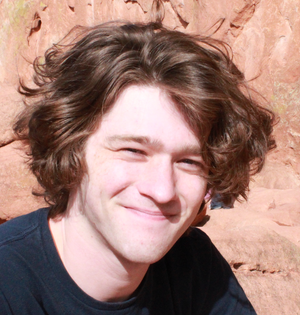
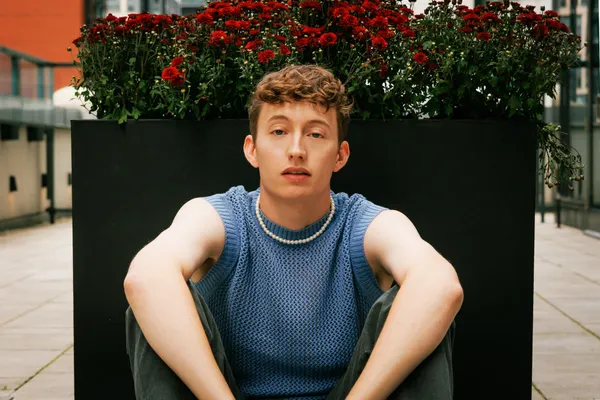
It’s either every film student’s dream or nightmare to direct a short film. It’s a lot of responsibility, a lot of work, and it takes a hell of a lot of confidence. No matter the size of the project, it’s an undertaking and a half. My goal for the summer was to make a short film and now that we’re in post-production, it's a great time to think about the things that went right, fell short, and the things I can do to prepare better for next time.
I co-wrote, directed, produced, acted in, and am currently editing this short. In other words, this thing is my baby. The film is about these two friends named Clint and Maxwell. Maxwell has landed himself in a time loop, and he's loving every day of it. Clint is let his summer waste away so Maxwell tries to get him to ask out his crush, Melanie.
There were so many things that went incredibly well on this project. For one, the morale on set was incredible! There were a couple times where we had to get down to it and really truly focus, but otherwise, we had lots of jokes, lots of fun, and lots of laughter. That was all thanks to the people who were there. The crew (many of whom also served as cast members) absolutely MADE this project what it was. They listened to all my crazy, stupid ideas and not only rolled with them, but added on to them.
I was also amazed by the amount of friends that showed up to be extras. People from all corners of my life were happy to be a part of this thing! It was incredibly heartwarming. In return, we were sure to take great care to take great care of everyone on set. We had a huge crafty table if anyone needed any snacks, and plenty of ways for people to cool down as there was a heatwave the week of our shoot. While we filmed inside for the most part, when we were filming outside, our script supervisor suggested having mandatory water breaks every hour. This was another way of not only keeping everyone safe, which is the most important concern, but also of keeping morale high.
I got a tip to rent the sound equipment we needed from a local video rental place and that worked wonders. If you do the same for your next project, be sure to ask about student discounts if you’re a film student. They might just throw you a bone and potentially save you hundreds of dollars. One of our locations was a charming local restaurant. You know how I got permission to film? I asked the owner when I ran into him while eating there. He was more than happy to let us!

So, where did the project fall short? Well, we weren't the most organized. We forgot to bring a clapper on day one, which gave that day a very loose feeling. Not to mention, it’s going make syncing the audio to the video a bit of a headache later. Our script supervisor dropped out the day before we started shooting, which may lead to issues with continuity when it comes to the edit. We luckily haven’t run into any issues in the editing phase as of yet. A member of our crew volunteered to be scripty after day 2 of shooting and that provided a lot of relief. Thanks Kade!
Something I wasn’t prepared for was the amount of ideas our DP had. He suggested shots that I hadn’t even considered. This was great, but because we were morphing our shot list into something different, it made it hard to tell just what shot we were on. The shot list ended up being thrown to the wayside a bit. Though it made organization difficult, as the director, I think it was worth the extra hassle in editing.
While our actors understood the characters and the general emotion of their part, often the minutiae of the lines were something that needed to be worked on just before we shot the scene. Sometimes the line deliveries wouldn’t be exactly what the scene needed and took some discussion between shots to tweak. This wasn’t a fault of the actors, I think it was a place where I fell short directing-wise.
The week’s heat was especially felt on our last day when we were outside (but luckily in the shade the whole time.) It was easily our most stressful day as we had not only a grad party to set up but a lot of shots to get through in a 5 hour span. Morale was tougher to keep up that day but thanks to the efforts of our unstoppable crew, we pulled through.
Overall, nothing was disastrous! Most of the things that went wrong were felt as disorganization and inefficiency, nothing that compromised the final product and nothing that compromised the safety and well-being of everyone on set. With all this being said, there are still many things I’d like to improve on for my next project.

Much of what I’d like to change boils down to preparation with my cast and crew. Granularly going through the script line by line discussing the purpose, themes, and delivery will help prepare actors for what’s to come. I would even ask actors to take notes regarding these things so that they can rehearse with them in mind. This will help make the most of our time on set by cutting out anything that could be handled beforehand. A similar thing goes for my DP. All those ideas cinematographers come up with can only really be done if they know the space well, which is where test shoots come in. If we had done test shoots before the day of filming then we could build the storyboard and shot list around those ideas. That would keep everything more organized and avoid wondering on set: “did we get coverage of all the things we needed?”
One of the scenes in the film takes place at a grad party. A party that I bought the supplies for and mapped out. I had a good vision of what it was going to look like, but I didn’t communicate that to my crew until we were all there setting it up. Directing everyone, individually, on where to set up what took more time than it probably should have and was more stressful than it had any right to be. Next time, for big setpieces like that, I’ll make sure everyone knows the full vision so that we can set things up more efficiently.
I took on a lot during this project, and it wasn’t easy. I was more than happy to do it, but it took a lot out of me. Because I was being pulled in so many different directions, I felt like I could only do everything 75% instead of the 100% it deserved. My performance was solid enough, though it would have been much improved if as soon as the camera cut, I wasn't putting out some fire or stressing about moving onto the next shot. Next time, I’d love to get a producer on so that I can laser in on my other responsibilities regarding the film.
From the start, I knew making this film would always be an incredible learning experience. I’ve seen firsthand how every decision in development and pre-production flows down into production and then into the final product. I believe that every set is an opportunity to learn no matter the size of the production, or your role on it. The things that I’ve learned through this film have already made me a better filmmaker–whether I'm in front of the camera, behind it, above or below the line.
League of Filmmakers is a DBA of Cinematography for Actors Institute, a nonprofit organization recognized as tax-exempt under IRS 501(c)(3) and California R&TC 23701(d). Operating under this umbrella, League of Filmmakers exists to elevate and unite creators across all filmmaking disciplines through editorial coverage, industry resources, strategic partnerships, and professional opportunities that support independent creators at every stage of their careers.