Table of Contents
July 2025 saw the release of the first movie in James Gunn's new DC Universe. And while "Superman" (2025) made a modest showing at the box office, the cultural impact can't be denied, sparking a "Superman Summer" trend through an insufferable number of TikTok videos featuring the song "Punkrocker" by TeddyBears.
So when DC's second film was announced to be "Supergirl" (2026), many fans were excited and expected a similar quality movie despite it being directed by Craig Gillespie rather than Gunn. Unfortunately, these expectations were not met as Supergirl continues to underperform critically and commercially, sitting at a 54% critics' score and earning a measly $37 million in its opening weekend. For reference, Superman made $125 million, and "Morbius" (2022) (often regarded as one of the worst comic book movies of all time) still edges out Supergirl with a $38 million opening weekend.
But what's the difference? Why isn't my TikTok feed filled with people jamming out to "Call Me" by Blondie? To find out exactly where Superman succeeded and Supergirl failed, we'll compare the films in three key metrics essential to any iconic superhero film: protagonists, antagonists, and spectacle.
Beginning with heroes, Superman certainly had the advantage of being a story about and consisting of characters the general audience was already familiar with, despite this being the first film in the franchise. Being in the cultural spotlight for nearly a century means that audiences already understand who Superman is, where he comes from, and what he does. Instead of rehashing this story, the film instead uses that runtime to familiarize the audience with more unfamiliar concepts, such as the conflict in Jarhanpur and the fresh members of the Justice Society.
Speaking of the Justice Society, Superman is replete with lovable side characters who add to the world and make the film more entertaining throughout. Whether its Jimmy Olsen (Skylar Gisondo) reconnecting with his crazy ex-girlfriend to help take down Lex Luthor (Nicholas Hoult), or Mr. Terrific (Edi Gathegi) and Lois Lane (Rachel Brosnahan) tracking down Clark, the colorful cast of characters brightens every dull moment.
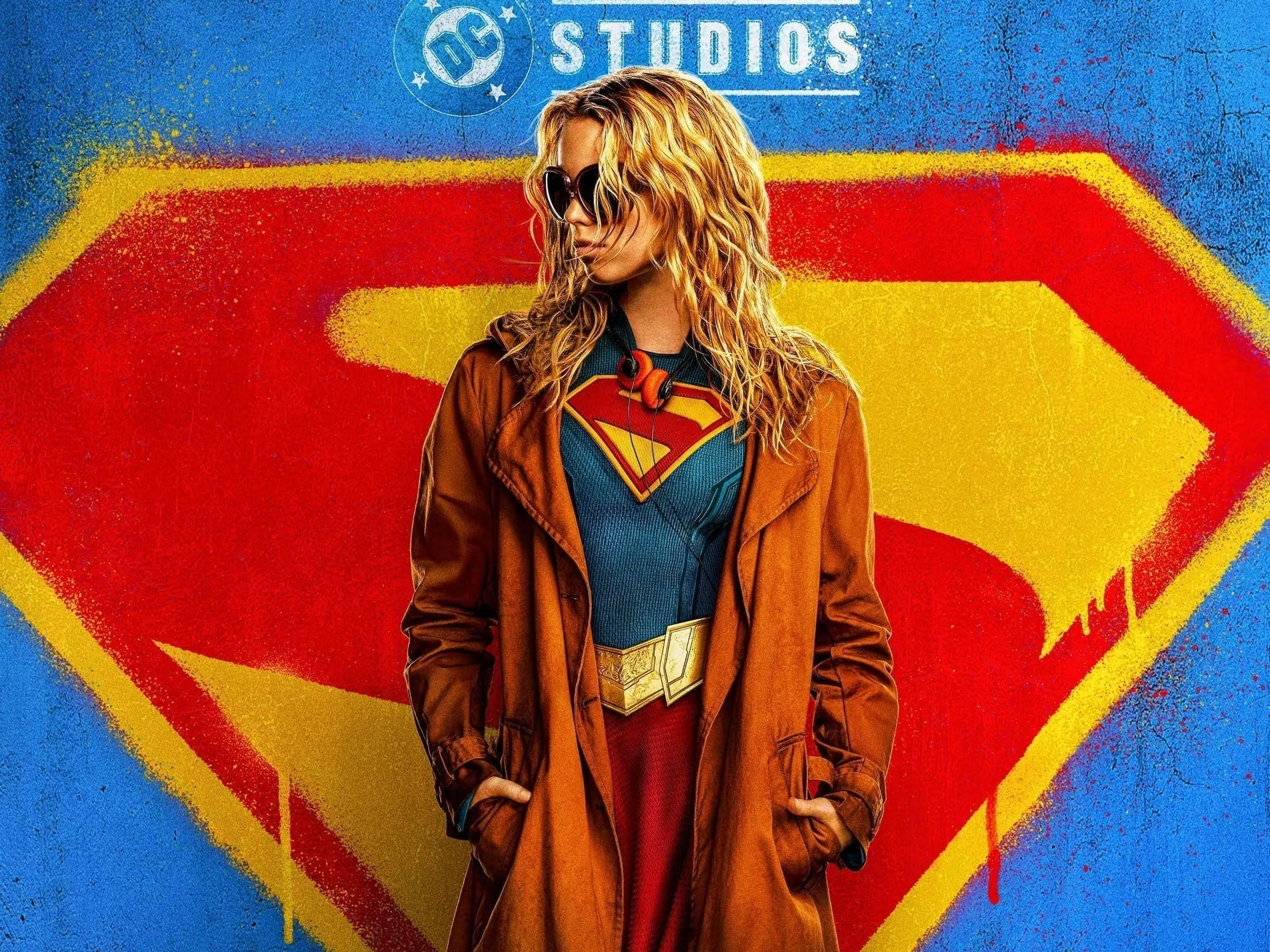
Now let's look at Supergirl's characters. Despite having decades of history as well, Clark's cousin is far less known than he is (proven by the amount of couples in Superman and Supergirl costumes that plague the streets each October), meaning the film had more work to do in familiarizing audiences with who Kara Zor-El (Milly Alcock) is. Despite this obstacle, the film chooses not to be a traditional origin story and, like Superman, takes place well into the titular character's life. The film tries to overcome this through the extensive flashback sequences throughout the film, which give us crucial information about who Supergirl is, but only come roughly halfway into the runtime, leaving Kara feeling like a stranger for much of the film.
Not only does Kara feel less fleshed out than Clark, but when compared to Superman, Supergirl's side characters don't hold a candle, largely because there aren't any. Aside from the film's main protagonist and antagonist, the only real, semi-prevalent characters are Ruthye (Eve Ridley) and Lobo (Jason Momoa). And while Lobo's inclusion was as fun as expected, his character had little screen time or tie to the story or characters, feeling more like an addition only included for fan service. As for Ruthye, who also left much to be desired, she felt like a cookie-cutter, revenge-driven sidekick; there really wasn't anything new or unique about the character that made me want to see more of her, unlike Jimmy Olsen for instance, whose portrayal was so impactful he will reportedly be getting his own spin-off show.

But a hero is only as good as the villains they face, and Lex Luthor is as good as it gets. What could've easily been a one-note, mustache-twirling, evil mastermind instead became a man driven into delusion by ego and powerlessness. It doesn't matter that Luthor isn't physically intimidating; what's scary is the lengths he's willing to go to get what he wants, whether it's killing an innocent Falafel Vendor or leveling an entire city. His evil is shown through his actions.
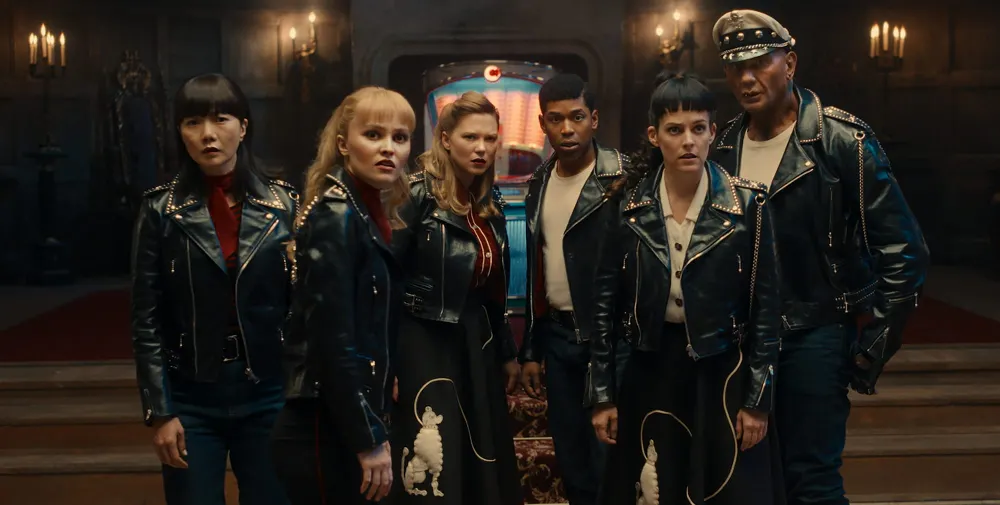
Now compare that to Supergirl's foe, Krem of the Yellow Hills (Matthias Schoenaerts), no doubt evil in his own regard, a mass-murdering, sex-trafficking space pirate, but... why? Out of the infinite ways to spend one's time in the vast cosmos of the DC universe, why is this what he's doing? He takes too much joy in it for it to simply be about amassing money or power. Is he just insane with a lust for murdering people? If that's the case, why, once Ruthye spits on him, does he order the others to kill her? Wouldn't a true psychopathic murderer just kill her where she stands? I'm not saying that all villains need to have some deep backstory or motivation, but when you're following up one of the most beloved villain portrayals of recent history, it might be a good idea to think about why your villain is willing to go toe-to-toe with a Kryptonian.
Finally, the action sequences in Superman and Supergirl are drastically different. Of course, when writing a story about characters faster than a speeding bullet and capable of leaping tall buildings in a single bound, it can be hard to find a way to present them with meaningful challenges when they should hypothetically be able to outrun, outlast, and out-smash anything thrown at them.
The two films address this problem in very different ways. Superman adds challenge through Clark's character. There's a giant monster rampaging downtown? Sure, Superman could fly through its heart or throw it into space, but that's not who he is. Instead, the challenge comes not from Clark's life being in danger, but from trying to save the lives of everyone around him, including the monster itself.
On the other hand is Kara, who in nearly every fight throughout the movie is depowered or weakened in some way. Instead of finding a creative way to add a challenge to Kara's fights, they simply add in the caveat that she's under a red sun, or give the bad guys some weird poison she has to barf out, or she gets injected with kryptonite, or she's on a planet with a kryptonite sun, etcetera etcetera etcetera. This causes Kara to feel less like Supergirl and more like "Occasionally Strong Girl", and worst of all, it leads to one hour and 48 minutes of fight scenes that feel more frustrating than thrilling.
Don't get me wrong, Supergirl definitely has a lot to love. Great additions to Krypton's backstory, fun character design, and a stellar performance from Millie Alcock all make the ticket worth the price; unfortunately, cookie-cutter characters, an undercooked villain, and uncreative fight sequences mean we likely won't be seeing a Supergirl summer anytime soon.