
Table of Contents
Three Key Takeaways
- A deeply personal film blending fantasy and reality to explore identity and memory.
- Independent filmmaking’s creative constraints as a catalyst for artistic innovation.
- A cinematic experience meant to be felt, provoking introspection rather than straightforward answers.
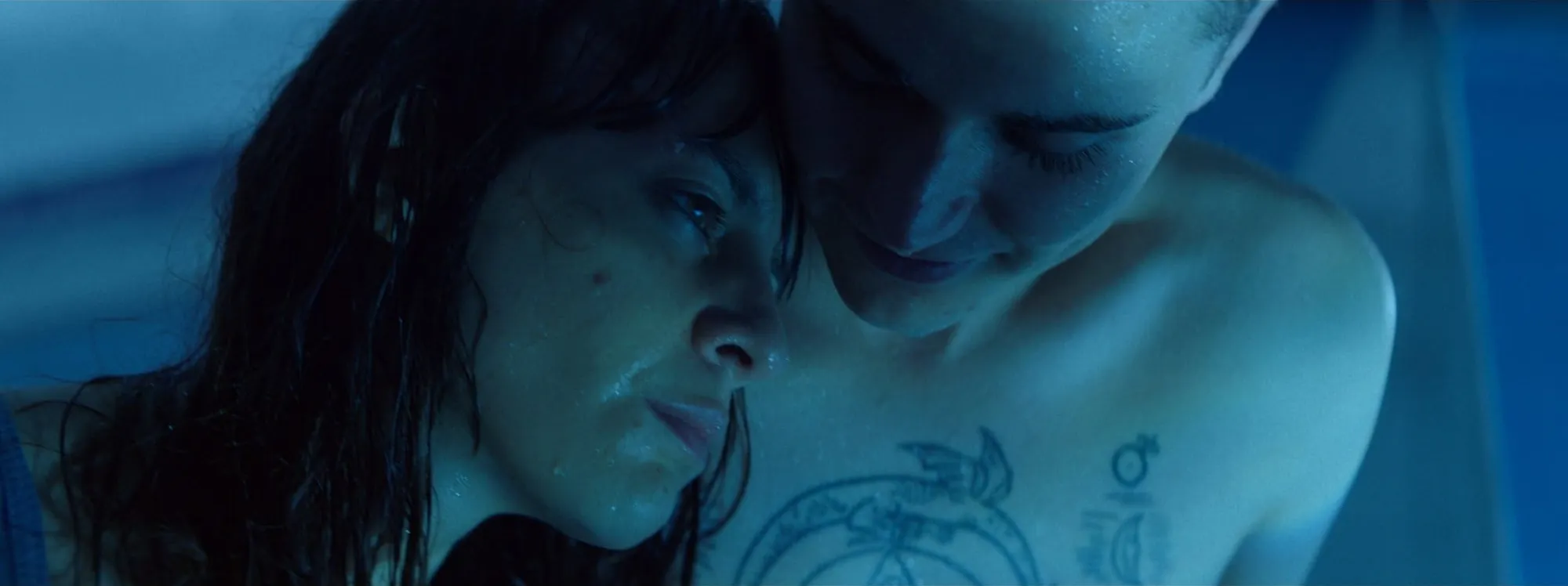
Javier Cutrona’s debut feature Alucina (Fishgirl) invites viewers on a poetic journey through the fractured memories of Camila, a young woman grappling with amnesia after a traumatic childhood event. Featuring Jessica Barahona in the lead role and supported by a talented ensemble including Pablo Aguirre and Lucas Ortiz, this film merges magical realism with urban drama. Selected for Nòt Film Fest, Alucina emerges as an intimate exploration of identity, loss, and the porous boundaries between reality and imagination.
Q&A Interview

What drew you to make this film? Why this story, and why now?
I believe that my son Francisco taught me to see life from another point of view. He taught me to understand that not everything is felt through the five senses, or expressed through learned language. My son has autism, and that label or diagnosis does not define him at all, although it does pigeonhole him and make him different in the eyes of society, as if being different were a bad thing.
What surprised me most about the filmmaking process this time—creatively or logistically? Was there a moment on set or in post that completely changed how you saw the story?
I think I arrived on set convinced of what I wanted to do and where I wanted to go. But it wasn't always like that. During the scriptwriting stage, the story mutated and changed direction. At first, Alucina (Fishgirl) was an earthly, dramatic story; there was no magical realism or fantasy. But my son defined the path, the twist, and the search. And Alucina was not only a story about the protagonist and her environment, but it also became the story of her and her inner self, and how that reality is unique and connects you with your soul, with the whole, with the cosmos. And there appeared magical realism, poetry, symbolism, as tools to connect with the viewer and to be able to talk about those themes that go beyond consensual reality, that go beyond the limits of perception, that go beyond consensual limits.

What was the hardest creative decision you made while making this film?
Accepting this film, consciously, that it is not a film for everyone, neither in its form, nor in its pace, nor in its theme. Making an honest and courageous film that seeks to generate an experience, a mirror, a subjective journey. And in that creative risk lies its strength.
Is there a moment in the film that feels the most you—something only you could have made?
I love this film with its defects and virtues, and I see myself reflected in it; much of me runs between that strangeness, in that feeling of wonder and confusion, in that network of symbols that speak to the subconscious, in that sensation of mystery, as if standing between wakefulness and sleep, between madness and the divine.
What do you hope audiences take away from your film?
I hope that the audience not only sees Alucina, but feels it. I hope that seeing Alucina is an experience that awakens emotions, memories, questions... and that each viewer allows themselves to inhabit that world with their own sensibility. I think it was Wong Kar-wai who said, 'I'm not so interested in the story, but in how it feels to be inside it.

How has this film shaped or shifted the kind of stories you want to tell next?
This film, Alucina, my first film, has taught me a lot. Making it has been a difficult and wonderful process. I have learned from the actors, artists, and technicians, and above all, I have learned from my mistakes. I believe that today I am a little wiser thanks to Alucina, and surely my next film will be a new way to explore and learn. I will continue on this path where cinema is an experience that is shared with the viewer, and where the meaning or essence of that experience varies depending on who sees it. It is the kind of cinema that stays in your head for hours or days, or even longer. It is the kind of cinema that you love and hate. That cinema that makes you ask yourself questions and makes you part of the journey.

What’s a tool, technique, or resource that really helped you during production?
I think that during the production stage, it was the camera, the eye, or the point of view of each shot or each scene that was very important to me. The type of framing, the arrangement of the characters within the frame, is something that fascinates me, so I manipulated the camera, I made the frames as an extension of my head. And during the editing stage, as the editor, I think Premiere Pro was a playground. The editing stage was a redefinition of the film's path and it was very exciting.
Independent filmmakers often rewrite the rules out of necessity. What do you think is the greatest strength of independent filmmaking, and how did you lean into that on this project?
I believe independent cinema is still auteur cinema — defined by the filmmaker’s voice, and that is a wonderful thing. That voice is what strengthens you; it sharpens your instincts. Making an independent film means working within budgetary limitations that constantly shape your vision and impact the script, which must be adjusted, cut, or transformed time and again. Shots fall through, actors are lost, shooting schedules are reduced. Yet these countless adversities, far from being paralyzing obstacles, become opportunities to refine the focus — to find creative solutions that often end up strengthening the film. The lack of resources pushes us to be more inventive, more attuned to what is essential. It makes us more communal with the crew, because cinema is a collective endeavor. And it keeps us asking, again and again, what truly matters for the story.


"Cinema is a collective endeavor. And it keeps us asking, again and again, what truly matters for the story."
What does it mean to you to have your film selected for Nòt Film Fest?
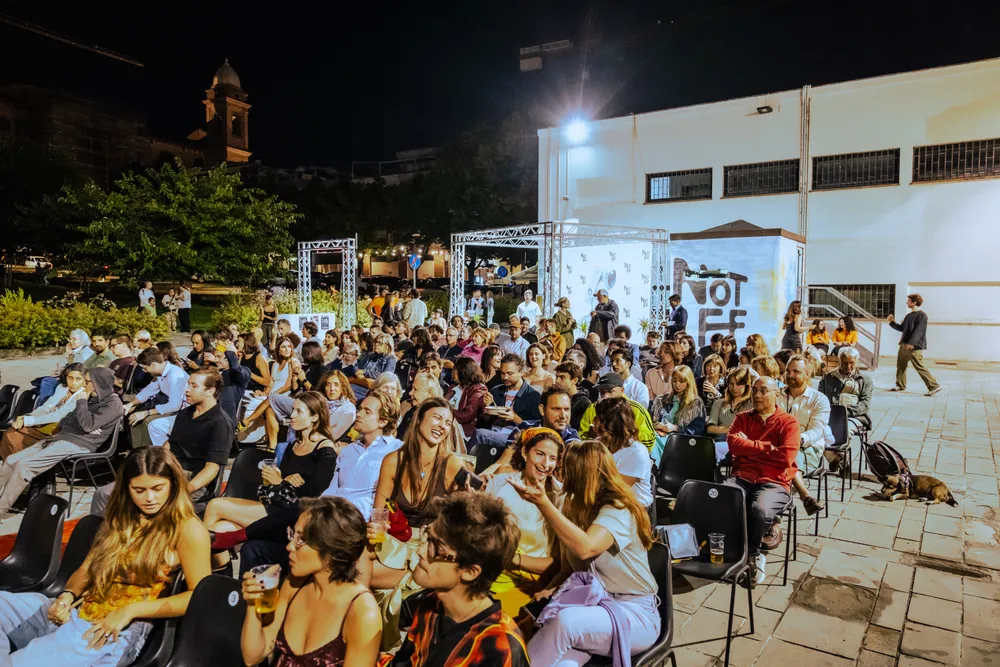
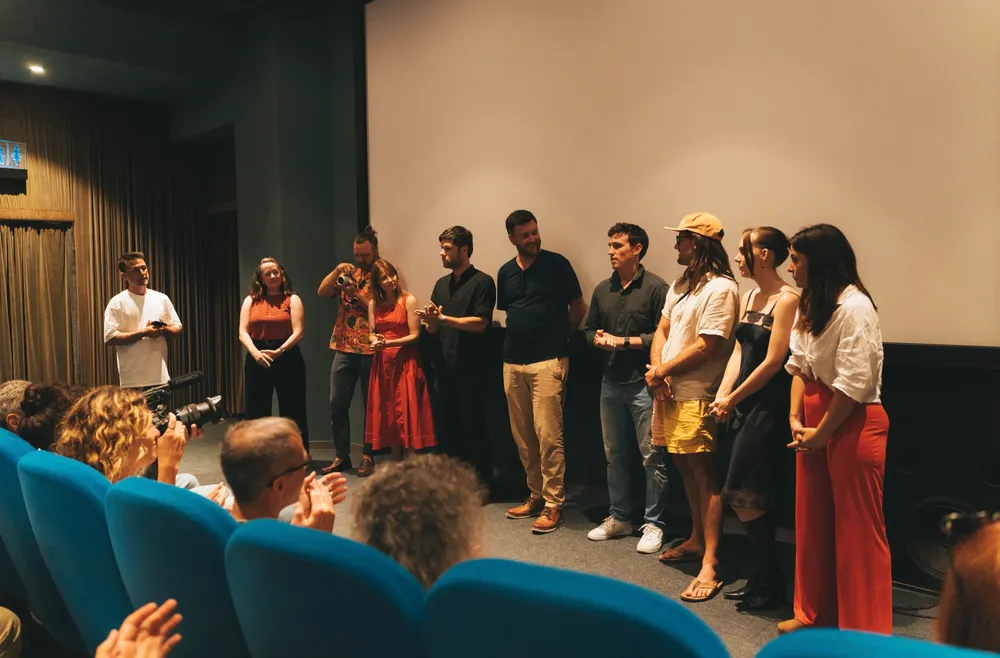
We’re very happy! Nòt Film Fest is a place where independent cinema is celebrated in all its forms — alive, unique, and daring. For us, being selected is a true honor. It’s a wonderful space in which to let this film live and breathe. We’re deeply grateful to be at Nòt and to share our work with a new audience.
How do you hope being part of Nòt Film Fest will shape the life of this film? Where do you see this film going next?
Ultimately, our mission is to bring this film to the most diverse audiences, in the most diverse places — and Nòt is an exciting step on that journey. I hope new paths open up. May not be a place where roads lead you to unexpected destinations, where you meet extraordinary people and live new adventures. May it be an exchange of ideas and emotions, a seedbed for new projects — the beginning of something yet to come.

We're on a journey with Alucina. It began last November at the Tallinn Black Nights Festival in Estonia, and since then it has taken us to far-flung places: Switzerland, Brazil, Colombia, Ecuador — and now Italy with Nòt. That’s the wonderful thing about cinema: it has a life of its own, it grows wings, and you never know where your next destination will be.
"At the core of all my work is a desire to find light in the dark, beauty in pain."
Cast & Crew
Jessica Barahona — Lead actress as Camila
Pablo Aguirre — Actor as Edmundo
Lucas Ortiz — Actor as José
Alejandro Bernal — Actor as Alan
Paula Fulton — Actress as Camila's mother
Anahi Ruiz — Actress as young Camila
Javier Cutrona — Screenplay, editing, direction, producer
Andrea Moyano — Producer
Nora Sara — Producer, production design
Alejo Chauvín — Cinematography
Fatima Meza — Costumes
Giovanni Labadesa — Executive producer
Learn more about the film here.

%22%20Explores%20Memory%2C%20Identity%2C%20and%20Magical%20Realism)