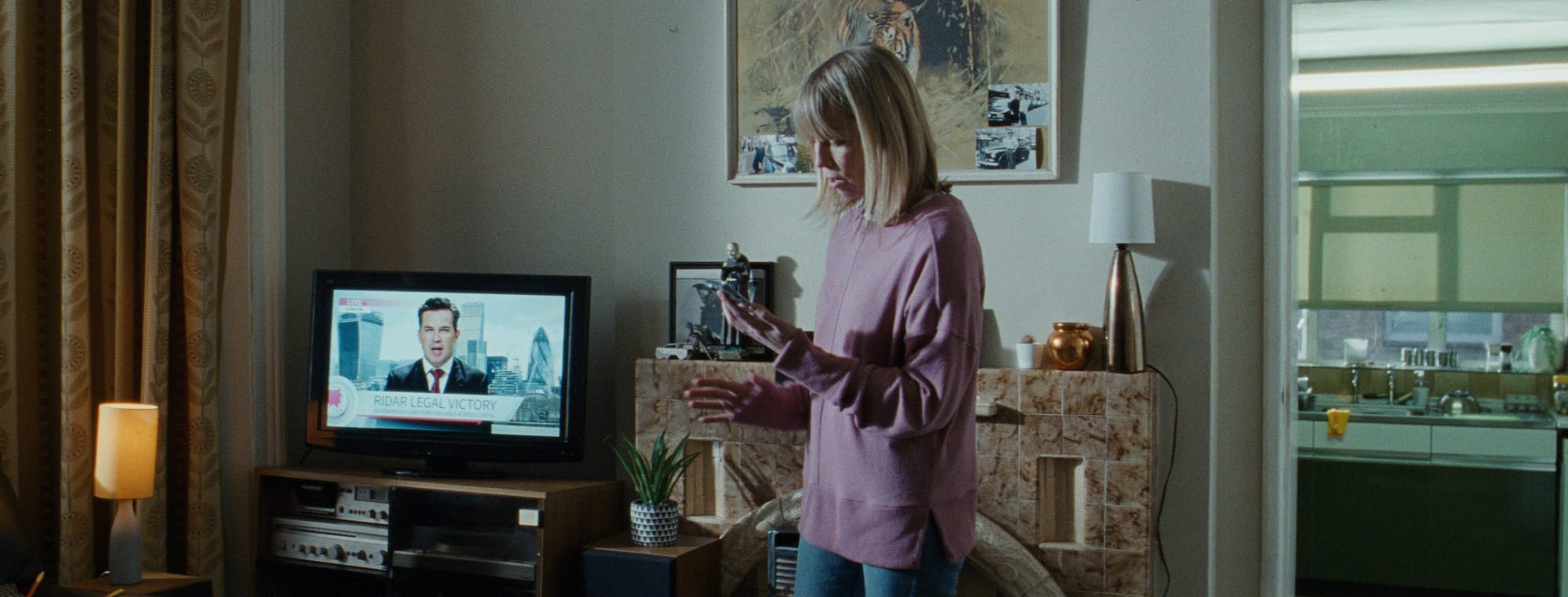
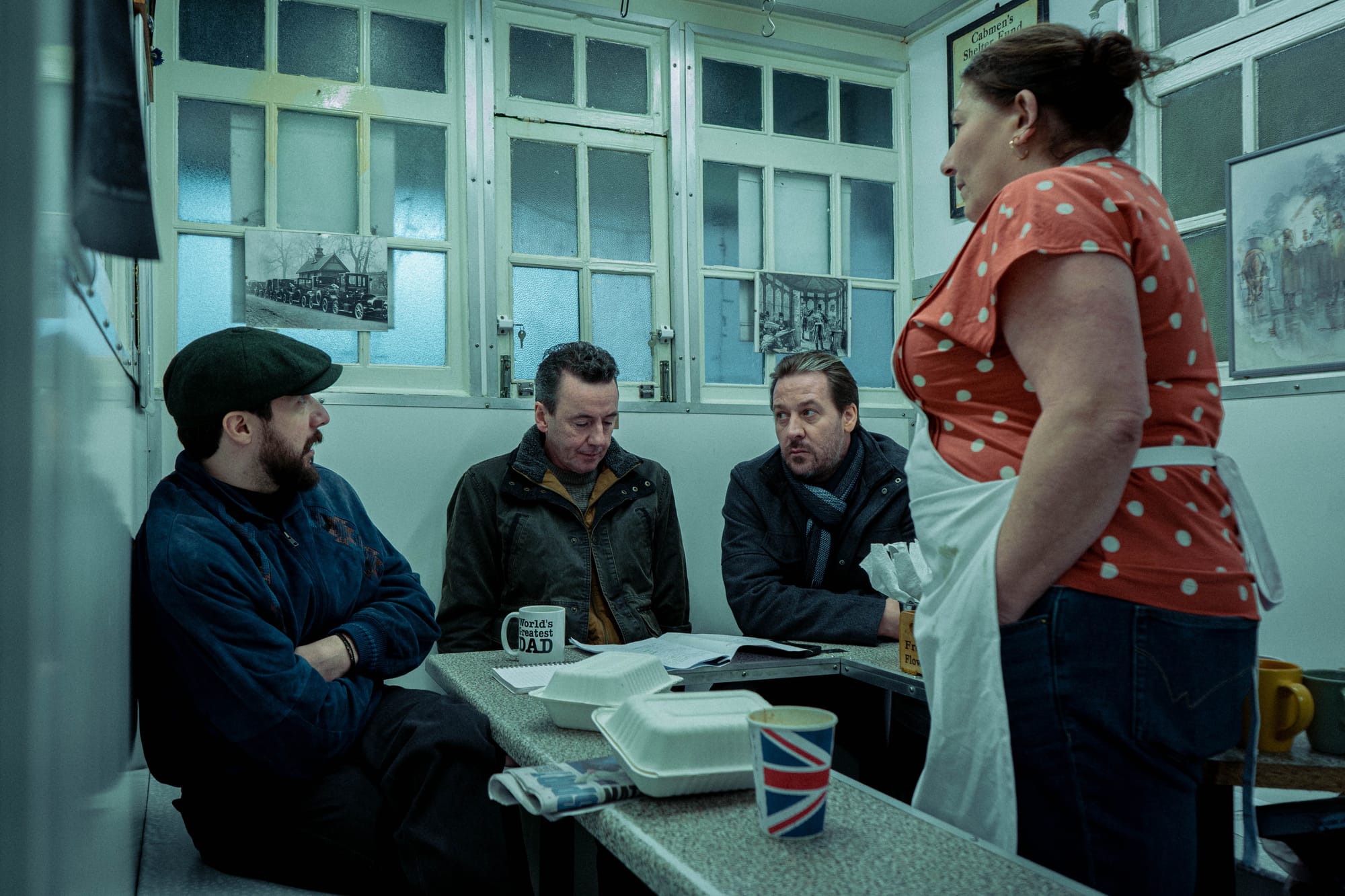
In the near future of Black Cab, the autonomous car company Ridar has won a landmark legal battle to operate across every London borough. Harry, a third-generation cabbie, stays optimistic. Then, over the course of one shift, he can't find a single fare. He breaks a promise to his wife, their struggling relationship fractures further, and the future he has been bracing for finally arrives. London writer-director James Arden calls it "a family drama about a man trying to hold on to his sense of purpose as a husband, father and provider, in a world quickly leaving him behind."
The premise is barely speculative. Arden points out that autonomous car companies are already training on London's streets. His film is a drama-thriller "with a sprinkling of sci-fi," and it rests on more than two years of research, including interviews with working cab drivers. This is Arden's third short, following the British Short Film Award winner Leopard and Sitter, which took the Grand Prize at Rhode Island International Film Festival and screened at SXSW London. Black Cab marks his second time at HollyShorts London.
Key Takeaways
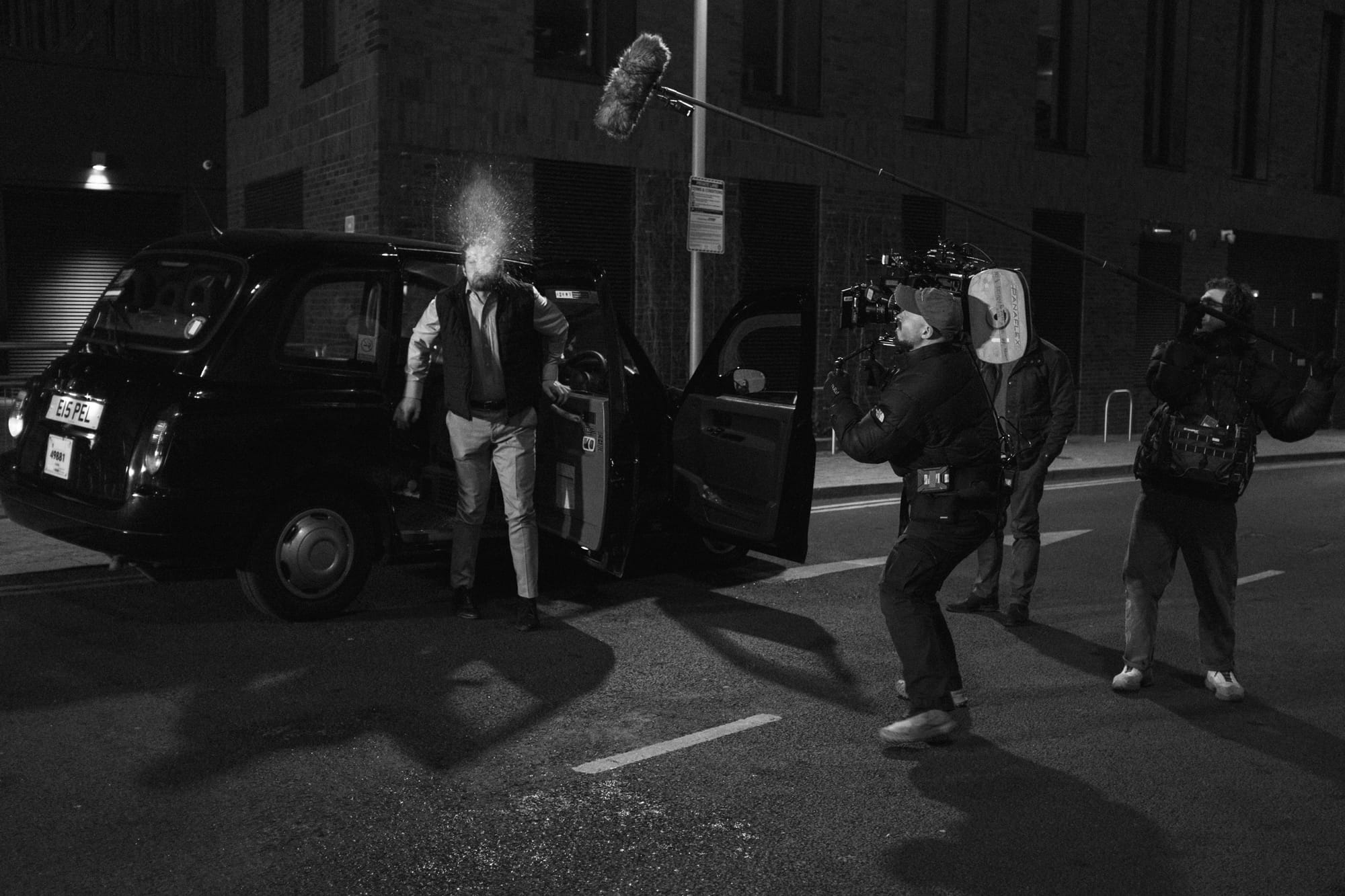
- Arden and DoP Adam Barnett shot Black Cab on 2-perf 35mm with a Panaflex Millennium XL2. They chose the "outdated" mechanical format on purpose for a story about humans being replaced by machines.
- The production filmed entirely on location in London in February, guided by a shared ethos: "without friction, there is no spark."
- Arden hopes the film starts a conversation about technology's impact on individual people, and about how much of our identity we tie to our work.
Here, Arden discusses the research behind the script, the gift of creative limitations, and why he keeps pushing his characters to the breaking point.
Interview
What drew you to make this film, and why this story, why now?
I wanted to make this film now because the script's themes are so current. Autonomous cars are starting to appear on London's streets in 2026. In a wider sense, all of us are concerned about what the future holds, and I think we can all relate to wanting to preserve our place in the world. Harry is just a normal person, like us all, facing great change.
Over two years of research and development went into the script, including interviews with real cab drivers that gave us real insight into a fast-changing industry. It's easy to get caught up in exciting technological developments without considering the wider social impact on individual people. Car technology is a perfect example: the convenience of Uber, the allure of a self-driving Tesla or Waymo. But all those people who make their living behind the wheel, whether cabbies, truck drivers, delivery drivers or emergency services drivers, will soon have to find new work, and millions could be left by the wayside.
I wanted to tell a story about an individual dealing with this developing crisis, and how it affects him and his family life. Work identity defines so many of us, especially men as earners, providers and protectors. Despite his optimism, Harry can't escape that when reality hits.
What surprised you most about the filmmaking process?
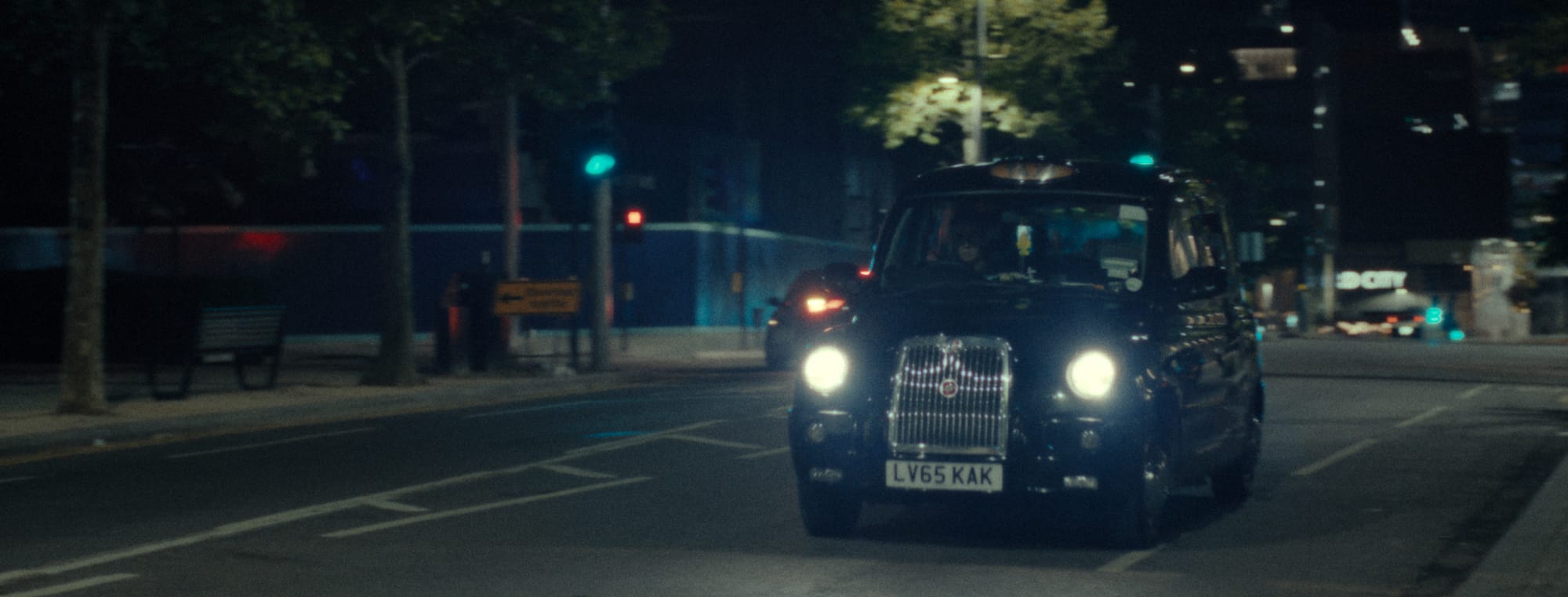
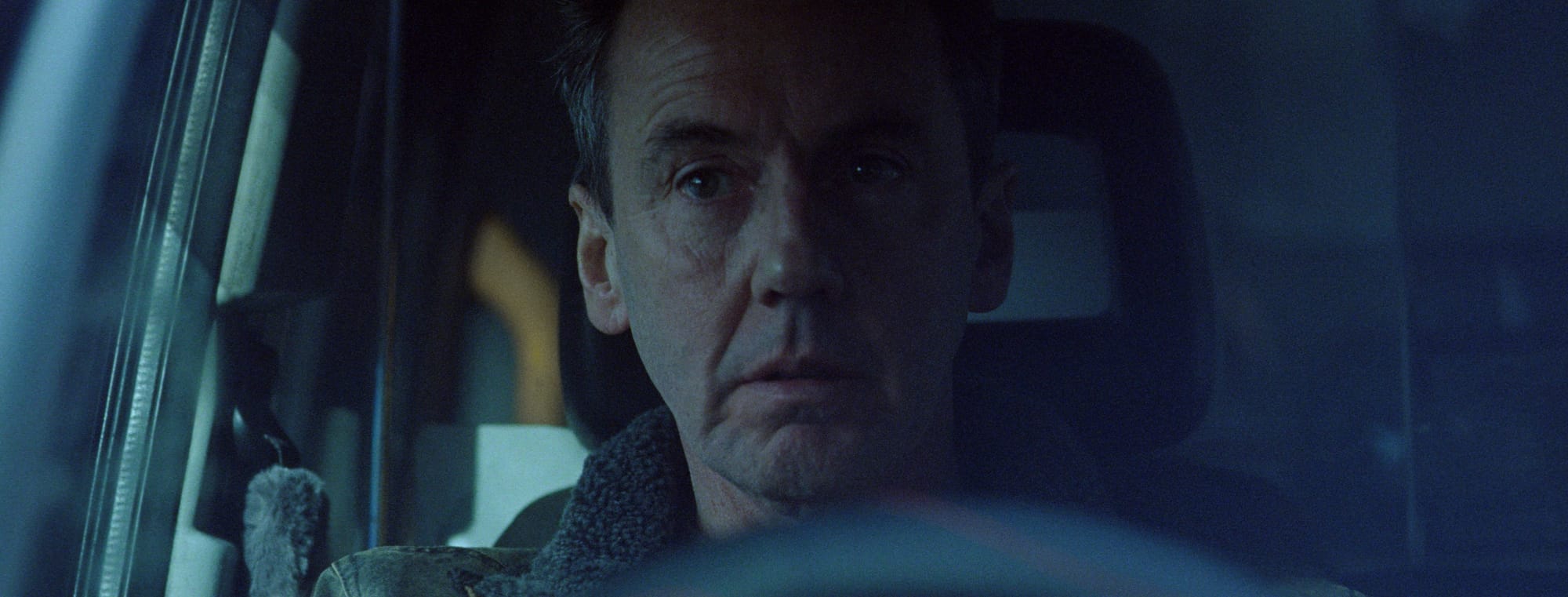
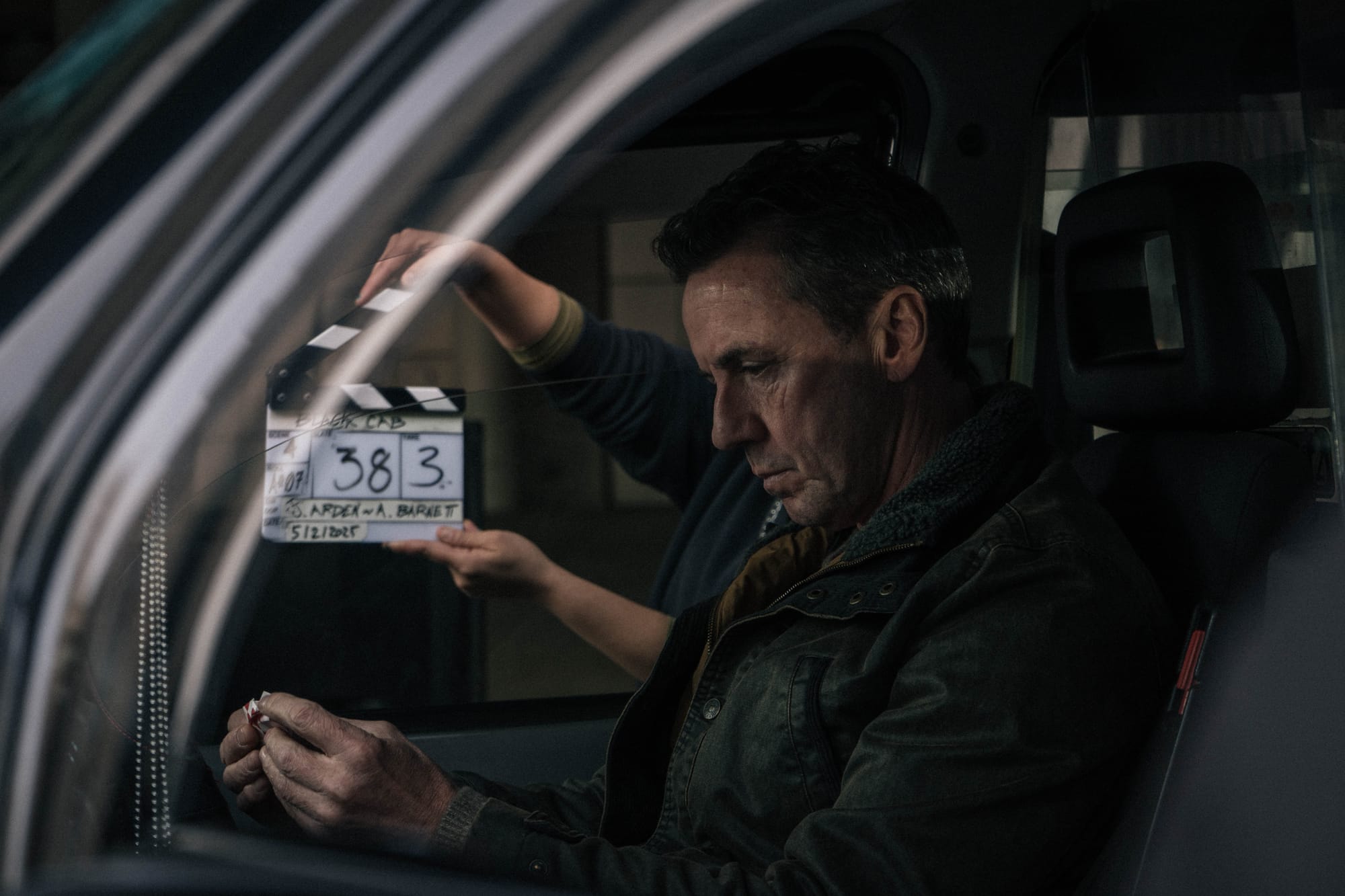
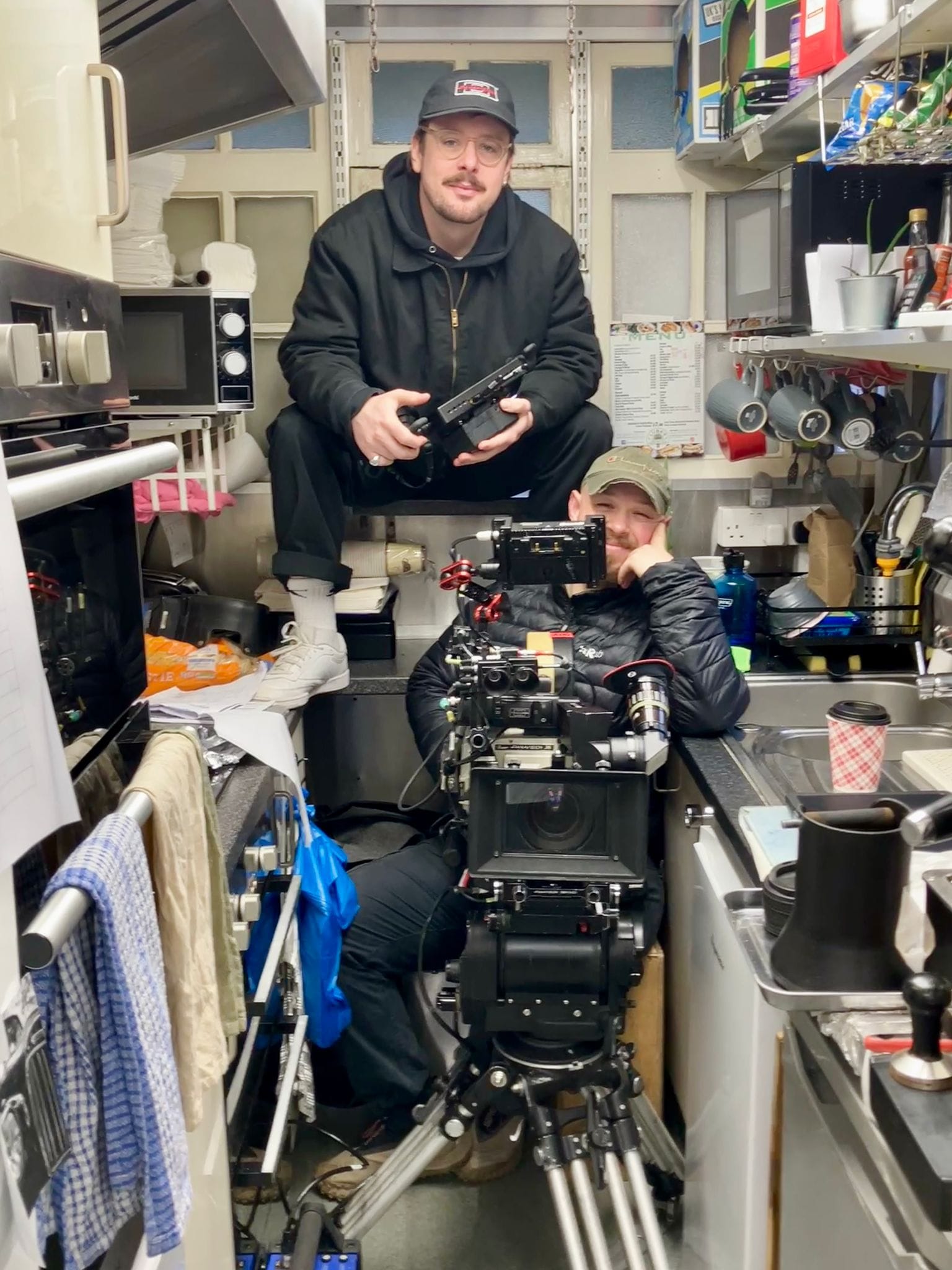
Shooting on 2-perf 35mm on a Panaflex Millennium XL2 was a very different experience. That logistical constraint really informed the creative approach, and I was surprised at how much I enjoyed embracing the limitations. It is a beast of a camera, so we had to work within what was possible: where we could put it in the cab, how much handheld we could do, and so on.
I initially wanted to shoot on 16mm, but this choice helped create a different, more unique look. It locked us into a 2.35:1 frame that we couldn't move away from. It didn't box us in. It gave us a framework to work within.
There is an anachronistic tension in making a film about mechanical and organic beings being replaced by digital, robotic ones. It felt like the perfect creative opportunity to use what many would call an outdated, inefficient medium.
What was the hardest creative decision you made while making the film?
On a personal level, it was cutting a character in the edit because it wasn't serving the story. It's always hard telling a cast member.
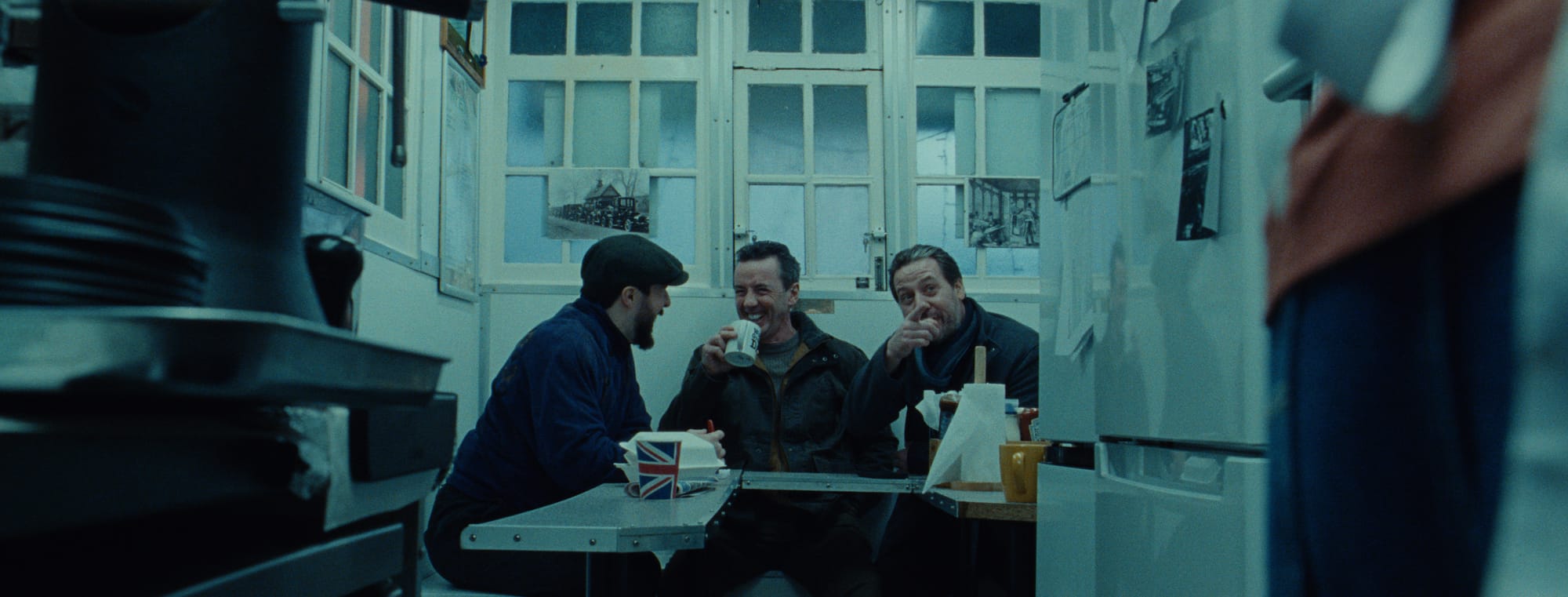
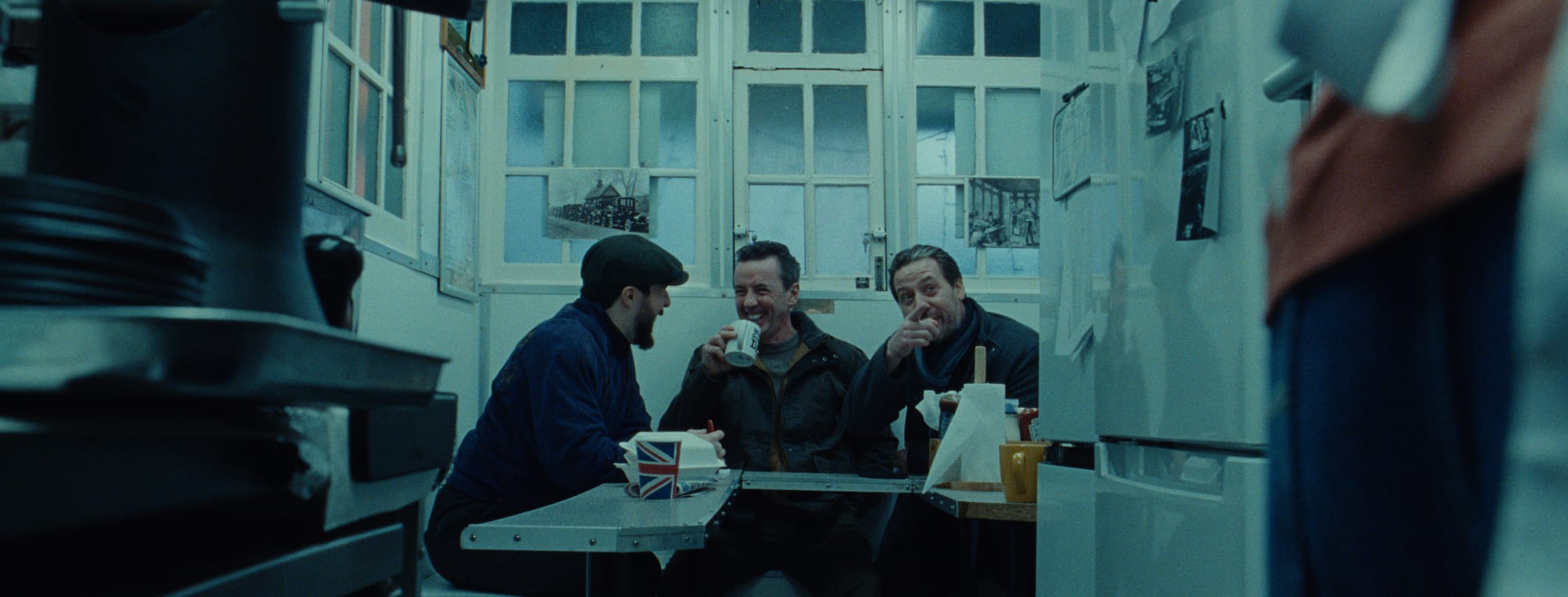
On a creative level, it was shooting entirely on location in London in February. It was cold, brutal and logistically hard, but I think it was worth it to make the film feel more real.
What moment in the film feels most like you, or like something only you could have made?
I've realised that in my scripts, I always push my characters to a breaking point before they reach a moment of reflection and self-realisation. So I'd have to say it's Harry standing in front of the Ridar, like a deer caught in the headlights.
What tool, technique, collaborator, or mindset shift helped most during production?
My DoP, Adam Barnett, and I settled on a collective ethos that fuelled our approach.
The world now has a constant obsession with ease and comfort. People want a life without friction and a total streamlining of everything, from their daily lives to their artwork and experiences. That seems completely at odds with Adam and me as filmmakers. Shooting on 35mm was not the easy choice. Shooting on location was not the easy choice. We wanted to make those difficult choices and find the film through them.
The ethos was: without friction, there is no spark; without friction, there is no tension; and without friction, there are no stakes.
What is the greatest strength of independent filmmaking, and what lesson would you share with other filmmakers?
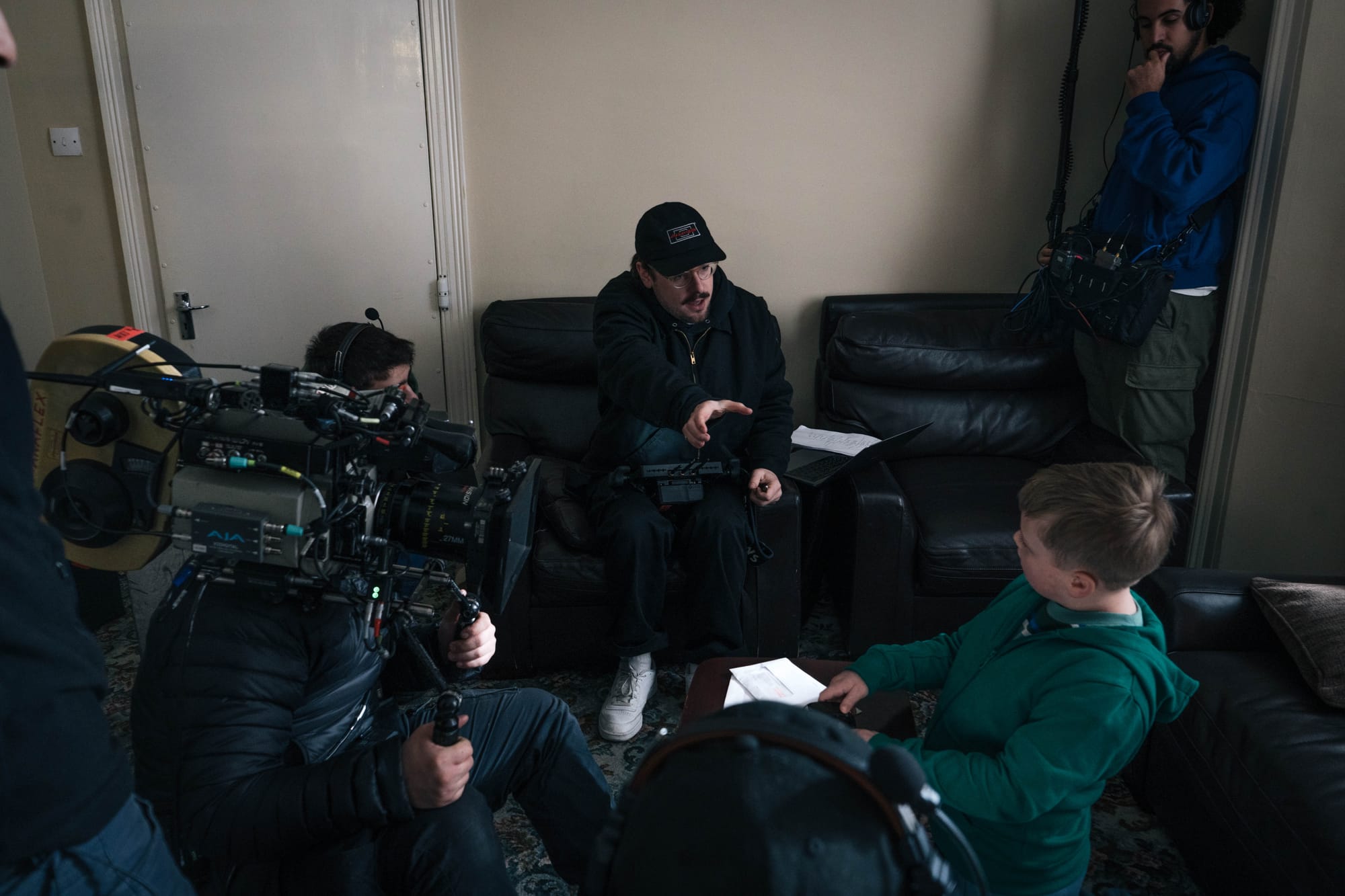
Going with the flow. You can always make a plan, but nine times out of ten, a lot of it goes out the window once you're on the ground shooting. Plenty of challenges hit us in production, including illness and technical issues. Banding together, going with the flow, and letting those challenges show us what was really important to capture ultimately serves the film.
What does it mean to have your film selected for HollyShorts London, and where is the film going next?
It's wonderful to return to HollyShorts London for a second time. We started our festival journey for Black Cab at HollyShorts in LA this year, so it's a lovely full-circle moment on our run.
Next, we're playing at a very well-regarded film festival in London in the new year, so there will be another chance to see it then, plus a few others I can't mention yet. I hope the film is a conversation starter. I hope it makes us think about the impact fast-developing technology will have on individuals and society. I also hope it makes us re-examine how much of our self-worth and identity is wrapped up in our work. We are more than our job titles, and we need to remember that.
Main Cast & Crew
- James Arden, Writer / Director / Producer . A British writer-director based in London who explores the chaos of modern life through character-driven storytelling. He directed second unit on Criminal Record S2 (Apple TV) and is writing his first feature, Public Relations.
- Adam Barnett, Director of Photography . A London-based cinematographer from the North of England. His credits include Champion and Just Act Normal (BBC), plus second unit on Criminal Record S2 (Apple TV) and The Girlfriend (Amazon).
- Jay Simpson as Harry. Credits include Day of the Jackal, Black Mirror, Chernobyl and The Holiday. He will next appear as Briggs in Pinter's No Man's Land at the Donmar Warehouse.
- Gemma Dyllen as Emma. Credits include The Death of Bunny Munro (Sky), The Capture (BBC) and Tamburlaine the Great with the RSC.
- Anna-Maria Everett as Maggie. Credits include The Dreamlands (BBC), Big Boys (Channel 4), Fool Me Once (Netflix) and Killing Eve 4.
- Frankie Wilson as Isaac. Credits include Hoard, The Souvenir Part One and Part Two, The Gold (BBC One) and Prima Facie.
- Production Company: Brother Film
Filmmaker Opportunities
💛 Fund your next project with fiscal sponsorship
Have a project in the works? As a 501(c)(3) nonprofit, the Cinematography for Actors Institute can accept tax-deductible donations on your film's behalf — a door-opener for grants, foundations, and supporters who want to back your work. We've serviced over 100 projects to date and helped route over $800,000 in funding to filmmakers. Explore fiscal sponsorship →
📬 Grant deadlines and festival opportunities, straight to your inbox
The CFA newsletter rounds up grants, festival calls, and community news for independent filmmakers — the kind of opportunities that are easy to miss and painful to miss. Join the newsletter →
🎬 Focus on the creative — we'll help with the logistics
Production Management, CFA's newest member program, launches this November: production insurance and workers' comp, payroll, film permits, gear rental coordination, SAG-AFTRA compliance, contract drafting, production consulting, and crew recommendations — handled by a team of working filmmakers, à la carte or all in, in partnership with Creative Access Group. It's waitlist-only until launch. Join the waitlist →
League of Filmmakers is published by our parent organization, the Cinematography for Actors Institute — a 501(c)(3) dedicated to education, community, and capital for underrepresented filmmakers and actors. Learn more about CFA →