Table of Contents
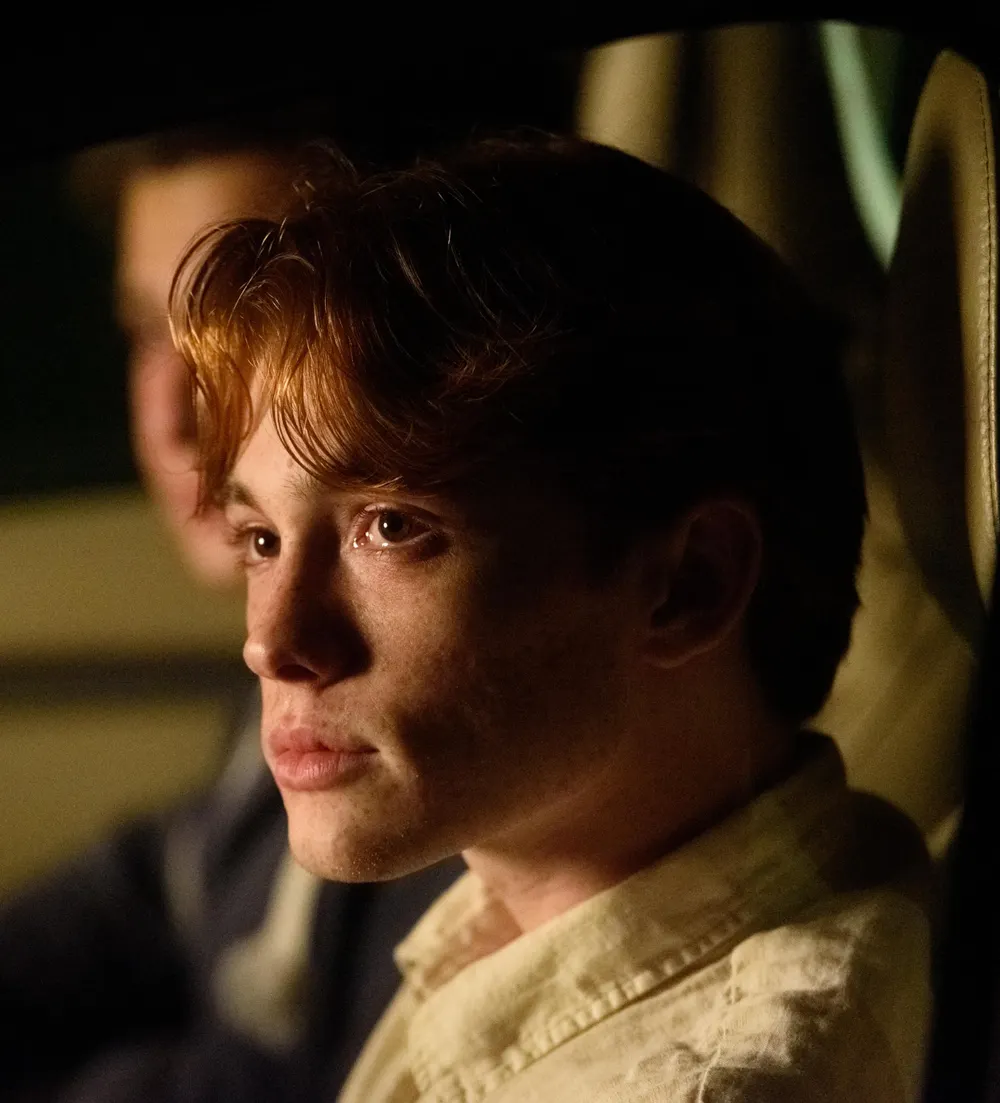
Born to Lose is a new piece of motorcycle cinema. It follows the story of Andy (Dylan Arnold), a biker whose father has died. He then inherits his bike and debts to local gangster Roddy (Shane Callahan). Andy confronts his father's past, family, and his identity.
It marks the feature film debut for writer-director Joseph Zentil and co-writer Pierce Csurgo. Taking a break from the busy festival circuit, we chatted about the process of making the film, how to write a good drama, and a love of motorcycles.
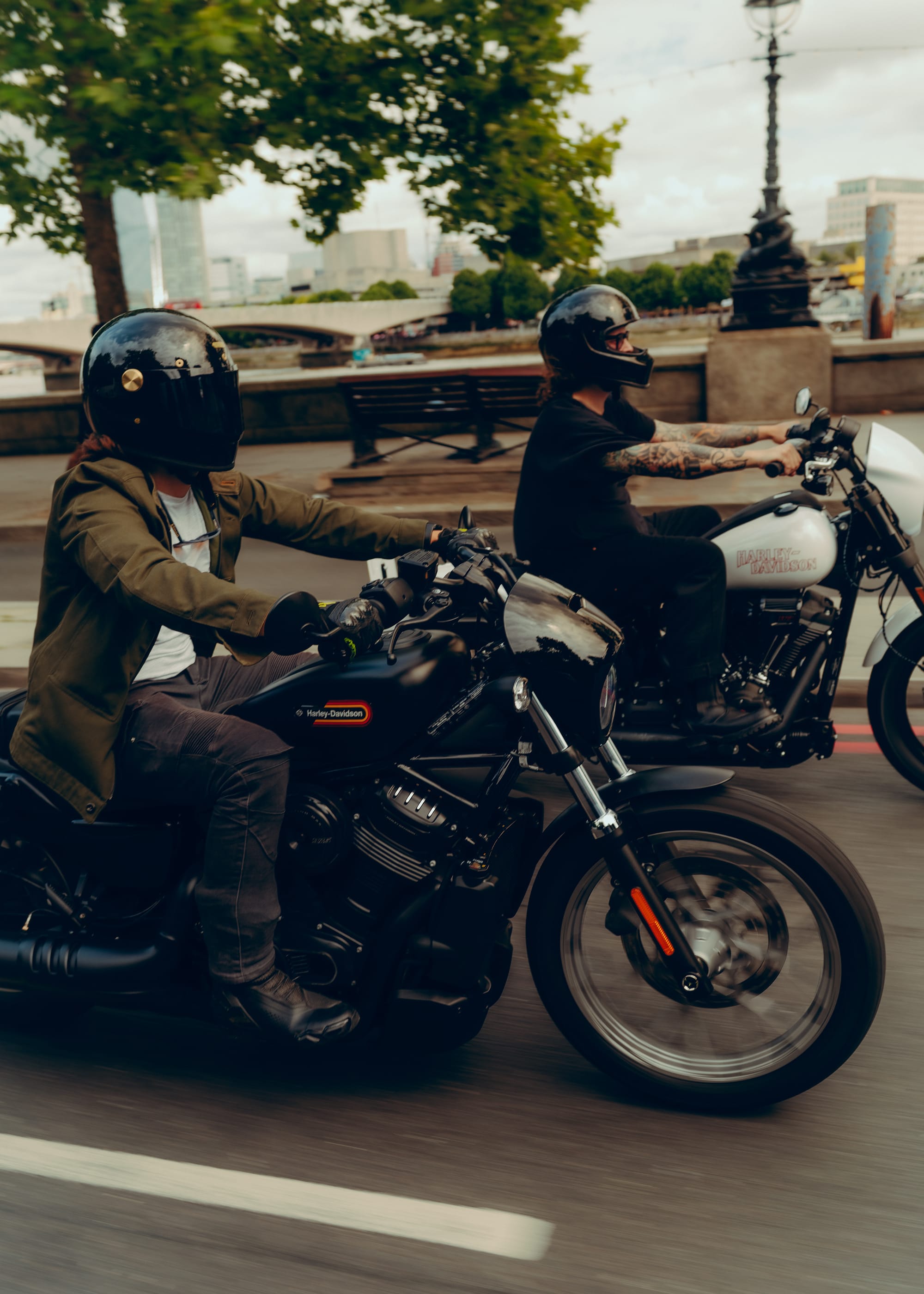
Let's take it back to the beginning of development. What were some of the first ideas or images that you had, and how did they change over the course of production?
J: The reality is that there wasn't a single image that inspired it. I think that it was this culmination of all these kinds of different experiences that eventually revealed themselves as a singular vision. As I've said before, this film was based on firsthand experiences, not only myself, but friends of ours that are in this world. After hearing the same kind of story, what people were going through, it became very obvious there was this through line. Once we were able to identify that, it ended up shaping the entire narrative of the film.
The film has a lot to do with the idea of Americana and being down south. As a team from Toronto, where that kind of culture doesn't exist, what was your approach? What was it about those themes that was so interesting, and how did you try to accurately portray these places?
J: There is some partial truth to that. I'm a dual citizen. My mom is from California, and her father was from Montana. So I lived a great portion of my life in the U.S., and I did feel connected. Obviously, I didn't grow up or live in Western Kentucky, but a lot of the same issues that people in Western Kentucky, and in our story, are going through reverberate throughout the other states. We wanted to tackle these issues. I was able to do it from a firsthand perspective, but simultaneously through a bird's eye [view]. I think that is ultimately what gave me the unique vision, and I guess you could say, feeling qualified to tell this story. I wanted to give that justice while still being critical of what was happening. I really do feel like, as a filmmaker and one of the writers, we were kind of on the edge of that.
P: I think as well when you're an outsider to a culture, a place, there is an acuity that you have because things are novel to you, there's an ability to see things with a fresh eye. I think having Joe's experience with the motorcycle community and having been on rides through places like this, he had a lot of the language for what was true to this place. I think for me, as an outsider, having grown up in Canada for most of my life, it was then like being able to see what felt the most salient to the actual story that we were telling in this place.
It sounds a bit ethnographic, your approach to writing this.
J: I think with my firsthand experience and Peirce's technical writing background, that was the partnership that allowed us to make these extractions from real life and form it together into a cohesive, single narrative.
You have these quiet moments, and then moments of tension, and then moments of action. How do you make these flow, [to speak more] on the more technical aspects of writing and pacing?
P: When it comes to writing scripts, I always start from a vision, or a jumping-off place. The opening page of the script is over black. We're supposed to hear Andy's bike as the first thing leading us into this film. Just from the get-go, from a technical writing perspective, it's all about rhythm and sound. When Joe took me to a swap meet down in Long Beach outside of Los Angeles, getting to just be in these places and hearing how people speak and how the bikes move, I think that absolutely plays a role in the writing itself.
In terms of the actual story, we wanted to tell it as lean and mean as possible, because that's a phrase you would use to describe a bike. The film is primarily about a guy that is in transition, and not riding his own bike for the entire film. It's like this stasis point, punctuating that with fast movement and then these moments of reflection. I like to think of how the actual content and form shape each other when it comes to writing.
I would say there's a natural rhythm based on a person riding a bike. They go fast, they stop, they go fast, they stop. Sometimes they enjoy the scenery, sometimes not.
Part of writing, I find, is that it reveals itself to you over time. Were there any specific moments based on those experiences where it showed itself to you? Maybe where you didn't expect it to go?
P: Joe and I are very heavily focused on beat sheet and treatments prior to actually getting into script writing, so there's not often surprises necessarily when it comes to writing on the page. I think so much of the surprise was more just the collaboration of Joe and I talking through these things and figuring it out. That cold opener sequence that involves a husband and a wife was based on a true story of someone Joe knew in the motorcycle scene. Then there's a part later on in the film where Andy and Jed are going to look for bike parts, and they find their way through a waitress in a diner. All of those are true stories. I guess the surprising part is that those ended up feeling so natural, not just to the world we were building, but to the story we were telling. Oh, this actually propels this forward.
J: If you do a good job as a writer creating the emotional context, a lot of the surprises, at least in my experience on this film, come from the dialogue you give the actors, strong psychological material, and it allows them to embody this character. Then when they're actually on screen going through it, whether it's just bringing a nuance to the words you aren't aware of, then you're often surprised. You have these moments where you're looking at the monitor, or you're in rehearsals, and now it's a three-dimensional thing that you're watching and breathing and feeling. There's a temperature and a humidity to it. I think that was the surprise, watching it all come to life. Watching the talent connect some of those dots you were not even necessarily aware were there.
Filmmaking is truly one of the greatest collaborative mediums because you could be the finest director or writer in the world, but without everybody else pulling their part and contributing, the magic's not there, and the totality of it all is not there.
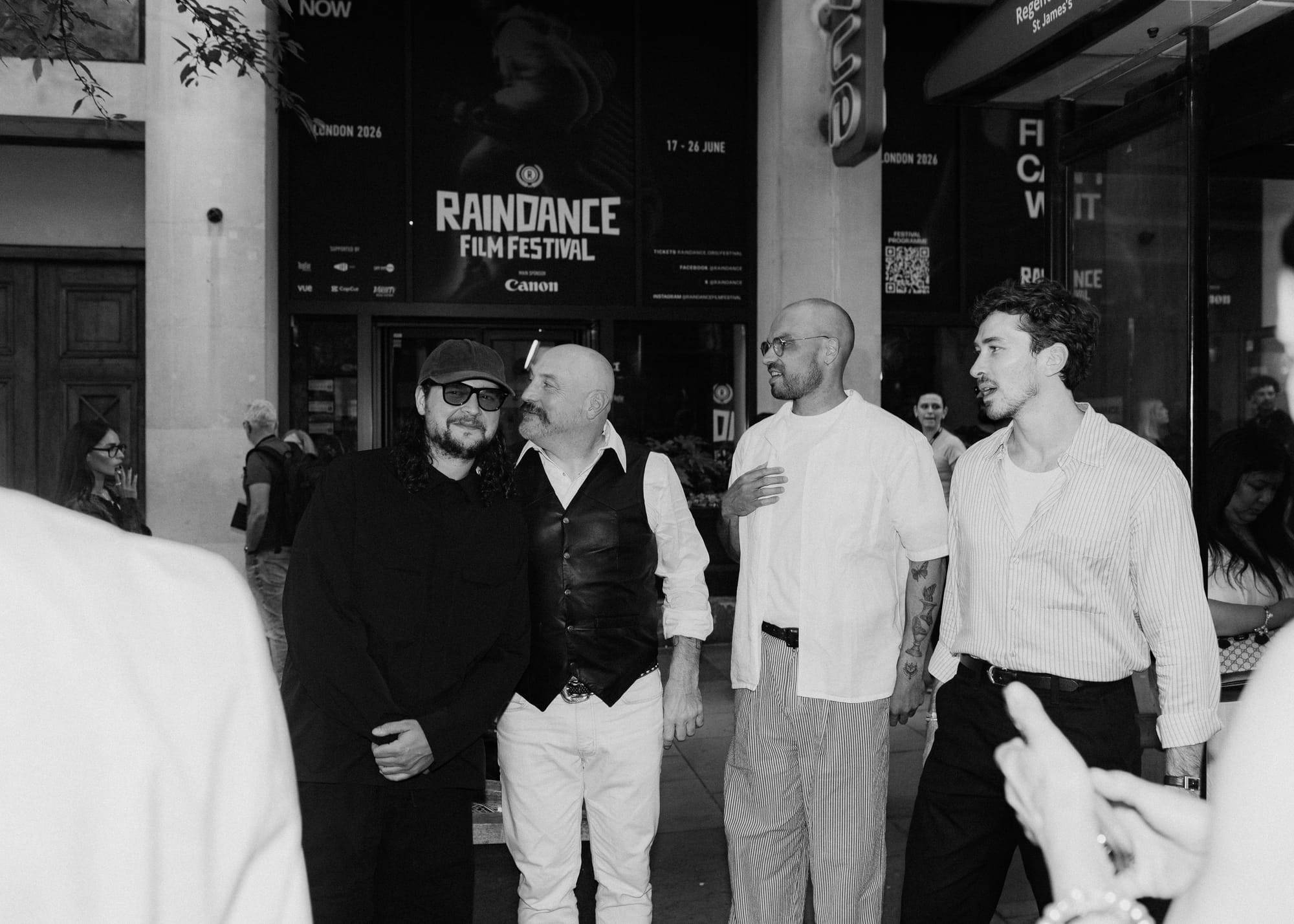
How does working with and blocking for vehicles differ from working with human-based stunts? How does it make its way into rehearsals?
J: To go back to the question about the pacing, Andy is on this journey in the film, and his only means of transportation is a motorcycle. So he is very much travelling through this world in between these experiences. Whether it is a romantic experience or he's getting beat up by the local gangster, or he's eager to go break some news. There's these moments of transition throughout the film that I think dictate the pace. I think that's true in real life, and especially to somebody who rides, they could really relate to that in their day-to-day life. That was one of the things that we wanted to accurately convey. Another part of that was the sound.
We were really deliberate as to when there would be vehicle sounds and when there would be silence. That was a reflection of what [Andy was going through], was he deep in thought on his ride, or is this more about being in the moment and the actual action of riding the bike? Tying that into the blocking of it all, it wasn't just a one-size-fits-all approach. It really depended on what we wanted to convey emotionally in the scene and whether we chose to be on a really far back establishing shot, he pulls into a parking lot and he feels small in the landscape, maybe that's indicative of how he's feeling in that moment. There's lots of moments where we're hand-held, wide lines, up close. These were all very deliberate decisions in terms of the film language that we were using.
I think it would be a crime to not mention our cinematographer, Garrett Davis, who's a friend of mine from film school and very accomplished in his own right. He brought a whole unique perspective to the blocking as well. He really opened our eyes to different possibilities and helped us translate things we wanted to convey emotionally, but to actually block it out and show it three-dimensionally on screen.
I know you mentioned the sound. Could you touch a bit more on that? How it influenced the emotions and themes?
J: We have two songs in the movie and they're bookends. We open with a needle drop and close with a needle drop and everything in between is score, except for one little moment on the inside of a club, which I'm not counting. I think given the bleakness of the landscape, just the temperature of the season we're in, the context of what he's going through dramatically–I kept saying that there was this dream-like sensation to it all. Steve Moore, who did our score, him and I just had a constant dialogue about [how] we live in a day and age where music technology is so advanced that you could isolate each sound and each instrument in the mix. We spent a great deal of time on the soundstage mixing this film, going through, literally, sound by sound, what we wanted because we viewed the sound as almost another character in the film. The sound is equally as important as the landscape of what you're looking at. I think that the two serve each other and they don't exist in a vacuum. I think the sound design, tying it back to the pacing, it all coexists. There's not one thing that's more [important] than the other. I think the nature of all [of] that is what allowed us to create the final film.
P: A huge conversation from the beginning was always the authenticity of everything you saw on screen. When we were at the post phase of doing our sound design, we interviewed a bunch of sound designers and ultimately landed on someone who was able to ensure that every engine sound you hear was tied to the actual bike that was on screen. Because this was a film we intended to make for bikers first. I think having had a few festival screenings now, where we've had a few members from the biker community come, what feels like the hallmark for success in this film was having them come up to us and be like, you guys really did this world justice. I think that really comes down to everything. All of the attention, effort, that we put on screen to make sure there was authenticity at every stage of the process.
J: And that's tied to the specific sounds of the vehicles. When [Andy's] holding a specific part in the garage, it's true to what he's saying. The techniques they're using while working on the bikes, while lifting the bikes on the hoists, all of that had to be accurate to us. As somebody who rides and collects bikes, my biggest pet peeve is when you're watching something that has motorcycles and the sound is disjointed to what you're seeing. You're watching a Harley and you hear a Kawasaki. That takes me out of it. The meticulousness of what we did was in an attempt to not take people out of it. We wanted people to be focused on the narrative and the character and what was happening, and not give them any excuse to be pulled out of that.
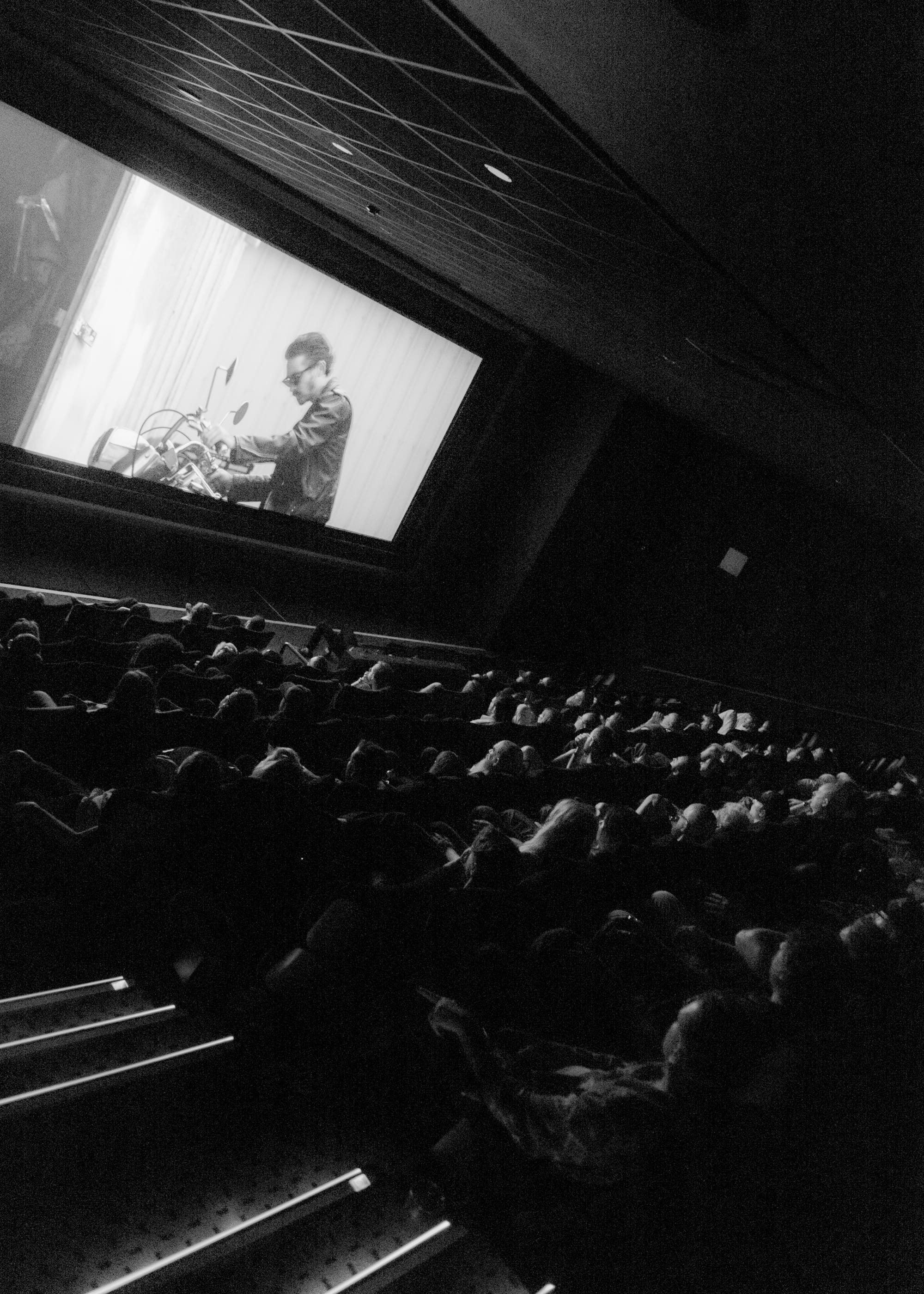
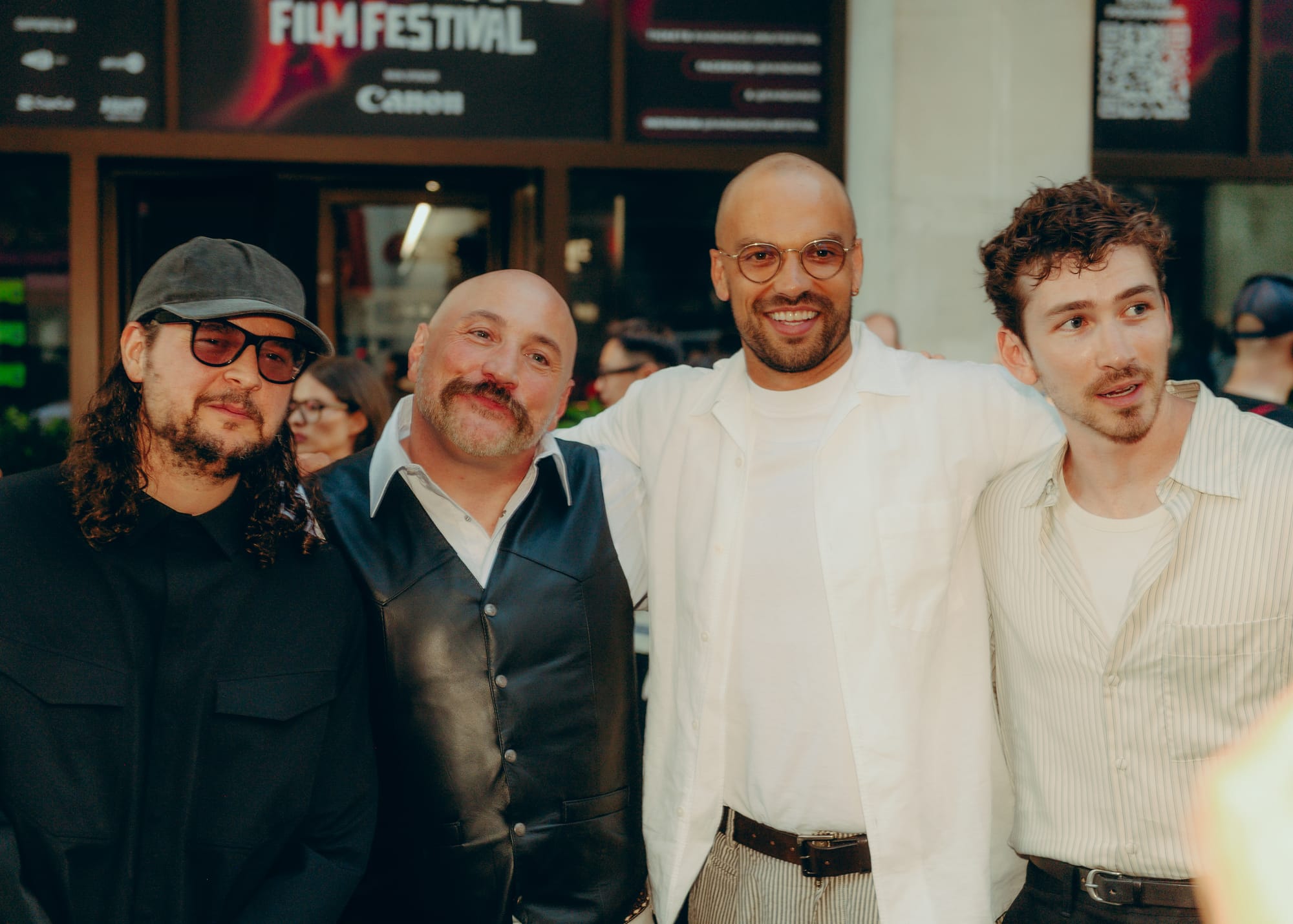
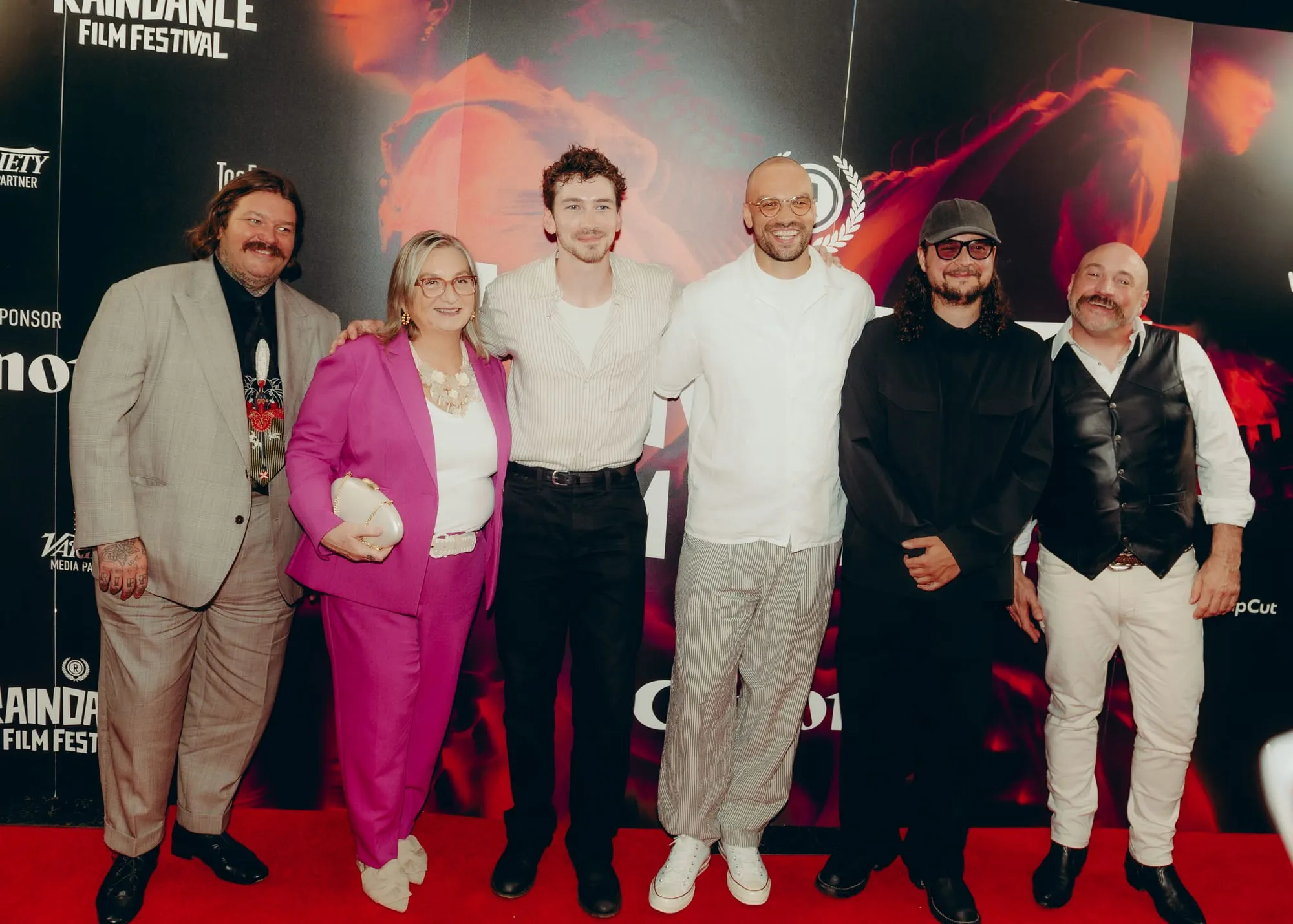
I know you guys were just at Raindance. Can you talk about the strategy of submitting to festivals, which festivals you're submitting to, and making your way around the circuit?
J: The festival component, I think in our minds, we always knew that would be a stop on our journey. We were going to make this film, and when we complete it, we'd want to screen it at festivals. But it wasn't until, maybe foolishly, after we were done that we really came up with our strategy and started the application process. I think the biggest lesson for me, and you know, if your film doesn't get into a festival or a specific festival that you want, I think there's a tendency to take that really personally. Oh, I didn't make a good movie, or they don't like me, or they didn't appreciate the performances, or whatever it is. The reality is that the films are being selected by programmers who are these individuals who have their own unique set of tastes and preferences. Larger than that, whether they want to admit this or not, they have an agenda.
They want to program films that thematically contain X or Y. I think for us, finding a home at a festival that would really appreciate and want to support us and understand our vision, we really found that with Raindance. Taking our film to the UK, which has a very large motorcycle community, we had that component to it. Like me as a partial Canadian, they were able to have that bird's eye perspective and look at this really distinct and uniquely Americana film, and they weren't seeing it as insiders. They were fascinated as outsiders, and that really came across. This is maybe a surprise to me as a filmmaker, but I think the outsiders are really the first to appreciate this film. As it meets an audience and as it's exposed to more and more people, I think we're starting to work our way to the core. In essence, the festival circuit is an important part of the process. I think it's a way to really celebrate the artistry of it all before it becomes about distribution and business and numbers and suits.
P: I think to Joe's point, for other filmmakers, especially making their first short film or first feature film, just to not take any of it too personally. This is our first feature as the lead creatives on it, but we've made plenty of short films and played a number of festivals. I think you just learn over time that each year, they may just have a different theme that they're looking for. Just because your film doesn't get programmed doesn't necessarily say anything about the quality of it. It's such a satisfying and fulfilling thing to be at a festival, in a full theatre with strangers, that in real time, you're feeling how they're engaging with the film. Then the Q&A, it's so so satisfying. But first and foremost, it's important to make the film that you want to make, that's what I always come back to.
J: Part of the magic as a filmmaker, you become desensitized. You write the script 50 times, you spend a month or however long shooting the movie, and then you spend several months editing it. By the end of it, you no longer have those fresh eyes. Then when you go to an audience and you're in the theatre, and you're hearing the laughs, gasps–you have a moment of realization that, oh, that was successful, or oh, I didn't realize that was funny, or that was funnier than I thought. That experience from the filmmaking side was one of the sheer joys of going through the festival process. We're still in it. We still have a few festivals coming up, and we're waiting to hear back from some. So we are very much still on that journey. We really want to enjoy the experience right until the end.
On that note, do you want to share the other festivals you guys are going to be at?
J: We're going to be at Croatia International, we're going to be at Burbank International, and we're going to be at the Breck Film Fest in Breckenridge, Colorado, all coming up. There's some others on the horizon that I can't quite talk about yet. But the most up-to-date source is our Instagram page (@borntolose_film), where we're posting everything in real time. So if you're wanting to see the film, and you don't want to wait for the general release, just keep checking in and hopefully we'll be playing in your city and you can come out. We really love to see people coming out and we appreciate the support. We made this for an audience. At first, you make the film for yourself, and you want to satisfy yourself creatively, but then at a certain point, it's no longer yours and it belongs to the world. I think we're now at that point, and what's keeping us going and motivated is this is the constant reaction from people seeing the film.