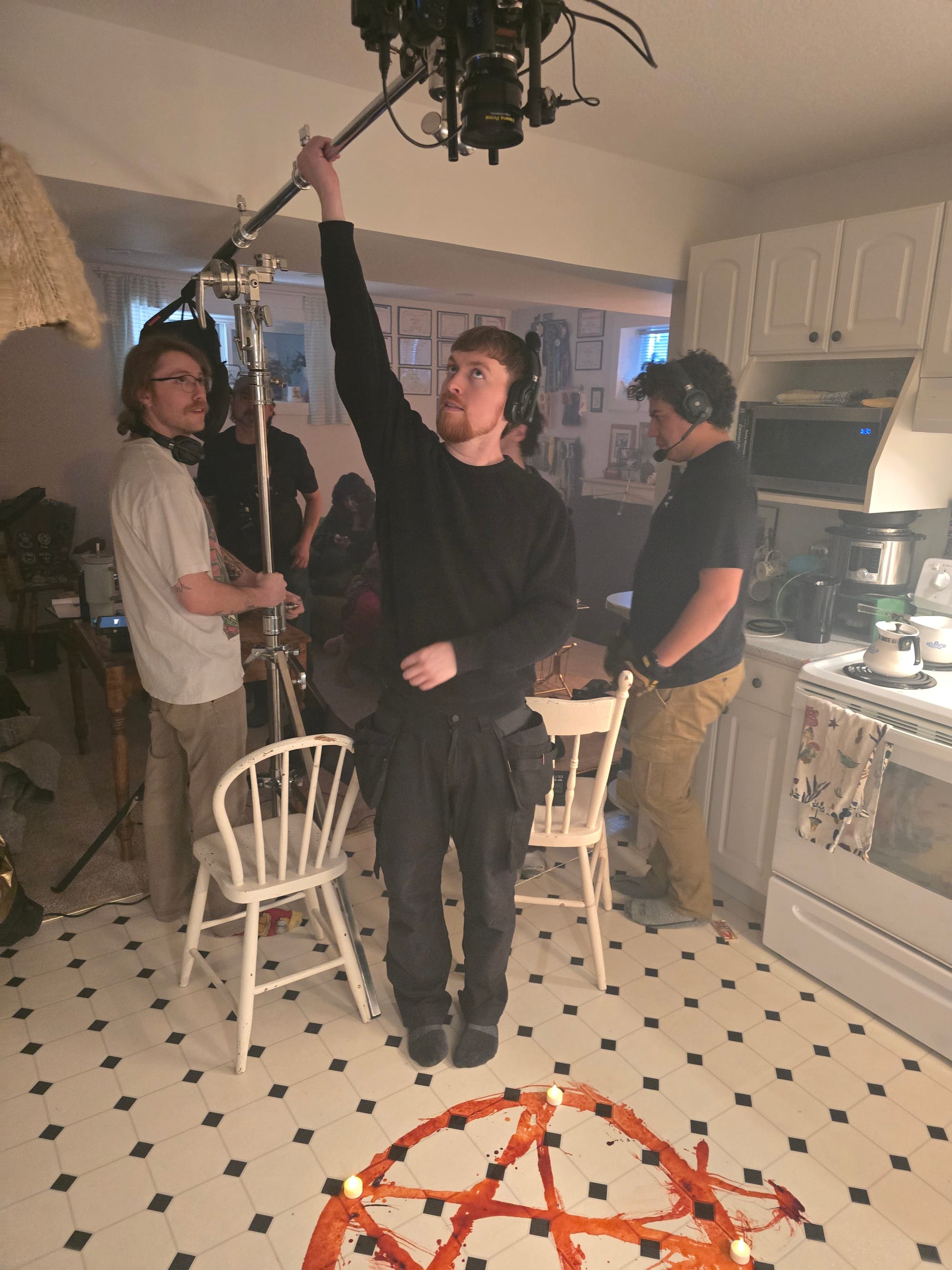
The premise arrived at dinner, fully formed, from de la Peña's wife: what if a cat performs a satanic ritual? Domeownation takes that one line exactly as far as it deserves to go — a cat, a ceremony, and a bid for control of the population. The Mexican director, based in Canada and founder of the genre production company Machakiller, recognized the idea immediately as something festival audiences would respond to. Horror crowds love cats. Horror crowds love Satan. And, as he points out, the logic only holds for a cat; run the same scenario with a dog and it falls apart.
What makes the short land is how deliberately unprecious it is. De la Peña set out to make something simple and silly, with a visual approach borrowed from the advertising world — wide lenses, cameras rigged to things, shadows, and an intentionally colorful palette. No thesis, no world-changing ambitions. Just a film engineered for the specific experience of sitting in a dark room with strangers and enjoying it together.
Key Takeaways
- The script was rewritten around what film-trained cats can actually do — walk from A to B and hold a mark — with puppets and camera tricks covering the rest.
- Two identical twin trained cats played the lead, swapped by the wranglers whenever one stopped cooperating, undetectably, on set.
- Everyone on the project was paid evenly, and the hardest logistical problem turned out to be the location, not the animals.
De la Peña spoke with us about trusting wranglers over ego, the pleasure of returning to his "Pizzagore Sundays" roots, and the feature version waiting on the other side of this short.
Interview
What drew you to make this film, and why this story, why now?
This is a standalone short film. It's a film I wanted to make as a "festival" short film, trying to get into as many festivals, and just focusing on the experience of watching it with an audience. During a dinner out, my wife came up with the story. She said, "what if a cat performs a satanic ritual," and immediately I was, "This is fantastic!" I knew this would be something festival audiences would love, especially genre festivals. Horror audiences love cats and love Satan, and it's funny how logical it would be for a cat to perform a satanic ritual and to also try to gain control of the population. Honestly, if you did this from the perspective of a dog, it would not work that well.
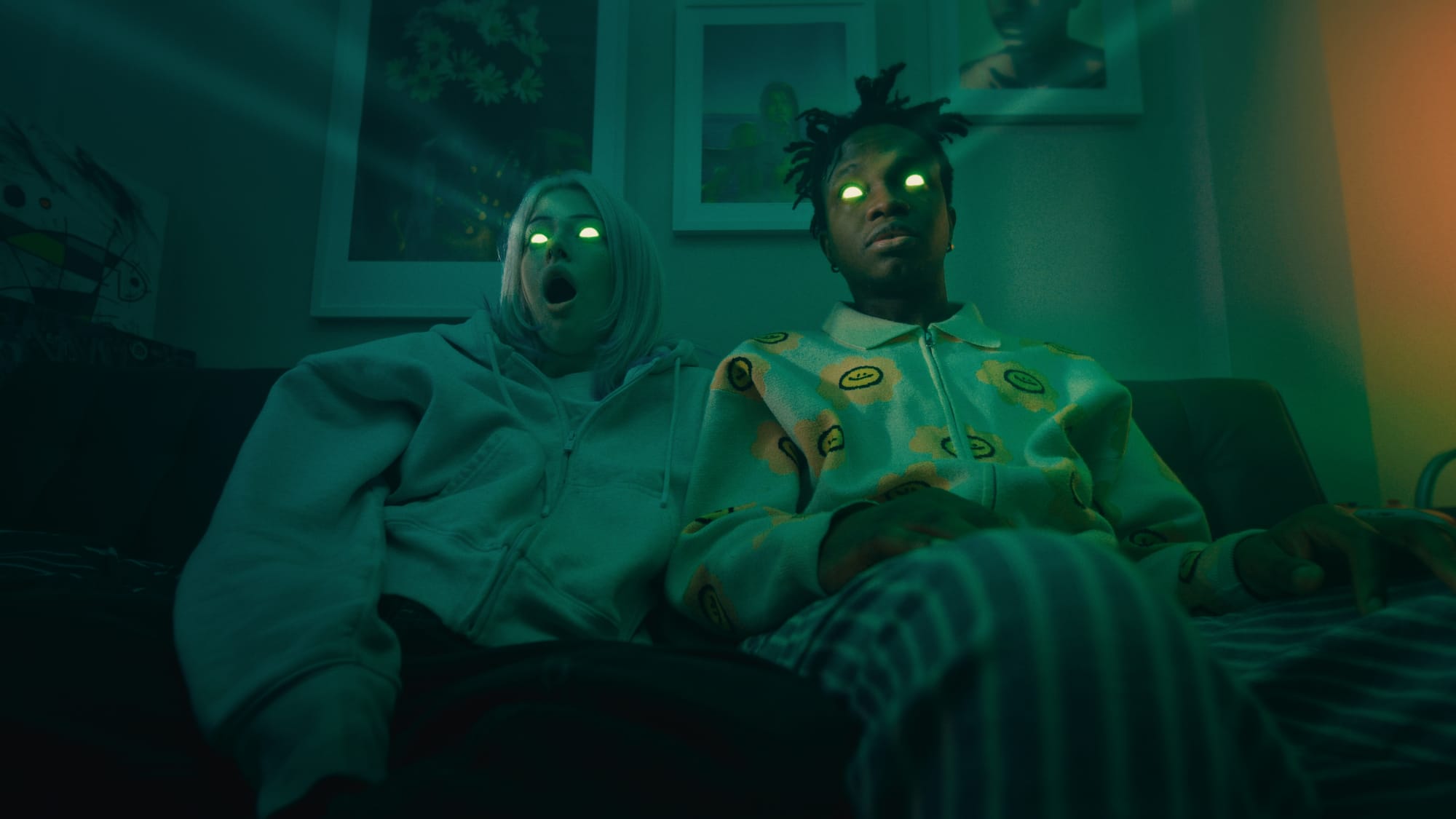
For the visual approach, I wanted to do something that felt like it was coming from the advertising world — wide lenses, camera rigged to stuff, but also shadows, and a colorful, intentional color palette.
I started this project as a "let's make something simple, silly, without trying to change the world, or being a snob filmmaker. Let's make something that works for festivals and that's it." After a few festival selections and comments, it's validating what we planned for, and I'm happy that people are responding way better than I expected. I even got a person reach out on my email telling me they loved the film, that they watched it at a festival and want to help out sharing it, even if it was a pay-per-view link or something.
What surprised you most about the filmmaking process, creatively or logistically?
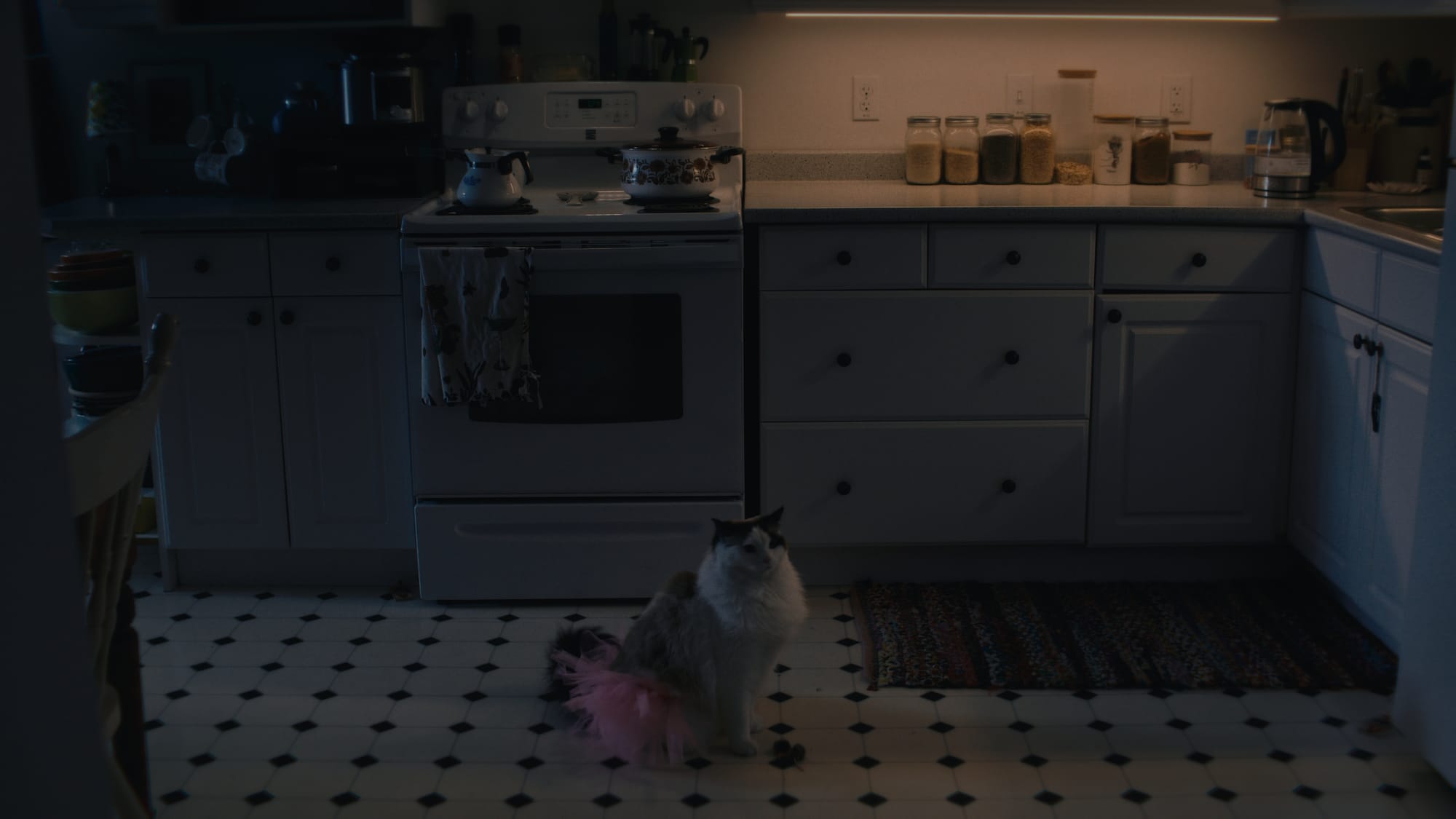
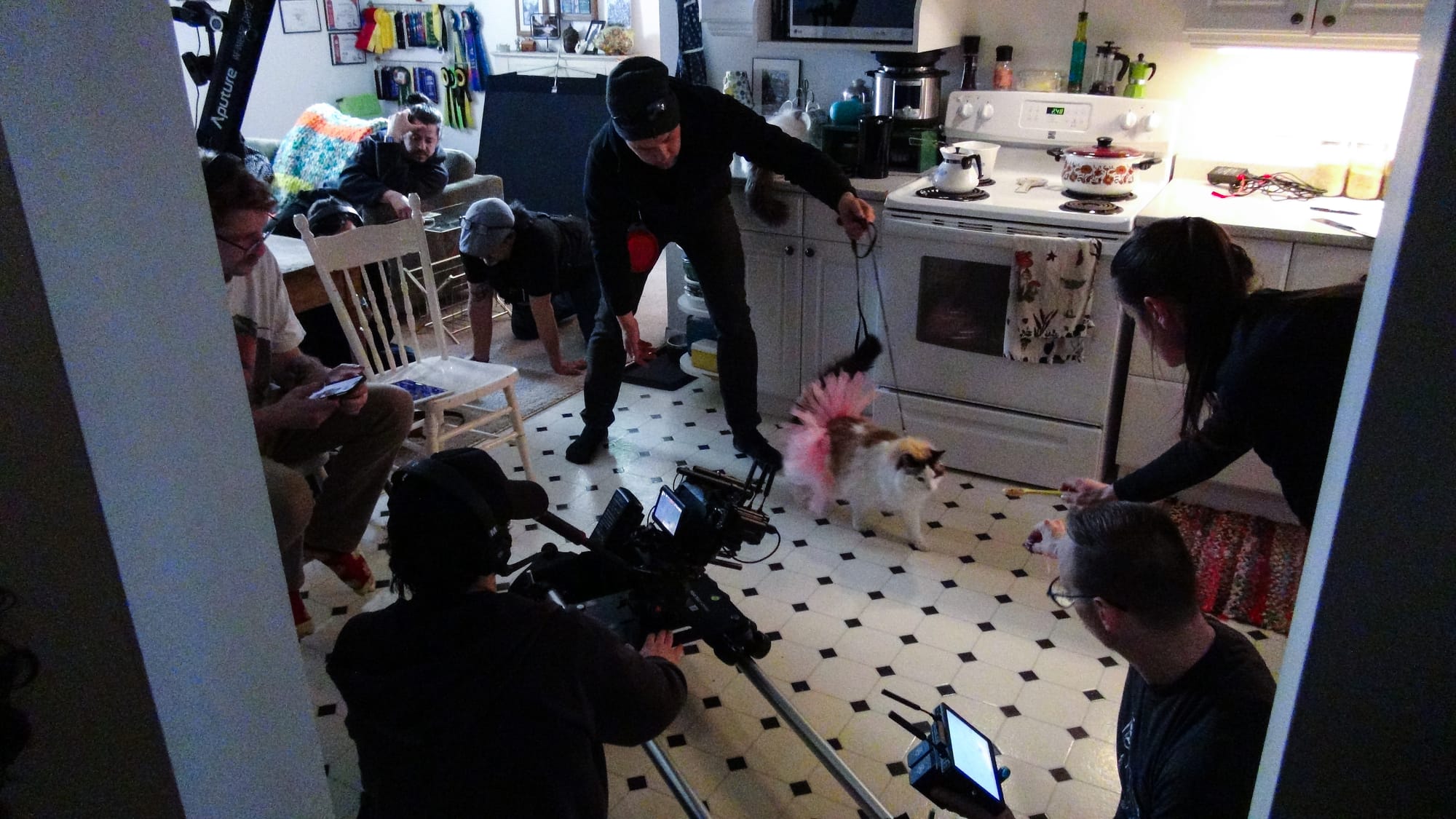
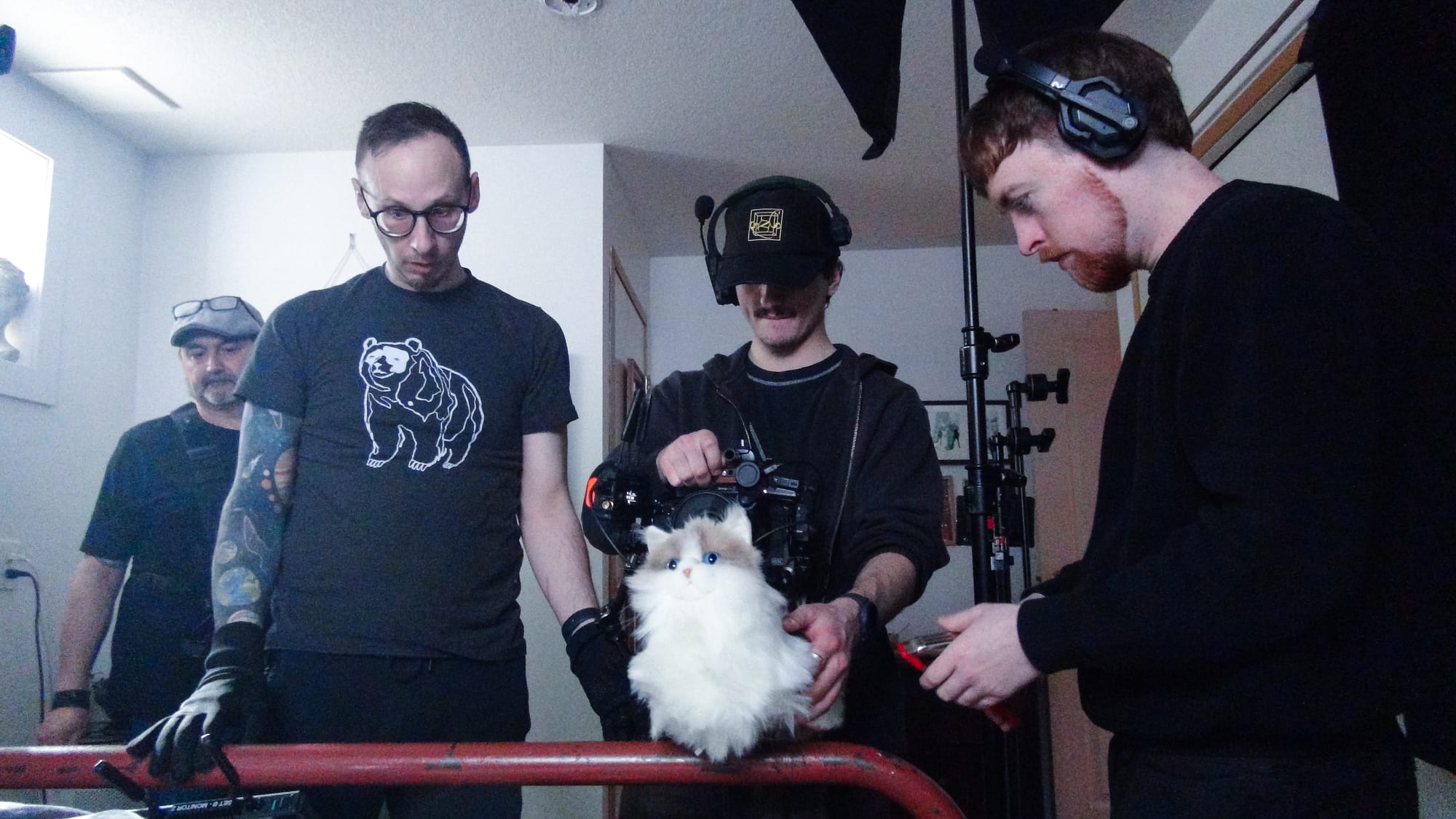
My favorite thing about doing this short is working with film-trained cats. When the story came about, I was like, "we will find cats for this film, how hard could it be?" Well, it turned out that only one company had trained cats, and I had to adapt the script to what trained cats could actually do: walk from A to B and stand in a spot. That's it. After adapting the script to that, we solved the rest with puppets and camera tricks, and I'm very proud of how both of them work together. Also, they were identical twin trained cats, so the wranglers were able to switch them whenever they weren't cooperating. We never noticed on set.
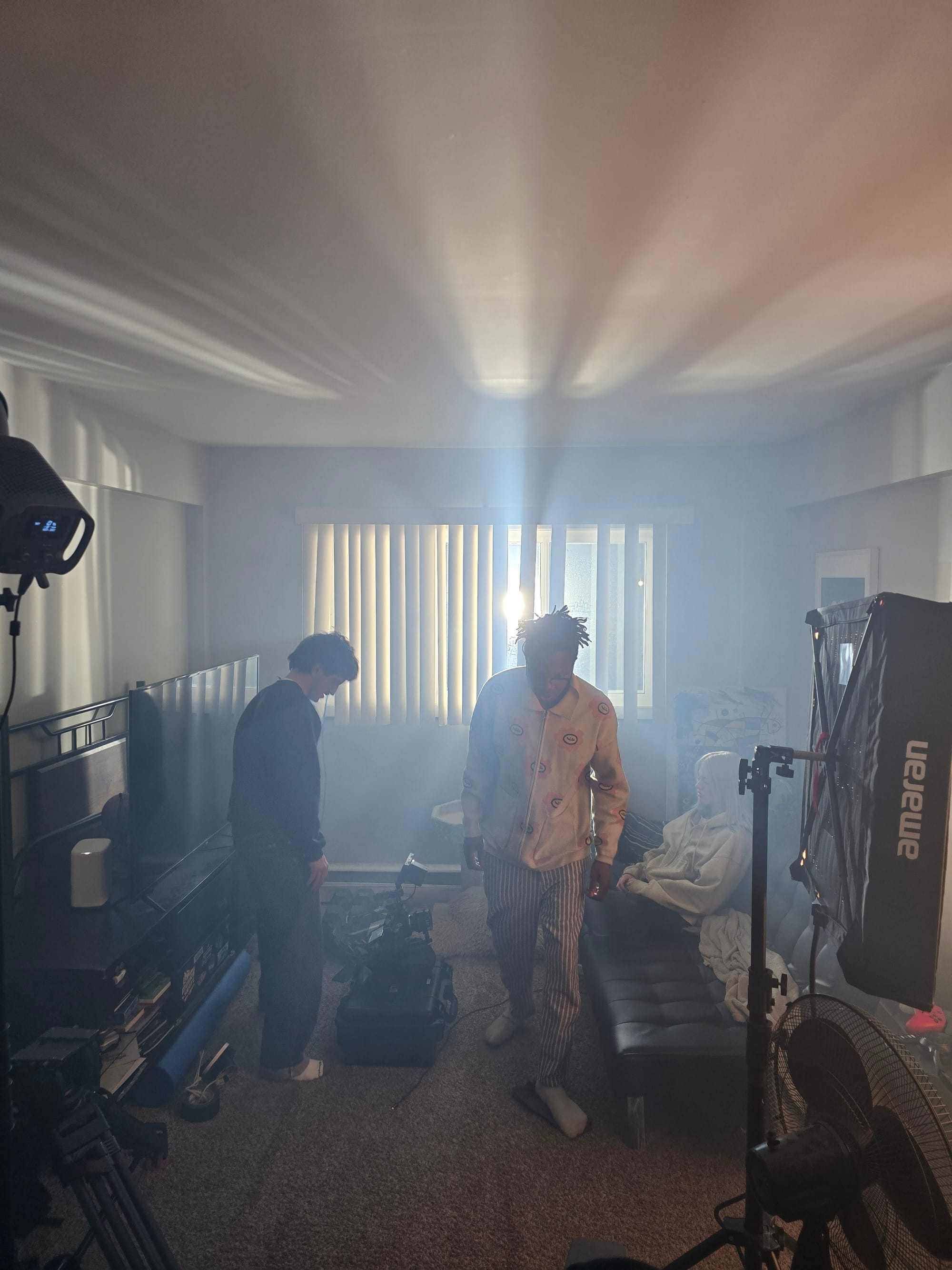
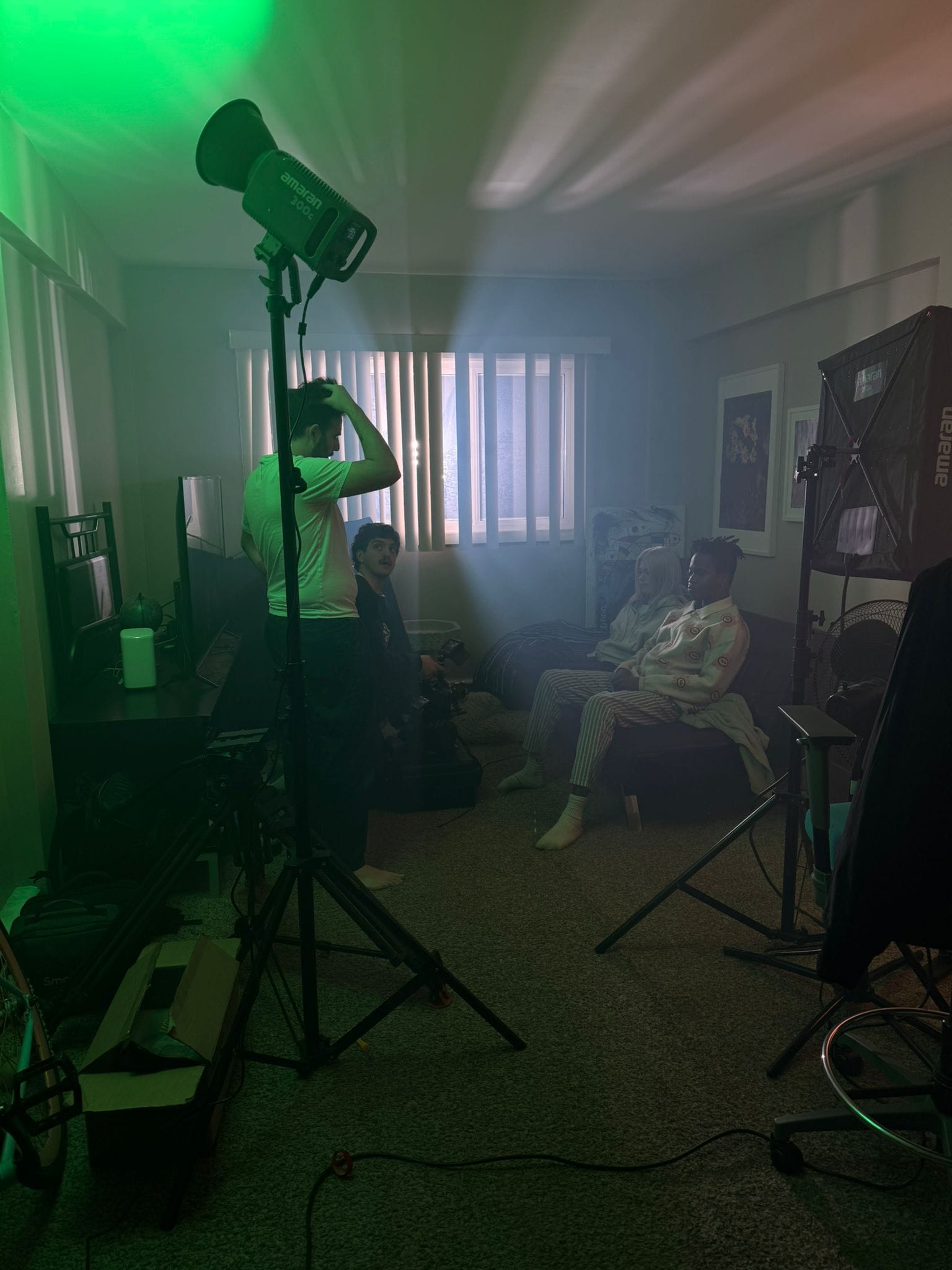
On the other hand, the most challenging thing was, as usual, that putting together a small-scale short film is hard. In this case, what I thought was going to be the hardest — the cats — wasn't. In reality it was finding a location that worked. We ended up shooting at the cinematographer's sister's place.
Thanks to this I gained a bit more experience working with live animals. I approached it by listening to the wranglers, their rules and logistics, and adapting that to our schedule. Ultimately what I take away from this is to listen FULLY to your team and figure out how to make things happen, instead of me trying to force how we are doing things. Also, the importance of planning. That will make or break a project.
What moment in the film feels most like you, or like something only you could have made?
I feel this project brings something back from my beginnings on the "Pizzagore Sundays" rituals — something funny, simple, with blood involved. I tend to be, or try to be, funny, but a few of my previous projects were leaning more toward the "serious" label, so I'm happy that this short reflects a bit of my personality in it.
What was the hardest creative decision you made while making the film?
Honestly, I approached this film with as much openness as I could, being flexible and adapting to whatever challenges we had. I spoke with the cat wranglers to know what I could do and expect from film-trained cats, and changed the script accordingly. I pulled in only people I trust, or people that we both wanted to work together with. I paid everyone evenly so everyone was on the same page. I knew that some things might change on the day, so all I could do was plan as much as possible, know what I need in the edit, and leave the rest to the film gods.
What tool, technique, resource, collaborator, or mindset shift helped most during production?
I've worked with puppets before, as well as CGI, but in this case I didn't have the budget to do the CGI, and didn't want to do the AI cat, so it was my first time working with live animals. From my previous experience with creatures, I knew I needed to listen to the pros — in this case the cat wranglers — as to what I can and can't do, and what to expect from the cats. Adapting the script to them, as well as the schedule, was great. The workflow on set worked, we got everything we needed, and it is great to see these cute cats in the short. (AND NOT AI.)
What is the greatest strength of independent filmmaking, and what lesson or breakthrough would you share with others?
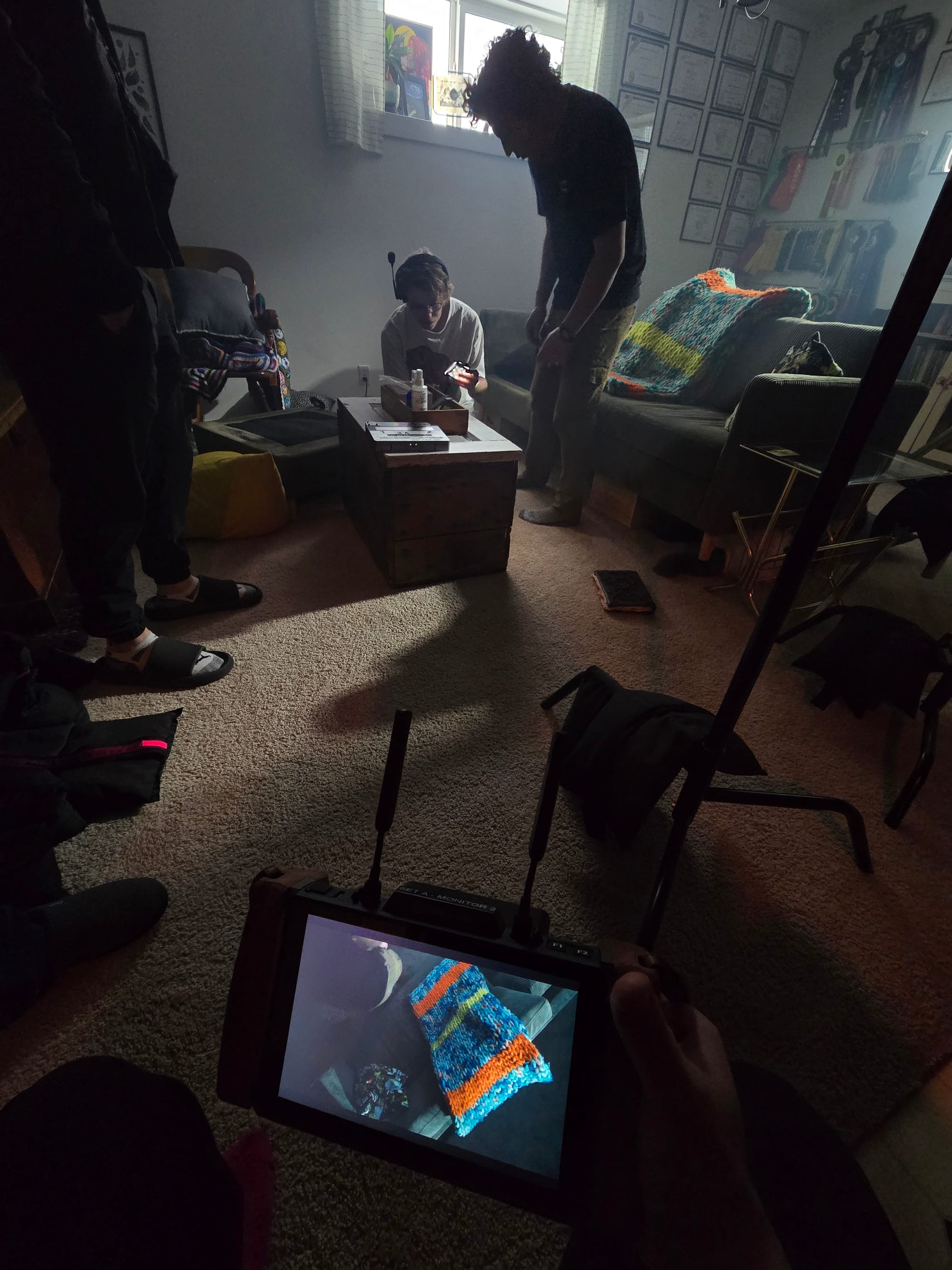
First: planning, planning, planning. Be ready for everything, and also be flexible enough to throw that out of the window to solve things on the day. One of the best teachings of independent filmmaking is to be adaptable, kill your ego, and not take stuff too seriously — and also, don't take yourself too seriously.
What does it mean to have your film selected for FilmQuest?
Honestly, when I finished the film and submitted to festivals, I wasn't too sure. You know, it always takes something else to validate what you have created. In this case it has been the best surprise ever. I was close to not submitting, just to manage my submission budget, but also downplaying myself with, "it's a big, strong festival, maybe not." So as soon as I got the notification email, I was ecstatic, and knew that I had to make my way there to the festival in person.
Where do you see this film going next?
I have a feature film treatment version of this story. At first I didn't have any intention to turn it into a feature, but after a few conversations, I do. I would love to make a silly feature film that follows the cat after the happenings of this short, and of course it will be gory and absurd, but also entertaining and visually stunning.
Some of my previous shorts were on the serious side. With this one, the goal has always been creating something fun, enjoyable, and focused on the experience of watching it as an audience. Focusing on the experience of watching is a great approach to making films — putting your audiences first. That is what I'll be thinking about for my next projects: what will it be like to watch this.
As for what he hopes people leave with: "For people to have a good time watching it, and to be respectful to their cats... you never know, they might be plotting against you."
Main Cast & Crew
- Karen — Sara Irwin
- Satanic cat — Peanut Butter & Jelly
- Story — Montserrat Zavala
- Screenplay — Adrian G. de la Peña
- Director & Producer — Adrian G. de la Peña
- Cinematographer — Owen Poffenroth
Adrian G. de la Peña is a Mexican film director based in Canada. His love for horror started by watching gore, zombies, beers, and pizza on "Pizzagore Sundays" (pretty original, isn't it?). A metal listener who still steps into mosh pits despite breaking a rib at an Opeth concert, he has over 15 years of experience working across narrative, documentary, and commercial production, and is the founder of the genre production company Machakiller.
Filmmaker Opportunities
💛 Fund your next project with fiscal sponsorship
Have a project in the works? As a 501(c)(3) nonprofit, the Cinematography for Actors Institute can accept tax-deductible donations on your film's behalf — a door-opener for grants, foundations, and supporters who want to back your work. We've serviced over 100 projects to date and helped route over $800,000 in funding to filmmakers. Explore fiscal sponsorship →
📬 Grant deadlines and festival opportunities, straight to your inbox
The CFA newsletter rounds up grants, festival calls, and community news for independent filmmakers — the kind of opportunities that are easy to miss and painful to miss. Join the newsletter →
🎬 Focus on the creative — we'll help with the logistics
Production Management, CFA's newest member program, launches this November: production insurance and workers' comp, payroll, film permits, gear rental coordination, SAG-AFTRA compliance, contract drafting, production consulting, and crew recommendations — handled by a team of working filmmakers, à la carte or all in, in partnership with Creative Access Group. It's waitlist-only until launch. Join the waitlist →
League of Filmmakers is published by our parent organization, the Cinematography for Actors Institute — a 501(c)(3) dedicated to education, community, and capital for underrepresented filmmakers and actors. Learn more about CFA →