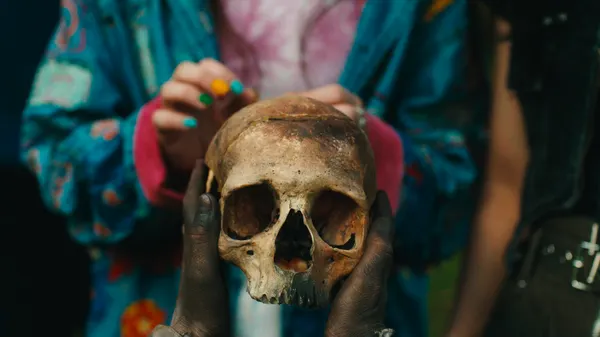
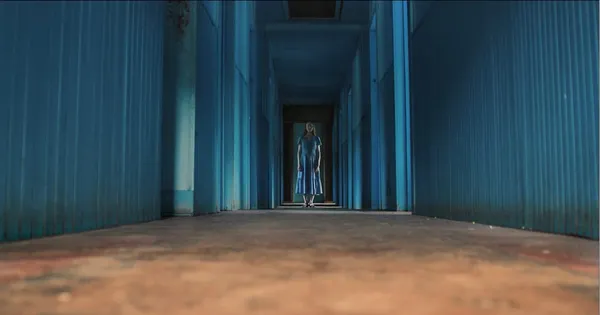
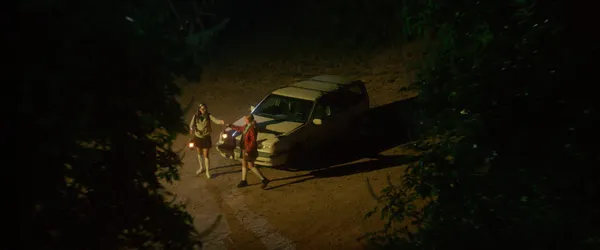
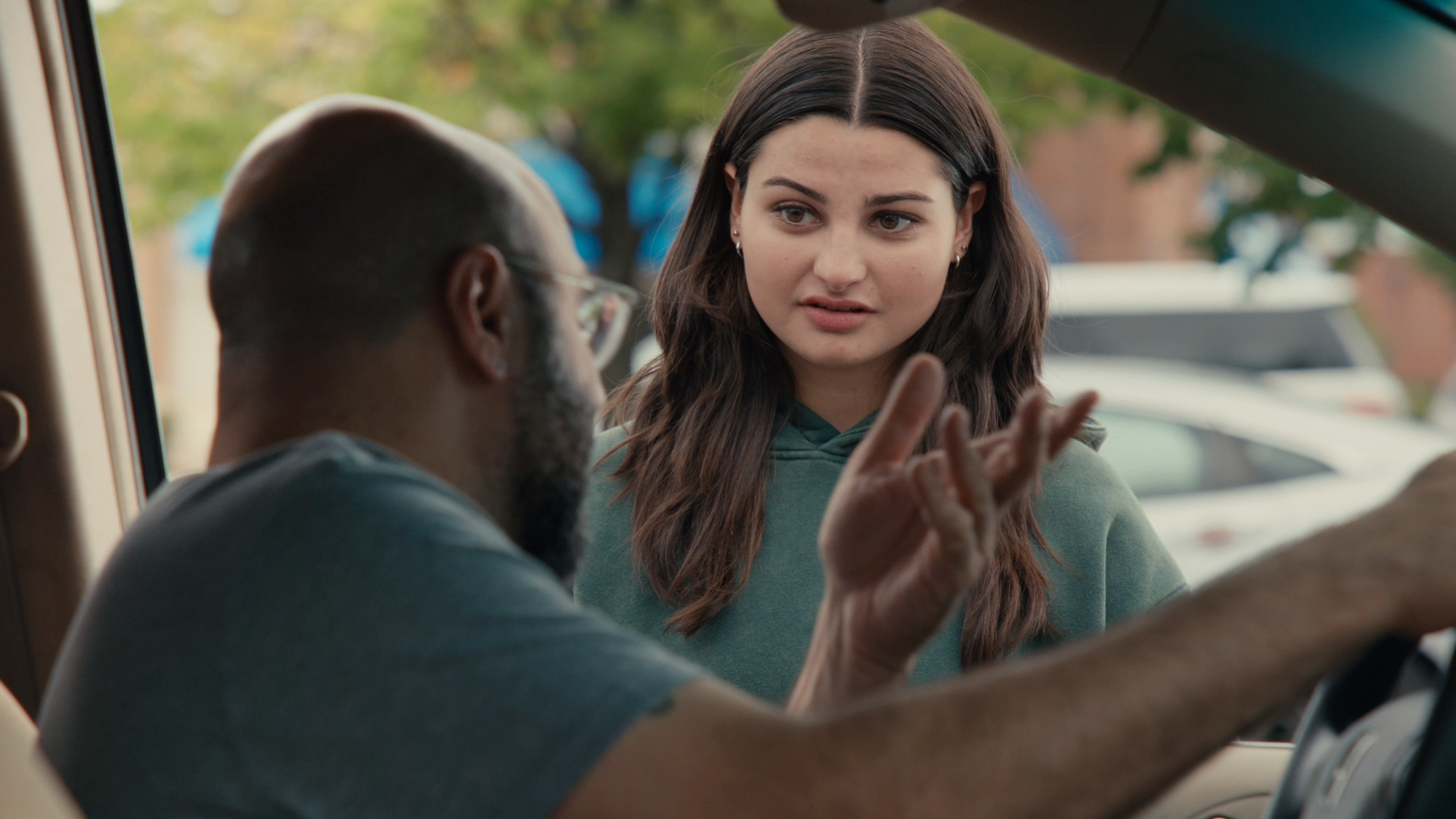
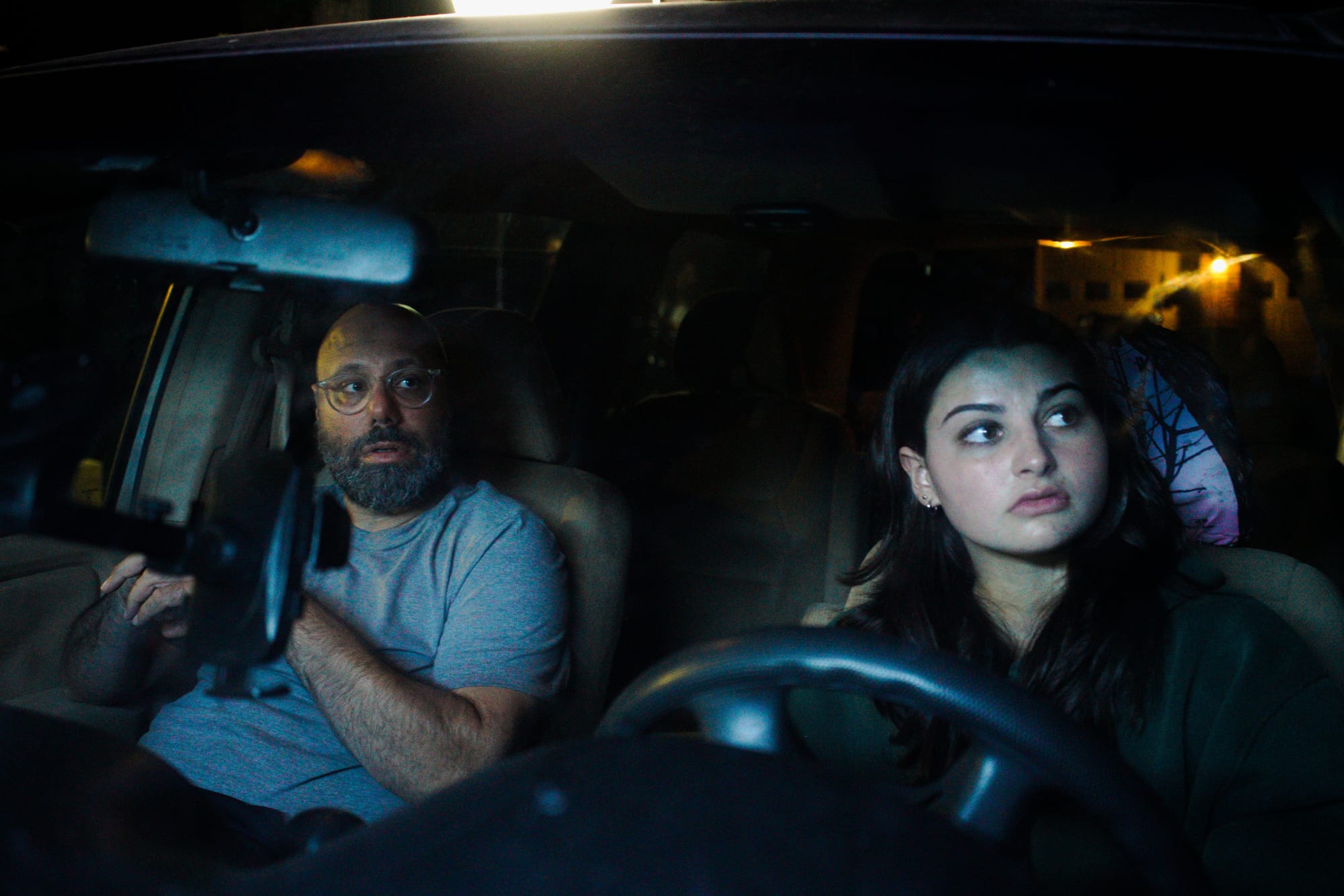
Sara is sharp, determined, and fifteen, and she spends the day riding shotgun in an aging minivan while her dad runs food deliveries around the city. The last order takes them far outside town, to a mansion with a long driveway. Sara waits. And waits. Then she goes in. The Shift, Joey Long's first film as a director, starts in the easy rhythm of a father and daughter killing time between stops and ends somewhere much colder.
Long built the film out of two sets of memories separated by twenty years: riding along on his mother's house-cleaning jobs as a seven-year-old, staring up at houses that looked like monoliths, and driving Uber Eats in Los Angeles as an adult, deep into gated neighborhoods and dark alleys at two in the morning with the same thought surfacing. The result is a horror short with a clear economic spine — convenience as a luxury on one end, and a genuine risk on the other.
Key Takeaways
- The Shift came directly from Long's years as a food delivery driver in LA and his childhood waiting in the car outside the houses his mother cleaned.
- Shooting in Northern Virginia instead of Los Angeles cost nothing in locations and cut the budget roughly in half.
- Long rewrote the film's climax overnight between shoot days, then shot it on zero sleep.
Long spoke with us about imagination as a survival instinct, the shots he didn't know he needed until the edit, and why he's telling his LA friends to go home and make something.
Interview
What drew you to make this film, and why this story, why now?
When I was seven years old, my mom worked as a house cleaner. Divorced and buried in debt, she couldn't afford a babysitter, so I would accompany her on jobs, often staying in the car while she worked. To me, the houses always seemed enormous — alien, even — mysterious monoliths that could hide anything within their walls. Our townhome was small, and so was I, so every place she cleaned felt like a mega-mansion to me. Once in a while, my mom would take longer than expected to come outside, and I'd find myself staring at these towering structures, wondering if something strange and horrible had happened inside. My imagination, always active, would spiral.
Fast forward two decades. I'm working as an Uber Eats driver in Los Angeles, chasing my dreams. The job was tolerable, even preferable to driving passengers, but late-night deliveries often brought back those old feelings. The app would send me past gates, down long driveways, into maze-like apartment complexes, through dark alleyways, and across people's yards. Those moments, venturing deep into unfamiliar territory, left me feeling vulnerable. That old imagination would fire up like a vintage car engine, and the same thought would cross my mind: if someone wanted to kidnap me right now, they could. The Shift is a deeply personal exploration of these experiences, viewed through the eyes of a young girl and her father.
At its core, the film examines the stark imbalance of stakes between the wealthy, for whom convenience is a luxury, and the working class, for whom providing it can be a precarious, even dangerous, act. It's a story that juxtaposes innocence and horror, warmth and dread, to explore the human cost of systemic inequality. In a world where revolutionaries talk about "eating the rich," The Shift turns the phrase on its head to reveal a grim reality: the rich are eating us.
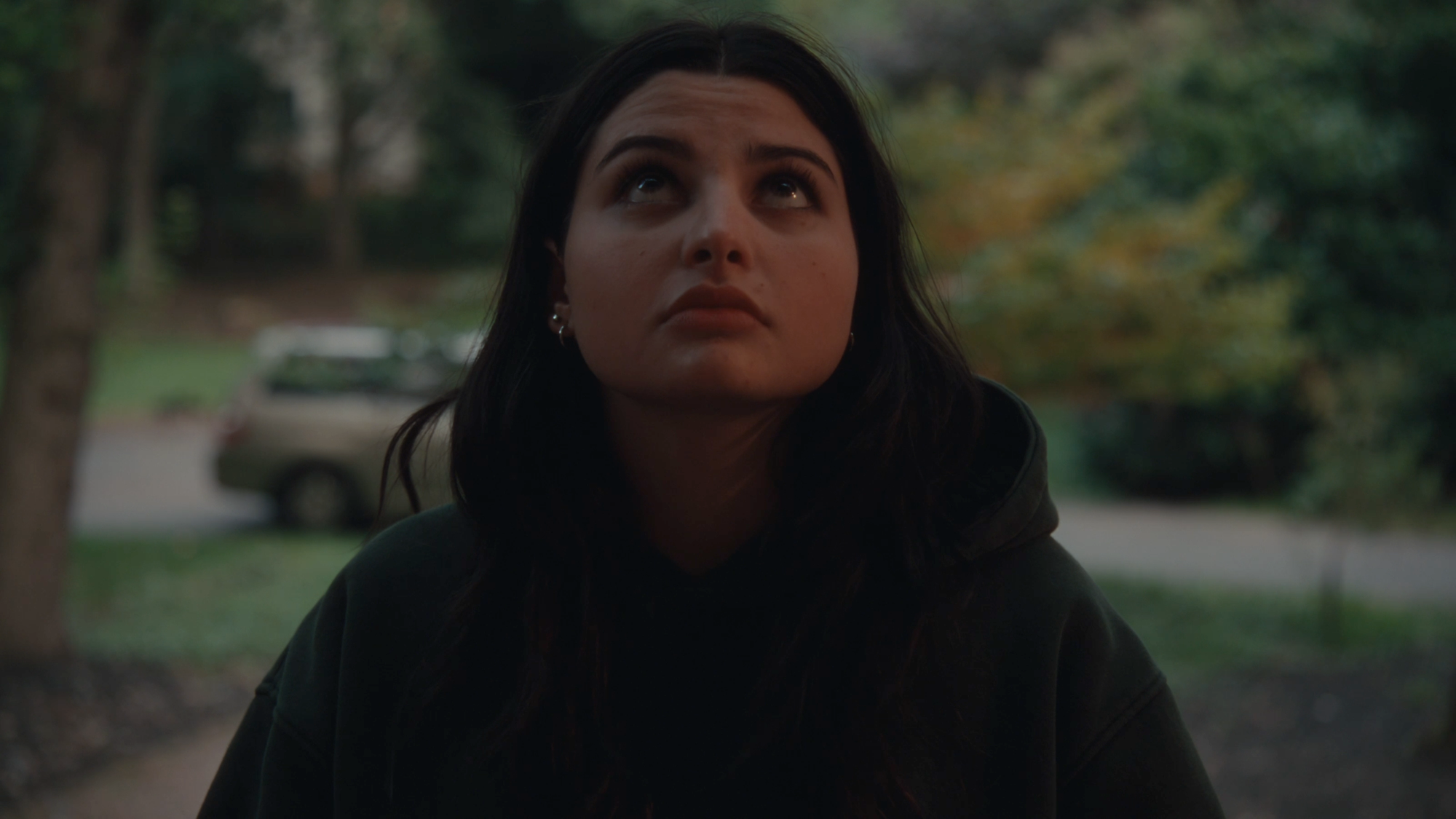
What surprised you most about the filmmaking process, creatively or logistically?
Before filming, I thought I was prepared.
When reviewing the footage in the edit, I couldn't believe how many "must have" moments we didn't capture. Things as small as an actor's eye-line, or how long we needed to hold on them after they said a particular line, or an angle of the scene we needed to film from, or a million other microscopic details.
The story is told visually, and it isn't enough to tell your cinematographer "this happens." You need to understand how exactly it will read on screen, and how it will cut into the following shot.
This is obvious to anyone who has made a movie before, but despite producing, writing, and acting in over a dozen films, I never had to face this reality until now. Being the director, no one is going to check your work. If you say it's good to go, people will believe you, even if you're wrong. Next time I will be storyboarding, and I will 100% have a script supervisor on set.
What moment in the film feels most like you, or like something only you could have made?
The opening sequence, a commercial for the food delivery service, is dripping with my voice, for better or worse. Hell, I even cast myself as the idiot in the ad, did the voiceover myself, and shot it on my iPhone.
What was the hardest creative decision you made while making the film?
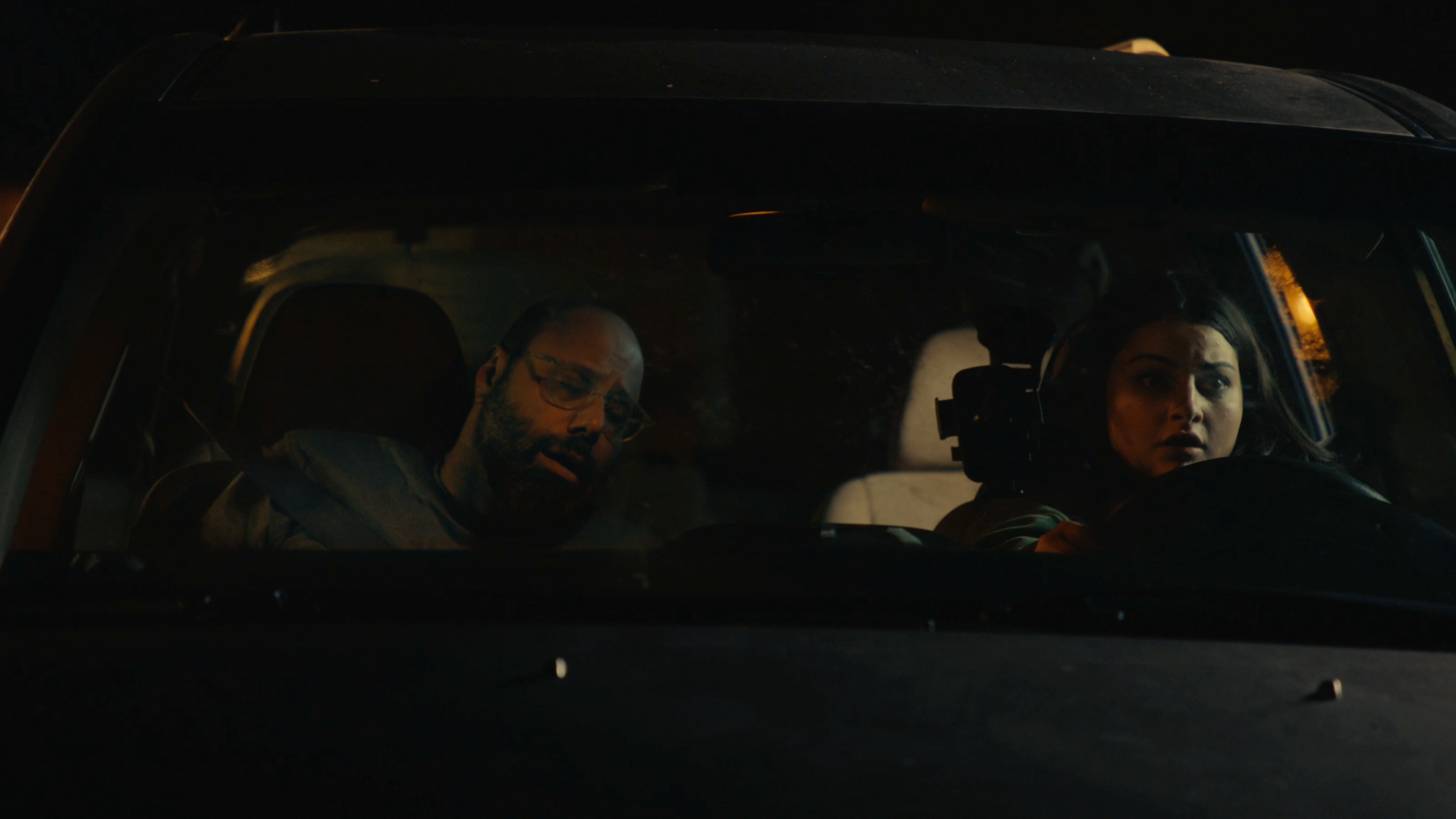
I needed to stay up all night between day one and day two of shooting to rewrite our script. So our two shoot days were really one long shoot day for me. I needed to do this because we were short on time, and unfortunately the scene I had to rewrite was the climax.
I am torn, because in retrospect I wish I'd moved mountains to get the original sequence I wanted. That being said, I'd be insane to feel anything other than gratitude for the utter miracle of finishing this film on time and on budget considering the circumstances. The fact that I was able to rewrite everything at 4am after a full day of shooting, then walk onto set and capture it on zero sleep? Completely insane, and a testament to the heroics of my producers Ashley George and Nik Dodani, my DP Frankie Turiano, and my AD Maya Elby.
What tool, technique, resource, collaborator, or mindset shift helped most during production?
Mindset shift, you say? (Sorry.)
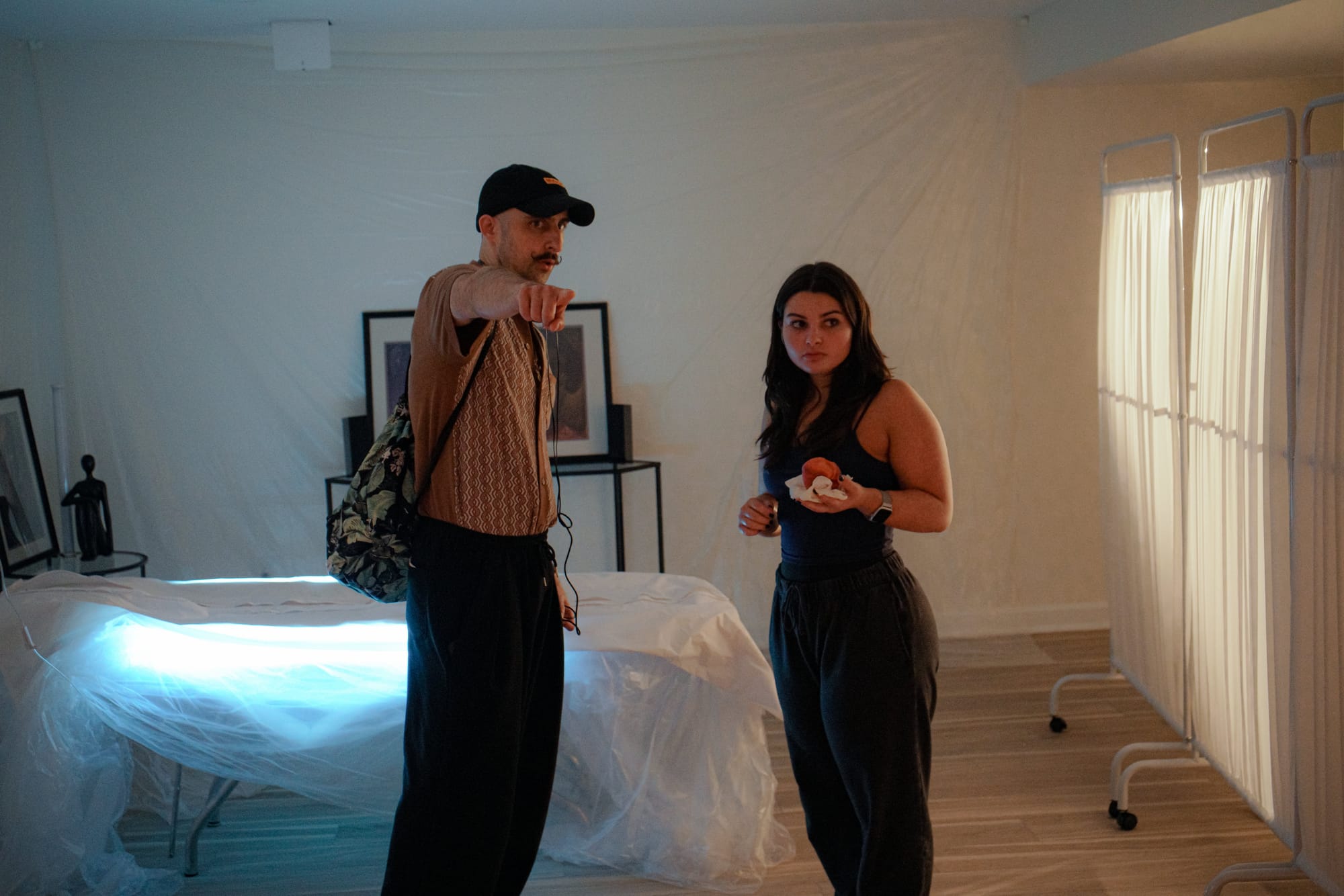
Nothing carried me more than my producer Ashley George. It would be sacrilegious to answer this any other way. She was the glue, the foundation, the judge, jury and executioner. She cleared the way so I could focus on directing. Can't possibly thank her enough.
What is the greatest strength of independent filmmaking, and how did you lean into it here?
In 2023 I basically ran out of money and had to leave LA after having lived there for 11 years. For a long time, this felt like a mortal wound to my filmmaking career.
However, I found that shooting this project in Northern Virginia likely shaved off half the budget I would've needed to make it in LA. We paid $0 for locations. Zero dollars.
Sure, we needed to fly in some cast and crew, but every single local I asked for help on this project said yes enthusiastically. People around here are thrilled to be involved in a movie, and they'll happily lend you whatever they can to get a special thanks. In LA it costs $10k a day just to breathe (and not just because of the smog).
So for this reason I encourage all my LA filmmaking friends to go back to their hometowns and shoot a movie there. If they're from LA originally, close your eyes and throw a dart at a map of the USA. You'd be amazed at what's possible when you leave the bubble.
How has this film shifted the kinds of stories you want to tell next, and what do you hope audiences take from it?
Shifted, you say?
In editing The Shift, I realized how much of the story is told through plot development and action. For my next project, I would love to tell the story more through the eyes of the actors. Let their emotional journey carry the film.
As for the audience, I just hope they feel something. Anything. If I can spark even a single twitch of engagement between the viewer and the film on my very first outing as director, I feel good about my chances building on that foundation, and hopefully making great feature films down the line. At the core of all my work is a desire to connect. Human to human. We are ONE! FIGHT THE MACHINES! (As the asylum nurses tackle me and inject a syringe into my neck.)
What does it mean to have your film selected for FilmQuest, and where is the film going next?
Everything. This festival rules. I wouldn't miss it for the world. After this, FOGFest in Canada, then Yonkers Film Festival in New York.
Main Cast & Crew
- Joey Long — writer, director
- Ashley George — producer
- Nik Dodani — producer
- Dave Merheje — actor
- Gigi Elbitar — actor
- Caleb Wells — actor
- Rachel England — hair/makeup/SFX
- Gwen Brodsky — PA
Filmmaker Opportunities
💛 Fund your next project with fiscal sponsorship
Have a project in the works? As a 501(c)(3) nonprofit, the Cinematography for Actors Institute can accept tax-deductible donations on your film's behalf — a door-opener for grants, foundations, and supporters who want to back your work. We've serviced over 100 projects to date and helped route over $800,000 in funding to filmmakers. Explore fiscal sponsorship →
📬 Grant deadlines and festival opportunities, straight to your inbox
The CFA newsletter rounds up grants, festival calls, and community news for independent filmmakers — the kind of opportunities that are easy to miss and painful to miss. Join the newsletter →
🎬 Focus on the creative — we'll help with the logistics
Production Management, CFA's newest member program, launches this November: production insurance and workers' comp, payroll, film permits, gear rental coordination, SAG-AFTRA compliance, contract drafting, production consulting, and crew recommendations — handled by a team of working filmmakers, à la carte or all in, in partnership with Creative Access Group. It's waitlist-only until launch. Join the waitlist →
League of Filmmakers is published by our parent organization, the Cinematography for Actors Institute — a 501(c)(3) dedicated to education, community, and capital for underrepresented filmmakers and actors. Learn more about CFA →