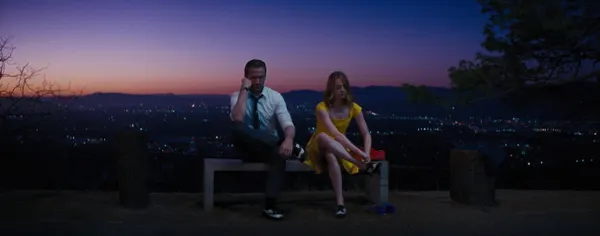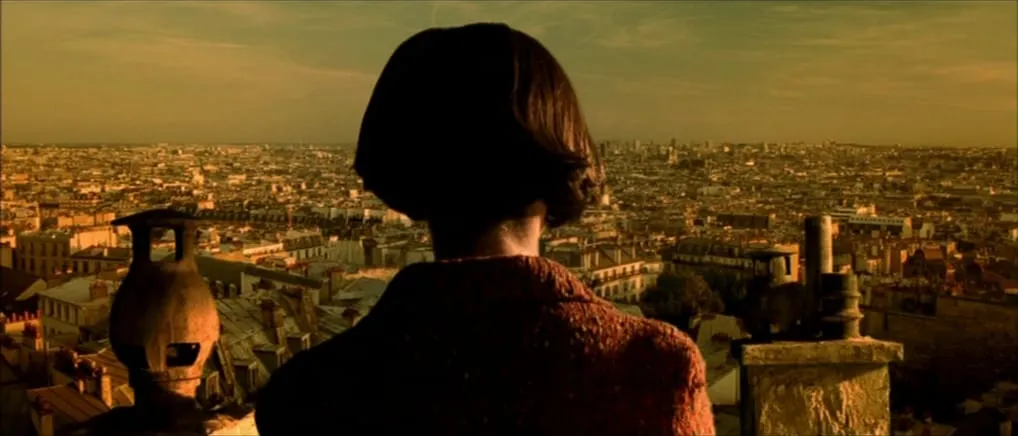
I recently read “The Lonely City” by Olivia Laing, a poignant book that explores different representations of loneliness in famous works of art. We often talk about loneliness in the digital age, with people immersed in online connection rather than in-person connection, but it exists in every generation. I was inspired by Laing’s book to explore representations of loneliness in film, as I think the visual medium can portray the nuances and contradictions of loneliness in a unique way. Although it pervades many films, I chose four that capture the emotion in distinctive ways, representing the pain, hope, and melancholy that come with it. Often, the reminder that others are going through a similar struggle can make us feel a little less alone. Hopefully, those experiencing loneliness currently will find solace in these recommendations!
The Bitter Tears of Petra von Kant (1972) Dir. by Rainer Werner Fassbinder
Entirely set in one room of an artsy apartment, The Bitter Tears of Petra von Kant features an all-woman cast and explores the unraveling of the arrogant fashion designer Petra von Kant. Petra lives with her loyal maid, Marlene, and has recently gone through a divorce. As she explains to her cousin, “Sometimes there was a coldness, you could feel it. Look, you’re with someone in a car or in a room, and you want to say something, but you’re afraid. You want to be affectionate, but again you're afraid. You're afraid of losing points, of being the weaker one.” Her inability to connect with her husband and broader refusal to let her guard down have made her lonely, which becomes evident when she meets the beautiful, young Karin, with whom she quickly falls in love. Her cool exterior shatters in this vulnerability, revealing a desperation for companionship. Despite her desire for company, she mistreats Marlene and keeps her family at a distance. The film, while ending on an ambiguously hopeful note, is tragic, demonstrating the loneliness caused by Petra’s desire to control and maintain her public perception.
Vive L’amour (1997) Dir. by Tsai Ming-liang
Vive L’amour tells the story of three lonely young people living in Taiwan. May is a real estate agent who brings a lover, Ah-jung, back to an empty apartment that she has been unable to sell. Unknown to May, Ah-jung takes her keys and moves in. However, both of them are unaware of a third person there, Hsiao-kang, a salesman struggling with depression. Despite the characters' proximity and mutual loneliness, their struggles are experienced alone. When they cross paths and companionship is shared, they never truly open up to one another, with their desires for connection demonstrated subtly or going unnoticed altogether. The dialogue is sparse, and the camerawork is simple, often remaining still while the characters move around in the unfurnished apartment or alone in the busy city. Sometimes the camera will linger on the characters for an uncomfortably long time, giving the effect that we, the viewers, are intruding on their solitude. It’s a quietly heartbreaking film that doesn’t find a resolution. Although we never hear the characters' internal monologue, we understand them through their loneliness; they become fully realized through their subtle gestures towards connection.
Amélie (2001) Dir. by Jean-Pierre Jeunet
Amélie is a two-hour whirlwind of color, fast paced editing, and an idiosyncratic set of characters. The film centers around Amélie Poulain, a shy young woman who has experienced loneliness since her youth as a homeschooled only child. Amélie’s days are mostly spent working at a diner, but everything changes when she accidentally finds an old box, left by a child who lived in her apartment decades prior. She decides to track down the owner of the box, setting a chain of events in motion that brings her closer to her neighbors. Amélie realizes that she finds joy in making other people’s lives better, which she does slyly (and often intrusively). As the film progresses, Amélie begins to step out of her shell with help from those around her. Loneliness is prevalent among the characters in this film: elderly neighbors who don’t leave their apartments, people mourning their lost loved ones, and grocers belittled by their ableist bosses. But the movie highlights how far small acts of kindness can go, with companionship found in brief but significant moments of connection.
Old Joy (2006) Dir. by Kelly Reichardt
An understated but moving film, Old Joy tells the story of two friends reconnecting on a road trip through Oregon. Kurt is a free spirit, while Mark has married and settled down. While they share a fond history, the trip confirms that their friendship will never be the same, with the two men struggling to connect in the way that they used to. Reichardt portrays this dynamic through long silences, awkward physical contact, and short conversations, highlighting the loneliness felt, particularly by Kurt, in the lack of connection. “Sorrow is nothing but worn-out joy,” Kurt remarks, a moment that I have found to stick with me. There is a melancholic acceptance of this loss throughout the film—maybe fond memories of relationships past can be enough to sustain us if we are fortunate enough to experience them.