Table of Contents
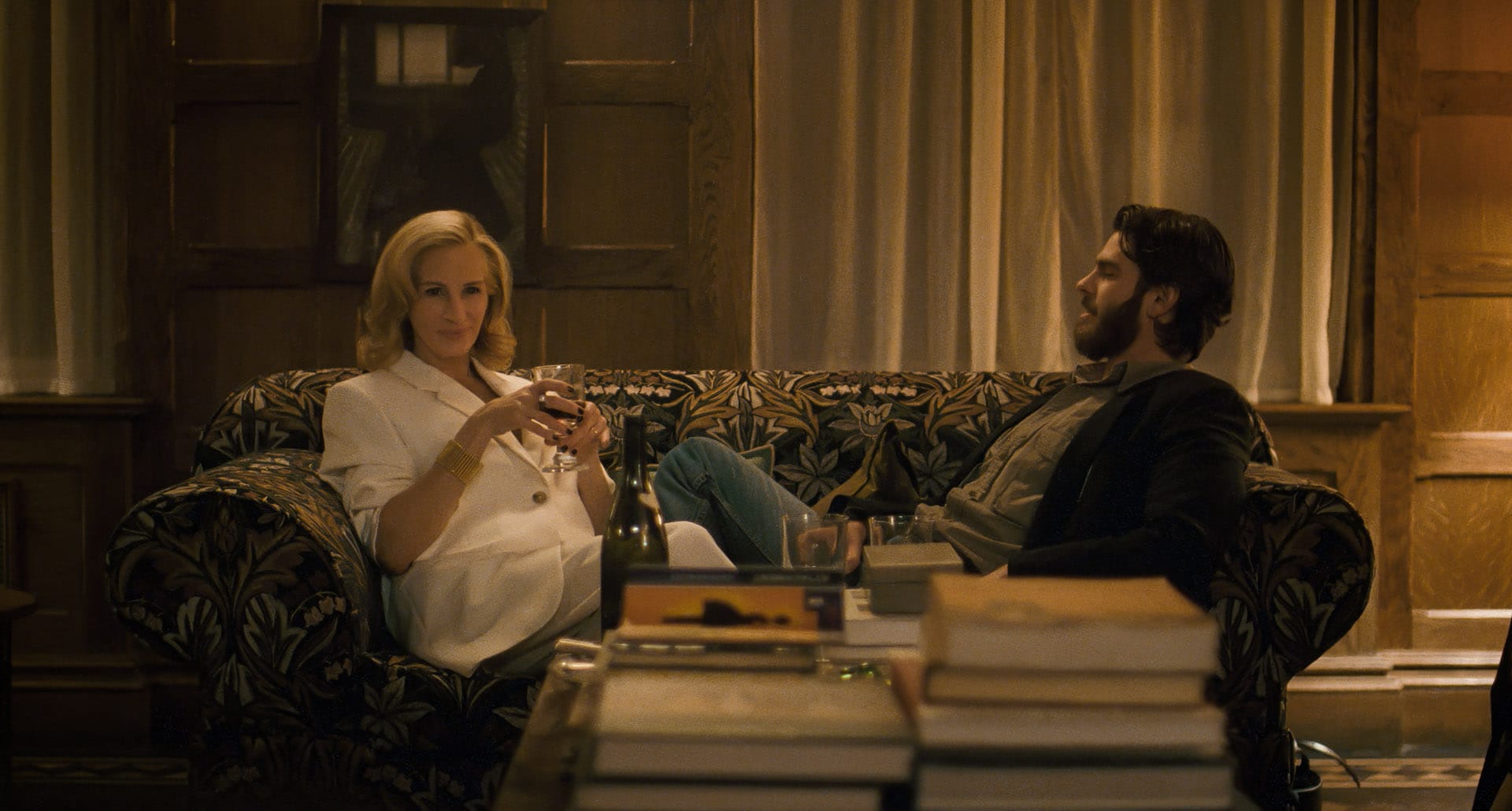
After The Hunt is a film directed by Luca Guadognino and written by Nora Garrett which stars Julia Roberts, Andrew Garfield, and Ayo Edebiri. The story is a journey to unfolding the truth of a sexual assault accusation that occurs between a student and a colleague. The film begins with a beautifully illuminated dinner hosted by Julia Robert's character, Alma, and her onscreen husband Frederik, played by Michael Stuhlbarg, with conversations touching on multiple concepts within philosophy. We quickly learn the real conversations are happening within body language. Luca sets the stage very early, urging the audience to pay attention to the blatant body language of each character. We see a very comfortable Henrik, played by Andrew Garfield, an enthralled Alma, who's at ease with Henrik's extreme level of comfortability in her home. Henrik's shoes are off, his feet planted on the couch as he contributes largely to the conversation being had with other guests – a conversation he deems to be very deep. Alma is fully engaged with Hank as he speaks, slowly finding her way closer to him, and following his lead by moving when he moves. Maggie, who is played by Ayo Edebiri, sits in close proximity to Hank, also largely contributing with playful banter, before Alma breaks the tension of the physical rhetoric between them. All of this unfolds while Alma's husband observes Hank's spread eagle position towards Maggie and Alma – deciphering the unspoken discourse between them before reporting back to Alma on what it all means as the dinner comes to an end. Luca's opening sequence foretells the puzzling storyline and dynamic of all four characters for the rest of the film.
STORY: 5/10
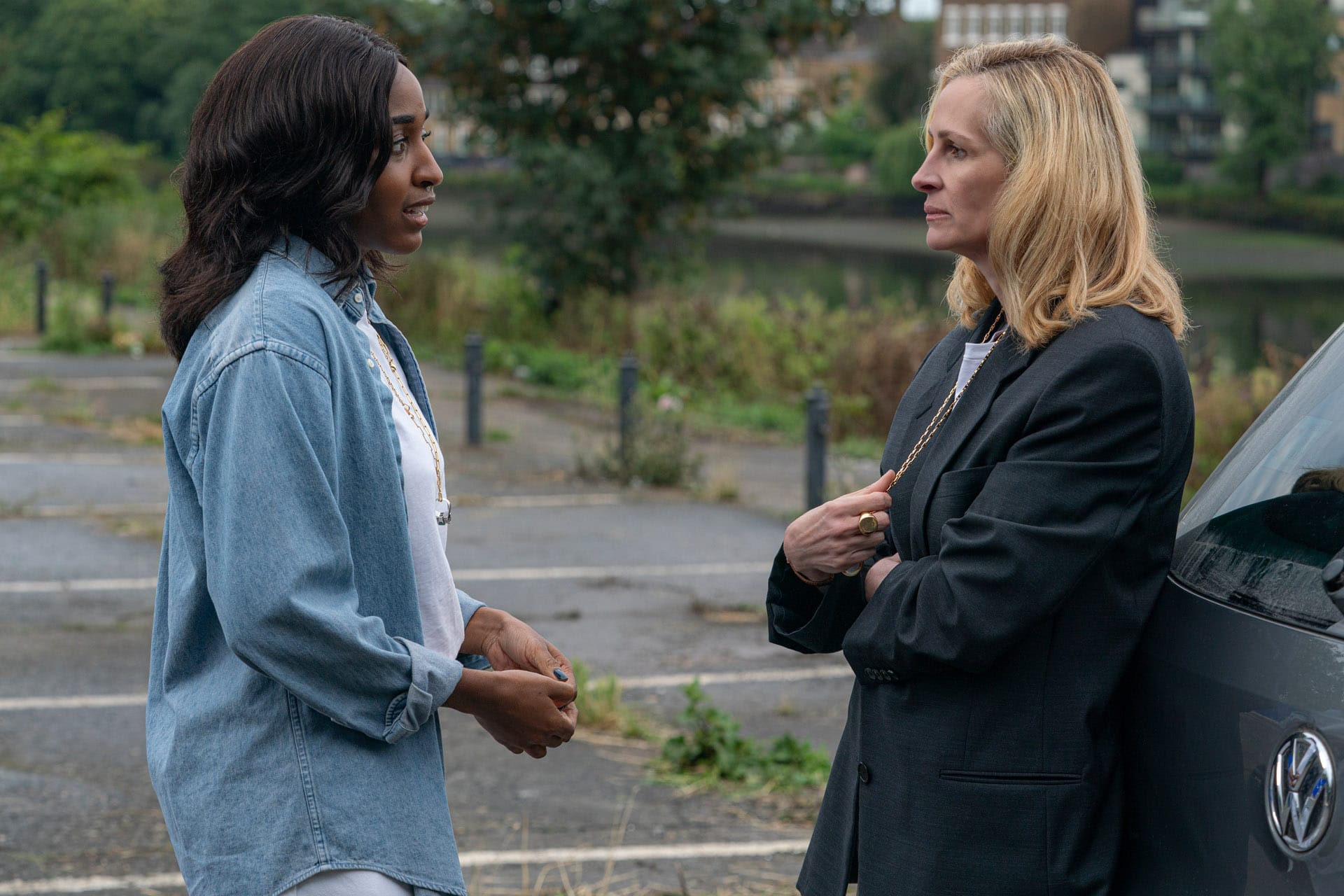
The inciting incident is the sexual assault that occurs shortly after the dinner, though not portrayed. While I do believe the main plot of the film is genuinely interesting – trying to crack who's story is true, while depicting how race, class, gender and sociocultural factors impact who's trauma is deemed valid – the story does begin to breakdown when subsidiary stories are introduced. One such example of this is Frederik's unprovoked deep hatred of Maggie (but not Hank, who kisses his wife in front of him). Another is Alma's pill addiction, reluctancy to visit a doctor, and her past. None of these side stories seem to fuel the original plot, and it seems as if we never really return to our starting place. The film then uses the now distant plot of the film to make critiques about cancel culture, the #MeToo movement, and protestors.
The film does end with Alma, interestingly, figuring out the truth. Alma almost gets assaulted by Hank, another confusing point given the fact they've had sex many times in the past. It begs the question, why did she just now realize he doesn't respect the word "no"? By that point it becomes unclear what the director, writer, and spectating camera wants us to know or what the take away message would be. There were a lot of shots of hands from each character, and what those hands were doing, with no payoff whatsoever in terms of what it all means. The original set up of the story was, to me, crafted nicely. Having a philosophical educational background of the characters originally made sense in helping us to try and solve the mystery of who's telling the truth, but it seemed to have just been ammo to push back on those who protest against silent dealings of trauma caused by superiors. I think overall for me, the story did not make any sense. To top it all off, the final scene of the film was a random long take of a $20 bill that served no point to the story, and then we hear Luca say "cut" before credits begin to roll. I honestly don't see this film getting nominated for the story.
DIRECTING: 8.5/10
Although the story falls short, I did really enjoy the directing of this film. Guadognino has a way of depicting his characters. Though it's not too present with Challengers, there seems to be a directing style of observing characters in a lounge state. As though splendor is illustrated through the lens of being. The meals Fredik will cook, when Alma goes to rest in Frederik's study, the diegetic music that plays through the home, the level of comfort Hank feels when he is in their home. The set they used for the home was a bit narrow, and Luca makes sure to portray that narrowness with his shots, but instead of feeling cramped and stuck, there was a nostalgic feel to it. As if the narrow walls were a giant hug. I too felt like Hank, I felt a sense of comfort when scenes occurred within the home. Unironically enough, Alma didn't seem to enjoy the home, allowing the narrow view of the home, maybe unintentionally, to serve two purposes.
Other auteurist shots, such as the close shots of hands were not my favorites, especially after a few of them occurred. I did enjoy the facial medium shots of characters such as Maggie. I think seeing her full frontal helped me find a way back to the story, to emphasize that this character is genuinely going through a hard time and isn't playing mind games with her professor, someone whom she actually admired. The home shots were my favorite to watch, especially the nicely lit dinner party. These scenes gave a chance for exploration of beautiful shots, lighting, and total mise-en-scène. I do wonder about Maggie being separated in that sole chair while everyone sat together on multiple couches and what the director wanted us to take from that blocking. Could it be a message of economic status, given that Maggie was richer than everyone combined at the dinner, or was it her race that was at play? I do think there is some possibility of directing nominations. I'm a bit wary of an Academy nomination for directing, but I think perhaps a Golden Globe, SAG or even a DGA nomination would suffice.
EDITING: 6/10
There was a good rhythm to the editing. Some of the close up frontal shots on the characters were enjoyable. I easily fell into the story world, wanting to hear from both Maggie and Hank as they try to persuade everyone of their truths. My favorite moment is when Maggie and Alma are outside – Alma much like a bomb that has gone off by this point – and she crushes Maggie's admiration towards Alma. The frontal shot of the emotional complexity Maggie was feeling in that moment really was chef's kiss. I'm not sure if it's something award winning especially with Sinners also being an award contender. From the beginning of the film, close up shots of hands were depicted but it fell through by the time we got the last close up shot of the $20 bill. There didn't really seem to be a point made with the hands, especially with having the frontal close ups.
ACTING: 6.5/10
The story starts off extremely captivating. These actors are deep in conversation. However, the captivating world that these actors capture us in quickly dissolves, along with the story. I think unfortunately certain performances were not captured in their entirety. Instead, there were more close up, focused shots on random details in the scenes, rather than actors. It was a struggle, after the first scene of the film, to stay focused on actor performances. As much as I want to love the performances, there really wasn't much shown to love. Andrew Garfield had more scene time that showed the multitudes within his character. We were able to see more of his character development as opposed to Julia Roberts' character, who seemed to have been more of a listening character. Towards the end of the film when we hear the clock (or bomb) starts to tick, Robert's character is being accused of manipulating her therapist friend. At the same time Edebiri's character makes public claims of the maltreatment, Robert's character fails to actually explode in any sort of manner. She just remains unmoving and unbothered.
You could argue that when she goes to the school courtyard to confront Edebiri's character, this is her "boom" moment, when the clock finally stops ticking. I would argue back and say they technically already had an explosive moment scenes before, when Maggie exposes that she knows Alma's past with the German article. Again, I think the way the film was shot and edited does massively take away from the performances of the actors. Maybe if things aligned more clearly then we could see the exploration of these characters. I wish the direction for Julia Roberts' character would have involved more than just a very unbothered response to most of the major events that happened to her. Overall, the acting did feel all over the place... which is ironically aligned with the story.
FINAL SCORE: 6/10
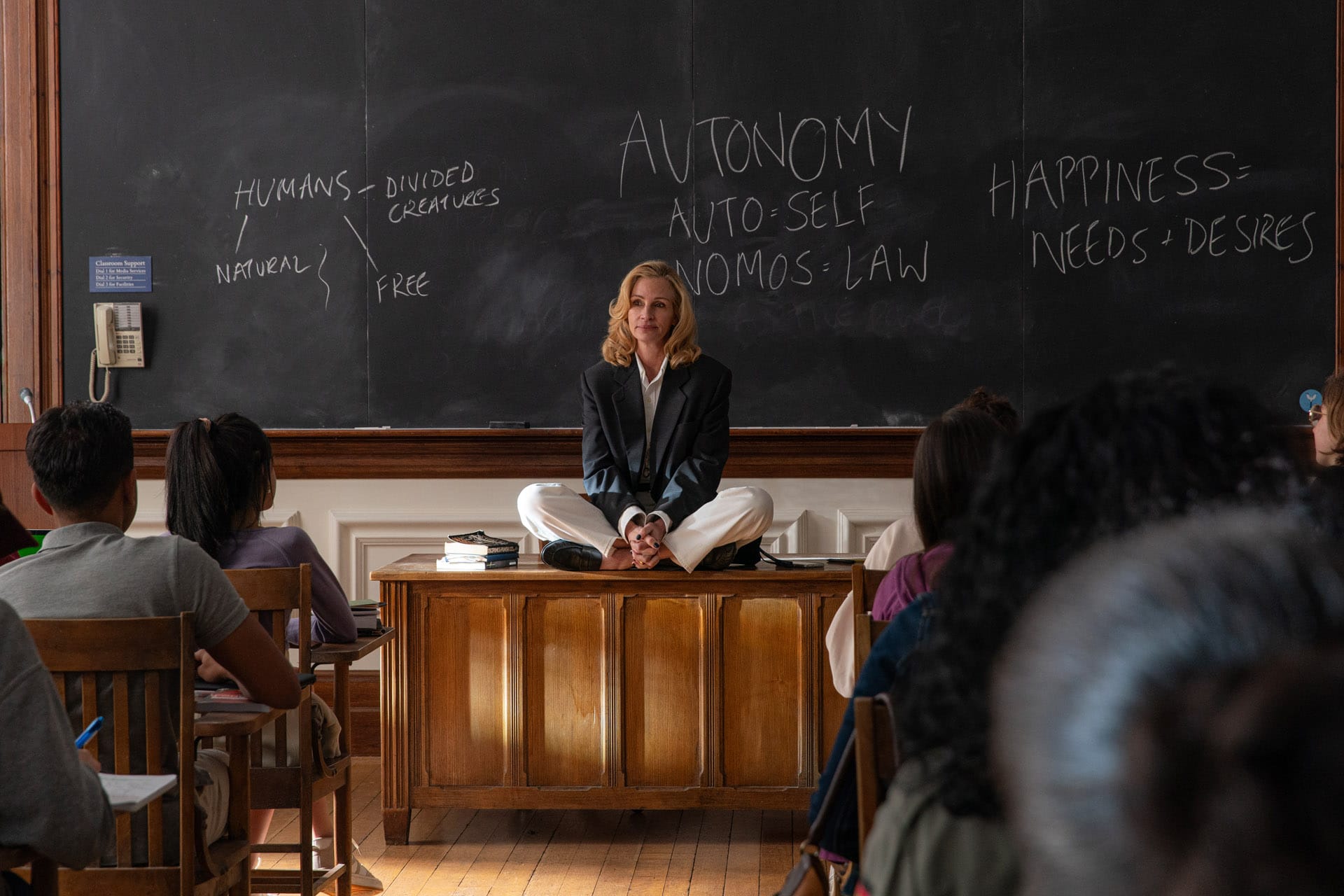
I was very excited to see After the Hunt, I looked forward to seeing the chemistry between all leading actors. I just wish the story better supported their performances. The story sets up this strong philosophical stance, and then everything that allows that philosophy to evolve is quickly abandoned. I figured since the story covered the topic of assault, maybe the philosophical training of the professors and students would weigh on them and dictate how the story unfolds. However, there was never another mention of any philosophical concepts or thoughts ever again after the first scene. I think the failure to maintain what was originally introduced into the story impacted the downfall of the film. I will say there was much appeal with the visual look of the film which helped keep the film afloat to some degree.
PREDICTIONS: Not Looking Too Good
I personally can not see this film being nominated. When I watched the trailer I thought that maybe it would sweep the board. The film does carry such high expectations, but it did not meet the mark. If anything, Andrew Garfield might have a chance at a nomination as his character left more room for exploration.