Table of Contents
Terel Gibson, a renowned editor who has collaborated with companies like A24, Disney, and Lucasfilm, recently gave a masterclass in collaboration with Diverso, a student-run film nonprofit dedicated to breaking diverse students into the entertainment industry.
He shared insights from Sorry to Bother You, highlighting a pivotal scene–that engaged audiences–and the production methods used. Gibson stressed the importance of organization, flexibility, and perseverance, noting that good work eventually finds an audience despite industry fluctuations.
Break down of scenes from Sorry to Bother You
Sorry to Bother You follows telemarketer Cassius Green, who discovers a magical key that leads to material glory. As Green's career begins to take off, his friends and co-workers organize a protest against corporate oppression. Gibson discusses two scenes he edited for the movie.
The first scene is Cassius's first day at work at a telemarketing center called Regal View. The cool feature about the scene is that during every call, Cassius is "dropped" into the location where the people he's calling are. It's almost as if he can sense their surroundings through the phone.
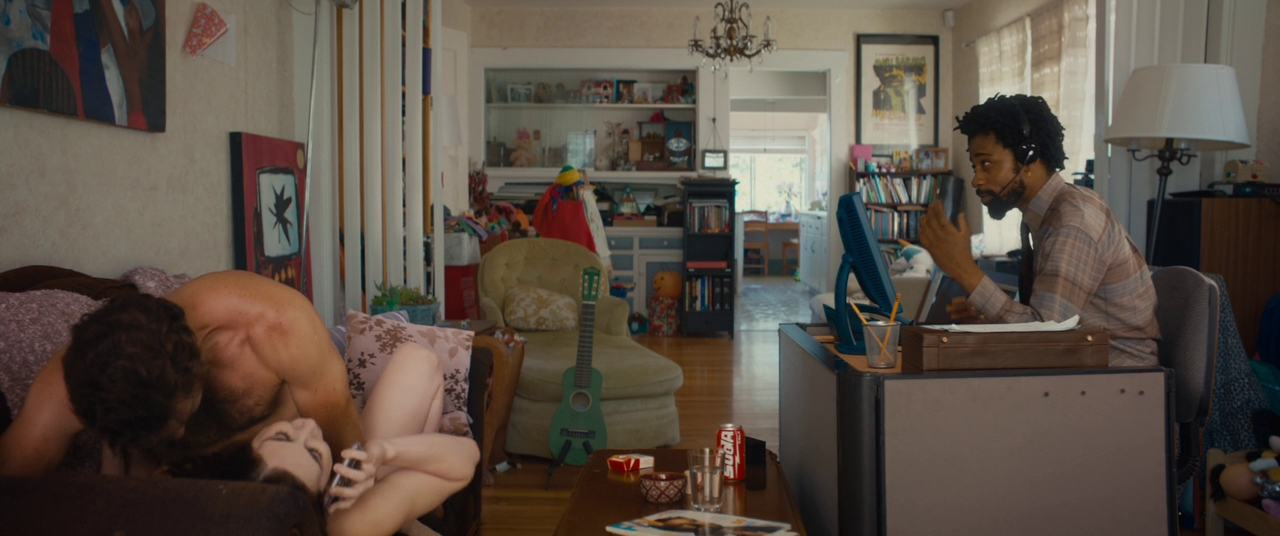
Gibson wanted to break down this scene because of where it falls in the movie. He describes this period of the movie as a place where the audience is still unsure about whether or not they are going to keep watching. The job of the movie is to retain attention at exactly that point. Provide something that sticks with the viewer and leaves them wanting to watch more.
After every screening, he always asks one question: at what moment did the movie capture your attention? He explains the impact of this particular scene on the early screenings of the movie:
"This scene is the moment where nine times out of ten, we get our hooks into the audience. Basically when they realize, 'Oh, this is going to be surrealist. This is going to really go out there.' This moment is where the audience realizes this movie is different."
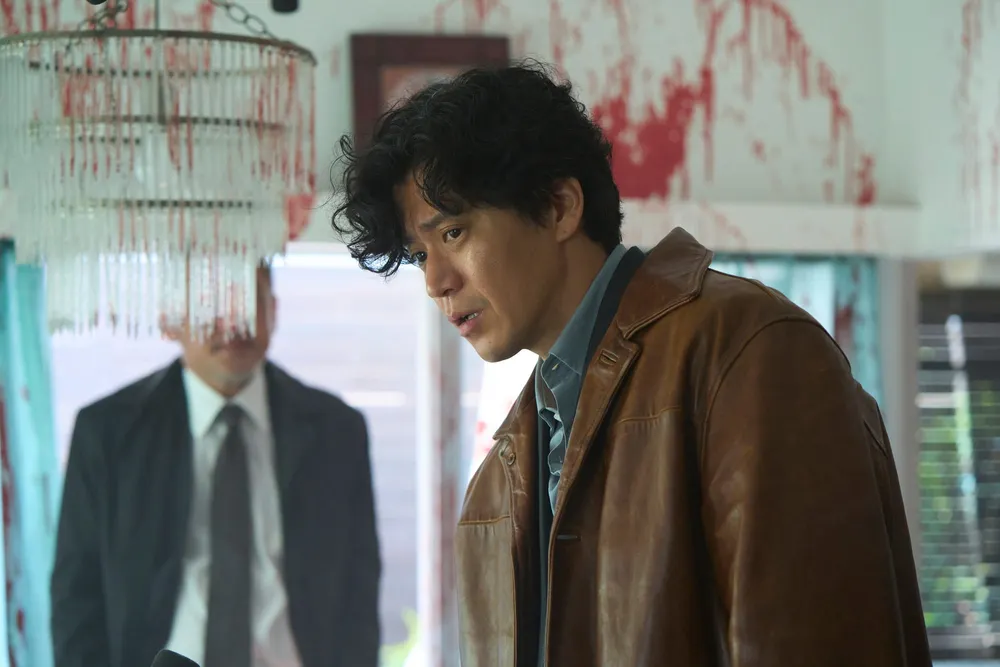
The second scene happens right after Cassius gets a promotion. His colleagues find out about it and call him a 'sellout.' The incident leads to a fight between them.
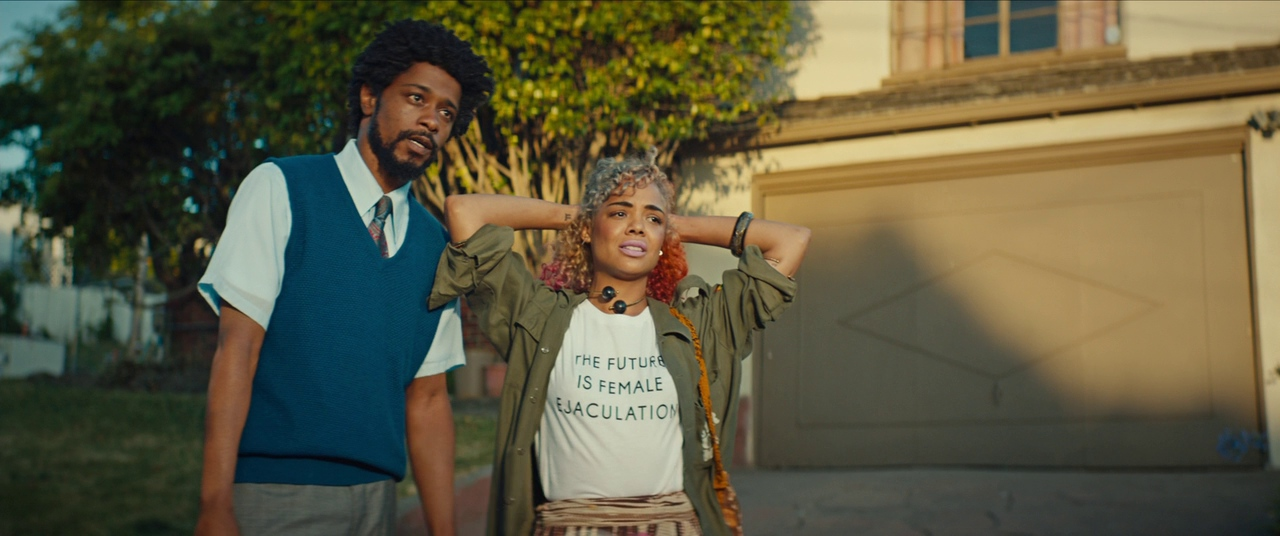
He describes that it took the actors a couple of takes before getting the rhythm, since the director kept making them try different feelings for the same scene and dialogue. What's intriguing about this detail is Gibson's explanation that during editing this scene was put together with four different takes, all of them with different portrayals.
He also explained that he decided to make the run time of the scene slightly longer than he was supposed to, and he expected the director and scriptwriter Boots Riley to want to go back to what was originally scripted. Turns out he loved it, and audiences in the screenings responded really well.
Gibson says that editing allows for some improvisation, but you must know where to do it in the film. Knowing where that specific scene falls in the plot is crucial because it can help the editor adjust the pacing. It also involves an element of common sense:
"During the shoot, you're 100% going by your instincts, because you're having very little communication with a director anyway. So you're basically acting as if you're the first audience member."
He spoke about a phenomenon when making movies, which he calls Lightning in a Bottle. He says it happens when a great script becomes even better during shooting and editing.
"You know that you make the movie three times, and that each time, at each stage, you elevate it. It's the type of filmmaking that leads to creating something special; that's the dream."
More on editing
What is your approach to editing when it's not done in chronological order?
"I go by feel. Feel is everything."
He tries to create scenes with rhythm and flow, changing things until they feel right, and then he leaves them alone. He knows that later in production, he will be doing some more shaping depending upon where that scene falls in the context of the movie.
"Unfortunately, a scene that is in the wrong place might play too long, and it might not get the laughs, but if it's in the right place, then it's okay for it to play a little bit longer."
What technical skills do you recommend an upcoming editor be familiar with?
Gibson believes storytelling is the most critical skill to master.
"I'm really trying to concentrate more on cracking story, music, sound, and all the things that help deliver that storytelling device. Listen to what your stomach is telling you this scene wants to be, and everything else is subordinate to that."
Regarding skillset, he recommends being proficient with whatever tool you're using. "You definitely want to have that feeling where you've used it so much that you're almost not looking at your keyboard. You just know it. It's not a technical craft. I would concentrate more on finding your voice than finding cool plug-ins because that won't save you. Ultimately, the story's got to work."
Finally, he talks about embracing your limitations and treating them as a strengths rather than a weaknesses.
"Sometimes having limitations, you will come up with a better idea, a better solution, because you don't have the resources to do the work."
If you have the resources but lack the eye that masters storytelling, you are an ineffective creative.
Are there any specific issues that you remember from any project that you've worked on? How did you work through it? What did you learn from it?
He was brought in as an additional editor on the newest Fantastic Four movie. They struggled to determine where to put the superheroes' backstory in the first act of the film. They knew it was important to provide context but wanted to do it in an efficient way. These characters were being rebooted for the third time, but they couldn't assume everyone knew the backstory. The movie had to provide context to stand alone, but they also wanted it to be effective.
The solution they came up with was getting rid of a huge action sequence in the beginning of the movie and instead starting off with a day in the life of the superheroes.
"If you get off to a rocky start where people are waiting for the movie to start, or it feels like the action is unearned, then people never find their footing, and then the movie just plays oddly."
Gibson explains it was a big learning moment, because that action scene was very difficult to cut. If you watched it on its own, it was fantastic. He learned to prioritize the pace of the movie over a particular excellent scene that didn't earn its place.
What is a typical timeline as an editor? What are your responsibilities and involvement?
The usual timeline expectation is to have an editor as soon as the movie starts shooting, so they can start putting the movie together as shooting happens, in case any reshoots are needed.
Each week, he sends the first cuts to the director to discuss any potential changes. Every director has a different process regarding feedback about the editing. Occasionally Gibson edits from home because he believes his best ideas come to him after dinner.
The first big stage is getting through the assembly. Then, it's getting through the Director's Cut. The next big stage is showing it to audiences and getting their feedback. After tending to audience feedback, the final stage is sound and music.
What does your workspace organization look like?
Gibson prefers to keep his things organized so he can access them quickly and not get confused or lost in the material. Properly sorting shots from different days and cameras is crucial to avoid a tangle.
This is a job that usually falls on assistant editors.
"They'll take the multi-camera clips, and they'll group them together into one clip so that I can watch them both at the same time and toggle back and forth between both cameras, because it's the same performance. It's just different angles."
Are there any doubts or fears you ran into at the beginning of your career as an editor?
Gibson understands the fear many new creatives have surrounding AI taking up jobs in the field. He says that AI cannot do creative jobs in a compelling way, so there will always be jobs for creatives:
"The great news is that there will always be stories, or always storytellers."
It might not be an effortless find, so he promotes perseverance within the job search... that and saving money as the biggest leverage for retaining control in your creative journey. That's what's going to give you freedom to work on the projects that speak to you, because there will be periods when your job search goes through downturns.
Gibson's most important tip is to reach out to people. That's what ultimately opens up opportunities for you. You have to be outspoken about it.
"This is a reputation and relationships business too."