This past week, as I sat on my couch scrolling the endless recesses of streaming services, trying and failing to find a film that could entertain my evening, I scrolled past one title that had been collecting dust on my watch list for far too long. "Full Metal Jacket" (1987) had first flagged my attention years ago after it was described as a "must-see for any American" by a family member who had spent time in the military himself; yet despite his praises, it took me until this week to finally watch it and to truly understand why it is such essential viewing.
The movie was outstanding on all fronts; in classic Kubrick fashion, it's shot masterfully, with characters that are equal parts unsettling and morbidly intriguing. And the ideas Kubrick explores, of unwilling servitude, blind justice, and the blurred intersections of loyalty and morality, easily earn Full Metal its flowers as an instant classic. But what stood out most to me were the methods the film used to explore these ideas.
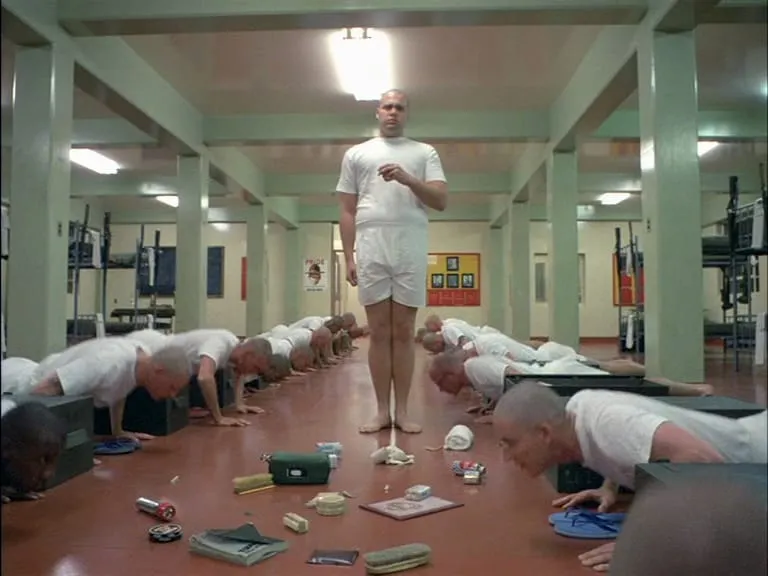
Full Metal takes an unconventional approach to storytelling, and as someone who had no idea what to expect going into the movie, it certainly threw me a bit off balance. The film is split into two clear halves, the first following Private Joker (Matthew Modine) as he makes his way through boot camp alongside Private Pyle (Vincent D'Onofrio), whose constant beratement by Drill Sergeant Hartman (R. Lee Ermey) eventually leads to him taking the sergeant's life, followed soon by his own.
The second half feels like a completely different film. Routine training drills are replaced with suspenseful action scenes, and in Pyle's absence, Joker takes center stage, feeling more like a main character than he did in the first half. If the first half of the film is mainly Major Payne (1995), then the second half is more Saving Private Ryan (1998). One thing both halves of the film have in common, however, is the juxtaposition of tone.
Despite its dark subject matter, Full Metal isn't afraid to make the audience laugh. The numerous comedic scenes lure the audience into a false sense of routine security, much like the characters themselves, which makes the action sequences all the more unexpected and impactful. After twenty minutes of hearing lines like "Hey, you got girlfriend Vietnam? Me so horny. Me love you long time," quotes like "The dead know only one thing: it is better to be alive" hit much harder.
I highlight the clashing tones of this film not as a negative, but rather to explore the reasoning behind Kubrick's unconventional approach. Contrast is a key theme in this film, highlighting the irony of war itself and of the idea of using violence and chaos to reach peace. "Fighting for peace" is inherently an oxymoronic concept, and no character in the film understands this concept better than Joker, who acknowledges this falsehood by writing the phrase "born to kill" on his helmet while wearing a peace pin on his chest, much to the chagrin of his senior officers.
When I was first told that Full Metal Jacket was a "must-see for any American," I falsely assumed it was because it would leave me with a sense of patriotic pride in the accomplishments of our great nation. Well, I was wrong. While it feels good to acknowledge and respect the sacrifices and achievements made for our country, Full Metal Jacket does a more difficult, though equally important job: it shows the deeply ironic truth of war.