Director Martin McDonagh is never afraid to find humor in the most uncomfortable situations. Throughout his filmography, he has explored grief, violence, and regret. He explores complicated relationships through characters who use sarcasm to avoid confronting their emotions. His latest film, Wild Horse Nine, continues the tradition, but somehow takes a step further by adding dark comedy into the mix. He also places the setting in one of the most politically complex times in recent history.
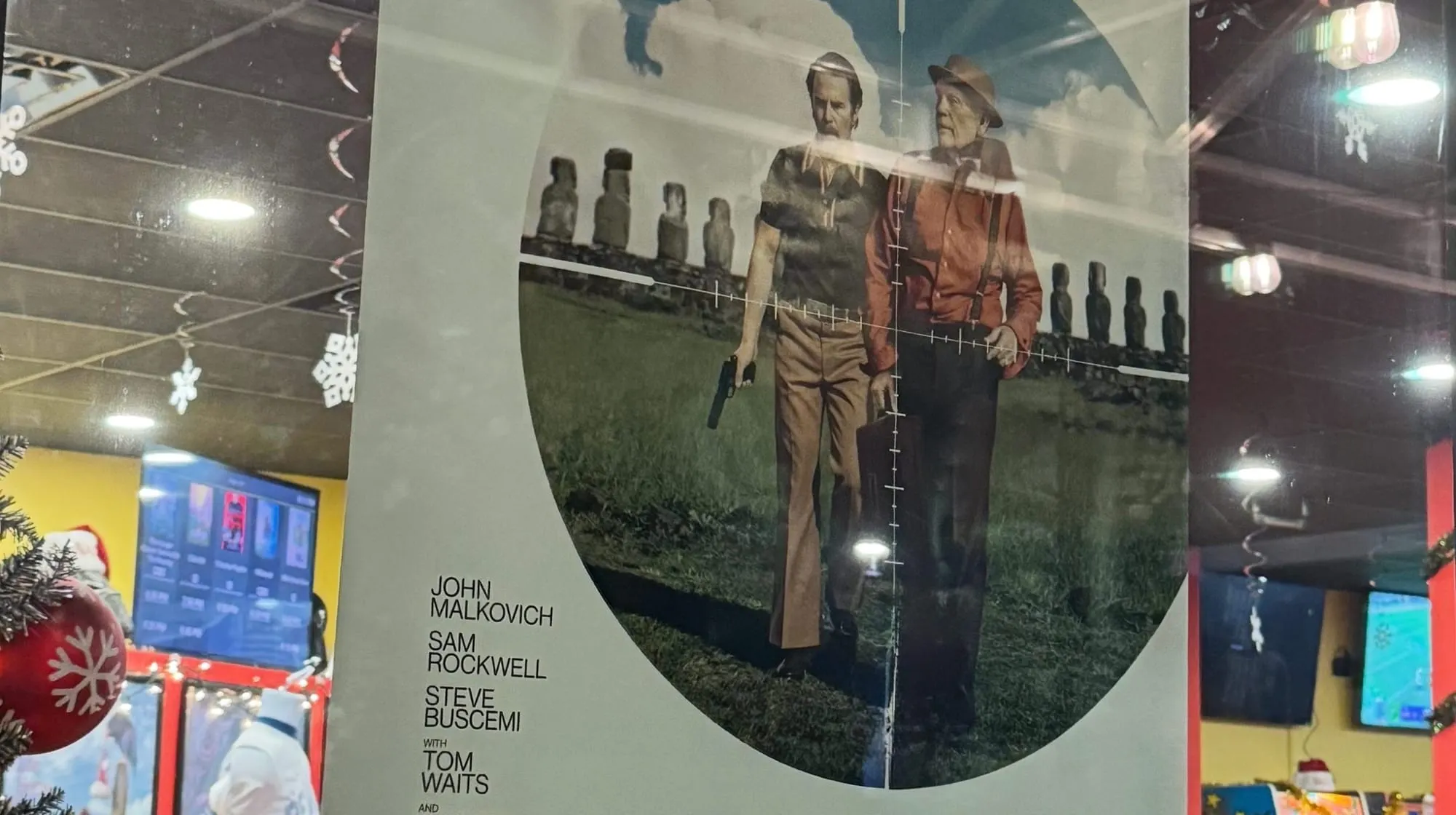
Released in theaters November 6, 2026, Wild Horse Nine follows two CIA agents, Chris, played by John Malkovich, and Lee, played by Sam Rockwell. The two are sent from Santiago, Chile, to Easter Island shortly before the 1973 Chilean military coup. Initially, the trip seems to be a journey between two lifelong partners but slowly turns into a story about the weight of friendship and past political decisions.

As the story unfolds, we learn that this trip is far more intense than expected, particularly with Chris. The audience learns that he is not only dying from cancer and struggling to remember things, but also has a past involving the assassination of John F. Kennedy. While reflecting on his past as his health declines, he can’t stop thinking about the consequences of his actions.
His cancer becomes a constant reminder that the past cannot be ignored. One notable moment in the film involves Chris’ connection to the horses on Easter Island, which becomes a symbolic motif. Their presence serves as a visual reminder that life is temporary and death is just something that he can no longer avoid. Every scene in which Chris is staring blankly ahead or thinking about himself, a horse shows up to ease his mind. They are very noticeable alongside Chris’ memories and involvement in the JFK assassination. Chris also has an interesting connection to Christianity, as he starts to question what is on the other side of life. Horses also have a long history of religious symbolism, particularly in the Book of Revelation, where the Four Horsemen represent conquest, war, famine, and death.

While no one in the film says the words “Chris shot JFK,” it is heavily implied, which makes his character even more complicated. Rather than presenting him as a CIA agent, McDonagh introduces this idea that Chris played a role in an event much larger than himself. Having that much involvement with something that changed American history forever would riddle anyone with guilt. His connection to JFK raises questions throughout the film about political power and how individuals justify participating in something morally complicated.
The combination of Chris' cancer and his involvement in JFK’s assassination is presented comedically. Chris makes Lee promise to shoot him so he can go out quickly; they choose 'Arkansas' as a code word. In the end, as the two are sitting on a hill next to the moai, Chris tells an elaborate story about something that happened in Arkansas. Reluctantly, Lee grants his wish and leaves. The humor McDonagh uses does not erase the seriousness of Chris’ past; instead makes him feel more human and relatable to the audience.