Table of Contents
Three Key Takeaways
- A poignant exploration of a troubled yet visionary photographer whose art speaks beyond time and place.
- An independent filmmaking journey marked by creative freedom, logistical challenges, and deep personal connections.
- A testament to how passion and resourcefulness can bring a cinematic documentary to life despite limited means.
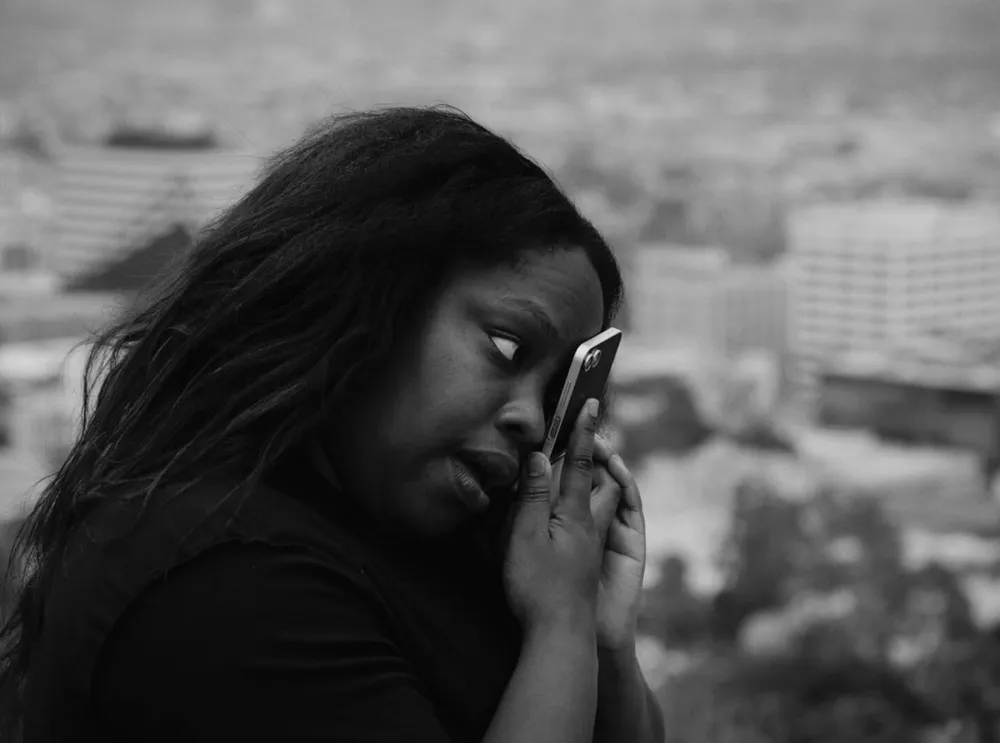
Co-directed by Marta Erika Antonioli and Elena Padovan, Exposure - The Story of Marco Pesaresi delves into the life and legacy of the gifted Italian photographer Marco Pesaresi.
Produced and authored by Michela Fragomeni and Riccardo Caccia, with cinematography by Fabrizio Luzzo and a compelling score by Daniele Maggioli and Marco Mantovani, the film weaves intimate interviews and archival footage to capture Pesaresi’s raw and honest photographic vision.
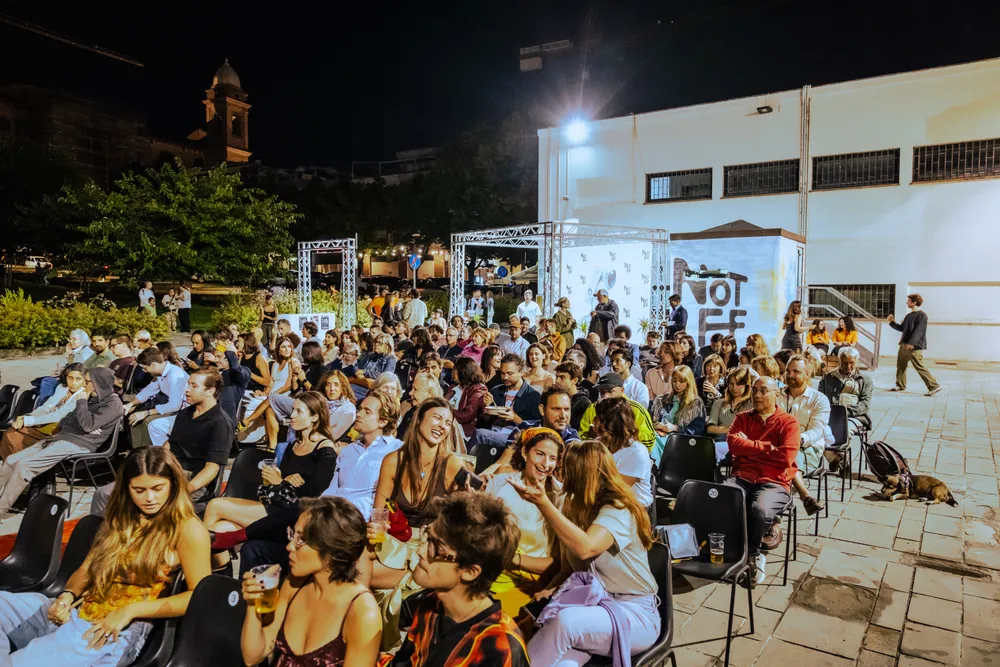
Selected for Nòt Film Fest, the documentary shines a light on a creative spirit whose work remains hauntingly relevant.

Q&A Interview
What drew you to make this film? Why this story, and why now?
Michela and Riccardo, our authors and producers, came across Marco Pesaresi's photography by coincidence, and immediately fell in love with its raw and vibrant honesty. When they shared it with me and Elena, we felt the very same. We found out about Marco's passing in 2001 and his intricated life, getting to know the people who knew and loved him. We then understood that his difficult existence determined everything in the way he saw the world and immortalized it. His capability of understanding the Other without ever judging anyone is moving and powerful, albeit filled with pain. We as a team share the desire that this troubled life and this amazing photographer can finally be known to a larger audience than only his small Italian region, Romagna.
"His capability of understanding the Other without ever judging anyone is moving and powerful, albeit filled with pain."
What surprised you most about the filmmaking process this time—creatively or logistically? Was there a moment on set or in post that completely changed how you saw the story?
Logistically-wise, the film was an unbelievable challenge for the team, because it was entirely organized by us: the pre-production, the whole filming process, up until the very last touches in post-production. We learned so much, especially when we found ourselves in difficult moments such as long shooting days, delays and so on. Creatively speaking, the documentary kept on writing and changing by itself. The subject was clear, but we let the people in it be free to say whatever they wanted and express themselves in a safe space. This lead to a lot of material, which we then edited: the editing process truly felt like finishing the script itself. The protagonists all brought details, anecdotes, emotions and reflections that soon began to link to each other, showing us - the team - shades and aspects of Marco's story and photography that we hadn't anticipated.
Is there a moment in the film that feels the most you—something only you could have made?
We reckon that the editing of the film is the most personal and intense part of it all. We are beyond happy for the bonds we created with the people that told us about Marco, and we will cherish them forever. But we put a lot of effort and precision into listening to their words and creating a development for the narration that would be both easy to follow and absolutely coherent and respectful of everyone's words and opinions.
What was the hardest creative decision you made while making this film?
There are two: one is very common and it is cutting. Deleting hours and hours of images we loved and words that were absolutely important was a challenge - a necessary one, though. The other one is quite sad, for two people who were a very important part of Marco's life passed away during the making of the movie. They had agreed to participate in our documentary and we tried to honor their memory and their love for Marco by using what we had already recorded with them in the movie.

What do you hope audiences take away from your film?
First of all, we hope that everyone gets to know and love Marco and his photography. His troubled life was filled with a pain that is actually very common and needs to be everything but a taboo. His photography can make anyone fall in love with this art because of how raw, honest and filled with human dignity it is.
How has this film shaped or shifted the kind of stories you want to tell next?
I think that biographies are beautiful but hard kind of stories to tell, for it feels necessary to constantly renew and change and innovate the language we can use to express them. So, this was this movie's challenge; now, I feel like telling other kinds of stories to try something new, but I feel like I am starting to find my voice and Exposure was definitely a turning point in this growth.
"The editing process truly felt like finishing the script itself."
What’s a tool, technique, or resource that really helped you during production?
We had Fabrizio with us, our amazing DOP, who met the vision Elena and I had by using BlackMagic cameras and DaVinci Resolve for editing and color grading too. We found it super easy to use this gear, with amazing results and a deep love for the way the image looks. We also worked with sound people who are amazingly attentive to detail, and that has made all the difference, not only in the final product, but it personally made me shift my mindset, making me strive for a very high standard.
Independent filmmakers often rewrite the rules out of necessity. What do you think is the greatest strength of independent filmmaking, and how did you lean into that on this project?
Independent filmmakers don't know the word "impossible". Or, to be precise, they don't accept it. They'll make anything work, it doesn't matter how much money it requires. We made an entire very cinematic documentary with very few economic possibilities, our time split between the movie and our other jobs, but not compromising the quality and the way we wanted to narrate the story. By wanting to make something so strongly, we learned how to overcome difficulties and we found that a lot of people are incredibly kind and will come a long way to help you out. It was also a lesson regarding how much you can actually achieve with few resources; a lesson I'd like to improve since independent filmmaking can also be incredibly draining and problematic.

What does it mean to you to have your film selected for Nòt Film Fest?
We are very honored especially because NFF is based in one of the places where Marco grew up and that he shot on his camera countless times. Festivals are the place to share our hard work with people, get feedback, meet other filmmakers and audiences. They are the best places, no questions asked.
How do you hope being part of Nòt Film Fest will shape the life of this film?
We, again, hope this movie gets a wide audience, and that someone will see it in Santarcangelo and talk about it, leading to other screenings and maybe some funding too for this or other future projects.
"Independent filmmakers don't know the word 'impossible'. Or, to be precise, they don't accept it."
Where do you see this film going next?
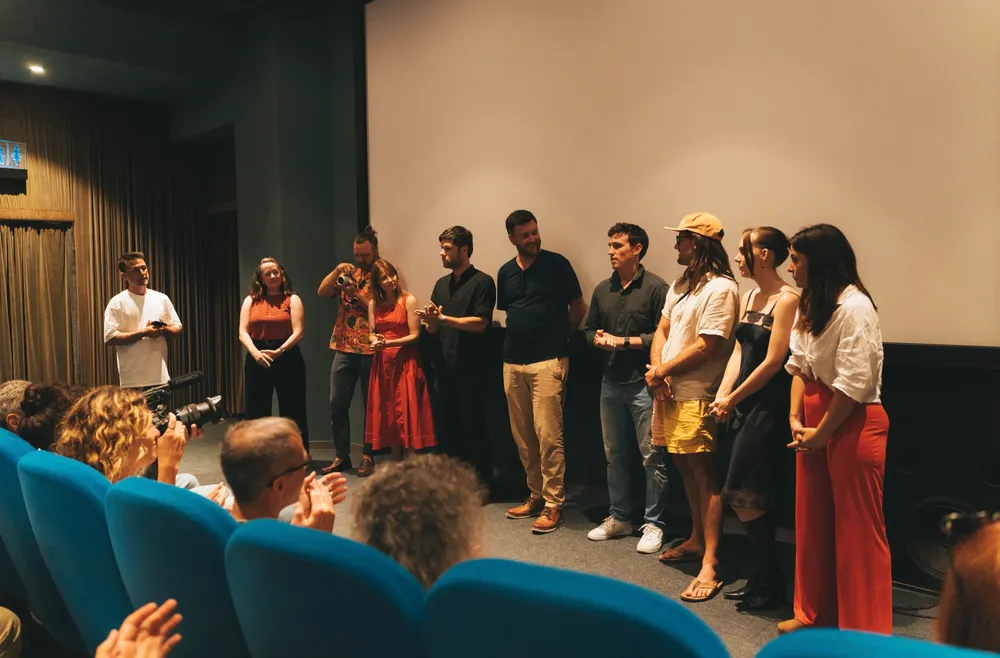
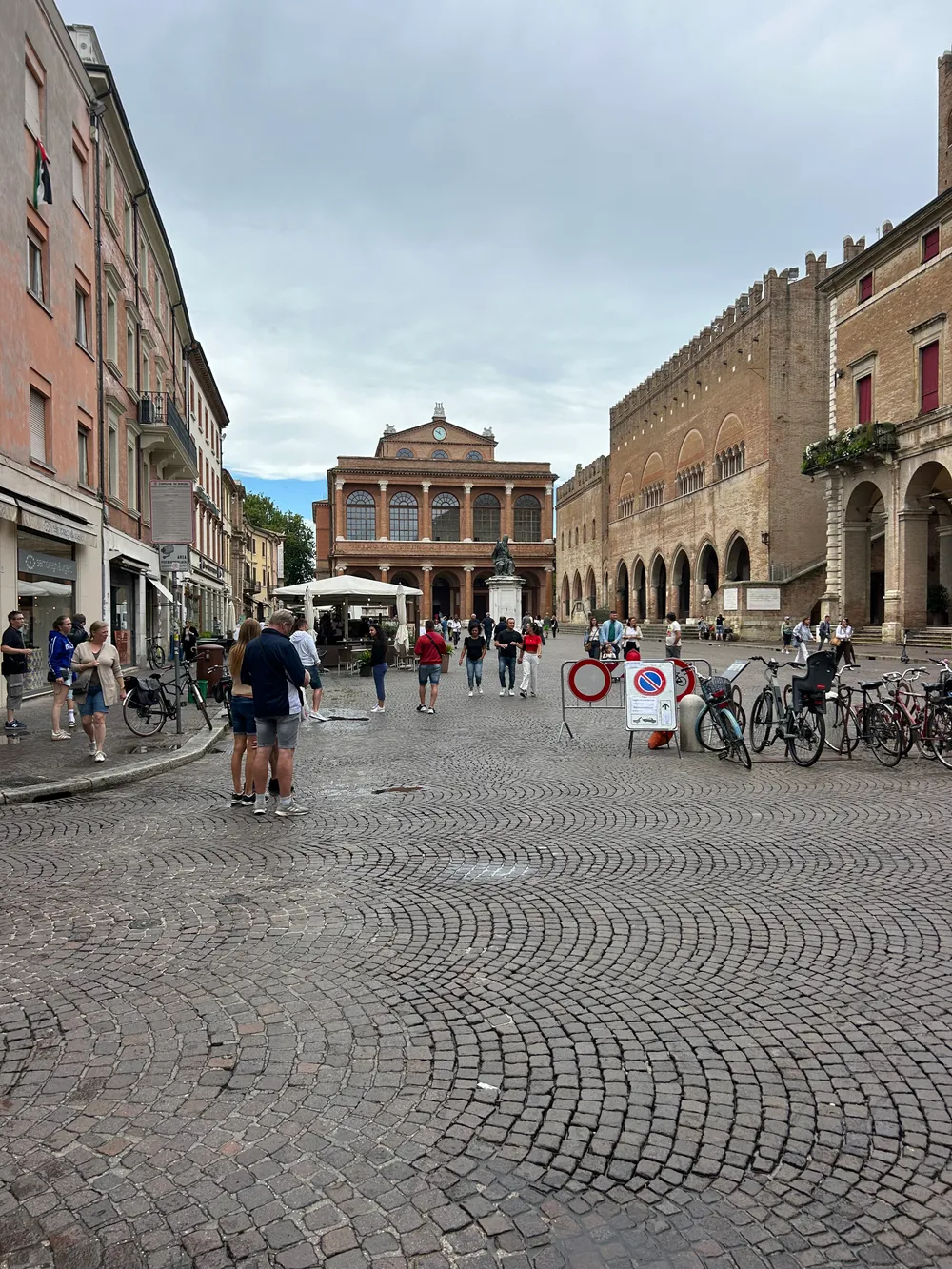
We will be touring with the movie in many different theatres across Italy: starting from Rimini's very own Fulgor cinema, going to our city Milan, and then many others. After all these screenings, we will like to let the movie be on some platform where people can watch it whenever they like.
“At the core of all my work is a desire to tell stories that may be overviewed and not noticed otherwise."

Cast and Crew
- Filippo Moretti — Soundman
- Davide Debenedetti — Soundman
- Enrico Zavatta — Sound Mixer and Engineer
- Tobia Montanari — Colorist
- Cast: Isa Perazzini, Simona Pesaresi, Laura Pesaresi, Valentino Cima, Daniele Ronchi, Luigi Gariglio, Renata Ferri, Roberto Koch, Denis Curti
For more on Exposure - The Story of Marco Pesaresi, visit their Instagram.