Table of Contents
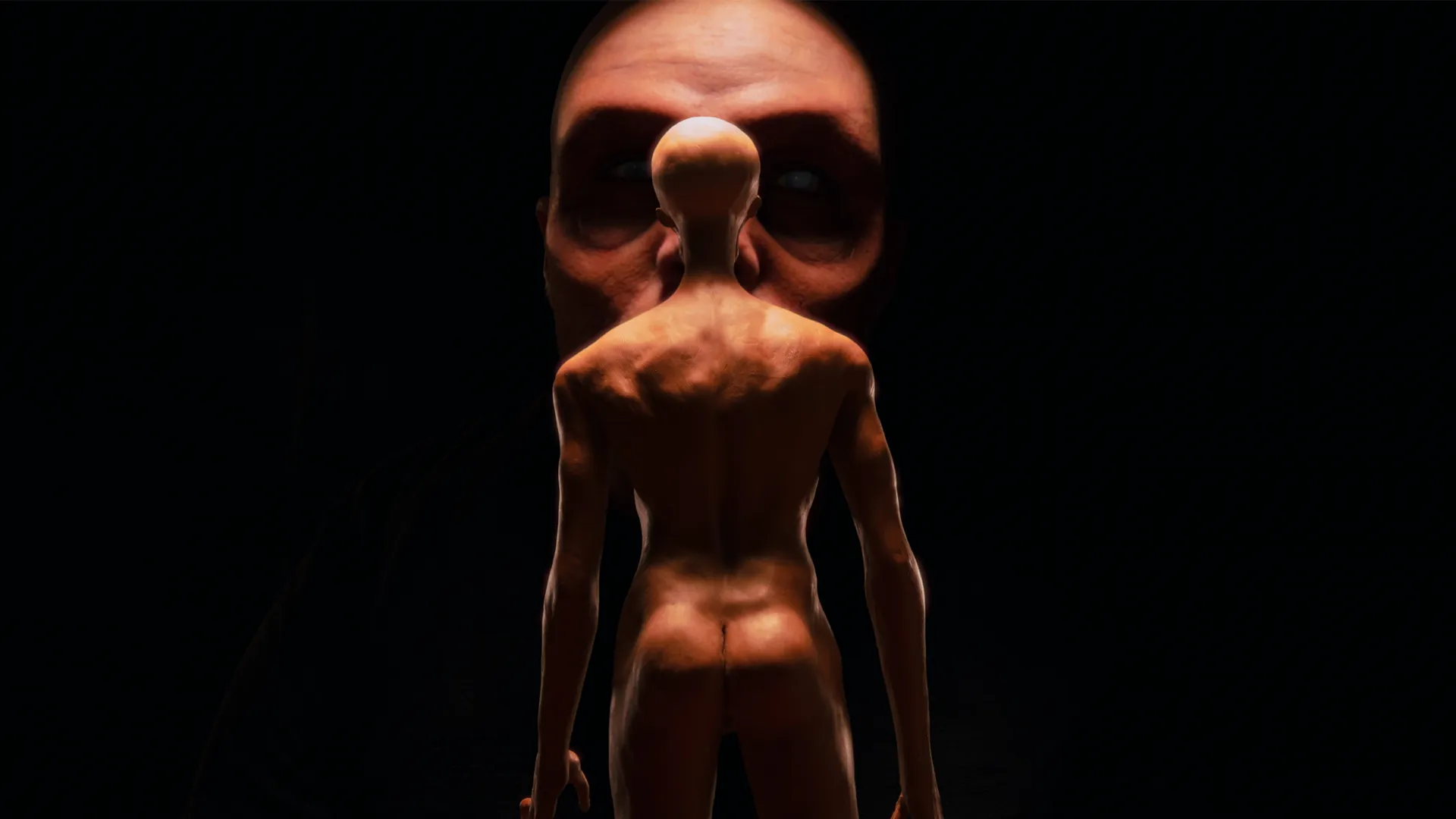
One of the hopefuls at this year's Academy Awards is Playing God, a stop-motion animated horror short from Bolonga, and the Italy-based Studio Croma. The film was shortlisted for the Best Animated Short Film category. After winning big at festivals including Tribeca and Animayo, the team behind the project has its sights set on the biggest honour of the year.
LOF sat down with Director Matteo Burani, Animator Arianna Gheller, and Producer Rodolfo L. Mase Dari to talk about the inspiration and process behind the film.
This is a very meta film. Where did the first spark for this idea come from? When was the moment that you decided to make it a horror short?
M: The idea came in 2017, and actually, the specific moment when Arianna and I met each other, and we talked for the first time about making a project together. In this case, the idea was Playing God since the beginning, and it was the story about the sculptor and his sculpture. So it was simple, like two minutes of video, something that was really easy so Arianna [can] make this really quickly. Maybe we can upload it after on Vimeo and we can play with all of these different stop motion techniques with no struggle
A: The plan was just to work for four months and release the video on Vimeo.
M: Yeah. But since the beginning, the story was simple, but the concept was existentialist because we were talking about the creation, especially regarding a sculpture. The way to be an artist is that you will never be satisfied with your work. So this was the meaning since the beginning, and the aesthetic, and the order. It was just a bit to traumatize the audience from the beginning. But the story became much more deep during the path [over] the years. We focalized more of the story, not only in the relationship between the two main characters, but regarding the others. Because at the end, the other creatures are the real victims in this story, and are the real main characters in some ways. In every one of us is the sculpture. We are the sculpture. So this is the tragic meaning, and our goal was to achieve this dark aesthetic for that reason, also to communicate a bit of trauma, this meaning and this message we want to give as a film. We love to not label the film in that way, like a horror film, because I think there is something more when you make horror. You have the possibility, especially in this time, to talk about something more. Because the order is like a way to see the other situation around you. Everything is honest from us.
This is a film without any dialogue. It really relies a lot on the soundscape you guys have created. What are some of the strategies you have when you're telling a story purely through visuals, or sound and light?
M: First, the most important thing here was to achieve a specific range of emotions of the puppets. The difficulties was that there were not real actors, but we are trying to achieve more than a real actor emotionally. Trying to explain everything without words was really difficult. But for that reason, we play with Arianna like an animator.
A: Even the music has an important part in the film, like the music does 50% of the emotions of the film.
M: Exactly. Working with the soundtrack was really important because it was so easy to dive in the generic horror mood with the wrong music. So we achieved this really, really specific music with two instruments. One was occarinas, and the voices. Every sound and every music moves yourself in a specific mood that you enjoy. For example, you have a moment that you have fear, a moment that you have sadness, and the music follows this kind of flow. The most important part of making the film was, of course, animating the characters, and his facial expressions, and the movement.
A: When we started the animation, it wasn't simple at all for me. I didn't have any idea how to achieve that quality. So when we started, I did a lot of experimentation with the clay, animating. We deleted a lot of animation at the beginning, but then I found the key to achieving that quality with the clay, which was a specific clay made with wax to maintain the detail of the little parts of the face. Then we discovered that to achieve this humanity that all the characters have in their emotions, it was necessary to add this moisture effect on their face. So we added Vaseline in their eyes. We added the saliva on those characters, mixing glues, Vaseline and different kind of gels, etc. We did a lot of experimentation.
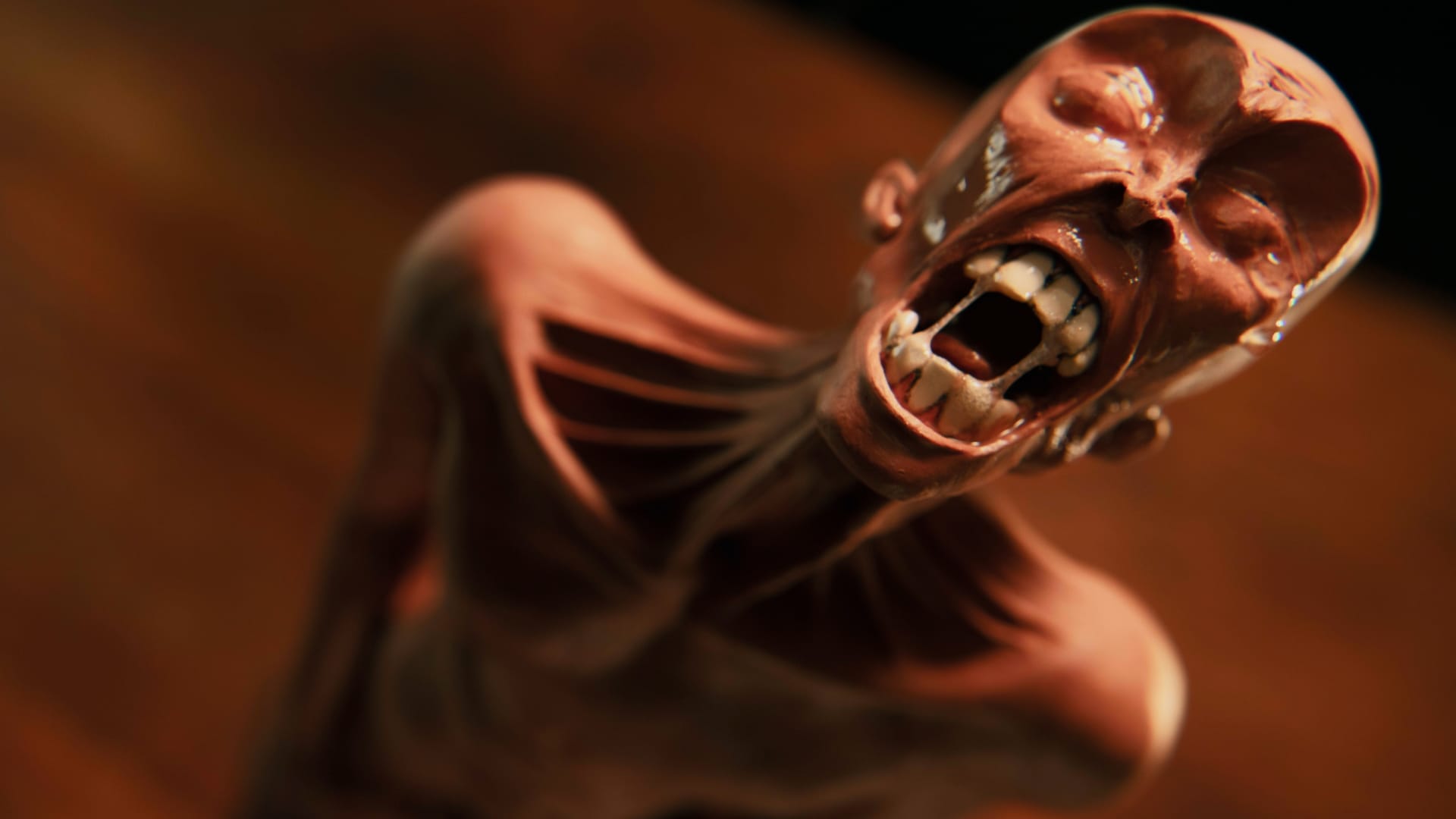
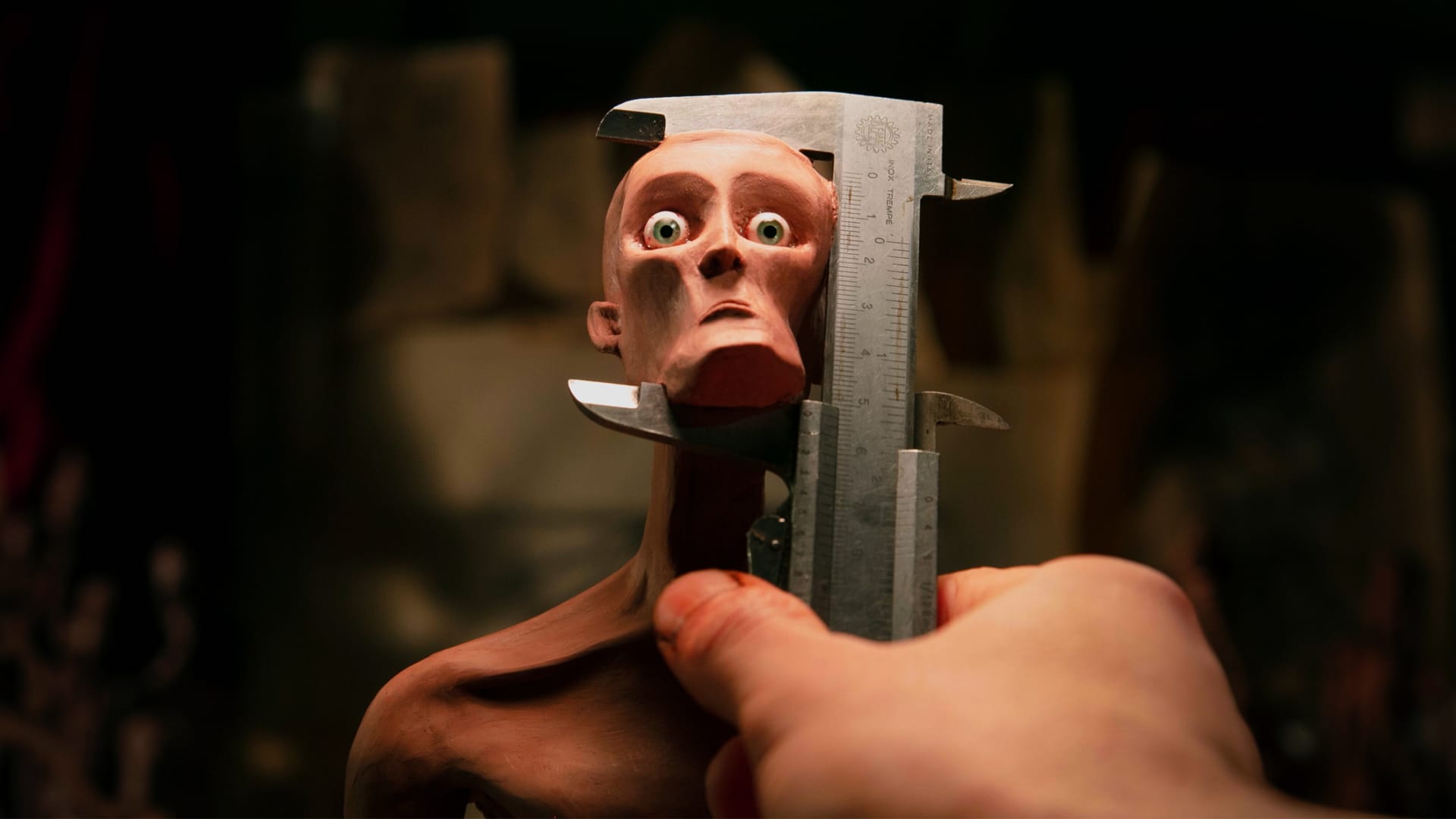
The most complicated part was to understand how to mix the three different stop motion [techniques] together, because even the pixelation part wasn't easy. The most complicated part was how we could match the size of the puppet with the giant puppet of the sculptor. And even then, we had to find a solution. Every shot had different problem solving that we found during the process, during the animation. [Emotionally], for me, it was a kind of journey. I used to have a mirror in front of me. First, before sculpting the details of his face, I used to do the actual job, testing the emotions on my face, and then reproducing all the shapes, the muscles, etc. The process was so intense for me, and I passed a lot of time with those guys that I really, I really felt that, it was easy at some point to understand the characters, the gestures, their soul, and we became friends.
M: At some point, we became the sculpture. We became the main character. I feel the main character, but I also feel the sculptor. There was this kind of dualism while making the film. I feel like the victim, but I am also the sculptor that creates something and is not able to see the perfection of it. It's cruel. To achieve the right expressions and good direction, the direction of the film and the music was kind of a mix, to say something without words. That was the point.
I know you guys mentioned that there was a lot of different changes that the project went through. What were some of the biggest changes that happened from the initial storyboarding and animatics all the way to production? Did that change the mood of the film at all?
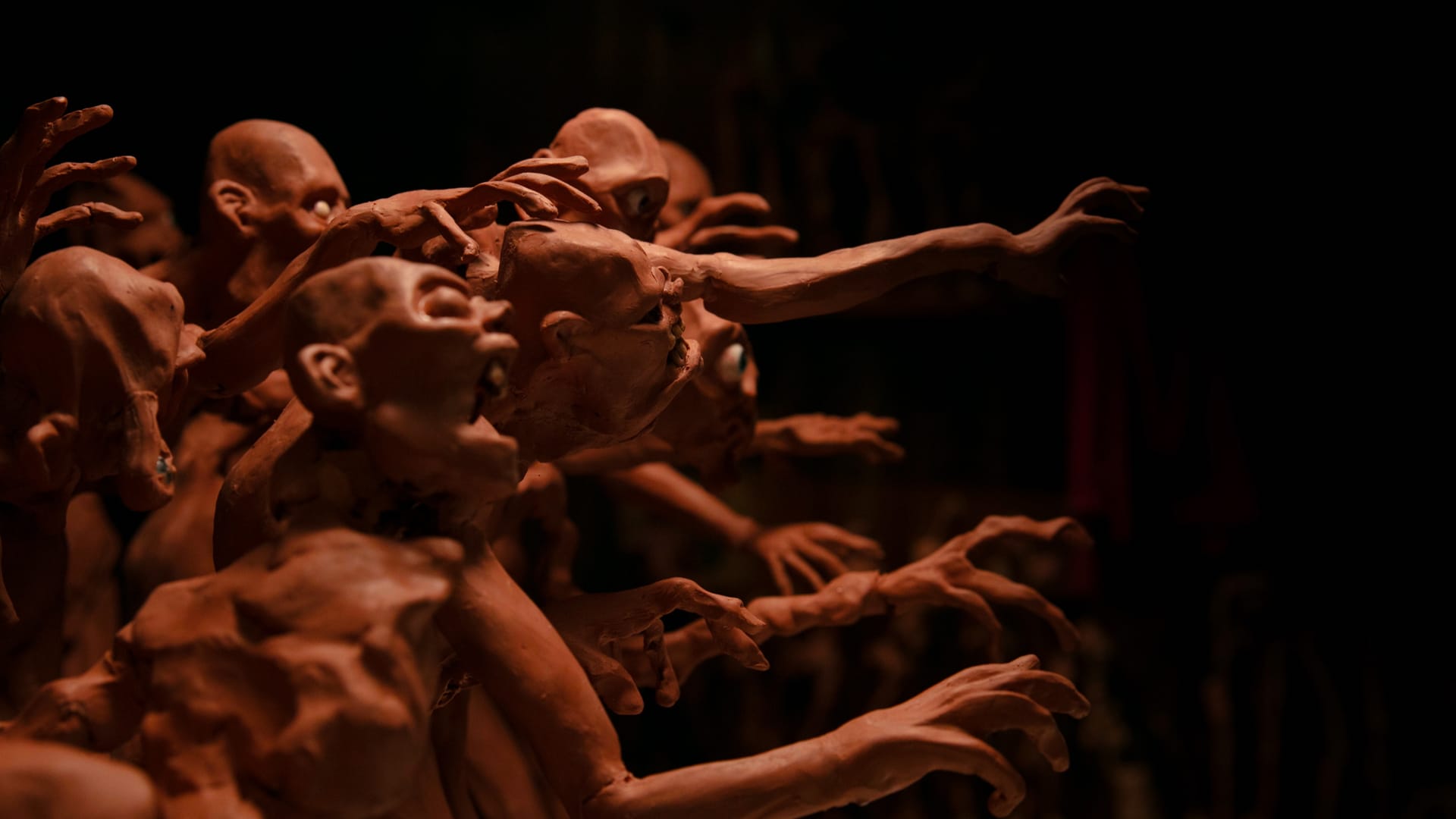
A: I think that maybe the biggest change at the beginning was that there wasn't the group of other characters. The story at the beginning was just the bond between the two characters. Then we added those two groups at the left and at the right of the table. The shots became more crowded.
M: It's happened sometimes that I see a friend take trauma, and I see this guy outside together with the others and his trauma, in some ways, was shared with the other people. I've imagined that the film needed the presence of the other sculptures because we need a backstory for this one. There are not just two characters here, but there are all the other characters, because we are talking about the eternity of the gesture of build to fall, build to fall, and build to fall. Of course, we were something before and will be something after. So this was the meaning, and we have included this meaning represented by all these creatures. It's a mystery since the beginning of the film, because they are so deformed, and then the main character is completely fine, but at the end, we discover that all these figures are deformed because they [have] fallen in the same loop. We play a lot with the character design of these figures, because since the beginning, we have imagined different ways that these creatures are falling down and destroying their faces in different ways. So we played a lot with the character design to build the puppets and these figures. But yes, this was the biggest change since the beginning that changed the story in some ways.
It's actually important that we grow with the project. It was seven years in production. We have grown a lot in these seven years. And the project is growing with us. It was putting inside the film, all your experiences or a new way to see the world. I'm not the person that started the project anymore. I'm changed in some ways, but this story now fits with me. I think that it was a great experience. So these are the things changing during the process.
A: The biggest change is us. We changed a lot.
How did you go about designing some of the more technical elements of the film? Did it happen more in production, pre-production, or post-production?
M: In pre-production. Since the beginning, the atmosphere was supposed to be something similar to us.
A: The visual design was very clear from the beginning. Actually, our first studio was an underground studio, so more or less the space in Playing God represented our first studio. All the walls were black without windows. So the atmosphere was the one of our atelier. The colour palette represents the colours of our city. We have a lot of references of Renaissance art here in Italy, so it was super clear from the beginning.
M: We live in a really small medieval city, so it's full of wood, clay, and terracotta. The reference of a workshop or a sculpture, it's really common to see these kinds of things. Basically, we translate all of this information from our city, from our favourite artists, from everything. We made everything a little bit dark, playing with the basic colour of the clay, the terracotta colour. Everything reminds us of the terracotta colour.
A: This has a lot of strong connections with the meaning of the flesh because there is this concept of creation from clay, like the myth of the Golem, for example. This is also a strong link with the story. We wanted to choose this particular clay, this plastecine that already has this colour to connect it with this living flesh effect of the character. So it's all connected with the reference of our city and with the story.
M: The game was to have this place buzzing with life. You have to see the sound of them, of the clay, of everything. The concept was really fluid. Our Director of Photography, Guglielmo [Trautvetter], helped us and worked with us since the beginning.
How did you decide on the movement of these characters,? You talk about this feeling of flesh, and with some stop motion projects it can feel a little clunky. In what manner did the movement come to you?
A: A lot of people asked me that, and the answer is always that they came out really naturally. They reflect my personal gestures in real life, so I transfered my attitude, my gestures into them. So it came out really naturally without specific thinking or pre-production. Can you imagine that at the beginning, we started without an animatic in the first year? So it was really an experiment. In the last two years of production, we did some specific animatics for the most difficult shots. For example, the one with the long crane when the characters match the face on the table. That shot was really complicated, so we prepared a specific animatic to understand all the timing. The long sequence where the character gets sculpted, the morphing of the clay animation, that, for example, was improvised.
M: Yes, it was experimentation. This is a great word to say. When we started, our standard was not so high. If we see the first shot we shot for Playing God now, of course, you start to feel cold.
A: And see the ears!
M: Yes, you can see the ears. Basically, everything had evolved during the time, and we, step by step, try to achieve something better every time. This was the meaning, especially at the beginning. When the creatures start to wake up, and they are moving, this shot, for example, it was essential to have everything fluid, and starting the film with 'Oh my god, great! You're so fluid. It's almost the real deal. What is that?' Because we try to play god in this way, to try to show our best skills possible. With this kind of technique, it's also part of the story. Without this kind of technique, everything is weaker. We tried to achieve this technique with the audience.
R: I think the movie would not have worked, for example, by having CGI. It would have been a completly diffrent feeling.
M: It's the movie that's made for this kind of medium.
A: Yes. You can see the texture of the plasticine when I touch the puppets. You can see the texture moving.
M: Also, because you have a real human being, you have real clay, real puppets, everything. It's so fluid, it's tangible and alive. You feel that it's alive because it's real. If you use another medium, everything is falling apart. Everything is [just] okay.
Your film is up for consideration for a nomination at the Academy Awards. At what point did you realize this had the potential to go on to the Oscars? Was it always a consideration, or did it come about on the festival circuit?
M: We finished the film in the middle of 2024, and we tried to achieve the best premiere possible. We started to be rejected from every big festival, and we started to say 'Oh my god...'
R: I remember Matteo calling me, saying, 'I'm going to hang myself!'
M: Because I was so scared to spend so much time making this film, everyone in your bubble says the film is great, everything is fine. But you start to see the festivals reject your film, like Cannes. So we're sent the news that we were selected for Venice for Critic's Week.
R: Which is a good place.
M: So from that, we started to believe a little bit. We had a good premiere and everything, then we discovered that there are two parts when you make the film, which we understand in this one year of distribution. There is the moment when you make the film, and there is the moment when you have to distribute the film.
A: That is actually another kind of production.
R: Yes, it's the other side. It's sometimes the dark side of the film. So at this point, we try to have the best distribution possible. We signed an agreement with an Italian distribution and with an international distribution. We start to make festival after festival and travel around the world, and now we have 200 selections and 100 awards. But we discovered the Academy Awards circuit the first time when we won Animayo Gran Canaria, and it was an Oscar qualifying festival. We started to say, 'Oh, Academy Awards, that's great!' Then we won Tribeca.
A: It wasn't so simple. We were in Tribeca to attend the festival, and until the last day of the festival, we were convinced we did not have any chance to win. But then, during the ceremony, they say our names, and it was a joy. A really big joy. We exploded really loud, we started to scream, because we realized there was a possibility for us, and everything came true.
R: So we try to navigate in this mood and try to find connections, try to understand how the rules are and everything. After Tribeca, the way the project was brought forward was always never looking too much ahead. I was always looking step-by-step. First, let's finish the film, let's make one scene after another. Let's not think too much, and then we'll finish the film. What can we do? We can premiere.
A: And do it in the best way possible, always.
M: Because our Co-Producer Nicolas [Schmerkin] won an Oscar decades ago, since we finished the film, I asked how we can move in this way? He said, 'If you don't win a festival, forget it!' I said, okay, I don't know what it means, but okay. It was a great experience, it was like a charge of dopamine. It's like being in this moment, living in this moment, trying to do the best as possible for your son. I think the project for us is like a son. Maybe this is the last shot we can try. Of course, to achieve a nomination can be...
A: Amazing.
M: It can be amazing. It can change our lives.
Could you talk me through the process of campaigning?
R: These are all things we had to learn by doing it for the first time. There are many rules, many things you need to get familiar with and many strategies that you can use. It's so much more complicated than we imagined, but it's also very, very exiting. We started working with PR that is focused specifically on animation. I think they are really huge help if they're good. So learning first which ones [PR] are the good ones can really help you in giving you the right tips and tricks on the activities to do. Basically, when campaigning, there are four main things you have to work on. The first one is digital communication, presence on social media and all over the place on the internet. The second is the press. Then you have screenings you can organize. Then there are all the parts of digital advertisement.
There's also a fifth one, which is lobbying, which is also very important. Everything that happens behind the scenes. So we divide ourselves into these activities. I am the one, for example, being present here in the US and going to all the screenings here in-person to lobby, to meet with the Academy voters, while Arianna and Matteo are the minds behind all the content that is put online, and taking most of the interviews and the relationship with the press. Then there is a lot of strategy in terms of which activities you do, which content you publish online, to which target audience, so there is a lot of variability in that.
It's important to have a strong project, but there is also the fear every time that maybe you don't know the taste of the Academy members. But the Academy members are like a sea, it's like an ocean, and of course, it's difficult. You can try to make it the best as possible, but of course, you don't know the taste. There is a lot of hope in that. Hoping the best, working so hard, but a lot of hope at the end.
Any last things you want to share?
A: We have the hope that the people will move on from the grotesque visuals and understand the real meaning of the film, which is actually really deep. We are having good feedback from the audience, especially because we released the film on YouTube, and we are reading a lot of the messages from people. We are really grateful because the feedback is really good, and I have the feeling that people are understanding the meaning of the film. I would just say thank you to the audience because they are welcoming the film. Somehow, all our effort producing this film, in all these seven years of work, it rewards us back.
M: There are also other bad comments like 'I really don't understand the film, I don't know how these people take seven years to make this shit.' I read this comment, and I said, 'Okay, I'm sorry!'
A: Yeah, but the majority of the feedback is positive! So we are super glad for that.
Our thanks to Matteo, Arianna, Rodolfo, and the rest of the Playing God crew.
This interview has been edited for length and clarity.