Table of Contents
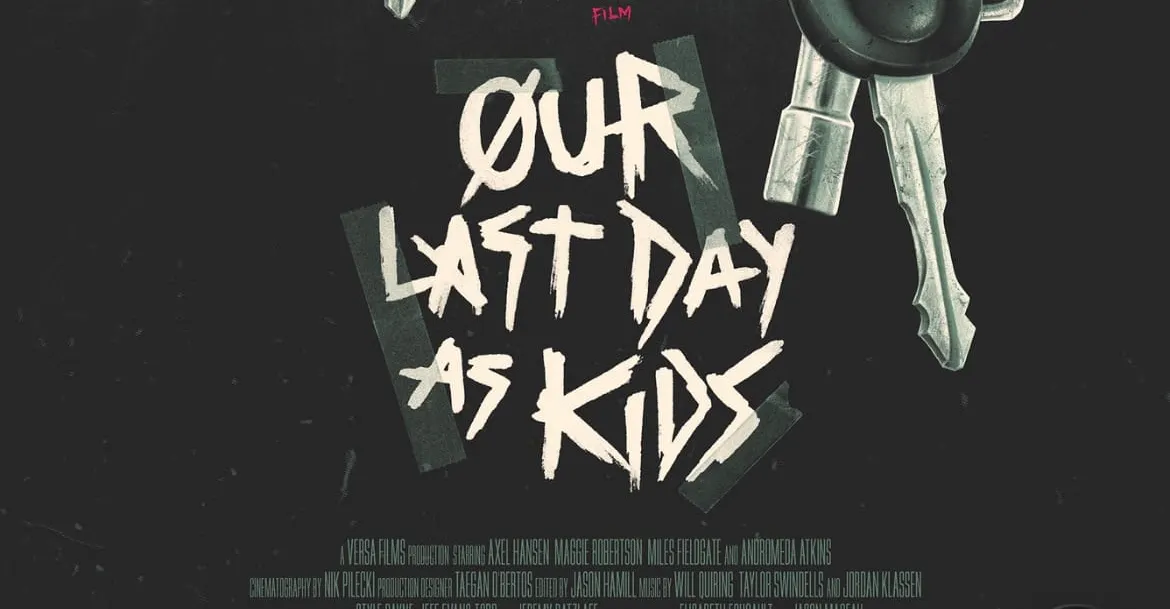
When I was a young boy, I thought there was nothing cooler than hearing post-hardcore on the radio and seeing scene kids in public. Now that I've grown up, I wake up every evening with a big smile on my face, because the music I grew up loving has found its way back into popularity. This has been said so many times that I'm not sure if it matters: 2000s emo is making a comeback in a huge way. It's no surprise to me that a short film has come out of this resurgence. Let's just stop, drop everything, forget each other's names, and talk about Our Last Day as Kids.
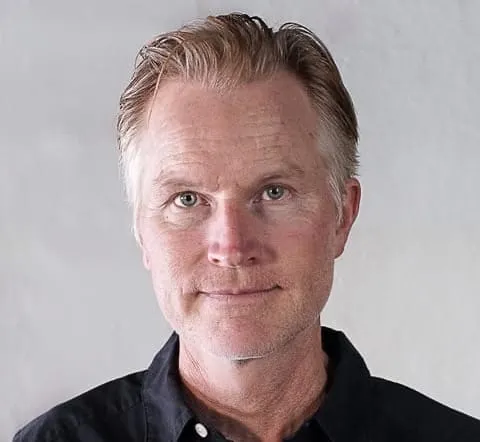
Our Last Day as Kids is the first narrative project from Dylan Hryciuk, currently known for his work on music videos for bands like Spiritbox. He got his start in filmmaking when he took his family camcorder to record his brother's band, and Our Last Day as Kids is loosely based on his own experiences growing up in the underground music scene.
The movie follows Casey, a teenager who meets a merry band of delinquents—Alex, Rodney, and El—one night after recording his brother's band. The film isn't about Casey, though. It's a coming-of-age story about the growing pains and struggles the whole group experiences with the 2000s music scene as a backdrop.
It's a really vulnerable, moving film with characters so honest and well-rounded that I feel like I've met them before, so it was a pleasure when I got to interview Dylan. A man so passionate and delightful that a 20-minute interview transformed into a 90-minute-long conversation about music, the drama of teen angst, and the kids he used to know. Here's a little snapshot of what was a thoroughly enjoyable discussion.
(Note: when we refer to "the Scene," we are referring to the underground music scene)
So... I'll just get right to it. Obviously, the short draws a lot on your own personal experience. I even saw that in the description of the YouTube video, you dedicate the film to "the kids you used to know." So how much of the short is fiction? How much is real?
Dylan Hryciuk: Yeah, so it's very personal, and the characters are based on real people, kind of across the board. Like, I am a Casey. My name's not Casey, but Casey is based on me. Alex is based on a real person. El is kind of an amalgamation of different kids I grew up with. And then Rodney is someone that I experienced from afar, but it kind of made sense for him to be like the antagonist of the friend group, where the story actually began.
So I have a full feature film written, and it explores the same characters and friendships at a deeper level. It all starts with Casey going to the show, and it's his brother's band. And you get the sense that it is like this kid who sees his brothers through rose-colored glasses, and he's kind of under their thumb a little bit.
Because both my brothers were in a metalcore band. And then my parents got, like, a family camcorder to record Christmas. We never did that. I just started making stop-motion films and filming things with it, and my brothers were like, "Oh man, you should like film our shows." And that felt like me being... a part of the band almost. So that became like my identity.
My dream as a teenager was not to become a filmmaker. My dream as a teenager was for my brother's band to be the next The Devil Wears Prada (Note: the metalcore band, not the Meryl Streep movie). When I was younger, I was very emo. I had the long, swoopy hair, jeans as tight as possible, and whatever. But a lot of that came from being inspired by my brothers. And then eventually I met these other kids, and I kept realizing... as I got older that a lot of who I defined myself as was based around other people that I admired.
So, then in the feature film, Casey eventually meets these kids in this antagonistic way, just like the short. Rodney hates his (Casey's) brother's band and whatever, and there's this weird push and pull, but he creates these deep friendships, especially with Alex and El. Alex is based on my first girlfriend.
I came from a very middle-class family. So I had the aesthetic of the music scene, but I started meeting kids where I was like, "Oh, shit, like, maybe this is coming from an even deeper place for you guys, why you need this music as an escape." I guess not to say I didn't have my own stuff, but it was different.
(Hryciuk went on to tell me about his struggles with body dysmorphia and how that's reflected in the character of Casey. He talked about the other stories the feature film shares with his life. The heartache of seeing his brother's band fall apart. Seeing his first girlfriend struggle with her sexuality. The lasting impact his friends had on him as he grew up.)
It sounds like the feature is going to make me cry like a baby. I hope you can get it made. When you get involved in the local music scene, it's because you like the music, but then you stay for the community. The longer you're there, the more you start to catch these brief flashes of the burdens other people are carrying. And you start to understand why they're a little gatekeep-y about it. You explore that a little in the short film, but how is it handled in the feature?
DH: It's a big part of it, especially with Rodney. There are a lot of things I want to say, but we dive into each of these characters' home lives. So El is actually the opposite of Rodney. We put these assumptions on her for her aesthetic and how she looks (Note: she has pink hair and multiple facial piercings). There are jokes about her, like not showering and stuff, and then you find out later that she's actually like a rich kid. I dated a girl exactly like that! She was going to raves, getting into a lot of trouble, and her whole aesthetic was being a little bit messier and grimier. Then I went to their house, and it was in a gated community, and they had secret passages in their house, and I was like "What the hell?" So that's what El represents to me, and then Rodney's on the opposite side, where he's an asshole because he's like really guarded. He's really protective of these friends because he's had to be almost like a father figure. Something is lacking in his family.
It's exactly what you were saying. The way Rodney sees it is that Casey's family has it so easy. So there's a jealousy there, but there's also this protective thing that Rodney is clawing onto. He likes the music for the "authentic reasons". He's here for the right reasons, and everyone else who isn't from the same background comes off as inauthentic.
It's not to say that the people from middle-class or upper-class backgrounds don't have problems. They just feel a lot easier to overcome. Like for me, I come from the middle class. Some people would say to me, like–there's a line in the short film like "What does Casey have to be sad about?" You know what I mean? And I wanted to touch on that.
I know what I've struggled with, but I also know my place in all that. People have it harder. I like that the film explores that. The Scene as a whole, where it's– on the one hand, the place that feels the most accepting and, on the other hand, it's very cliquey and gatekeep-y and elitist. It's all these things crashing together, like, how does that make sense? So as a "Casey," I always felt like I both fit in the Scene and didn't. Too normie to be in the Scene, too alternative to be out of it.
I feel like a lot of people could relate to that. Myself included. So do you embrace the title of "elder emo"? Do you feel like it applies to you?
DH: Yeah, I do! It's funny you ask that, because I'm 33 now, but when I was a teenager, emo was a very hurtful thing to say. There was no "Yeah! I'm emo!" If someone called you emo, they were insulting you.
This may be too much information, but when my brother was in high school, one of the kids he went to high school with made a "Kill All Emos" website, and he put my brother's picture on there. And that was normal. Teachers didn't do anything, it was just "Oh, that's just teenagers."
It was crazy. I remember biking to my first girlfriend's house, the girl that Alex is based on, and this truck pulled up beside me. I was like 13, 14 years old. This big truck stops right next to me, and the guy starts yelling at me, and he said he would've killed me if his girlfriend wasn't in the car. Because of how I looked.
Emo wasn't a badge of honor. I liked being in the Scene. We didn't consider it the "emo" scene or the "metalcore" scene or whatever. Today, when people use that term, I just think it refers to an amalgamation of all the things we were listening to back in the day. Whether it was metal, hardcore, or emo, or pop punk.
Now that I'm older, when people say "elder emo" there is that kind of nostalgic badge of honor. Like yeah, if you're gonna encompass all that music under the term "elder emo", now I can look back and feel proud to have belonged to that scene. It was a really cool time to grow up.
I feel like people have varying definitions of what "true emo" is. That's sort of the gatekeeping again. I'm not the person to say, "Oh, emo actually started in the 80s. Blah blah blah." I grew up in the MySpace era of music, which did bring together deathcore, metalcore, hardcore, and emo-adjacent music all to the forefront in my life. That's what I'm really attached to. I love it all. The labels don't really matter to me.
There's definitely more pride in being "emo," no matter how you define it. So obviously, casting was a high priority, or at least it seemed that way. Did you have to educate any of your actors on the music?
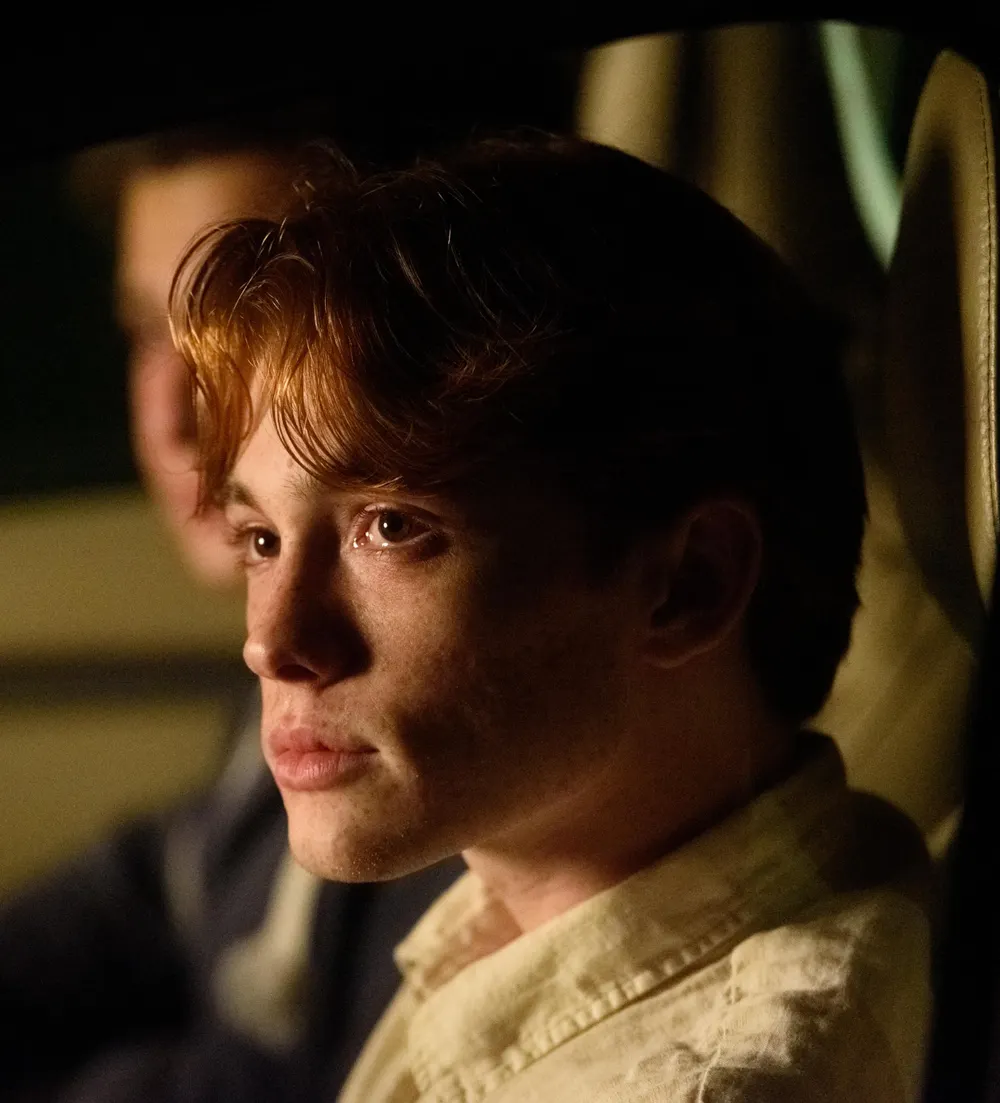
Yeah, our lead, the guy who played Casey, he didn't realize it was "an emo film" when he auditioned. He was kind of pulled back from it. To the point where, originally, we had planned for him to have dyed hair and swooped bangs, but he wasn't really for that, so I decided to leave that to the feature. We decided to lean into the "baby emo" vibe because he was so outside of the Scene. He was a bit of a preppy boy. It actually led into that performance fairly well. Sort of the vibe of the kid having one foot in and one foot out. This kid really likes the music, but he doesn't have a lot of edge to him, so his character is trying to find that through other people.
That was probably the biggest hurdle. What's cool is that the last thing we filmed was the scene at the show. Before that, he didn't like metal or anything. Then, once he was at the fake show that we had created, he was like, "Oh my God, I get it." He understood being in that energy like "Oh, the feeling of being there is completely different," and he was listening to a band we made up like a week prior. Very rushed music, this isn't a real show, and you felt something. Imagine what it must be like at a real show. So it was really cool seeing him sort of become a "Casey" in real time and find the music through the filming.
The girl who played Alex listened more to the Beatles and Radiohead. You know, rock and indie. That's all she listened to. She was more of a hipster, but she could transform, and it would make sense, but she didn't actually listen to any of the music we had in the film specifically.
Casey and Alex were both like actors, right? Versus the other two, Rodney and El, were musicians.
So El, we found on Instagram. I don't know how you'd describe her music. Very like punk, electronica. They're from the UK. They're a fan of my production company through our music videos. They weren't an actor, but when they auditioned, it was just so natural. I was like, "This is the person I wrote." The more I talked to Andromeda, the person who played El, the more I realized they were just exactly like the character I envisioned. Like how?
And Rodney is a musician too. Rodney is not like a punk. His music project is like modern indie, but it has an angsty punk energy. I shot a music video for Senses Fail, and he was there, and he had this bright red hair. I wanted him to play Rodney 'cause he has this energy. He shaved his head. Fully transformed into someone else. He said he never shaved his head. He told me he related more to Casey, but he had more Rodney energy than he realized.
Were there any scenes that were hard for you to revisit? Just making the short film or even writing the feature?
Yeah, so when I started writing the movie– I've been wanting to do this for a long time, my whole goal is to get into doing narratives and features. And when you're in film school, they tell you, like, write what you know. Like, if you're starting, write what you know, because you're not going to be able to write some like hitman, sci-fi, whatever, and make it feel grounded, because you don't have enough life experience to somehow figure out how to make something that crazy feel real.
So I'm like, well, there's nothing I know more than my relationship with my brothers. It all started with their band, which meant the freaking world to me. Like the biggest heartbreak of my life wasn't when my first girlfriend and I broke up. It was watching my brother's band fall apart because my dream was for them to make it.
And when I was writing the feature, I was writing about all those things. This awkward, insecure kid I was, 13 to 17 or whatever. And when I was writing it, I was like, oh, no, I'm still this kid. It was like very therapeutic, but also very weird to realize, like, how much you don't change in certain ways.
Cause I still struggle with my body and my face and all of those things. I sent my brothers the script, and I still wanted them to finally give a shit about what I'm doing. And they, instead, were just giving all these notes on, like, "Nah, you should do this." And "Oh, it's really not about the band, blah, blah, blah." Like stuff like that. And I'm like, damn, I'm still like trying for their approval.
So that was a big eye-opening experience of writing that and what made it challenging. Diving into some deep insecurities that I'm still trying to process.
There's this one scene we're filming in the bedroom, where he's crushed from this breakup, but there's this one moment where he looks up at the mirror and looks at himself finally, because what he hears on the camcorder is about turning the camera on himself.
I'm just describing to this kid who's playing me how I felt a lot of my life, of just [saying things] like, "You're going to look up at that mirror, and you hate what you see." And I'm like, "Oh my God, like, why do I feel that way?"
And I remember watching him perform it. Just tears streaming down my face because I'm seeing myself from an outside point of view. I can't empathize with myself, but watching a character who's feeling the things I feel, I'm like, "Why does that kid feel that way?" Like, that's not okay? So that was a really interesting part of filming it.
I can only imagine how that must have felt for you. What do you hope people take away from your short? Or the feature if you get to make it?
I think the whole film is about how we all have very different journeys about finding ourselves and who we are, and it's about being okay with that journey.
Coming to terms with self-acceptance, and that's a big part of what the Scene felt like. It was "Oh, you're accepted here. I don't care if you have the craziest haircut or you're wearing your sister's jeans or whatever, like hell yeah! We love that about you."
I've seen a lot of music movies, and it's always about a band that blows up, and now they're Queen! Wow, wasn't Queen amazing? And I want this movie to be an ode to just like the local scene. That local band that went nowhere was so important to some of those kids in the crowd. For my brother's band, that kid in the crowd was me. There are other kids too, but they were so important to me. And as much as they think their dream never happened, and they never got a tour of the world or whatever, there's probably a kid who picked up a guitar or started screaming because they were in the crowd of your show. And isn't that like the domino effect?
Yeah. So I think that is one of the big takeaways I want people to take from it. The people who are in bands that never made it. The local music scene. They are the backbone of the music industry.
You can watch Our Last Day as Kids on YouTube and follow them on Instagram for updates.