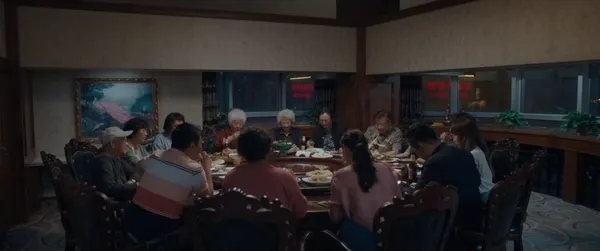
In the remote forests of Appalachia, a young redhead woman born into a secretive clan of soul stealers struggles to embrace the violent tradition that defines her people. That is the whole of Alexandria Basso's REDNECK on paper, and almost none of what makes it work. The film lives in the gap between an absurd premise — souls collected in freckles — and the deadly sincerity with which Basso and her collaborators stage it.
Starring Annalise Basso as Sparks, in a role written specifically for her, REDNECK arrives at FilmQuest as a proof of concept for a feature, though it was built to stand on its own. It occupies a strange and generous space between folk horror, dark comedy, and fairy tale, and it understands that laughter is one of the fastest routes into an audience's defenses.
Key Takeaways
- REDNECK takes a comic premise — a murderous clan of redheads who collect souls in their freckles — and commits to it with total sincerity, landing somewhere between folk horror and fairy tale.
- Basso wrote the lead role for her sister, Annalise Basso, whose insistence on one more take at the end of day one produced the scene the film hinges on.
- The hardest work was subtraction: deciding how much of an enormous mythology to suggest without explaining it.
Basso spoke with us about trust, torchlight, and the version of the edit her editor called a wildcard.
Interview
What drew you to make this film, and why this story, why now?
I think what drew me to make this film was the personal challenge of taking something inherently comical and building an entirely unique mythology around it. I've always loved stories that take something familiar and twist one tiny, impossible element until the ordinary becomes extraordinary. I wanted to explore how far I could take that idea while keeping the world grounded in something recognizable and human.
But beneath all the absurdity, REDNECK is really about reclaiming the thing that sets you apart. Taking something that might have made you feel strange, different, or even ashamed, and turning it into a source of power.
What surprised you most about the filmmaking process, creatively or logistically, including any moment on set or in post that changed how you saw the story?
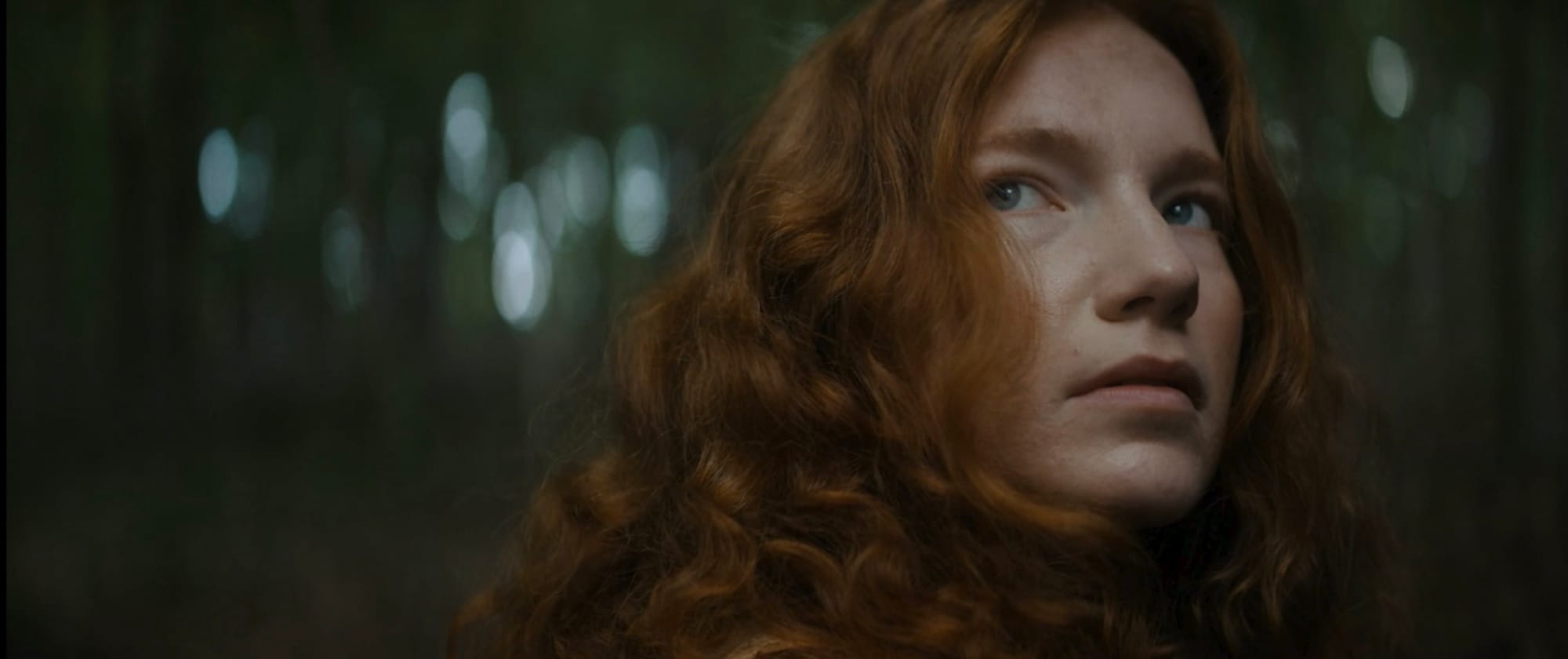
I was astonished by my sister's talent. I'd written this character specifically for Annalise, so I knew what she was capable of, but to actually watch her perform and transform, reach and twist, dig in and open up — that was astonishing. There's one scene in particular where she succumbs to her monstrous nature that, to me, makes the entire film. Without that scene, we wouldn't have a movie, and we almost didn't get it. It was the last shot of our first day, we were about to wrap, and she said, "I have one more. Let's go right now." We did, and I'm so thankful for her. She's been on a lot of horror sets; this was my first. I'm glad I listened.
My cinematographer understood the texture of what I was trying to create completely instinctively. I wanted something intimate and strange, a portrait of a people rather than a conventional movie. I didn't want it lit like a movie. I wanted it lit like a story. And he delivered.
My producer, Hope Karowski, had this wonderfully relaxed disposition while somehow managing approximately 149,352 things I was convinced I'd have to handle myself. Her calm and efficiency gave me the freedom to focus on the film.
And then there was my editor, Alex Hoffman. I'd initially assembled the film almost exactly as it appeared on the page, and something wasn't working. I'd lost energy, lost momentum. My stomach totally dropped and I thought I'd made the most expensive mistake of my life. Alex rearranged it and somewhat hesitantly presented what he called his "wildcard version."
That was the version.
I think the greatest surprise was the film itself, after I allowed talented people to help shape the story.
What moment in the film feels most like you, or like something only you could have made?
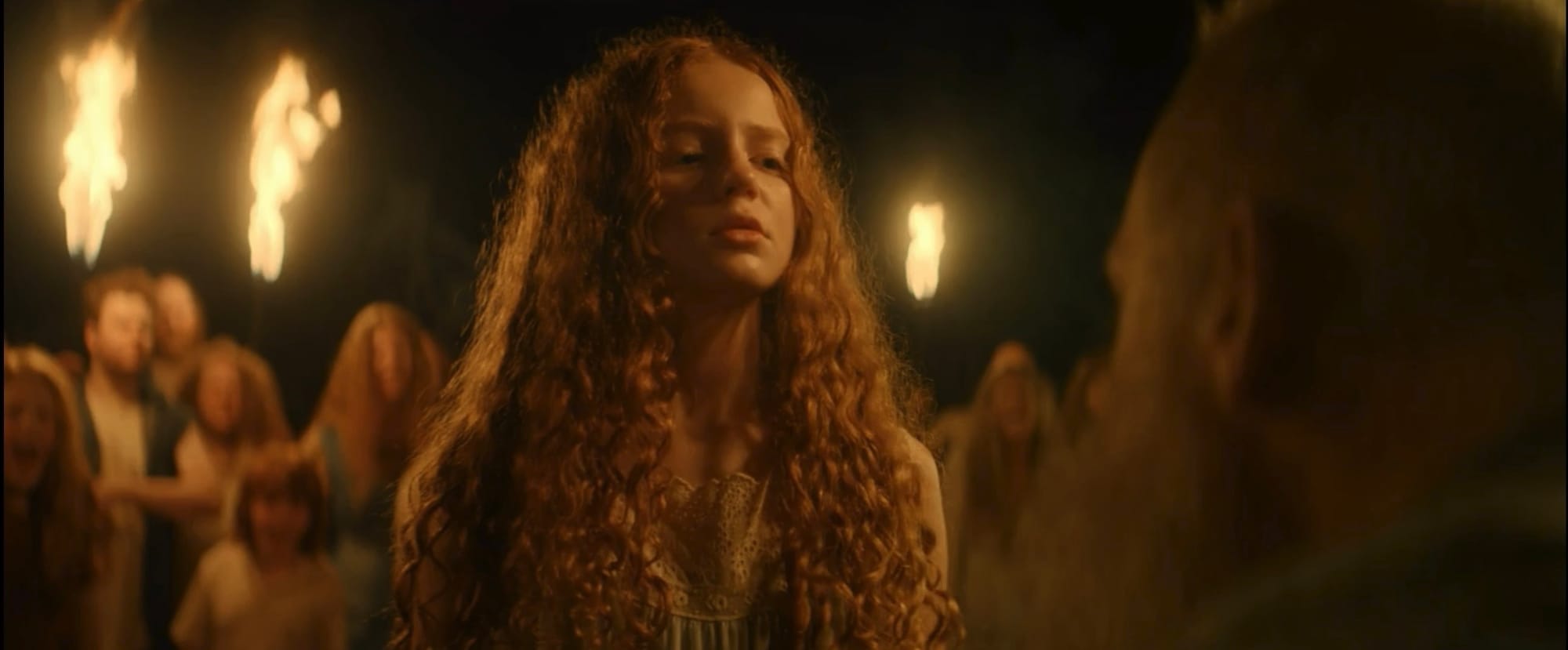
There are fifty redheads in torchlight cheering for a little girl to take a human soul at a hillbilly fortress.
It's bizarre. It's strange. And visually, it's incredibly striking. You don't know whether to laugh or recoil, and instead you find yourself completely intrigued. I think that moment encapsulates everything I love about storytelling. Something utterly ridiculous presented with such sincerity that, somehow, it becomes beautiful. It's an image that probably shouldn't exist, and yet there it is.
What was the hardest creative decision you made while making the film?
I wrote so many versions of REDNECK. It's ultimately a proof of concept for a feature, but I knew the short needed to stand on its own two feet. That created an interesting tension. I had this enormous mythology I wanted to explore, and every version tempted me to reveal a little more of it.
The hardest part was deciding what to leave out. How much of this world could I suggest without explaining it?
What tool, technique, resource, collaborator, or mindset shift helped most during production?
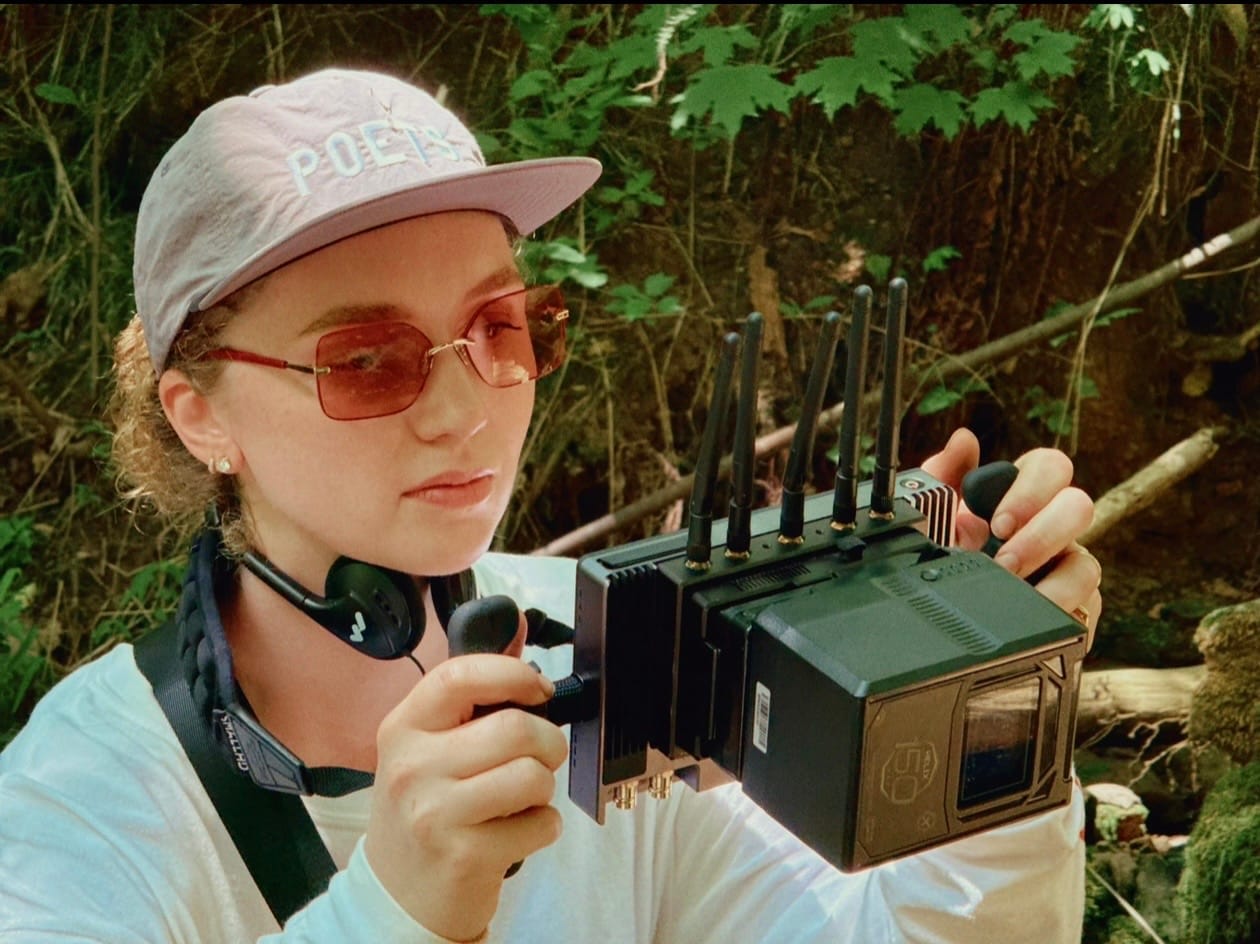
My cinematographer, Chris Haggerty, and I were made for each other creatively. I think we found each other at exactly the right time, with exactly the right project.
I'm a bit lonely by nature. I have a very small orbit of people I let in, and I've historically had a difficult time entrusting other people with things that feel so entirely mine. But I gave my vision to someone else, and he illuminated it.
He was this incredible wellspring of positivity, energy, and creative instinct. He understood what I was trying to accomplish without my having to explain every little thing. And because of that, I was able to focus entirely on directing, on the performances, and on navigating this peculiar world I'd created.
He literally lit the path.
How does your film fit within, or push the boundaries of, its genre or form?
I think REDNECK occupies an interesting space between folk horror, dark comedy, and fairy tale. Folk horror traditionally derives much of its terror from isolation, ritual, and the suspicion that an ancient belief system has survived beyond the reach of modern civilization. REDNECK offers that and more. I'm interested in horror that doesn't rely exclusively on dread. Humor can make an audience lower its defenses, and tenderness can make something grotesque unexpectedly sympathetic.
What is the greatest strength of independent filmmaking, and how did you lean into it here?
I think the greatest strength of independent filmmaking is that you don't have to appeal to everyone.
REDNECK is a fairly good example. It's a film about a murderous clan of redheads who collect souls in their freckles. I can't imagine that premise emerging from a committee.
Independent filmmaking allows you to protect the peculiarities that make a story worth telling in the first place. There's a tremendous freedom in pursuing something simply because it fascinates you.
What does it mean to have your film selected for FilmQuest, and where does the film go next?
FilmQuest celebrates the kinds of stories I've always loved: strange, imaginative, occasionally grotesque, and unafraid to take themselves seriously even when their premises are completely insane. Genre filmmaking has this extraordinary ability to bring together people who are willing to surrender to someone else's imagination. What filmmaker could ask for a better audience?
I just want audiences to be entertained. I want them to escape. I'm genuinely honored to have an audience's attention, even for fifteen minutes. I want them to laugh, feel uncomfortable, and become curious about this strange little world I've created. I want to leave them wanting more.
Hopefully, there will be a feature length version of REDNECK at the next FilmQuest festival.
Main Cast & Crew
- Annalise Basso as Sparks
- Alexandria Basso — Writer/Director
- Chris Haggerty — Cinematographer
- Hope Karowski — Producer
- Alex Hoffman — Editor
Filmmaker Opportunities
💛 Fund your next project with fiscal sponsorship
Have a project in the works? As a 501(c)(3) nonprofit, the Cinematography for Actors Institute can accept tax-deductible donations on your film's behalf — a door-opener for grants, foundations, and supporters who want to back your work. We've serviced over 100 projects to date and helped route over $800,000 in funding to filmmakers. Explore fiscal sponsorship →
📬 Grant deadlines and festival opportunities, straight to your inbox
The CFA newsletter rounds up grants, festival calls, and community news for independent filmmakers — the kind of opportunities that are easy to miss and painful to miss. Join the newsletter →
🎬 Focus on the creative — we'll help with the logistics
Production Management, CFA's newest member program, launches this November: production insurance and workers' comp, payroll, film permits, gear rental coordination, SAG-AFTRA compliance, contract drafting, production consulting, and crew recommendations — handled by a team of working filmmakers, à la carte or all in, in partnership with Creative Access Group. It's waitlist-only until launch. Join the waitlist →
League of Filmmakers is published by our parent organization, the Cinematography for Actors Institute — a 501(c)(3) dedicated to education, community, and capital for underrepresented filmmakers and actors. Learn more about CFA →