Table of Contents
Three Key Takeaways
- Minimalism as a powerful storytelling tool: Suriano distills horror to its essence, using one actor, one room, and silence to evoke profound psychological tension.
- The horror within: The film explores guilt, isolation, and internal confrontation rather than external monsters, redefining genre boundaries.
- Independent filmmaking’s strength: Creative freedom and embracing imperfection fuel the film’s emotional honesty and atmospheric depth.
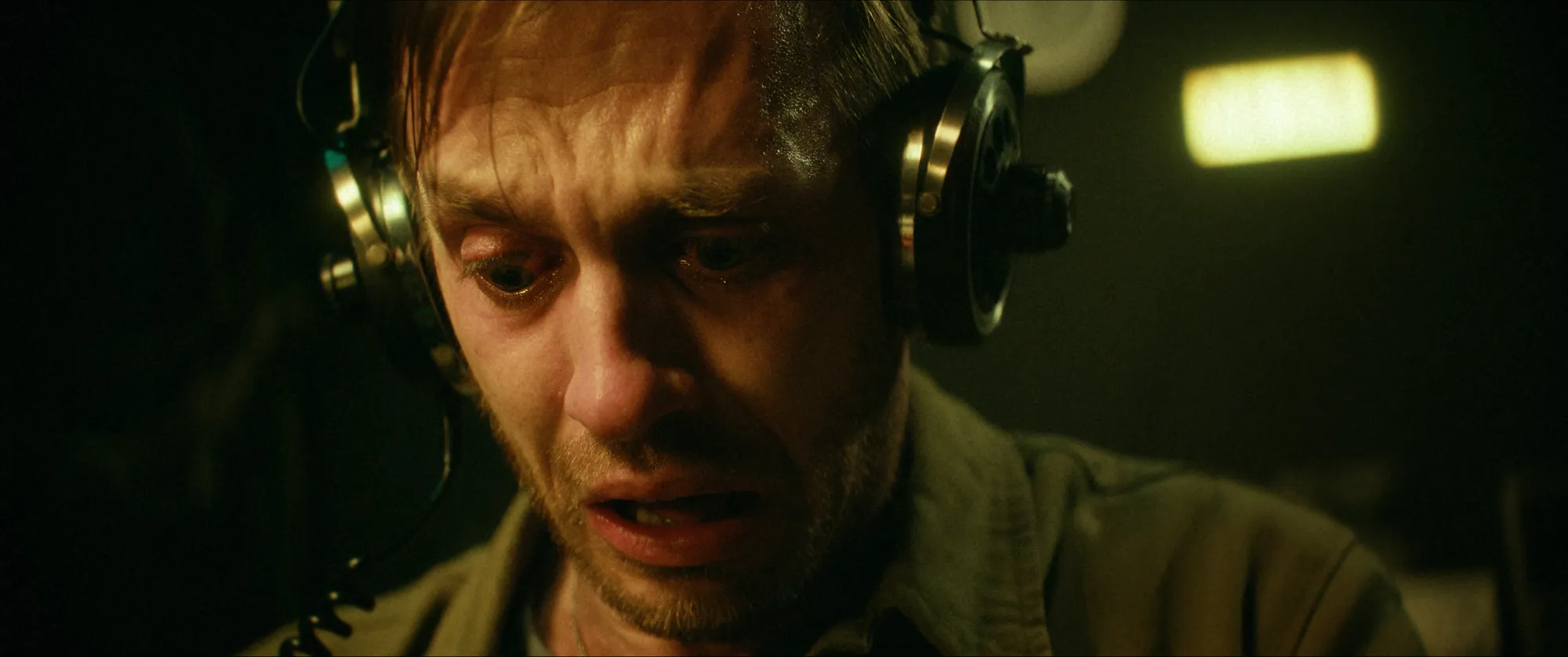
Italian-American filmmaker Riccardo Suriano brings his latest psychological horror short, “The Waking Call,” to FilmQuest 2025, where lead actor Michael Maggi earned a Best Actor nomination. Anchored by a raw, intimate performance and shot by cinematographer Daniele Tofani, the film captures a late-night radio host unraveling in a single room, confronting the ghosts of his past through mysterious calls. Suriano’s work blends atmospheric tension with emotional depth, inviting audiences into a haunting meditation on silence and guilt.

What drew you to make “The Waking Call”? Why this story, and why now?
I was drawn to make “The Waking Call” because I wanted to strip filmmaking down to its purest form: one actor, one room, one truth. In a time when cinema often hides behind spectacle, I wanted to confront silence, isolation, and guilt through a raw human performance. This story reflects the internal noise we all carry, the conversations we avoid with ourselves. It felt urgent to explore that now, in a world that never stops talking.
What surprised you most about the filmmaking process this time—creatively or logistically? Was there a moment on set or in post that completely changed how you saw the story?
What surprised me most was how silence became the loudest element of the film. On set, we realized the tension didn’t come from movement or dialogue, but from stillness, from letting the actor not perform. During post, I discovered that every small breath, every sound of the room, carried more weight than any score or cut. It completely reshaped how I approach storytelling, less about control, more about trust in the moment.
Is there a moment in the film that feels the most you—something only you could have made?
Yes, there’s a moment where the camera lingers too long, almost uncomfortably, as the character’s composure unravels. That hesitation, that refusal to cut away, feels the most like me. I’ve always believed horror isn’t in what we show, but in what we make people sit with. That scene captures my instinct to let silence and vulnerability do the talking.
What was the hardest creative decision you made while making this film?
The hardest creative decision was deciding how much of the caller’s side to reveal. We experimented with distortion, fragments of voices, and complete silence. Every choice changed the emotional balance—was it horror, grief, or guilt? In the end, I chose ambiguity. Letting the audience fill in what they couldn’t hear felt riskier, but also more human.
What do you hope audiences take away from your film?
I hope audiences walk away with the uneasy feeling that horror isn’t always external, that sometimes the scariest voice is the one inside our own head. “The Waking Call” isn’t about monsters or jump scares, but about guilt, loneliness, and the quiet spaces where truth can’t be ignored. If the film makes someone sit in that silence for a moment and reflect, then it’s done its job.

“I’ve always believed horror isn’t in what we show, but in what we make people sit with.”
How has this film shaped or shifted the kind of stories you want to tell next?
This film reminded me that simplicity can be the most powerful storytelling tool. By stripping everything down to one actor and one space, I rediscovered how much emotion can live in stillness and suggestion. Going forward, I want to keep exploring that tension—intimate, character-driven stories that use genre as a mirror for human truth rather than a mask to hide it.

What’s a tool, technique, or resource that really helped you during production?
What helped me most was learning to detach from control. I tend to plan everything down to the frame, but this film forced me to let moments breathe and allow things to happen that weren’t scripted. The best discoveries came when I stopped forcing precision and started listening to the space, the silence, and the instincts of everyone around me.
“The scariest voice is the one inside our own head.”
Independent filmmakers often rewrite the rules out of necessity. What do you think is the greatest strength of independent filmmaking, and how did you lean into that on this project? Is there a lesson or breakthrough you’d share with others navigating this path?
The greatest strength of independent filmmaking is freedom—the ability to create without permission. On “The Waking Call,” that freedom meant embracing imperfection and trusting instinct over approval. There was no committee, no safety net, just a small group of people chasing truth in a room. The breakthrough for me was realizing that limitations don’t shrink creativity, they sharpen it. When you stop trying to compete with scale and focus on soul, the film becomes undeniable.
“Limitations don’t shrink creativity, they sharpen it.”
What does it mean to you to have your film selected for FilmQuest, one of the world’s top reviewed genre film festivals?
It truly means the world to me. FilmQuest represents everything I love about cinema—fearless, imaginative storytelling that celebrates the genre in all its forms. To have “The Waking Call” selected here, and to see our lead actor, Michael Maggi, nominated for Best Actor, is beyond anything I could have imagined. What makes it even more special is knowing where it all began—a film made with zero money, zero connections, just a small group of old friends back in Rome who believed in a story and had fun bringing it to life. Being part of such a major festival reminds me that passion, trust, and creativity will always matter more than scale. It’s proof that sometimes, the smallest films can travel the farthest.

FilmQuest celebrates the majesty and might of genre filmmaking across fantasy, horror, sci-fi, action, thriller, western, kung-fu, and beyond. How does your film fit within—or push the boundaries of—genre storytelling?
“The Waking Call” belongs to psychological horror but intentionally challenges its conventions. Instead of relying on external monsters or visual shocks, it turns the horror inward, exploring guilt, silence, and self-confrontation. The film removes every traditional device, leaving only a man, his voice, and his unraveling mind. In doing so, it reshapes the language of horror into something quieter and more human, where fear lives inside the soul rather than outside the frame.
Where do you see this film going next?
After its world premiere at FilmQuest, I hope “The Waking Call” continues its journey through festivals that value atmospheric and psychological storytelling. Beyond that, I’d love for it to find a home on a curated genre platform like ALTER, Short of the Week, or FilmShortage, where it can reach a global audience of horror fans and filmmakers. My goal is for the film to open doors to my next project while continuing to connect with viewers who appreciate horror that whispers instead of screams.

At the core of all my work is a desire to show people the stories I live in my head exactly as I experienced them, and to make them feel what I felt long after the screen fades to black.
Cast and Crew
- Michael Maggi — Lead Actor; Italian stage and film actor nominated for Best Actor at FilmQuest 2025, known for emotionally grounded performances and recent work with Roland Emmerich.
- Riccardo Suriano — Writer/Director/Producer; Italian-American filmmaker blending atmospheric tension with emotional depth in psychological horror and sci-fi.
- Daniele Tofani — Director of Photography; Italian cinematographer noted for practical lighting mastery and expressive framing in genre and arthouse films.