
The other day, my dad woefully informed me that he'd just seen the worst episode of The Simpsons ever. And after watching "Homer vs. Dignity," I had to agree.
The infamous fifth episode of the 12th season sticks to its typical routine: the Simpson family faces some kind of crisis, Homer begrudgingly seeks a solution, and through some wacky hijinks and tough love, ultimately learns a greater lesson—though not before making an absolute fool of himself.
As predictable as its structure is, The Simpsons hasn't exactly proven exhaustive. The 37-season show clearly tapped into a formula that works (I'm as big of a Flanders fan as the next person) but this specific episode, one that my dad singled out amidst a vast pool of cheap gags, outdated humor, and outlandish situations, was an especially difficult watch.
As the title suggests, Homer's complete lack of dignity is the episode's foundational punchline; and it doesn't have much else to offer in its half-hour runtime. He's the butt of every juvenile joke, all of which lack any real substance aside from ridiculing Homer's ineptitude.
This incident left me and my dad thinking: what happened to the once-lionized, all-knowing father figure of American television? And what precipitated his fall from grace?
The Patriarchal Golden Age
While discussing Homer's staggering incompetence, my father pointed to the television shows he remembered seeing as a kid. Leave it to Beaver, Dennis the Menace, The Andy Griffith Show, and of course, Father Knows Best all encapsulated the idealized nuclear family representative of '60s popular media. These charming portrayals hark back to a time when being "the man of the house" truly meant something: a title that inherently demanded a level of respect and obedience, but more than that, a title that was deserved.
Leading father figures of television at the time were characterized by their unwavering moral compass, endless wisdom, and a polished class and debonair that made audiences across America look up to them. In many ways, these shows were just as formulaic as The Simpsons is today, sticking to a storytelling template that typically ended with a life lesson or some gentle discipline delivered by dad.
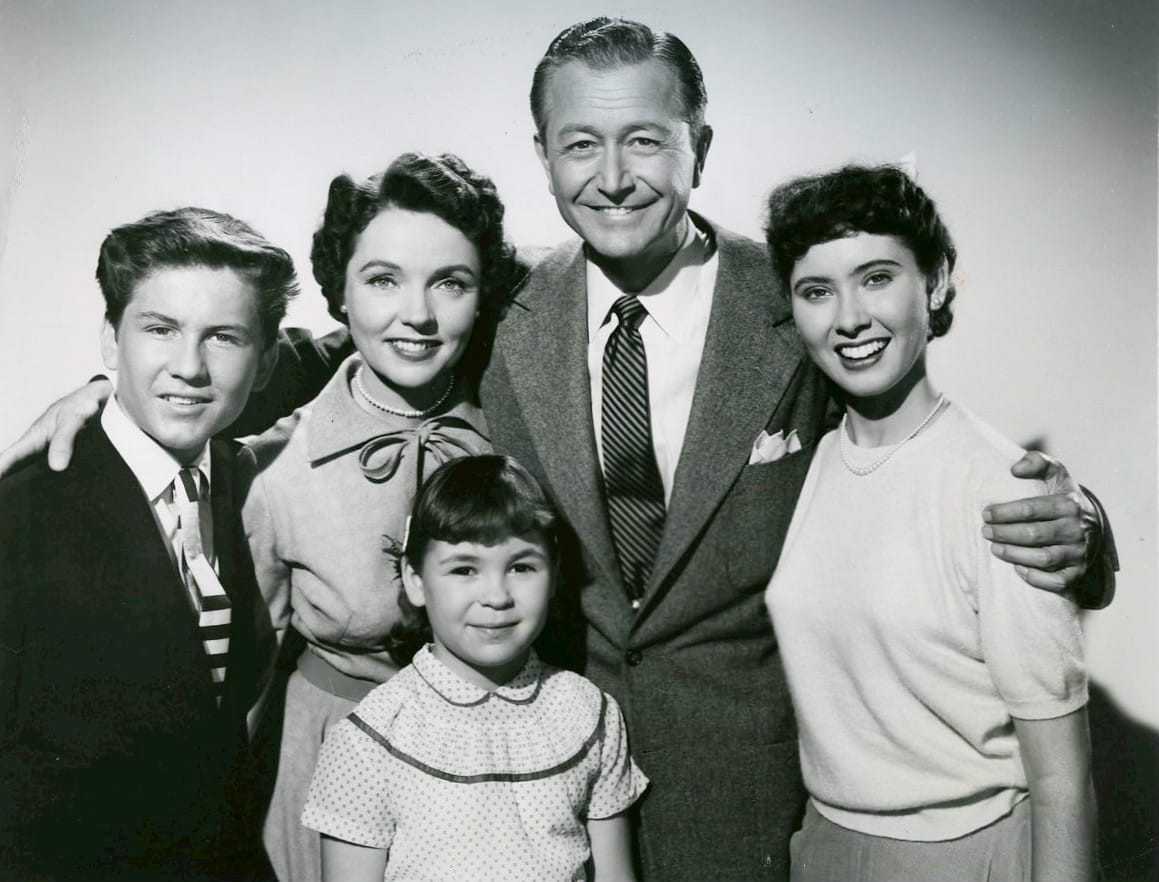
Such depictions defined an era in which men held most of the domestic power. Deeply rooted as this assumption was in American tradition, it simultaneously masked the unsavory aspects of mid-20th century family dynamics: notably, how gender roles established restrictive norms for others in a patriarchal household.
An article from the Demography journal found that "corporate" and "male breadwinner" families dominated throughout the 1900s, while women—especially married women—were disproportionately not engaged in, and even barred from, wage labor. When that economic imbalance started to shift in the latter half of the century, attitudes on authority were inflamed. The author cited a particularly disturbing quote from a 1958 man-on-the-street interview:
Too many wives are getting independent. They go to work and begin feeling they have more to say than the father. The old-fashioned way—when father was THE boss—kept families happier. Not so many divorces, separations, and juvenile delinquents, then.
In addition to the systemic misogyny underlying these harmful stereotypes, the finger-wagging routines of father-focused sitcoms reflect a destructive style of parenting prevalent in pre-counterculture America: authoritarian parenting.
Remnants of this outdated approach are still identifiable in mid-century media. In fact, in the original Father Knows Best radio show, the man of the hour would often resort to depreciative name-calling when his kids frustrated him—a more acerbic trait that was scrapped for the moderated CBS version.
While such behavior is downplayed in older "family-friendly" broadcasts, by normalizing even subtle acts of discipline, these commanding, archaic patriarchs still subconsciously reinforce a parenting style that has since been proven ineffective at best, and damaging at worst.
A Shift in Primetime Parenting
Leading into the 1970s, the U.S. saw a significant change in parenting styles and family structures—a change that was naturally reflected in popular media. This shift was sparked by a more educated understanding of child development and protection, and a greater awareness of nontraditional households.
The Brady Bunch was an early pioneer of this modernized depiction of the American family. The 1969 sitcom follows a widower, Mike Brady, his second wife Carol Martin, and the big, blended band of children and step-children they raise together. While their rose-tinted day-to-day is far from realistic, including under-represented relationships and living situations in mainstream media was nonetheless a big step for entertainment broadcasting.
Embed from Getty ImagesMike Brady holds many of the same values of his primetime predecessors: measured sternness, ethical sensibility, and an admirable level-headedness. However, he is also known for his warmth, compassion, patience, and tenderness—traits that contradict the calloused, no-funny-business, ultra-masculine parenting style typical of post-war patriarchs.
Perhaps more relevant to the discussion of fathers is Full House, which shattered '80s sitcom tropes through a three-person, multi-male co-parenting model. Made up of a single father, a rebellious brother, and a wisecracking best friend, the eclectic cast of caretakers both challenged traditional ideas of what family meant, and showed that fathers can be just as capable in domestic duties designated as "ladylike" for far too long.
The Fresh Prince of Bel-Air also made significant strides toward a progressive depiction of parenthood through the '90s. While Will Smith's deadbeat dad is absent throughout the series, his uncle Philip Banks steps up as the loving father figure he needs. This heartbreaking scene at the end of season four epitomizes the strength of their relationship, and the principled empathy of Uncle Phil's character:
The Buffoonification of Beloved Sitcom Dads
Despite decades of advancement in breaking down stereotypes, the turn of the century saw a resurgence in flawed fictional fathers—though this time, at the complete opposite end of the parenting spectrum.
If television fathers of the '40s and '50s exemplify a toned-down authoritarian approach, then 21st century sitcoms crudely exaggerate neglectful parenting. The Simpsons undoubtedly set a blueprint for the "buffoon" archetype, which has only been amplified throughout the series' lengthy runtime. Characters like Modern Family's Phil Dunphy soon followed suit, as did other animated shows like Family Guy and The Amazing World of Gumball.
These infantile caricatures—once paragons of sophistication and responsibility—often revert to a childlike dependence on their partners, or even their kids during fits of immaturity. It's an alarming implication that's played for laughs, but begs the age-old question: does art imitate life, or does life imitate art?
A 2020 APA analysis of television trends found that 2000s fathers show a lesser degree of involved parenting than in previous decades. A study from the Psychology of Popular Media Culture journal drew a similar conclusion, and contemplated this pattern's real-world sociocultural impact:
The decades-long TV portrayals of working-class fathers as somehow lacking (e.g., more bumbling, more foolish, less competent, less responsible) may lead individuals to pre-judge actual working-class fathers as less involved and less friendly and more caustic toward their children.
In another study examining television's effect on perceptions of fatherhood, the author reflected on the moral precedent being set by evolving gender norms and parenting standards:
Contemporary TV may be painting a picture of fatherhood in which fathers can be portrayed as “good” family men as long as they love their family, despite their incompetence and misgivings. … these portrayals of men seem to be incompatible with a societal call for sensitive, involved fatherhood.
What to Expect from Expectant Fictional Fathers
So what can we infer about the future fathers of television? Past the peak of the bleak buffoon era, more recent shows have given us hope: Chief Hopper of Stranger Things and Joel Miller of The Last of Us spearheaded the lone-wolf-turned-fierce-protector surrogate father trope, and further popularized modern media's celebration of found family.
Still, real life parenting patterns remain rooted in societal expectations and gender roles. A 2022 survey from the Pew Research Center found that mothers were more likely to say that being a parent is the most important aspect of who they are; they were also more likely to express concern about their children struggling with certain hardships. However, a larger percentage of fathers said they were raising their kids similar to how they were raised.
Going back to The Simpsons, Homer's relationship with his own father is nothing less than turbulent. Homer is loath to visit Abe at the nursing home, and when Grandpa Simpson does make a rare appearance, the script cruelly pokes fun at his infirmity and past war traumas.
Abe exemplifies a bygone era of fatherhood in his old-school methods of belittlement and discipline. In one episode, he even throttles his son, revealing the origin of Homer's classic move on Bart. Though presented as a gag, this callback reinforces our current understanding of cross-generational impacts of poor parenting. And those damaging impacts are why it's all the more vital to break abusive generational cycles.
While Homer is far from a perfect father, he continually takes steps to become a better one. He shows more emotional vulnerability, support, and love than he ever experienced in his own upbringing. "Homer vs. Dignity" may not be the pinnacle of his efforts—but there are a few touching moments in the series that redeem him.
I'll leave you with this emotional ending to the famed "And Maggie Makes Three" episode. If there is hope for Homer Simpson, there is hope for us all. Happy Father's Day.