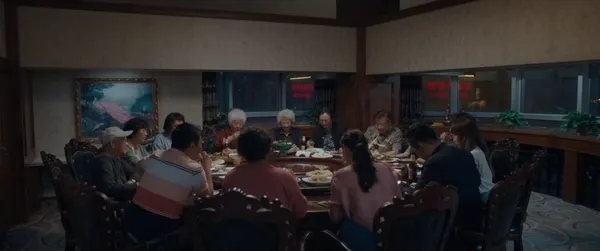
The Crawling begins where a lot of horror begins — a remote cabin, a couple, a light through the window at three in the morning — and then goes somewhere stranger. Christian Everhard's debut feature is cosmic psychological horror with body horror teeth: after retreating to the woods with his wife, a disgraced cop is assaulted by a cosmic entity, and the unraveling that follows is as much about who he thought he was as what is happening to him.
Everhard describes it as a slow burn, an immersive descent into identity, control, and transformation. It is also, by his own account, a domestic drama wearing a monster's skin. The film is playing FilmQuest, his first time at the festival, and it arrives as the end of a long stretch of screenplays and shorts that never quite got the green light — until he stopped waiting for one.
Key Takeaways
- The story came from a real night in a secluded cabin, a flash of light through the window, and the question every horror filmmaker eventually asks themselves at 3AM.
- Everhard deliberately rejected the familiar tall, waifish gray alien, designing something big and brutal with Steve Wang and Cleve Gunderman to sell the sense of a hero being overpowered.
- His path to a first feature came down to choosing one project, ignoring the budget question, and pushing the rock uphill daily until others joined him.
Everhard spoke with us about aliens, actors who say more with less, and the scene he would rather you discover for yourself.
Interview
What drew you to make this film, and why this story, why now?
I was tossing and turning one night on vacation. It was the middle of the night, I was staying in a secluded cabin in the middle of the woods. It was around 2 or 3AM, and because I'm a demented horror filmmaker and fan, I started thinking "what would be the scariest thing to happen to me right now?"
And I swear this is true — as I was thinking, a flash of light beamed through my window. I jumped up and looked outside, but nothing was there. Of course, I thought of aliens right away. What would happen if aliens came down and assaulted me or my girlfriend? I had my story.
Then I started thinking about my main character. Who would be the most interesting person to be incapacitated and assaulted by a stronger being? It became clear right away that my main character had to be a cop, someone who defines themselves by their masculinity and ability to dominate and control other people — to an unhealthy degree. So as the story developed, I started to dig into themes of masculinity, identity, control, and all of the themes that could be explored with this concept.
Aliens seem to be all the rage at the moment. Identity and toxic masculinity are evergreen topics that I find fascinating. It just seemed like a good time to marry the two together and make a fun, weird little horror movie.
What surprised you most about the filmmaking process, creatively or logistically?
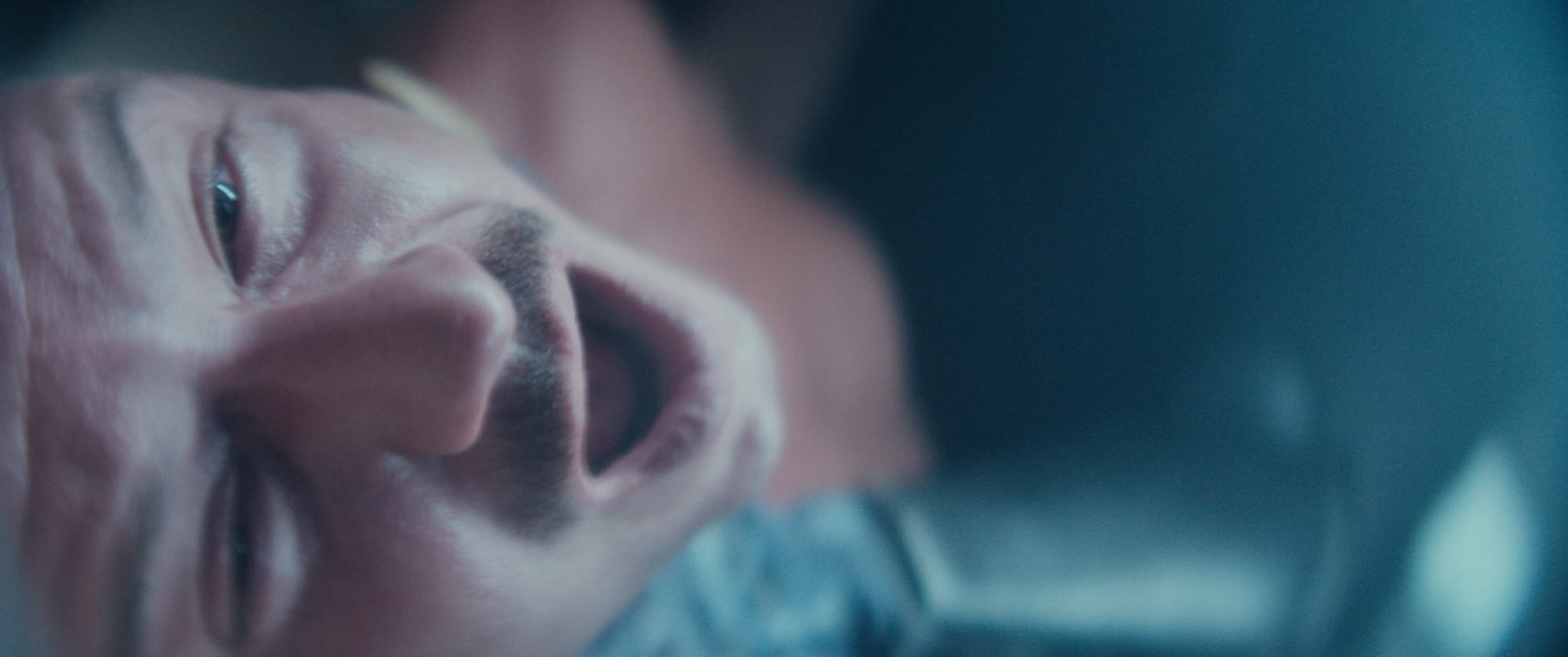
I'm always surprised at how great actors can say so much while saying so little. Luckily, Will, Katherine, and Bobby brought so much to the table and I found myself cutting dialogue and re-working scenes around their incredible talent. And I think the picture is far better off because of it.
What moment in the film feels most like you, or like something only you could have made?
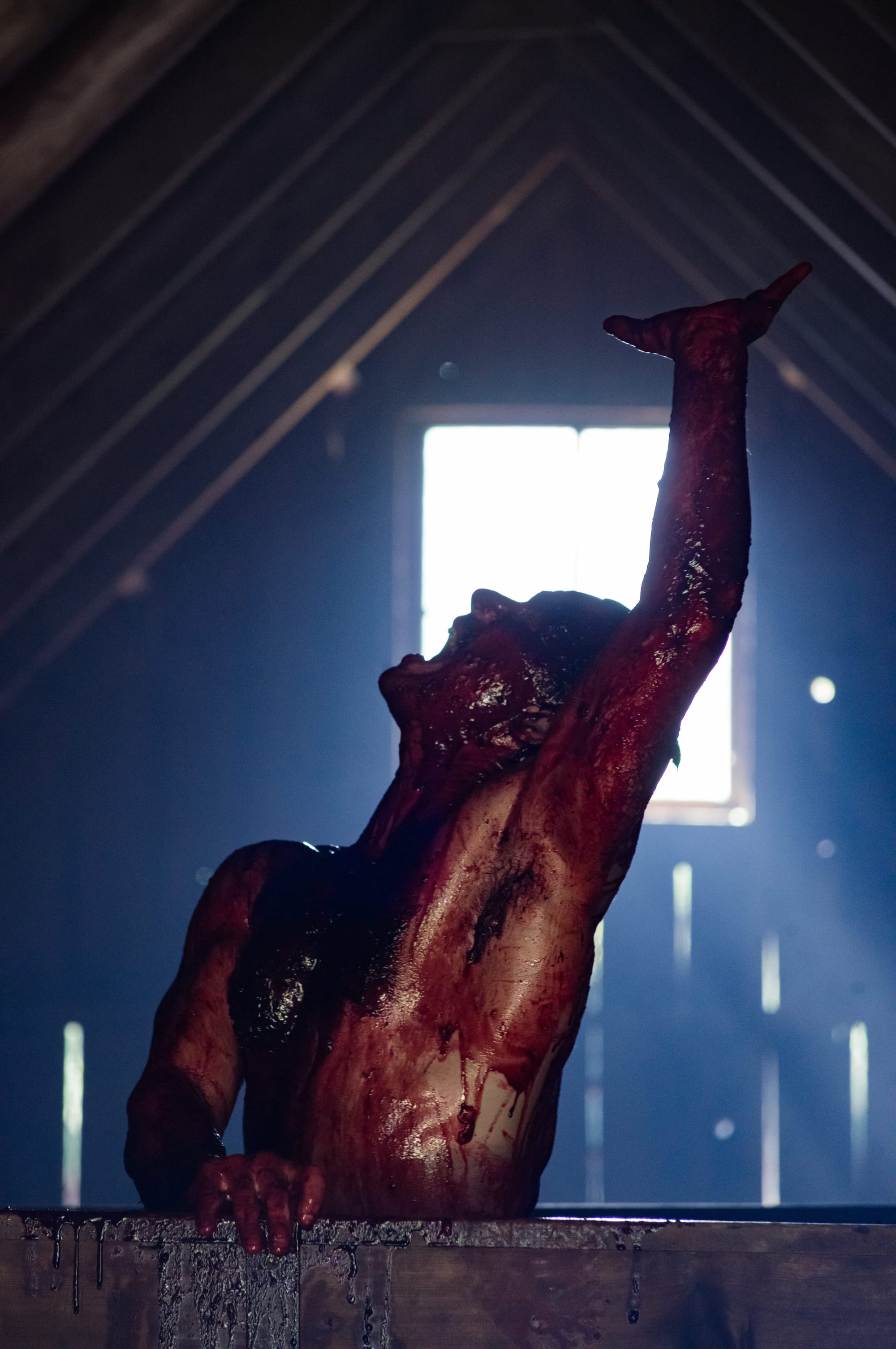
It's kind of a spoiler, so I wouldn't say this ahead of time, but definitely the scene that is most "me" would be the birthing scene. At the end of the film, our main character physically vomits up an embryo carrying an alien/human hybrid baby. It's wild, and gross, but I hope also full of humanity and affection for our main character. That's what I really love about horror: the ability to create interesting characters that we learn to love, then putting them in awful situations and watching the audience squirm. It's the best.

What was the hardest creative decision you made while making the film?
Probably the look of the aliens. We've seen aliens so many times in movies, and originally I had envisioned the typical tall gray. But as the story progressed, and I realized what I was really trying to say with it all, it became clear that I wanted something completely different from what we normally see. Instead of tall, thin, waifish aliens, I went for something tough, big, and brutal. I really wanted to give a sense of them overpowering our hero, and the menace they could bring. So designing the aliens with the legendary Steve Wang and Cleve Gunderman was fun, but risky at the same time, because I was doing something completely new.
How does your film fit within, or push the boundaries of, its genre or form?
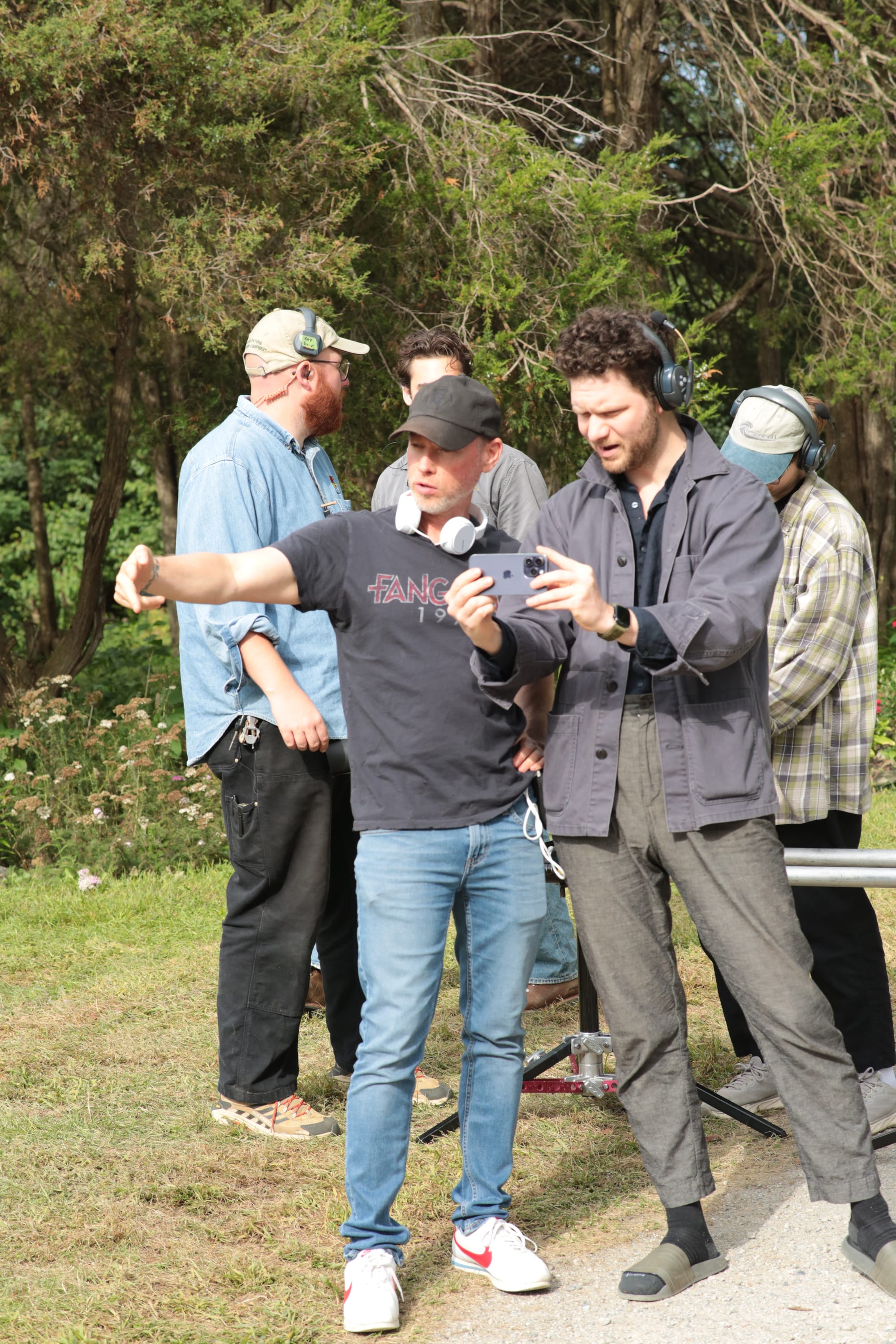
The Crawling definitely fits within the body horror subgenre, but I also look at it as a domestic drama of sorts, with some really terrible and horrifying scenarios. We basically take this guy who clearly defines his entire life by his strength and masculinity, and slowly strip that away and reduce him until he becomes a sobbing mess in a bathrobe giving birth. I don't know if that's pushing the boundaries of cinema, but it was definitely fun to explore.

What is the greatest strength of independent filmmaking, and what lesson would you share with others?
It took me a long time to direct my first feature. I kept banging out screenplays, making short films, getting just enough attention to keep me going, but never getting that green light. Until January of last year, I said I'm going to focus on one thing and one thing only. I don't care if it's less than perfect, I don't care if I raise $50K or $500K — whatever I have by fall, I'm making this damn movie.
Full stop. I let everything else fall away, and like a madman I pushed that one rock up the hill a little bit every single day. And you know what, people started to jump on board. Next thing you know, we're all pushing the rock, and the movie got made. That's the beauty of indie filmmaking. You don't need permission. You just need determination. And that's something we can all find if we want it bad enough.
I also have to say the entire crew brought so much talent, so much heart and creativity every single day. Being able to brainstorm and work things out with such an incredible group of collaborators made all the difference. I couldn't have done it without them.
What does it mean to have your film selected for FilmQuest, and how has it shaped what you want to make next?
This is my first time at FilmQuest, and I have to say I'm extremely impressed with everyone involved. It's been an incredible experience and honor to be considered alongside all these other great films.
I was really interested in starting this film with a character that the audience might not like at first, then taking them on a journey where we get to know our hero, start to understand what made him the way he is, and halfway through we start to love him. Because of that journey, I decided to approach the horror in a psychological, character growth, slow burn kind of way.
I plan for my next project to be an all out assault. A fast paced, fever dream of horror that rip snorts its way across the big screen. At the core of all my work is a desire to make people laugh, jump in their seat, squeeze their partner, and then walk away with a slightly better understanding of humanity. With this one, I just hope people are entertained, and walk away discussing what it all means.
Main Cast & Crew
- Cast: Will Brittain, Katherine Hughes, Robert Lewis Stephenson
- Writer/Director: Christian Everhard
- Producers: Nick Donadio, Ryan March, Christian Everhard
- Editor: Ryan March
- Director of Photography: Alexander Bergman
Filmmaker Opportunities
💛 Fund your next project with fiscal sponsorship
Have a project in the works? As a 501(c)(3) nonprofit, the Cinematography for Actors Institute can accept tax-deductible donations on your film's behalf — a door-opener for grants, foundations, and supporters who want to back your work. We've serviced over 100 projects to date and helped route over $800,000 in funding to filmmakers. Explore fiscal sponsorship →
📬 Grant deadlines and festival opportunities, straight to your inbox
The CFA newsletter rounds up grants, festival calls, and community news for independent filmmakers — the kind of opportunities that are easy to miss and painful to miss. Join the newsletter →
🎬 Focus on the creative — we'll help with the logistics
Production Management, CFA's newest member program, launches this November: production insurance and workers' comp, payroll, film permits, gear rental coordination, SAG-AFTRA compliance, contract drafting, production consulting, and crew recommendations — handled by a team of working filmmakers, à la carte or all in, in partnership with Creative Access Group. It's waitlist-only until launch. Join the waitlist →
League of Filmmakers is published by our parent organization, the Cinematography for Actors Institute — a 501(c)(3) dedicated to education, community, and capital for underrepresented filmmakers and actors. Learn more about CFA →