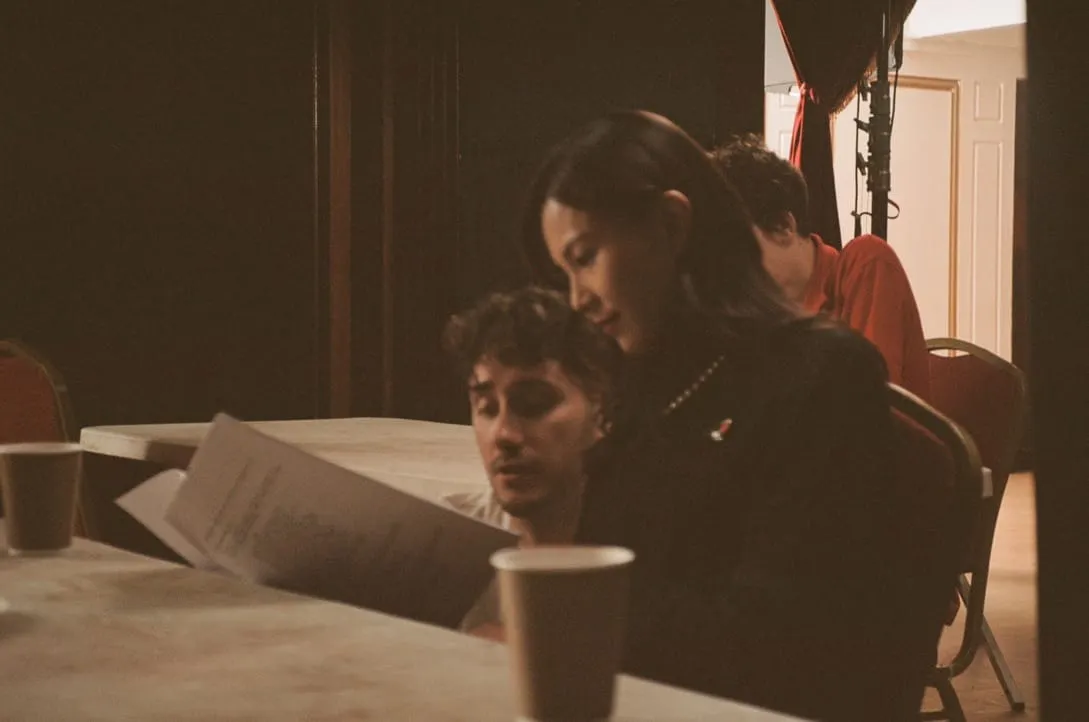
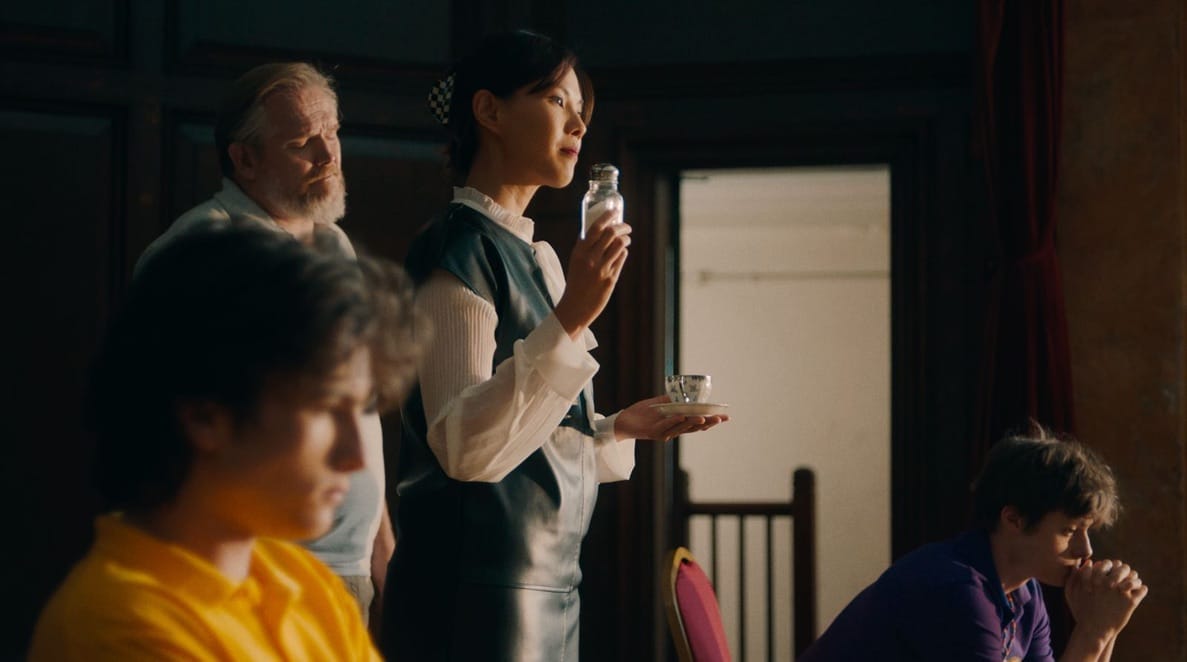
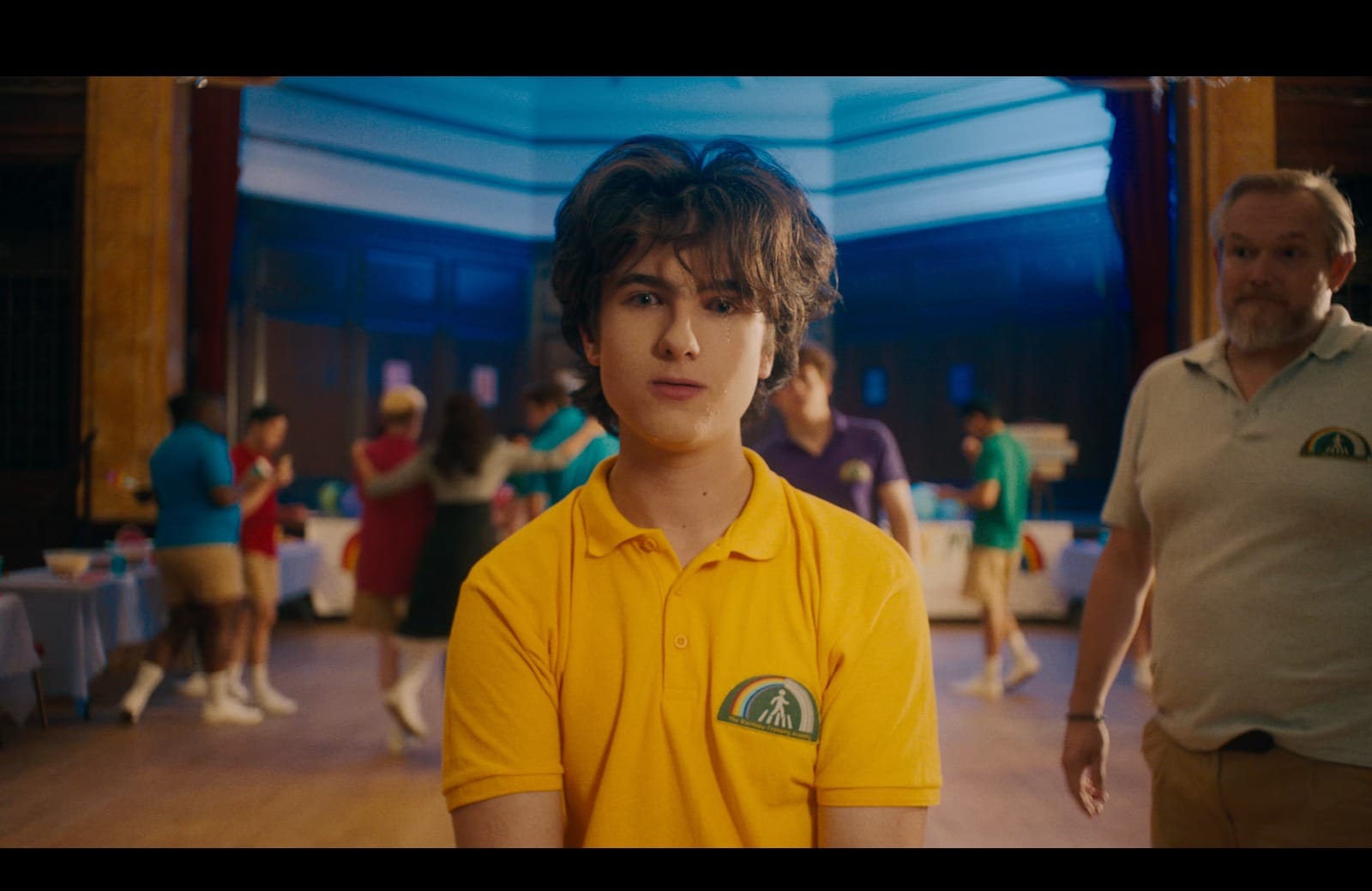
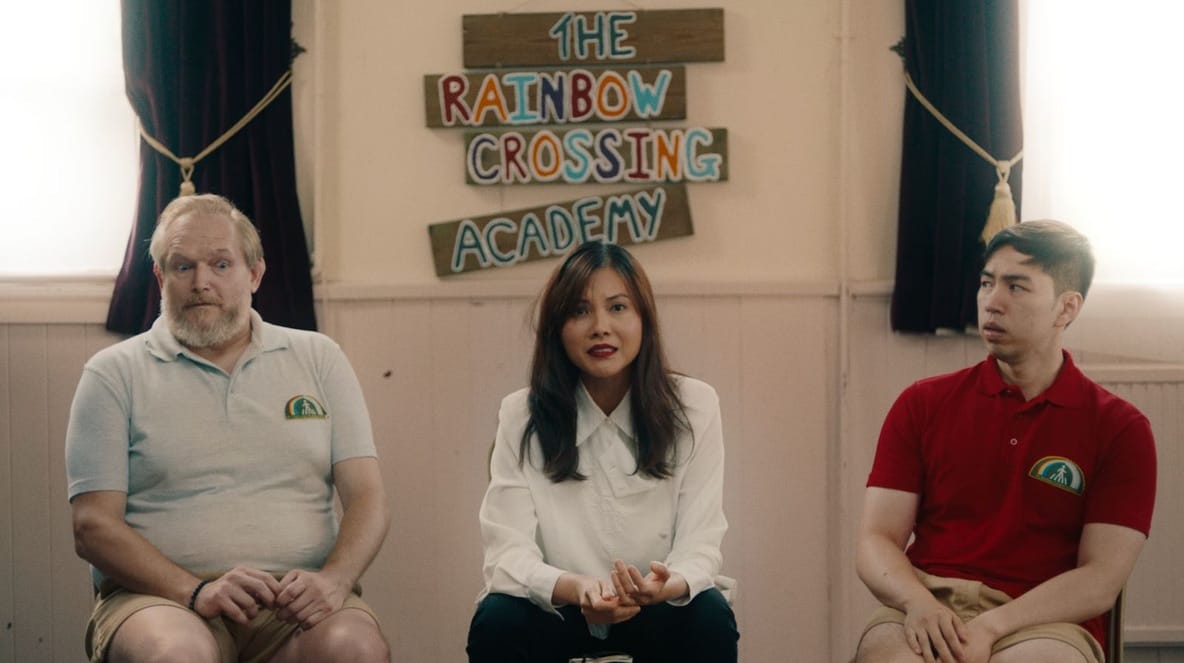
In The Rainbow Crossing Academy, written, directed and produced by Jacob Sarkisian, Sebastian enrols at a camp that insists it is not a conversion camp, hoping to turn straight for his girlfriend, Daisy. Camp leaders Eve and Keith encourage him, but his progress falters when he becomes attracted to new campmate Jordan.
Sarkisian was a film journalist for nine years before switching to filmmaking, and The Rainbow Crossing Academy was his first film and his first time on set. He says the film is made "predominantly for queer audiences," and that he wanted to write a story where queer viewers "can LAUGH AT our oppressors rather than watch ourselves be oppressed by them yet again."
Key Takeaways
- The film began as a horror script, and Sarkisian rewrote it as a heartfelt comedy after realising, in his words, "I am just not a horror writer."
- Sarkisian says much of the camp leaders' pseudo-science dialogue is direct or slightly adapted quotes from real conversion camp leaders and "scientists" such as Joseph Nicolosi.
- In the edit with editor Billy Morley, Sarkisian reworked the film's climax, adding a home video footage sequence to the phonecall scene between Sebastian and his girlfriend.
Below, Sarkisian answers our questions in writing.
Interview
What drew you to make this film, and why this story, why now?
The Rainbow Crossing Academy started out as a horror film. I thought a horror set in a gay conversion camp was a great idea but, after multiple drafts, I realised I am just not a horror writer. However, I loved the premise and characters and particularly thought the fact that the lead character CHOSE to enrol in the conversion camp himself was compelling. So I rewrote the script into a heartfelt comedy, which comes much more naturally to me and also suits my ethos as a creative. I did not want to write another conversion camp drama where the gay characters suffer endlessly. We have seen that. We know that happens. Let’s move on. I wanted, instead, to write a story where we members of the queer community can LAUGH AT our oppressors rather than watch ourselves be oppressed by them yet again. There have been films where their purpose is to show the pain that conversion camps cause. The purpose of this film is to show just how stupid and nonsensical the thought-processes behind conversion camps are. I did extensive research into conversion camps and a lot of the pseudo-science phrases that the camp leaders say are actually direct or slightly-adapted quotes from real-life conversion camp leaders and “scientists” such as Joseph Nicolosi. And all of that stuff - from the triangle of containment to “there is nothing more masculine than the smell of another man” - was very easy to mould into comedy as it is, naturally, hilarious. That’s where the comedy came in.
The heart of the story came from my own personal experience - I had a girlfriend who was perfect on paper. I was so desperate to be straight because I did, truly, love her and wanted it to work but unfortunately, it couldn’t. So I have lived Sebastian’s experience - I know the pain of having to break up with someone in that scenario. And I know the inner frustration of feeling like “why can’t I be this way?” I also know what that denial feels like. So this film makes fun of the homophobic attitudes we queer people face but what it is actually about is internal homophobia - how we reject who we are out of fear and desperation and how we must learn to overcome those fears before we can conquer that internal homophobia and accept ourselves. It’s also about how we need other queer people to help us overcome that internal homophobia. And that’s where the heart and soul of the film is. The bulk of my rewrites, as a result, come in juggling the tone of the story - making sure we stayed funny and entertaining without losing this heart and soul. That was where the majority of my work as a writer came, and it was about learning how to enable the film to have its cake and eat it, which is my ethos as a writer.
“I did not want to write another conversion camp drama where the gay characters suffer endlessly.”
What was the hardest creative decision you made while making the film?
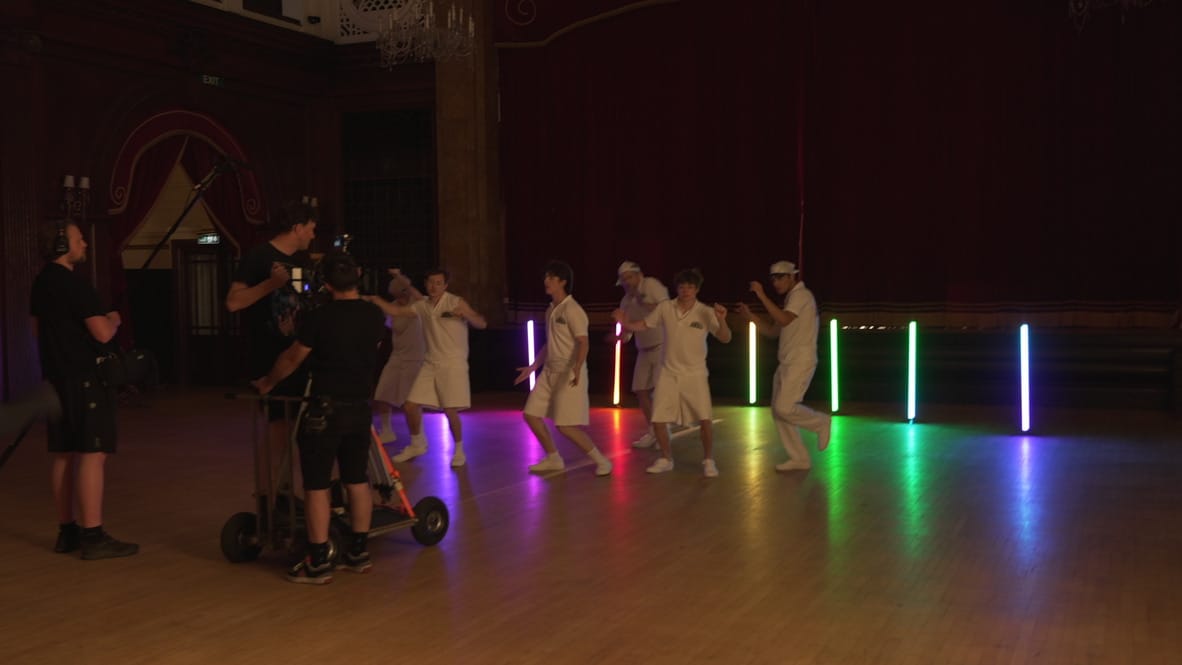
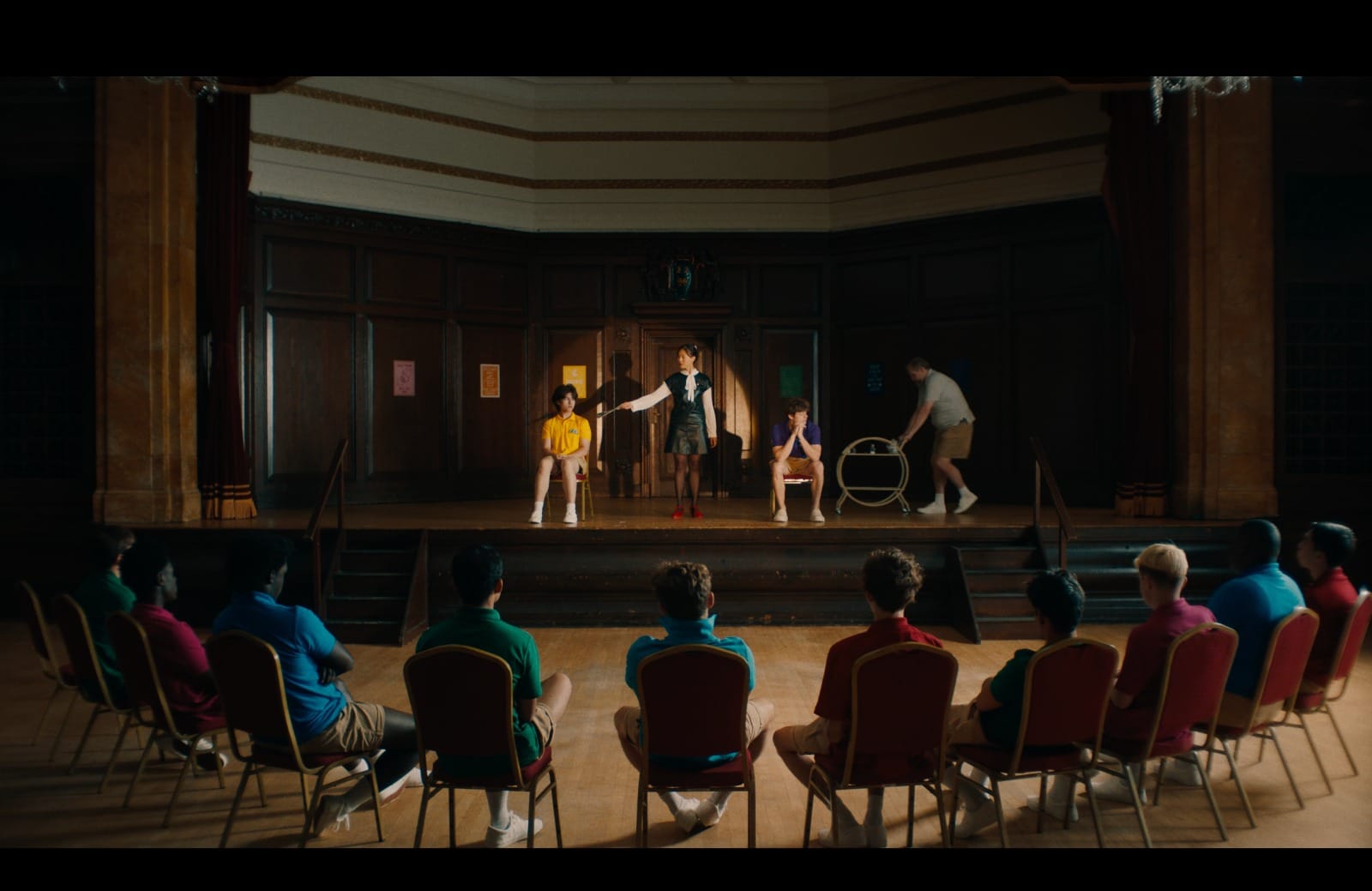
The hardest part was on shooting day 2. We had an issue with location which meant we ended up running out of time and missed an ENTIRE scene, which was a key scene - Eve punishing Sebastian and Jordan and putting them through aversion therapy. Originally, this scene was set in the office of the film and was just a scene between Sebastian, Jordan, Eve, and Keith. Eve's punishment was kept private. Missing that scene meant a whole crucial chunk of the film was lost. And we didn't have the budget to pay for another shooting day or anything like that. So I made the decision to rewrite the scene that night, after shooting, and rewrote it so it would fit our next location the next day - the main hall where the dance scene happens. I consulted Crystal Yu, who played Eve, and we found that we could take an angle where Eve would do this punishment publicly, in front of the other boys, not to be vicious but instead to use it as a "teaching moment" for the boys (she thinks she's doing good!). And I took inspiration from the chocolate cake scene from Matilda for this. I wrote the scene, included all the extras we had, and then we slotted it into the schedule for the next shooting day, and it worked big time and ended up becoming much stronger than the initial scene ever was!
What moment in the film feels most like you, or like something only you could have made?
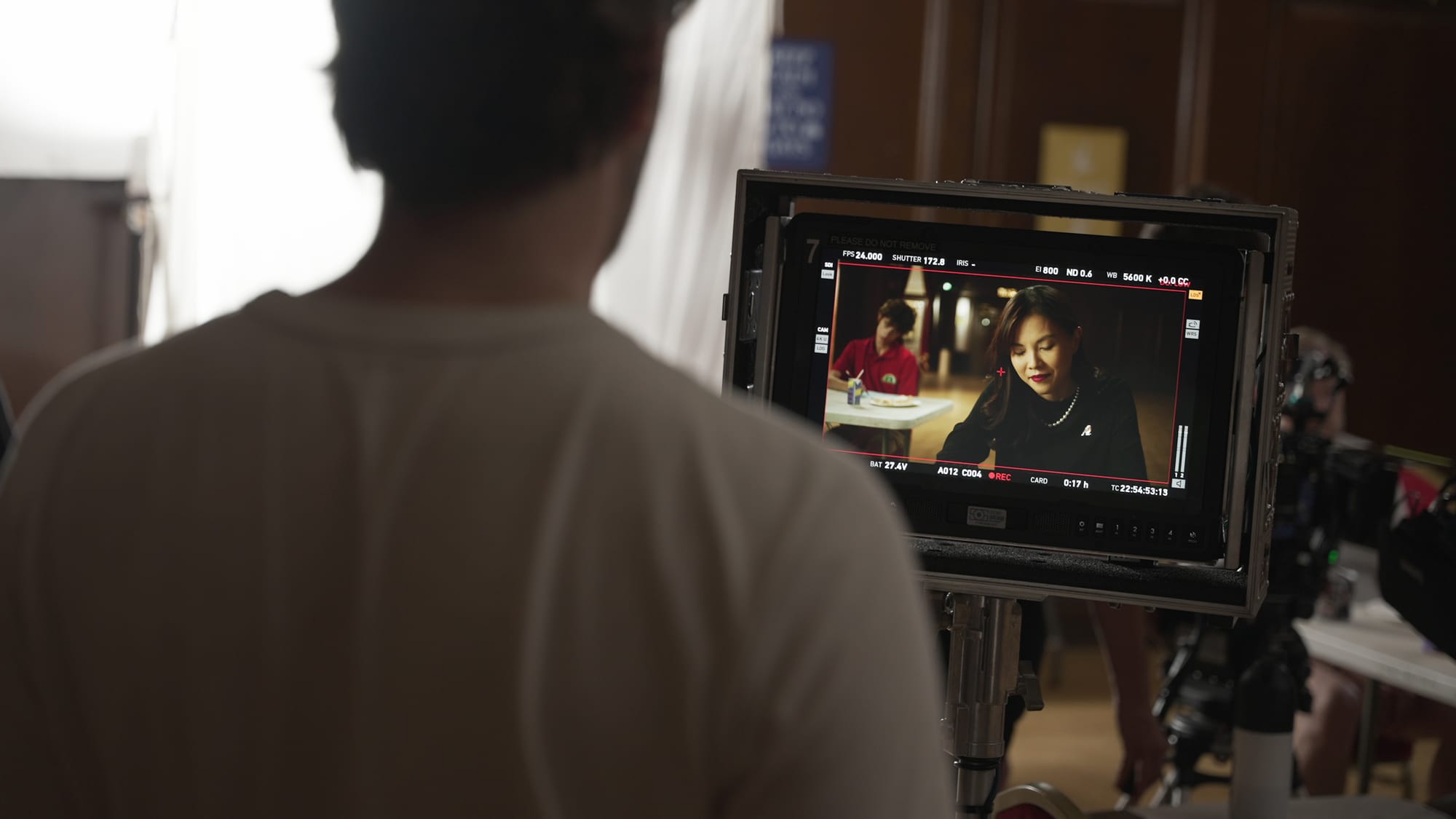
Playful, in particular, is a word I like to use about my work - that's why I wanted to do the film’s “coming out” scene the way we did. I didn’t want it to be a dramatic, downbeat coming out scene as we usually see; I wanted to make it a impactful, playful, inventive celebration - so Sebastian comes out in a daydream sequence where he imagines himself as “part of the boyband,” a metaphor in the film which means part of the queer community. He accepts himself in this daydream sequence where he dances to an NSYNC song as part of a 2000s-inspired boyband. He then comes out to his girlfriend and again we take a big swing - we cut to a series of home video footage clips of Sebastian as a young boy. First we show the young boy as sad and worried as his girlfriend says she’s always known him to be sad and unsure, and then when she accepts him and says he gets to be himself, we show the young boy as happy and joyous. And the young boy in these home video footage clips is actually me. That’s real home video footage clips of me as a kid - and so those two scenes, the boyband dance scene and the home video sequence, sums me up as a filmmaker. I am a filmmaker who takes big swings and deals with big themes in playful, left-field ways but also a filmmaker who marries that playful creativity with genuine heart and human emotion. That’s what all my favourite films do and that’s what I want to do as a filmmaker in all my work and I believe The Rainbow Crossing Academy was the perfect vessel to show off my talents in this regard in my debut film.
This two moments feel like they are just mine because it is basically my personality on screen. I love silly, fun, outlandish humour like that and it's very much my sense of humour. But I also unabashedly wear my heart on my sleeve, and don't shy away from genuine emotion. I am also very sentimental, and so I feel those two scenes together sum me up as a person!
“And the young boy in these home video footage clips is actually me.”
What does it mean to have your film selected for HollyShorts London?
It's a huge honour. I was a film and TV journalist for nine years and I used to cover short films every awards season for Gold Derby. So I used to go to short film festivals and events, including HollyShorts UK, as a journalist (I worked with Catherine and London Flair PR very closely!). But at these festivals and events, I always wished I was there with a film of my own, instead of reporting on the works of others. And the last film festival I attended as a journalist was HollyShorts UK two years ago. So it means so much to me that the FIRST ever film festival I am going to as a filmmaker is HollyShorts UK. That feels very fitting and poetic to me, and for me professionally, it shows how far I've come! So I am truly very proud to be playing at HollyShorts UK.
Asked what sits at the core of all his work, Sarkisian answered: "Spread positivity." He also says he has written a feature version of The Rainbow Crossing Academy, adding that "key cast members have agreed to return, too."
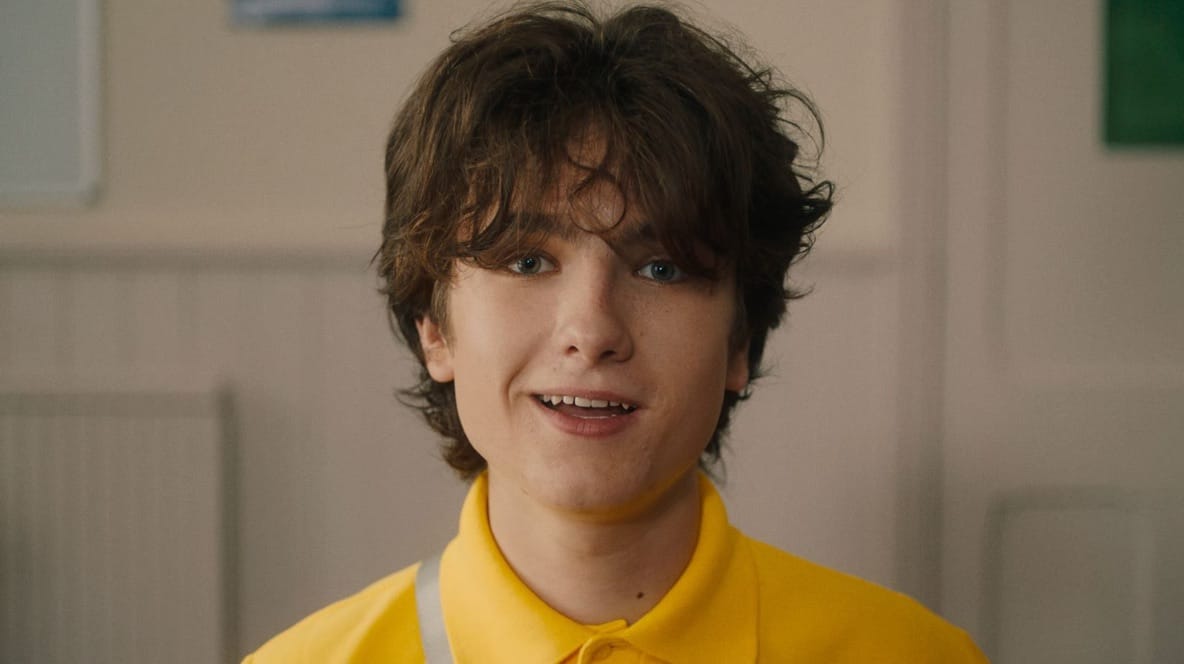
Main Cast & Crew
- Jacob Sarkisian – Writer/Director/Producer, Executive Producer, Costume Designer
- Stephanie Laurent – Producer, Executive Producer
- Executive Producers – Chris Overton, James Yeoburn, Dan O’Dwyer, Freddie Fox
- Associate Producers – Neal Parsons, Madalaine Sarkisian
- Co-Producers – Bea Ralston, Scarlett O'Donoghue
Cast:
- Raphael Goold
- Louis Ashbourne Serkis
- Crystal Yu
- Steevan Glover
- Emmanuel Sonubi
- Sonny Serkis
- Oncel Camci
- Joe Henry-Evans
- Daniel Millar
- Maisie Frater
- Zhenhao Lu
Key Crew:
- Neal Parsons – Director of Photography
- Billy Morley – Editor
- Miles Berkley Smith – Additional Editing, Sound Recordist
- Sydney Aldridge – Casting Director
- Madalaine Sarkisian – 1st Assistant Director
- Jack Chambers – 2nd Assistant Director
- Jack McCartney – Composer
- George Castle – Sound Designer
- Elaine Said – Costume Designer
- Dan O’Dwyer – Data Wrangler
- Chris Varaies – Graphic Designer and Special Effects
Filmmaker Opportunities
💛 Fund your next project with fiscal sponsorship
Have a project in the works? As a 501(c)(3) nonprofit, the Cinematography for Actors Institute can accept tax-deductible donations on your film's behalf — a door-opener for grants, foundations, and supporters who want to back your work. We've serviced over 100 projects to date and helped route over $800,000 in funding to filmmakers. Explore fiscal sponsorship →
📬 Grant deadlines and festival opportunities, straight to your inbox
The CFA newsletter rounds up grants, festival calls, and community news for independent filmmakers — the kind of opportunities that are easy to miss and painful to miss. Join the newsletter →
🎬 Focus on the creative — we'll help with the logistics
Production Management, CFA's newest member program, launches this November: production insurance and workers' comp, payroll, film permits, gear rental coordination, SAG-AFTRA compliance, contract drafting, production consulting, and crew recommendations — handled by a team of working filmmakers, à la carte or all in, in partnership with Creative Access Group. It's waitlist-only until launch. Join the waitlist →
League of Filmmakers is published by our parent organization, the Cinematography for Actors Institute — a 501(c)(3) dedicated to education, community, and capital for underrepresented filmmakers and actors. Learn more about CFA →