
It's true that, in life, many fear what they cannot see or understand for themselves. For example, the fear of death. The idea of its dreadful inevitability is something one begins to mourn at birth. It has no face or physicality, yet we fear its final confrontation and try to prolong it for as long as possible. To be afraid of the unknown is a regular part of life, so why not exploit this fear through a cinematic lens?
The most disturbing films have been those that purposely choose to leave you without a final reveal. The villain or creature is never shown, therefore providing the audience with more questions than answers. This is an intentional thought process a screenwriter chooses to utilize as they craft a script that places more emphasis on gritty details hidden beneath the surface of their creation. One example I would like to bring forward is the 1968 Roman Polanski film Rosemary's Baby. The story follows a young woman who begins to suspect that her neighbors are targeting her unborn child. Throughout the film, you follow Rosemary as she searches for the truth and begins to approach every new bit of information with distrust. It quickly becomes a psychological game of cat and mouse with an unknown predator.
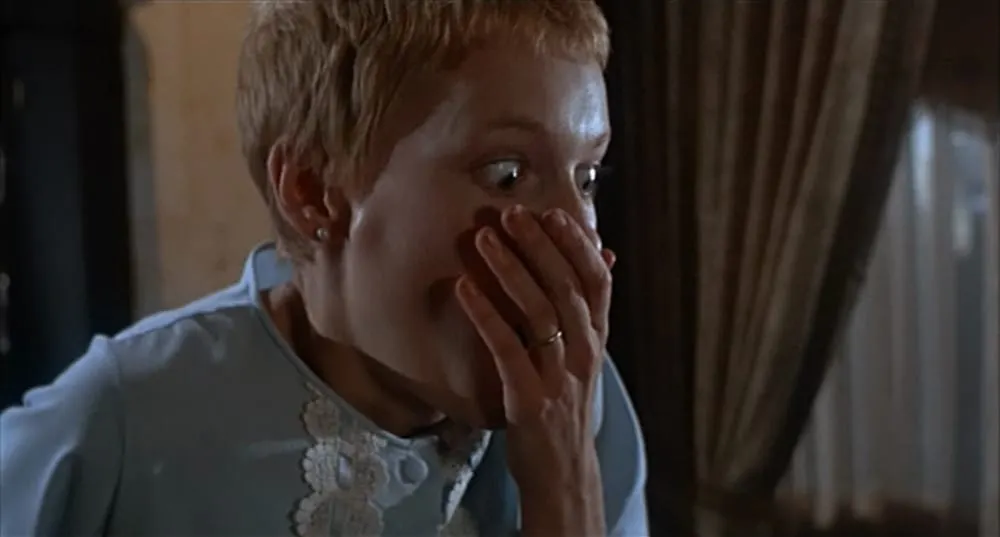
In the grand finale, Rosemary's baby is stolen from her as she gives birth. She is forced into a confrontation with her neighbors-turned-cultists and fights her way through to her child. Only, she begins to feel strangely uncertain in her success. Rosemary inches forward and slowly pulls away the blanket. As she lays eyes upon her son for the first time, her once softened face morphs into an expression of utter horror. The audience never sees Rosemary's baby, but from the terror in her eyes and the surge of a jagged instrumental score, it's evident that he is unnatural. She screams. A cultist comes forward and states how he has his father's eyes. His father, the Devil.
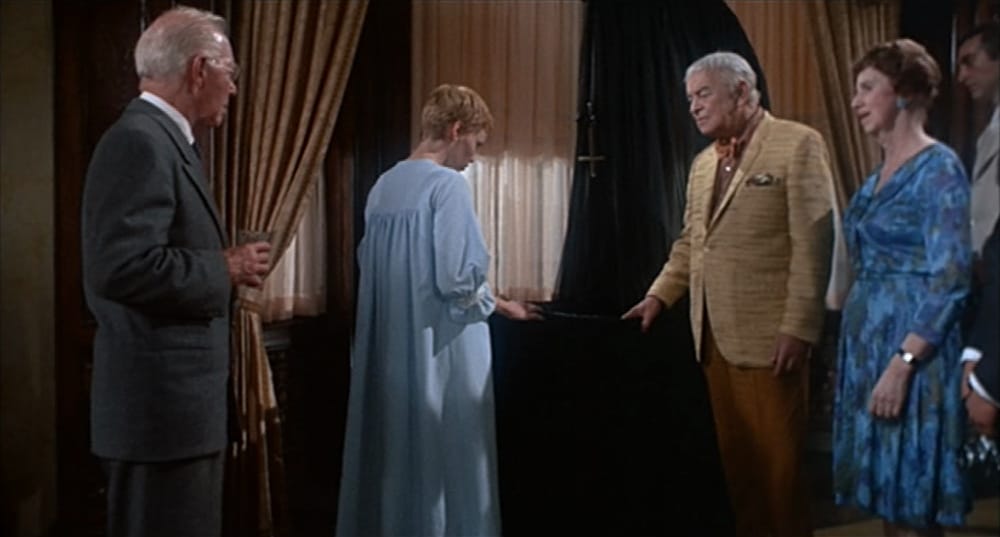
While we never see her baby's face, we begin to imagine his appearance in a uniquely disturbing way that could only be captured in the dark recesses of one's mind. In the end, the lack of a reveal in this final scene is something that has remained with viewers long after its release and established it as an iconic piece of horror cinema that is still relevant today.
Though not all horror films choose to take the route of no reveal, there are many that have successfully accomplished this feat and even commodified it. Scream (1996) and Psycho (1960) are good examples of this. Both films are framed in ways that perfectly highlight the horror that can come from a well-written reveal. Even so, it is important to provide a contrasting "bad" example to Rosemary's Baby where the film's final lead up led to a disappointing reveal. For this, I have chosen the 2024 film, Longlegs.
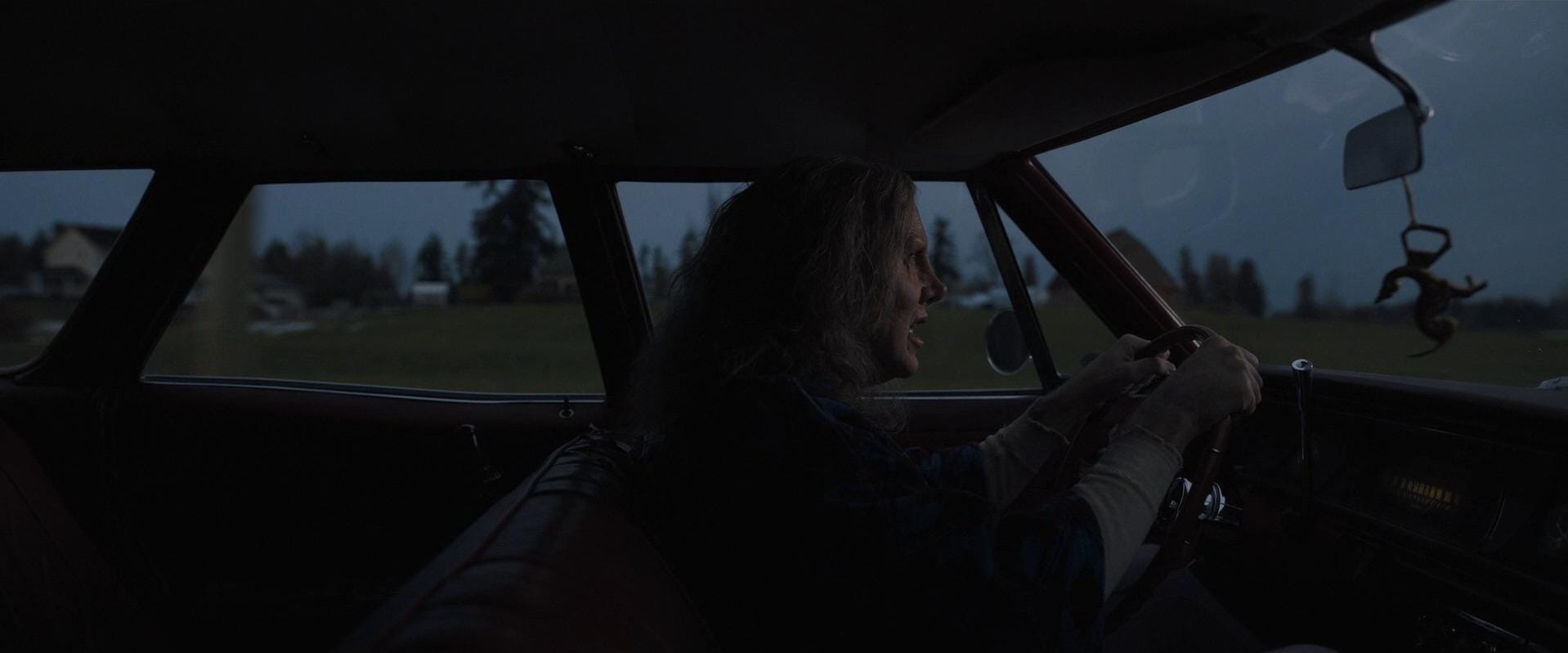
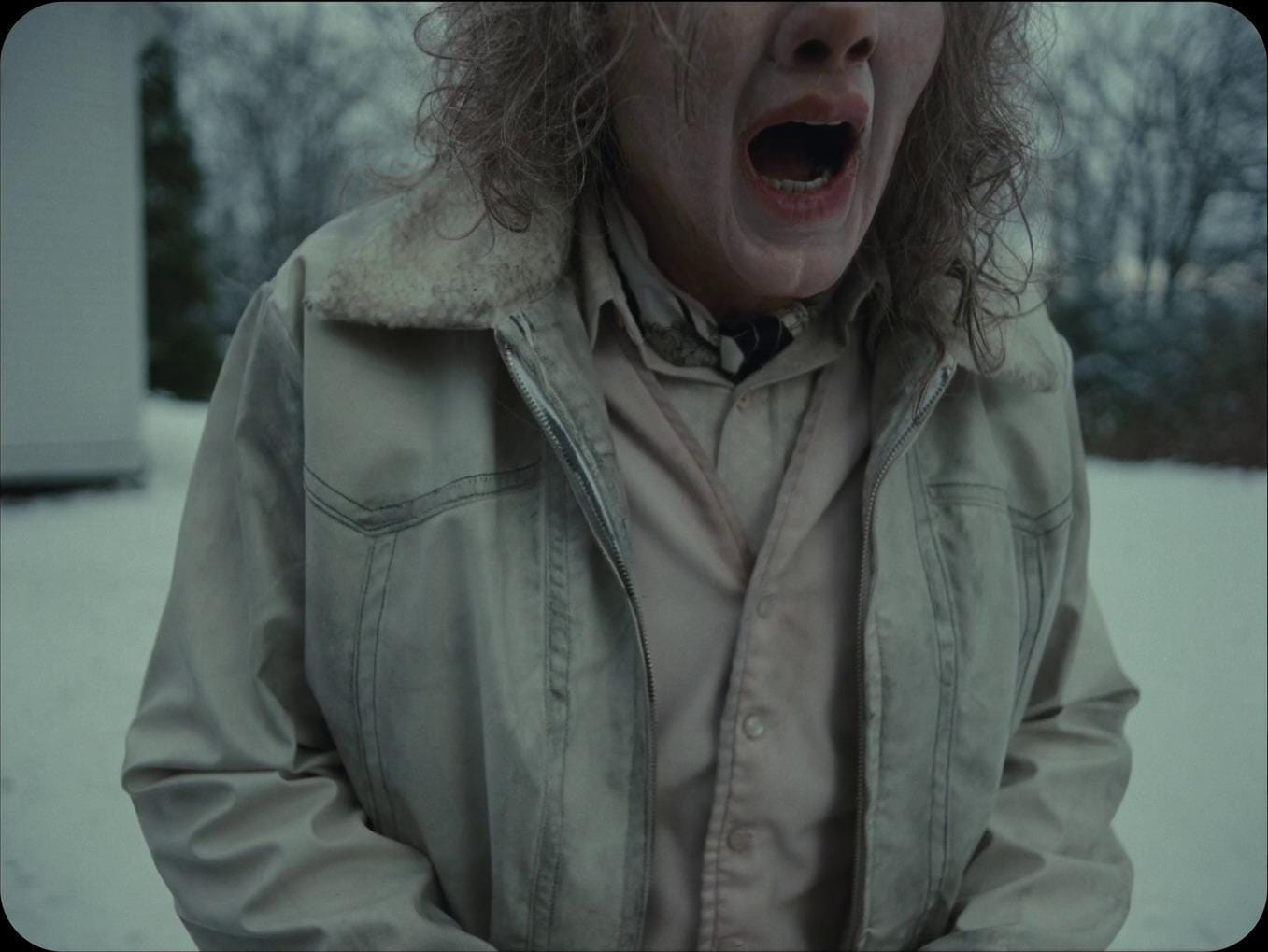
The initial hype for Longlegs had many horror fans excited for its pending theatrical release. People online praised the film's advertising for its pointed lack of plot reveals and spoilers in its trailers, which led many to believe it would be a film that redefined the modern horror genre. Now years after its premiere, it's safe to say that was not the case. While the film provided a satisfactory amount of gore and suspenseful moments, audiences were deflated by the final big reveal of Nicolas Cage's character, Longlegs. Suddenly, the disturbing enigma of a serial killer was gone and replaced by a man who looked like he experimented with too many injectables.
The movie completely falls apart after Cage's reveal and fails to pick up the pieces, making it a forgettable disappointment in theaters. While other areas of the plot certainly lacked, it was mainly due to the loss of its overhyped killer that the film tanked. Something the trailers provided that the film didn't was a fear of the unknown. It's because of this poorly written second act that it became a meme instead of the highly acclaimed piece of horror cinema that the advertisements claimed it to be.
Many believe that the horror genre is lowbrow cinema filled with unnecessary gore and sexuality. By making this statement, you completely disregard what the genre truly stands for. Fear is in all of us. In fact, it's one of our strongest emotions. Creating a well-written horror film is one of the hardest things a filmmaker can do because of how psychological it is. To write horror is to unearth a part of yourself that you have been told to suppress. A section of your soul that has been carved out of the coldest and loneliest portions of living. To take something so outwardly ugly and make it into art is truly a beautiful thing. It lives in what remains unspoken; the shadow behind an open door, a darkened alleyway, a faceless memory. The most horrific thing we can be faced with is an endless well of possibilities. We often find that what terrifies us most is what we choose not to see.
League of Filmmakers is a DBA of Cinematography for Actors Institute, a nonprofit organization recognized as tax-exempt under IRS 501(c)(3) and California R&TC 23701(d). Operating under this umbrella, League of Filmmakers exists to elevate and unite creators across all filmmaking disciplines through editorial coverage, industry resources, strategic partnerships, and professional opportunities that support independent creators at every stage of their careers.


