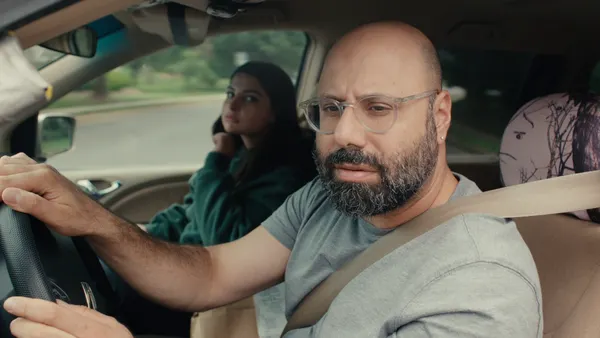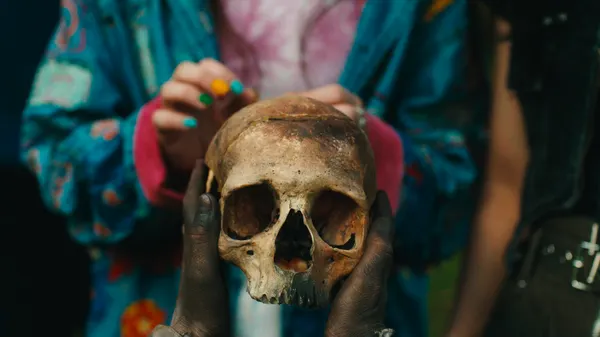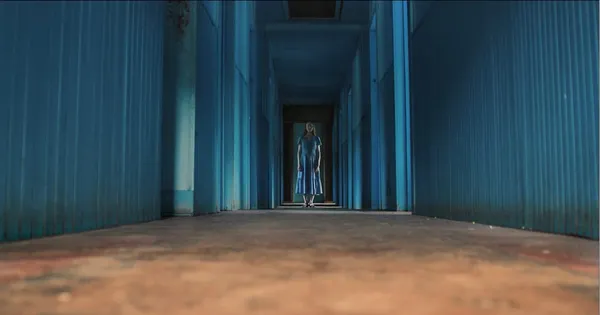
Fifteen years into chasing the dream, Amy Erickson still hasn't broken through. Then auteur director Patrick Lombardi sparks to her latest script — a UK mafia story about an undercover officer who discovers she loves the crime world she's meant to be taking down — and sees in it the redemption his flailing career needs. What follows is a collaboration that curdles into obsession, with Amy's film-within-the-film mutating on screen with every note she receives.
Bravado is the work of writer-director Alex Hanno, a Los Angeles filmmaker whose credits include the feature Elephants and the award-winning short Detox, made alongside longtime collaborator Luca Malacrino, who produced, co-wrote, and plays Patrick. It is a psychological meta-thriller about the one world these two know intimately: the room where the writing happens, and the long, bruising repetition of trying to get it right.
Key Takeaways
- Hanno and Malacrino built the film from their own working lives — Hanno's experience as a screenwriter and writers group moderator, Malacrino's roots in Cardiff, which shaped the Welsh setting of the film-within-the-film.
- A two-camera setup for the Amy and Patrick scenes let the actors play like a theater company, with direction given while cameras kept rolling.
- The film's most-discussed scene is a lengthy date sequence shot as a oner, which the team fought to keep intact through the edit.
Hanno spoke with us about the writer-director split inside his own head, the surprises of post-production, and why the best collaborators are the ones who argue with you.
Interview
What drew you to make this film, and why this story, why now?
After working together for over a decade, Luca and I decided we wanted to make a film about a world we knew intimately.
My experience as a screenwriter and as the moderator of a writers group got me interested in exploring the writing process itself: the repetition, passion, frustration and emotional highs and lows, as well as what the struggle to break in really looks like. Luca's roots in Cardiff helped us build the Welsh setting for the film-within-the-film. Together, our shared love of Scorsese and mafia cinema shaped that story, while our fondness for psychological thrillers shaped the main narrative.
What surprised you most about the filmmaking process, creatively or logistically, including any moment that changed how you saw the story?
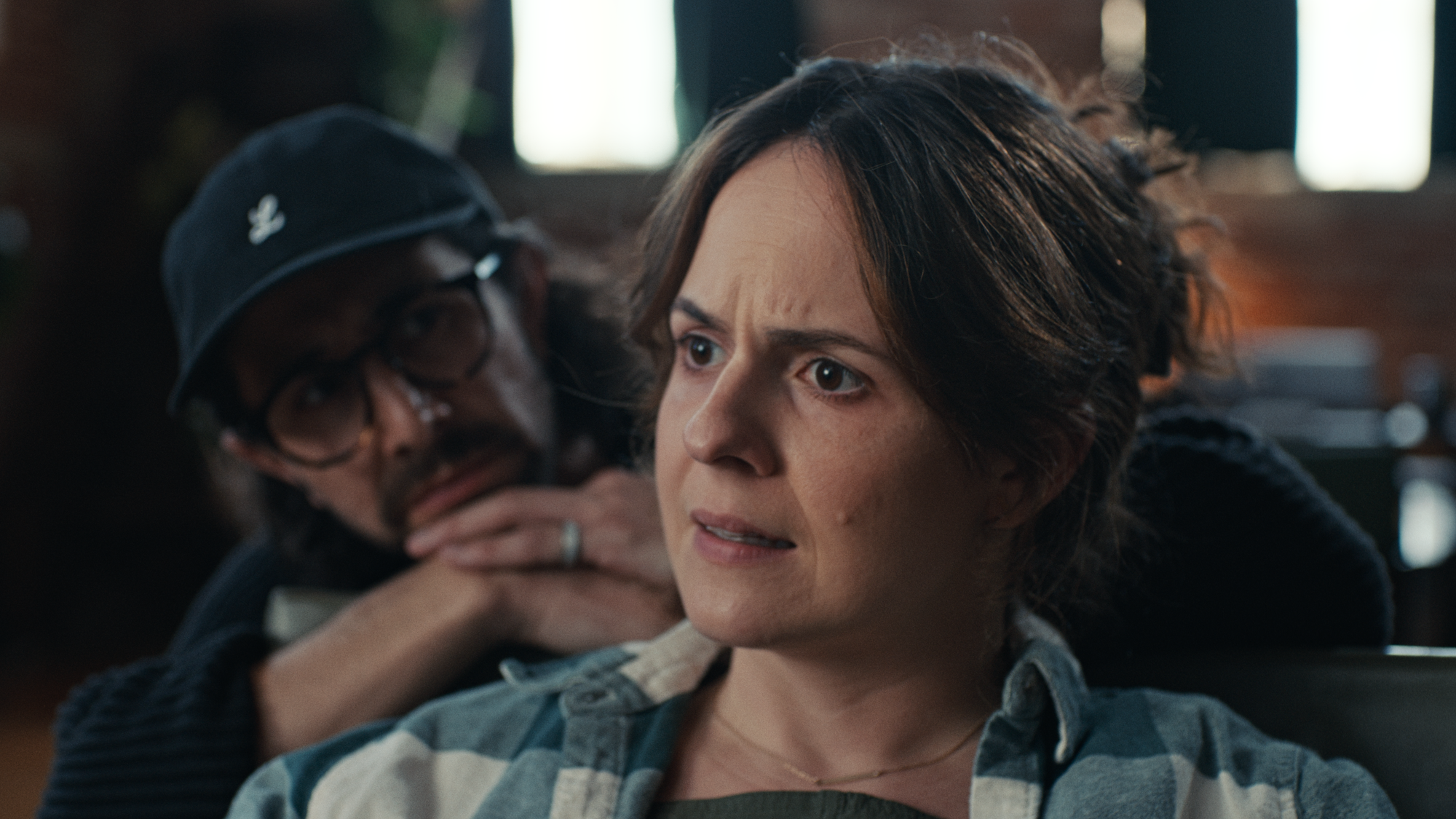
The psychological thriller became stronger during the edit. The finished film was largely what we had written, but in post-production we realized we could push further into genre and bring the audience closer to Amy's experience, and the authentic experience of working screenwriters everywhere. We wanted viewers to feel her stress, fatigue, anxiety and frustration, rather than simply observe them.
What moment in the film feels most like you, or like something only you could have made?
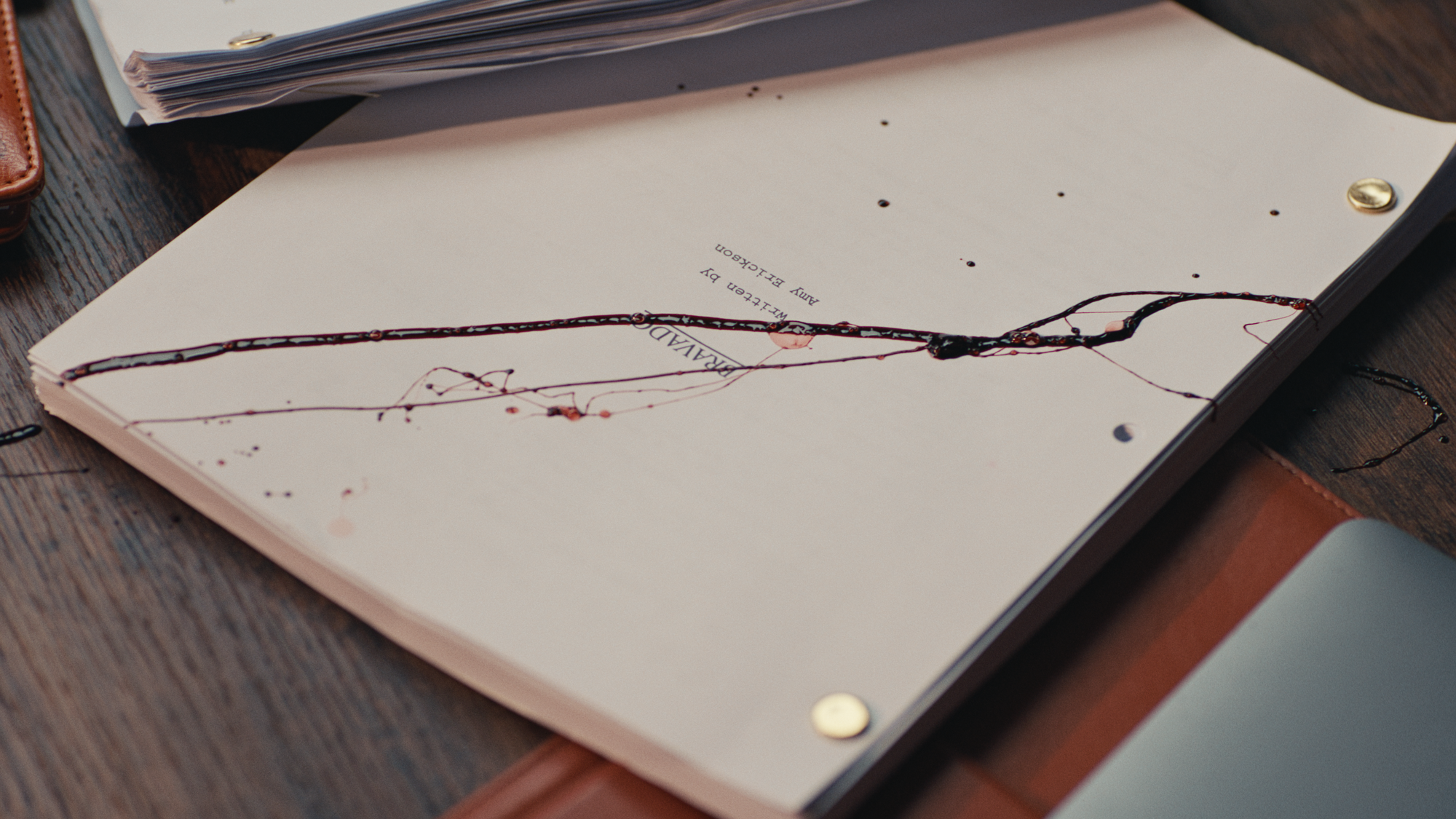
The scenes between Amy and Patrick feel especially personal to me. I see the writer and director as two halves of my artistic personality, and in directing Caitlin — who plays a screenwriter — across from Luca, who plays a director, I got to intimately explore my relationship with my own art. It made all of their scenes both a challenge and a joy to direct.
What was the hardest creative decision you made while making the film?
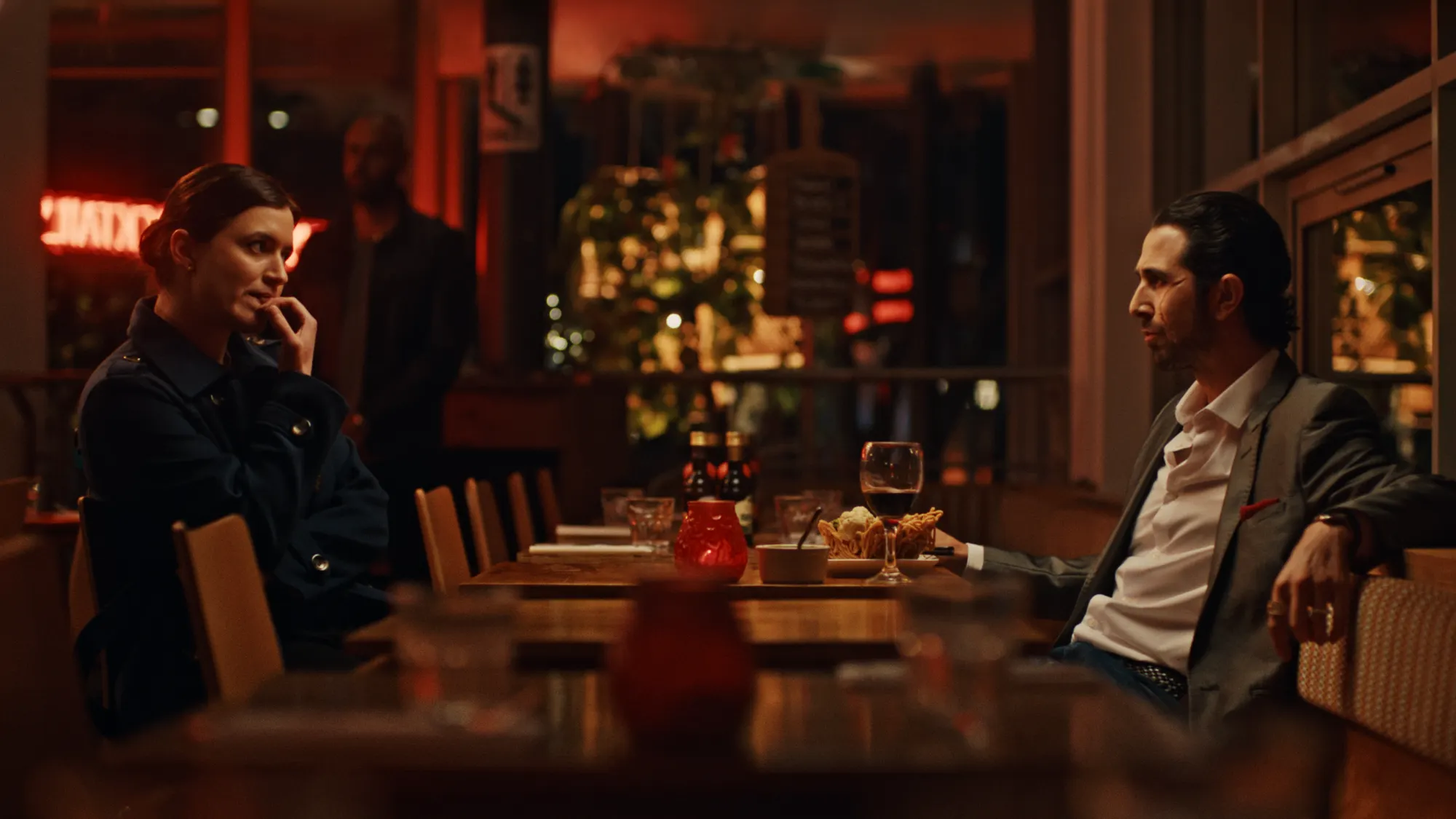
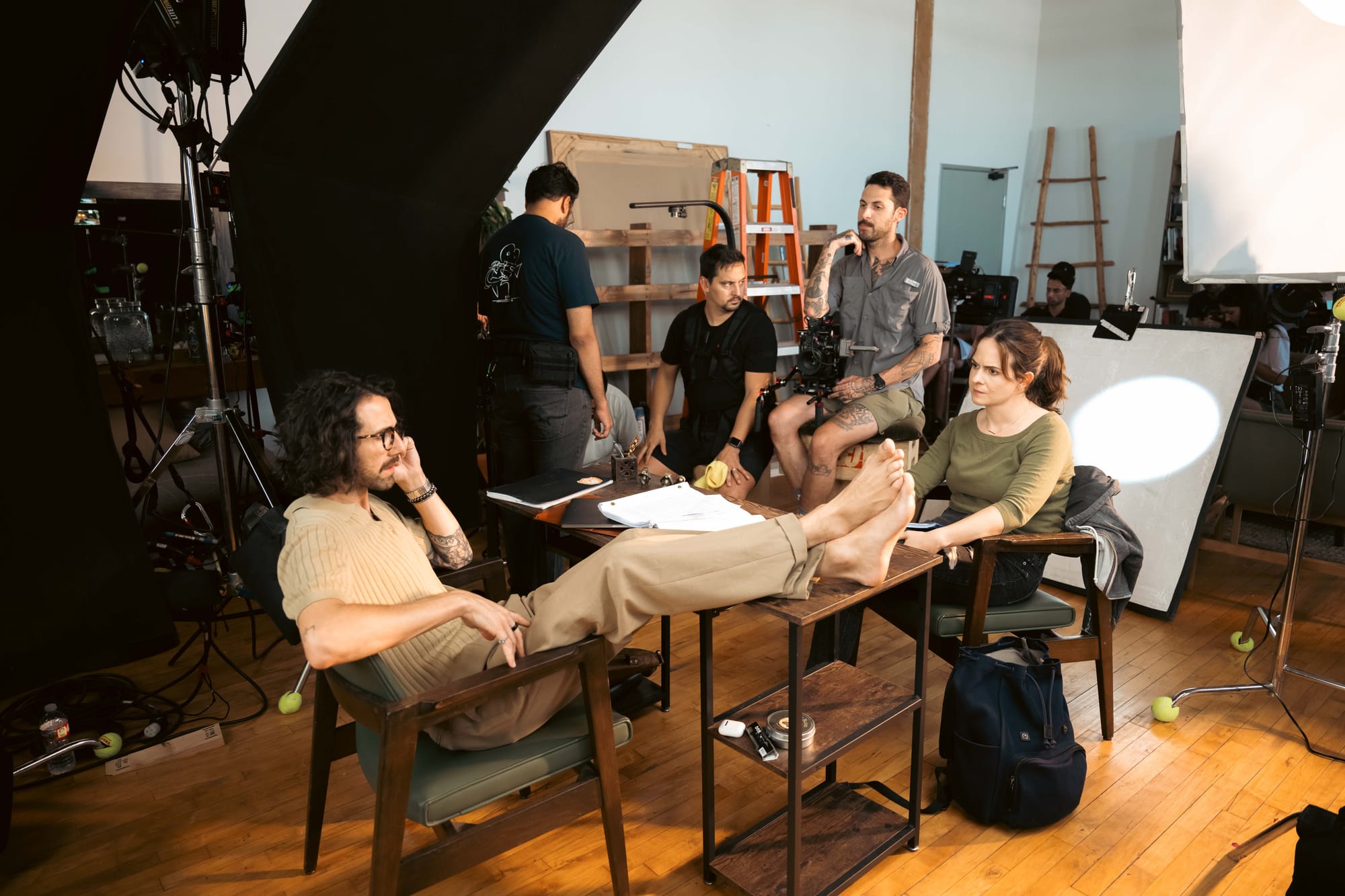
Going into shooting, I had a very clear vision for one scene in particular: a lengthy date scene about midway through the film that goes awry as it unfolds in real time. I shot the scene as a oner to help lock the viewer into the moment, and we managed to walk away with nine takes, most of which were usable, rolling with the final one.
But when it came to the edit, there were opinions and concerns about that scene given its length, and folks urged us to cut it down and use coverage instead of sticking with that oner. We stuck to our guns, leaving it in as originally intended, and the end result was exactly what I'd hoped: it became one of the most powerful and talked-about scenes in the film. But it was hard from start to finish, both shooting it and pushing back against some of that feedback to keep it in, in full.
What tool, technique, resource, collaborator, or mindset shift helped most during production?
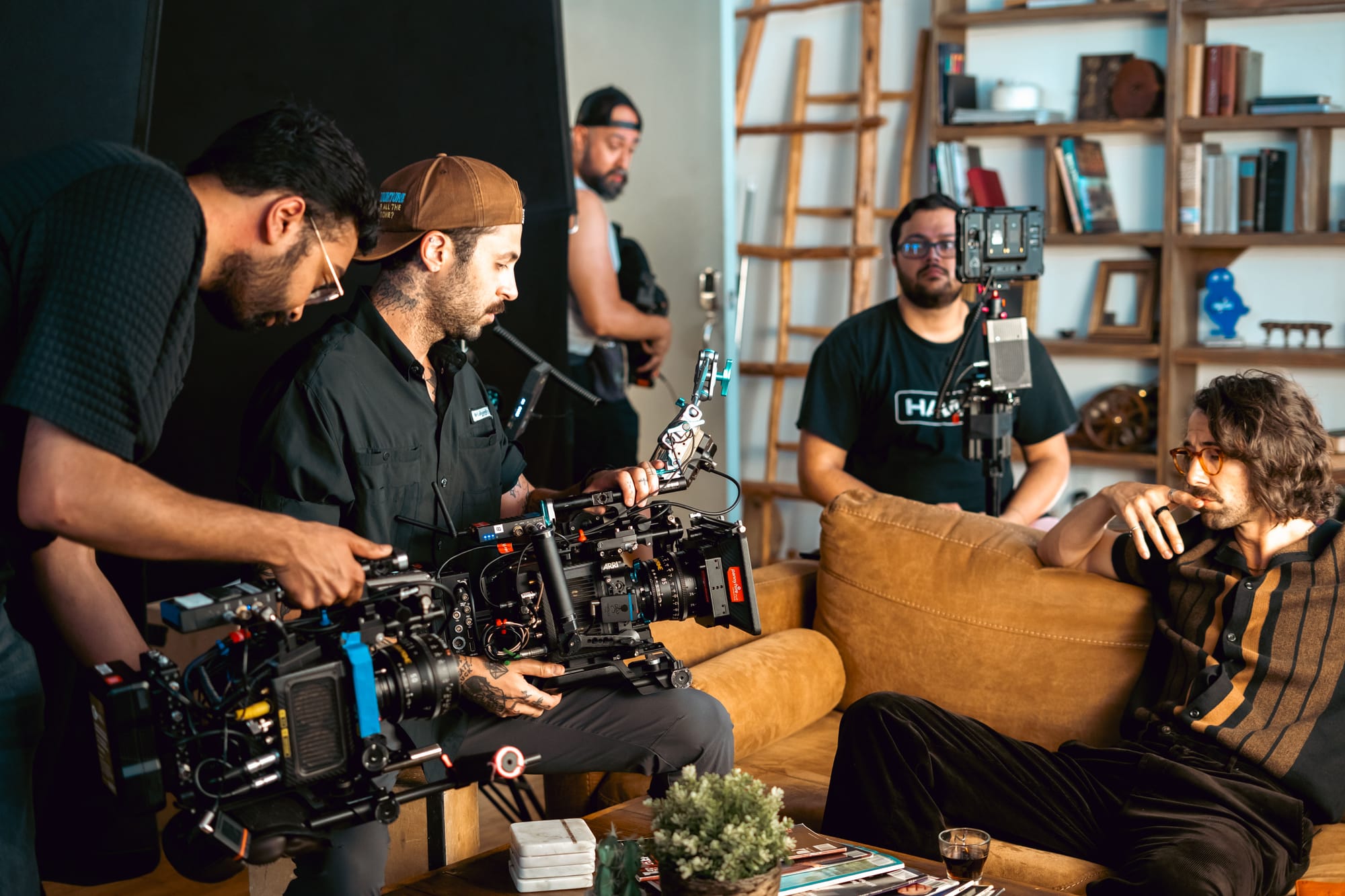
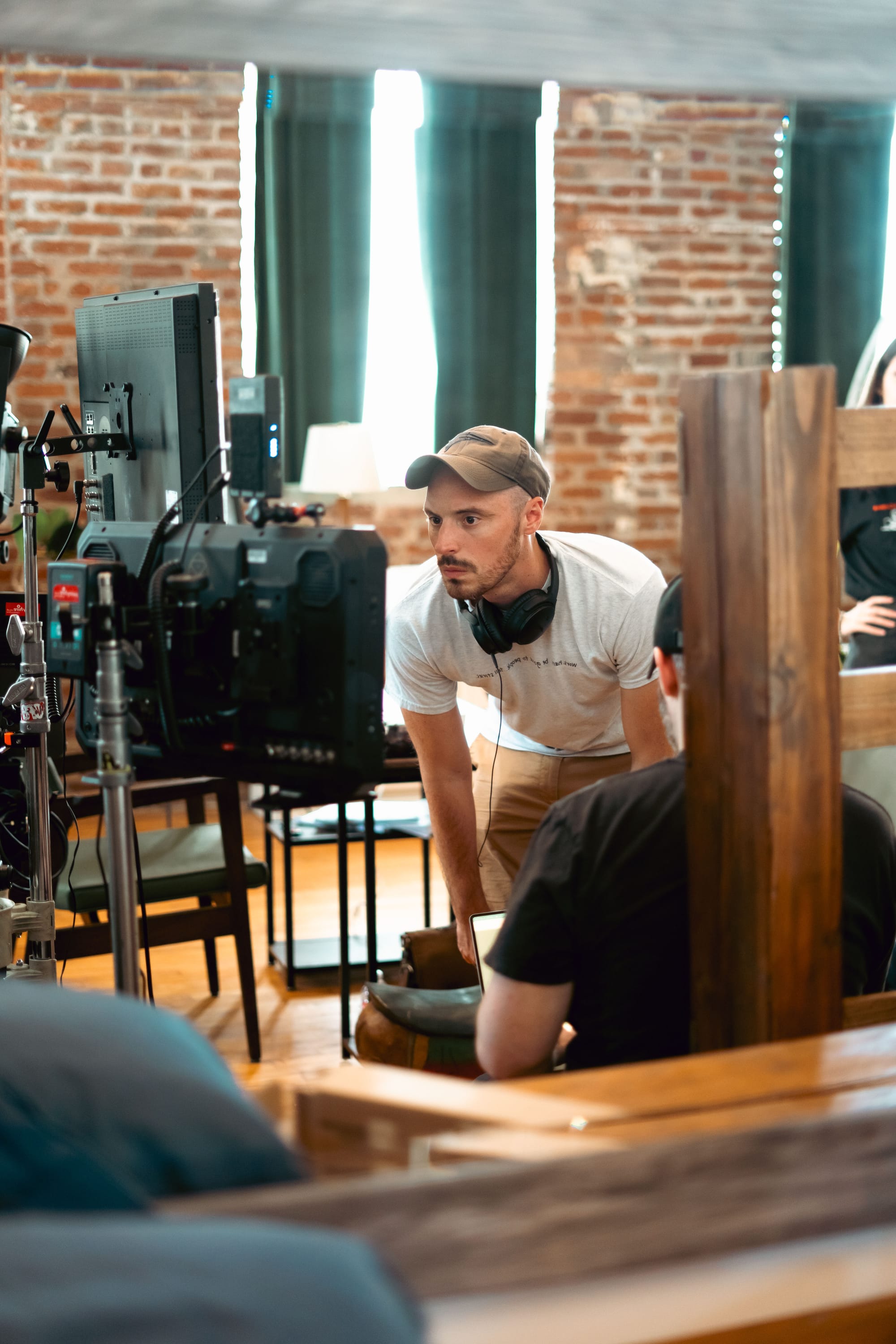
Using two cameras for scenes with Amy and Patrick gave us the freedom to play, almost like a theater performance. I could give direction while the cameras kept rolling, and Caitlin and Luca could discover moments together without constantly stopping and resetting.
The blocking of the "two truths and a lie" moment — if you've seen the film — grew out of that freedom, from improvisation and attempting things that didn't always work. That flexibility helped shape the energy that crackles within those scenes.
What is the greatest strength of independent filmmaking, and what lesson would you share with others?
For us, it was the team. Bravado brought together people Luca and I had known for years, alongside new partners who connected with the film, creating a team of artists who were extremely passionate about making something unique, challenging, and altogether special. Caitlin had worked with Luca and me several times, Javier had shot a few shorts with me, and Warren is a lifelong friend of Luca's from Cardiff.
The advice Luca and I would pass on is to surround yourself with people who care enough about the film to disagree with you. Find collaborators whose commitment to the work is stronger than their desire to tell you what you want to hear.
What does it mean to have your film selected for FilmQuest, and where does Bravado go next?
FilmQuest is an incredible opportunity to bring Bravado to an audience interested in genre filmmaking. We wanted to tell a personal story that is authentic and relatable, that also pushes beyond the boundaries of reality. Having the film selected for a festival devoted to that kind of work gives us a place to share it with an entirely new audience.
I hope people recognize their own consuming passion in Amy's story, even if they've never written a screenplay. We're proud to see that a film so specific to the filmmaking world has connected with people outside the industry. We want Bravado to keep reaching audiences through its festival run and beyond, and we hope it shows what we can achieve with a carefully designed independent-film budget.
I want to keep making films that are born from personal experience, and that push audiences artistically, emotionally, and intellectually. Cinema is meant to evoke, and that's exactly what Bravado does. Luca and I hope it opens the door to a lifetime of us telling stories together. Our next project is A Sanctuary For Water Voles, a dramedy set in Wales about a dysfunctional family trying to bury the hatchet before it's too late. We plan to shoot in 2027 with support from the Welsh government.
Main Cast & Crew
- Alex Hanno — Director, co-writer and producer. Los Angeles-based writer/director whose credits include the feature film Elephants and the award-winning short Detox.
- Luca Malacrino — Producer, actor and co-writer. A Welsh-Italian filmmaker from Cardiff, Wales. Plays Patrick Lombardi and Giovanni V2/V3.
- Caitlin Morris — Actor. An actor from St. Petersburg, Florida, co-founder of Pitch Her Productions and a lifetime member of the Actors Studio. Plays Amy Erickson.
- Additional cast: Rachel Di Renzo, Tessa Claire Hersh, Phillip Andre Botello, Shereen Walker, Richard Nicholas Emerson and Giovanni Malacrino
- Screenplay by Luca Malacrino and Alex Hanno
- Producers: Luca Malacrino, Alex Hanno, Apoorv Arora, Rebecca Hardy and Dom Lenoir
- Cinematography: Javier Ruiz
- Editing: Warren Blackmore
- Music: Jeremy Klewicki and Jacob Tardien
- Production Design: Kaylee Hawley
- Associate Producers: Kenna Roubicek and Melissa Case
Filmmaker Opportunities
💛 Fund your next project with fiscal sponsorship
Have a project in the works? As a 501(c)(3) nonprofit, the Cinematography for Actors Institute can accept tax-deductible donations on your film's behalf — a door-opener for grants, foundations, and supporters who want to back your work. We've serviced over 100 projects to date and helped route over $800,000 in funding to filmmakers. Explore fiscal sponsorship →
📬 Grant deadlines and festival opportunities, straight to your inbox
The CFA newsletter rounds up grants, festival calls, and community news for independent filmmakers — the kind of opportunities that are easy to miss and painful to miss. Join the newsletter →
🎬 Focus on the creative — we'll help with the logistics
Production Management, CFA's newest member program, launches this November: production insurance and workers' comp, payroll, film permits, gear rental coordination, SAG-AFTRA compliance, contract drafting, production consulting, and crew recommendations — handled by a team of working filmmakers, à la carte or all in, in partnership with Creative Access Group. It's waitlist-only until launch. Join the waitlist →
League of Filmmakers is published by our parent organization, the Cinematography for Actors Institute — a 501(c)(3) dedicated to education, community, and capital for underrepresented filmmakers and actors. Learn more about CFA →