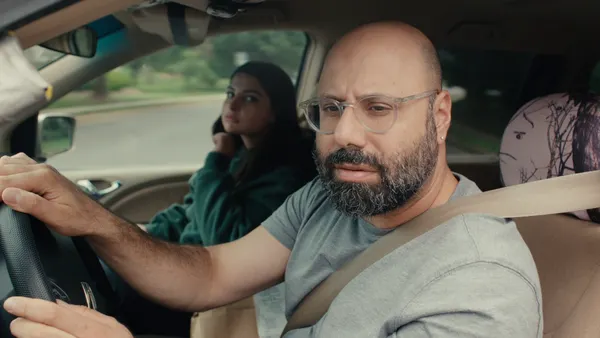
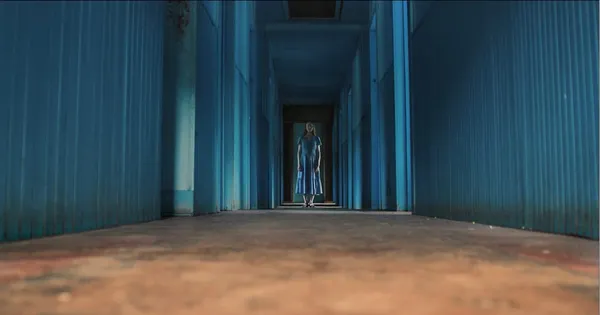
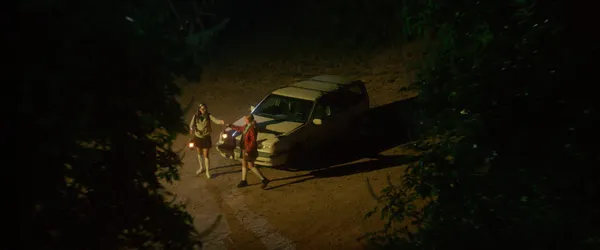
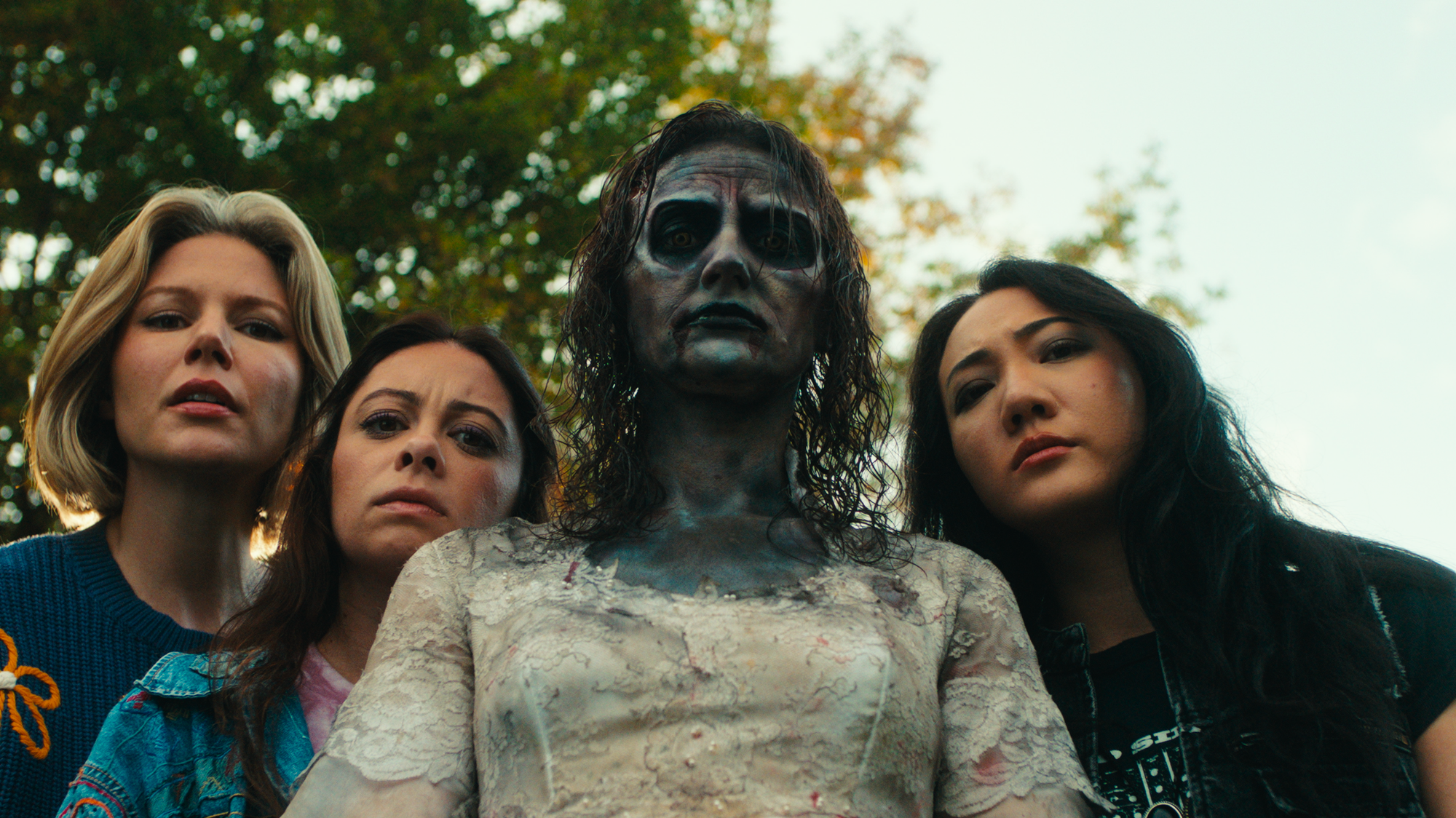
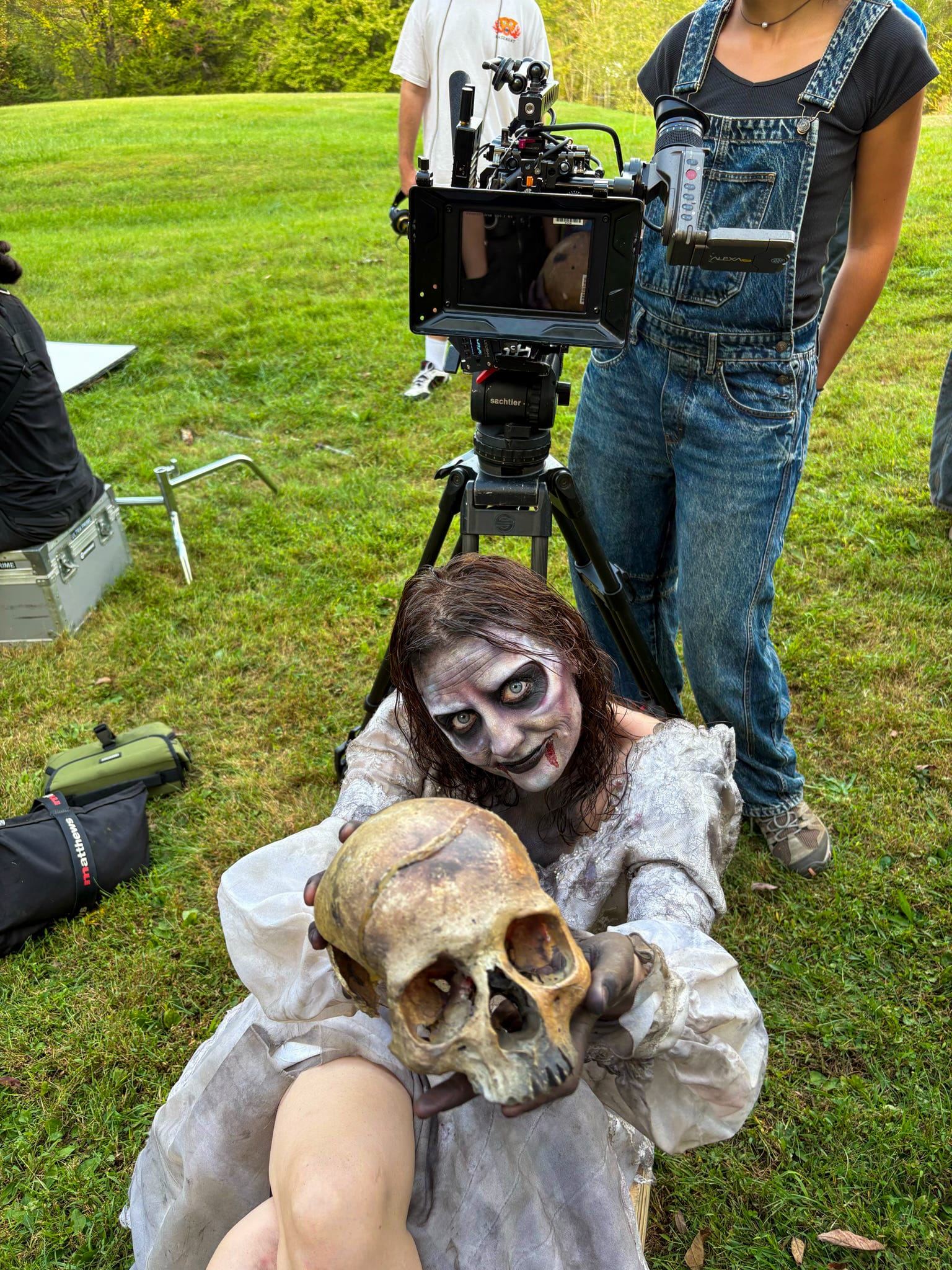
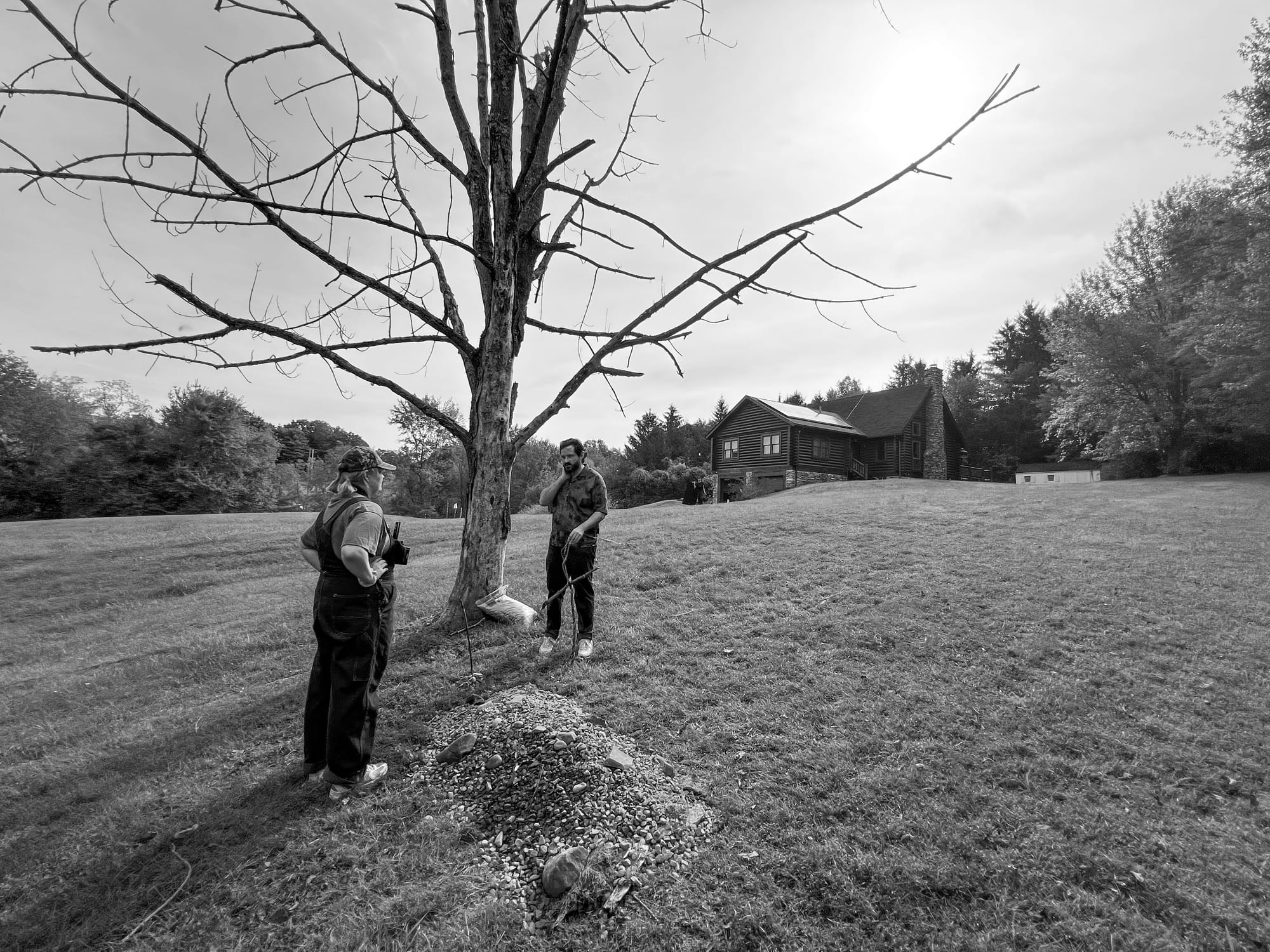
Three girls drive to a remote log cabin for a weekend away. In the backyard, at the base of a long-dead tree, sits an unmarked grave. The music from their car disturbs the stones on top of it, a hand breaks the surface, and a monster rises — a zombie in a wedding dress who follows them across the lawn, past them, and back to her own gravesite, where she delicately examines a skull and entrusts it to one of them. Then she's gone, and the girls drive home, having given their new friend one last moment in the sun.
In The Palm of Her Hand is the second short from Haunted Doll Pictures, the banner of NYC-based writing and directing duo Greta Guthrie and Jake Lazarow, whose partnership dates back to Penn State and a trash bag full of movie theater popcorn traded for an original score. It was shot in two days at a cabin in Rhinebeck, New York, with a crew helmed primarily by women department heads, on a thirty-day turnaround before the location sold. It contains no scripted dialogue, arguably fewer than one jumpscare, and ends on an earworm pop song.
Key Takeaways
- The film was conceived, crewed, and shot in 30 days, built around a borrowed cabin that was about to be sold.
- Cutting half a page on the day removed the short's only scripted dialogue, leaving a nearly silent film about a friendship that transcends language.
- Guthrie and Lazarow call the result "unprogrammable" — too sweet for horror festivals, too frightening for general ones — and wouldn't change a frame.
Guthrie spoke with us about tenacity, pinky-promises with a cinematographer, and what it means to return to Provo.
Interview
What drew you to make this film, and why this story, why now?
This film, strangely, came out of an odd series of events that resulted in our being presented with the opportunity to shoot a short film at a lovely cabin in Rhinebeck, NY — the only caveat being we were still on the festival circuit for our last short film, we did not have a new short film written, we had no crew booked, and we only had 30 days to do all of it before the cabin was sold. Easy!
Even though we had this beautiful location, we wanted to make a story that was worthy of the beauty of the setting. Having our filmmaking history mostly surrounding creature features or dramatic horror, we felt compelled to tell a different version of a horror story, and a side that we never see — a wholesome exploration of female friendship and what connection with someone really entails. The gift of an unexpected springboard made conjuring something out of nearly nothing a fun and deliberate challenge. The location of the New York wilderness was no longer just a convenience, but a necessary, fundamental aspect of the story we needed to tell, backdropping the melancholy, absurdity, and euphoria of the short.
What was the hardest creative decision you made while making the film?
Our schedule was quite tight — we had one day to shoot, one night to house our crew, and had to transport everyone and everything from NYC to Rhinebeck, NY and back. We arrived at 10pm, slept a few hours, woke up to film, and went home after an entire day of shooting (an almost three-hour trip). Granted, these are all logistical issues, but as any filmmaker knows, the logistical has a way of seeping into the creative.
After a few speedbumps in our morning, our incredible 1st AD, Rebecca Balough, tapped us on the shoulder and told us she was worried about making our day. The film uses almost entirely natural light so time was of the essence, while also knowing we still had to transport our crew home. We looked at our shooting script and after a few hard conversations — we could rush, but that would sacrifice quality; we could cut down some of our extended takes, but those feel like the backbone of the film — the solution seemed obvious. We ended up cutting almost half of a page, saving us two additional set-ups. Despite our 1st AD believing we did this primarily for time, it seemed so obvious to us because as we reread it without this section, it flowed in a way it never had. We ended up cutting the only scripted dialogue in the entire short, leaving the short as almost a silent film. These women on screen form a relationship that transcends words, yet the feeling of understanding still resonates. What could have, and should have, been the hardest decision, sacrificing creative vision for logistics, ended up making the film more concise, impactful, and frankly, better.
What surprised you most about the filmmaking process, creatively or logistically?
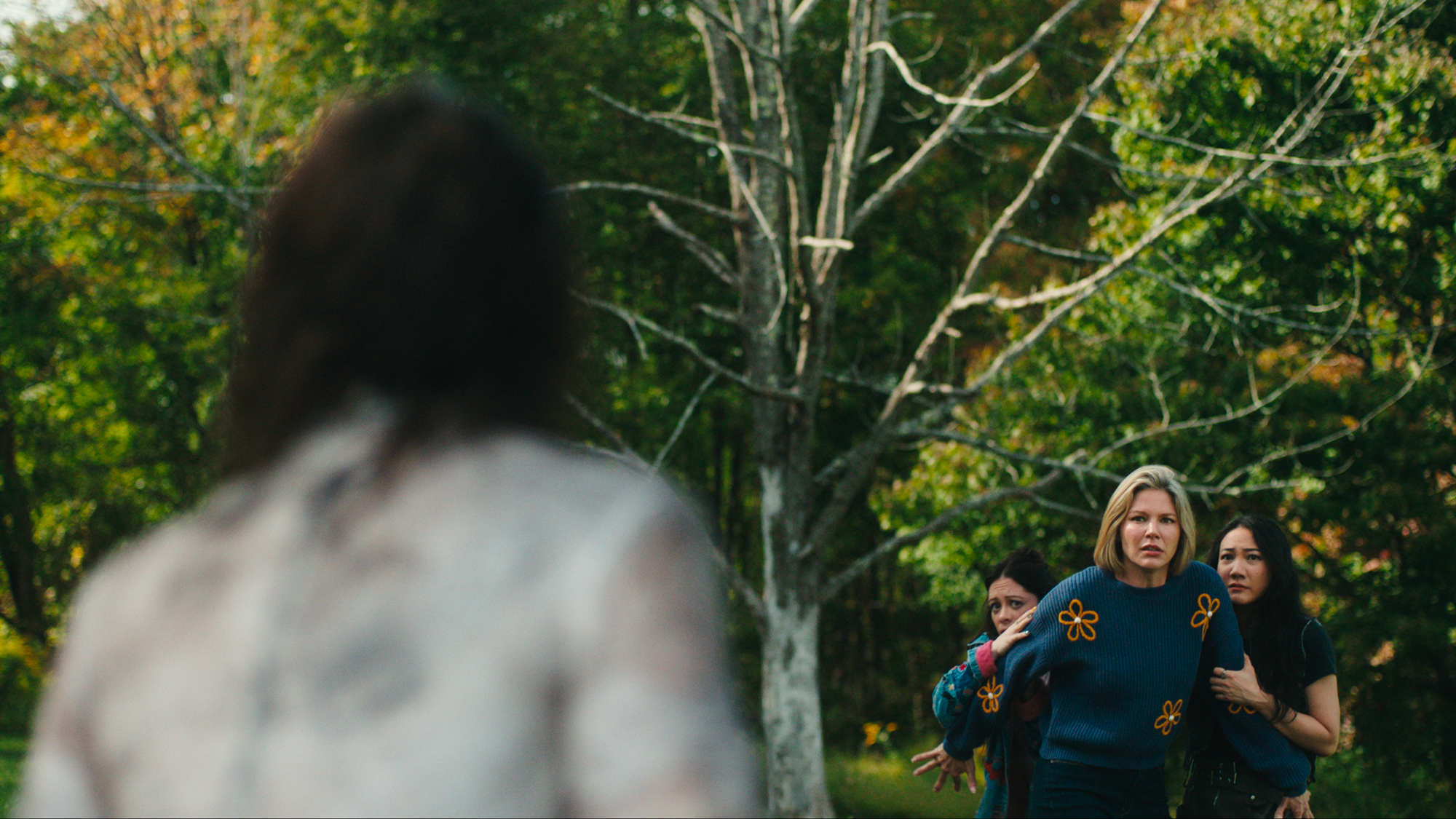
We ended up filming this short in two days in beautiful fall weather with a crew helmed by primarily women department heads. As we made this story about the transcendence of understanding and womanhood, we saw it being reflected in real life. We were living an extension of the film that we were creating. It was one of the most profound and creatively fulfilling moments of my life, and we're so proud to have created an environment and story that gives others the chance to feel that way.
What moment in the film feels most like you, or like something only you could have made?
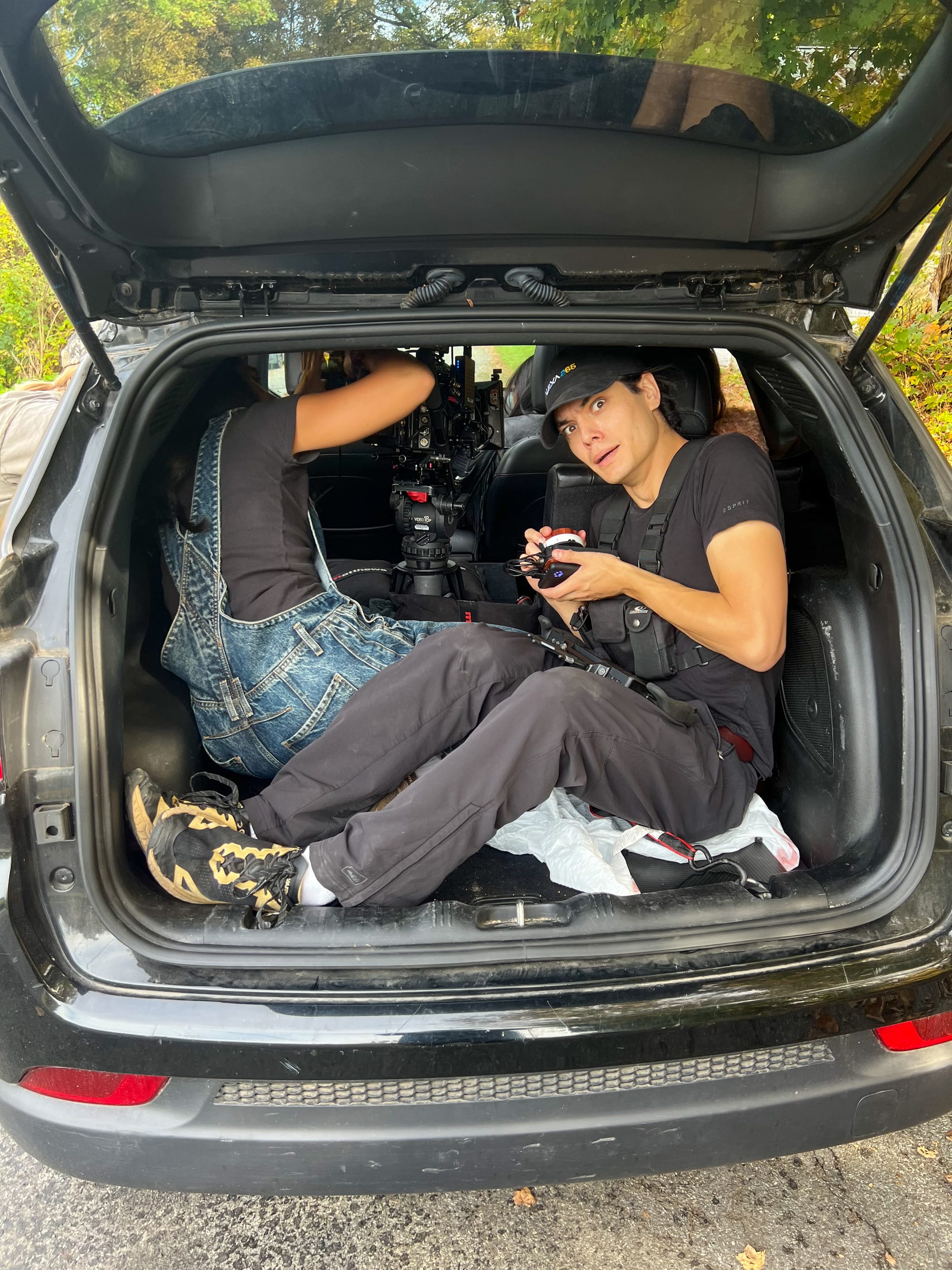
On this film, we were lucky to work with a combination of new and old collaborators. During In The Palm of Her Hand, we worked with our lovely friend Maria Raad in a new capacity as DP. She, along with several others, continued to note our lack of coverage on the day. We had conversations about how she was scared that we would get into the edit and regret not getting conventional coverage, and she wanted to get it just to be sure. Having never worked with her in this specific capacity, we had to reassure her that we as directors may be unconventional, but are absolutely certain. After what essentially was a pinky-promise to not regret this, we moved forward without it. She is great at her job, because two people asking for a two-minute uninterrupted wide shot is something that reasonably should cause a couple of eyebrow raises.
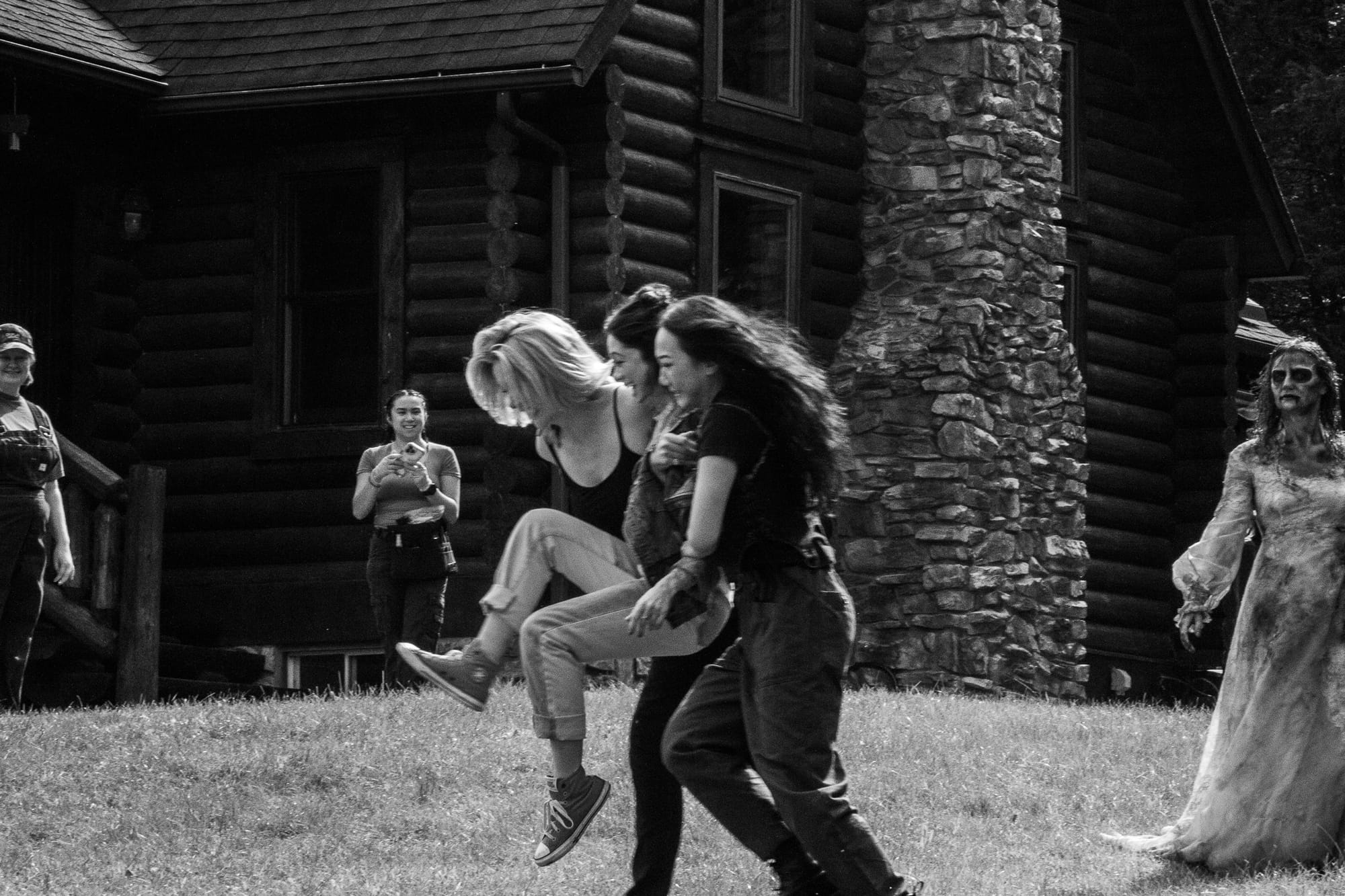
However, I do believe that is what separates us from other comparable filmmakers and makes our films together so recognizable as ours — our sheer bullheadedness in our dedication to unconventional approaches in telling a story. Our film ends with an extended shot of a hand holding a skull out of a window. We were similarly challenged on this, on if we wanted some variety just in case or for visual intrigue, but we knew that this odd shot is the best way to end this story. Particularly in horror, a lot of filmmaking approaches a short from a classic horror structure intended to get scares. While we love and appreciate all of the more conventional horror stories that absolutely succeed in their intent, we love to think about how we can use tools from other art forms and genres to tell the most effective story — such as having four girls run around a yard for several minutes and having faith in the viewer to understand dramatic, comedic, and emotional cues even from a fly-on-the-wall perspective.
What collaborator or mindset shift helped most during production?
We are so lucky that our crew is made up of friends and trusted collaborators, old and new. Many have been with us on our previous shorts, even back to our days at Penn State, and many of our newer collaborators are now stuck with us for life. The only way that we are able to continue to evolve as filmmakers is because of the trusted input and perspective from our talented friends and crew.
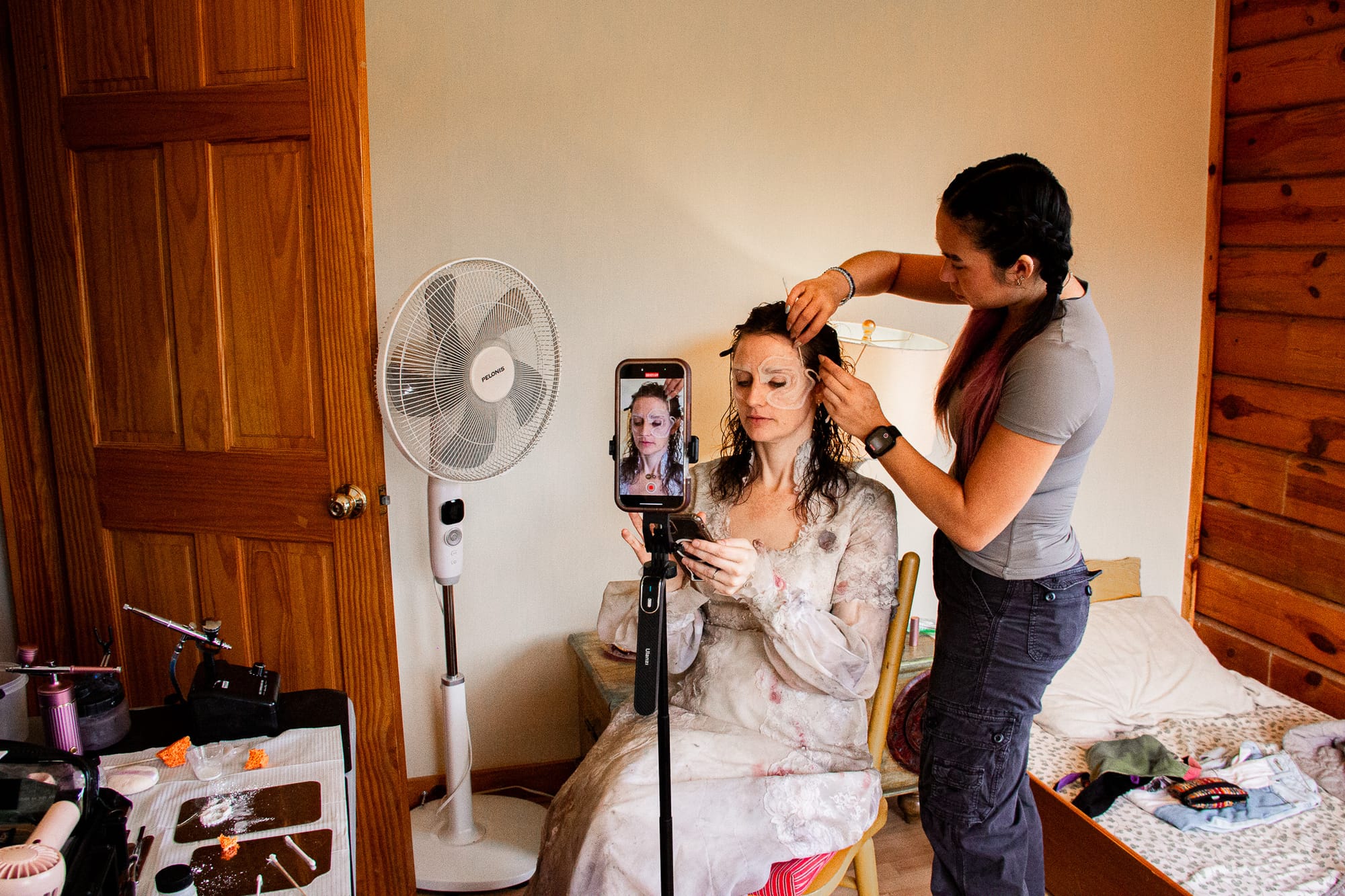
There is one person, however, without which this film wouldn't exist. When we were presented with the opportunity to film a short on incredibly short notice, there was one person whose schedule we checked, and coordinated the shoot around her availability — our longtime HMU artist and friend, Alina Rose Stout. We quickly understood that we couldn't craft a monster without her, and more importantly, we wouldn't want to. She is an incredible SFX artist, and we wanted to give her the creative freedom and space to build a design that she was excited about and had room to flex her skills and muscles with little direct oversight from us. We could not be more proud of her, thrilled with her final design, and more continually thankful she keeps lending us her wonderful talent.
How does your film fit within, or push the boundaries of, its genre?
Our previous work can be placed fairly cleanly into boxes — creature feature, dramatic horror, horror comedy, psychological horror, even rom-com. In The Palm of Her Hand ends that streak. We have called this film, lovingly, "unprogrammable." Film festivals seem to not know what to do with or make of this film. It is too sweet and lovely for most horror festivals, too frightening for general festivals, and frankly, too odd of a genre mishmash for genre festivals. So much so that we have gotten multiple messages of "we love your film, but couldn't find the right spot in our programming." It would be easy to let this get us down, but it doesn't — we are so deeply proud of this story and wouldn't change a frame if we could.
What interests us as filmmakers isn't to create the bloodiest or most frightening film, but instead how to dissect this genre and use it to tell an effective story in an unexpected way. We know how to tell a scary story and generate a popcorn-throwing jumpscare, but to make the viewer care about a rotting zombie and tear up at a friendship despite the macabre proceedings — that's the thing. Men are notably at the forefront of so many of the horror stories and projects today, and I knew that as a woman in the space, who knows and loves the classics and a good scare, I was in a special position to genre-bend and create an inherently feminine, odd, spooky, touching film I would've loved to have seen as a younger filmmaker and woman in horror. If even one person watches this film and feels their perception of the limitations of horror expanded, then we've done our job.
What does it mean to have your film selected for FilmQuest?
In 2024, we were lucky enough to have one of our feature scripts accepted by FilmQuest. This gave us the opportunity to judge a few of the shorts categories that year. In between watching the shorts, I was working on a prop for a short of our own and dreaming of screening alongside the incredible talent I was seeing — little did I know, almost exactly a year after this moment, we'd be screening our film, Housewife, in Provo at FilmQuest. We made the trip in 2025 after years of people telling us how incredible it was — how life-changing could a film festival be? Very, it turns out.
FilmQuest champions not only genre films, but careers, connections, collaborations, and most importantly, friendship. We've met some of our closest friends and creative collaborators through this wonderful festival. I'm not saying that the entire reason we made a new short was to get the chance to return this year, but it certainly was in the back of our minds the entire time. Being recognized for our film by an institution that generates some of the most incredible art I've ever seen is endlessly meaningful. To get to return with this short that means so much to us this year is an honor that is hard to put into words, and it's hard to leave these two writers speechless.
Main Cast & Crew
- Shannon Collis as The Monster
- Colleen Grate as Chloe
- Dana Mauro as Molly
- Tori Wong as Larissa
- Executive Producer | Keisha Castle-Hughes
- Writers & Directors | Greta Guthrie & Jake Lazarow
- Producers | Greta Guthrie, Jake Lazarow, Shannon Collis
- 1st AD | Rebecca Balough
- Director of Photography | Maria Raad
- Production Designer | Noa Bricklin
- Set Dresser & Stills Photographer | Aubrey Lace Taylor
- Hair & Make-Up, SPFX | Alina Rose Stout
- Gaffer | Nat Bennett
- Key Grip | Dillon Rowe
- Editor | Nick Sivak
- Sound Mixing | Liam Nee
- Sound Design | Jake Jurich
- Colorist | James McConnell
- Composer, Original Music | Greta Guthrie
- Poster & Graphics | Nathan Sellers
- VFX | Elizabeth Hejny
- PA | John Papp
- Production Company | Haunted Doll Pictures
Filmmaker Opportunities
💛 Fund your next project with fiscal sponsorship
Have a project in the works? As a 501(c)(3) nonprofit, the Cinematography for Actors Institute can accept tax-deductible donations on your film's behalf — a door-opener for grants, foundations, and supporters who want to back your work. We've serviced over 100 projects to date and helped route over $800,000 in funding to filmmakers. Explore fiscal sponsorship →
📬 Grant deadlines and festival opportunities, straight to your inbox
The CFA newsletter rounds up grants, festival calls, and community news for independent filmmakers — the kind of opportunities that are easy to miss and painful to miss. Join the newsletter →
🎬 Focus on the creative — we'll help with the logistics
Production Management, CFA's newest member program, launches this November: production insurance and workers' comp, payroll, film permits, gear rental coordination, SAG-AFTRA compliance, contract drafting, production consulting, and crew recommendations — handled by a team of working filmmakers, à la carte or all in, in partnership with Creative Access Group. It's waitlist-only until launch. Join the waitlist →
League of Filmmakers is published by our parent organization, the Cinematography for Actors Institute — a 501(c)(3) dedicated to education, community, and capital for underrepresented filmmakers and actors. Learn more about CFA →