
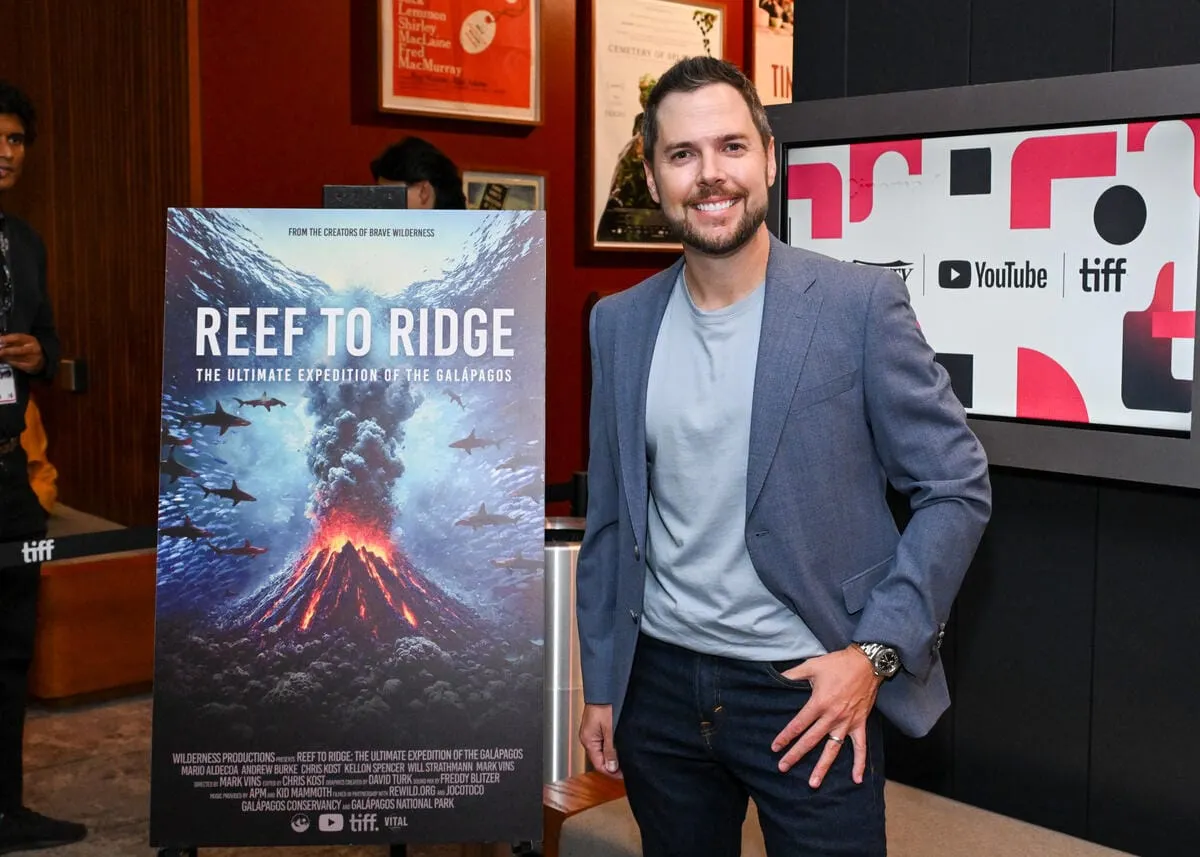
After over a decade of success on YouTube with the Brave Wilderness channel, creator Mark Vins is bringing his wildlife storytelling to the big screen with his feature debut Reef to Ridge, a treacherous adventure in the Galapagos Islands. While attending TIFF for the premiere of the exciting new project, Vins sat down to discuss how his experience as a content creator is equipping him for the future of cinema.
You have had a lot of success on YouTube for years. What is it about this moment that made you decide to do a feature?
Well, when we started on YouTube in 2014, it was kind of an accidental avenue. We got onto YouTube as a way to develop a television concept, but we always wanted to be filmmakers. Ever since we were in college, my team and I have been using film festivals as a north star opportunity, [showing us] what is possible for young filmmakers and aspiring creatives that can be accomplished at a film festival. So we'd always wanted to make a feature film and [have been] working our way up to it for the last twelve years. It's always been on the agenda, but we've been very busy; the stars aligned for this one.
So how has it been, spending over a decade with short-form content, and now sustaining a longer narrative? How has that been different, and what things have you noticed in the process?
In terms of the duration, what's been really fascinating is that YouTube's duration has been getting longer and longer, especially in our niche of wildlife adventure stories. When we started on YouTube, the sweet spot was a seven-minute video; now it's fifteen to twenty minutes. So we've actually progressively been getting longer and longer in format, and we've made a couple of shorts over the years in the thirty to thirty-five-minute range. It was sort of building up to going feature length. Not to say it was easy; it was certainly a Herculean effort for our team to make something that was almost eighty minutes long. It definitely almost felt like an endurance sport. You gain the miles, and you gain the stamina to really go for it when the time is right.
Exactly, that difference between those short little TV-length episodes that you have on YouTube versus that one big stretch where you're out in that environment.
I've always looked at YouTube creators as being a lot closer to the cinema side of the creative realm. Television is, of course, an easy analogue because of the living room screen and the duration of content being shorter. But the way we tell stories that are end-to-end, singular pieces, it's a lot more like a short film, so I think YouTube creators are uniquely qualified and adaptive.
Do you see this platform as a more accessible way to get the art form out there and encourage it?
Absolutely. Well, I get asked this a lot. Becoming a YouTube creator, I guess it's one of the top five professions that kids aspire to be. I get asked the question all the time: how do you do it? My son or daughter wants to do this; how do they break into it? The answer is always the same. You just have to start creating so that it's an iterative process of trial and error, and that feedback loop that we have with our audience that builds the skills necessary to take on a project like a feature-length film. To your point about what about YouTube is sort of resonating in the space is that ascent. It does feel like a giant climb at the end of the day, and of course we're all inspired by filmmakers that we grew up around, like Spielberg. I'm a huge Paul Thomas Anderson fan; he's done some of my favourite films. Getting to be at a festival like TIFF, it just feels like a full-circle moment because that's what got me to hold a video camera for the first time, and now I'm here. It's a pinch-me moment.
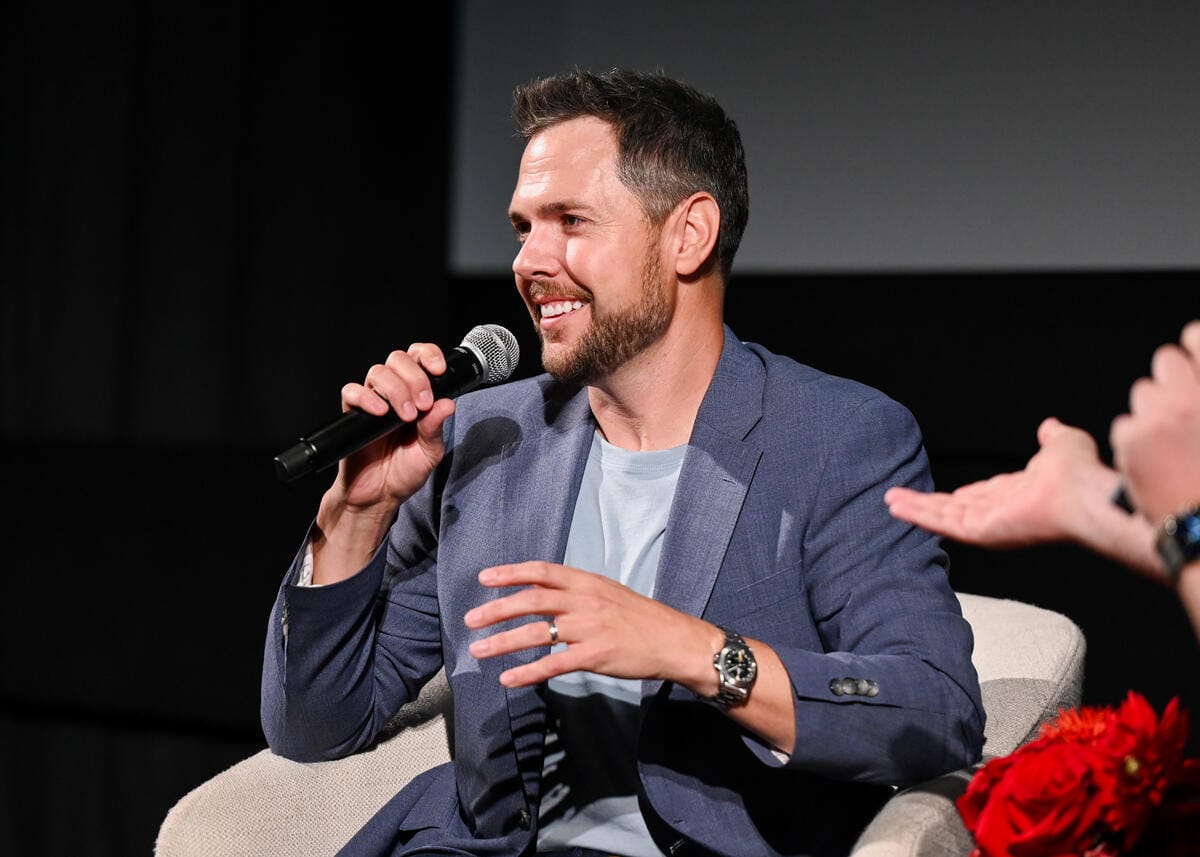
We are in an era where YouTube is really becoming a bigger part of cinema. We're seeing [films like] Backrooms, Obsession, and Talk to Me beginning on YouTube and growing into these huge box office hits. Where do you see your role as a creator, and the wider role of documentary or non-fiction filmmaking fitting into this?
Well, it's not a surprise to any of us on the YouTube creator side of things that there's success being had by the filmmakers and films you just mentioned. We are unique in the sense that we are very close to our audience. We're very much on the pulse of what audiences are not only relating to, but also what they want to consume. There's a different methodology for YouTube creators and how we think about what's going to engage the audience. If you're a filmmaker like Quentin Tarantino, who's one of my favourites, he has to go and look back historically at films where we are very much going forward. Looking to build out the next thing where we're putting out content, and we're getting the immediate feedback. We're building our skills to that response versus having to [draw from] a collection of films and originate an idea out of the inspiration. I think there's obviously many different ways to create art, and I don't think there's a right or wrong way, but I think the way we do it on YouTube uniquely puts us closer to the audience, and that's why you're seeing these successes happen in theaters. Audiences are taking what they're watching at home onto the screen.
Would you say that you're relying more on that immediate feedback than the existing canon of films you're contributing to?
Yes, because narrative is changing. When I was in film classes in college, they called it the MTV effect, the effect that MTV had on scene rate. The number of clips per scene were increased because of MTV and the commercial era of television. I think that platforms like YouTube and streaming are having that same effect today on narrative; the pace of narrative is increasing, and the blurred lines between acts are uniquely different now. The way you retain an audience's attention, even sight-lines. You mentioned the film Obsession, and one of the things that I took away from that film was that it's a master class in using sight-lines and cinematography to keep the audience glued to the screen. I look at that as a YouTube hallmark. Those are things we really hone in on at a micro level. So getting that feedback from the audience just gives us a leg up to tune in.
Most of the time for filmmakers, they have to wait until it premieres to get that feedback, but now you have this dual online and in-person audience.
It was so exciting to premiere the film in front of an audience. We see the numbers, of course, on YouTube, and the audiences are large in scale; they're global. But there's nothing like being in a room and hearing the gasps and the exhales, and you can feel the excitement. That's what I love about going to movies and going to festivals like TIFF is getting to experience it in real life as a community, and this is the first time I've been able to do that with my own work. It's so inspiring, and it makes me want to just do it again.
Would you say that being at TIFF and making a feature film is changing the demographics that you normally cater to online? Are you trying to draw a new audience or keep your old one?
The audience we have on YouTube is our home. That is the core of our brand and our opportunities. Everything good that's happened for Brave Wilderness and me as a creator has been the result of our success on YouTube. But I don't think for a second that an audience at TIFF is the same. The way we went about making the film was trying to utilize the skills that we built on YouTube, but understanding that a captive audience in a theatre is going to react differently. The scale of the screen is going to make people feel differently about things. While that's new turf for us, it wasn't lost on us that we had to change the mould and we had to adapt. So while there's a lot of talk right now about creators taking cinema by storm, I think it goes both ways. I think we also have to evolve. Yes, there's the audience, and there's a fresh approach, but there's a legacy canon that is still mission-critical to telling a story in a theatre.
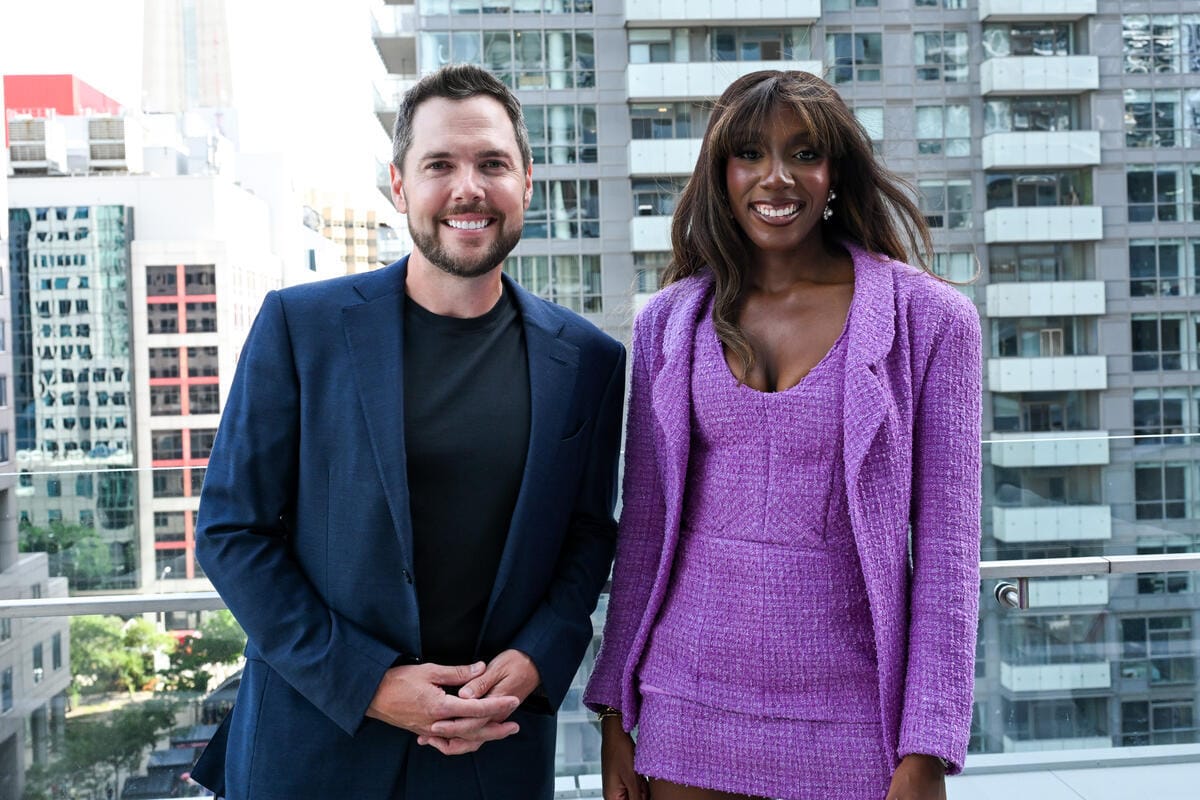
I'm a sucker for animal facts. Are there any that you learned while making this film?
My favourite footage from the film is the underwater footage of the marine iguana. They're unique because they're the only lizard on the planet that forages in the ocean, and they've developed the skill to excrete salt by snorting it out of their nostrils. Wigging is the name of this. You read about these facts, but when you see it in person, it's super comical. It's hilarious! And they do it often, so if you're looking at a rock covered in marine iguanas, you're going to see salt flying everywhere. A lot of iguana snot rockets on that trip. Definitely one of my favourite memories of the production.
If anyone can't make it to TIFF, where can they find the film?
We're going to have an American premiere at the Boston Museum of Science on November 1st, and then we'll have a limited theatrical release and before going to streaming.


