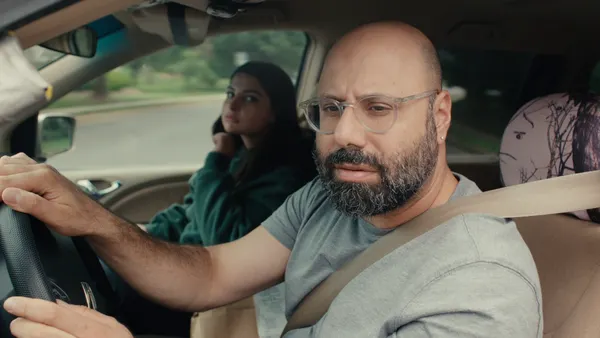
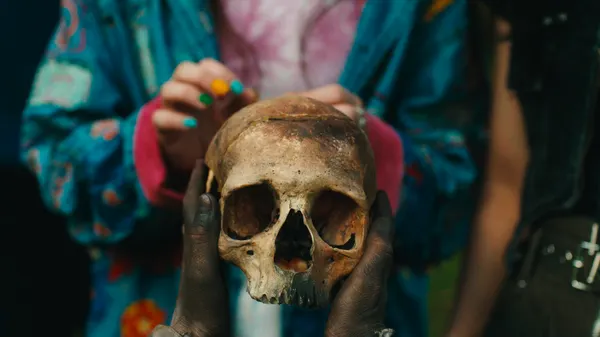
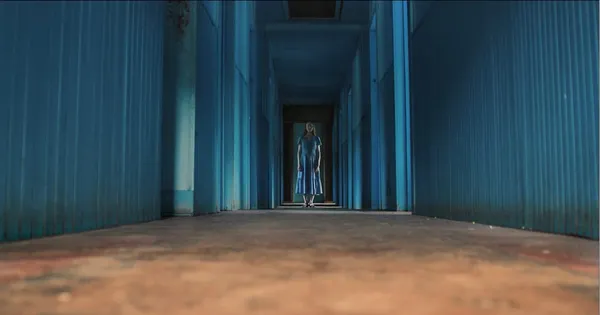
In Certain Thomas, the United States has been replaced by a totalitarian regime called The New State, where every decision is rendered by an advanced algorithmic calculator known as The Equator. A young analyst begins to question the math when its cold logic collides with his spiritual beliefs. Writer/director Henry K. Hwang — a Tisch graduate whose work has screened at Tribeca and HollyShorts, and who once directed a $1.3 million musical that toured South Korea — built the film on a simple, unsettling premise: this is not speculation.
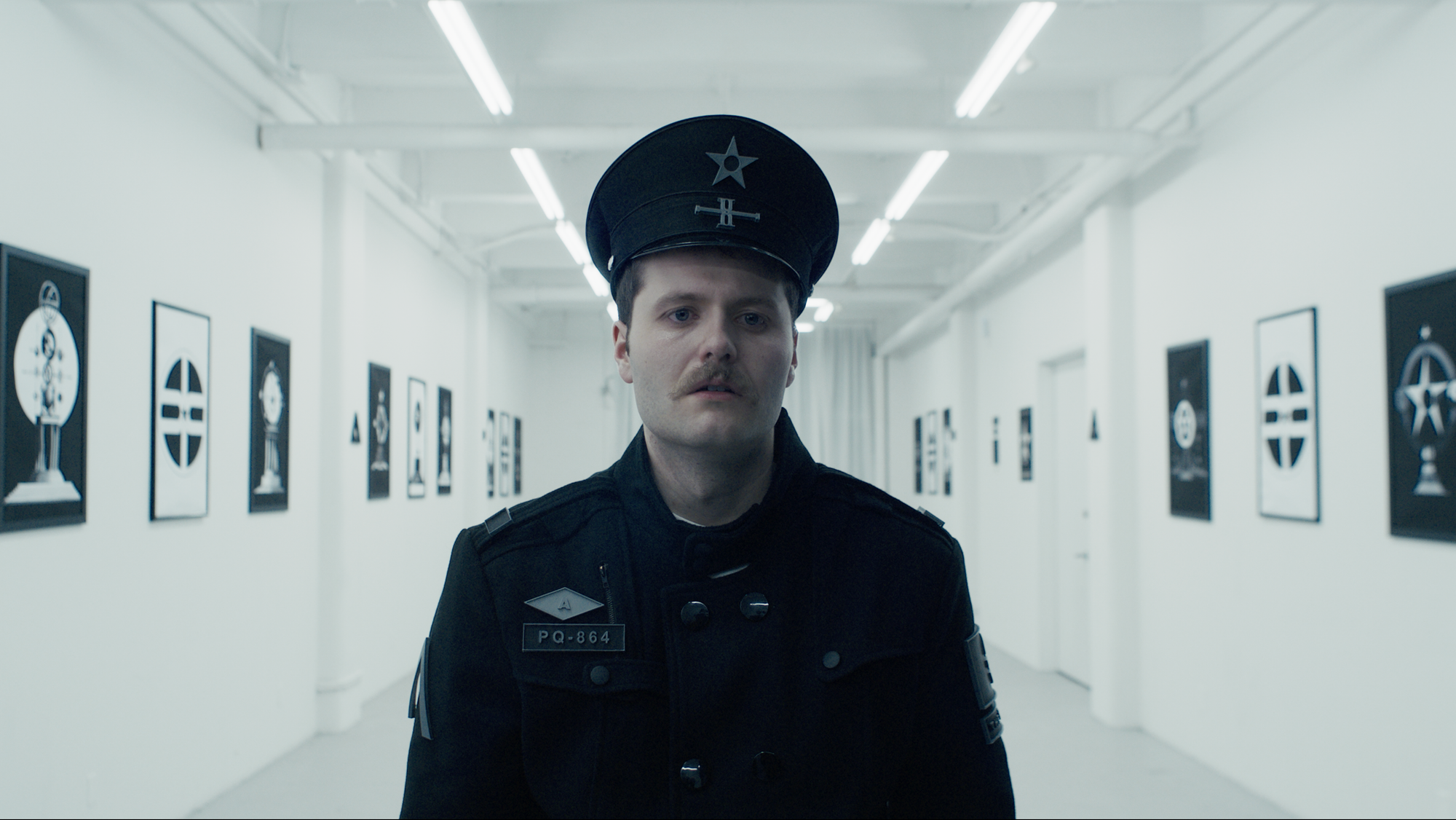
What distinguishes the film is its refusal of the dystopian hero. Thomas is not a rebel. He is fragile, uncertain, and decent, and he conforms, because conformity has become the new reality. Hwang shot in New York, using the city's brutalist architecture to find a future that looks uncomfortably like the present, and he's now developing the feature version with Oscar-shortlisted producer Scott Aharoni and his company Curious Gremlin.
Key Takeaways
- Hwang is arguing for "Dataism" as a genre of its own — not what technology could do to us, but what we are already handing over.
- The film's antagonist isn't a rogue AI but a system everyone has agreed to trust, and a protagonist ordinary enough to go along with it.
- Largely self-funded, the short traded budget for total creative control, built on a "less is more" approach to science fiction.
Hwang spoke with us about progress as paradox, Hannah Arendt, Hemingway, and why he was willing to end the film where most filmmakers wouldn't.
Interview
What drew you to make this film, and why this story, why now?
The idea came from noticing how progress works and how it is perceived in our society. Most of the time, it's about making older work or values obsolete and replacing them with something new. This is wonderful, as it moves us forward and is a testament to human ingenuity. At the same time, it can be deeply troubling and tragic, because every new idea comes with the death of an old one. It's paradoxical by nature.
I think it becomes a major issue when society as a whole pursues an unchecked ambition for constant progress, as it does now, when the technological and automation revolution is beyond our control and keeps replacing older values that may not be as "efficient" or "progressive" but are nonetheless valuable for their humanistic qualities. That's not to say what's happening today is purely negative in a black-and-white way; it could lead to phenomenal breakthroughs, like curing diseases once thought incurable, such as cancer, which would be simply wonderful. But it's definitely something we must be careful about, as just as much could go wrong.
This idea seeded the world of Certain Thomas: a world where relentless efficiency and progress are not only algorithmically justified but mandatory. There's no going back in this world; it's a great, inevitable tsunami of progress beyond our control, which is similar to how things feel right now. From there, I came up with a world where the United States has become a technocratic totalitarian regime called "The New State," where all decisions are made by a highly advanced algorithmic calculator called "The Equator."
What surprised you most about the filmmaking process, creatively or logistically?
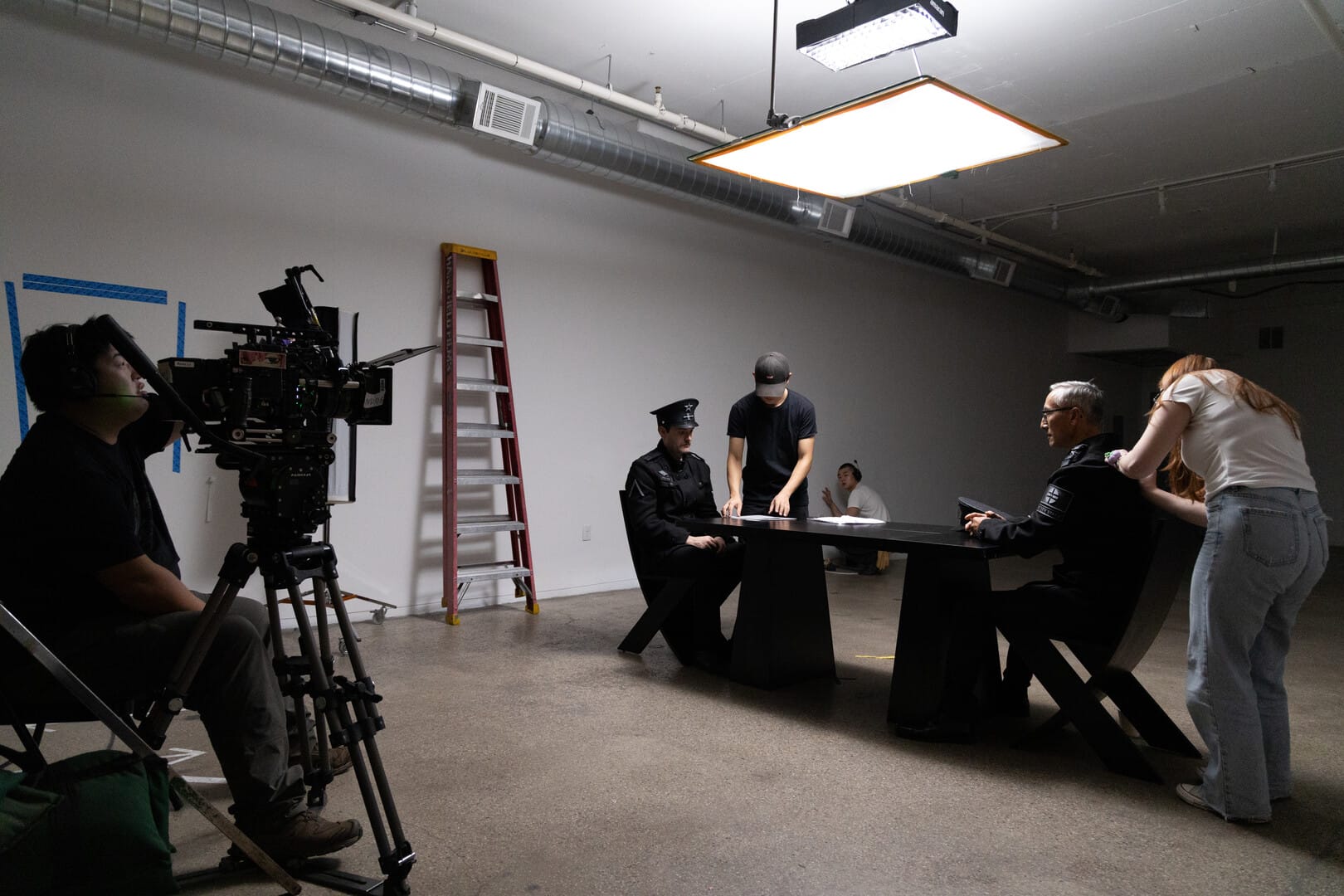
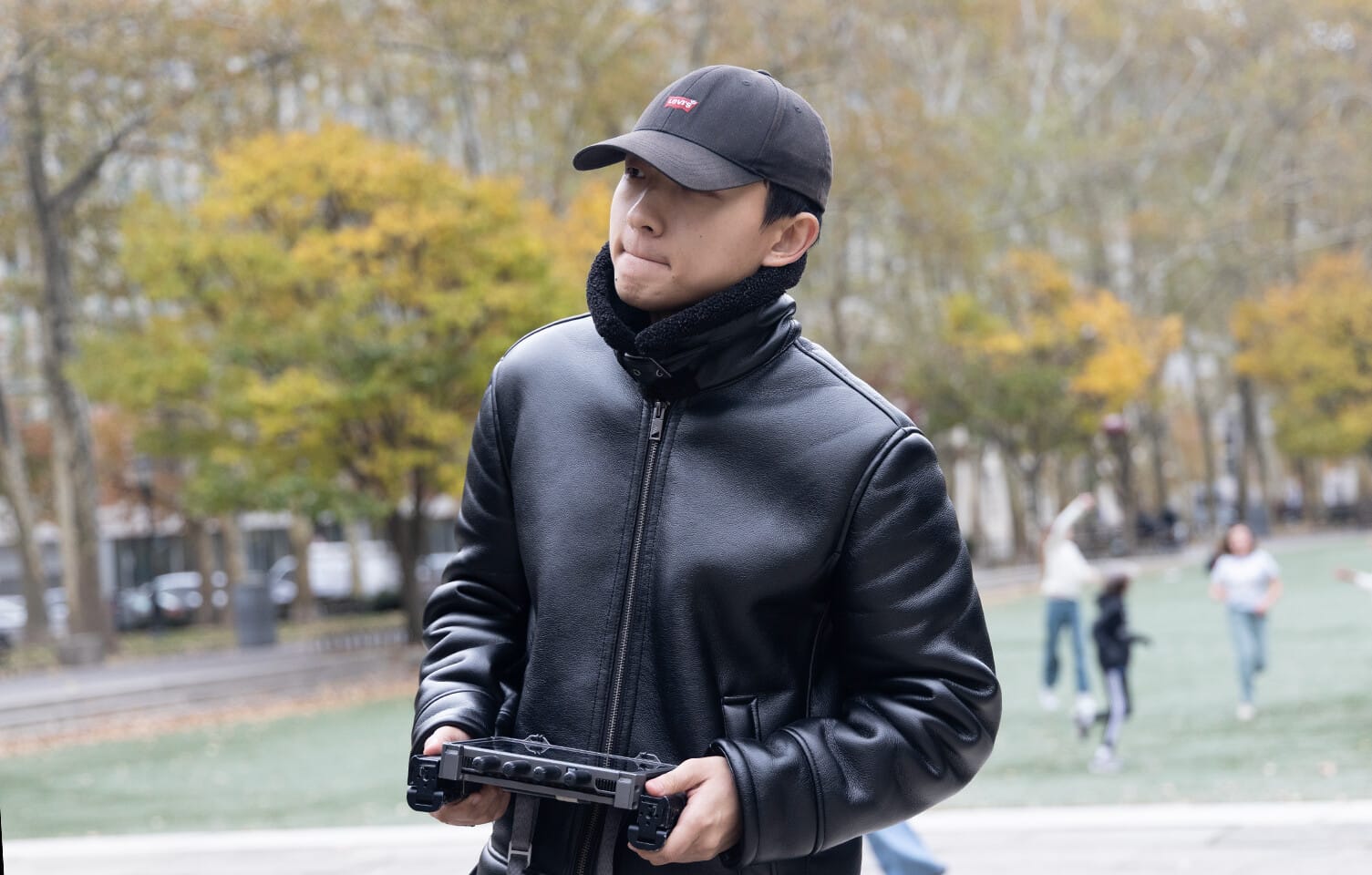
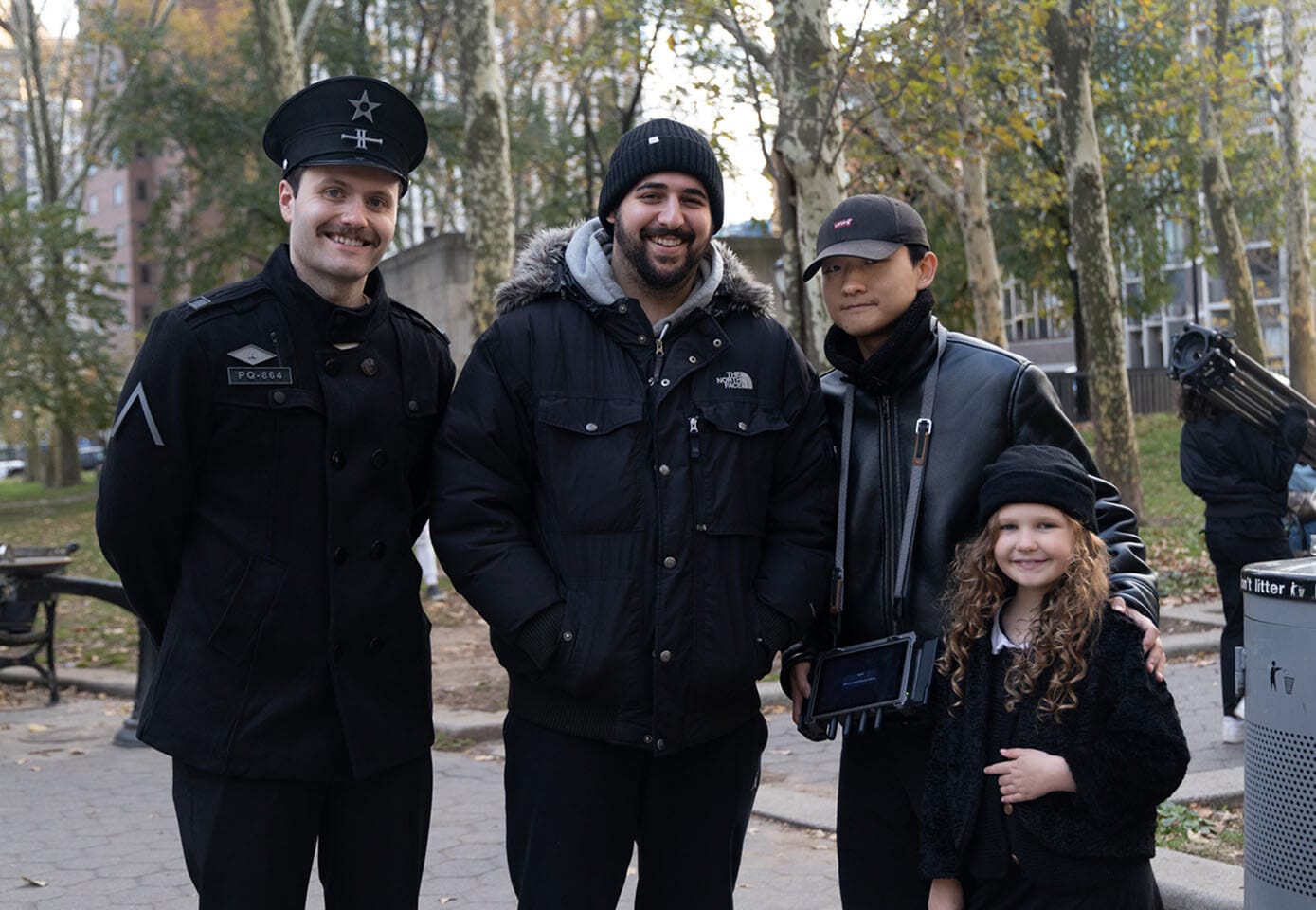
There wasn't any moment that made me change the story, because we stayed true to the script, and the finished product is very close to what was written on the page. I have to give a lot of credit for this to my fellow cast and crew, who managed to bring to life an idea that could have been very difficult to execute, including our impeccable producer Scott Aharoni, our production designer Martyna Kalata, our DP Jason Wang, and many more.
Honestly, nothing was especially hard creatively once the script was finished. If anything, coming up with an idea I truly fell in love with was what took a while.
What moment in the film feels most like you, or like something only you could have made?
Without spoiling what happens, the end of the film. Something unexpected, disturbing, and brutal happens, and I don't think most filmmakers would go that far because of how harsh it is, even though you don't see a single drop of blood or anything graphic. However, if you want to make a point that is urgent and relevant, I do think you have to go that far, and I am more than happy to go that far to say something important.
What do you hope audiences take away from this film?
At the end of the day, I hope the audience becomes aware of what could happen and what could go wrong with today's technology. When we're facing something we know is wrong but think we have no choice, or think is beyond our control, we're very good at deluding ourselves that what we're doing is justified, or even good. That's how our brains make peace with ourselves and our decisions. It's very easy to conform to something when society gives it its blessing. As Hannah Arendt suggested, the greatest atrocities aren't committed by evil men, but by ordinary people who conform. The banality of evil happens every minute, everywhere in the world. And I understand that. Who would want to go against the collective and be rejected, or lose opportunities that could grant them societal safety?
I'm not saying I'm any better. In some ways, Certain Thomas is my surrender, or rather my confession, of how, at certain points in my life, I agreed to do something I knew was wrong, even though it had society's consent and approval. And this isn't something happening solely now, with the current technological revolution; it has always been happening, since the dawn of society. This film is a dissection of how that happens. Thomas isn't a bad man. If anything, he's a moderately kind, thoughtful, ordinary, perhaps even good man. But he commits perhaps the most atrocious act a man could commit on earth, because of societal pressure and his decision to conform. It's easy to say you wouldn't do what he did, but history is the evidence: people truly can go that far once something is considered a new reality, a new trend. I think the best thing we filmmakers can do is confront people with those realities. In essence, my film shows how easily we could kill our own humanity to fit into the tribe.
Can we be better, or is there nothing we can do about it?
How does your film fit within, or push the boundaries of, its genre or form?
The fact that we did not treat this like science fiction. This world is no longer speculative fiction. Albania is now governed by a "Minister of State for AI" called Diella. Every day, our inseparable use of technology makes algorithms affect the way we see, live, and think. We use the internet or AI to make small to extremely important life choices. A decision without technology is scarce. We live in a world of dataism.
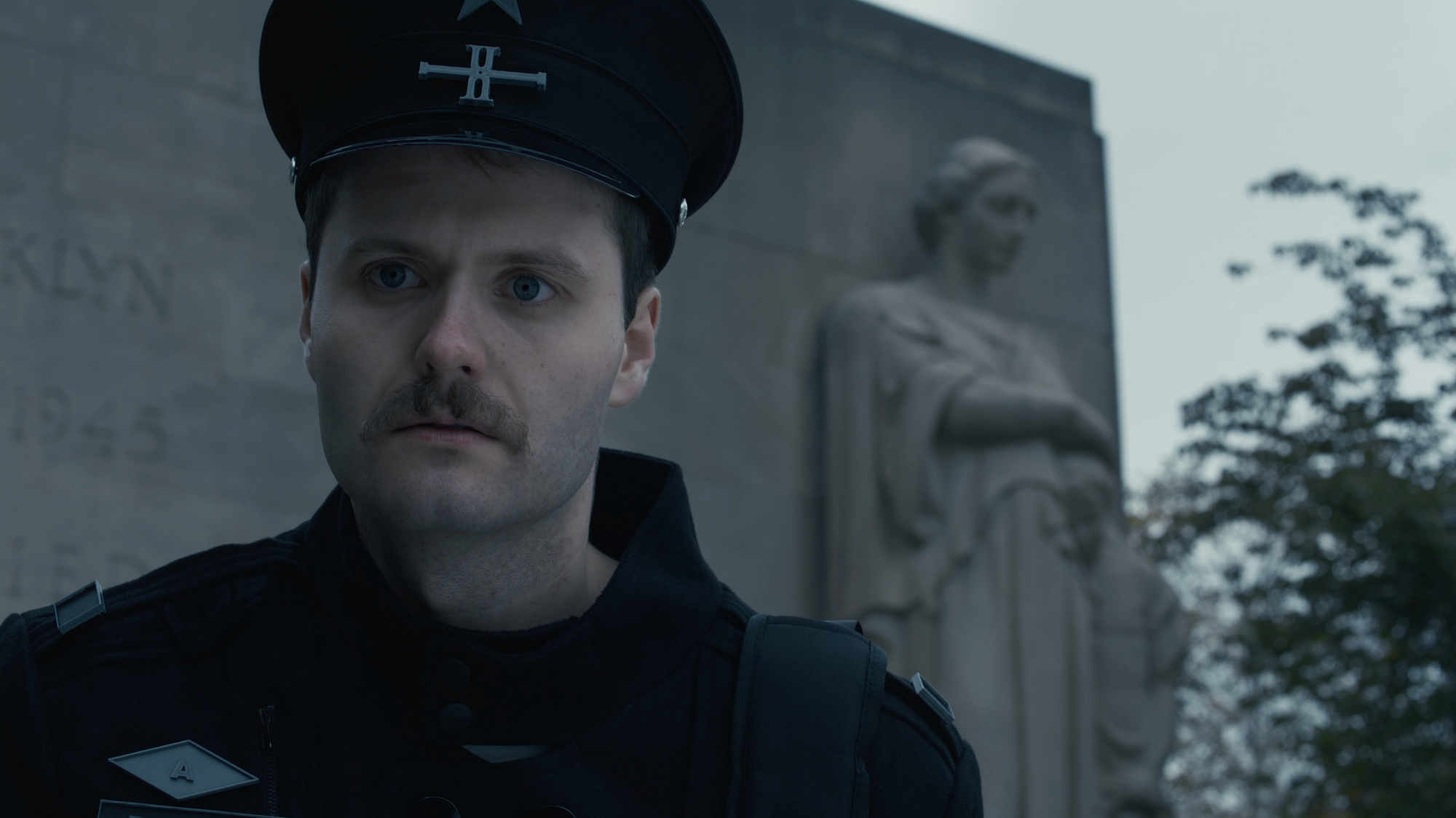
Unlike most dystopian narratives, Thomas is not a hero. Nor is he a courageous rebel. He is an ordinary man — fragile, uncertain, and deeply human. However, the regime he works for as an analyst expects him to be efficient, progressive, and infallible, just like math itself. He knows, at his core, that what he serves is morally wrong, demanding acts that betray his religion and his values. And yet, he conforms. He conforms because it is the world's new normality. A new reality.
Certain Thomas is not a work of genre. It is cautionary realism about today. To go further, I really wish a new sci-fi genre called "Dataism" would be created. In a world where we are dependent on data, even asking dating advice or major life choices from chatbots, data and algorithmic supremacy is perhaps the most influential, relevant, and urgent topic we should be discussing. Our future won't just be shaped by data, it will be governed by it.
What tool, technique, resource, collaborator, or mindset shift helped most during production?
My producer Scott Aharoni, apart from being such a great producer, is a great filmmaker himself, and he never tried to stop me from being fully creative and crazy with my ideas. So I felt total freedom when writing this, which is always fantastic and helpful.
From the get-go, I wanted to make a sci-fi that embraces "less is more." Because this world takes place somewhere that looks familiar to our present and the past, I needed brutalist buildings that fit that kind of timeless tone. Luckily, in New York City, there are quite a few interesting buildings I could find. And in terms of the story, yes, this arc is ambitious, but in my opinion it's not so large that it requires a feature length to do it justice. It's a very simple, symbolic story that fits well as a short form.
What is the greatest strength of independent filmmaking, and what lesson would you share with others?
I remember a famous director I greatly admire — for the life of me, I can't remember who — saying that no matter how big your budget is, whether it's 100 million or 300 million, you are always on a tight, shaky boat; the budget is never enough. Money was definitely tight while making this film, but more than that, the greatest strength of this sort of independent filmmaking is creative freedom. Unless you are on the level of Christopher Nolan, you always have to deal with investors, producers, and the studio. But with a film like this, which is largely self-funded, you may get advice from people you respect, but you have total control. That is the beauty of it: you can make whatever you want.
Then the question is, how does one come up with great ideas? For me, it's reading. Watching a lot of great films is a given. Nowadays it seems like even reading one chapter of a book in one sitting has become rare, so reading many great classics gives you a huge advantage by default. Most of my ideas are inspired by truly great books. My favorite authors include Kazuo Ishiguro, John Steinbeck, Harlan Ellison, and Isaac Asimov. But Ernest Hemingway is the most important of them all, because his work opened my eyes to literature. I didn't know written words could be so beautiful and emotionally powerful until I read A Moveable Feast when I was thirteen. And I never thought one could achieve so much with so little until I read A Farewell to Arms. I even doubted my path as a filmmaker for a while and considered becoming a novelist; I just didn't think a film could be as impactful and profound as a great 200–300-page novel. But then I saw Ingmar Bergman's Wild Strawberries when I was fourteen, and it instantly changed my mind.
What does it mean to have your film selected for FilmQuest, and where does it go next?
It means a lot. FilmQuest is one of the best genre film festivals in the U.S., and as a genre filmmaker, having my short screen there and being part of such a great event is an invaluable experience. There's an exciting market happening this year, and I've heard so many great things about the festival from past filmmakers, so I can't wait to be part of it.
Next is the feature version of Certain Thomas, which I'm developing with our incredibly talented producer Scott Aharoni and his production company, Curious Gremlin. I'm currently writing the screenplay, which goes much deeper into this world and, I must say, even darker. Going forward, I want my stories to be of greater scale and greater urgency. Even with fascinating visuals of the future, the audience should realize the world on screen looks a lot like their own phone. If Certain Thomas taught me anything, it's that the most important questions about our future aren't about whether machines will think like us, but whether we'll keep thinking for ourselves.
Main Cast & Crew
- Henry K. Hwang — Writer/Director
- Scott Aharoni — Producer
- Christopher Armstrong — Composer
- Jason Wang — Director of Photography
- Martyna Kalata — Production Designer
- Leon Schwendener — Pvt. Thomas K.
- Sean Weil — Sgt. Maj. Powell
- Christopher Chan — Sgt. Maj. Powell
- Juniper Renee Verdon — Leah
Filmmaker Opportunities
💛 Fund your next project with fiscal sponsorship
Have a project in the works? As a 501(c)(3) nonprofit, the Cinematography for Actors Institute can accept tax-deductible donations on your film's behalf — a door-opener for grants, foundations, and supporters who want to back your work. We've serviced over 100 projects to date and helped route over $800,000 in funding to filmmakers. Explore fiscal sponsorship →
📬 Grant deadlines and festival opportunities, straight to your inbox
The CFA newsletter rounds up grants, festival calls, and community news for independent filmmakers — the kind of opportunities that are easy to miss and painful to miss. Join the newsletter →
🎬 Focus on the creative — we'll help with the logistics
Production Management, CFA's newest member program, launches this November: production insurance and workers' comp, payroll, film permits, gear rental coordination, SAG-AFTRA compliance, contract drafting, production consulting, and crew recommendations — handled by a team of working filmmakers, à la carte or all in, in partnership with Creative Access Group. It's waitlist-only until launch. Join the waitlist →
League of Filmmakers is published by our parent organization, the Cinematography for Actors Institute — a 501(c)(3) dedicated to education, community, and capital for underrepresented filmmakers and actors. Learn more about CFA →