Some films earn their power by staying small. Ayesha Agarwal's debut short Coconut Girl watches Shwetha, the young child of Indian immigrants, pull away from her mother and her heritage after classmates mock the coconut oil in her hair. When a playdate reveals that same tradition proudly advertised on a mainstream conditioner, the irony lands with a quiet force: the thing she was taught to hide is the thing the world around her has embraced.
Agarwal, an LA-based writer/director who balances careers in affordable housing and independent filmmaking, made Coconut Girl in 2024 with support from Wavelength Productions. Her interest in cultural identity and belonging runs through the film's every frame, told, deliberately, through the eyes of a child who hasn't yet learned that her difference might one day become her strength.
Key Takeaways
- A tender coming-of-age drama laced with horror undertones, built around the intimate ritual of a mother oiling her daughter's hair.
- Budget and location constraints reshaped the film for the better, from a vintage mini school bus to a reimagined playground.
- Agarwal's guiding belief: cultural specificity doesn't limit universality, it deepens it.
Below, Agarwal talks through the film's origins, the electric final take that changed everything, and why constraints became her collaborators.
Interview
What drew you to make this film, and why this story, why now?
Growing up, I spent a lot of time trying to hide the visible parts of my Indian heritage because they made me feel different. More than anything, I wanted to fit in. As I've gotten older, and as popular culture has evolved, I've learned not only to embrace my heritage, but to recognize all the wonderful ways in which it has shaped me and enriched my life. That shift in perspective has changed the way I think about cultural differences more broadly. Some of the most dynamic and joyful environments I've been a part of are those filled with people whose backgrounds and experiences are different from my own. In a world where that kind of openness and exchange feels increasingly fragile, stories that celebrate our differences, and remind us of everything we gain from them, feel more important than ever. Ultimately, Coconut Girl came from wanting to tell that story through the eyes of a child who hasn't yet learned that the very thing making her feel like an outsider may one day become a source of pride.
What surprised you most about the filmmaking process, including any moment on set that changed how you saw the story?
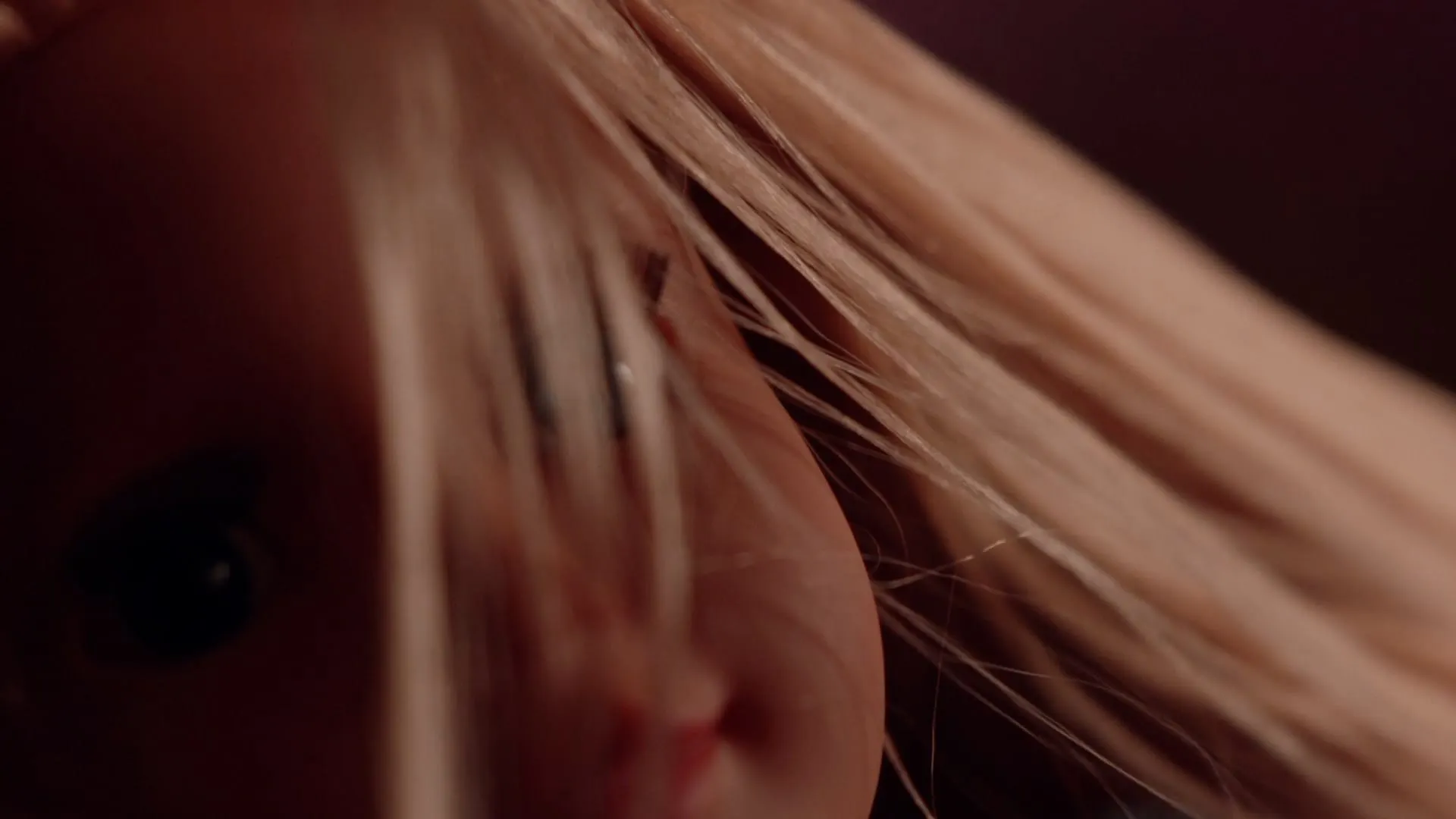
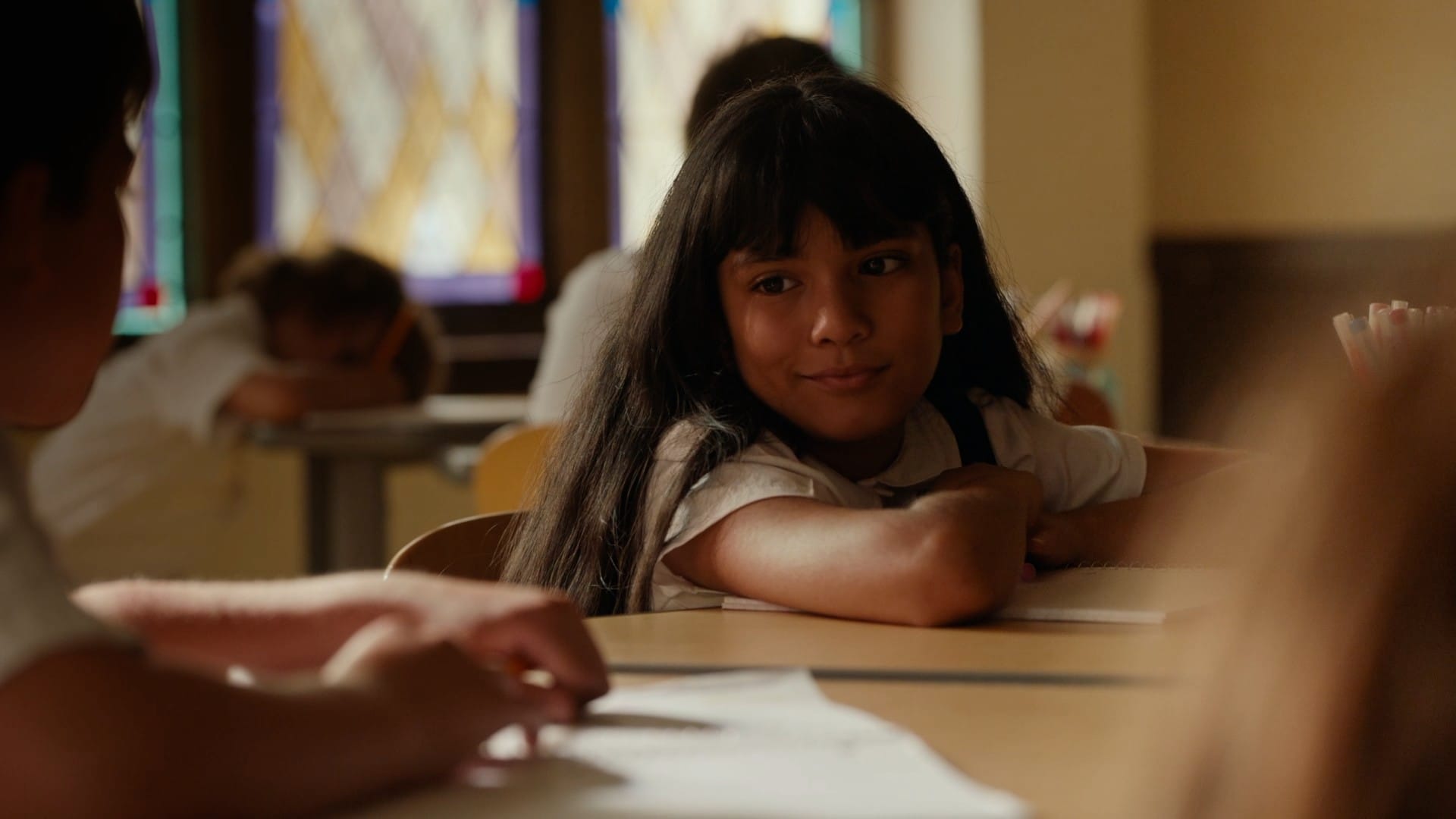
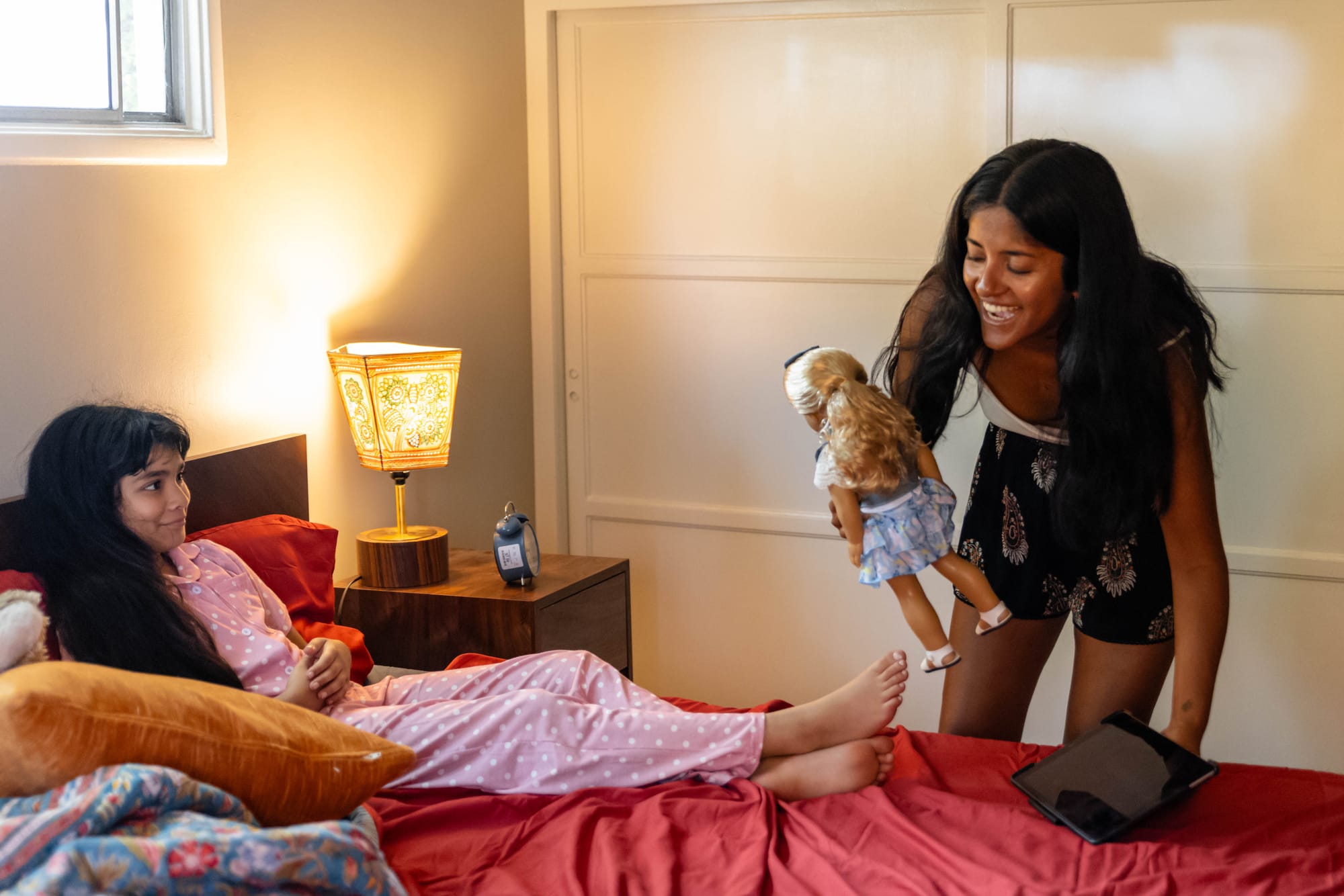
The nightmare sequence was actually a late addition to the script, and initially I thought of it more as a plot device than a thematic or atmospheric anchor. But filming both the nightmare and the doll hair-brushing sequences completely changed the way I saw the film. There was something about leaning into those horror undertones that captured Shwetha's internal experience, her fear, shame, and growing alienation, in a way that dialogue couldn't. That realization ended up dramatically shaping the edit and the visual language of the finished film.
Filming the nightmare itself was absolutely electric. Because we had a set full of kids, we were constantly watching the clock, and we had to save the nightmare for the very end of our final day because Shwetha's hair gets completely soaked in the scene. We had maybe ten minutes left to get it. There was no room for error, and then our young actress just knocked it out of the park. I remember all of us watching her perform and holding our breath as she made magic. It was one of those moments where the constraints of filmmaking somehow created something better than what I had imagined on the page.
What moment in the film feels most like you, or like something only you could have made?
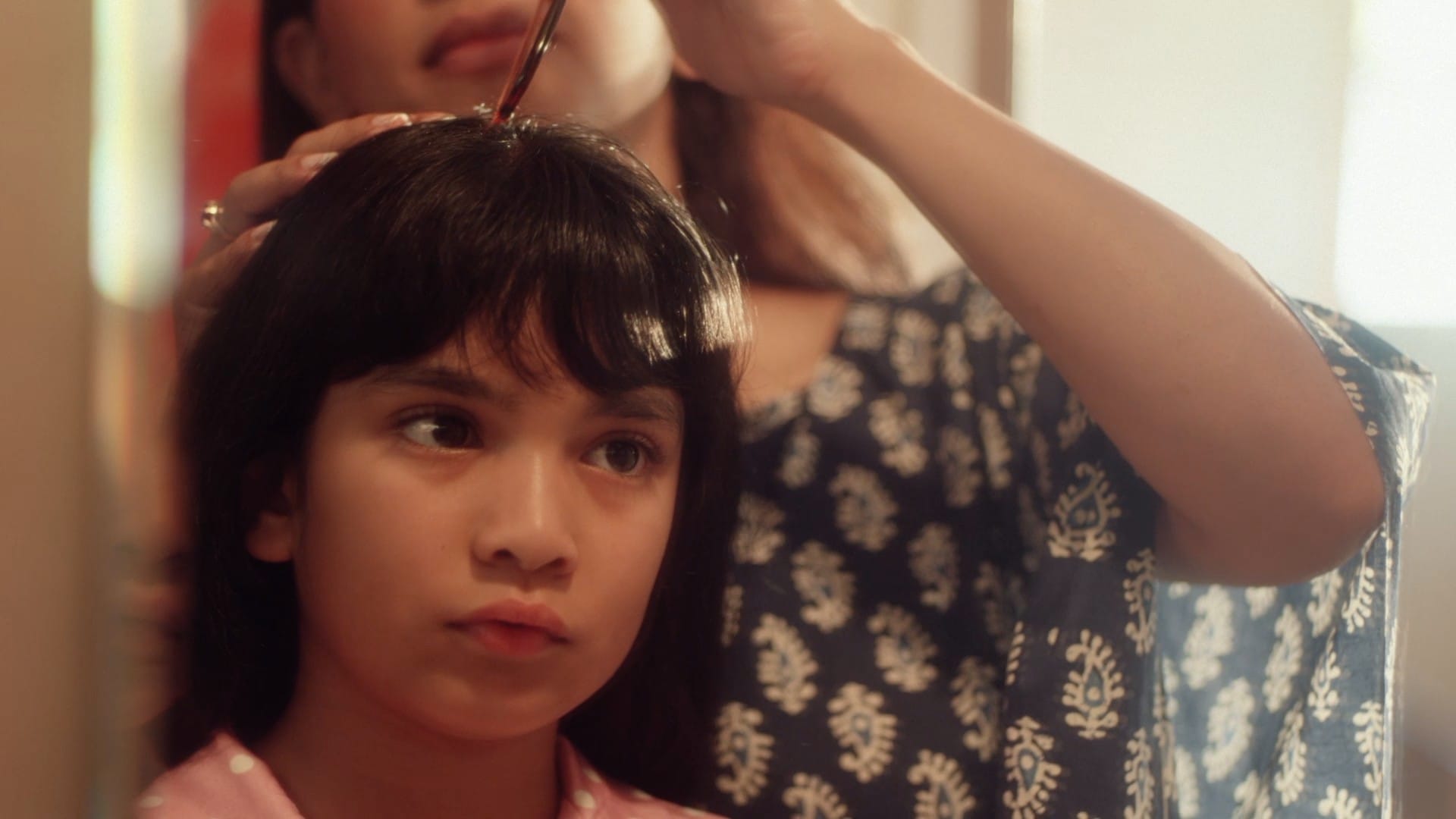
Probably the hair-oiling scene. It's not something that only I could have made, but it feels incredibly specific to the experience of growing up as the child of Indian immigrants. I know countless fellow desis who share some version of that memory: sitting between your mother's legs and accepting this ritual because it's an expression of love, without necessarily understanding what it means or why it has been passed down through countless generations of Indian women.
As a child, it was just something my mother did. Only as I got older did I come to understand the history and intimacy embedded in that ritual. I'm really happy with how the scene turned out because I think it captures both sides of that experience: the simplicity of how a child receives that love and the deeper cultural meaning she isn't yet old enough to understand. In many ways, that tension is at the heart of Coconut Girl.
What was the hardest creative decision you made while making the film?
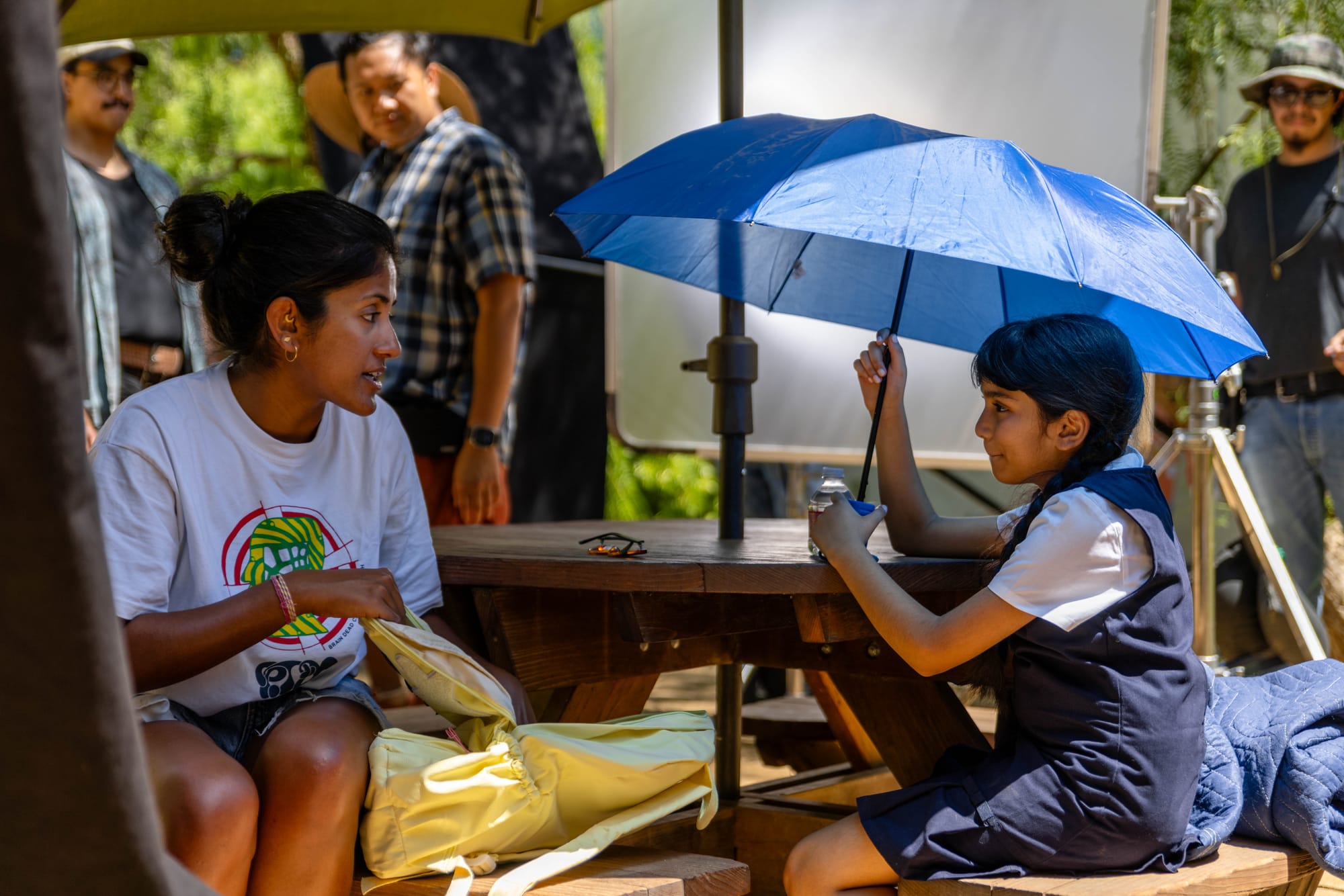
Choosing our school location was surprisingly difficult. I had written the playground scenes with a very specific image in my head of that classic castle structure we all grew up with. We found only one school that really matched that vision, and unfortunately it was closed for construction during our shoot weekend. The school we ultimately chose was available and within our budget, but it had no playground at all. Instead, it had a huge field bordered by the rock-climbing wall you see in the film.
Committing to that location was hard because it meant letting go of an image I had lived with since writing the script and completely reimagining the blocking and visual language of those scenes. But it also forced us to get creative. We had giant swings built, ordered playground fixtures online, and essentially created our own version of the environment I had imagined. I'm stoked with how it turned out. It taught me that sometimes holding onto the spirit of an idea rather than its exact execution can lead you somewhere even more interesting.
What tool, technique, or mindset shift helped most during production?
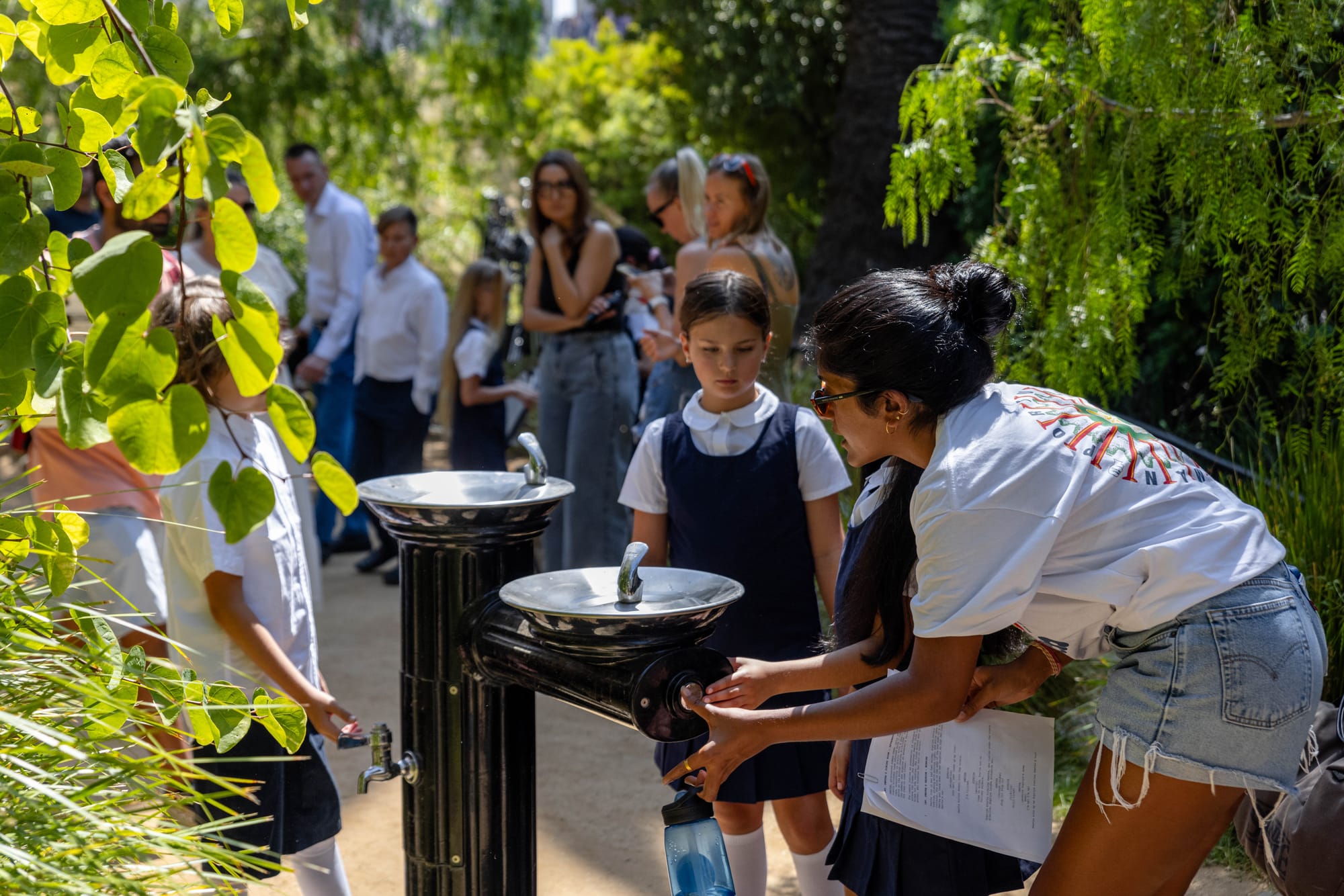
The most helpful mindset shift was learning to be more fluid and treating what I had imagined as a loose framework for what I wanted to achieve rather than a rigid blueprint. That allowed me to go from thinking, "I have to accept this change," to asking, "What new possibilities does this constraint offer?"
One of my favorite examples came from the school bus sequence. As we got closer to the shoot, we realized that renting a full-size school bus and actually driving it would be a pretty significant challenge, both financially and logistically. So we went on Facebook Marketplace and found someone selling an old, out-of-commission mini school bus. He let us use it for half a day for a fraction of what an active school bus would have cost, and we created the illusion that it was moving by literally pushing and rocking the bus from outside the frame. Funnily enough, the old bus has a much more vintage feel than what we originally envisioned and fits the era of the film even better. It was a great reminder that a constraint doesn't necessarily mean compromising your vision; sometimes it pushes you toward a solution that serves the film better than the original plan.
What do you hope audiences take away from this film?
I have three hopes. First, I hope that anyone who grew up feeling pressure to hide or extinguish parts of their cultural identity sees themselves in Shwetha. There can be a particular loneliness in believing that the things that make you different are things you need to erase, and I hope the film makes people who have experienced that feel a little less alone.
Second, I hope it encourages people to be more conscious of the ways we shape the experiences of those around us. Sometimes the smallest actions, what we laugh at, what we question, what we choose to defend, or when we choose to speak up, can have an enormous impact on whether someone feels like they belong.
And finally, I hope everyone walks away hugging their mothers a little tighter!
What does it mean to have your film selected for The Reel Champions Shorts Fest?
It's an honor to be included alongside so many women and non-binary filmmakers who are championing underrepresented voices and expanding the range of stories we see on screen. I really admire what The Reel Champions Shorts Fest is building by not only celebrating the filmmakers telling these stories, but also recognizing the creative teams behind the camera who bring them to life. I'm proud that Coconut Girl can be a small part of that mission.
And, of course, there's something extra special about screening in LA. This is where we made the film and where so many of the people who helped bring it to life are based, so getting to share it with our own community always feels a little like coming home.
Main Cast & Crew
- Ayesha Agarwal — Writer/Director. An LA-based writer/director whose work focuses on the complexities of cultural identity and belonging. With a dual degree in economics and mathematics from Columbia University, she balances careers in affordable housing and independent filmmaking, two realms connected by her commitment to equity, identity, and representation. Since completing Coconut Girl in 2024 with support from Wavelength Productions, she has written a feature adaptation of a nonfiction novel and an original screenplay selected as a finalist for 1497's Features Lab.
Filmmaker Opportunities
💛 Fund your next project with fiscal sponsorship
Have a project in the works? As a 501(c)(3) nonprofit, the Cinematography for Actors Institute can accept tax-deductible donations on your film's behalf — a door-opener for grants, foundations, and supporters who want to back your work. We've serviced over 100 projects to date and helped route over $800,000 in funding to filmmakers. Explore fiscal sponsorship →
📬 Grant deadlines and festival opportunities, straight to your inbox
The CFA newsletter rounds up grants, festival calls, and community news for independent filmmakers — the kind of opportunities that are easy to miss and painful to miss. Join the newsletter →
🎬 Focus on the creative — we'll help with the logistics
Production Management, CFA's newest member program, launches this November: production insurance and workers' comp, payroll, film permits, gear rental coordination, SAG-AFTRA compliance, contract drafting, production consulting, and crew recommendations — handled by a team of working filmmakers, à la carte or all in, in partnership with Creative Access Group. It's waitlist-only until launch. Join the waitlist →
League of Filmmakers is published by our parent organization, the Cinematography for Actors Institute — a 501(c)(3) dedicated to education, community, and capital for underrepresented filmmakers and actors. Learn more about CFA →