Table of Contents
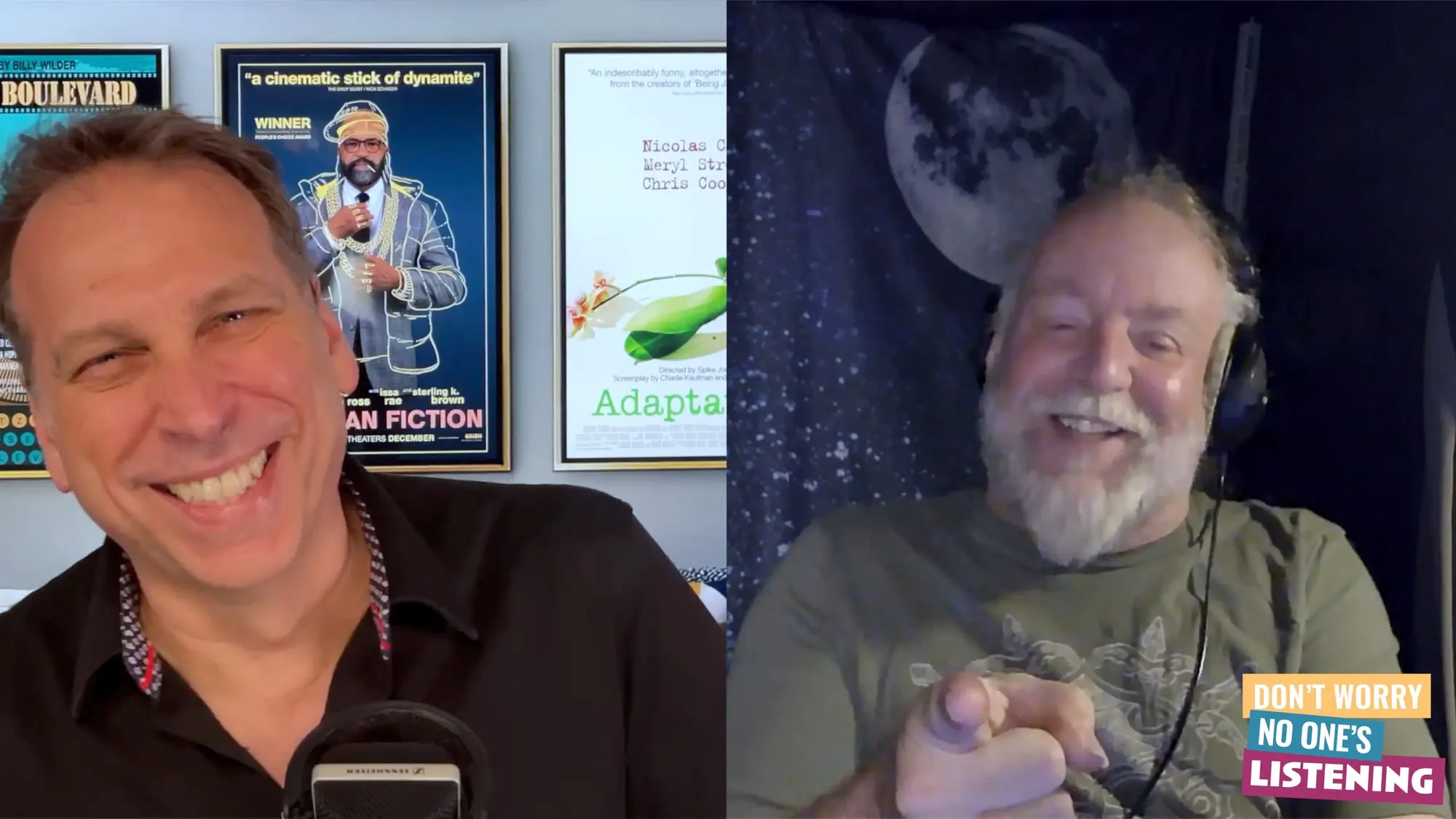
Edward Savio has spent a career telling stories as a screenwriter and novelist, but he has always been just as taken with the people who tell them. Don't Worry, No One's Listening is where that fascination lives: an intimate conversation with acclaimed audiobook narrator and recent Audible Hall of Fame inductee Ray Porter, tracing the life and career of one of contemporary storytelling's defining voices.
The festival cut runs about an hour, moving from Project Hail Mary through acting, writing, parenthood, fame, and failure. It is, by design, less an interview than the kind of talk artists have after everyone else has gone home — and it earns its place at a festival devoted to storytelling by asking the same questions any good film does: how do you hold an audience, and what do you leave in?
Key Takeaways
- Savio approaches conversation the way he approaches a screenplay — thinking in scenes, rhythm, reveals, and emotional movement rather than a checklist of questions.
- The Ray Porter episode moves ninety degrees when you least expect it, from performance to respecting the author to parenthood to colonoscopies, and somehow it all belongs.
- Editing a podcast, Savio found, resembles writing: the hard part isn't finding good material but discovering the arc inside it and cutting the moments you love.
Below, Savio talks about the instincts he carried over from fiction and film, and the mindset shift that finally let the show find its voice.
Interview
What drew you to make this show, and why this story, why now?
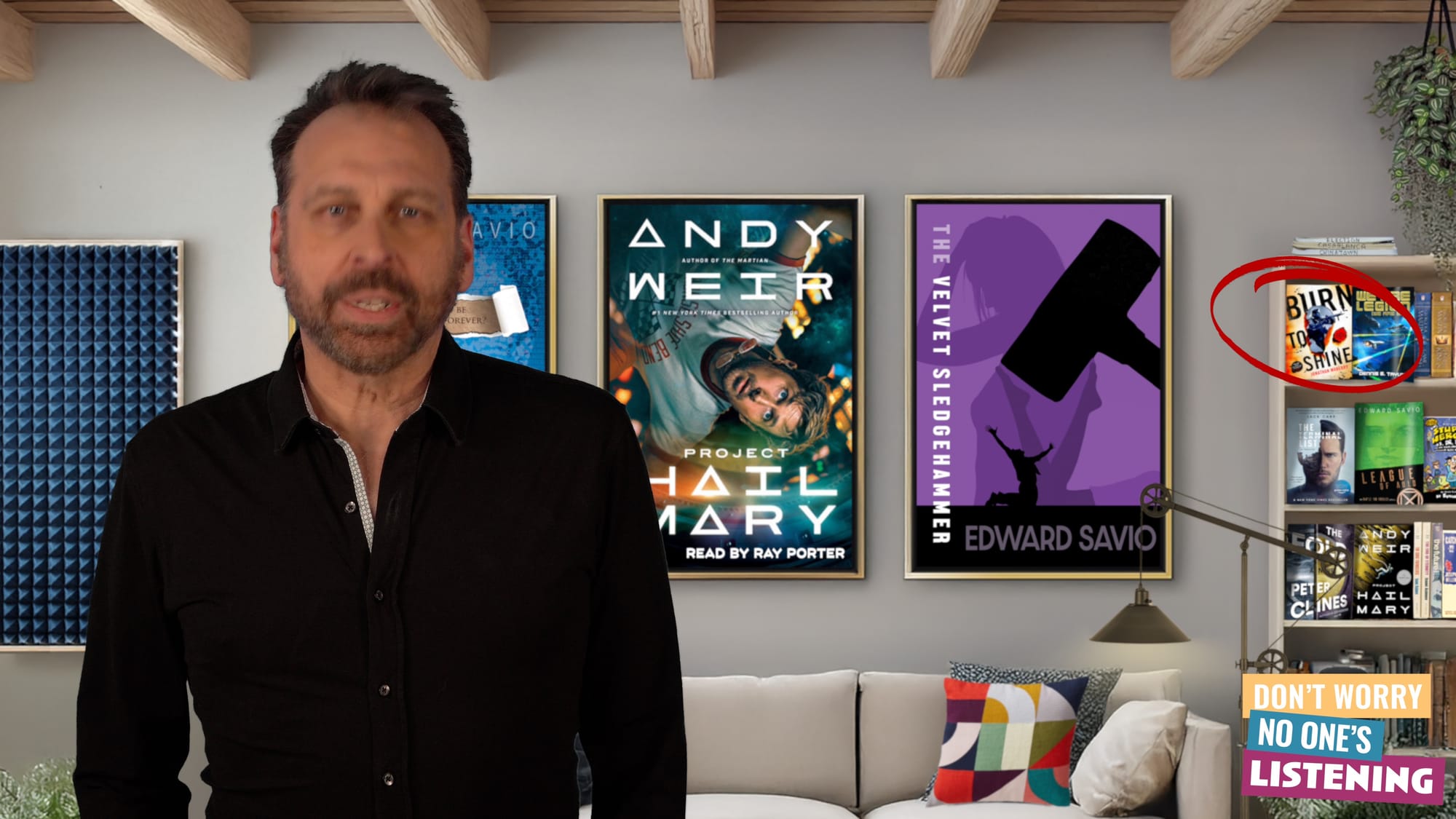
I've spent my career telling stories — as a screenwriter and novelist — but I've always been just as fascinated by the people who tell them. Every creative person brings a different history, process, set of influences, and way of looking at the work.
I wanted conversations that felt less like interviews and more like the discussions writers and artists have after everyone else has gone home. The work is usually where we start. It's almost never where we end up.
Screenwriting taught me that a scene needs discovery. Novel writing taught me to follow an interesting thought farther than may initially seem sensible. Both inform the way I approach these conversations.
What surprised you most about the process, including any moment that changed how you saw the story?
The biggest surprise was how much editing a podcast resembles writing.
In a screenplay or novel, you can love a scene and still cut it because the story moves better without it. A podcast is the same. Our conversations can run two or three hours, and the hard part isn't finding good material. It's discovering the emotional and intellectual arc inside it, then deciding which great moments have to disappear.
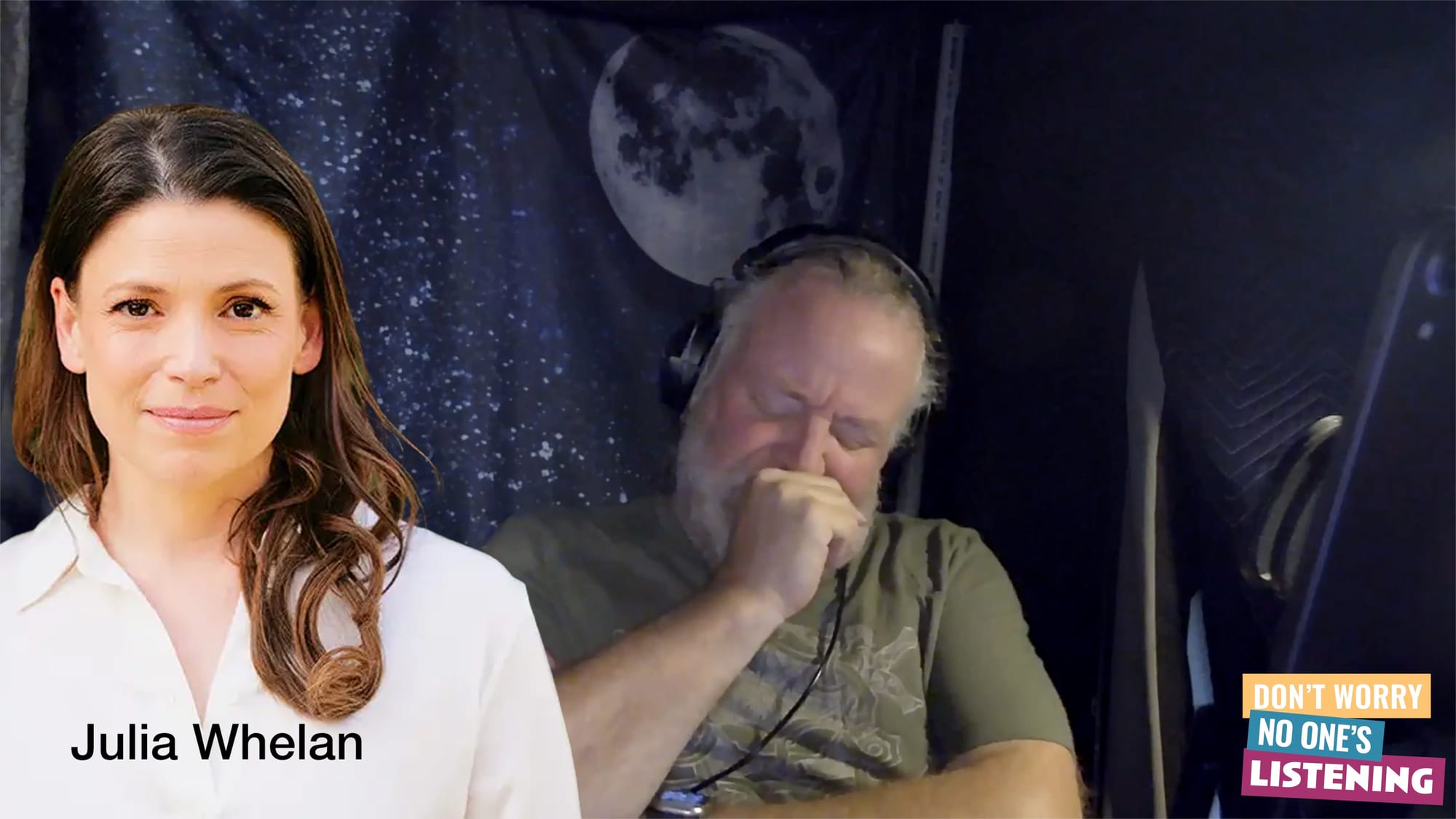
The Ray Porter conversation moved through acting, audiobook narration, writing, parenthood, creativity, fame, failure, and several places no reasonable person could have predicted. The edit wasn't about making those subjects orderly. It was about preserving the feeling that one thought had naturally led us to the next.
What moment feels most like you, or like something only you could have made?
Probably the moments when the conversation veers ninety degrees into somewhere neither of us expected.
That's something I've always loved as a storyteller. The obvious path is usually the least interesting one. A guest says something that completely reframes the discussion, we follow it, and suddenly we're talking about something more revealing than the original question.
In the Ray Porter episode, a conversation about performance becomes a conversation about respecting the author and the audience. Then writing. Then parenthood. Then colonoscopies. Somehow, it all belongs in the same conversation. That feels very much like this show — and very much like me.
What was the hardest creative decision you made?
Learning to cut things I love.
Screenwriters sometimes say a movie is written three times — on the page, during production, and in the edit. Podcasts aren't that different. We record the conversation, then discover its final form afterward.
Some of my favorite exchanges don't make the festival cut because they interrupt the larger rhythm. Good editing isn't simply choosing the best individual moments. It's choosing the best experience for the audience.
What tool, technique, or mindset shift helped most during production?
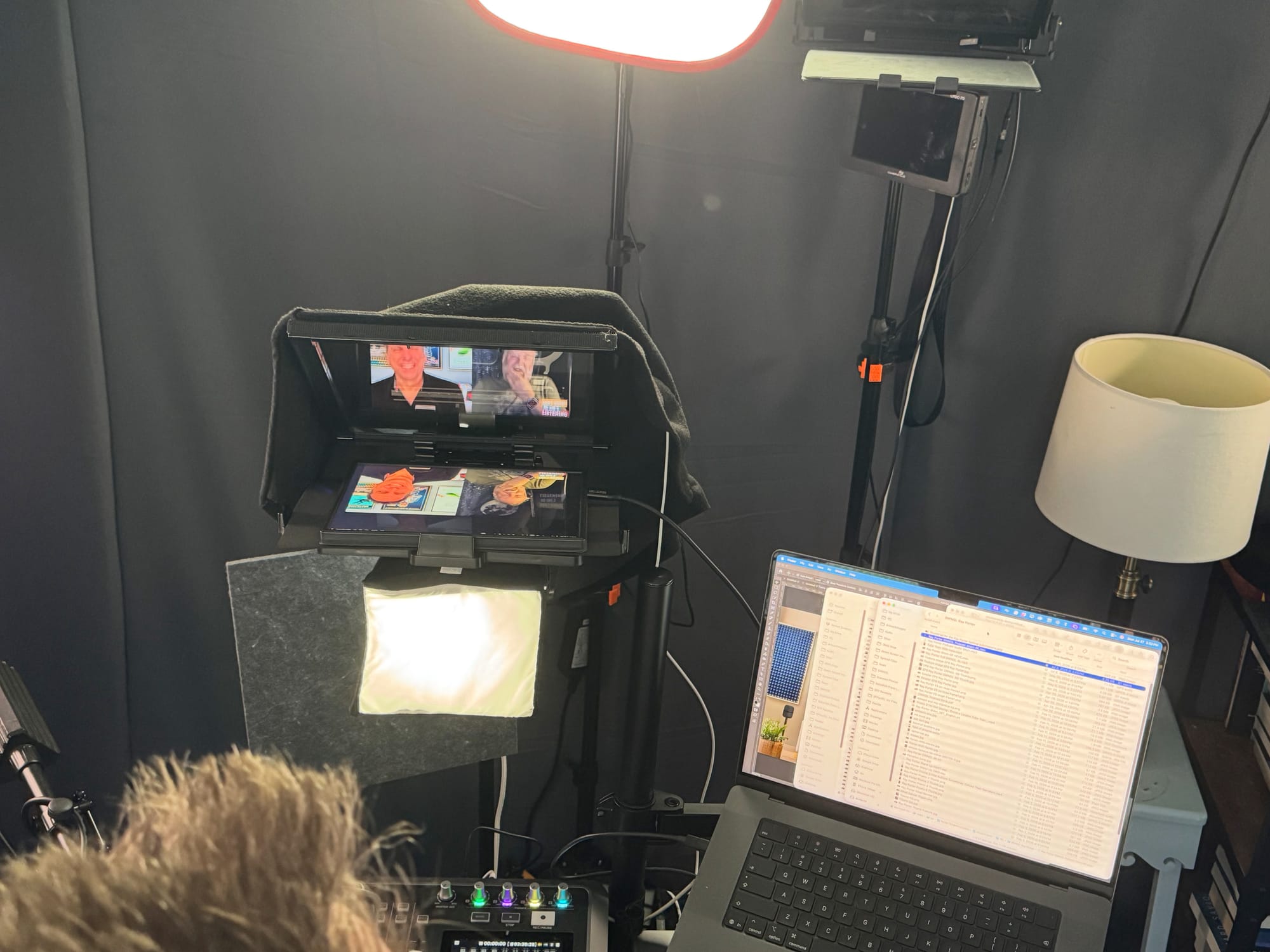
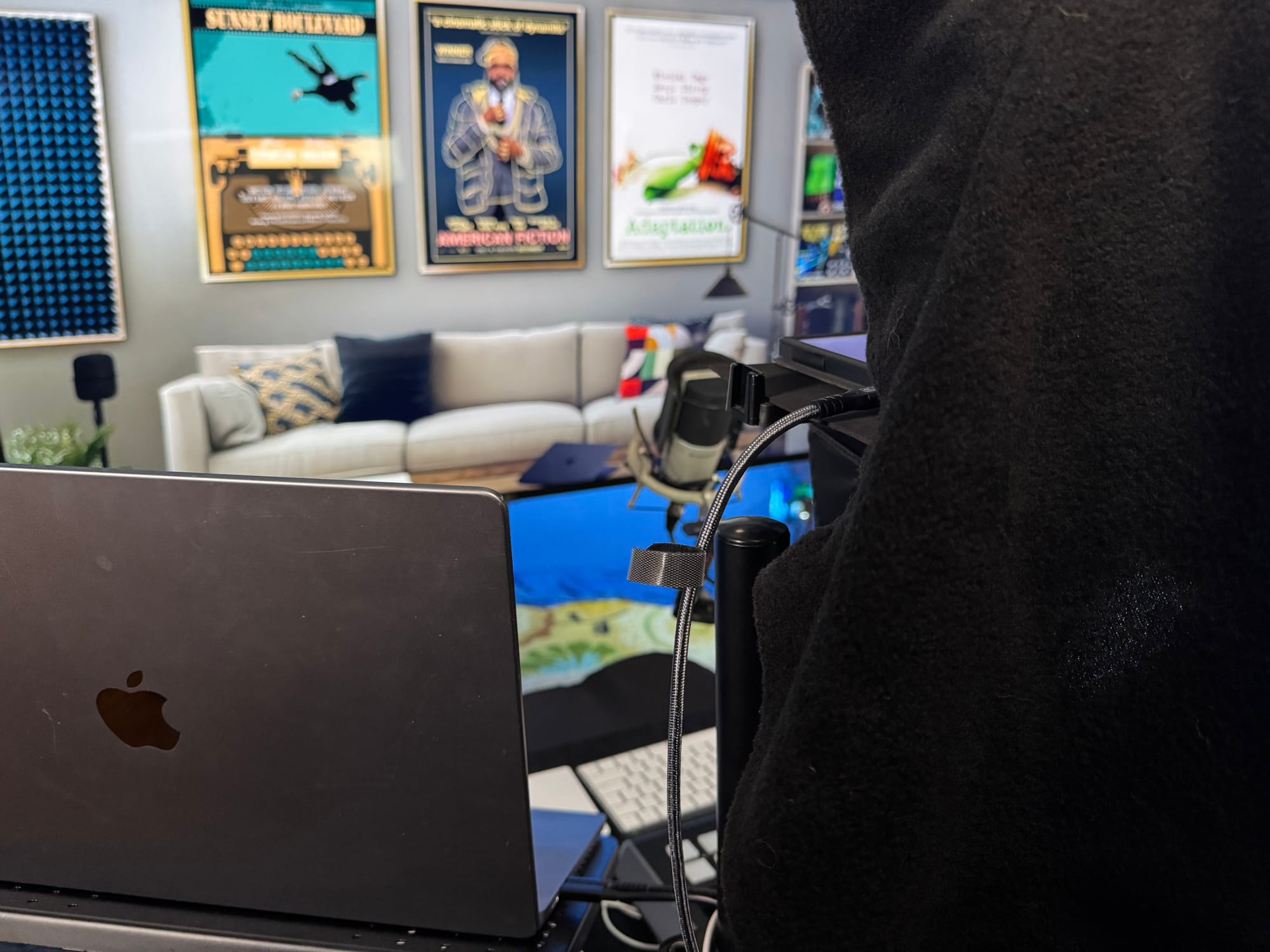
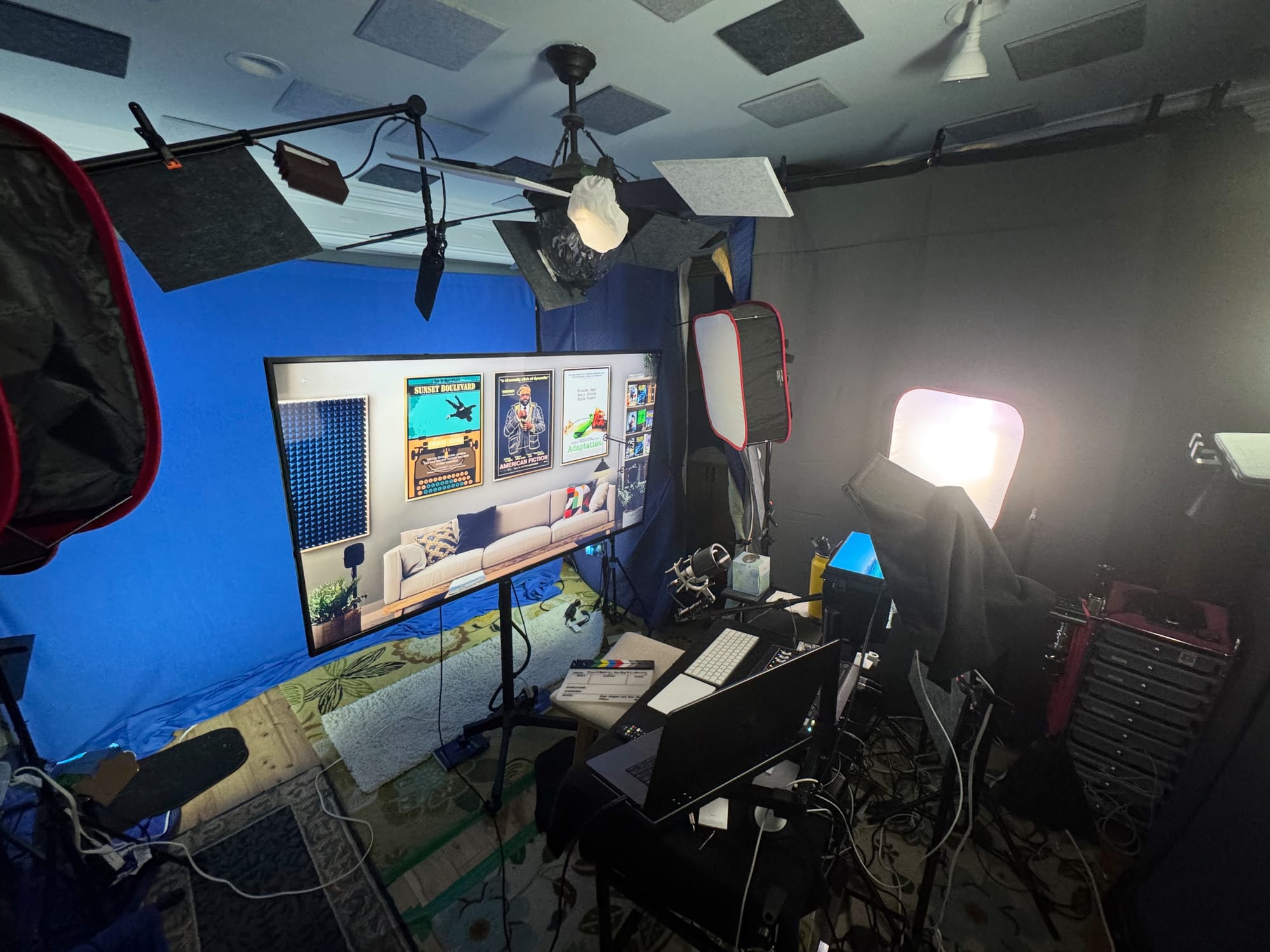
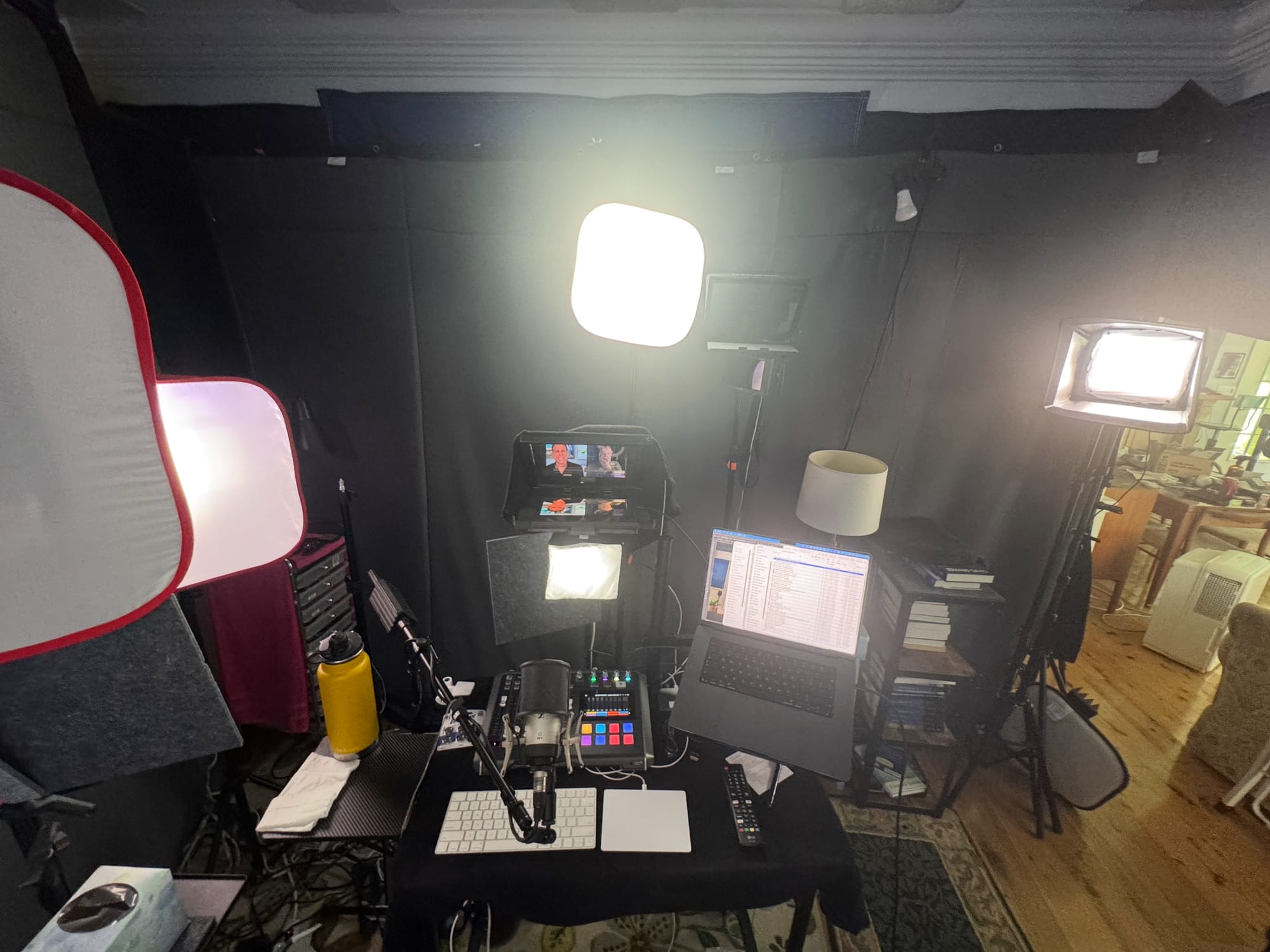
The ability to edit video through a transcript is still relatively new. It lets me "redline" a conversation the way I would a screenplay or novel, which gives me a strong sense of what I have, what can go, and what needs room to breathe. But transcript-based editing only gets you so far. I still move into more traditional editing tools for the fine-grain control — timing, reactions, overlapping laughter, and the overall look and rhythm of the finished piece.
The most important mindset shift was realizing I didn't have to make a traditional interview. My experience in film and screenwriting makes me think in terms of scenes, rhythm, reveals, reversals, and emotional movement. Writing novels taught me that sometimes the apparent digression is where the real story is hiding. Once I stopped worrying about checking every promotional box and focused on creating a genuine conversation, the guests relaxed. Better stories emerged. The show found its voice.
What do you hope audiences take away from it?
That creative people are wonderfully strange — in the best possible way. They build worlds, solve imaginary problems, hear voices, argue with people who don't exist, and carry entire conversations in their heads while shopping with their spouse at HomeGoods.
But every guest brings a different version of that life. Ray Porter has spent years disappearing into other people's stories as an actor and narrator, and now he's discovering what it means to create stories of his own. I hope audiences discover work they might not otherwise have found. More than that, I hope they become curious about the minds behind it.
What does it mean to have the show selected for HollyShorts?
It's an honor to have it included in a festival devoted to storytelling and independent creators.
We're arriving through a different form, but the creative questions are remarkably similar. How do you hold an audience? How do you shape a story? What do you leave in? What do you cut? And how do you create something that feels distinctly your own while making it accessible to others?
Having the Ray Porter episode selected is especially meaningful because Ray works across film, theater, audiobooks, and now writing. The conversation itself lives at the intersection of those forms.
Main Cast & Crew
- Edward Savio — Director/Host. Screenwriter, novelist, and creator of the political cartoon Ourmageddon. A Connecticut native who has written for major studios including Walt Disney Studios and Sony Pictures Entertainment, he is best known as the author of the award-winning sci-fi action novel Alexander X and its sequels Ancient Among Us and League of Auld, as well as the novel The Velvet Sledgehammer. His time at ICM and Triad Artists adds an invaluable business perspective.
- Ray Porter — Guest. American actor, voice artist, award-winning audiobook narrator, and recent Audible Hall of Fame inductee, best known for voicing Darkseid in Zack Snyder's Justice League. A 15-year veteran of the Oregon Shakespeare Festival, he has narrated popular audiobooks including Project Hail Mary and the Joe Ledger series.
- Lisa Lindo — Producer. A producer and literary manager whose career began at Skadden, Arps, Paramount, ICM, and Norman Lear's ACT III. She served as VP of the Milan Int'l Film Festival for 22 years and, as former CEO of Acme Talent & Literary, set up projects including Elf and Save the Last Dance.
Filmmaker Opportunities
💛 Fund your next project with fiscal sponsorship
Have a project in the works? As a 501(c)(3) nonprofit, the Cinematography for Actors Institute can accept tax-deductible donations on your film's behalf — a door-opener for grants, foundations, and supporters who want to back your work. We've serviced over 100 projects to date and helped route over $800,000 in funding to filmmakers. Explore fiscal sponsorship →
📬 Grant deadlines and festival opportunities, straight to your inbox
The CFA newsletter rounds up grants, festival calls, and community news for independent filmmakers — the kind of opportunities that are easy to miss and painful to miss. Join the newsletter →
🎬 Focus on the creative — we'll help with the logistics
Production Management, CFA's newest member program, launches this November: production insurance and workers' comp, payroll, film permits, gear rental coordination, SAG-AFTRA compliance, contract drafting, production consulting, and crew recommendations — handled by a team of working filmmakers, à la carte or all in, in partnership with Creative Access Group. It's waitlist-only until launch. Join the waitlist →
League of Filmmakers is published by our parent organization, the Cinematography for Actors Institute — a 501(c)(3) dedicated to education, community, and capital for underrepresented filmmakers and actors. Learn more about CFA →