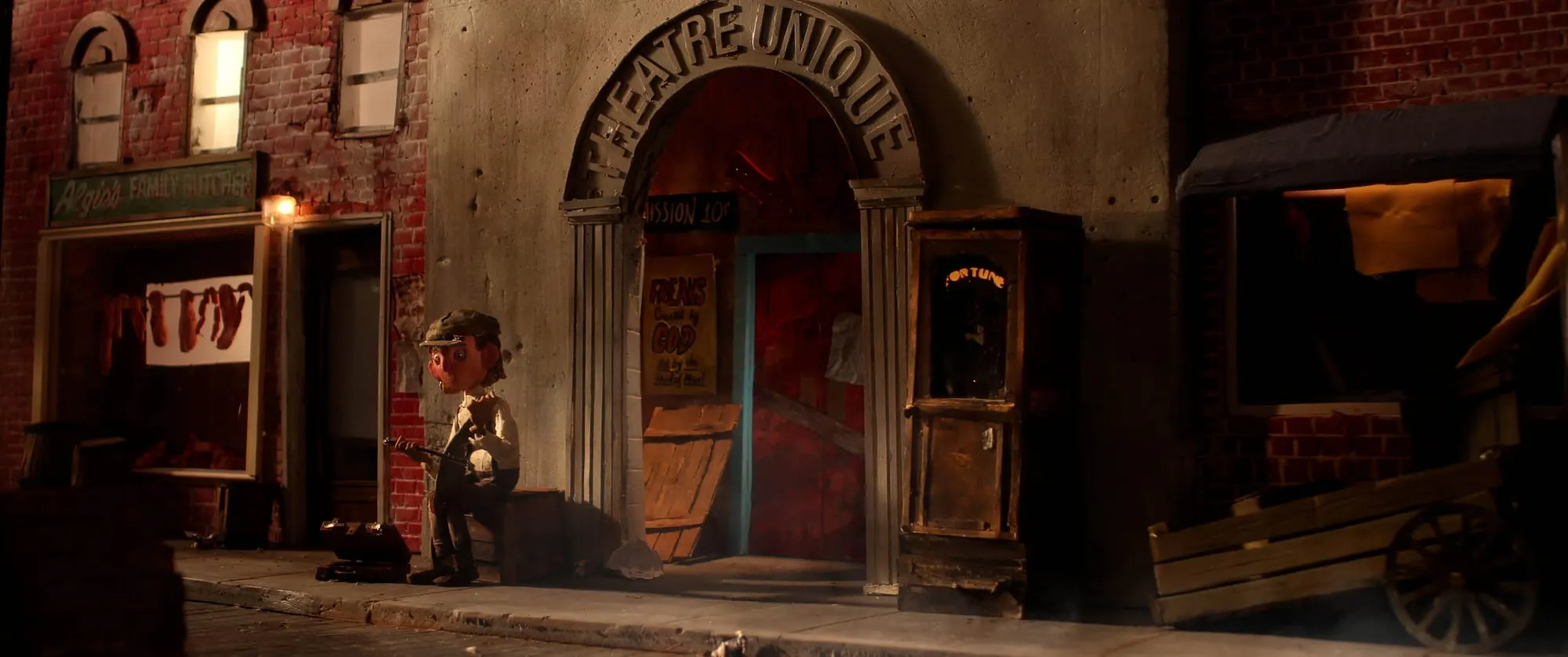
Elliot Lobell spent fifteen years in stop-motion and digital animation before he built Edward almost entirely by himself — writer, animator, director, puppet builder, painter, cinematographer. The premise is a single line: Edward is a sideshow performer with a parasitic twin. What grew out of that line, across seven years and nine handmade sets, is a seven-minute film that works less as a scare and more as a study of attachment, and of the quiet moments a person steals in between.
The film premiered at Coney Island Film Festival, where it won Best Animated Film, took Best Animation at The New York Short Film Festival, and had its European premiere at Ravenheart Film Festival in Oslo. Now it arrives at FilmQuest in Provo, Utah, alongside filmmakers Lobell has looked up to for years — some of whose work, he says, set him on the path toward Edward in the first place.
Key Takeaways
- Nearly nine handmade sets, built and shot almost entirely solo over seven years, most of it in a basement.
- A three-month residency from Jersey City arts organization 14C gave Lobell studio space, a DP, and the thing he had never had: a deadline.
- Audiences read the parasitic twin as everything from a personal struggle to a past relationship to the state of the world — a metaphor Lobell didn't plan on.
Lobell spoke about building a world by hand, learning to act through a puppet, and the discipline of pushing forward.
Interview
What drew you to make this film, and why this story, why now?
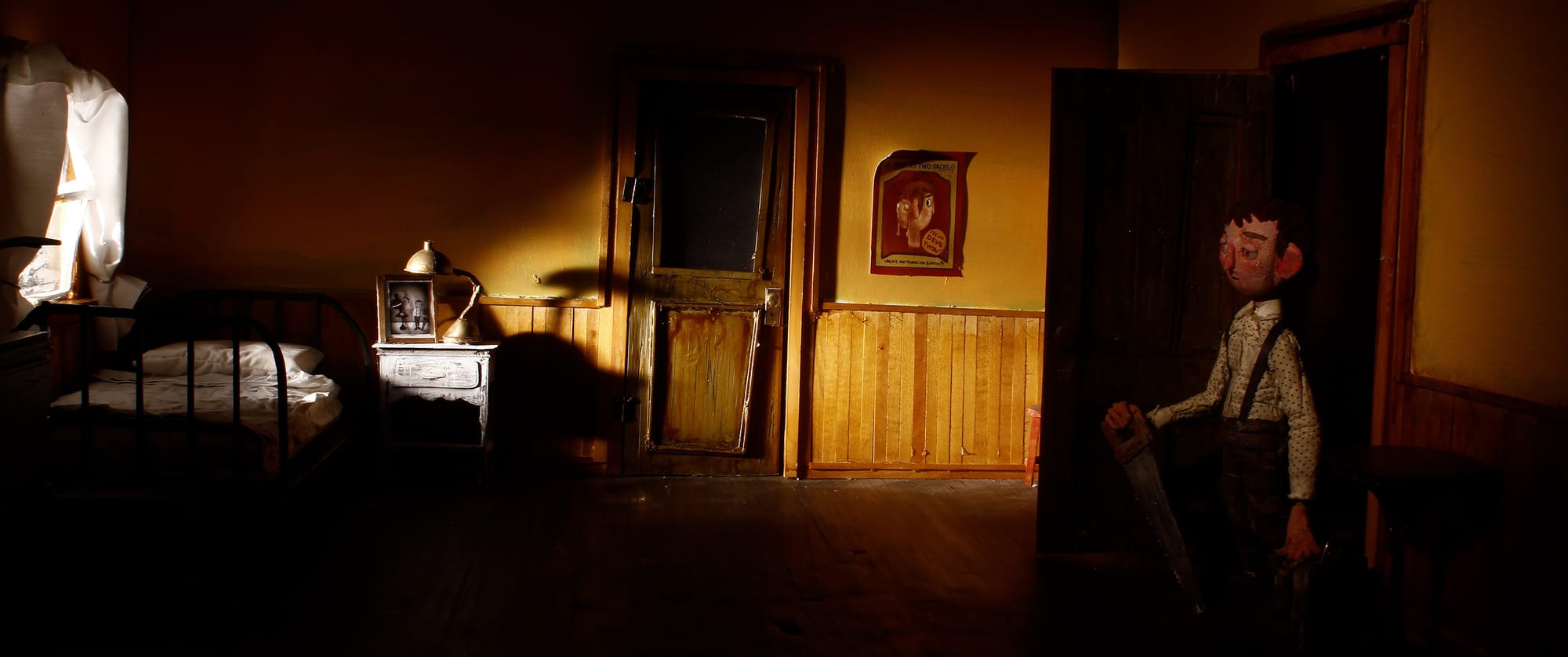
When I began writing this film in 2018, I had been working primarily in post-production and digital animation. I was yearning to make something that was truly tangible, with everything shot in-camera and made by hand.
I was inspired by the mysteries of Coney Island sideshow and the odd medical history of the early 20th century. I felt that the time period lent itself well to the handmade, gritty and weathered world that the film takes place in.
What surprised you most about the filmmaking process, creatively or logistically?
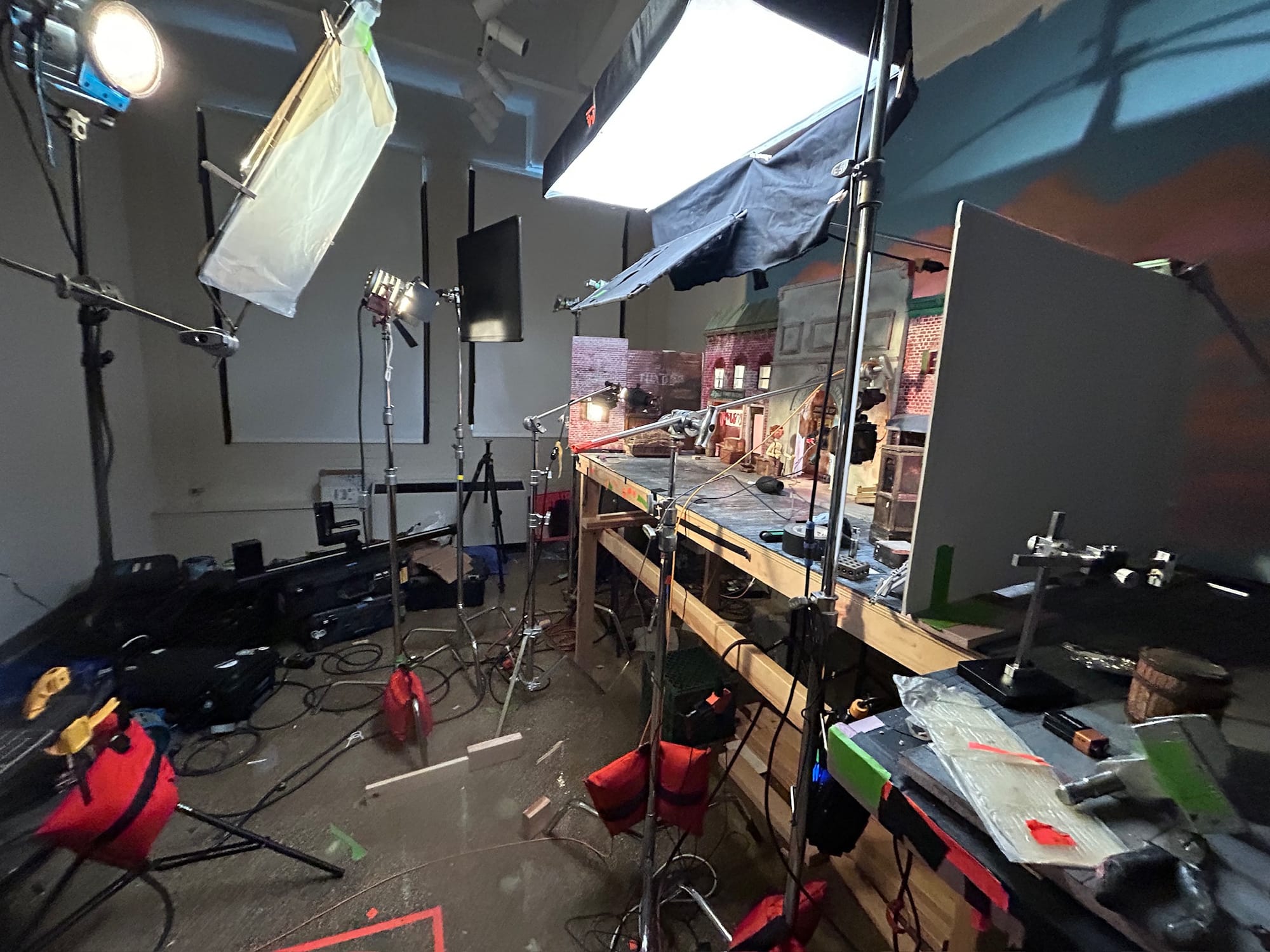
When I began making this film, though it wasn't my first foray into stop-motion animation, I hadn't realized how ambitious it was going to be — with nearly eight or nine handmade sets that I had to build. So that was the biggest logistical surprise.
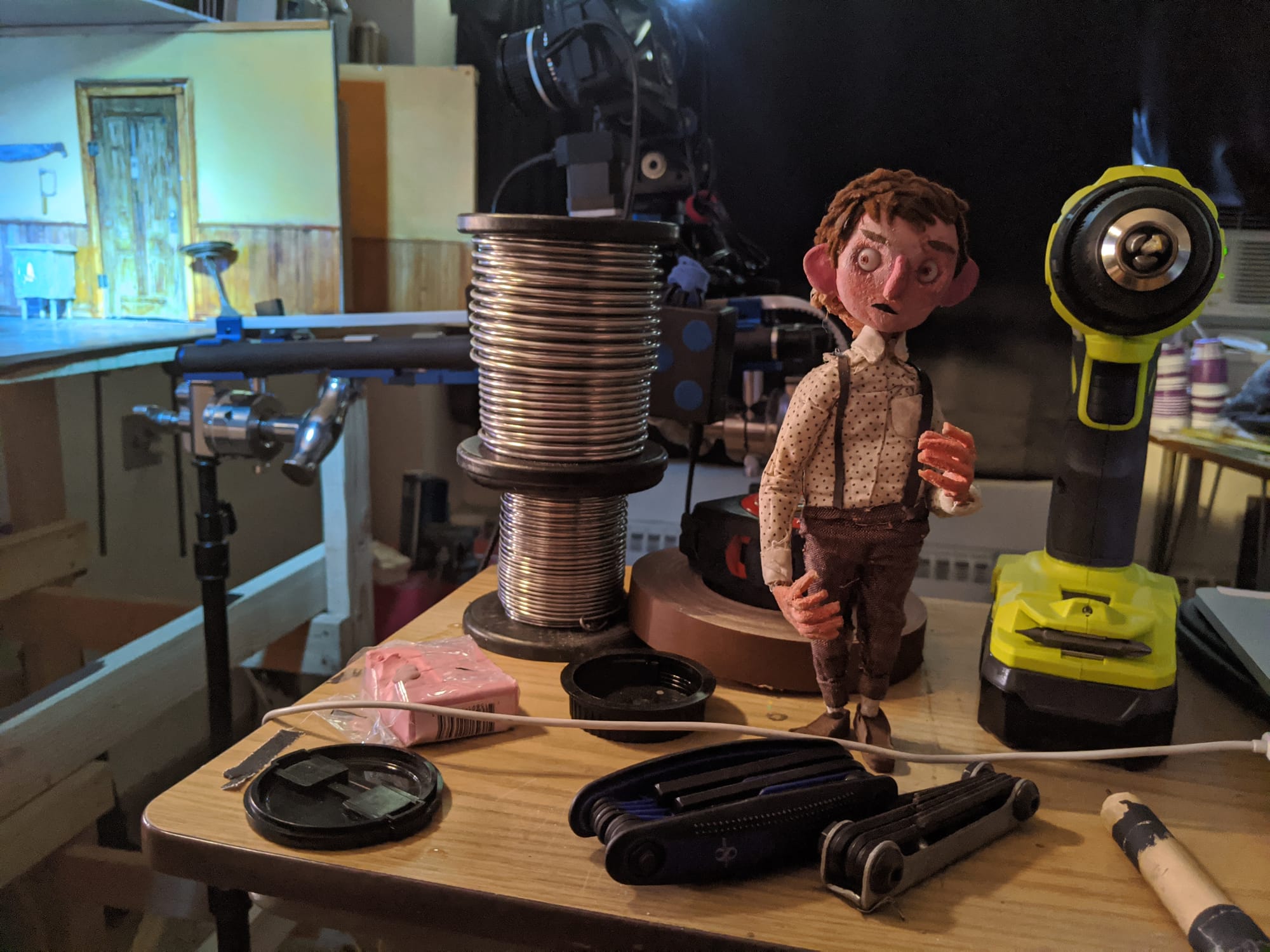
When I began filming, I was so focused on telling the story that the main character was literally just a puppet that I had to move. Shortly after the first couple of scenes, I realized — while he was still a puppet — that he was embodying a character who had real feelings and was dealing with a real problem that was unique to him. I found myself "acting" and performing through the puppet, rather than just moving it frame by frame.
What moment in the film feels most like you, or like something only you could have made?
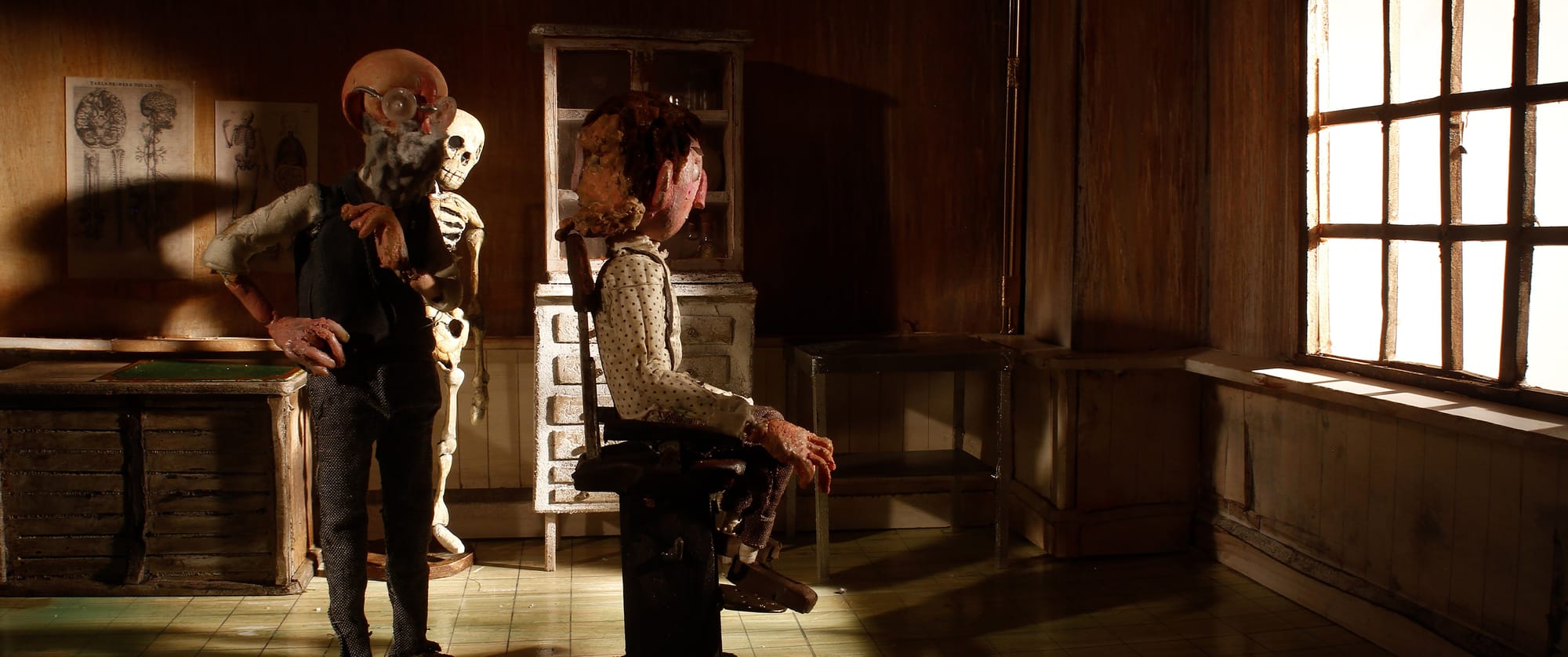
There are several scenes that I feel have my personal touch, but the two that stick out to me are slight moments of peace amidst all the chaos. At the end of the day, Edward is a horror film with quirky characters and an even weirder monster, but just when things are getting a little dark, I let the characters rest, whether metaphorically or physically. Without giving away too much, there are two scenes represented by the peaceful, warm glow of the sun through the windows that lets the audience know, maybe our hero isn't as tortured as he seems.
What was the hardest creative decision you made while making the film?
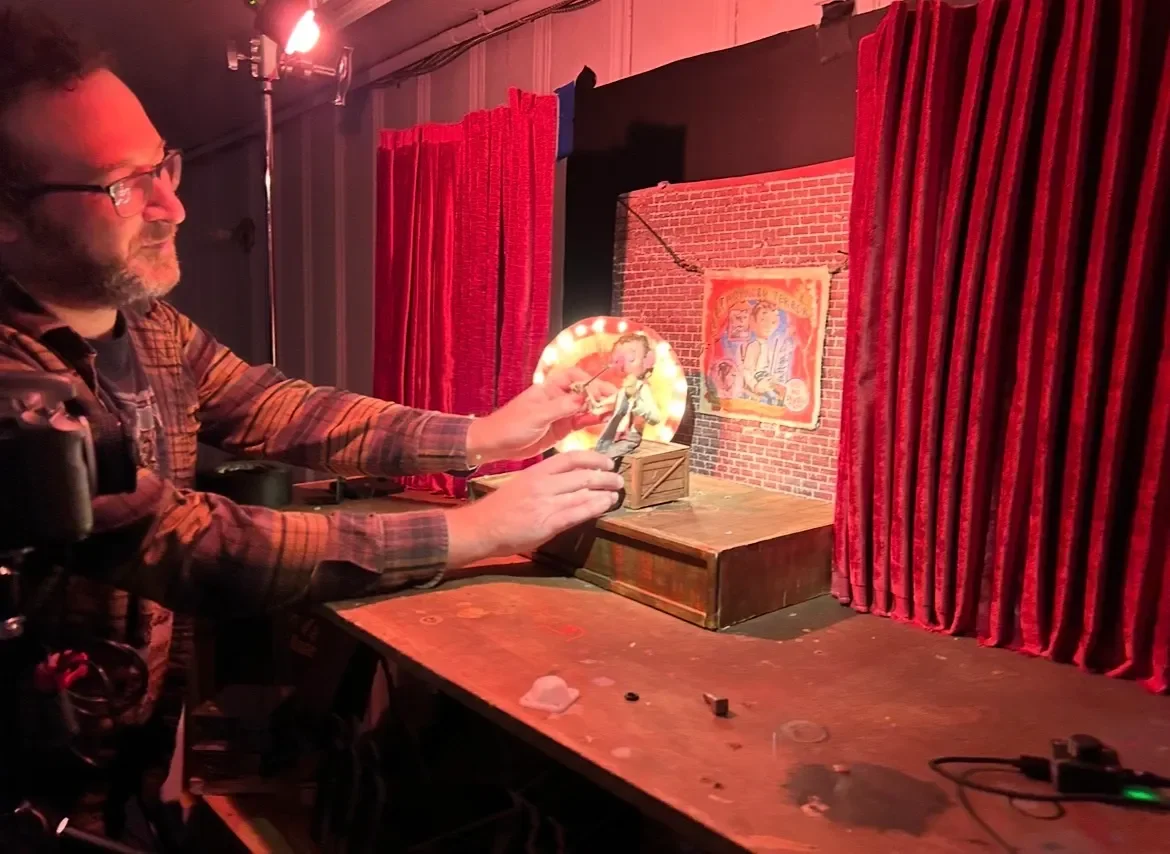
This film was made almost entirely by myself, with the exception of a few wonderful, generous friends and crew mates throughout the years. One of the compromises of making a stop-motion film all alone is that you have to wear so many hats — animator, painter, puppet builder, cinematographer.
One of the hardest creative decisions throughout the entire process of making Edward was the decision to push forward. There were so many scenes or shots that I wish I could have gone back and remade, whether it was the way a costume looked or some animation choices, but in order to get the project done, I had to continue on and learn from my mistakes to make the rest of the film as good as it possibly could be.
What tool, technique, resource, collaborator, or mindset shift helped most during production?
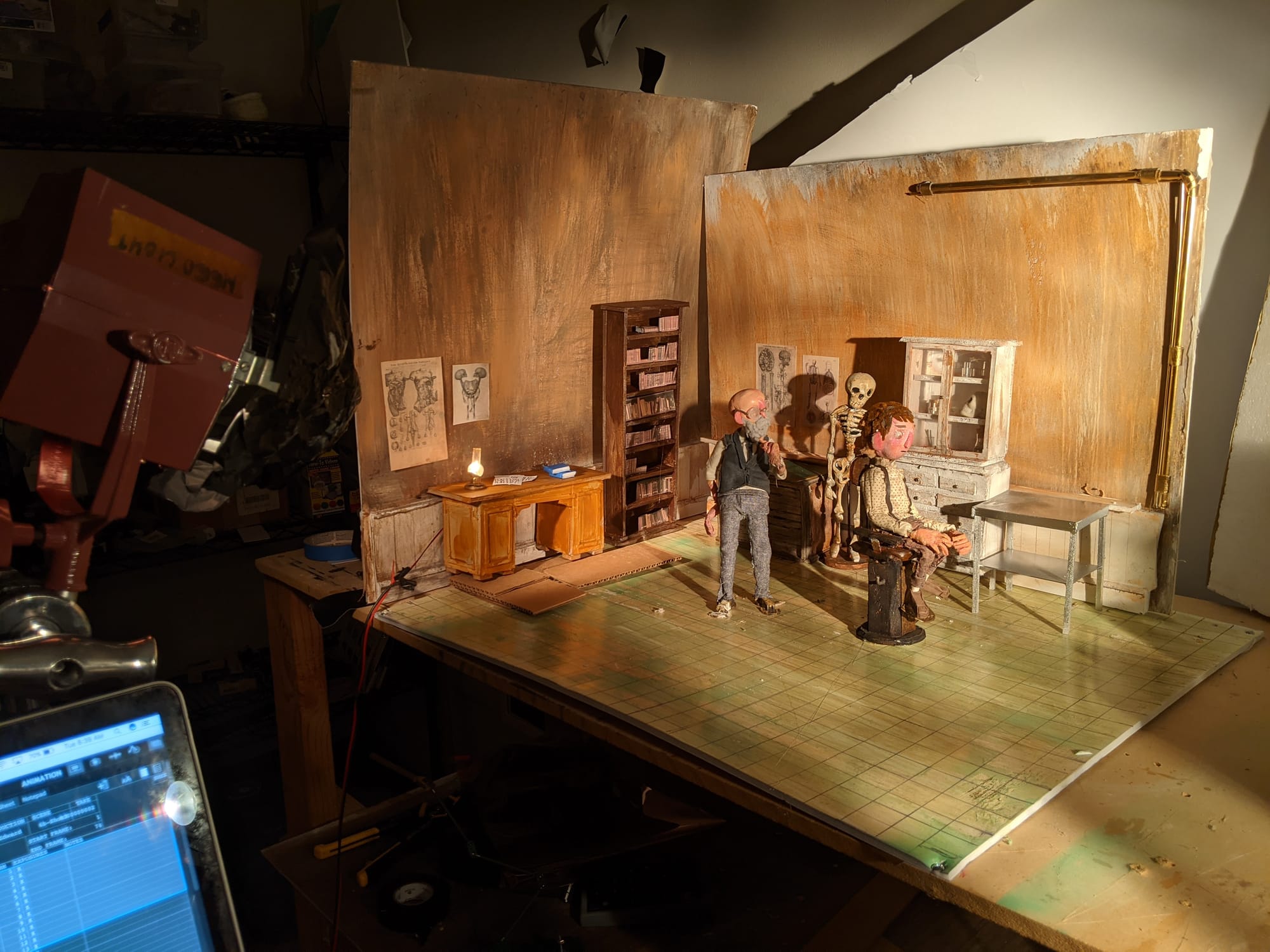
The majority of the film was made in my basement. In 2025 I was awarded a residency by a local arts organization in Jersey City called 14C, which provided artists free studio space to finish a project that was too big for their home studio. This was such an amazing resource because I finally had room to build and animate simultaneously, I was able to bring on DP Zach Poots to help me shoot the biggest set pieces of the film, and most of all, it gave me a deadline.
Part of what took the film so long was that I wasn't beholden to any deadlines. This residency was three months long, and as soon as that time was up, I had to move out, so it really got the production into gear and gave me a real finish line.
How does your film fit within, or push the boundaries of, its genre or form?
Edward is a horror film, but it doesn't rely too heavily on that label. The sensitivity and nuance of the story, told through what are essentially inanimate objects, is the core of what the film's storytelling is. While the film is more psychological than scary, I think the scares and the surprises of this film are far more impactful because you feel for Edward from the very beginning.
When I started making this film, I set out to make just a fun little stop-motion horror film. The longer I worked on it, the more Edward's parasitic twin became a metaphor for that one thing you just can't escape. Several audience members have told me that they interpret that in different ways, whether it's a personal issue they can't shake, past relationships, or the state of the world.
What is the greatest strength of independent filmmaking, and what lesson would you share with others?
The greatest strength of independent filmmaking is the ability to tell the stories you want to tell. When a film is truly independent, it allows artists and storytellers to take risks, to not just opt for the shiniest or most commercial-looking films, but tell nuanced stories with characters that live in unique worlds.
It also sparks the best forms of collaboration, and that's what I would absolutely share with others setting out to make their own films. Whether you are making a project with a group of friends or hiring a crew, collaboration is the best tool you have. Trust the people you are working with and share ideas, be transparent in your communication, and be open to critical feedback.
What does it mean to have your film selected for FilmQuest, and where does the film go next?
When I set out to make Edward, I would have been happy if a few small local audiences saw it and it ended up getting a good response online. I never imagined that after seven years of hard work it would have ended up at one of the coolest film festivals in the world. It is such an honor, not only to be chosen to screen at FilmQuest, but to screen alongside some filmmakers that I have looked up to for quite a while, including some whose films inspired me to start on my journey making Edward.
In addition to FilmQuest, Edward has been selected at a current total of eight festivals, including Screamfest LA and the Oscar-qualifying Woodstock Film Festival. We are very much in the middle of our festival run, and I'm excited to share Edward with as much of the world as I can.
Asked to finish the sentence — at the core of all my work is a desire to — Lobell doesn't hesitate: "Tell visually rich stories that connect the audience with characters that evoke mystery, wonder, and real emotion. Even though they're just puppets."
Main Cast & Crew
- Elliot Lobell — Writer, Animator, Director. An award-winning independent stop-motion filmmaker, illustrator and monster maker who has spent the last 15 years working in stop-motion and digital animation.
- Zach Poots — Director of Photography (largest set pieces)
Filmmaker Opportunities
💛 Fund your next project with fiscal sponsorship
Have a project in the works? As a 501(c)(3) nonprofit, the Cinematography for Actors Institute can accept tax-deductible donations on your film's behalf — a door-opener for grants, foundations, and supporters who want to back your work. We've serviced over 100 projects to date and helped route over $800,000 in funding to filmmakers. Explore fiscal sponsorship →
📬 Grant deadlines and festival opportunities, straight to your inbox
The CFA newsletter rounds up grants, festival calls, and community news for independent filmmakers — the kind of opportunities that are easy to miss and painful to miss. Join the newsletter →
🎬 Focus on the creative — we'll help with the logistics
Production Management, CFA's newest member program, launches this November: production insurance and workers' comp, payroll, film permits, gear rental coordination, SAG-AFTRA compliance, contract drafting, production consulting, and crew recommendations — handled by a team of working filmmakers, à la carte or all in, in partnership with Creative Access Group. It's waitlist-only until launch. Join the waitlist →
League of Filmmakers is published by our parent organization, the Cinematography for Actors Institute — a 501(c)(3) dedicated to education, community, and capital for underrepresented filmmakers and actors. Learn more about CFA →