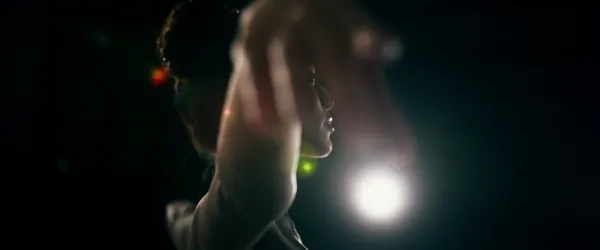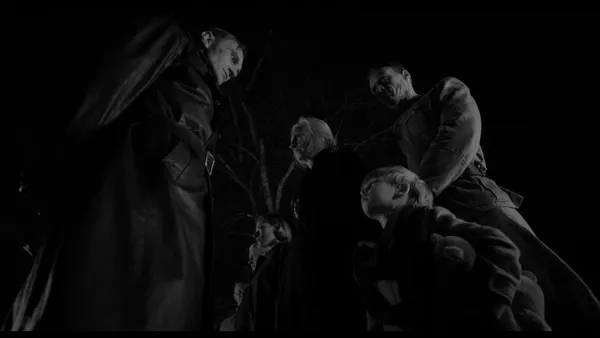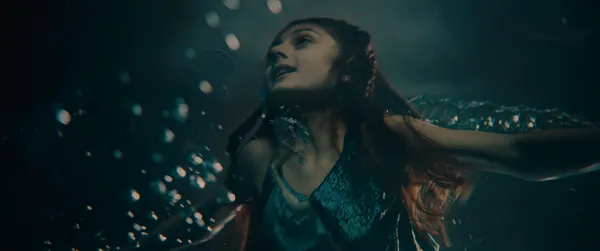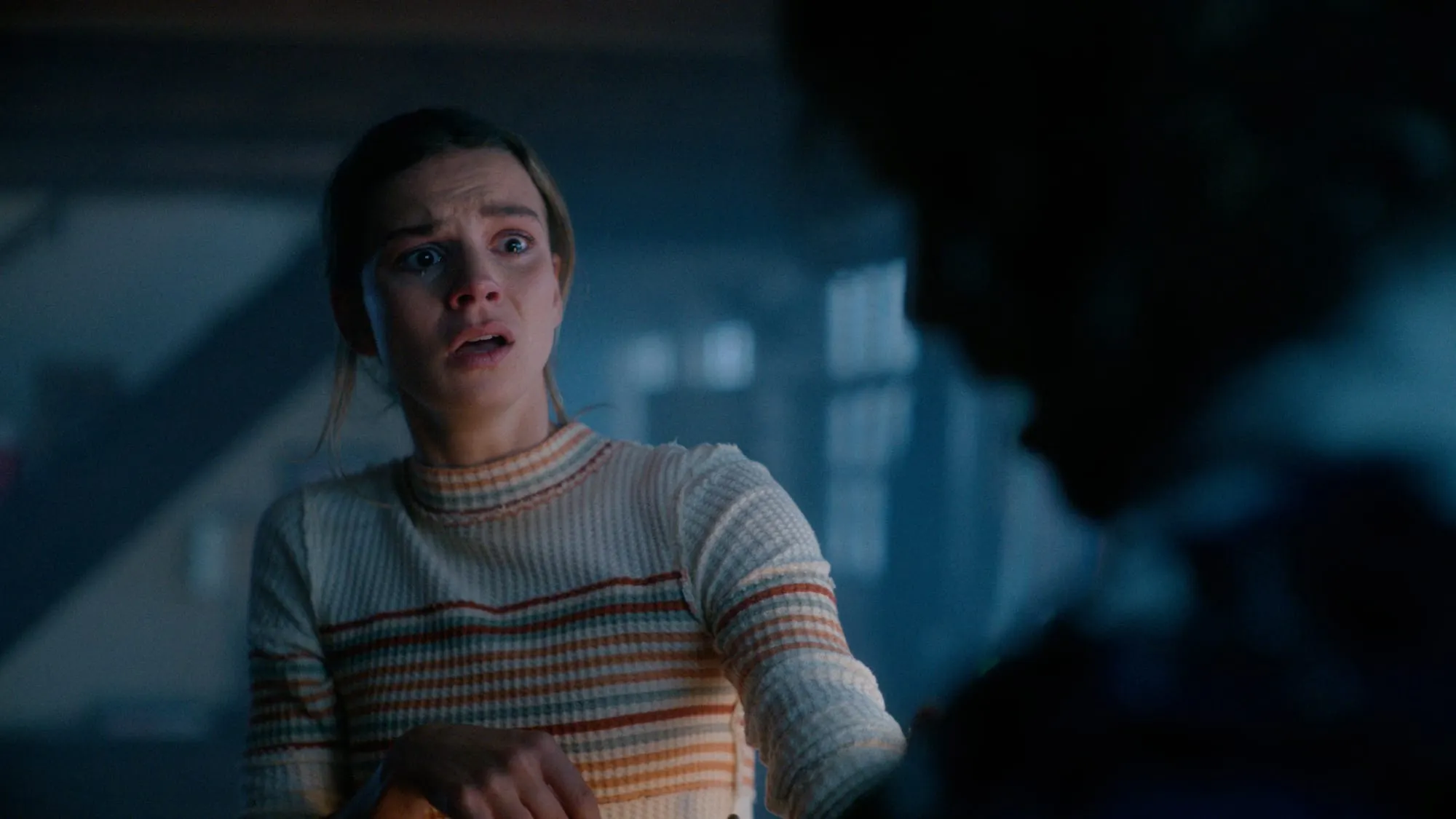
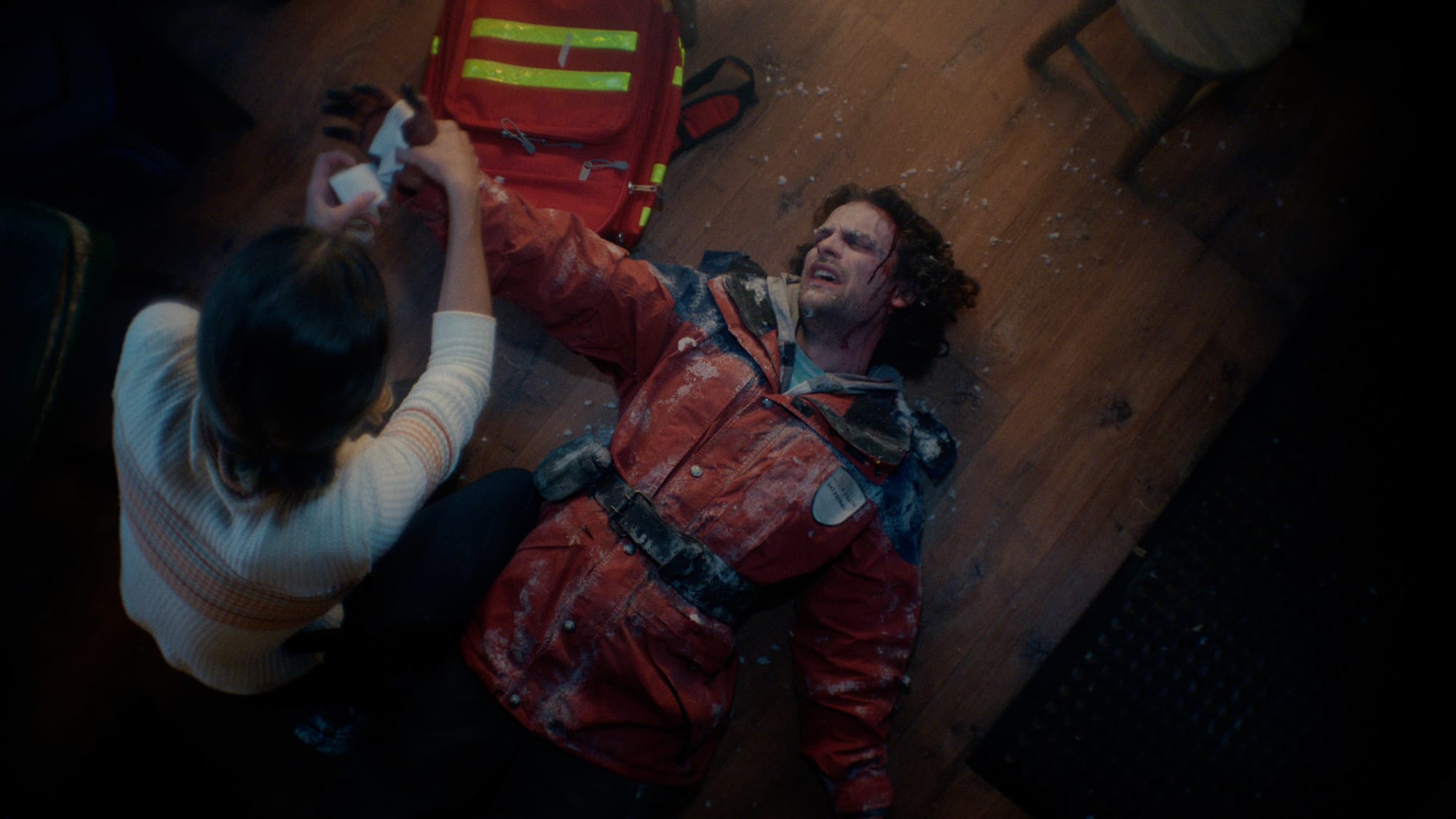
Rob Himebaugh has been circling the Donner Party for years — the winter, the isolation, the deprivation, the awful arithmetic of survival. Feed the Dark began as a period piece on the American frontier and ended up somewhere colder and stranger: a contemporary ski resort, high above the snowline, where a patroller named Beth realizes her injured colleague Shelly has been possessed by a ravenous demon.
What makes the short land is how precisely it balances its two appetites. It moves with the immediacy of a survival thriller, then opens onto something much larger — Wendigo folklore, Lovecraftian scale, the terrifying spectacle of something impossibly enormous. Shot during a July heat wave in a Topanga Canyon cabin dressed as a mid-winter patrol hut, it arrives at FilmQuest with nominations for Best Makeup FX and Best Mini Short.
Key Takeaways
- A frontier cannibalism story relocated to a modern ski resort, blending Wendigo folklore with Lovecraftian mythology.
- In post, removing the score from key sequences proved more frightening than scoring them.
- Practical creature effects, production design, and visual effects were built collaboratively — a Topanga cabin in July became a snowbound patrol hut.
Himebaugh spoke with us about pioneer history, the hardest character to define, and the feature version he already has in mind.
Interview
What drew you to make this film, and why this story, why now?
I've long been fascinated by the Donner Party and American pioneer history, particularly the intersection of cannibalism, winter, isolation, and deprivation. I'm intrigued by the question of how far people are willing to go to survive, and what happens when our most basic instincts come into conflict with our humanity.
Originally, I wanted to explore these ideas in a period piece set on the American frontier, but eventually transplanted them into a contemporary ski resort, borrowing from Wendigo folklore and Lovecraftian mythology along the way. Feed the Dark became an opportunity to combine my fascination with history, folklore, and survival horror into something cinematic, visceral, and hopefully a little unexpected.
What surprised you most about the filmmaking process, creatively or logistically?
The power of silence! During post-production, we discovered that removing the music from certain sequences actually amplified the tension and dread. It's tempting to use the score to underscore every emotional beat, particularly in horror, but sometimes withholding music forces the audience to sit with the discomfort of a moment. It was a great reminder that what you leave out can be just as powerful as what you put in.
What was the hardest creative decision you made while making the film?
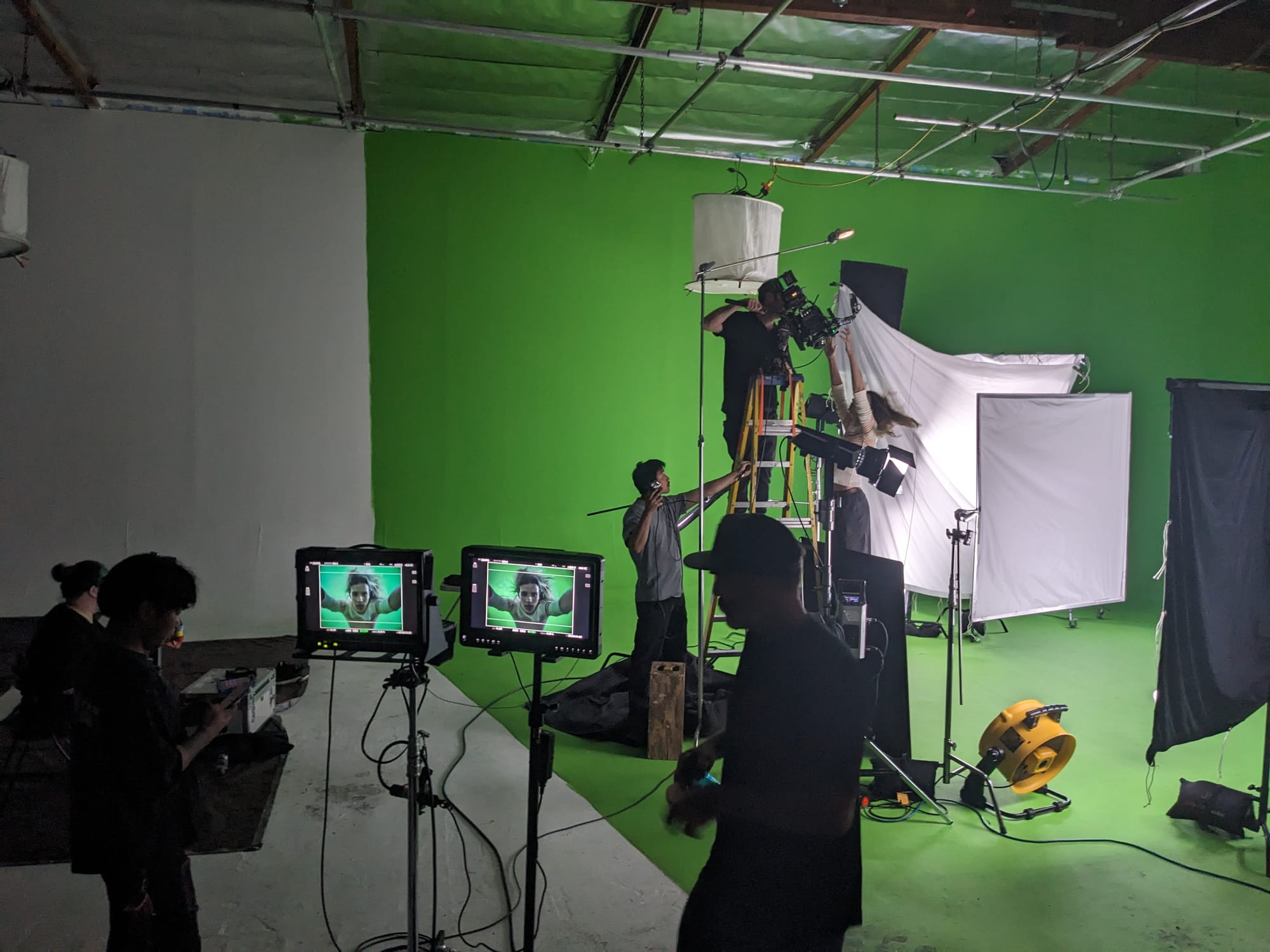
Defining Shelly's personality was surprisingly challenging. We meet him in medias res, without knowing much about what happened immediately beforehand, so we had to decide who this person was and how he should behave. Was he frail and vulnerable? Big and imposing? A little goofy? What would make him most interesting before the supernatural elements of the story fully revealed themselves?
Finding the right balance was important because Shelly's behavior needed to feel unpredictable without undermining the tension or giving too much away.
What moment in the film feels most like you, or like something only you could have made?
The final few moments of the film, without question. The inner child in me who grew up watching Jason and the Argonauts and reading Clive Barker's In the Hills, the Cities was completely unleashed. Those final images tap directly into my lifelong fascination with monsters, mythology, and the terrifying spectacle of something impossibly enormous.
What tool, technique, resource, collaborator, or mindset shift helped most during production?
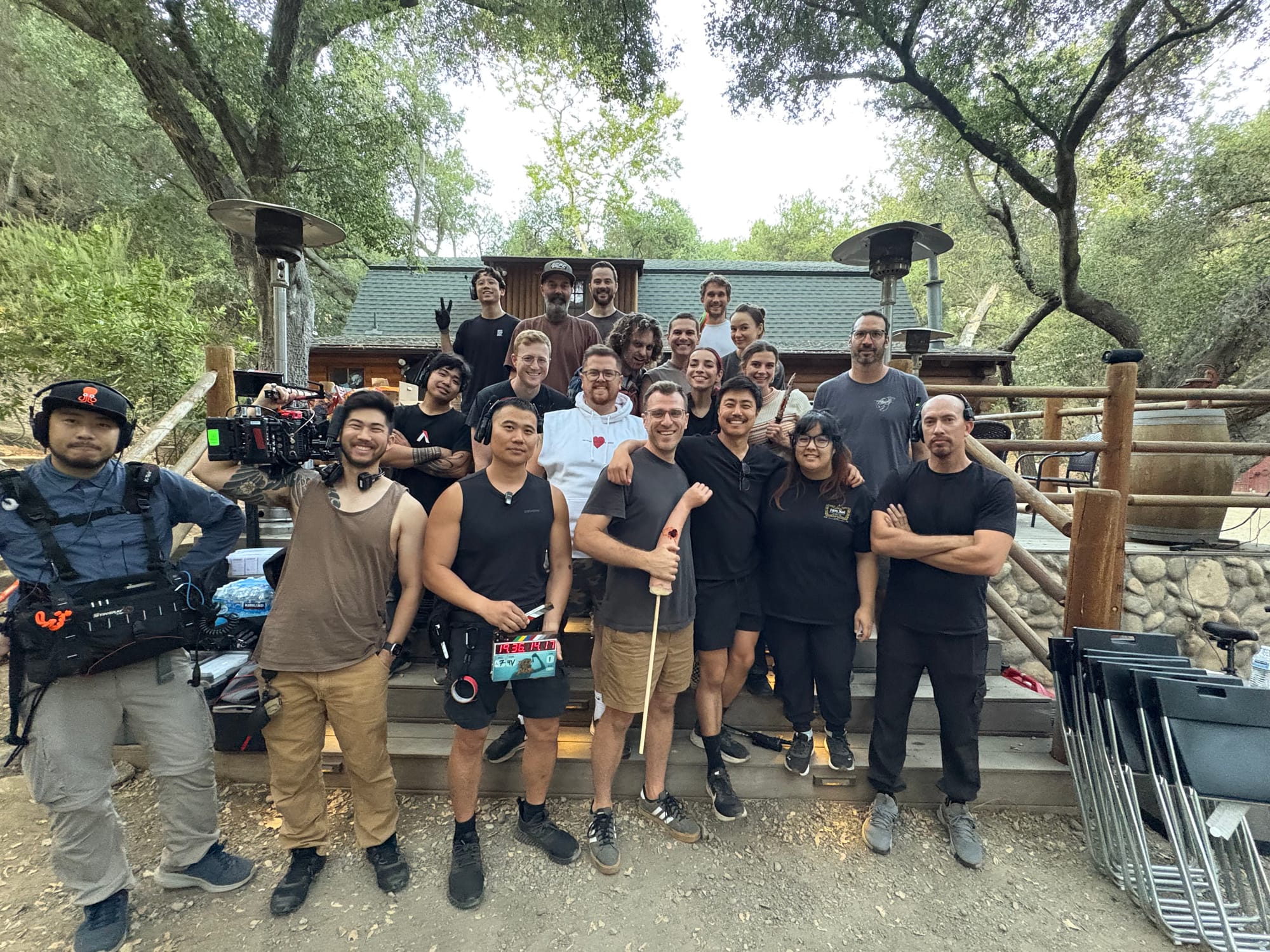
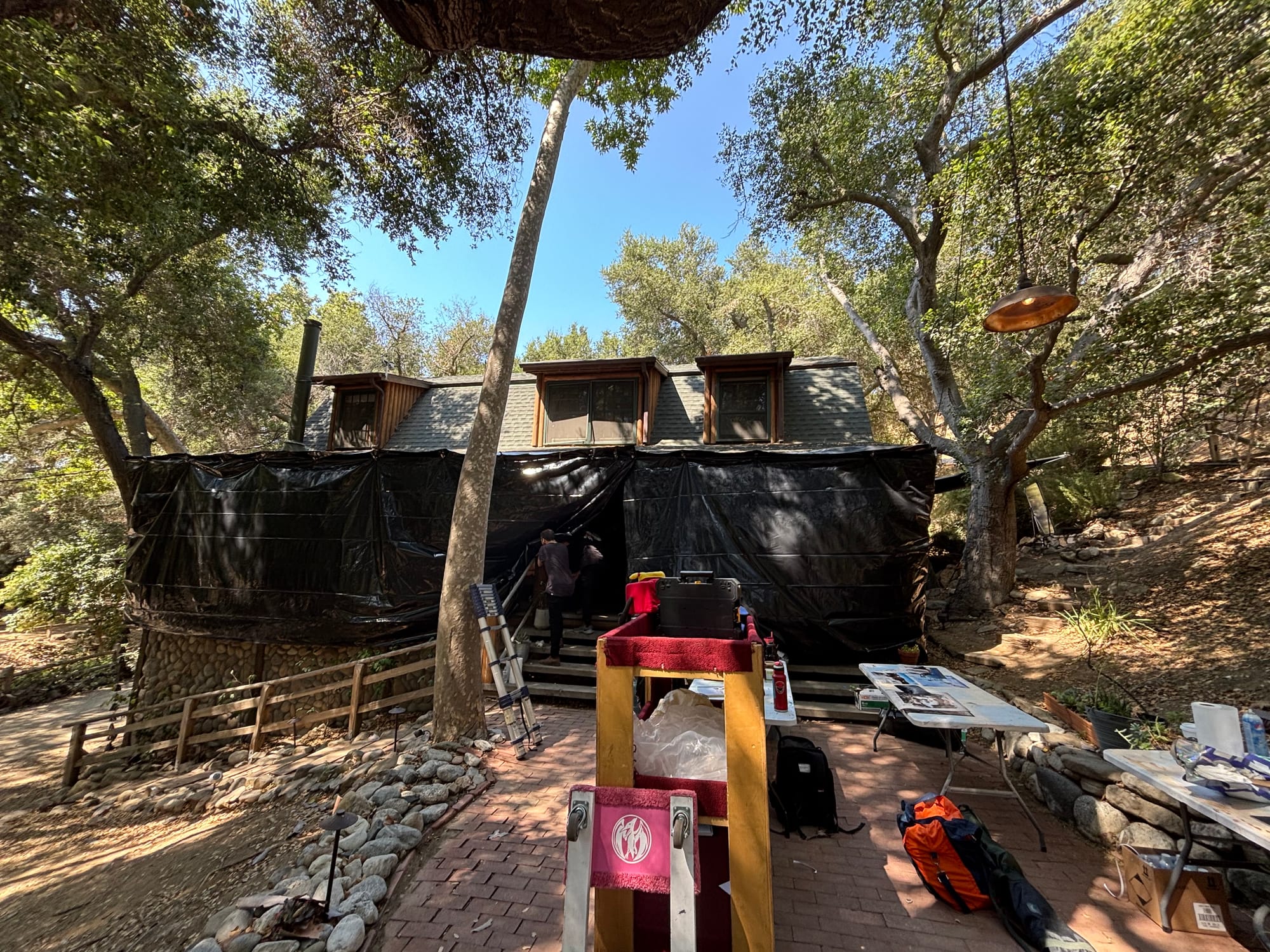
Our collaborators were absolutely essential in realizing the scope of this film. Production designer Brendan O'Connor transformed a cabin in Topanga Canyon into a convincing ski patrol hut in the middle of winter, despite the fact that we were shooting during a July heat wave. Our visual effects supervisor, Shruti Gham, helped bring my vision for the film's expansive exterior sequences to life, while special effects artist Nelson Cooper and his team were instrumental in developing our creature and executing the numerous practical effects throughout the film.
Each of them brought an extraordinary level of creativity and problem-solving to the production, and the film simply wouldn't exist in its current form without their contributions.
What is the greatest strength of independent filmmaking, and what lesson would you share with others?
I think one of the greatest strengths of independent filmmaking is the opportunity to bring together people with unique points of view and give them the freedom to express themselves creatively.
On Feed the Dark, I wanted every department, from cinematography and production design to costumes, special effects, sound, and music, to have a genuine creative voice in shaping the film.
My advice to other filmmakers would be to lean into your collaborators. Give them the opportunity to surprise you, challenge your assumptions, and contribute ideas you might never have considered. I guarantee the resulting film will be better than anything you could have created entirely on your own. Your collaborators make you a better filmmaker every time.
How does your film fit within, or push the boundaries of, its genre, and what do you hope audiences take away?
Death comes for us all, often when we least expect it. It's not a particularly comforting thought, but I think horror films are uniquely equipped to help us explore these uncomfortable truths.
With Feed the Dark, I wanted to combine the immediacy of a survival thriller with the mythology and cosmic scale of supernatural horror, using the genre to explore our complicated relationship with mortality. At its heart, the film is about the specter of death, something that frightens all of us, even if we're not entirely sure how to feel about it. Death is inevitable, but our relationship with it is complicated, often contradictory, and deeply personal. I hope the film gives audiences an opportunity to confront some of those anxieties while also enjoying a fun, frightening genre experience.
At the core of all my work is a desire to connect with audiences — to explore interesting aspects of the human condition in a playful, cinematic way — and I love that horror can accomplish that through both visceral entertainment and deeper existential questions.
What does it mean to have your film selected for FilmQuest, and where does it go next?
It's an enormous honor, and a wonderful validation that we've created something that connects with audiences. That's ultimately every filmmaker's greatest hope!
To also be nominated for Best Makeup FX and Best Mini Short makes the experience even more rewarding. Nelson Cooper's special effects work on this film is truly outstanding, and I'm thrilled to see it recognized. I'm enormously grateful to our entire cast and crew for helping us pull off such an ambitious, fun, and cinematic little horror film.
I have an exciting feature-length version of Feed the Dark in mind, one that would expand the mythology and explore the world and characters in much greater depth. I'd love the opportunity to revisit this story on a larger canvas, and hopefully the short can help open some doors toward making that happen.
My next short film is dramatically different in scope. After making something as expansive and effects-driven as Feed the Dark, I wanted to challenge myself to tell a much more intimate, contained story while exploring a larger emotional and dramatic arc. It's been a rewarding exercise in finding ways to create tension and suspense through character and performance rather than spectacle, although I certainly haven't lost my appetite for the latter!
Main Cast & Crew
- Emily Mutimer (Beth)
- Timothy James Willard (Shelly)
- Rob Himebaugh (writer/producer/director)
- Luke Taccardi (producer)
- Brendan O'Connor (production designer)
- Shruti Gham (visual effects supervisor)
- Nelson Cooper (special effects artist)
Filmmaker Opportunities
💛 Fund your next project with fiscal sponsorship
Have a project in the works? As a 501(c)(3) nonprofit, the Cinematography for Actors Institute can accept tax-deductible donations on your film's behalf — a door-opener for grants, foundations, and supporters who want to back your work. We've serviced over 100 projects to date and helped route over $800,000 in funding to filmmakers. Explore fiscal sponsorship →
📬 Grant deadlines and festival opportunities, straight to your inbox
The CFA newsletter rounds up grants, festival calls, and community news for independent filmmakers — the kind of opportunities that are easy to miss and painful to miss. Join the newsletter →
🎬 Focus on the creative — we'll help with the logistics
Production Management, CFA's newest member program, launches this November: production insurance and workers' comp, payroll, film permits, gear rental coordination, SAG-AFTRA compliance, contract drafting, production consulting, and crew recommendations — handled by a team of working filmmakers, à la carte or all in, in partnership with Creative Access Group. It's waitlist-only until launch. Join the waitlist →
League of Filmmakers is published by our parent organization, the Cinematography for Actors Institute — a 501(c)(3) dedicated to education, community, and capital for underrepresented filmmakers and actors. Learn more about CFA →