

Mel is skeptical, boyish, and new to drama club at her all-girls Catholic high school. She is eager to please and protect her talented friend Shelby. When an intimate moment between the two girls is co-opted by their drama teacher, Mr. Voznesky, Mel begins to see the twisted connection he has with Shelby. As his influence grows, Mel's jealousy and righteous rage drive her to break the spell he has cast. Going Dark is a psychological thriller with a self-aware sense of humor and a proof of concept for a feature about "catholic school girls and the monsters that live inside them."
For Brooklyn-based director Kate diRienzi, a Philly native who began as a theater director and choreographer, the subject is personal. A few months after high school, she sat in a dorm room with ten young women from across the country. Every one of them had a story about an idolized drama mentor who crossed boundaries with students. Going Dark is her expressionistic answer to that shared history, and to the complicated debt she still feels to the men who taught her what she loves most.
Key Takeaways
- The film grew from a dorm-room conversation in which every young woman present had a story about a drama teacher who crossed boundaries with students.
- In under ten minutes, the short moves from intimate, performance-driven blocking to a score-driven experimental montage to a confrontational, open ending.
- A feature version is in development, centered on mentor and mentee and on a class staging a play called The Goblin.
diRienzi spoke with us about theater on screen, the risk of letting young women be monstrous, and bringing the film to her lead actress's hometown.
Interview
What drew you to make this film, and why this story, why now?
Only a few months after graduating high school, I found myself sitting in a dorm room with a large group of girls, all of whom did theater in high school. After not too long, someone said it: "My drama teacher slept with students." Without missing a beat, I replied, "Mine too!" Everyone followed suit. In a room of ten young girls from all over the country, every single one of us had a story about an idolized artistic mentor who crossed boundaries with young students without shame or consequence.
Unfortunately, my drama teacher was a bad man. Even worse, he taught me everything I know about what I love most. Going Dark is an expressionistic proof of concept short that explores this sickening predicament.
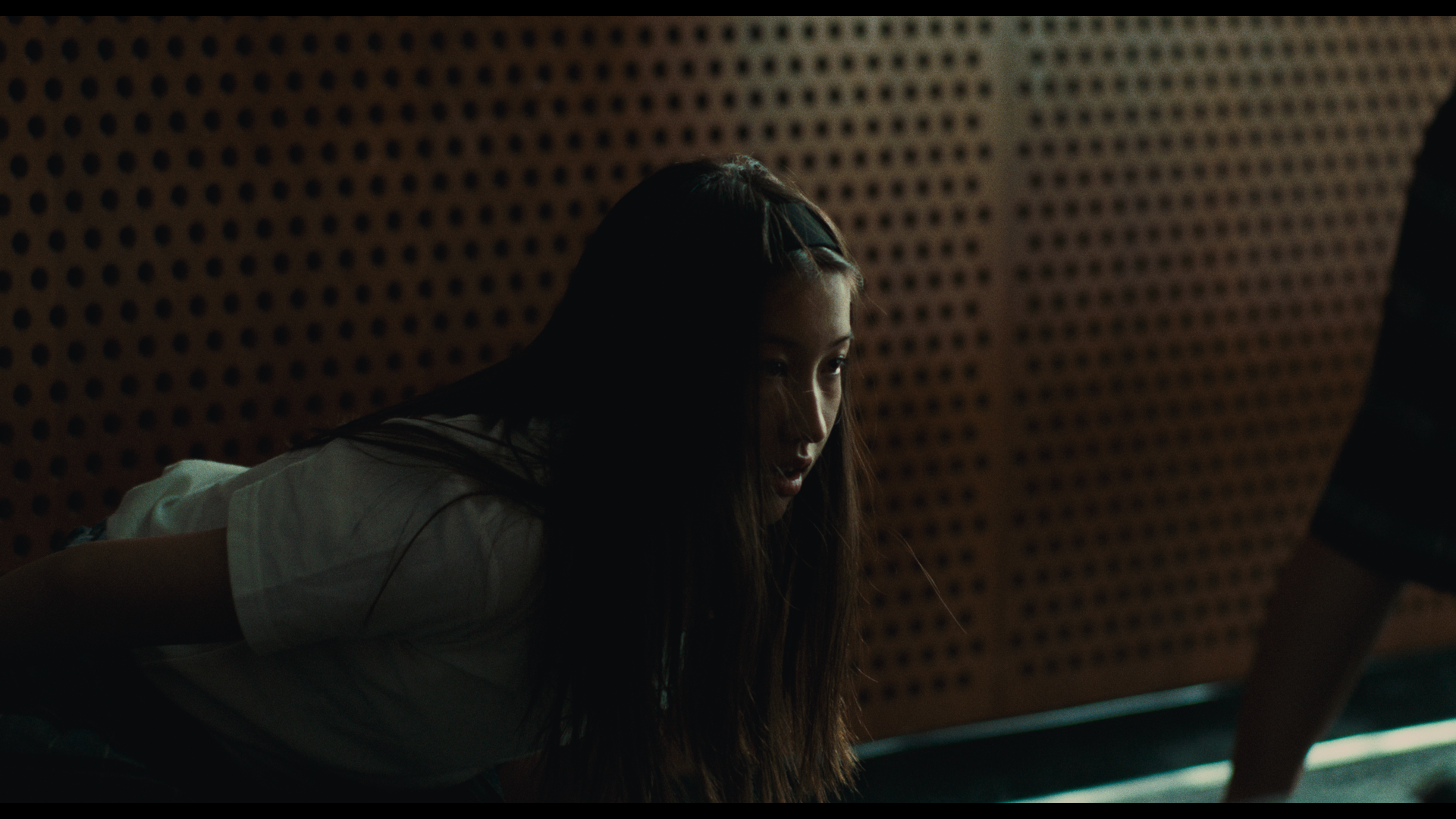
Through making this film, I wanted to viscerally capture the impact a toxic mentor like Mr. Voznesky can have on young artists and their community. The film begins like many creative spaces do: pure and playful, a "safe space" built for discovery. The moment Voz enters, the DNA of the space morphs into a place of control, manipulation, and power.
As I navigate life as an artist and a director, I find myself preoccupied with my own relationship to freedom, control, and influence. The endless process of carving out my own voice has always lived under the shadow of my male mentors. My need to make this film is born out of a desire for freedom from that shadow. At the same time, it is born out of the pressure I still feel to meet the standards of the men who shaped me, even after they have disappeared from my life.
What surprised you most about the filmmaking process?
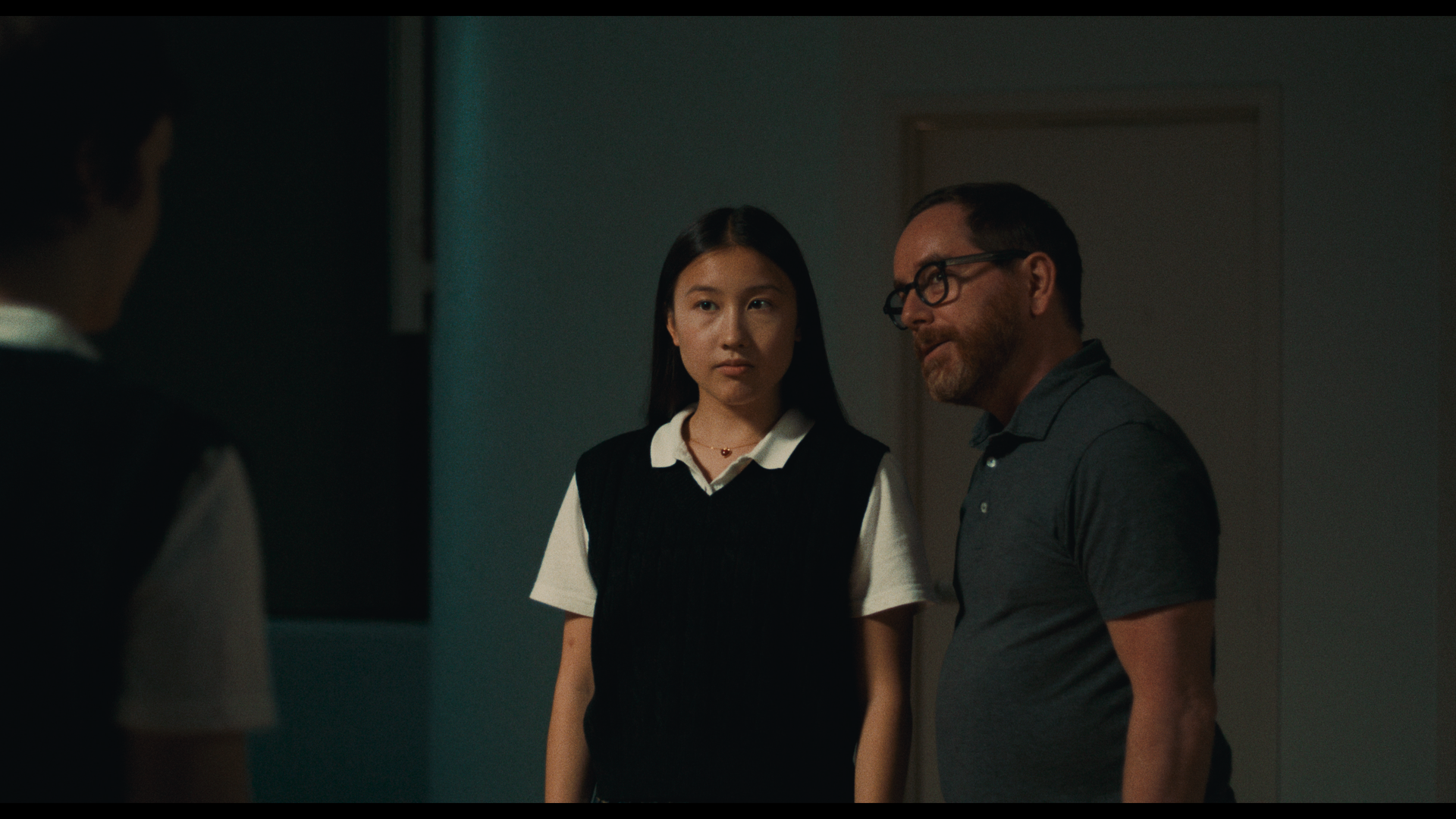
Building this film with these actors was a very special process on an artistic and personal level. Our core actors are all theater people with their own unique and complex experiences with artistic mentors. I was especially surprised working with Sam, who plays Voz. For his performance he drew heavily on his own memories of looming mentors who tested boundaries, having worked in the theater for three decades.
I was also incredibly moved by the vulnerability and sharp sense of play that Naomi, who plays Shelby, brought throughout. She had a lot on her plate in terms of intimacy and physicality. After navigating our disturbing scene with all three leads, it was really rewarding to explore the physical exercise scenes with Naomi. I think she was really excited to let it all out.
What moment in the film feels most like you, or like something only you could have made?
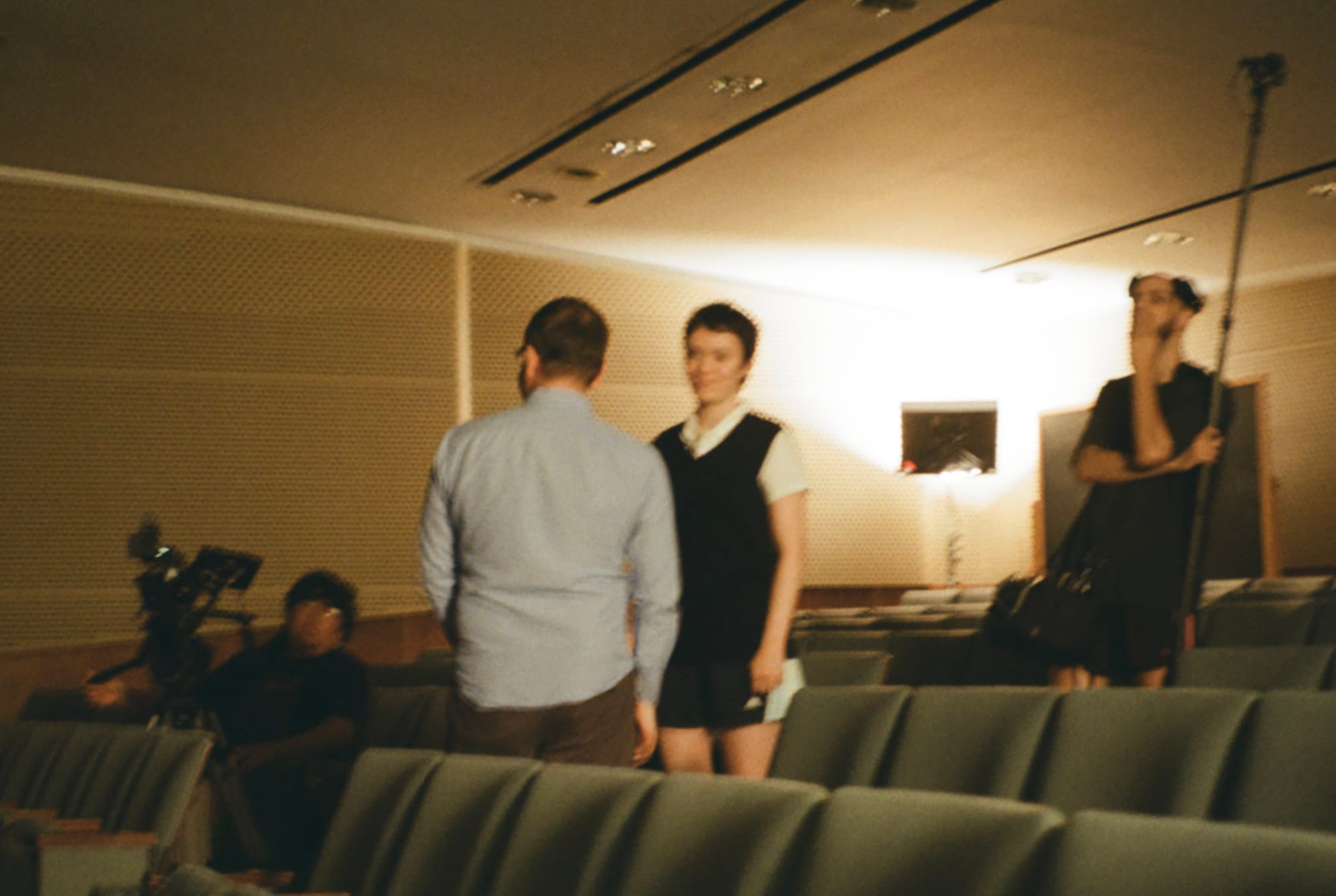
Coming from the theater myself, I've always been really excited about the prospect of putting theater on screen and making it cinematic and immersive. There's so much about the form of this movie that I'm proud of and excited to bring into the feature version. I think the stylistic progression of the short is especially exciting. It moves from an intimate scene driven by blocking and performance, to an immersive, score-driven montage built on experimentation, to a confrontational and open ending. I'm pretty proud of how much we were able to accomplish formally in less than ten minutes.
What was the hardest creative decision you made while making the film?
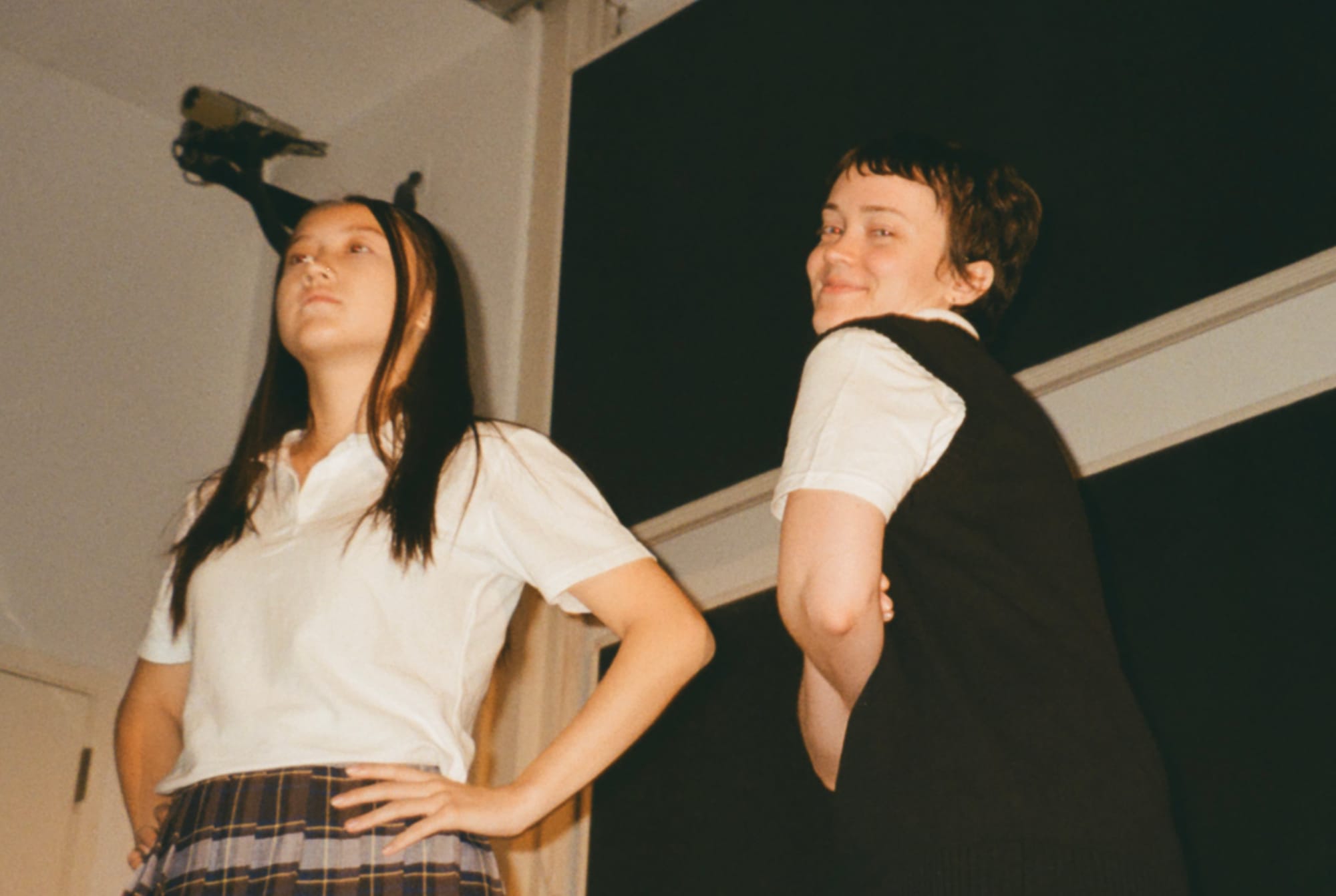
I started with an initial draft of the feature and intended to make this short as a pure proof of concept. It was a tricky balance, deciding which piece to focus on and how to translate the larger story. Eventually I decided to veer away from the feature and allow the short to become its own narrative piece. That was a tricky thing to figure out, but ultimately I think it helped me focus on experimenting with style and let the short act as more of a generative revision tool for future drafts.

How does your film fit within, or push the boundaries of, its genre or form?
Going Dark is a psychological thriller with a sense of self-aware humor. I've always been very drawn to metatheatrics on screen. We talked a lot about Opening Night, Drive My Car, and Madeline's Madeline while preparing to make this film. By focusing on the way insidious mentors shape the minds of young artists, I hope Going Dark will challenge the assumptions we have about coming-of-age films, specifically ones about young girls. I think allowing young femme characters to inhabit the monstrous sides of themselves and their desires on screen is taboo, but really exciting and authentic.
At the core of all my work is a desire to tell intimate stories that express explosive emotions. I hope the films I make can explore the unspoken desires and secrets of character.
What does it mean to have your film selected for HollyShorts London?
It is truly an honor to be part of this program and to screen our film at HollyShorts London. Our lead actress, Naomi Townsend, is based in London, and it will be wonderful to have a hometown screening to celebrate her amazing performance.
Lizzy and I are also developing and prepping an indie pilot called The Kegel Method, written by and starring local British stand-up Sarah Weitzmann. It's a surrealist comedy about an uncle who becomes entwined with an all-female sex cult. We hope that screening our film in London will help us meet collaborators and producers to make this pilot.
Where do you see this film going next?
We are in development on the feature of Going Dark. It will focus on the relationship between mentor and mentee and on how the class of Catholic school girls develops and performs a play called The Goblin.
Main Cast & Crew
- Kate diRienzi, Director Brooklyn-based filmmaker from Philly whose films examine explosive emotional landscapes through a lens of strained femininity and queer freedom. Her shorts have screened at Hamptons International, Nantucket, and Bend Film Festival, and her work has been recognized by NFFTY, Boston Film Festival, and Short of the Week. She is a 2026 Saltonstall Filmmaking Fellow, a 2025 Robert Gore Rifkind Queer Production Grant recipient, a 2025 Screenwriter Sessions PANO Scholarship recipient, and a 2024 NYWIFT Scholarship recipient. She holds a BFA from NYU Tisch and an MFA in Screenwriting & Directing from Columbia University, participated in the La Fémis Producing Atelier in Paris and Cannes, and is an Adjunct Assistant Professor of Screenwriting at Columbia.
- Lizzy Blum, Producer: New York-based multidisciplinary producer working in theater and film. She is a production and finance coordinator at St. Ann's Warehouse and was previously a production coordinator at The Tonight Show Starring Jimmy Fallon. Her credits include Finding Bella, Nun's Beach (NFFTY Audience Award, Short of the Week), and Stand Up to Murder.
- K. Xian Ming Yu, Director of Photography: Queens filmmaker, 2026 Sundance Trans Possibilities Fellow, and recipient of the 2025 NewFest/Netflix New Voices Grant. Their short i saw you in the flood premiered at SXSW 2026, and Yú Cì (Fish Bones) premiered at SXSW 2025 and received a Special Jury Mention at Provincetown International Film Festival. Their cinematography has screened at Sundance, SXSW, Energa Camerimage, and New Orleans Film Festival.
- Catherine Young as Mel
- Naomi Townsend as Shelby
- Sam Breslin Wright as Mr. Voznesky (The History of Sound, Madam Secretary)
Filmmaker Opportunities
💛 Fund your next project with fiscal sponsorship
Have a project in the works? As a 501(c)(3) nonprofit, the Cinematography for Actors Institute can accept tax-deductible donations on your film's behalf — a door-opener for grants, foundations, and supporters who want to back your work. We've serviced over 100 projects to date and helped route over $800,000 in funding to filmmakers. Explore fiscal sponsorship →
📬 Grant deadlines and festival opportunities, straight to your inbox
The CFA newsletter rounds up grants, festival calls, and community news for independent filmmakers — the kind of opportunities that are easy to miss and painful to miss. Join the newsletter →
🎬 Focus on the creative — we'll help with the logistics
Production Management, CFA's newest member program, launches this November: production insurance and workers' comp, payroll, film permits, gear rental coordination, SAG-AFTRA compliance, contract drafting, production consulting, and crew recommendations — handled by a team of working filmmakers, à la carte or all in, in partnership with Creative Access Group. It's waitlist-only until launch. Join the waitlist →
League of Filmmakers is published by our parent organization, the Cinematography for Actors Institute — a 501(c)(3) dedicated to education, community, and capital for underrepresented filmmakers and actors. Learn more about CFA →


