

Louisa Connolly-Burnham's premise fits in two sentences: Kate is an intimacy coordinator. She is also a sex addict. From that friction, Connolly-Burnham, who wrote, directed, and stars as Kate, builds a psychological thriller with a pitch-black sense of humour. The Intimacy Coordinator opens as a workplace drama, with Kate taking great care to make her actors feel safe. It then slides, scene by scene, into something far more frightening as she starts making exceptions for herself.
The film arrives at HollyShorts London after screening with HollyShorts in LA, a homecoming for a short made in London. It lands at a moment when conversations about consent and power on set are more open than ever. Connolly-Burnham is interested in the gap between being told you can say no and actually feeling that you can.
Key Takeaways
- Connolly-Burnham both directs and plays Kate, so she had to stay close to the character's wants and fears "even when she was doing things I found horrifying."
- The film's final kiss wasn't in the script. It was discovered on set, a choice she credits to the closeness of independent production.
- She is now writing a feature version, hoping to spend time with Kate on an ordinary day.
Here, Connolly-Burnham talks about messy desire, painfully ordinary moments, and how far to take an ending.
Interview
What drew you to make this film, and why this story, why now?
I kept coming back to this one sentence. Kate is an intimacy coordinator. She is also a sex addict. I wanted to make a film about someone who's genuinely good at her job and understands exactly why boundaries matter, then see what happens when she starts making exceptions for herself. In the opening scene, you see how much care she takes to make Max and Ella feel safe. Later, she uses the language of trust and creative discovery to push Max into doing something he's uncomfortable with. That shift was what I wanted to explore.
I also wanted to write a woman whose desire could be messy, funny, lonely and frightening. The timing felt right because we're having much more open conversations about consent and who holds power on set. I was interested in that gap between being told you can say no and feeling like you actually can, especially when the person asking is the person you've been told you can trust.
What surprised you most about the filmmaking process, and was there a moment that changed how you saw the story?
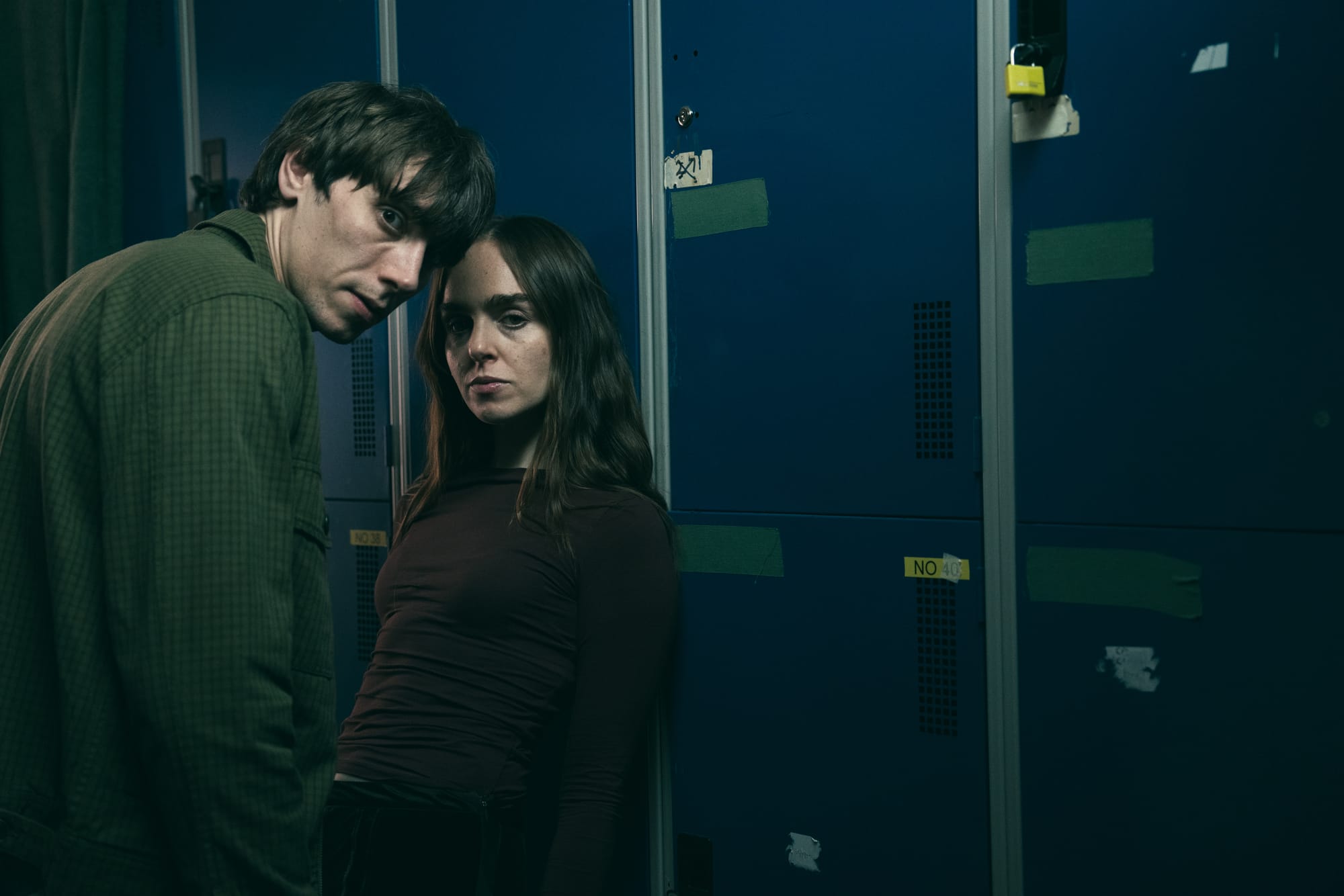
What surprised me most was how much of Kate's humanity came through in the smallest moments. The phone call with her mum was a big one for me. Kate knows she's spiralling, and she's trying to say it out loud. Then her mum assumes she's asking for money, the dog starts barking, and suddenly Kate's saying, "Yeah, yeah, sure, it's fine." There's something so painfully ordinary about that. You can hear how quickly she gives up on being understood.
That moment changed how I thought about playing her in the more extreme scenes. You can be frightened of Kate, feel furious with her, and still remember the woman sitting on the edge of her bed trying to ask her mum for help. I wanted to see how long we could hold all of those feelings at once.

How does your film fit within, or push the boundaries of, its genre or form?
I think of The Intimacy Coordinator as a psychological thriller with a really dark sense of humour. It opens like a workplace drama. Later, when Kate asks Max to take his top off, all the tension comes from something ordinary on a film set: someone asking an actor to try the scene a different way. I loved seeing how much dread we could get out of that before the film tips into outright horror.
The short form let me make those turns quite abruptly. When Nigel exposes Kate at the support group, she comes out with, "Blimey, who put 2p in Nigel?" You can laugh at that and still be worried about what she's going to do when she walks out of the room. The humour lets you get comfortable with Kate for a second, and then you realise how close you've let her get.

What moment in the film feels most like you, or like something only you could have made?
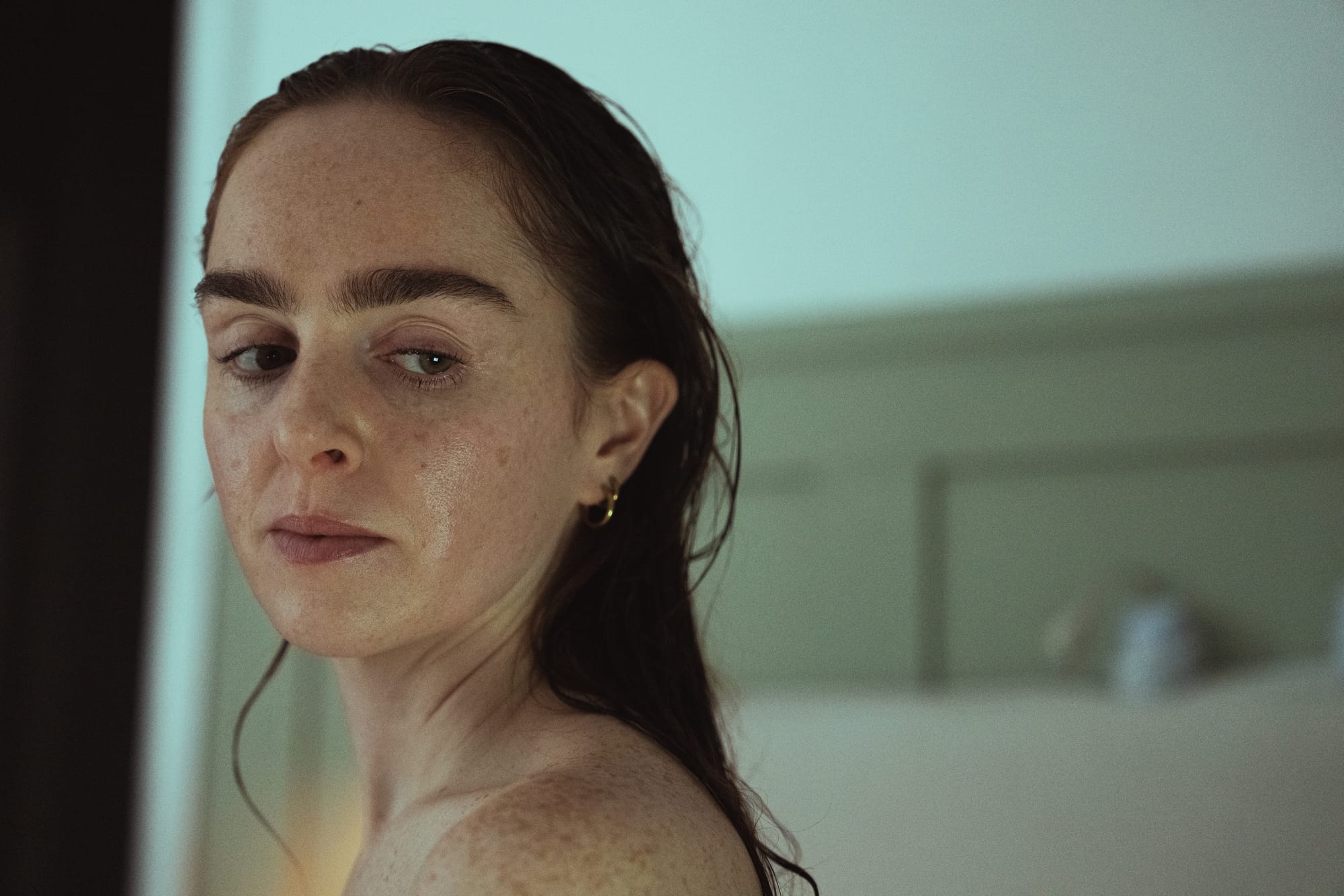
Probably the final moments in the alleyway. There's a flicker of remorse on Kate's face, and then she does something that takes the scene somewhere even more disturbing. I knew it would be hard to watch, and I felt that was exactly where the film needed to go.
I like taking risks as a filmmaker, and I'm drawn to showing women at their absolute worst. I want to give them the freedom to be selfish, destructive, even frightening, and still be the person we follow all the way to the end. With Kate, I wanted you to see that moment of remorse and believe it, then watch what she does next and have to sit with the fact that both impulses belong to the same woman. That feels very me.
What was the hardest creative decision you made while making the film?
The hardest decision was how far to go with the ending. In the script, she doesn't kiss Max. While we were shooting, we decided she should.
There's something horribly tender about the kiss. We've just watched her do this incredibly violent thing, and then she leans in as though there's still some intimacy between them. As an actor, I had to play that gesture sincerely, which made it even more uncomfortable. That was what convinced me to keep it. For a second, you see how Kate wants to imagine the moment, even as the reality of what she's done is right there in front of you.

What is the greatest strength of independent filmmaking, and what lesson would you share with other filmmakers?
The greatest strength of independent filmmaking is how close everyone is to the work. You can be on set with a small group of people, feel that a scene could go somewhere you hadn't imagined, and try it right there.
The lesson I'd share is to be clear about the feeling you're after and give yourself and your collaborators some freedom in how you get there. I knew I wanted the audience to feel disturbed by what Kate does and still recognise something human in her. Having that in mind gave us the confidence to try something more tender in the most violent scene in the film. It's the sort of choice I love making with people I trust, because you can say, "This might be too much. Shall we try it anyway?"
What does it mean to have your film selected for HollyShorts London, and where is it going next?
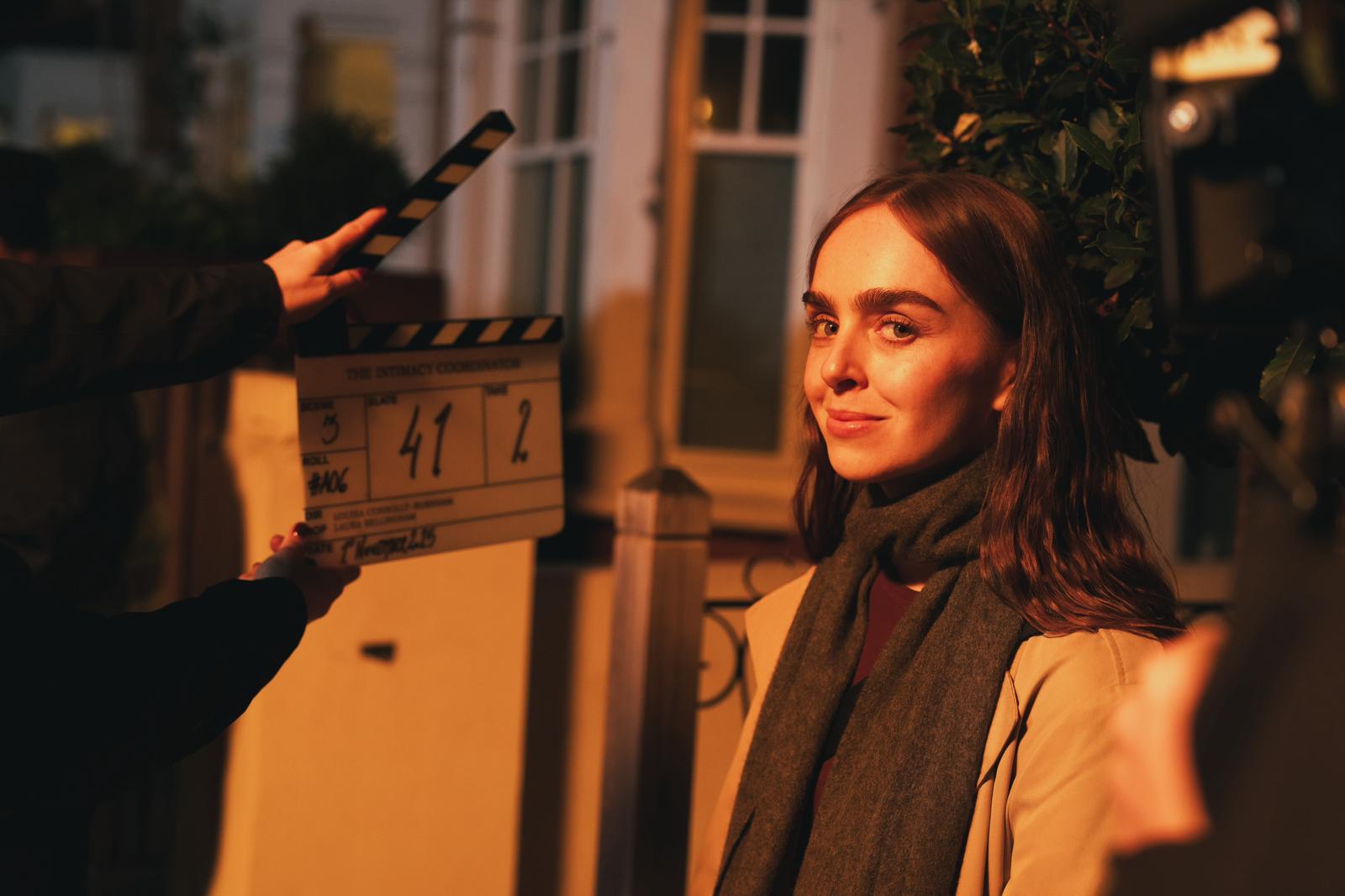
It means a lot to bring The Intimacy Coordinator to HollyShorts London after screening with HollyShorts in LA. We made the film in London, and after travelling with it this year, there's something lovely about bringing it home and getting to share that moment with the people who made it with me. People laugh at different moments, and you can feel the whole room go quiet together when the tone shifts. I'm excited to see how a London audience reacts.
I'm writing the feature version now. What excites me about having more room is getting to spend time with Kate on an ordinary day. What does she find funny? Who does she call when she's lonely? What does she do when she's trying really hard to have a good day and it's going badly by eleven in the morning? I want to get to know her well enough that, when she does something shocking, you can trace the choices that got her there and still be taken aback by the one she makes.


Filmmaker Opportunities
💛 Fund your next project with fiscal sponsorship
Have a project in the works? As a 501(c)(3) nonprofit, the Cinematography for Actors Institute can accept tax-deductible donations on your film's behalf — a door-opener for grants, foundations, and supporters who want to back your work. We've serviced over 100 projects to date and helped route over $800,000 in funding to filmmakers. Explore fiscal sponsorship →
📬 Grant deadlines and festival opportunities, straight to your inbox
The CFA newsletter rounds up grants, festival calls, and community news for independent filmmakers — the kind of opportunities that are easy to miss and painful to miss. Join the newsletter →
🎬 Focus on the creative — we'll help with the logistics
Production Management, CFA's newest member program, launches this November: production insurance and workers' comp, payroll, film permits, gear rental coordination, SAG-AFTRA compliance, contract drafting, production consulting, and crew recommendations — handled by a team of working filmmakers, à la carte or all in, in partnership with Creative Access Group. It's waitlist-only until launch. Join the waitlist →
League of Filmmakers is published by our parent organization, the Cinematography for Actors Institute — a 501(c)(3) dedicated to education, community, and capital for underrepresented filmmakers and actors. Learn more about CFA →


