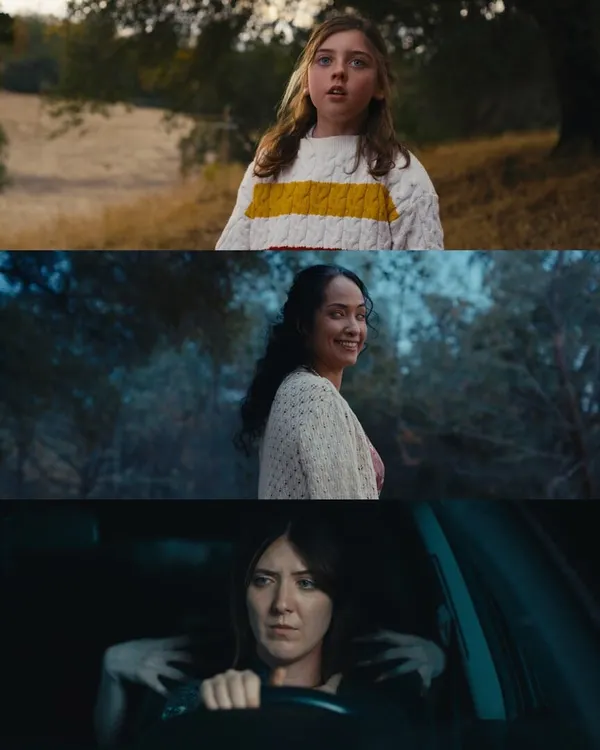
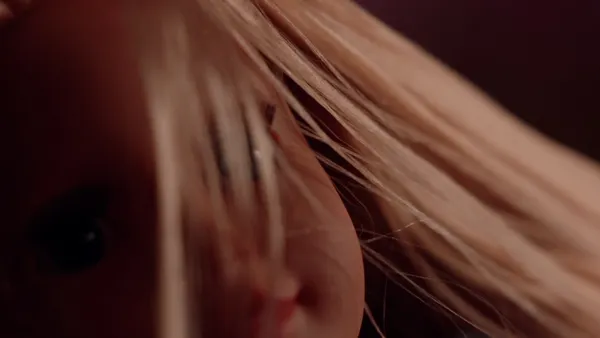
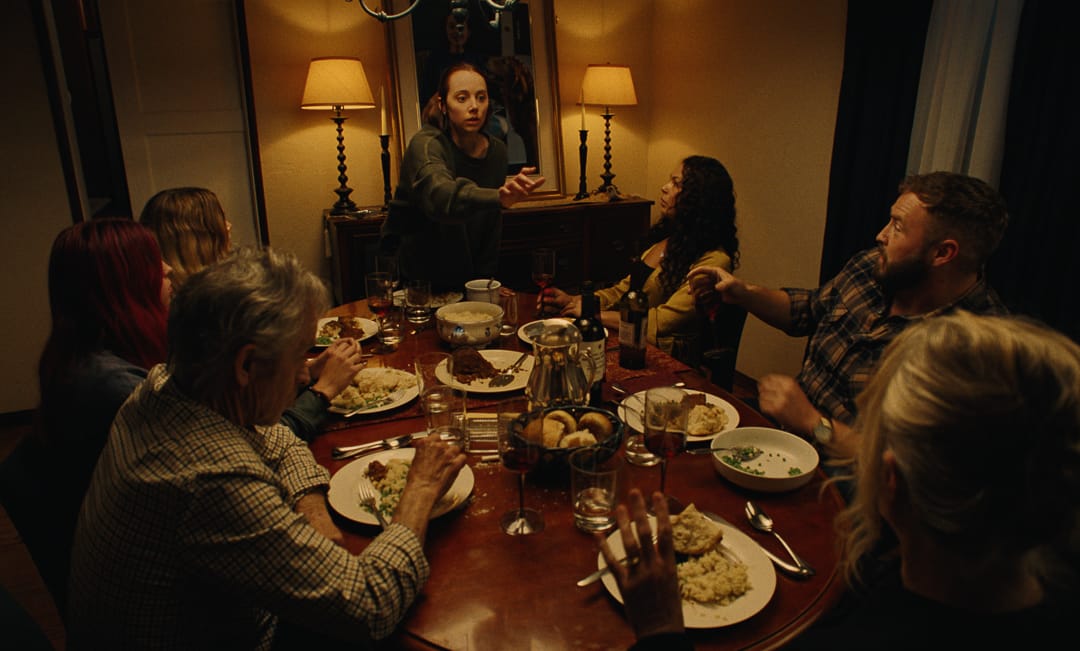
Ivy Mack has survived a head injury that nearly killed her. What she has not survived, not yet, is dinner with her family. In Head Case, writer-director Georgia Sampson strands her lead in her childhood home after a near-fatal accident pulls her out of her life in New York, then hands her a hallucination to contend with: the ghost of her childhood dog. It is a short dramedy with surreal edges, built on a premise Sampson knows firsthand — at twenty-three, she broke her skull open and moved back in with her mother to recover.
The film's power comes from its compression. One room, a full cast, a dog, and a fourth wall that Sampson breaks on purpose. The result is a portrait of a woman whose harshest voice is her own, and a family that loves her in ways she can't quite receive.
Key Takeaways
- Head Case grew out of Sampson's own recovery from a near-death head injury, fictionalized into a family dinner where concern and cruelty share a table.
- The single-location structure was a constraint turned into a strategy: with a dog and a large cast, one room concentrated the tension instead of diluting it.
- Sampson defends the fourth-wall break as the clearest way to dramatize a "character vs. self" conflict, and camera tests with a mirror confirmed it belonged.
Sampson spoke with us about plays, dogs who refuse to bark on cue, and why drama started to feel more honest than comedy.
Interview
What drew you to make this film, and why this story, why now?
When I was twenty-three, I broke my skull open and had to move back in with my mother to recover. While most of Head Case is fictional, I drew a lot of inspiration from the existential crisis at the core of the script: an adult woman gets stuck in a room with people who are the most concerned about her but have backwards ways of showing it.
I've noticed that this is a really prevalent feeling amongst my generation. It's natural for all of us to feel a bit existential. In the last decade, we've experienced health concerns at a global level, the fluctuation of financial strains, and a lot of people openly grappling with their mental well-being.
So, while I was initially drawn to it because of my connection to recovering from a near-death experience, I came to really push for Head Case to become a reality when I realized that I wasn't alone in this feeling of trying to find meaning in a moment that could be insignificant. I think we've all been trying to do that lately.
What surprised you most about the filmmaking process, creatively or logistically?
My favorite part of the creative process is that it is always changing. I wrote this script that was so dialogue heavy and, naturally, the actors changed their lines. Sometimes what they came up with was better than anything I wrote, so I tried to encourage their takes on it both on set and in the edit.
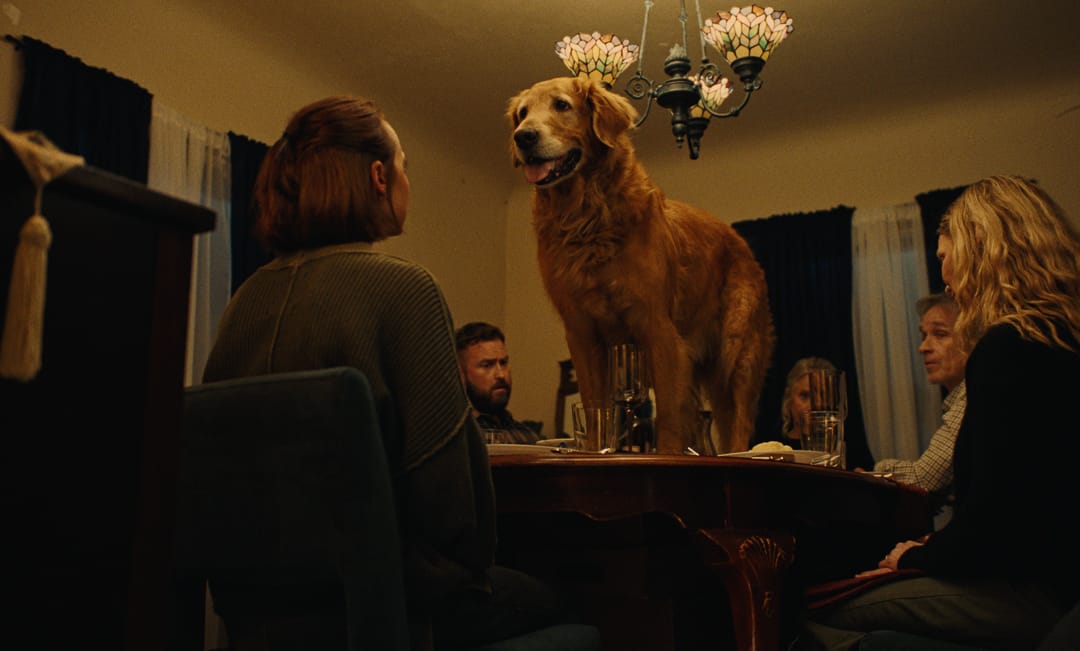
On top of that, since we had a dog in the movie, there was a lot of extra planning, coordination, and moments that we were banking on but couldn't guarantee. One of the scripted moments was where Doc, played by the gorgeous and talented Finn, was supposed to bark to interrupt Ivy from having a judgmental aside. However, on the day of shooting, he couldn't bark. When I talked to Tessa, his trainer and owner, we brainstormed a solution where he kind of sniffed and kissed Ivy's face instead. Lindsay, our lead, embraced the change on set in a beautiful way. So when I was watching it all come together in the edit, I realized that it all came off as more tender and loving than the other way.
All of this is to say: I loved the planning of the shoot and really adore my producers for how much logistical work they did. But there are so many moments of magic that happened because the filmmaking creative process is a team sport and not just one person's words on a page.
What moment in the film feels most like you, or like something only you could have made?
I grew up reading a lot of plays. When I was in high school, I starred in a version of A.R. Gurney's The Dining Room where I played a lot of characters, but my favorite was the elderly mother role who is kind of drifting in and out of lucidity.
I think plays do a really beautiful thing that movies can't capture all the time: they force you to be in the same space as a character and, if that character sees something that no one else does, you buy in. I am always trying to recreate that feeling. I think Head Case actually captures it more than other projects I've done. On top of that, it also grapples with a lot of material in a very short amount of time. I am always trying to work out a million questions about the world in my scripts. I'm just thrilled that those questions followed the actors into their performances, because I can see them all grappling with it when I watch it back. I have to thank them for that.
What was the hardest creative decision you made while making the film?
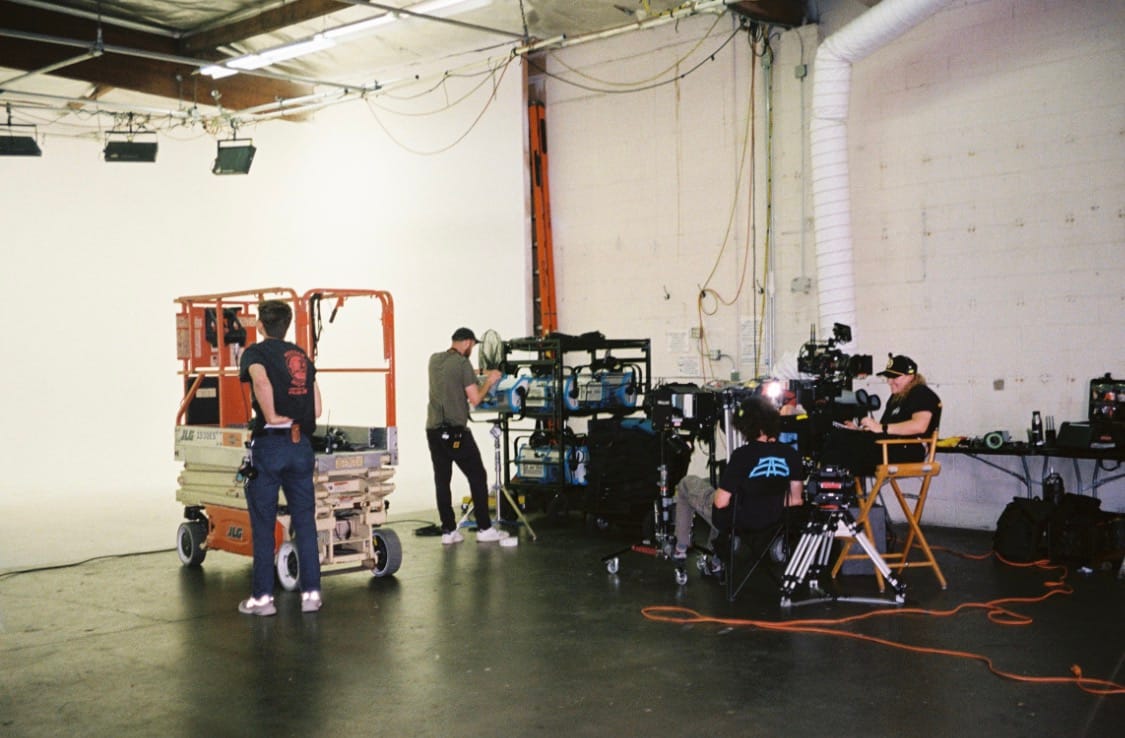
Breaking the fourth wall is not a popular decision. In fact, I've met many people who hate it. When I was workshopping the script, I had a few writers tell me that it is derivative of Fleabag and Annie Hall. But I ended up taking that as a compliment, because there are so few other pieces of film that clearly define what a "character vs. self" conflict looks like.
The visual language behind it was an idea I had really early on in the feature mapping process — to show that the character has a strained, harsh inner voice that is usually sharpest when it comes to her own life. But trying to get people on board with it is not an easy sell. Luckily, when I was doing camera tests with the mirror and my DP, we realized that there was so much beauty in keeping the fourth wall breaks in. You get let in and, with a film about mental health, that is so important.
What is the greatest strength of independent filmmaking, and how did you lean into it here?
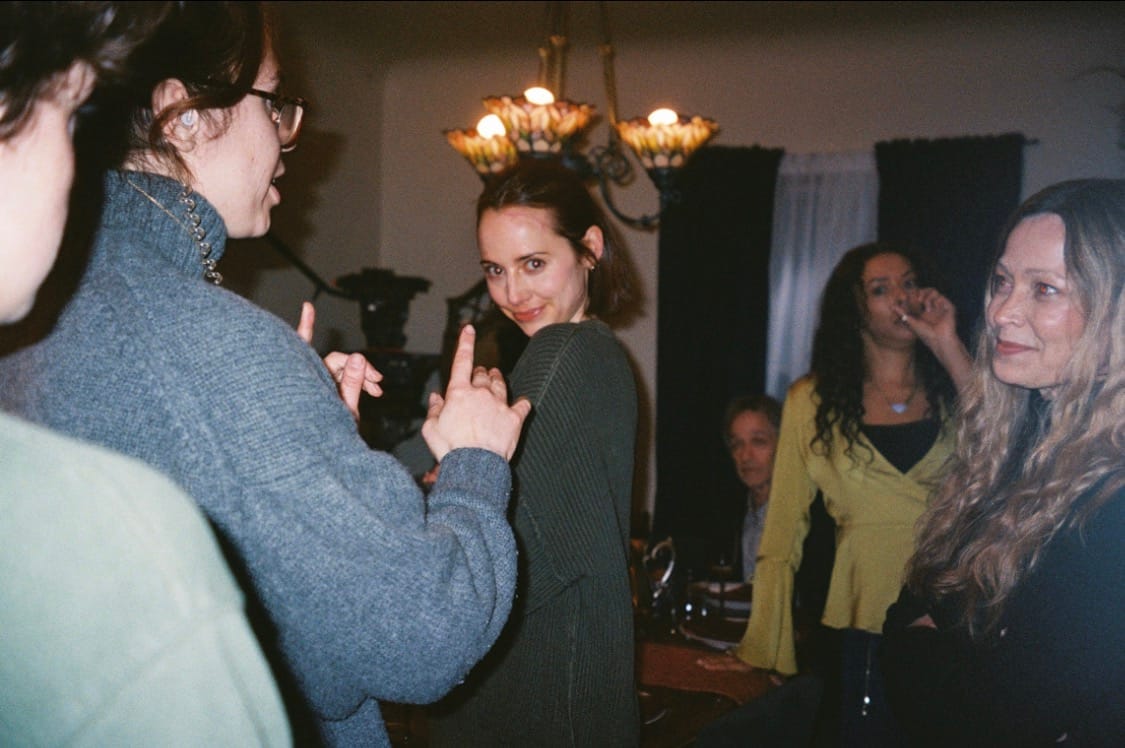
When I was planning this shoot a few years ago, I kept thinking about short films that I thought told a story in a really concise way. I realized, after going through the pretty standard run of "best short films," that all of them were either shot with minimal locations or minimal characters. And it's all because of the constraints of independent filmmaking.
True independent filmmaking means finding a way to work inside the constraints and making them work for you. I figured that, since we were going to have a dog and a bigger cast, creating a world that is just one room where everyone exists is easiest for production. With that in mind, the drama intensified because all of that tension was in one room. I think that if I had unlimited budget and time, this probably could have become something else. But working inside of the limit I knew made the whole project stronger and pushed me as a writer and director.
What tool, technique, resource, collaborator, or mindset shift helped most during production?
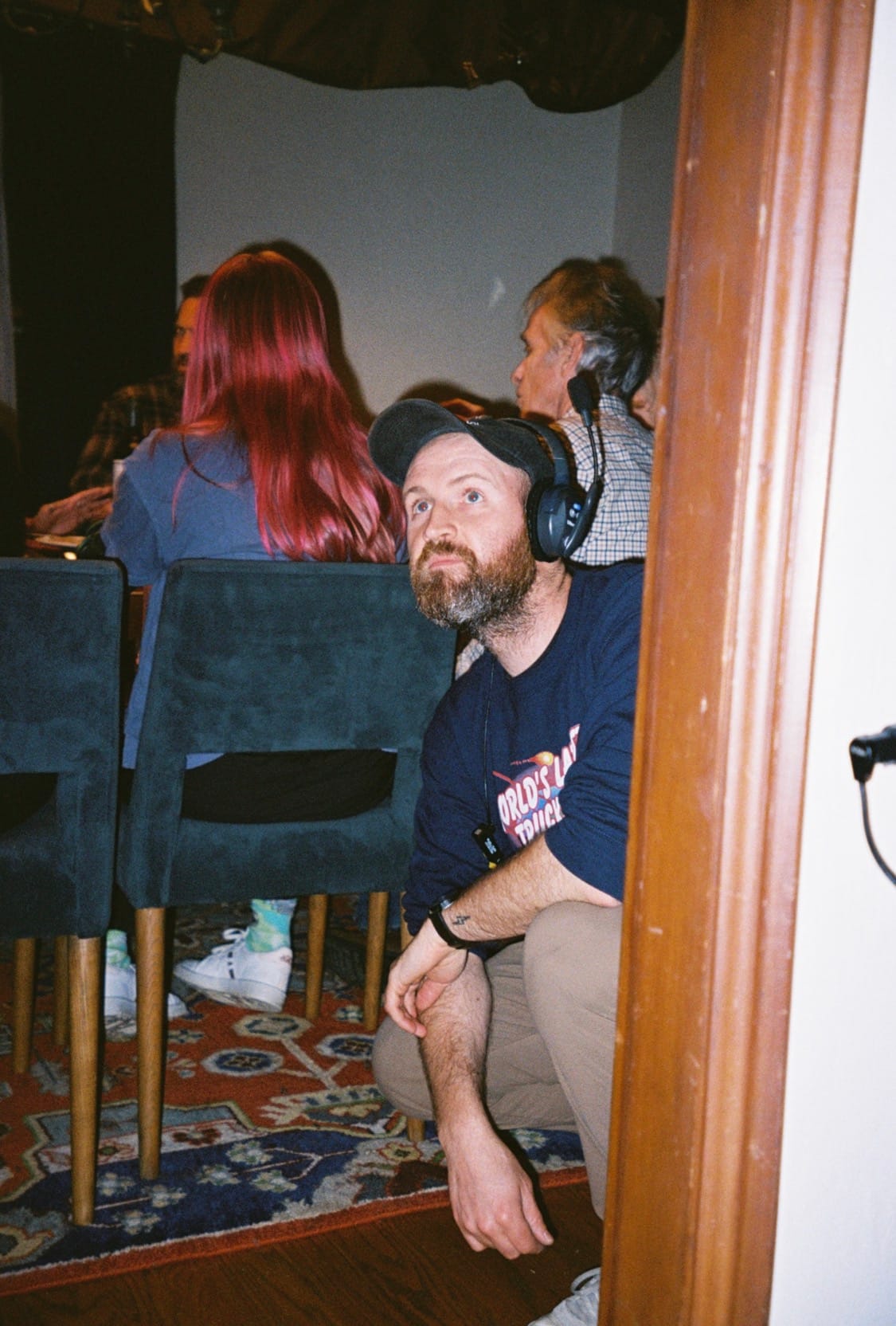
I cannot emphasize how much I value and relied upon so many people on this team. My DP, Jake, read a few versions of this before it was polished and still saw the heart of it for what it was. My editor, Bateman, took the notes and random sequences I wrote and made something that I was blown away by. My producers, Kianna and Regan, pushed me to keep going when pre-production felt like months on months of "maybe this isn't going to happen."
I can't point to just one collaborator that defined this project, but if I had to sum up the mindset and technique that defined this for me, it would be from a Judith Weston quote: "Talk to a person. Listen to a person. Be a person, not a character." I think that can be applied not just to acting but to creating and directing writ large. You don't just need to be the role. You need to also ebb and flow with the people who make it with you.
What does it mean to have your film selected for The Reel Champions Shorts Fest, and where does the film go next?
It's so amazing to have Head Case in The Reel Champions Shorts Fest. I love the Reel Champions and the organizations like them that really support women in film. I feel very connected to other women who are doing the same work that I'm doing. We are able to see each other's work and intentions in a way that feels supportive. To be chosen and honored by a group of female filmmakers means so much to me.
We are playing at a few more festivals before the end of the year. However, we hope to have an online release by the holidays. It feels like the best time to remind people that the themes explored in my fictionalized family dinner conversation can be applied to real life. I hope audiences leave feeling a mix of comfort and empathy — it's a reminder that everyone has an area or space where they feel misunderstood, and the hope is that we all have enough patience and reflection to see where that happens to us, and where we might be doing that to others.
Main Cast & Crew
Crew
- Georgia Sampson — Writer & Director
- Kianna Maynard — Producer
- Regan Hill — Producer
- Jacob Dugger — Director of Photography
- Taylor Venegas — Production Designer
- Sophia Bailey — Art Director
- Julia Linger — Casting Director
- Bateman Lewis — Editor
Cast
- Lindsay Elston as Ivy Mack
- Wendi Bazar as Melissa Mack
- Emiliana Gavoni as Anne Mack
- Jeremy Urann as Mikey
- Danika Butler as Nat
- Karen Leigh Sharp as Dee
- Bradley Fischer as Jay
- Finn Bodey as Doc
Filmmaker Opportunities
💛 Fund your next project with fiscal sponsorship
Have a project in the works? As a 501(c)(3) nonprofit, the Cinematography for Actors Institute can accept tax-deductible donations on your film's behalf — a door-opener for grants, foundations, and supporters who want to back your work. We've serviced over 100 projects to date and helped route over $800,000 in funding to filmmakers. Explore fiscal sponsorship →
📬 Grant deadlines and festival opportunities, straight to your inbox
The CFA newsletter rounds up grants, festival calls, and community news for independent filmmakers — the kind of opportunities that are easy to miss and painful to miss. Join the newsletter →
🎬 Focus on the creative — we'll help with the logistics
Production Management, CFA's newest member program, launches this November: production insurance and workers' comp, payroll, film permits, gear rental coordination, SAG-AFTRA compliance, contract drafting, production consulting, and crew recommendations — handled by a team of working filmmakers, à la carte or all in, in partnership with Creative Access Group. It's waitlist-only until launch. Join the waitlist →
League of Filmmakers is published by our parent organization, the Cinematography for Actors Institute — a 501(c)(3) dedicated to education, community, and capital for underrepresented filmmakers and actors. Learn more about CFA →