Table of Contents
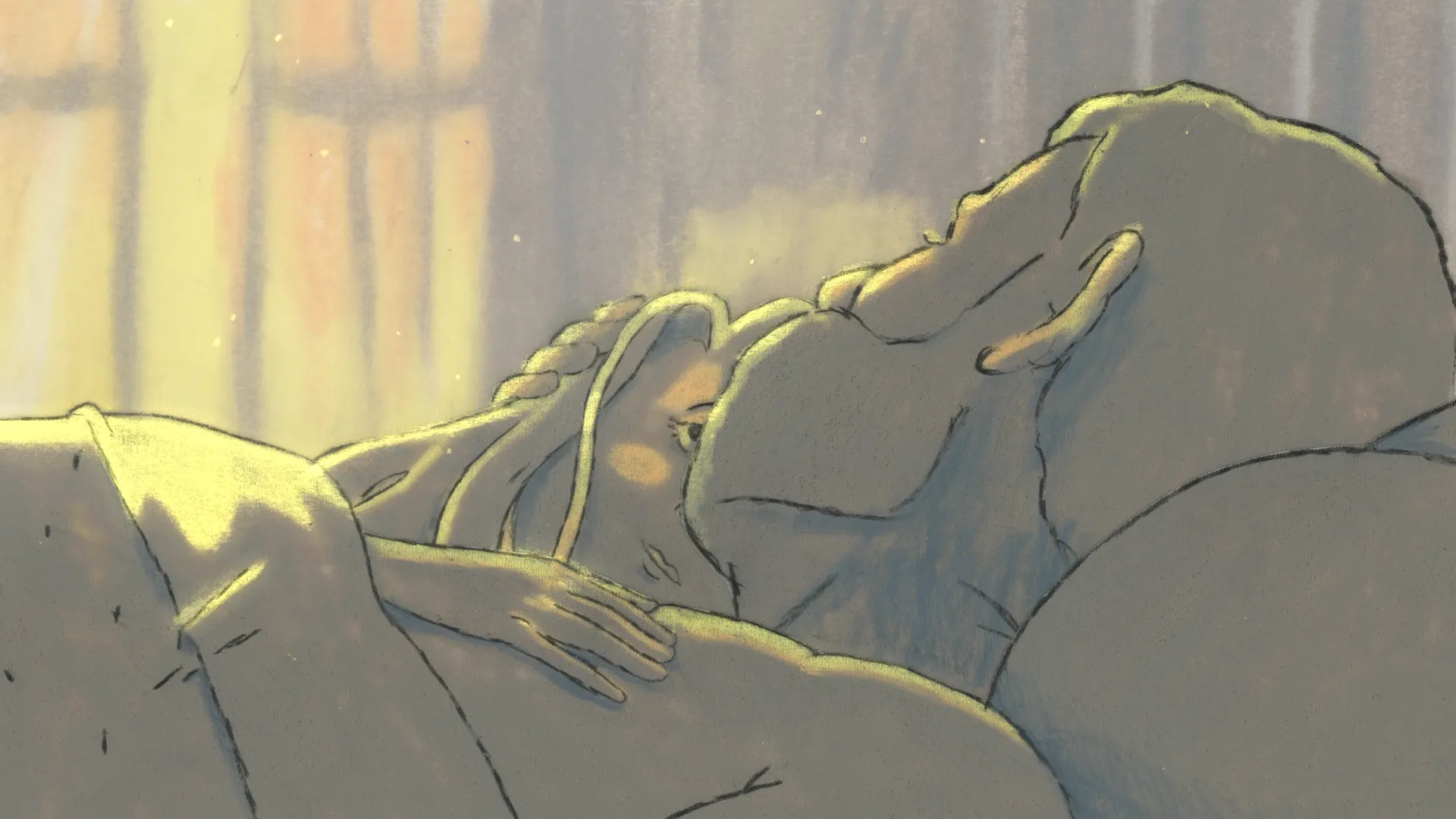
Narrated by Academy Award nominee James Cromwell and based on John Matthias' memoir, Living with a Visionary is a soulful, bittersweet reflection on a fifty-year marriage. As Diana, an art curator grappling with Parkinson's, is beset by vivid and often beautiful hallucinations, her husband John adapts to her imaginary world — until the Covid-19 pandemic separates them and forces him to admit he can no longer be her caregiver. It is a story about powerlessness and grief that never loses sight of the strange beauty inside it.
Stephen Neary, a Hoosier-born writer, director, and animator based in Los Angeles, made the film almost entirely alone, in a shed in his backyard, across four years of nights and weekends. The result premiered at Sundance, where it won the Short Film Jury Award for Animation. At HollyShorts, it comes home.
Key Takeaways
- Neary hand-rendered thousands of drawings on overlapping layers of vellum and watercolor paper — a deliberate, tactile answer to an industry anxious about AI.
- The film adapts a New Yorker piece by University of Notre Dame professor John Matthias, whose account of his wife Diana's decline struck a chord with grieving readers worldwide.
- After qualifying for the Oscars at Sundance and being acquired by NYTimes Op-Docs, the short is weighing a potential awards run.
A conversation with the filmmaker follows.
Interview
What drew you to make this film, and why this story, why now?
After his wife Diana's passing, University of Notre Dame English professor John Matthias wrote a long letter to friends and family, detailing the uniquely devastating circumstances of his wife's decline, as well as the events that led to his own dehumanizing commitment to a psych ward. John was surprised to learn that a colleague had submitted the letter to The New Yorker, where it was published in the Feb 1, 2021 issue. Striking a chord worldwide, John received hundreds of letters and emails from readers, many grieving losses of their own.
I read the article during the pandemic, with a newborn, trying to run a cartoon show from home, with our studio caught up in a labyrinthine corporate merger that would cost us all our jobs. Something about John's article allowed me to fully grieve all the crazy events of the past few years. It's impossible not to draw parallels to your own life — the decline of my grandmother due to dementia, my parents aging as my own family grows, the feelings of powerlessness, all alongside a strange sense of beauty in the absurd. I reached out to Matthias in 2022 about adapting it into an animated short, visually inspired by the work of Canadian animator Frédéric Back. I understood no major studio would support it, but I was deeply touched by my conversations with John, who told me, "I think it's something Diana would have liked."
What surprised you most about the filmmaking process?
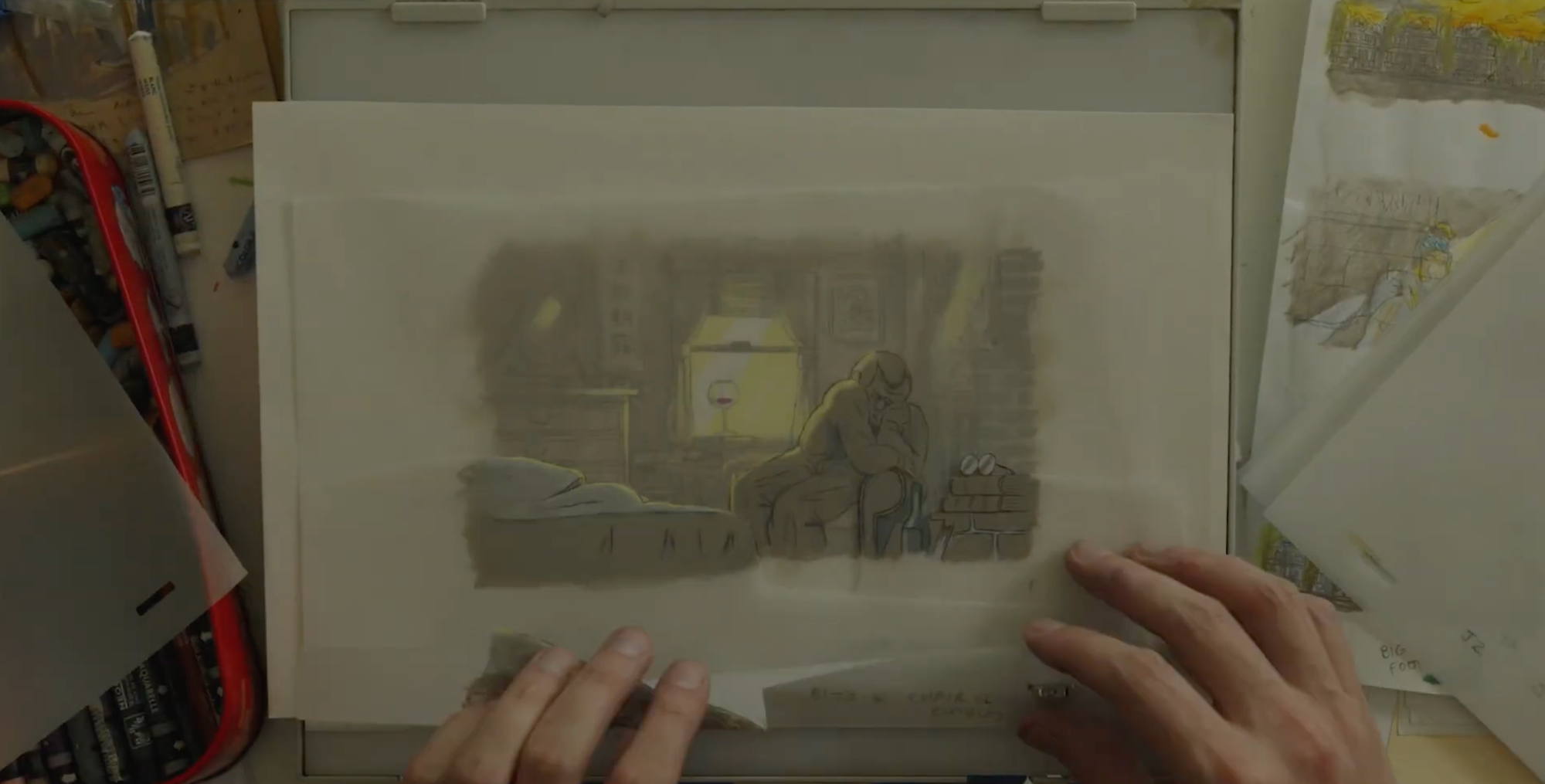
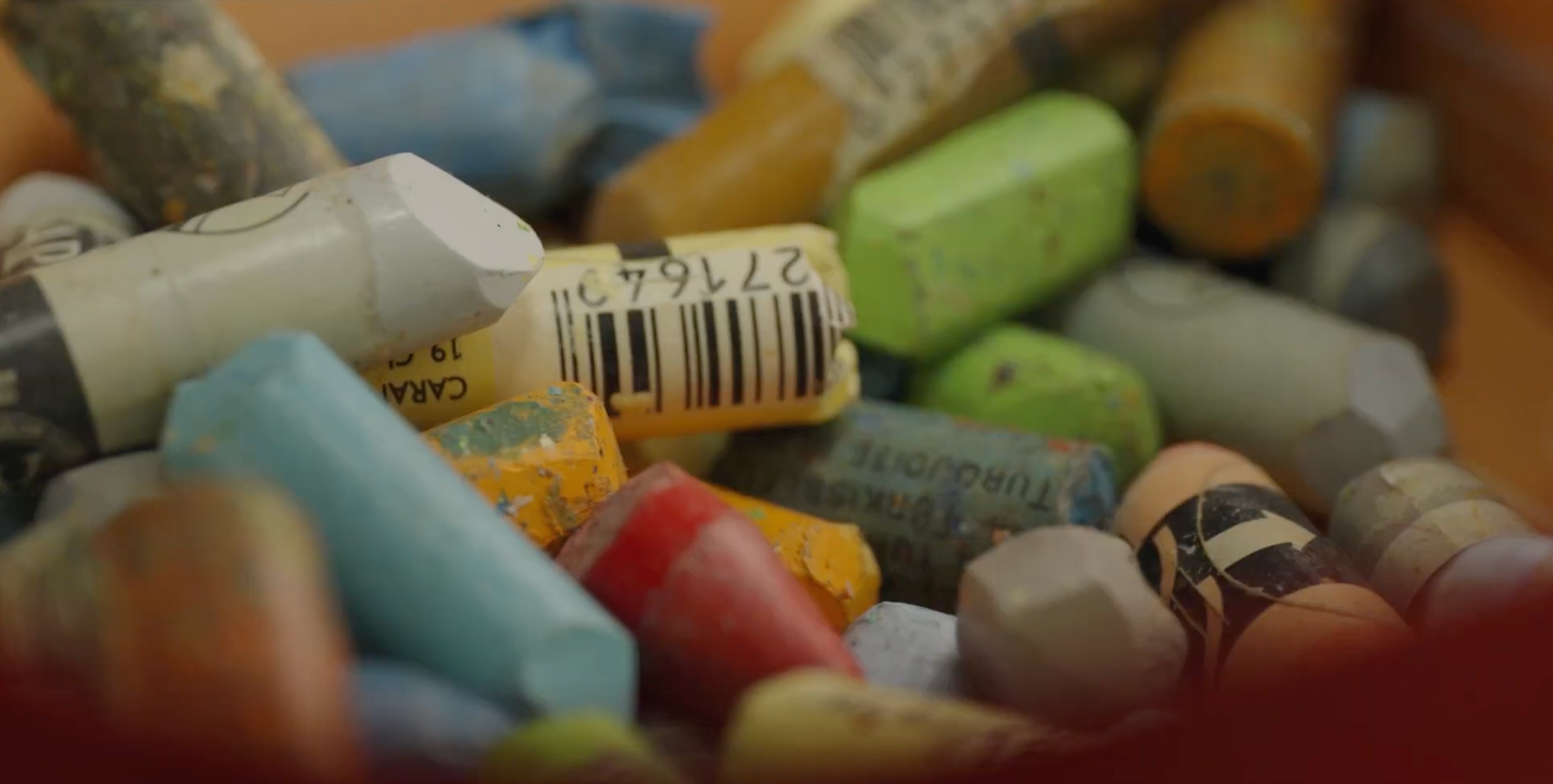
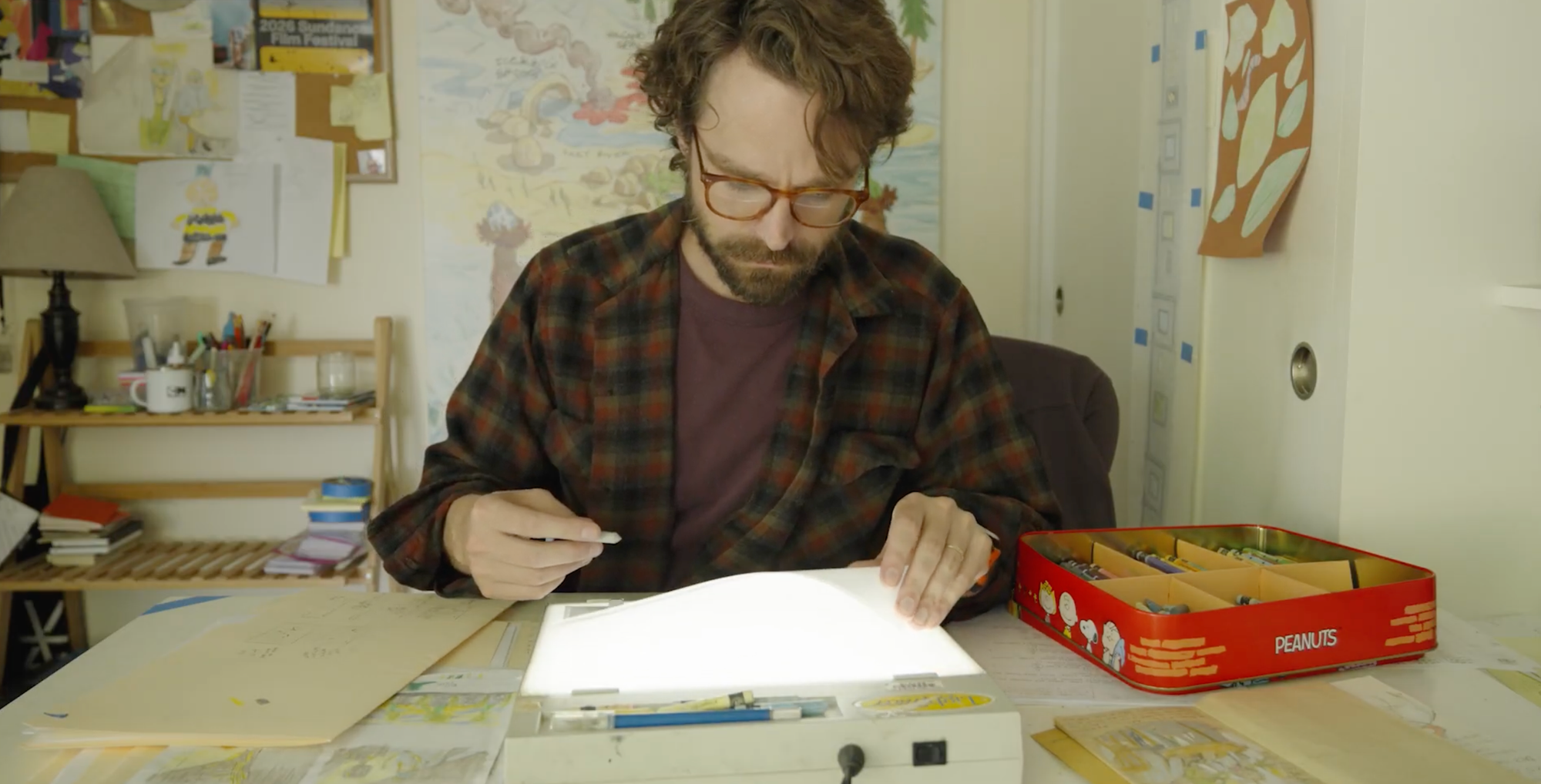
While I've worked in animation for nearly two decades, this is the first time I've animated a film on paper. I was delighted to sit for hours every day drawing on my favorite paper with all my favorite crayons and pencils. While each individual shot was a unique logistical problem, working on the 15-minute piece over the course of four years meant there were weeks at a time where I did not watch the entire film. I was always surprised to see that the film worked when I put it all back together, each time with more of it animated. The story was still just as heartbreaking as the day I read it.
What moment in the film feels most like you, or like something only you could have made?
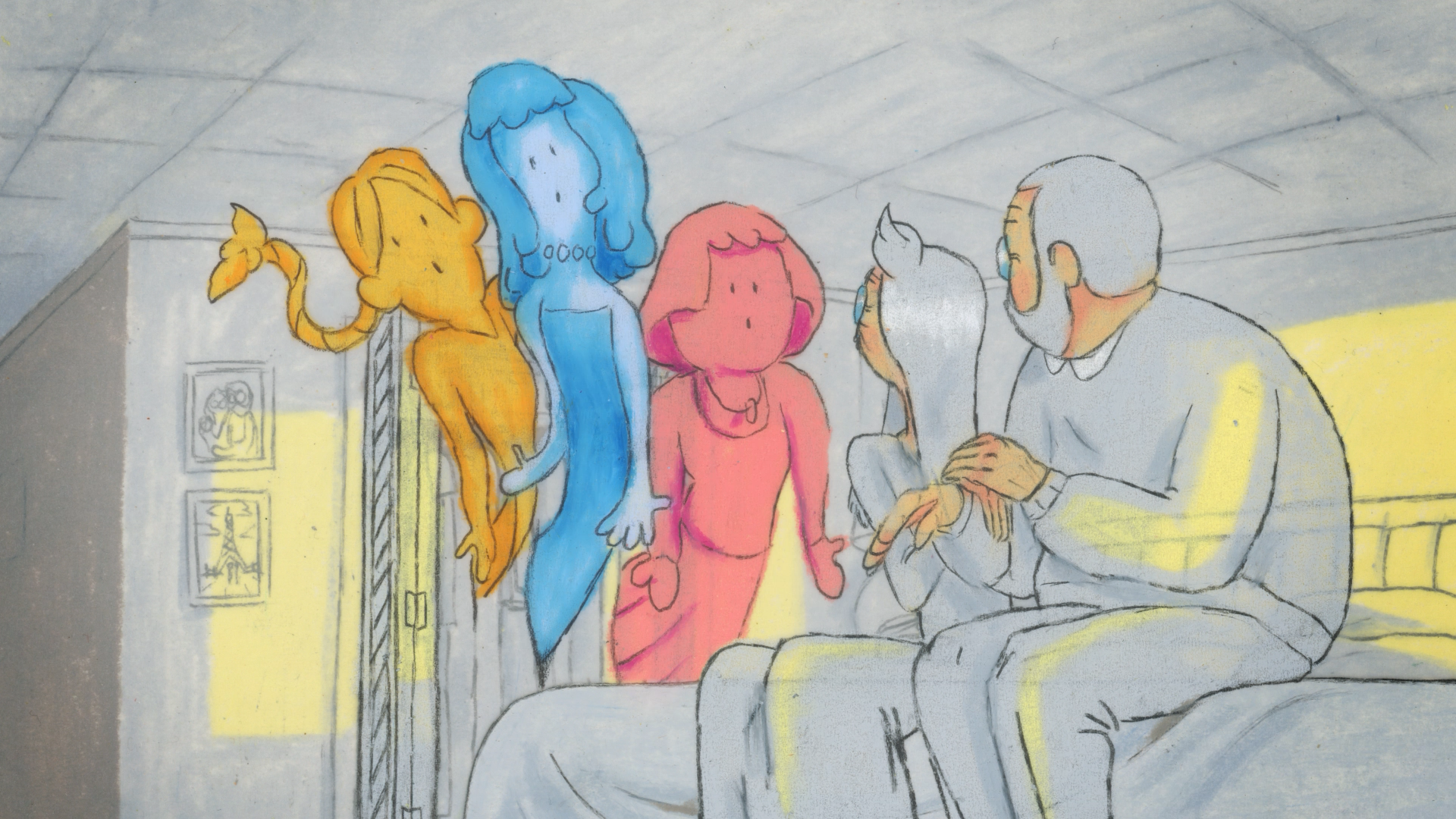
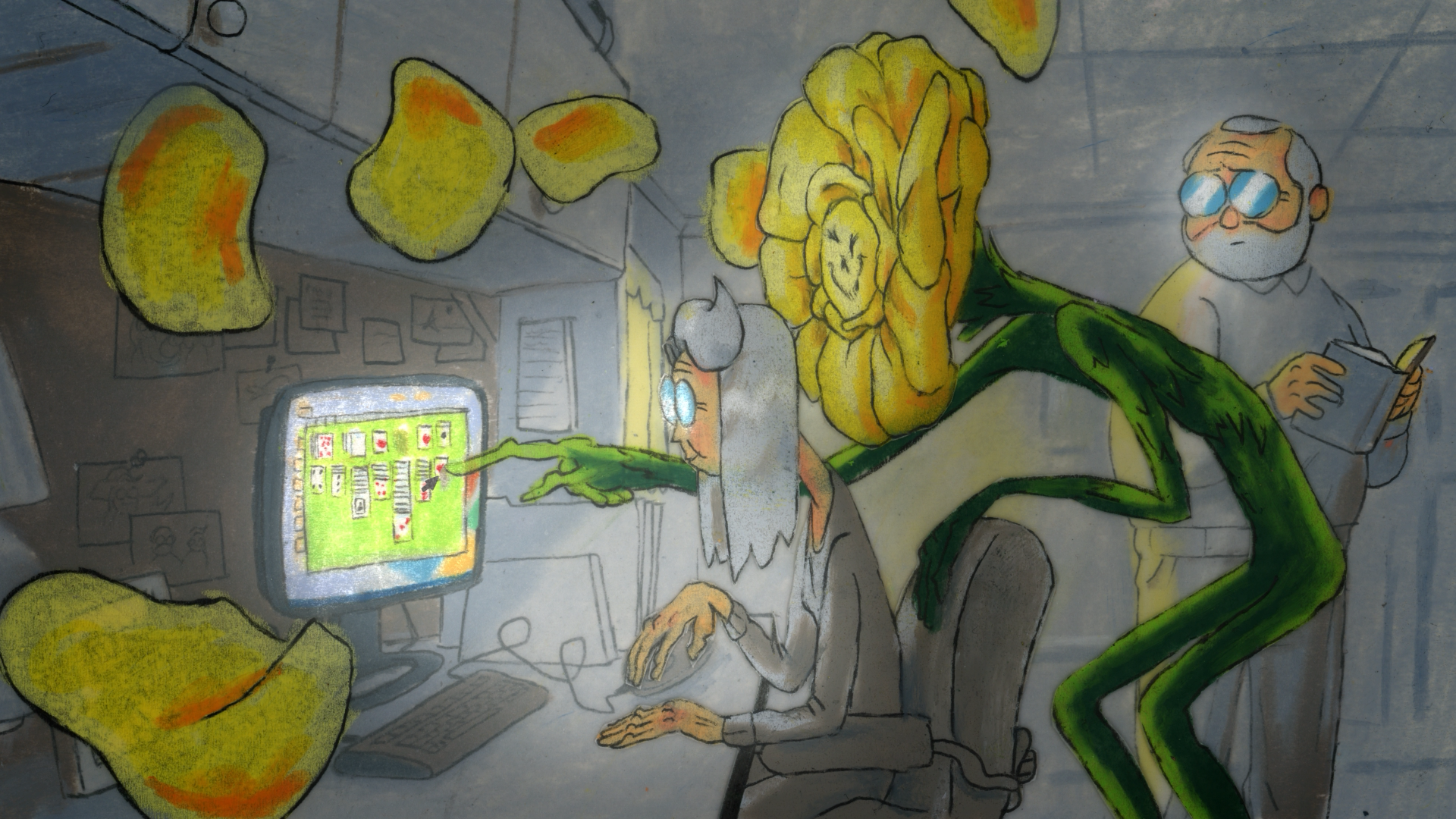
There is a sequence where Diana has retired and is now living at home full-time with Parkinson's. Her hallucinations become worse at home, but before they do, they are briefly more amusing than scary. Chinese calligraphy on the wall flies around like butterflies, women fly out of the closet, and a rude man masturbates into a dresser drawer. While these hallucinations are all specifically cited in the original memoir, it's the sort of rich content a director dreams of adapting for animation. Heartfelt, a little strange, but ultimately an intimate glimpse into someone's daily inner life struggling with this disease.
What was the hardest creative decision you made while making the film?
Making the film at all was the hardest decision I've made in my career. Animation takes so long that I knew this would be an effort years in the making. It meant years of nights and weekends while working on commercial projects during the day to pay the bills and feed my family. But I felt so strongly about the story that at some point it became impossible for me not to make it.
What tool, technique, or mindset shift helped most during production?
As I was still debating whether to make this film, I caught up with my mentor from NYU, John Canemaker, an Oscar-winning animator who has always been supportive. After reading the original article and seeing my sketches, he very simply stated, "You have to make this. This is your soul." For John, making art is simple, as simple as eating and breathing. It's something you must do.
How does your film fit within, or push the boundaries of, its form?
Animation has changed rapidly in the past 20 years. From the death of traditional 2D animation in favor of 3D, to the almost perfection of photorealistic imaging, we've finally gone full circle. Audiences know anything is possible in animation — it's even possible to make it without animators, as AI threatens our industry. It felt incredibly important for me to focus on the DIY aesthetics of this piece — the paper, the pencil, even the fingerprints and dust on the paper. It's my hope that the handcrafted feel adds heart to this extremely human story.
What does it mean to have your film selected for HollyShorts, and where does it go next?
While our journey started with Sundance in January, HollyShorts is incredibly meaningful because it means bringing this project home to Los Angeles, where it was created. As Covid hit and Hollywood continued to radically change, I feel so lucky that I got to make this entire short essentially in a shed in my backyard, right here in LA. I'm overjoyed to share it with my industry peers and neighbors. Since the film qualified for the Oscars at Sundance, we are weighing a potential Oscar run — especially if it means bringing this film to more audiences. It has been acquired by NYTimes Op-Docs and will premiere online before the end of this year.
Main Cast & Crew
- Stephen P. Neary — Director, Writer, Producer, Storyboard Artist, Lead Animator
- Mireia Vilanova — Producer
- James Cromwell — Narrator
Filmmaker Opportunities
💛 Fund your next project with fiscal sponsorship
Have a project in the works? As a 501(c)(3) nonprofit, the Cinematography for Actors Institute can accept tax-deductible donations on your film's behalf — a door-opener for grants, foundations, and supporters who want to back your work. We've serviced over 100 projects to date and helped route over $800,000 in funding to filmmakers. Explore fiscal sponsorship →
📬 Grant deadlines and festival opportunities, straight to your inbox
The CFA newsletter rounds up grants, festival calls, and community news for independent filmmakers — the kind of opportunities that are easy to miss and painful to miss. Join the newsletter →
🎬 Focus on the creative — we'll help with the logistics
Production Management, CFA's newest member program, launches this November: production insurance and workers' comp, payroll, film permits, gear rental coordination, SAG-AFTRA compliance, contract drafting, production consulting, and crew recommendations — handled by a team of working filmmakers, à la carte or all in, in partnership with Creative Access Group. It's waitlist-only until launch. Join the waitlist →
League of Filmmakers is published by our parent organization, the Cinematography for Actors Institute — a 501(c)(3) dedicated to education, community, and capital for underrepresented filmmakers and actors. Learn more about CFA →