Table of Contents
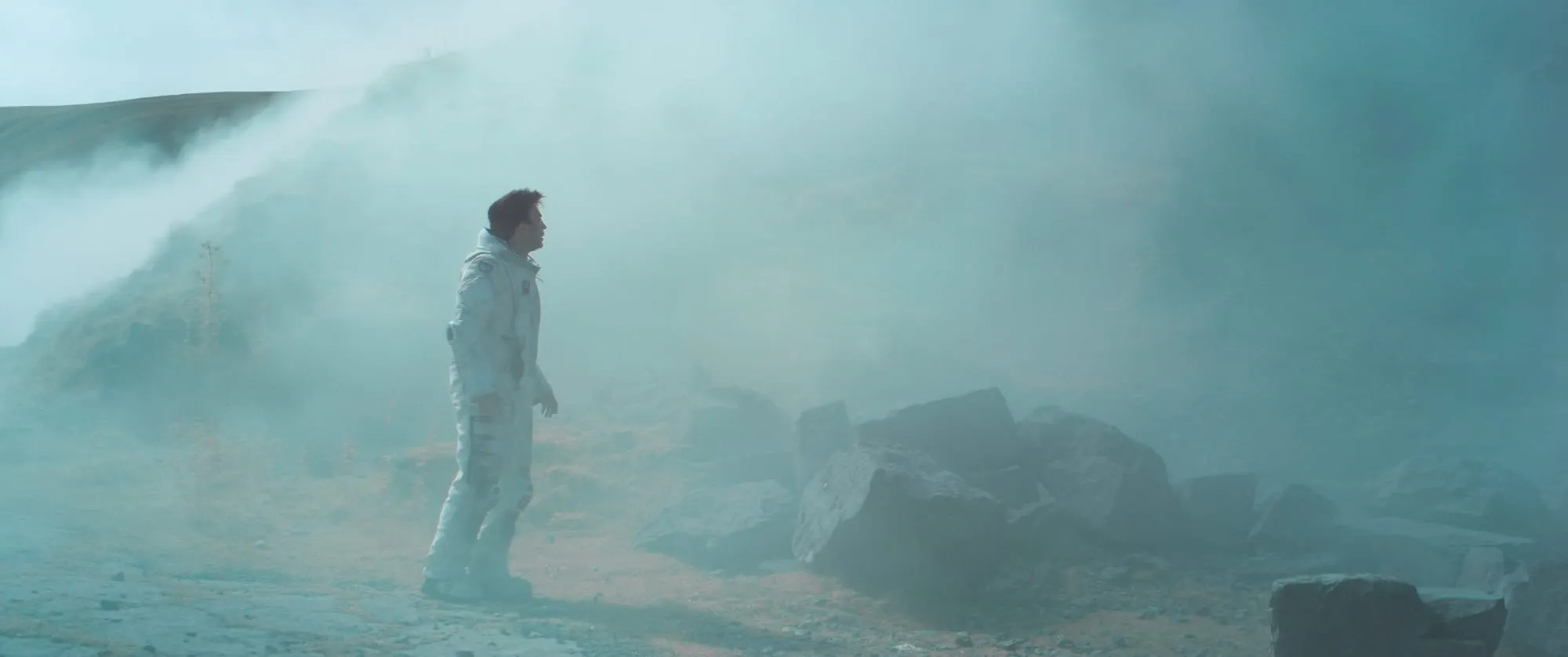
On a desolate planet shrouded in mist, a lone astronaut searches for his missing mother, a crew member of the Oneiros Project. As he journeys deeper, his mission becomes less about survival than about an encounter with the planet itself — a presence that reaches into his memories and seems to understand what he is truly searching for. Oneiros is the work of Junbo Qiu, a Chinese writer-director based in London whose films blend speculative concepts with emotional intimacy. It arrives at HollyShorts already carrying an MPSE Golden Reel Award for its sound editing and a cinematography feature in British Cinematographer.
What lingers is not spectacle but a feeling. The astronaut believes he is looking for his mother; what he may really be seeking is the sensation of being mothered — understood, protected, accepted without having to explain himself. In Qiu's hands, science fiction becomes a way to approach grief and displacement more directly, not less.
Key Takeaways
- The alien world was created through an in-camera infrared process inspired by Aerochrome film, keeping the landscape physically real while rendering it unmistakably not-Earth.
- Qiu withholds all dialogue from the astronaut, trusting performance, cinematography and sound to let the planet communicate with him more directly than another person could.
- The film treats its planet not as a place to conquer or escape, but as a character that responds to the astronaut and comes to understand him.
Qiu spoke with us about the mountain that sparked the idea, the shot he could not have planned, and why ambiguity found a home at HollyShorts.
Interview
What drew you to make this film, and why this story, why now?
I first had the idea for Oneiros while climbing Mount Teide in Tenerife. Near the summit, with the clouds below me and the volcanic landscape surrounding me, I felt almost like an alien, and suddenly experienced a strong impulse to connect with something larger than myself.
After moving from China to the UK, I had also become aware of how distance can turn the people we love into images sustained through screens, recordings and memory. In the film, the astronaut may not truly be searching for his mother as a person, but for the feeling of being mothered: to be understood, protected and accepted without having to explain himself. The planet recognises that need before he does. For me, the film explores how grief and displacement can make us pursue a projection, while the care we need may arrive in a form we never expected. That feels especially relevant now, when so many relationships are lived across borders and mediated through screens.
What surprised you most about the filmmaking process, including a moment that changed how you saw the story?
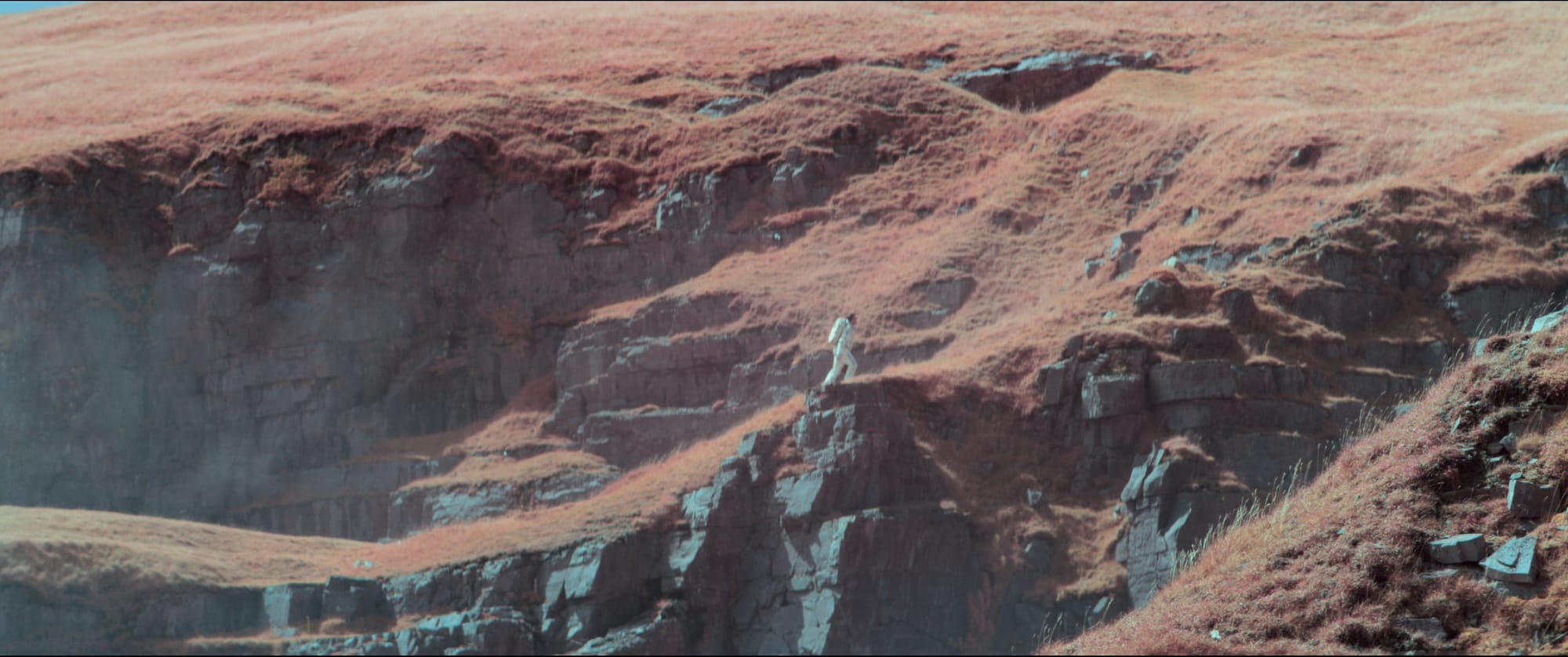
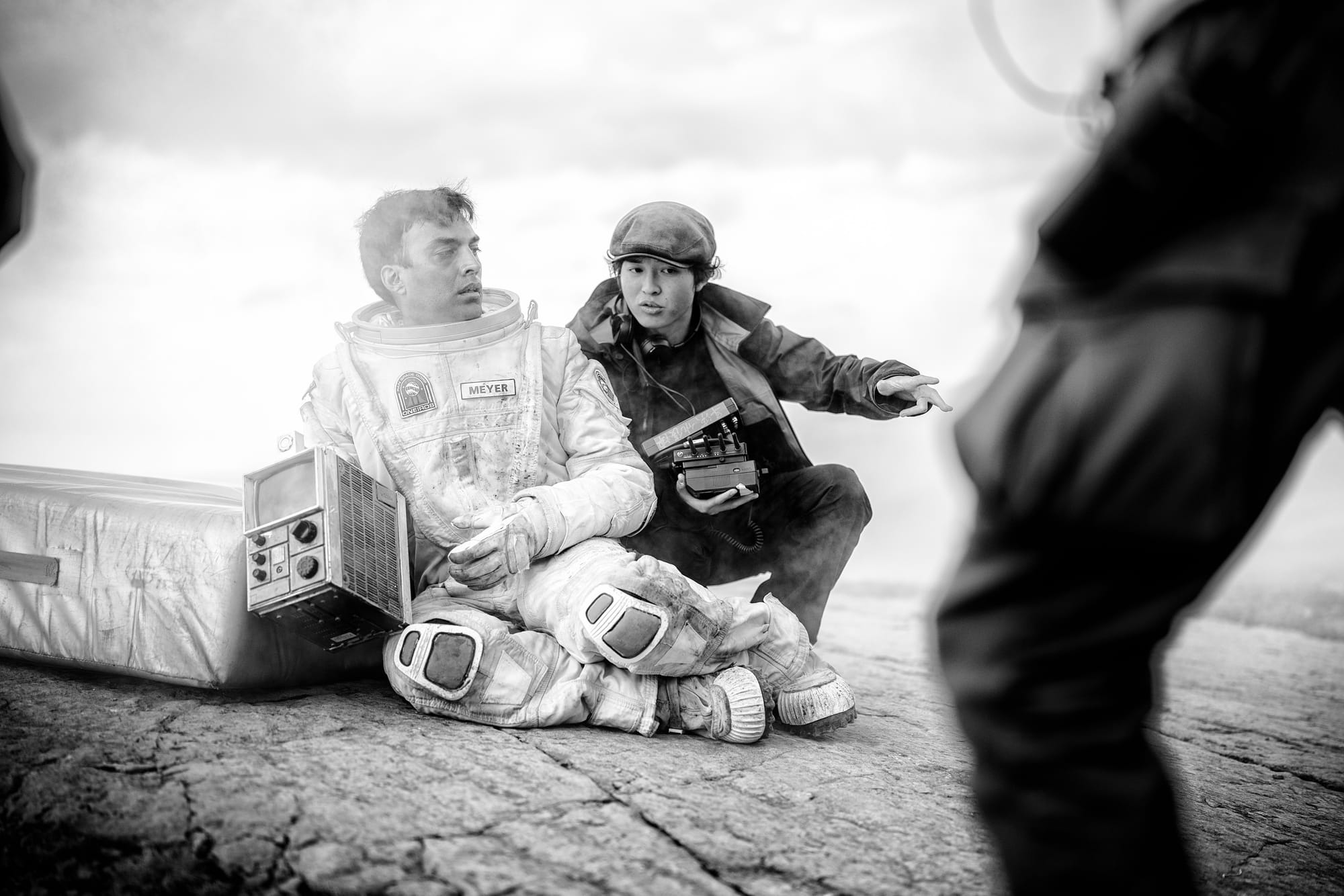
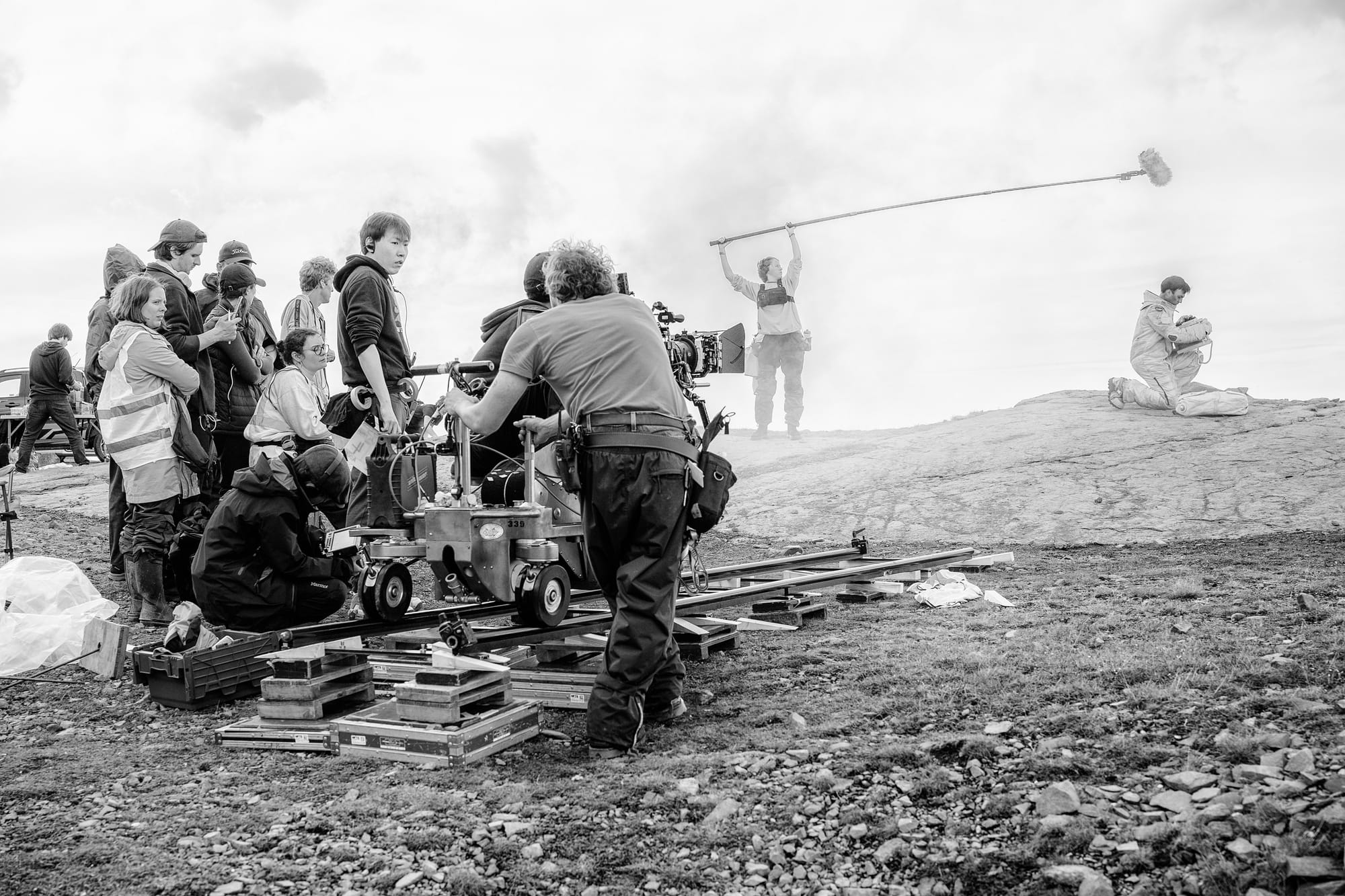
What surprised me most was how strongly the planet emerged as a character. On set, the infrared camera transformed a familiar Welsh landscape into something alien, but it was during editing and sound design that I began to feel a rhythm in the way the landscape responded to the astronaut's inner state.
That changed how I understood the story. It became less about a man struggling against a hostile environment and more about someone being recognised and cared for by a presence he does not yet understand. It reminded me that a film can reveal meanings beyond the script through the relationship between image, performance and sound.
What moment in the film feels most like you, or like something only you could have made?
The moment that feels most like me is when the astronaut walks against the wind as mist blows across the mountain. It is a simple action, but for me it contains his entire emotional journey. He is chasing something within the mist without fully understanding what it is, driven forward by an instinctive calling from within.
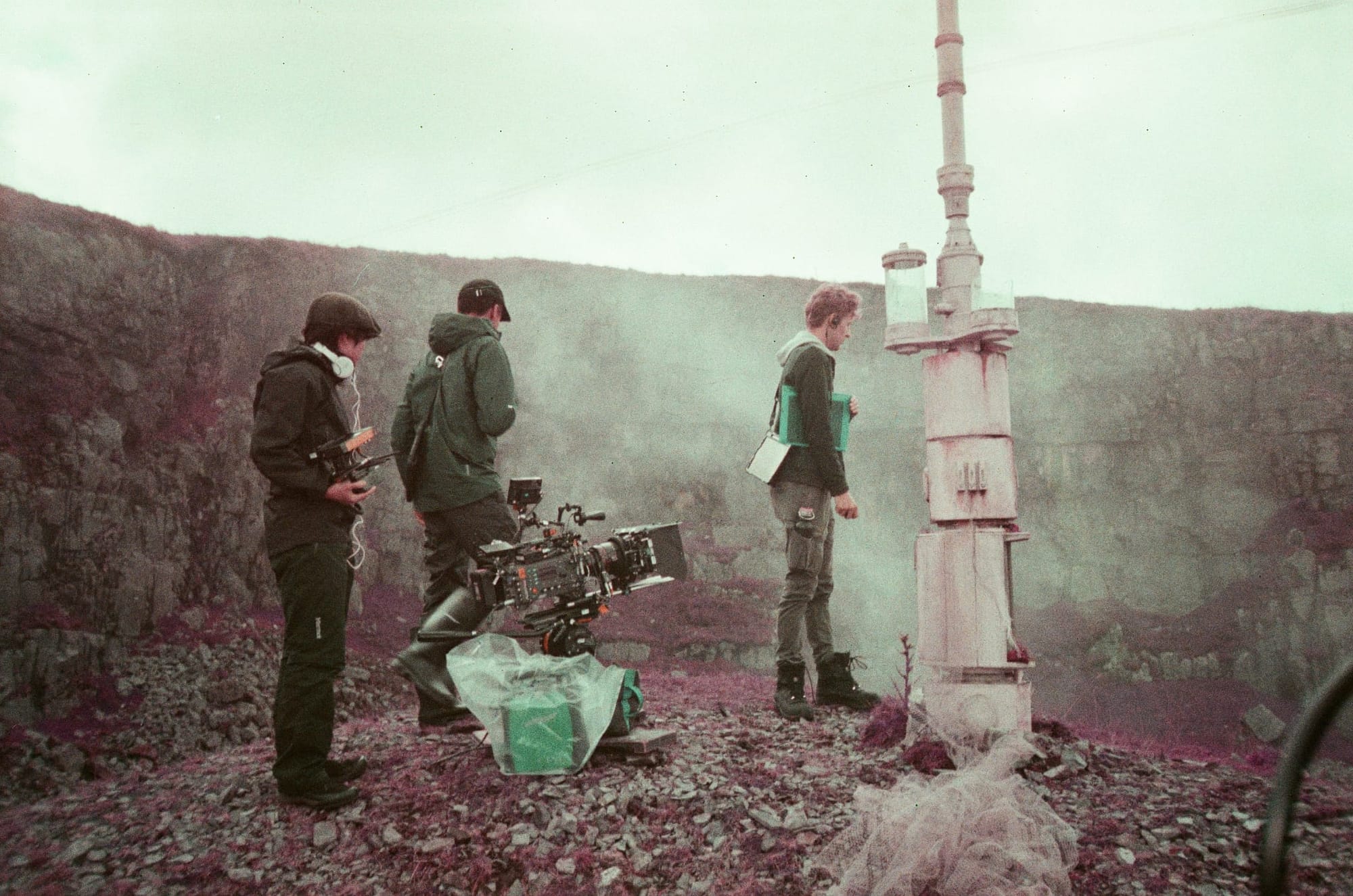
We discovered the shot on location. The wind was much stronger than it had been during our recce, and there was no natural mist, so we used an Artem smoke machine. The wind caught the artificial mist and carried it perfectly and naturally through the landscape. In that moment, I did not feel the need for a close-up or additional coverage. We simply held the shot and allowed the frame to embrace the weather. The emotion was already there in the relationship between the figure, the wind and the landscape in the mist.
What was the hardest creative decision you made while making the film?
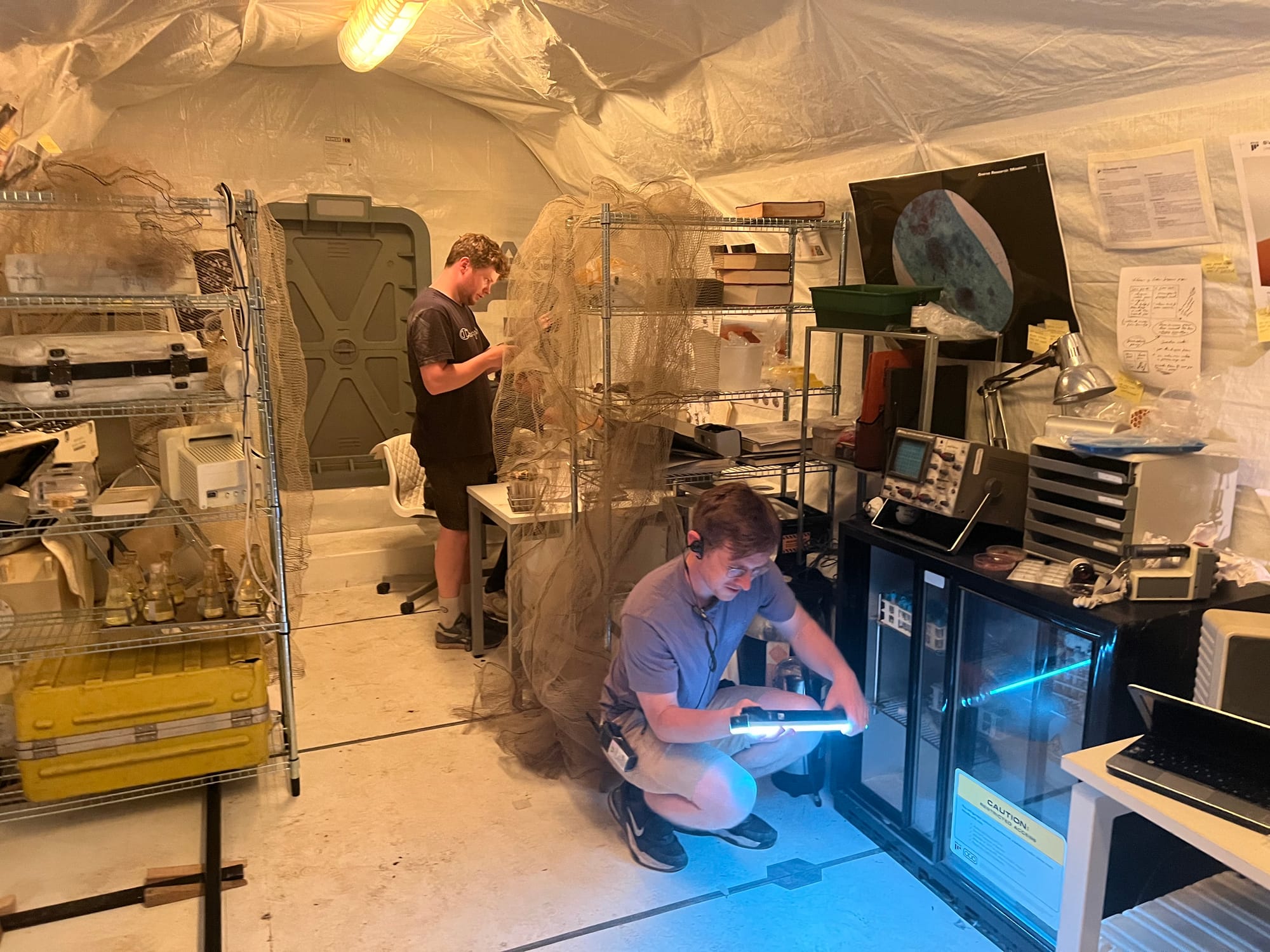
The hardest creative decision was not giving the astronaut any dialogue. I wanted the audience to experience the planet through his body, memories and senses rather than through explanation, but I worried that withholding his voice might create too much emotional distance.
It required us to trust performance, cinematography and sound to express what he could not say. At the same time, his silence gives the audience more space to listen closely to the environment and sense how the planet is responding to him. The recordings of his mother become the only human voice he can hold onto, reinforcing the idea that he is attached to a projection of her. Ultimately, the absence of dialogue allowed the planet to communicate with him more directly than another person could.
What tool, technique, or mindset shift helped most during production?
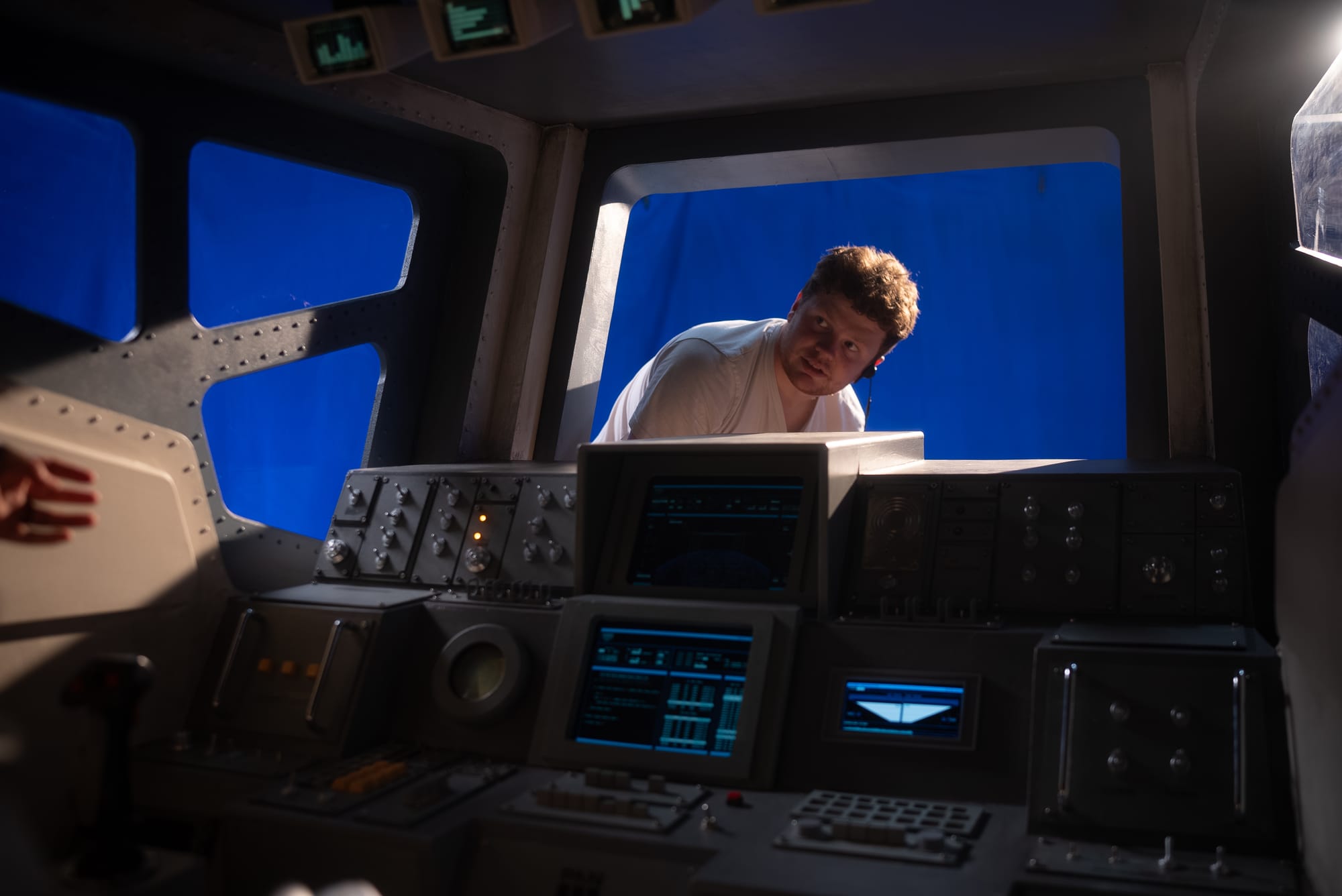
The most helpful resource was the visual preparation I developed with our production designer, Will Mansell, who is a brilliant collaborator. Together, we assembled nearly twenty large sheets of reference images. I laid them across the floor of a room at NFTS and walked each Head of Department, as well as anyone encountering the project for the first time, through them in sequence, almost as if we were moving through the film itself.
That process helped people understand not only how the world should look, but how it should feel. It allowed us to clear up assumptions early and make sure every department was imagining the same film. I found that especially important in science fiction, where each person can easily bring a different idea of the world unless a shared visual language is established from the beginning.
What does it mean to have your film selected for HollyShorts?
Being selected for HollyShorts means a great deal because Oneiros has sometimes struggled to find its home. It sits between science fiction, psychological drama and experimental cinema, and does not fit neatly into traditional boxes. This recognition reassures me that there is space for films that are ambiguous and driven by unspoken emotion and atmosphere rather than conventional spectacle.
It also gives the film the opportunity to meet an international audience in Los Angeles. I am proud that the risks taken by the whole team will be experienced on this stage, and I look forward to discovering how audiences from different backgrounds connect with the film in their own ways.
How has this film shaped the kinds of stories you want to tell next?
Oneiros confirmed that I want to use speculative worlds to explore intimate emotional relationships rather than technology for its own sake. It showed me that science fiction can create distance from reality while also allowing us to approach grief, attachment and desire more directly.
My debut feature, currently in development, continues that direction through a near-future world where emotional labour can be outsourced to AI replicas. Compared with Oneiros, I want to bring the speculative idea closer to everyday life and connect it more explicitly to questions of care, parenthood, and what makes us human as artificial intelligence becomes increasingly capable of performing humanity. At the core of all my work is a desire to make the unfamiliar feel intimate, and the intimate feel newly strange.
Main Cast & Crew
- The Astronaut — James Krishna Floyd (BIFA-winning, BAFTA Breakthrough actor; No Man's Land, The Swimmers, My Brother The Devil, The Good Karma Hospital; writer-director of Unicorns)
- The Mother — Maryam Davari
- The Alien — @miss_burton_x
- Director — Junbo Qiu
- Producer — Paola Dominique Delfuego
- Writer — @frechty
- Cinematographer — Cal Ola
- Production Designer — Will Mansell
- Editor — @bertiewelsh
- Music — Katie Ellwood
- Sound Designer — @anitttttta1225
Filmmaker Opportunities
💛 Fund your next project with fiscal sponsorship
Have a project in the works? As a 501(c)(3) nonprofit, the Cinematography for Actors Institute can accept tax-deductible donations on your film's behalf — a door-opener for grants, foundations, and supporters who want to back your work. We've serviced over 100 projects to date and helped route over $800,000 in funding to filmmakers. Explore fiscal sponsorship →
📬 Grant deadlines and festival opportunities, straight to your inbox
The CFA newsletter rounds up grants, festival calls, and community news for independent filmmakers — the kind of opportunities that are easy to miss and painful to miss. Join the newsletter →
🎬 Focus on the creative — we'll help with the logistics
Production Management, CFA's newest member program, launches this November: production insurance and workers' comp, payroll, film permits, gear rental coordination, SAG-AFTRA compliance, contract drafting, production consulting, and crew recommendations — handled by a team of working filmmakers, à la carte or all in, in partnership with Creative Access Group. It's waitlist-only until launch. Join the waitlist →
League of Filmmakers is published by our parent organization, the Cinematography for Actors Institute — a 501(c)(3) dedicated to education, community, and capital for underrepresented filmmakers and actors. Learn more about CFA →