Table of Contents
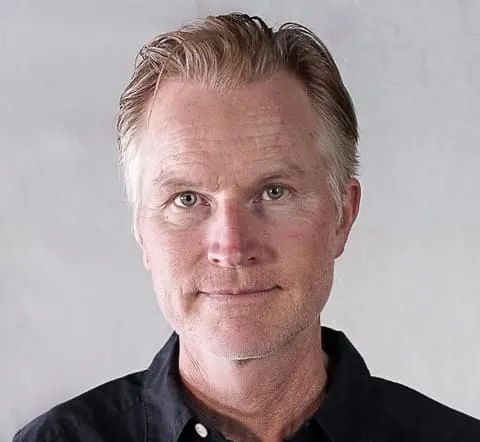
Troy Paff has had nothing short of the American Dream when it comes to his cinematic travels and career. Coming from Cleveland to Los Angeles, Paff sees the way he came to LA as having been with “a wing and a prayer.” Today, Paff is an accomplished, multi-Emmy-winning cinematographer who is motivated to create films instead of videos.
In a generously long interview, Paff opened up to me about his journey as a filmmaker, the projects that built the artist who brought Texas Music Revolution, and other projects like Dirty Jobs to screen. Motivated by passion, Paff’s career has been nothing short of the embodiment of a Led Zeppelin song. But the “girl with love in her eyes and flowers in her hair” is a Super 8 film camera. From the very start of this interview, I wanted to help readers understand who the creator was. How did Troy Paff become the decorated cinematographer he is today?
In an era where we rarely get the time to know one another, I wanted to get to know Troy Paff, so we went back to Cleveland in the late 80s.
“My dad worked in telecommunications and he was trying to get me into the phone industry. And I did that for 6 months. I needed to raise some travel money to move to California.” To his father’s surprise, Paff did raise the money. “Not a whole lot, enough for gas” he says, but he made it to the “over the grapevine… through the layers of yellow grudge” that makes LA notorious for creation.
But then for Paff “it was overstimulation. You know LA is this creative playground… and Cleveland didn’t have that, you know? Cleveland had a cool music scene, but if you weren't a musician there weren't a whole lot of creative outlets.” At that time Paff was 19, he enrolled in Community College in Orange County and then transferred to Long Beach State to pursue a degree in filmmaking. But there was a difference for Paff, between videos and film:
“I was all about, no, I want to be a filmmaker, not a videomaker.” But at the time, film was still rudimentary, the quality of film was nowhere near where it is today and Paff wanted to make things that movies are made out of, but those weren’t videos.
“Now we can look back at it through a different lens of nostalgia and say, it's got a unique look… it has its own sense of soul. But back then it was like, ugh, who would bother shooting video when you can shoot film? I mean, that's what movies are made out of! You go see a movie at the theater, you're not seeing video – you're seeing a film. So the only gateway was Super 8.”
At the time, Paff was new to the creative academic environment. Soon after realizing that Super 8 was the way to go for filmmaking, he learned that he wanted to "step it up a notch" and match the standards of news gathering for broadcast as well as the requirements for advanced-level classes at CSULB, it would mean shooting on 16 millimeter, something that was higher stakes and more costly.Paff openly describes himself as a broke artist during this phase of life. A factor that somewhat complicated things.
“You couldn't afford to do multiple takes with your actors. You didn't have the economic freedom or I guess the privilege of doing a lot of takes. So you had to make it count.”
But in a way, it seems Paff enjoyed those high stakes environments because when he purchased his first video camera, a Canon Hi8, he didn't use it that much. It was not until the transition to High-Def happened and the screen became wider that Paff began to find video truly inspiring. During this time, Paff was working in medical photography at Good Samaritan Hospital.
“It was kind of cool that we had medical representatives that would buy us top level pro gear. I would write my own ticket and say, ‘Well, we need the best video cameras possible.’ But they still weren’t as good as the human eye, not like they are today.”
“And I think this is actually the heart of it. We see things with the human eye, and that is where our technical reality and our artistic potential reside. We see something beautiful– it could be a sunset, it could be a sunrise, a scene with fine radiations of color and tonality. And then you think, Oh, my God, I have to capture that. And then out comes the camera, and you try to capture it. And then video totally crushes the image. All of that spectrum that was inspiring to you now has been muddled, and it’s like, well this looks like crap. I would rather just let that image be in my memory.”
But high definition video brought a new love of video for Troy.
Growing up in the 2000s, I fangirled over my love of Dirty Jobs as we moved from the origins of Troy's career to the projects that made him the filmmaker he is today.
Paff was originally not in the blueprint for the Discovery Channel show. After a project, Paff finds himself on a couch with a buddy and a beer. Paff's close friend, Doug Glover–also a CSULB alum and a Director of Photography–was discussing upcoming work and an offer to shoot a new television show that mutual friend Bong Hung had provided clean up footage for on the pilot episodes. Bong was unable to shoot the first official season, and recommended Doug.
"Oh, no, you can't do that. We're filmmakers. We can't shoot TV," Paff protested, and then followed up with, "Well, what is it about?"
"So we were having a beer in his living room, and I said, well, let's put those tapes in, let's see what it is. He puts it in, and, of course, it looks crappy, ... but there's Mike Rowe." Paff continues painting the scene with excitement and transparent skepticism. "So we watched this pilot episode and I said, Doug, man, this guy is great. If you were to go shoot this show and bring the image quality up and the coverage quality up, this could be really good. This is legit."
"This is legit" is also how I felt while religiously watching the show as an eight-year-old on my mom's office floor.
So Doug considers taking the job, and Troy, inspired by the potential of some honest storytelling, offers to help with the show if Doug were to ever need it in the future.
"So wouldn't you know, a couple weeks later, he calls me from San Francisco..." Paff took minimal convincing, just the description of an exciting excursion that involved following the garbage men in Chinatown. He was on the next shoot, and then the one after that, for the next eight years.
When asked about his favorite episode of Dirty Jobs, Paff reminisced on yet another passion he'd had during that phase of life. One that isn't typically tied to filmmaking.
"During that period, I was doing a lot of rock climbing. So, because I was a climber, we eventually started doing a lot of height-related stuff where I could be the safety guy. So I think my favorite Dirty Jobs shoots had to do with heights in hindsight. Those were the most exhilarating for me because I got to mix preparation and the gear. And then it was such an alien world for the rest of the crew, we would find ourselves in over our heads. And that sometimes makes the best TV. So, you know the window washer episode in Honolulu, that was kind of an exercise in humility because I got my hair caught in a pulley. That's not why I liked it. I liked it because we were working with window washers that were really awesome people. I could imagine an alternative universe and career through them. Like I could totally get into window washing.
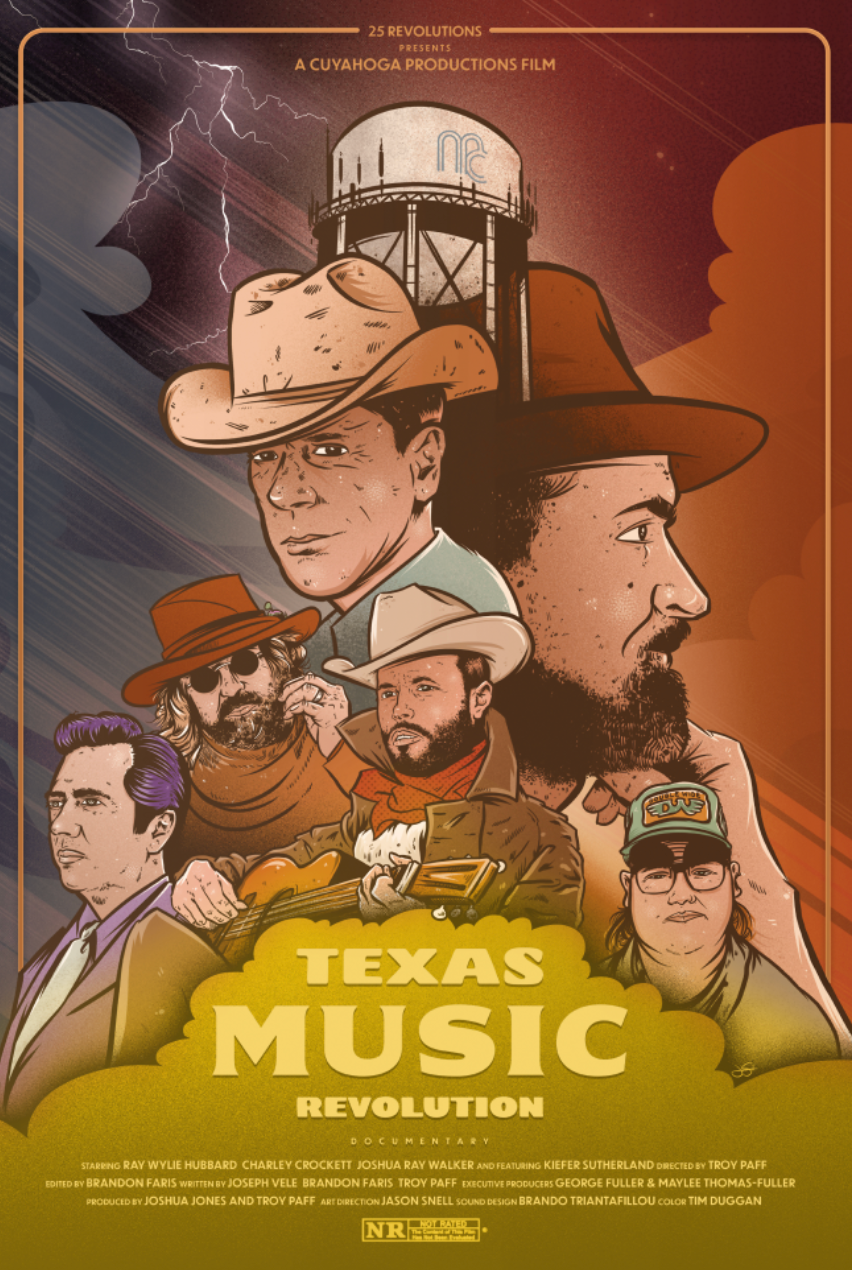
His commitment to art and honest film creation pushed Paff into his most recently released project, Texas Music Revolution. The film follows festival founder Joshua Jones and KHYI as the radio station puts on the 25th anniversary Americana music festival, Texas Music Revolution. The film focuses on the irreplaceable Texas culture that is rooted in Outlaw country and often missed on the Top 100 Billboard Country Charts. Joshua and Troy had been acquaintances after meeting in Taos, a few years back. At this open mic night, Josh and Troy hit it off and began discussing their overlapping interests.
"I worked in TV and film. Josh worked in radio. And over the next few years, we kicked around the idea of one day doing a music film together, like a cool music documentary." Paff was inspired by the Wilco Documentary, I am Trying to Break Your Heart, which covered a lightning-in-a-bottle period of time following the Chicago-based rock band. But uniquely, the Wilco documentary was filmed by one man with one camera who had unlimited access to hang out with the musicians. Paff admired the intimacy of the shoot, wanting to replicate this type of total access.
"He wasn't this imposing presence. He didn't have a crew of people using up all the air in the room. It was really intimate and that allowed storytelling to take center stage. So I had used that example with Josh. One day, I would like to make a film like I Am Trying to Break Your Heart. It gives me and a camera uncommon access to a moment in time. And then [we] see where we go."
KHYI, like millions of other entertainment businesses, suffered immensely during COVID.
"They had lost all their ad revenue, they had laid off half of their staff, they were at death's door, they were about to close. Meanwhile, Texas Music Revolution, the festival, had barely gotten its 24th anniversary done during COVID, the year before. And the question was– if we're going out of business– should we even bother with the 25th anniversary of the festival? Or should we go ahead and do the festival knowing that that might be our swan song?"
In what seemed like the darkest hour, Paff got a call from Josh, who, honest about the stakes, finally pitched making that movie that he and Troy had been throwing around for years. Troy called Josh back the next day with a few conditions in order to move forward with the project, one being total unlimited access to Josh, his life, his perils and his passions.
"I don't want to tell the story of the radio station, per se. I see those as being like subplots or themes. For this movie to work, it's got to be about a hero." Paff knew that hero had to be Josh.
"If you're willing to let me tell your story through your point of view, then you will have an audience that will be ready to relate to you, and they will be rooting for you, and they will have a sense of stakes in the game where you have the greatest stakes."
After conversations between Josh and his wife about the trust between Paff and KHYI, Josh and his wife allowed Troy into their lives to document this journey. A week later, Paff was driving to Dallas so he could shoot a project they didn't yet have financial support for.
"The way we did it was kind of backwards, but I knew it was possible because you're leveraging intention and opportunity." With the project shot, Paff was able to pitch a fascinating story with a great hero and this interesting subculture. That interesting subculture is the ages-old history of the prominent Texas Culture in country music.
"It's about Texas music. We've got amazing artists Charley Crockett and Ray Wylie Hubbard. We've got Tony Villanueva's story."
But something was missing for Paff, even with the great story of music survival and cultural preservation.
"As a documentarian, I love the work of Frederick Wiseman and other classical documentarians who are patient and willing to put themselves into a fly on the wall position and allow the story to come to them. However, with Dirty Jobs, we embraced the notion of being immersive. So instead of being a fly on the wall all the time, we also knew that it would be valuable to share in the experience of Mike and our subjects. So that's when we embraced the notion of running around, getting the camera moving, not being afraid to get the camera dirty. So in TMR (Texas Music Revolution), by the time we were shooting the actual music festival, in the back of my mind I'm thinking, like, okay, I've got all of this nice, conventional footage. We have a pretty good movie in the can, but what I really need is some adrenaline. "
And then came the rain. Even though an impending lightning storm caused some issues for the camera crew, it invigorated Paff.
"I could feel the excitement. I'm like, I can't wait. My crew, at this point– I had hired a small crew to help me cover the festival– when the weather was increasingly getting worse, they were getting nervous."
Paff watched his crew get out the plastic camera covers and find a spot to wait out the rain, but he was ready to take this opportunity head-on. Troy led the crew out of their forced rain dance, telling them to get b-roll and do whatever they can to get coverage for the story. Troy was off.
"So I got my own umbrella. I carried an umbrella in one hand and the camera in the other. And I tell the sound man to make sure he's getting a feed. That if he's not getting audio through Josh’s wireless mic, he needs to let me know over our walkies. And I ran off into the rain.”
"So, I never heard from him. The whole time I’m shooting, I'm wondering, did he lose touch with me? Like I hope we're getting audio, because I followed Josh alone for the next hour, hour and a half in the bad weather. For me, it was like, finally, this is exactly what I wanted. This is exactly what the film needs. And the more miserable Josh becomes, the better."
The mindset behind Dirty Jobs, being willing to get the camera dirty while staying true to documentary intentions, never really left Paff's process; it simply carried over into Texas Music Revolution.
In the end, after two years of fundraising and editing followed by a film festival run, the film was picked up and distributed by Monkey Wrench Films. It began its theatrical release in April of 2026 as a prelude to the film's release on streaming services on June 5. As expected, the film premiered in Texas before heading to California.
From the beginning, this project was more than just a story of music; it was a story of Texas pride, cultural rebellion, and resilience. This is highlighted with the usage of the famous Davey Crockett quote, "You may all go to hell, and I will go to Texas." In a way, it seems the Lone Star attitude, the aggressive search for creation that can be mistaken for rebellion, is a similar drive that pushes Paff to make his films.
According to Paff, "You may all go to hell, and I'll go to Texas" does in fact accurately sum up a lot of his love for Texas culture; it's more than just an iconic Davy Crockett quote.
"I familiarized myself with literature and historical quotes that express what I was experiencing in my time in Texas. So you had resilience, you had a rebellious attitude– I came across that quote, and it says so much in so few words, and then I realized that Charley Crockett is a direct descendant of Davy Crockett, so I'm like, Oh my god. It kind of decided itself. It's no longer even a debate. This is like, perfect."
The inherent love for rock music continues to pull Paff as he moves into his next project, which has already generated buzz from Rolling Stone. When asked about his next projects, Troy's follow-up question was, "Do you know what a Nudie suit is?"
Paff's next project might be his most adventurous yet, as he tracks down a famous stolen Nudie suit. In a story that features travel, drama, mystery, and family, The Suit has nearly everything, well, besides a particular Rocket Man. But rest assured, Troy is working on that!
Today, Paff is in Taos, New Mexico, working with his production company, Cuyahoga Productions. They specialize in "nonfiction narrative image making for film, television, and web" projects. But even as the projects and places change, his work stays true to the ideas that originally brought him to Hollywood: making films, not videos. He has stayed true to his artistic vision, even though the blueprint was nothing more than a wing and a prayer.