Table of Contents
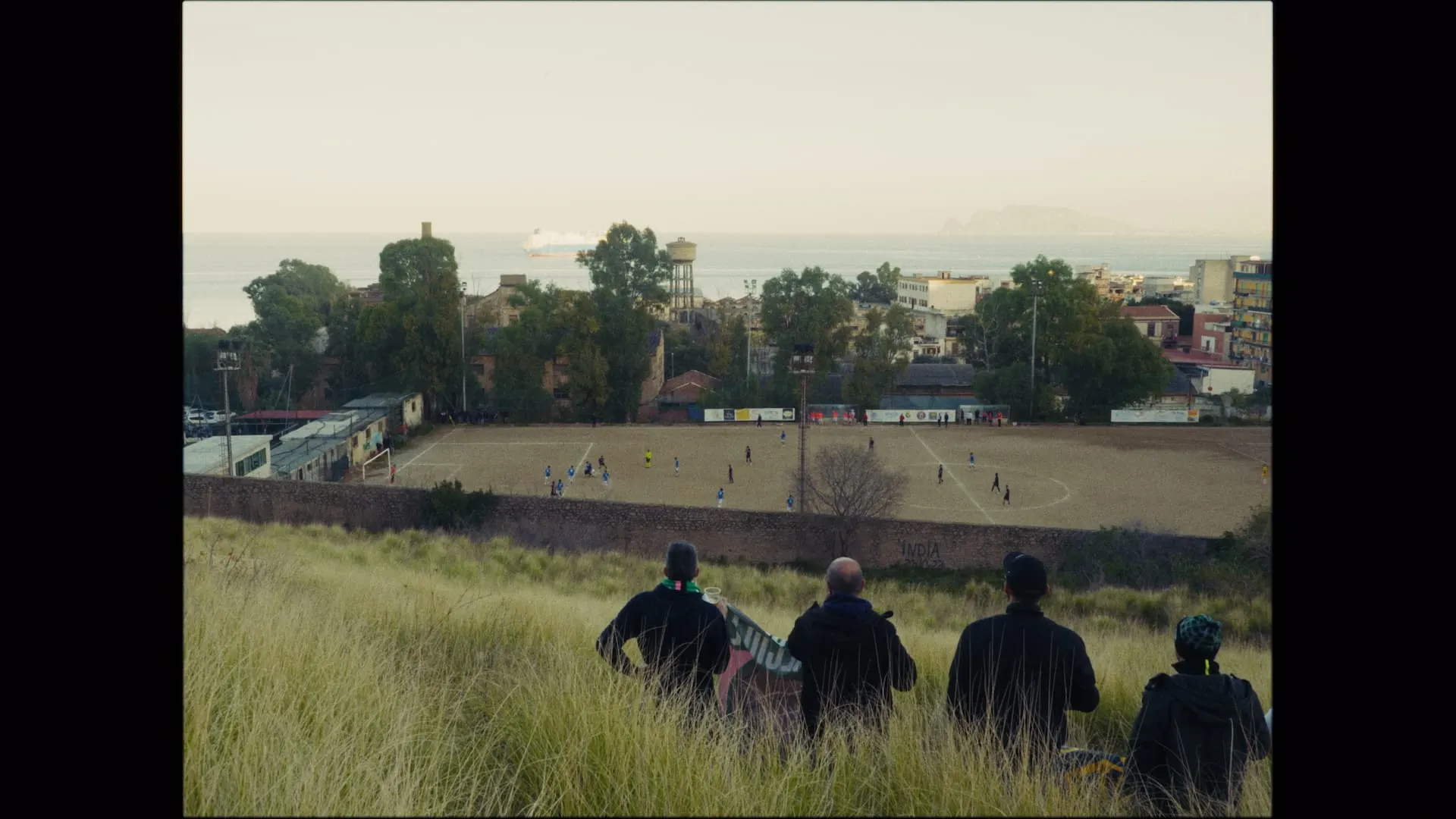
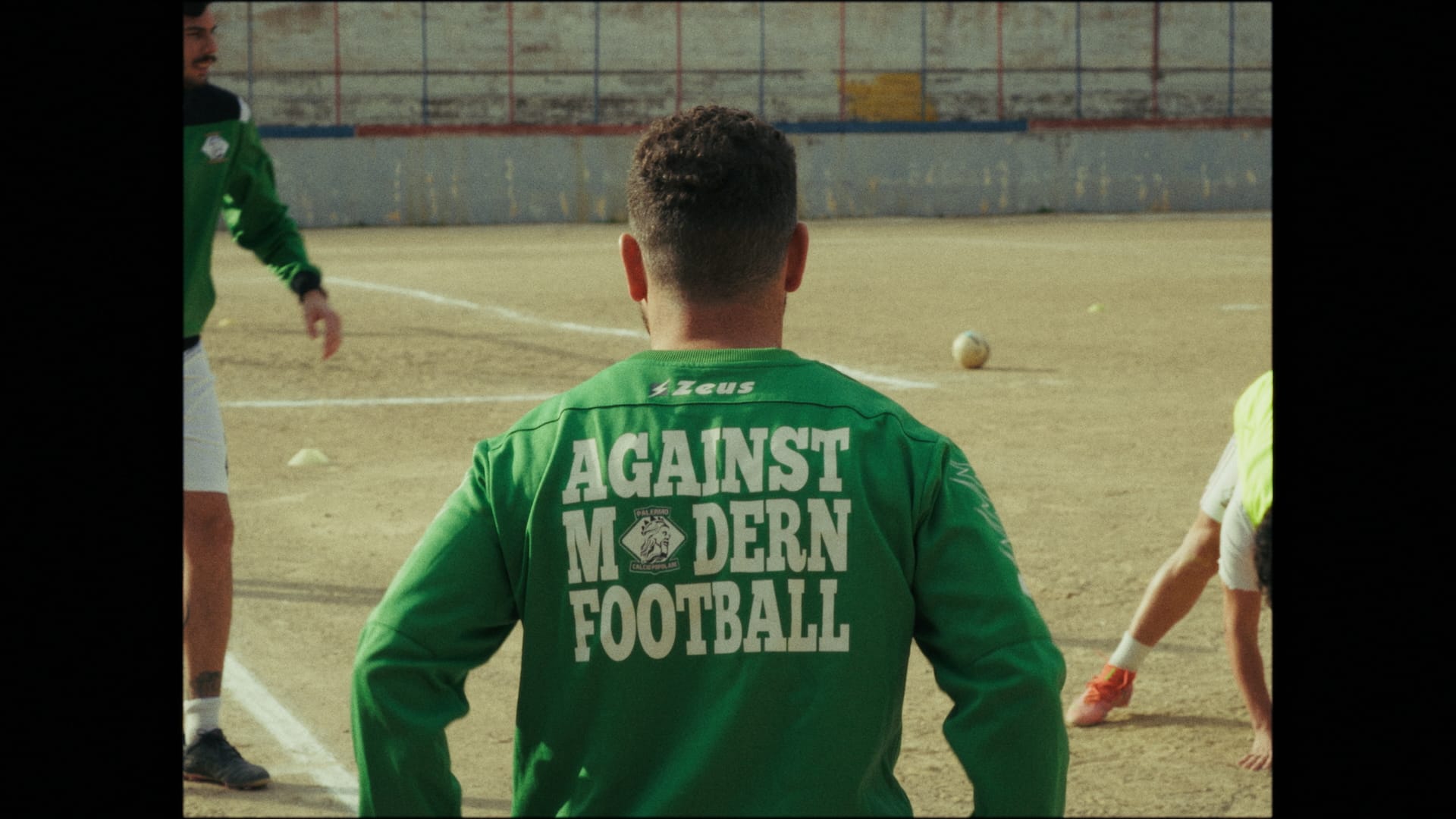
In the outskirts of Palermo, a group of disillusioned fans founded Palermo Calcio Popolare in 2016 with a phrase printed on their jerseys: Against Modern Football. Giuseppe Lanno's La realtà è peggio (Reality is worse) is a solo-shot dive into that world — no owners, no corporate sponsors, only community ownership and volunteer work — where the daily lives of members, players, and volunteers intertwine through sacrifice, dreams, and stubborn resistance.
Returning once again to his hometown, Lanno witnesses a sporting model that quietly becomes political, and by political he means social. The team eventually loses its historic home ground, the city offers no alternative, and still the People's continues in the depths of the lower leagues. Reality is worse asks whether this utopia can grow without betraying its principles, or whether it will be overwhelmed by the reality of its title.
Key Takeaways
- A community-owned Palermo football club becomes a form of resistance against the commercialized modern game.
- Lanno shot the 88-minute documentary entirely solo, letting limited means shape both his access and his growth.
- The film prizes "show, don't tell," trading the safety of interviews for built narrative moments and poetic freedom.
Below, Lanno talks about hometown loyalty, the discipline of refusing interviews, and why a camera in hand is its own kind of independence.
Interview
What drew you to make this film, and why this story, why now?
As a filmmaker, I return once again to my hometown, this time to be a witness to a sporting model that transforms into something profoundly political. And by political, I mean social. I'm always drawn to stories that involve communities in their effort to build something against all the odds. I like that utopia can have a real impact in our society, because I believe we are not only losing public and social spaces, green fields, but also our desire to dream is drastically going down. And that's what Palermo Calcio Popolare does, in my opinion — it's the dream of a few that has an impact on many. Given the recent World Cup, it has become clear that the dominant model is totally uprooting fans to make space for payers, for VIPs, for more and bigger sponsors, and so I believe this film becomes relevant because it shows a specific little piece of Earth that becomes a form of resistance.
What surprised you most about the filmmaking process, creatively or logistically?
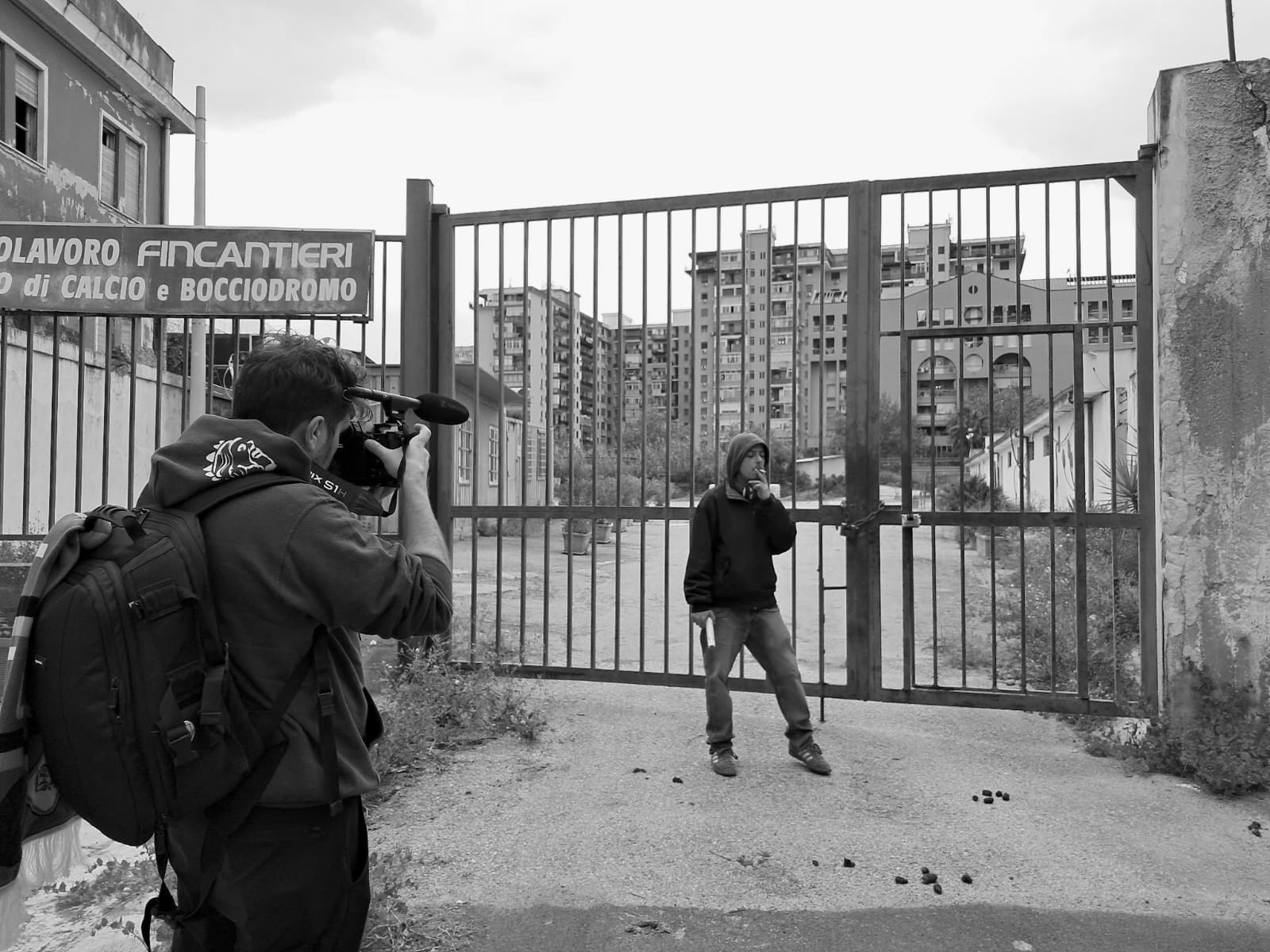
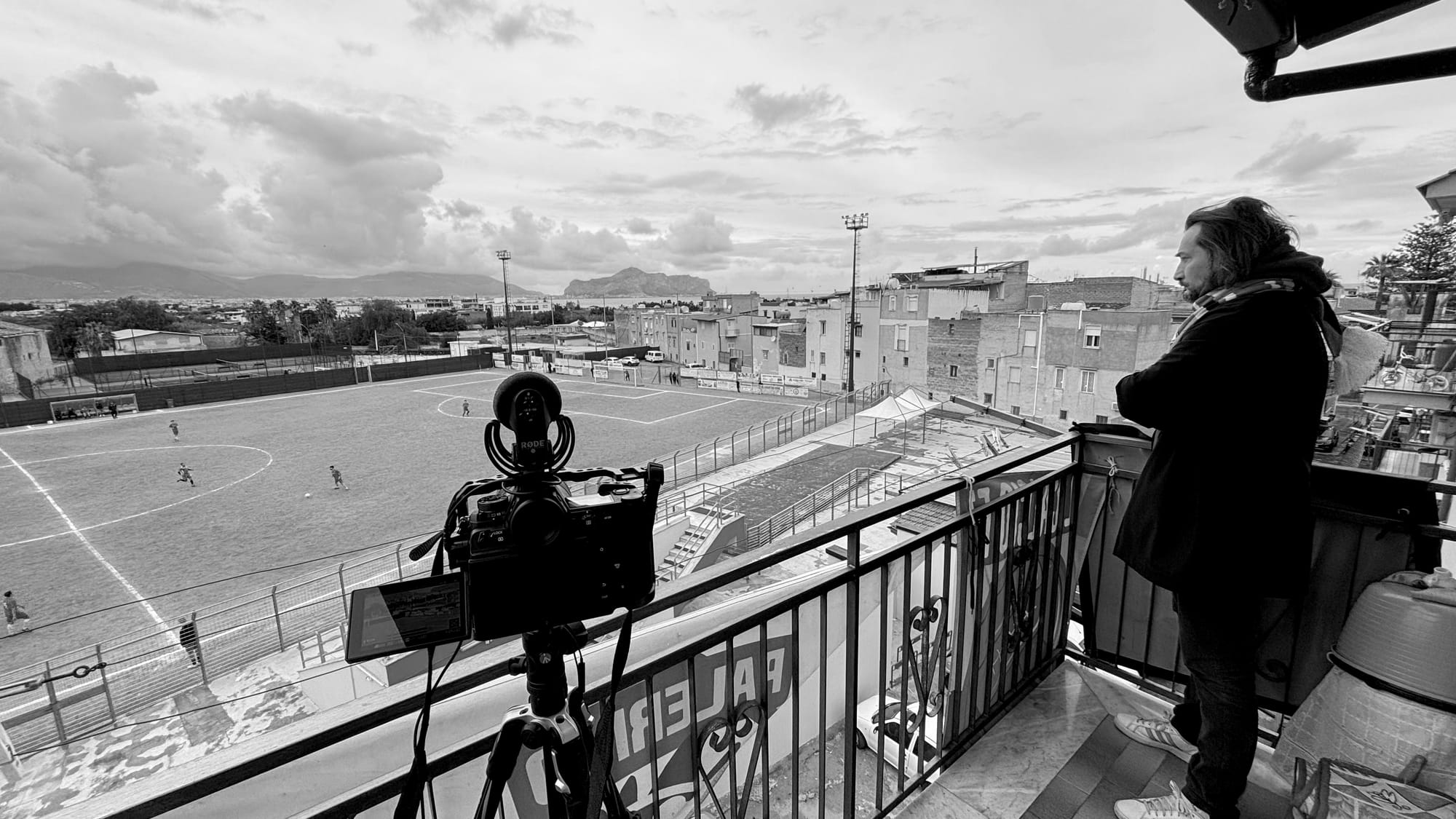
I shot the film solo, and this gives you huge limitations but also a different type of access to the scene, to the people around you. I became part of a group until I blended in, until people felt me not just as a filmmaker following them around but as somebody who shared his time with them. It's different from my previous work, in which I had to deal with just one character, so I particularly enjoyed the choices I had to make with the limited means I had. I think all the stuff I wished I had shot and couldn't made me grow as a filmmaker. It also makes me appreciate what I managed to come up with.
What moment in the film feels most like you, or like something only you could have made?
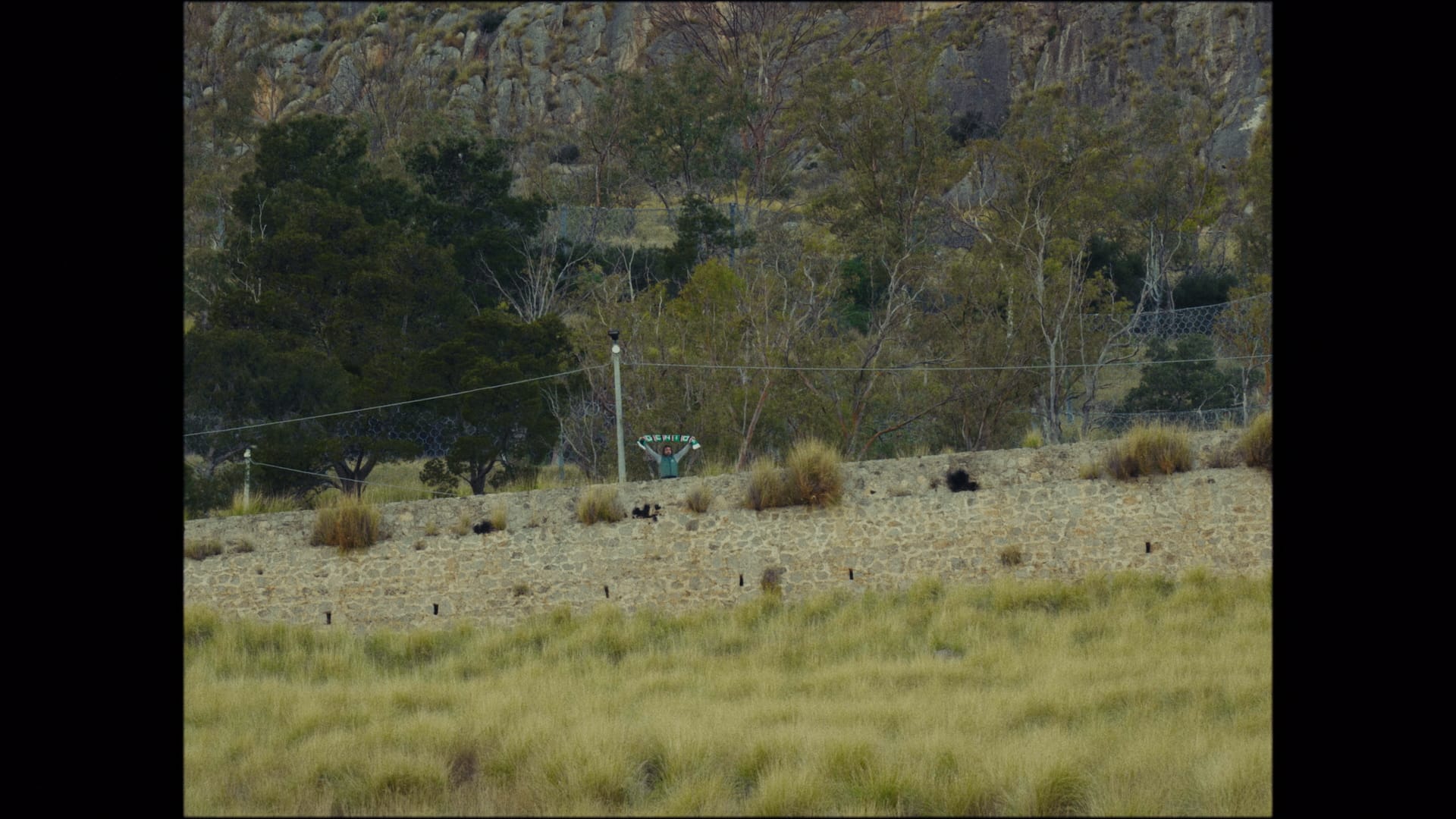
There's a brief moment in the film in which I ask a question to a stranger on the street. In that moment I felt I was doing something worthy of the legendary film director Franco Maresco, an artist from my city who I really love. Once I started interviewing people, I found out one of them was in Franco Maresco's films. It might not mean anything to people, but it matters to me a lot. I had hoped to create a randomly grotesque moment in the film, like one of Maresco's, and it kind of happened. It's so brief in my edit and it doesn't push the story forward, but it feels a lot like me.
What was the hardest creative decision you made while making the film?
At some point I decided not to get any more interviews from any character present. I felt interviews were somehow a way to feel safe, so I chose to wait and build more narrative moments that explained more than they could ever do. Good old "show, don't tell." I was scared I was creating a comfort zone that could endanger my own vision. This can become a documentarian's nightmare.
What do you hope audiences take away from this film?
I like the idea that audiences can remember the power of building communities. I would love for people to see that the outskirts of a problematic city can be a real center of social empowerment. Yet I would also like people to feel the irony I try to convey in my storytelling, the eyes I put on things.
What tool, technique, or mindset shift helped most during production?
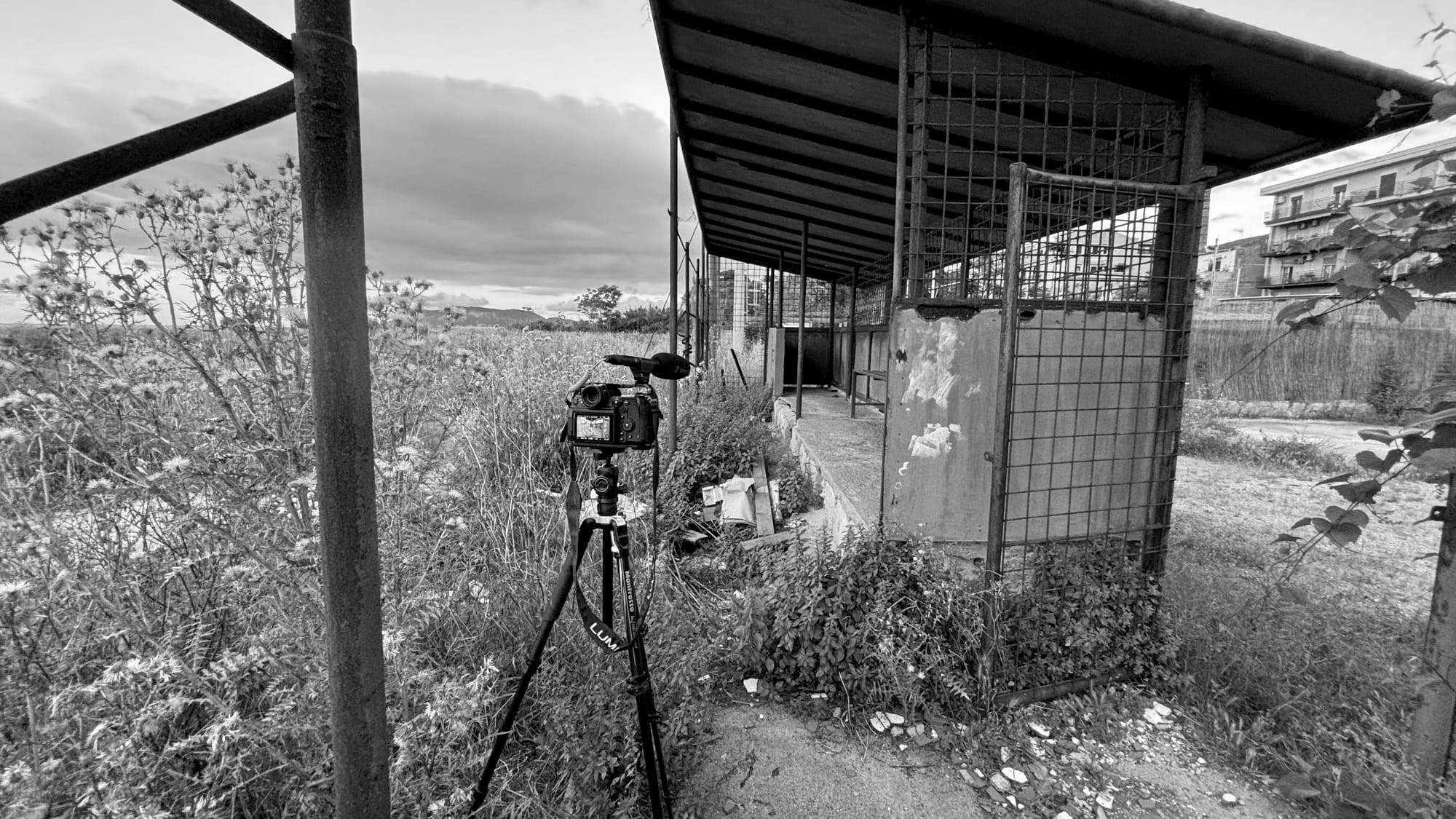
I made the film by myself, so as for tools I tried to be as light as I could. Using a camera — the LUMIX S1H — that gave me a great balance between tech specs, latitude, and organic video quality was an important condition for me. Knowing your camera really well is essential for me, because even though it's true the story matters most and you have to account for all the limitations of shooting solo, I believe there's only so much you can compromise visually. It doesn't matter which brand or model, but in this case my tool is also my only chance to get what I'm seeing.
What does it mean to have your film selected for Not Film Fest?
Not Film Fest is the first place that encouraged me outside my own personal circle of people. It's a place where I felt recognized and welcomed as a filmmaker. I know how Not was born and why Alizè and Giovanni keep doing it — the love they put in is the love they have for sharing with others. So being at Not again is sharing, giving and receiving. It's a great place to be.
Where do you see this film going next?
I'm hoping for more selections into festivals to make a good, nice run, and in the meantime I'm arranging screenings around Europe, maybe the US too, many of them organized by groups of supporters, local teams that share the same idea of opposition against modern football. I hope the film can travel a lot thanks to this support network and the indie cinemas that are accepting my proposal.
Main Cast & Crew
- Giuseppe Lanno — Filmmaker
- Palermo Calcio Popolare (Palermo People's Football) — Cast
Filmmaker Opportunities
💛 Fund your next project with fiscal sponsorship
Have a project in the works? As a 501(c)(3) nonprofit, the Cinematography for Actors Institute can accept tax-deductible donations on your film's behalf — a door-opener for grants, foundations, and supporters who want to back your work. We've serviced over 100 projects to date and helped route over $800,000 in funding to filmmakers. Explore fiscal sponsorship → You can also catch our 3rd annual financing panel at HollyShorts.
📬 Grant deadlines and festival opportunities, straight to your inbox
The CFA newsletter rounds up grants, festival calls, and community news for independent filmmakers — the kind of opportunities that are easy to miss and painful to miss. Join the newsletter →
🎬 Focus on the creative — we'll help with the logistics
Production Management, CFA's newest member program, launches this November: production insurance and workers' comp, payroll, film permits, gear rental coordination, SAG-AFTRA compliance, contract drafting, production consulting, and crew recommendations — handled by a team of working filmmakers, à la carte or all in, in partnership with Creative Access Group. It's waitlist-only until launch. Join the waitlist →
League of Filmmakers is published by our parent organization, the Cinematography for Actors Institute — a 501(c)(3) dedicated to education, community, and capital for underrepresented filmmakers and actors. Learn more about CFA →