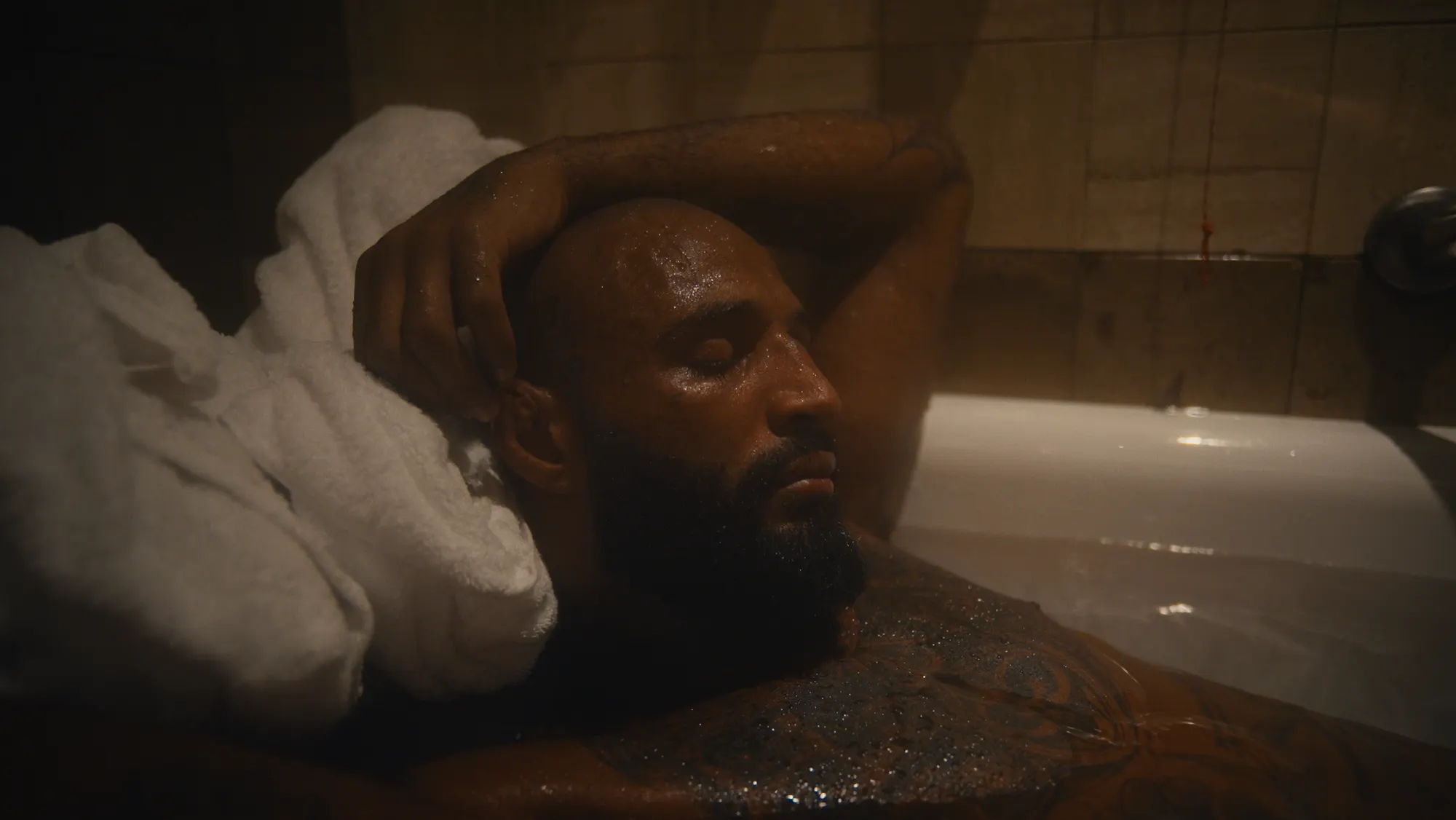
Khadim is a young Italo-Senegalese fighter preparing alone for his upcoming match in a gym in Rome. In Sweet Sweat, Michele Formica trains a still camera on the days leading up to the weight cut, revealing the tenderness and humanity hidden behind the toughness of the body and the discipline. What emerges is less a sports film than a study of contradiction: the meditative focus a person brings to something that requires hurting themselves first.
Selected in the Super Doc Shorts category, the film arrives with the confidence of a filmmaker who trusts stillness. Formica and his team shot everything in two weeks with a small crew, a single lens, and a refusal of the usual cues that tell an audience how to feel.
Key Takeaways
- Sweet Sweat is shot entirely with a static camera and a single 21mm lens — a deliberate rejection of "cinematic" language in favor of simply watching.
- Formica turns the silent, brutal ritual of weight-cutting into the real subject, focusing on what happens before the fight rather than the fight itself.
- The film leans fully into observational documentary, stripping away narration and interviews to let tension live in the waiting.
A conversation with the director follows.
Interview
What drew you to make this film, and why this story, why now?
I was drawn to weight-cutting because it's one of those rituals fighters live with in complete silence, yet it's arguably more brutal than anything in the cage. Nobody talks about it, not because it's a secret, but because it's accepted as the price you pay.
I chose to follow Khadim Dia because of how he talked about it, with a kind of romanticism and care, as if the process itself were a fundamental part of his craft. That's not something I'd heard from other fighters. What interested me most was that discipline, the meditative focus toward something objectively self-destructive. That contradiction is the real subject of the film: how far someone will go, calmly, for a goal that requires hurting themselves first.
What surprised you most about the filmmaking process, creatively or logistically?
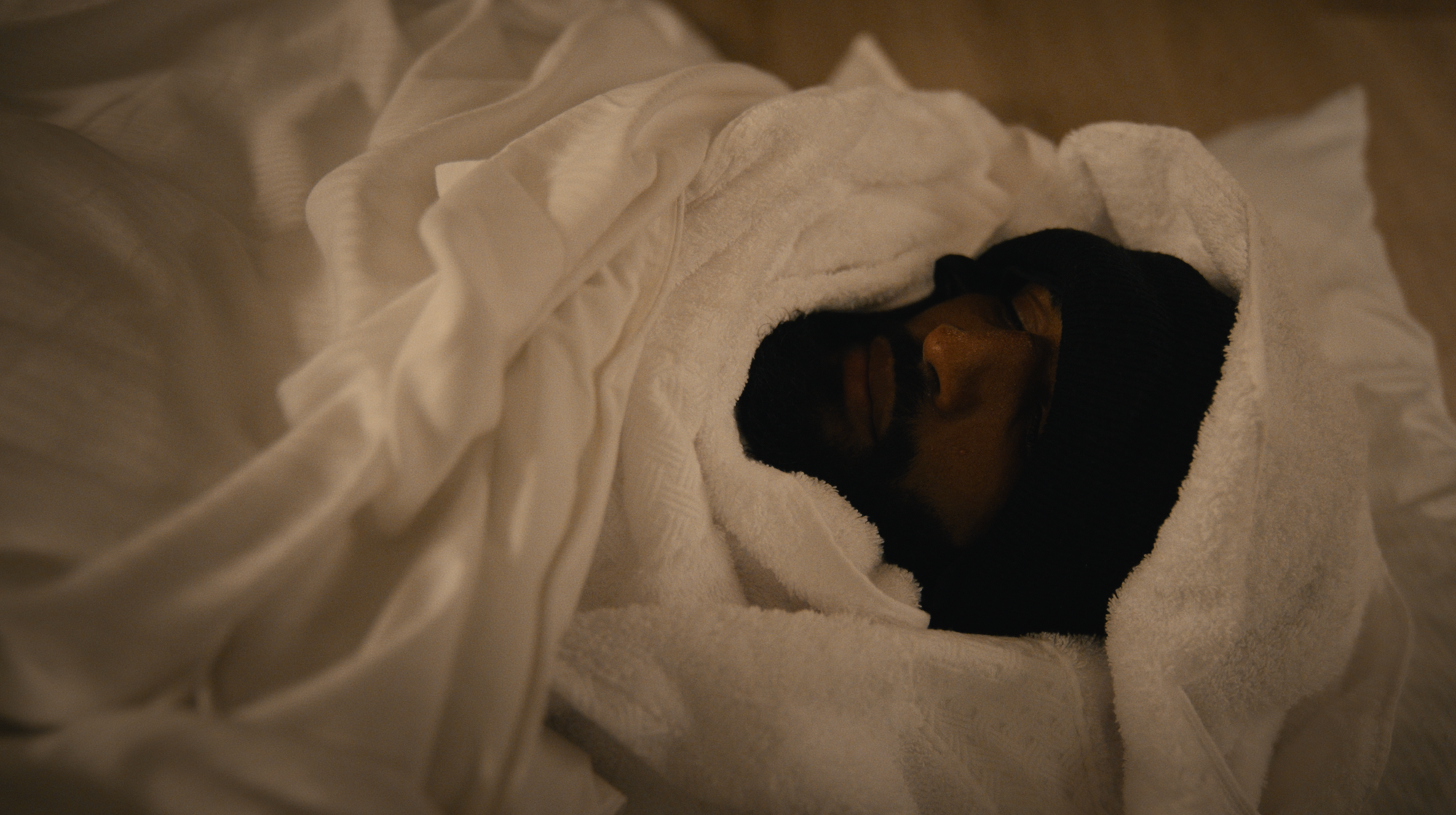
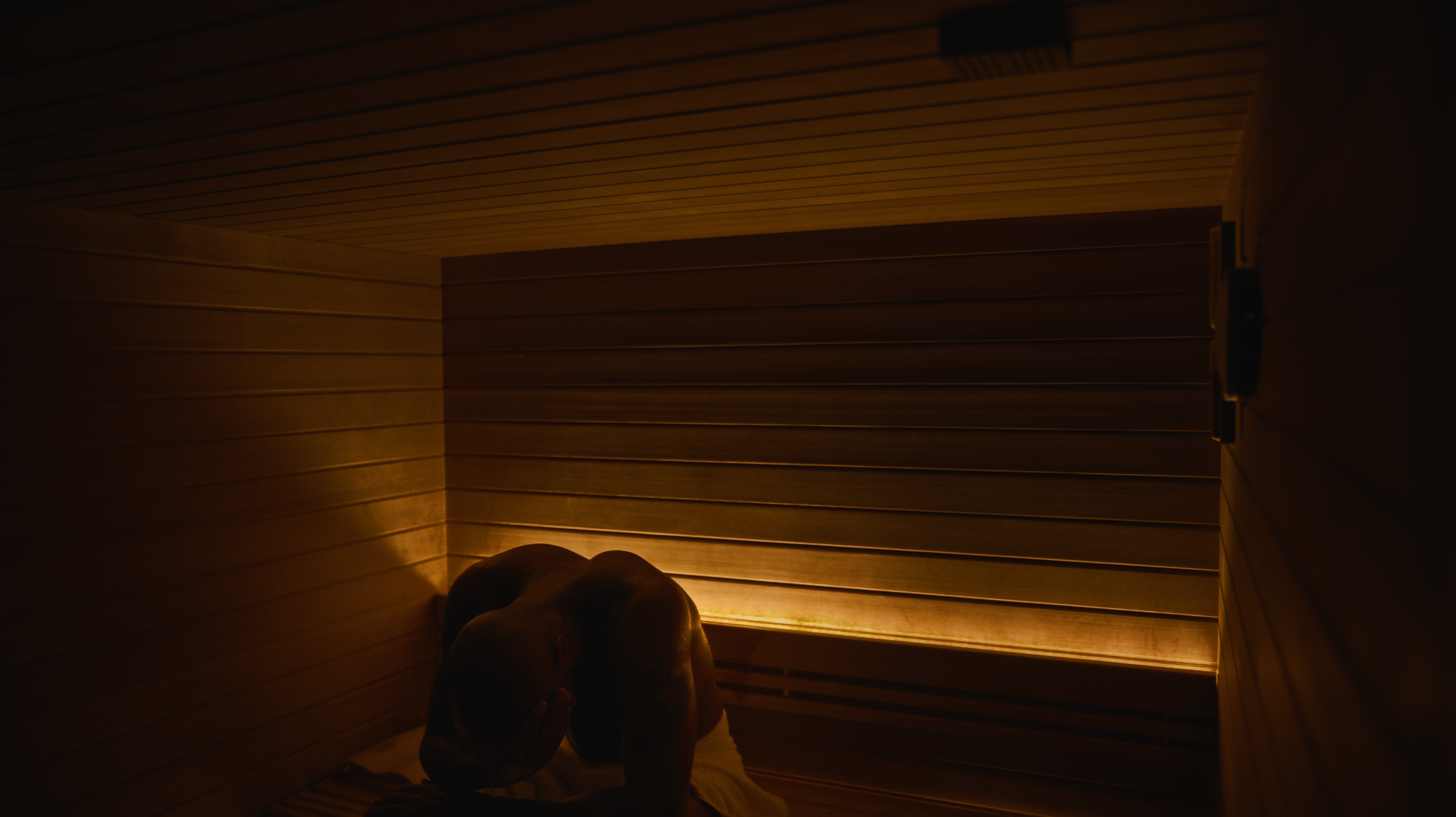
Creatively, I expected to have to build tension in the edit, but on set I realized the waiting itself was the drama: the silences and the passing time. That changed how I cut the film. I let it breathe more than planned, because the tension lived in the stillness.
Logistically, access was the hardest part. Weight-cutting happens in private, chaotic spaces, and you can't schedule emotion. Moments we expected to be pivotal fell flat; others we almost skipped became the heart of the film.
What moment in the film feels most like you, or like something only you could have made?
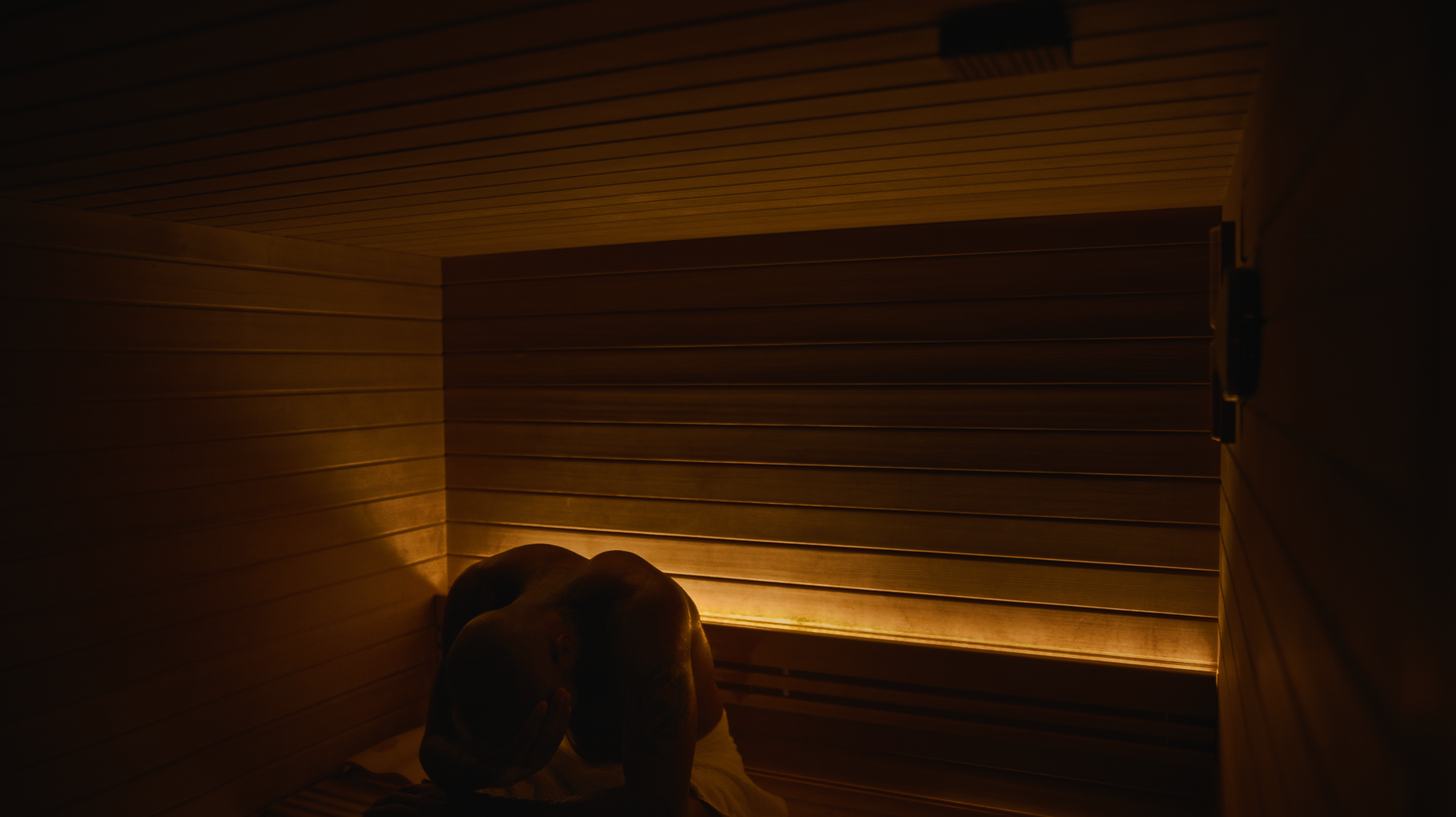
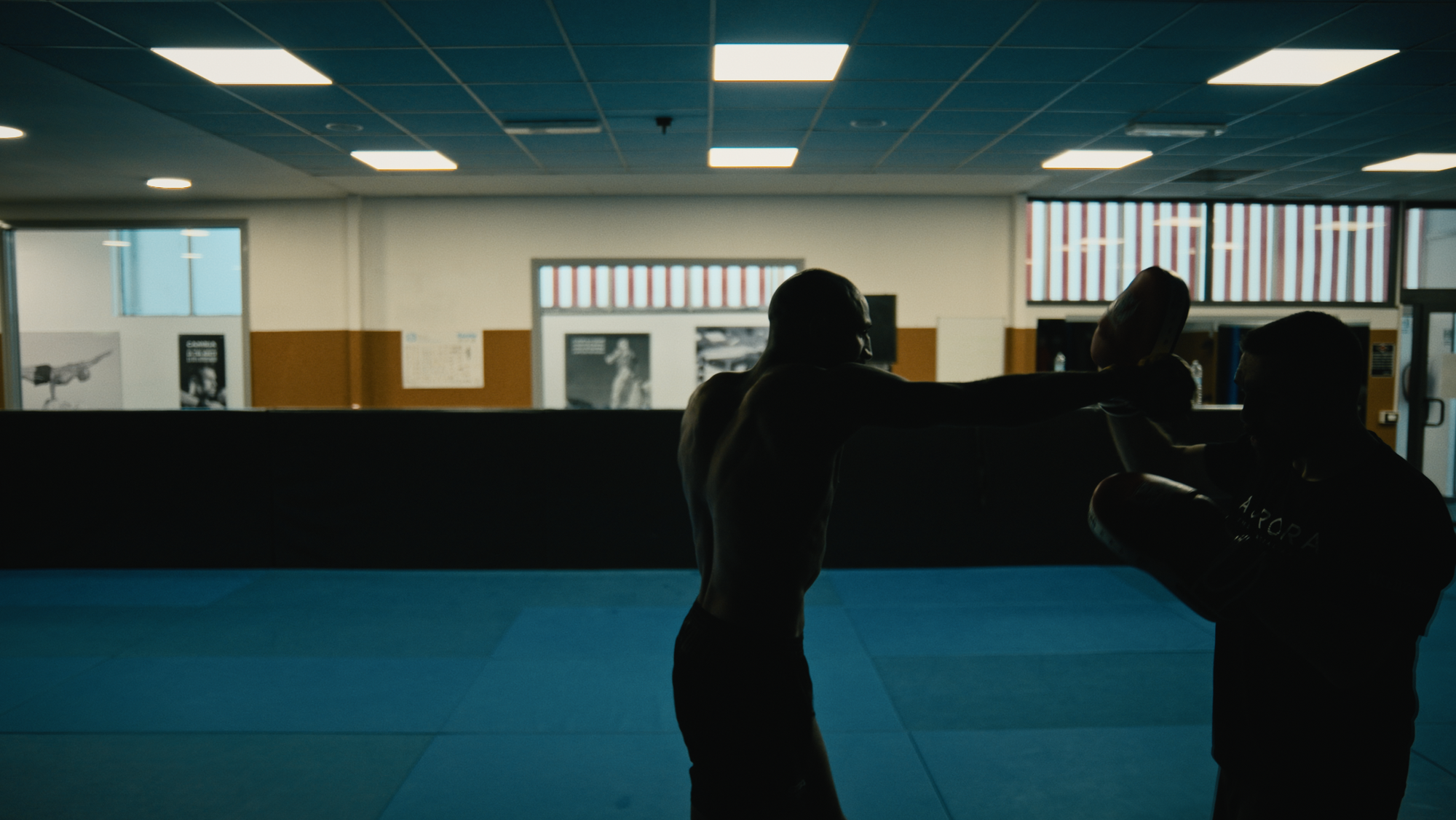
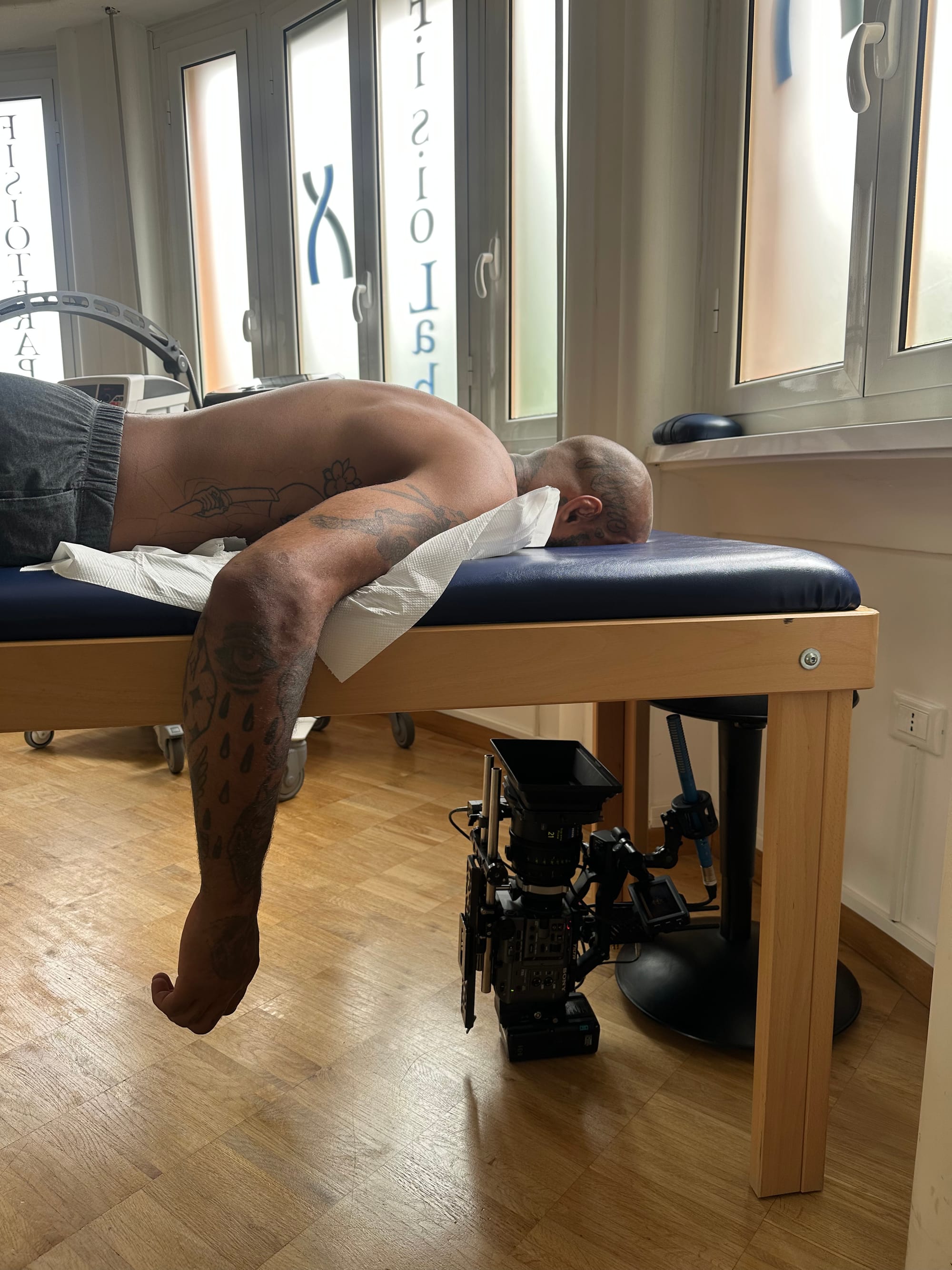
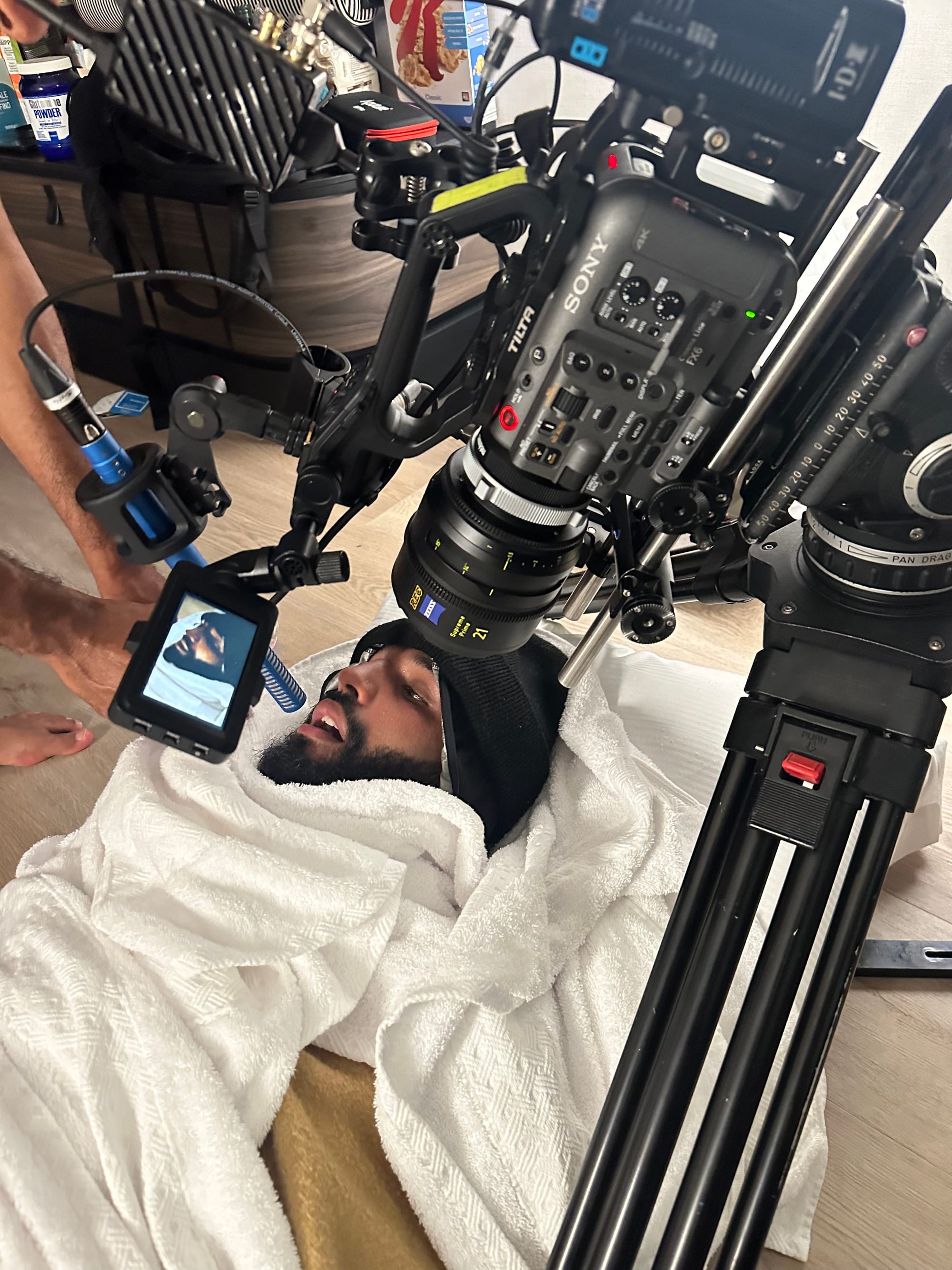
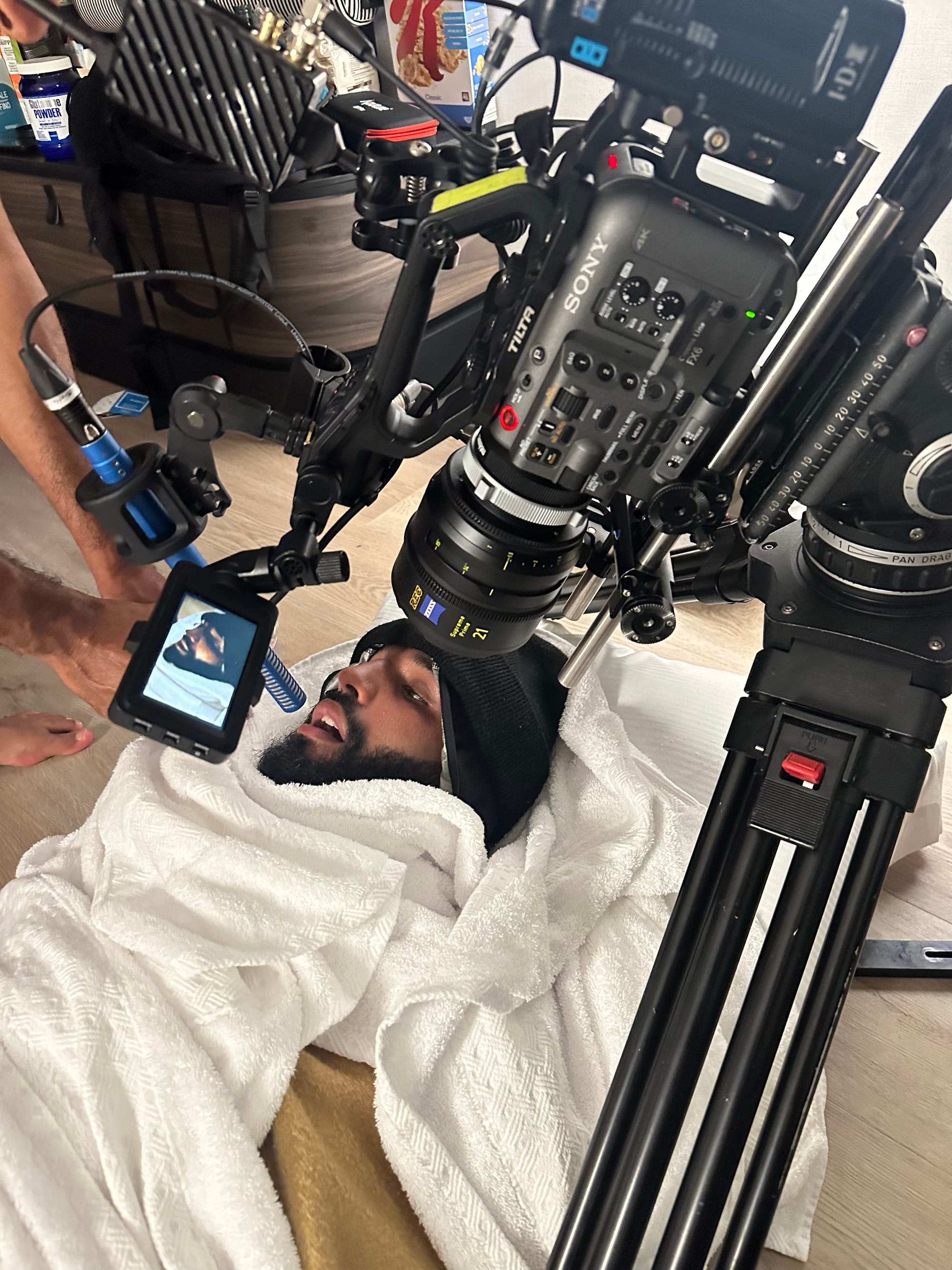
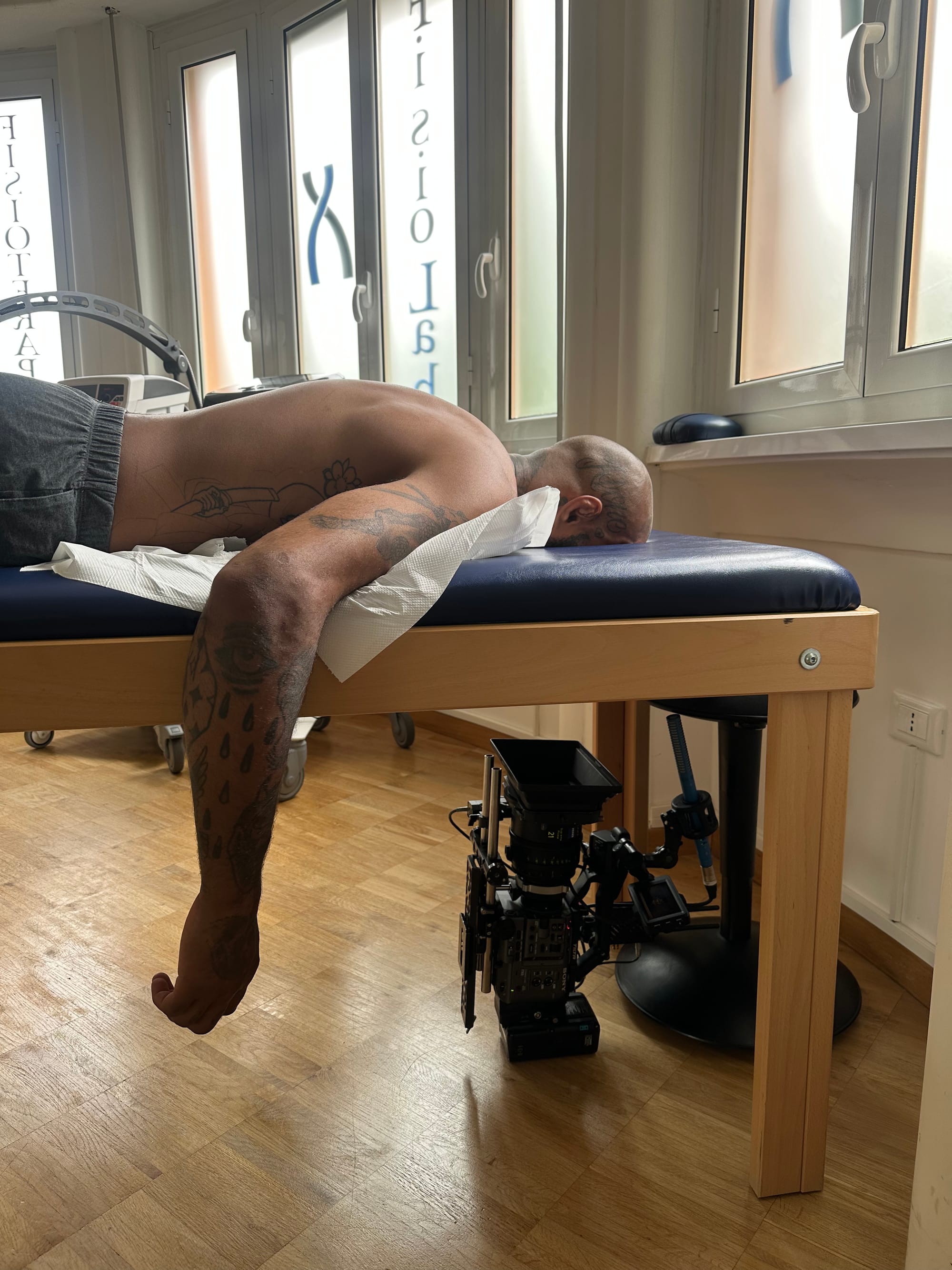
The moment that feels most like me isn't really one scene, it's a choice I made with the DOP, Claudio Cascavilla, before we even started shooting: everything is filmed with a static camera, no camera movement, and a single lens, a 21mm. I didn't want the camera to comment on anything, no push-in for tension, no handheld for chaos, no lens change to signal a shift in tone. The 21mm gave me a fixed distance to the subject, close enough to feel the room but wide enough to never intrude. It forces the story to happen inside the frame, not through the frame.
That restriction is probably the closest thing I have to a signature, trusting that if you just hold still and watch, the moment will do the work, instead of the camera doing it for you. It's a very deliberate refusal of "cinematic" language, in favor of just looking.
What was the hardest creative decision you made while making the film?
The editing was definitely the hardest part. It forced us to really think about what to cut and what to keep. We shot everything in two weeks and ended up with an insane amount of footage. Figuring out what to sacrifice and what to hold onto was by far the toughest part of the whole process.
Working with the editor Oliviero Gullotta was probably the biggest factor. He helped me see it with some distance, figuring out what to cut and what to protect, especially in the moments where I was too close to the material to judge it clearly. He pushed me to trust the silences even more than I originally planned, which ended up shaping the whole tone of the film.
What do you hope audiences take away from this film?
I hope people leave with more questions than answers, honestly. I'm not trying to make a statement about whether weight-cutting is right or wrong. I want people to sit with the contradiction of it.
I hope it makes people think differently about what discipline actually costs, not just in fighting, but in general. We tend to admire people who push through pain silently, and I wanted the film to ask: at what point does that stop being admirable and start being something else?
How does your film fit within, or push the boundaries of, its genre or form?
Sweet Sweat sits inside the observational documentary tradition, but I think it pushes against how that form is usually applied to sports docs. Most sports documentaries lean on narration or interviews to tell you how to feel about the struggle. I wanted to strip all of that away and trust that watching, without commentary, could be just as powerful.
The genre also tends to focus on the event itself, the fight, the competition. I was more interested in what happens before it, in the private, unglamorous ritual that nobody usually points a camera at. In that sense, it's less a sports film and more a film about the body and discipline, using sport as the entry point.
What does it mean to have your film selected for Not Film Fest, and where do you see it going next?
It's an honor, genuinely. Not Film Fest is dedicated to independent cinema, and being selected in the Super Doc Shorts category means a lot to me. Some of the best independent short films of the last few years have gone through this festival, so being part of it with a documentary like Sweet Sweat feels like real recognition.
I hope it keeps traveling through independent and documentary festivals. For me, that's the most beautiful part of this work and of distributing a short film, the festivals themselves, the chance to connect with new, young professionals, and to actually experience the festival, exchanging with other participants and audiences.
Main Cast & Crew
- Production: Goofy Studio
- Director: Michele Formica
- Producer: Carolina Corsato
- Cinematography: Claudio Cascavilla
- Editing: Oliviero Gullotta
- Colorist: Marco Valerio Caminiti
- Original Soundtrack: Marco Farina
- Sound Editing: Andrea Basili
- Mix Audio: @bnc
- Graphics: Davide Rossi Doria
Filmmaker Opportunities
💛 Fund your next project with fiscal sponsorship
Have a project in the works? As a 501(c)(3) nonprofit, the Cinematography for Actors Institute can accept tax-deductible donations on your film's behalf — a door-opener for grants, foundations, and supporters who want to back your work. We've serviced over 100 projects to date and helped route over $800,000 in funding to filmmakers. Explore fiscal sponsorship →
📬 Grant deadlines and festival opportunities, straight to your inbox
The CFA newsletter rounds up grants, festival calls, and community news for independent filmmakers — the kind of opportunities that are easy to miss and painful to miss. Join the newsletter →
🎬 Focus on the creative — we'll help with the logistics
Production Management, CFA's newest member program, launches this November: production insurance and workers' comp, payroll, film permits, gear rental coordination, SAG-AFTRA compliance, contract drafting, production consulting, and crew recommendations — handled by a team of working filmmakers, à la carte or all in, in partnership with Creative Access Group. It's waitlist-only until launch. Join the waitlist →
League of Filmmakers is published by our parent organization, the Cinematography for Actors Institute — a 501(c)(3) dedicated to education, community, and capital for underrepresented filmmakers and actors. Learn more about CFA →