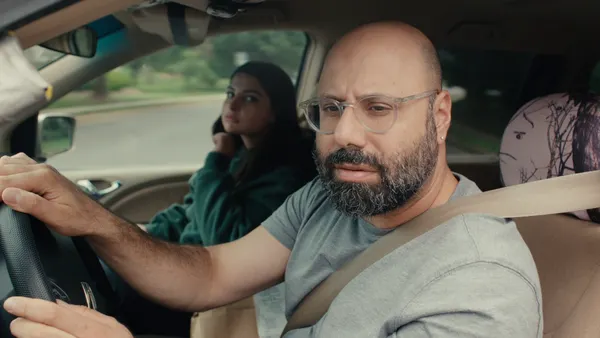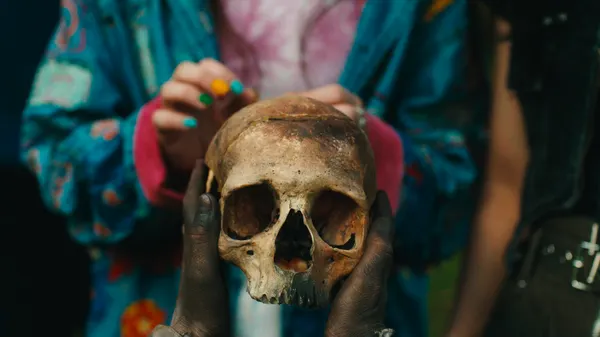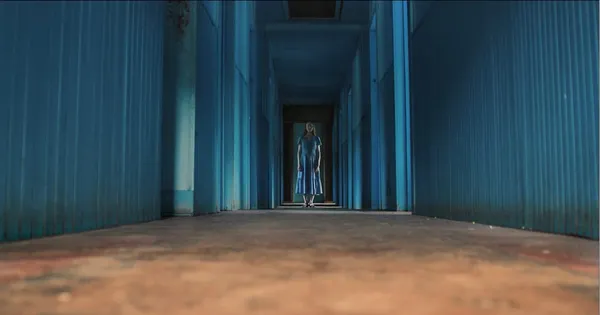
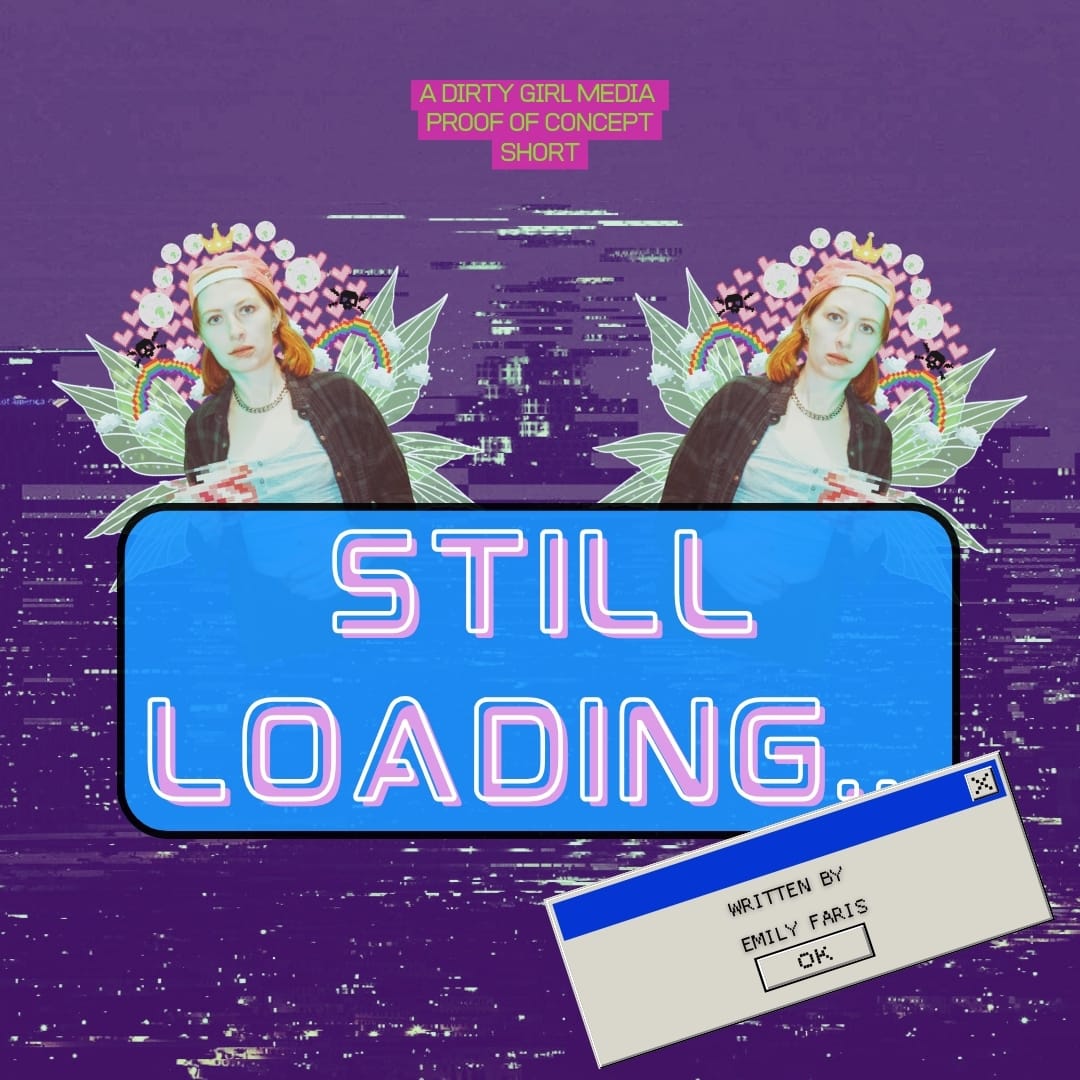
Emily Faris arrives at FilmQuest with a script rather than a finished film, and that distinction matters less than you'd think. Still Loading already has a shape, a voice, and a protagonist who sounds uncomfortably familiar: EM, a 35-year-old woman-child who walks into the office of an experimental psychologist, DR. HARMONIA, and finds herself thrust into a revolutionary methodology — literally gaming her way through her own subconscious to confront her childhood trauma at the Boss Level. Whether EM slays her demons or the demons slay her is the question the script holds open.
Faris is the writer, and she plans to direct both the produced short and the feature version that follows. The material comes from somewhere specific: she lost her mother to breast cancer as a little girl, and Still Loading draws on what it has been like to navigate adulthood in that shadow. She has carried the story for nearly a decade in various forms. This one, she says, is the one.
Key Takeaways
- Still Loading is an unproduced short script competing at FilmQuest, with Faris attached to direct both the short and the planned feature.
- The story is autobiographical in origin, built from Faris's experience of losing her mother to cancer as a child and growing up in that absence.
- Next up: shooting and cutting a sizzle reel to raise funds for the feature version.
A conversation with Faris about writing toward the thing you've been avoiding, the usefulness of trusted critics, and why she wants to work where sci-fi, fairy tale, and dark comedy overlap.
Interview
What drew you to make this film, and why this story, why now?
This project uses my own experiences of navigating adulthood in the shadow of losing my mother to breast cancer when I was a little girl. This is a story I've carried with me for nearly a decade, in various forms. I think it's happening now because I've had the right amount of life and professional experience necessary to see it into this current form.
What surprised you most about the process, creatively or logistically?
No matter how many projects I write and/or develop, I'm always amazed at how the world becomes clearer and richer once you take the step to start writing. You can't think your way through everything ;)
What moment in the film feels most like you, or like something only you could have made?
I think the humor in combination with the heavy subject matter. And the lead character — since it's a version of me.
What was the hardest creative decision you made while making the film?
Don't think I've had to make it yet. But as of now, I think understanding that this is a long-term project and I'm sticking with it for as long as it takes.
How does your film fit within, or push the boundaries of, its genre or form?
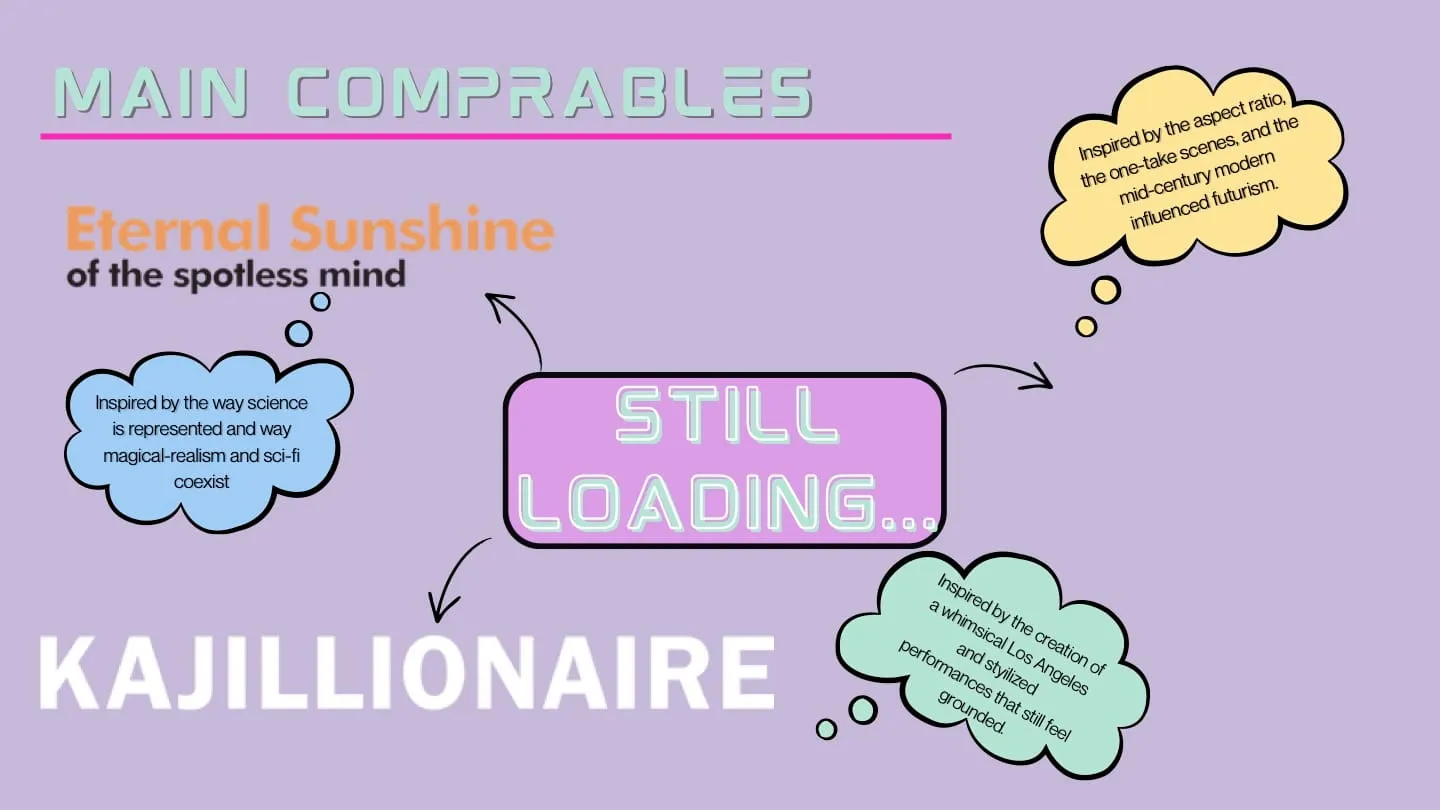
The vision I have for the produced version borrows from sci-fi but adds the playfulness of fantasy/fairytale. I'm interested in cross-genre stories.
What is the greatest strength of independent filmmaking, and what lesson would you share with others?
Trusted collaborators and critics. It's important to have collaborators who share and understand your vision, and even better if they can give you constructive feedback to help make your vision even better.
How has this film shaped or shifted the kinds of stories you want to tell next?
It has solidified my desire to create work that borrows from multiple genres. I see myself working in the space where alternate-reality, fairy tale, and lore meet. With a heavy dose of dark comedy.
What does it mean to have your film selected for FilmQuest, and where does the project go next?
Tremendously validating and encouraging. Keeps me motivated. Next is to shoot and cut a sizzle reel to raise funds for the feature version.
There's a line Faris offers when asked what sits at the center of everything she makes: a desire to touch on universal experiences and emotions through the heightened realities of genre-heavy filmmaking. Still Loading is the clearest argument for that approach she has made so far. Grief is universal and almost impossible to dramatize without flattening it; a boss fight, by contrast, is legible to anyone who has ever held a controller. Putting one inside the other gives an audience a way in, and gives EM a structure she can't talk her way around.
The script's double register — the jokes and the weight, arriving together — is the part Faris identifies as unmistakably hers. It's also the part that resists easy categorization, which may be why she's drawn to the territory where alternate reality, fairy tale, and lore meet. Dark comedy isn't a coating on top of the hard material. It's how the hard material becomes speakable.
Her answer about the hardest creative decision is worth sitting with, because it's not really an answer about craft. She hasn't had to make it yet. What she's made instead is a commitment: this is a long-term project, and she's staying with it for as long as it takes. For a filmmaker developing a short as a proof of concept for a feature, that's the decision that governs all the others — the willingness to keep returning to a story she's already been carrying for a decade, through drafts, through a sizzle reel, through fundraising, through whatever comes after.
What keeps her honest in that process, by her own account, is other people. Trusted collaborators and critics, she says — the ones who understand the vision and can still tell her how to sharpen it. For an independent filmmaker working largely on her own terms, that's the resource that doesn't come with a line item in the budget.
For now, Still Loading exists as pages, a FilmFreeway link, and a director's clear sense of what it should look like once it moves. FilmQuest's recognition of the script lands as encouragement at exactly the stage when encouragement does the most work — before the shoot, before the money, while the project is still, as the title has it, loading.
Main Cast & Crew
- Emily Faris — Writer; attached to direct the produced short and feature version. Dirty Girl Media
Filmmaker Opportunities
💛 Fund your next project with fiscal sponsorship
Have a project in the works? As a 501(c)(3) nonprofit, the Cinematography for Actors Institute can accept tax-deductible donations on your film's behalf — a door-opener for grants, foundations, and supporters who want to back your work. We've serviced over 100 projects to date and helped route over $800,000 in funding to filmmakers. Explore fiscal sponsorship →
📬 Grant deadlines and festival opportunities, straight to your inbox
The CFA newsletter rounds up grants, festival calls, and community news for independent filmmakers — the kind of opportunities that are easy to miss and painful to miss. Join the newsletter →
🎬 Focus on the creative — we'll help with the logistics
Production Management, CFA's newest member program, launches this November: production insurance and workers' comp, payroll, film permits, gear rental coordination, SAG-AFTRA compliance, contract drafting, production consulting, and crew recommendations — handled by a team of working filmmakers, à la carte or all in, in partnership with Creative Access Group. It's waitlist-only until launch. Join the waitlist →
League of Filmmakers is published by our parent organization, the Cinematography for Actors Institute — a 501(c)(3) dedicated to education, community, and capital for underrepresented filmmakers and actors. Learn more about CFA →