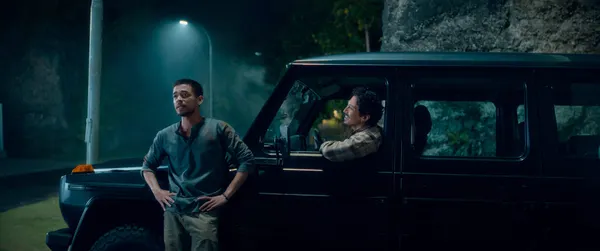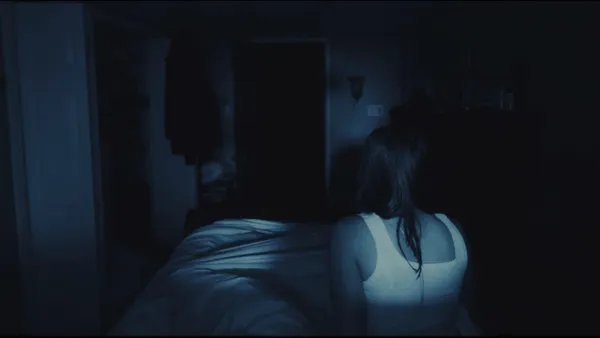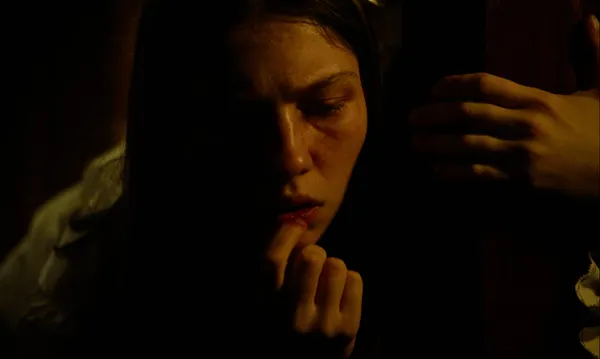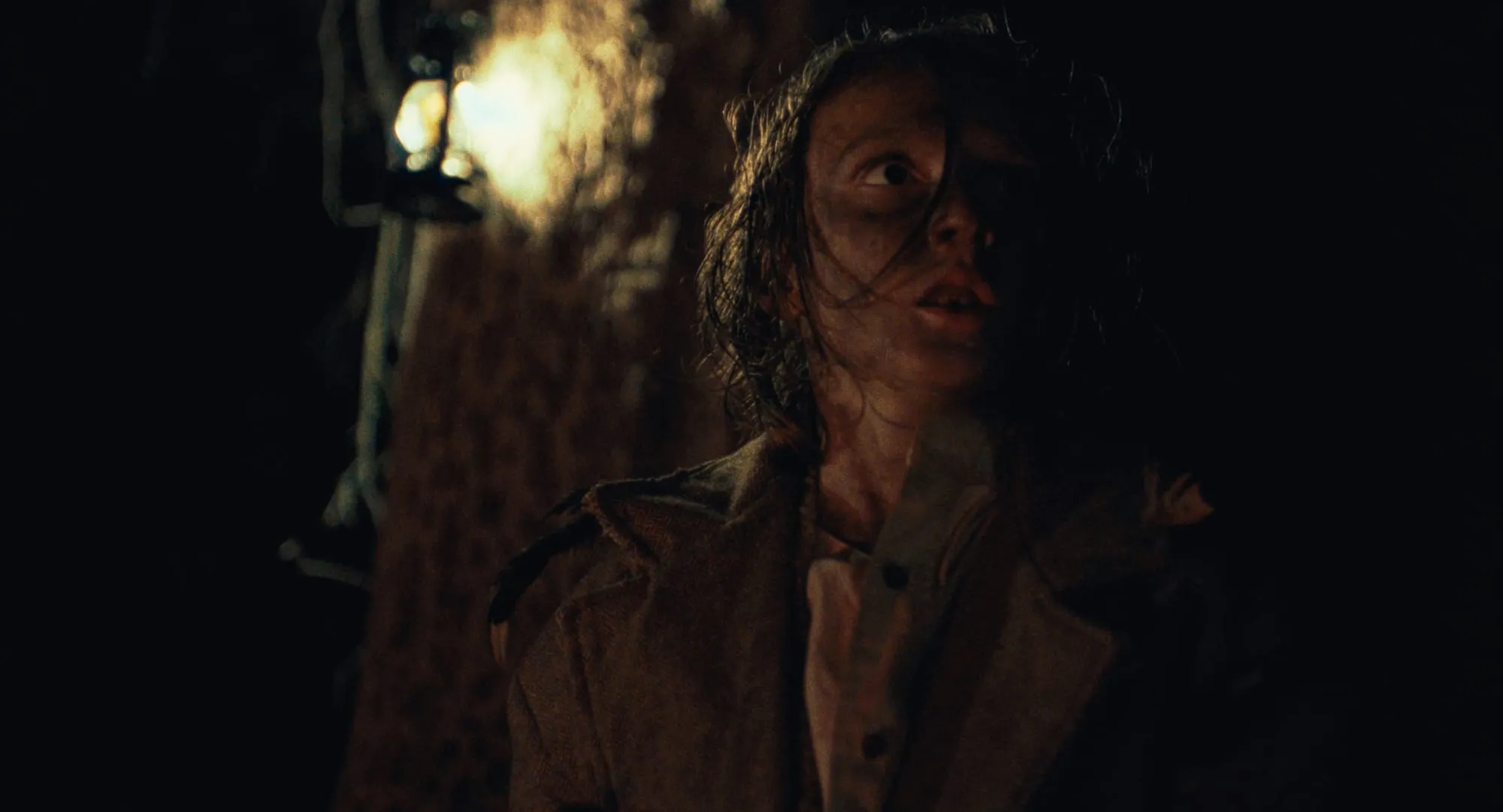
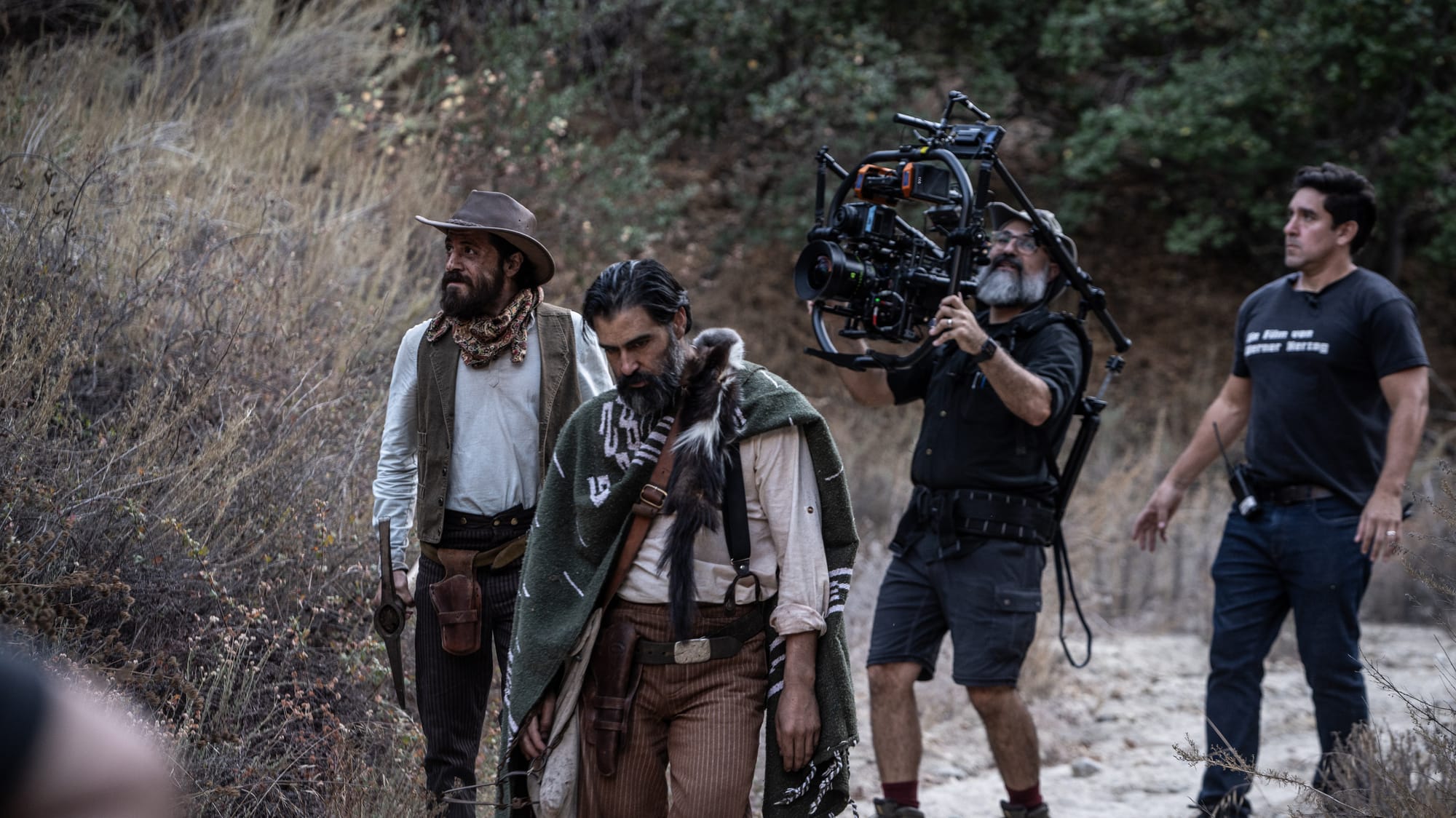
In the desolate forests of Alta California, a rugged prospector named Manny and his companions Diego and Don Rob are chasing gold through country that has not yet been mapped, named, or explained. Then they find a wild, animal-like boy in the trees, and something with feathers starts moving in the dark. The Bones Exist is a horror dinosaur western — a sentence its directors say with a laugh, because as far as they know, nobody has put those three words together before.
Co-directed by Kelsey Bollig, a Los Angeles filmmaker known for bold genre stories with a violent personal edge, and writer/co-director Matthew DuVall, a VFX artist whose credits include Deadpool, Life of Pi, and Pirates of the Caribbean: Dead Men Tell No Tales, the short arrives at FilmQuest as both a monster movie and an argument. Its premise reaches back to the moment enormous, inexplicable bones first started coming out of American soil and nobody knew what they belonged to. Its production reaches forward, toward a way of making independent films where post-production is not the cleanup crew but a co-author from day one.
Key Takeaways
- Bollig and DuVall moved the entire film from day to night on their DP's encouragement, shooting with two cameras at once — one for performance, an infrared rig for puppet tracking — to trade the safer technical choice for the better creative one.
- DuVall used Gaussian Splats, drone-scanned locations for digital relighting, and a 16-camera array to capture practical fire and embers, putting a scale on screen that the budget alone could not buy.
- Manny's death, the film's full dinosaur reveal, was never shot on set at all. It was built from scratch in post.
The directors spoke about dinosaurs as a first love, the night that called to them, and why their limitations became part of their creative identity.
Interview
What drew you to make this film, and why this story, why now?
As a VFX artist, Matt has spent his entire career bringing other people's visions to life. With The Bones Exist, he finally had the chance to bring his own to the screen, and to return to the thing that first made him want to make movies in the first place: dinosaurs.
What drew us to this story was the opportunity to take dinosaurs back to the very beginning — not prehistoric times, but to the moment we first began discovering their bones. There's something fascinating about imagining the American West before we understood what dinosaurs were, when enormous, inexplicable fossils were emerging from the earth and no one quite knew what they belonged to. Early explorers were venturing into a landscape that still felt genuinely unknown. What did they think was waiting for them out there? What if they believed these enormous creatures might still be roaming somewhere beyond the horizon?
We took that question and ran with it.
We decided to direct The Bones Exist together out of equal parts romance and curiosity. Kelsey had directed four shorts before this one, with Matt creating the VFX for the previous two, and our collaboration had naturally become more intertwined with each film. We wanted to see what would happen if we took that partnership one step further — not simply director and VFX artist, but two filmmakers building the world together from the ground up.
And if we were going to try it for the first time, a monster western with dinosaurs felt like a pretty good place to start.
What was the hardest creative decision you made while making the film?
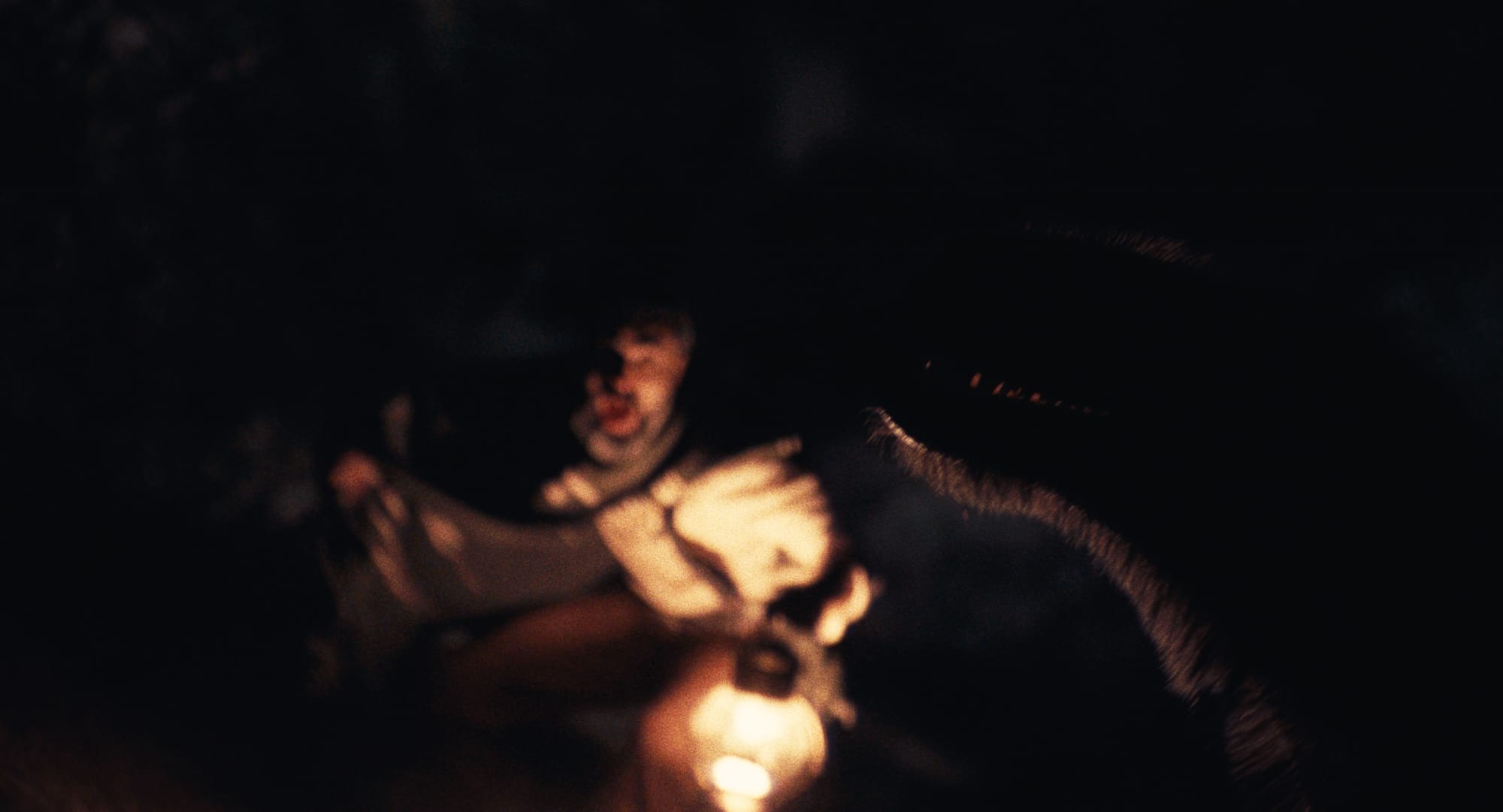
The film was originally written and designed to take place during the day. From a VFX standpoint, that was the safer choice; we knew daylight would make it much easier to track our puppet dinosaur and ultimately replace it in post.
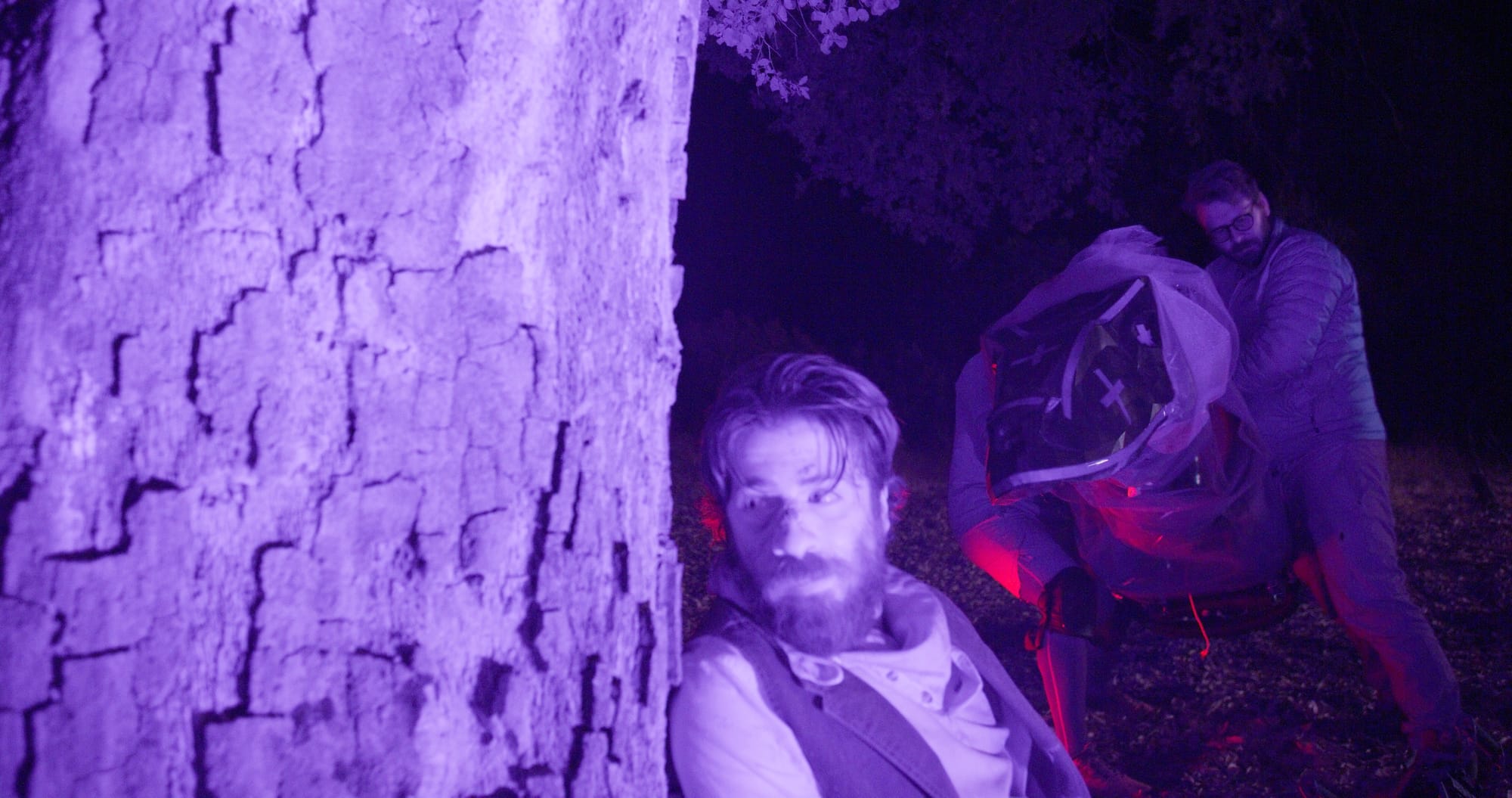
But as we got deeper into prep, the night started calling to us. Our DP, Mike Moghaddam, encouraged us to embrace the darkness, and creatively, we knew he was right. Setting the film at night allowed us to push much further into horror, to obscure the creature, play with what you can and can't see, and let the audience's imagination do some of the work.
The problem was that we were essentially trading the easier technical choice for the better creative one.
To make it work, we ended up shooting simultaneously with two different cameras: our primary camera capturing the performances and an infrared camera capturing the puppet and tracking information we would need for VFX. It made an already ambitious production considerably more complicated, but it gave us the film we actually wanted to make.
It was definitely the harder choice. It was also absolutely the right one.
What surprised you most about the filmmaking process, creatively or logistically?
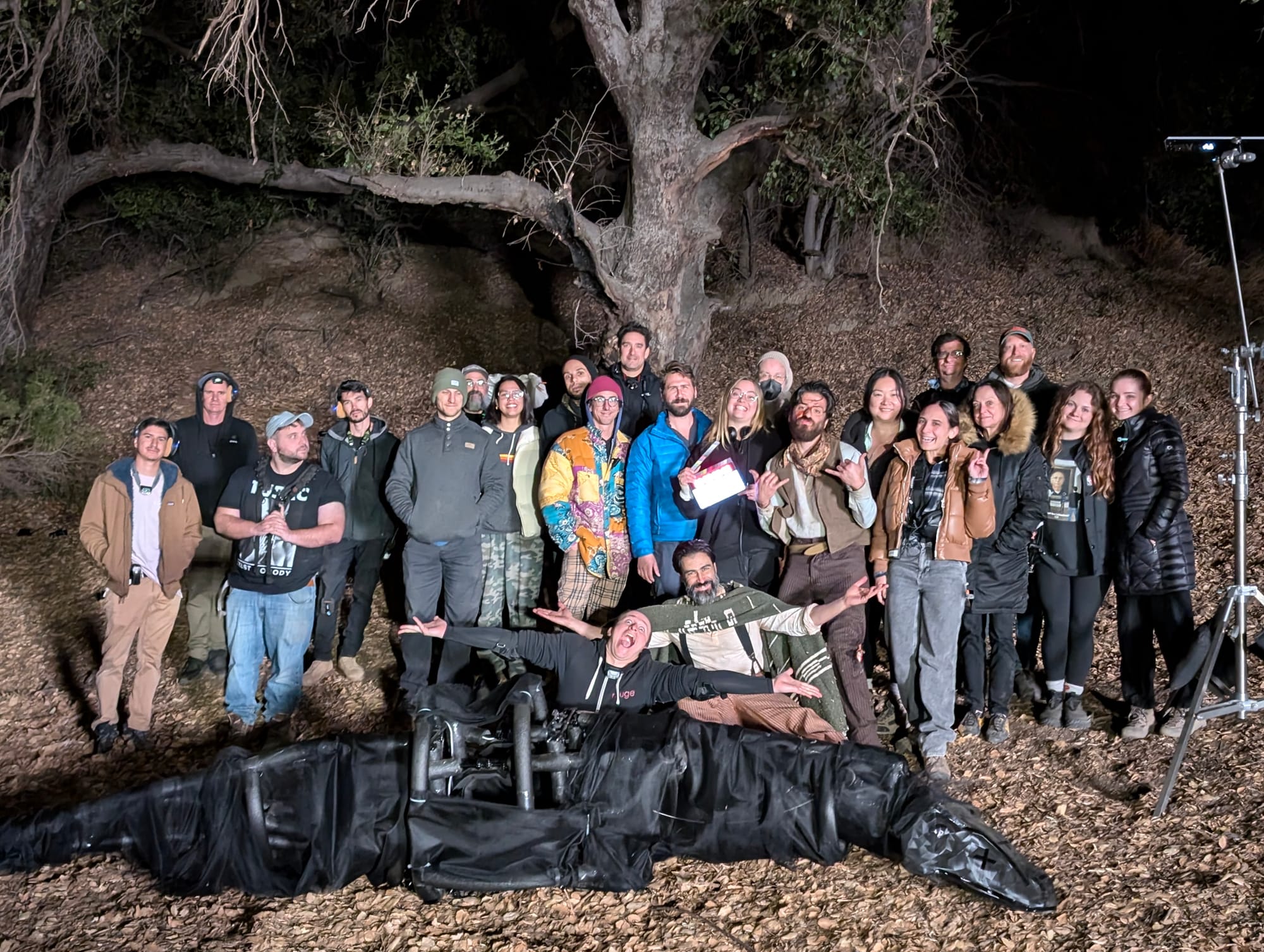
Honestly, we knew what we were getting ourselves into with this film, so "surprised" might not be the right word. But we were genuinely touched by how many people showed up ready to play in the woods overnight with us and some dinosaurs.
This was an incredibly physically demanding shoot. We were outside, in the dark, in the dirt, working long nights on a film that required everyone to give a little more than what was probably reasonable. And they did. Our cast and crew completely committed to the world we were trying to create, no matter how ambitious or strange the ask was.
We knew making The Bones Exist would be difficult. What we didn't fully anticipate was how much the people making it alongside us would become part of what we love about it. The movie simply wouldn't exist without them.
What moment in the film feels most like you, or like something only you could have made?
We both have different moments that feel distinctly like us.
For Kelsey, it's the campfire scene. The camera movement, the choreography between the men, and the way all of that unfolds while something is quietly lurking in the shadows feels like home. That kind of movement — letting the camera and characters dance around a threat the audience can sense before they fully understand it — is something that shows up throughout my work, and it was incredibly fun to bring that language into this world.
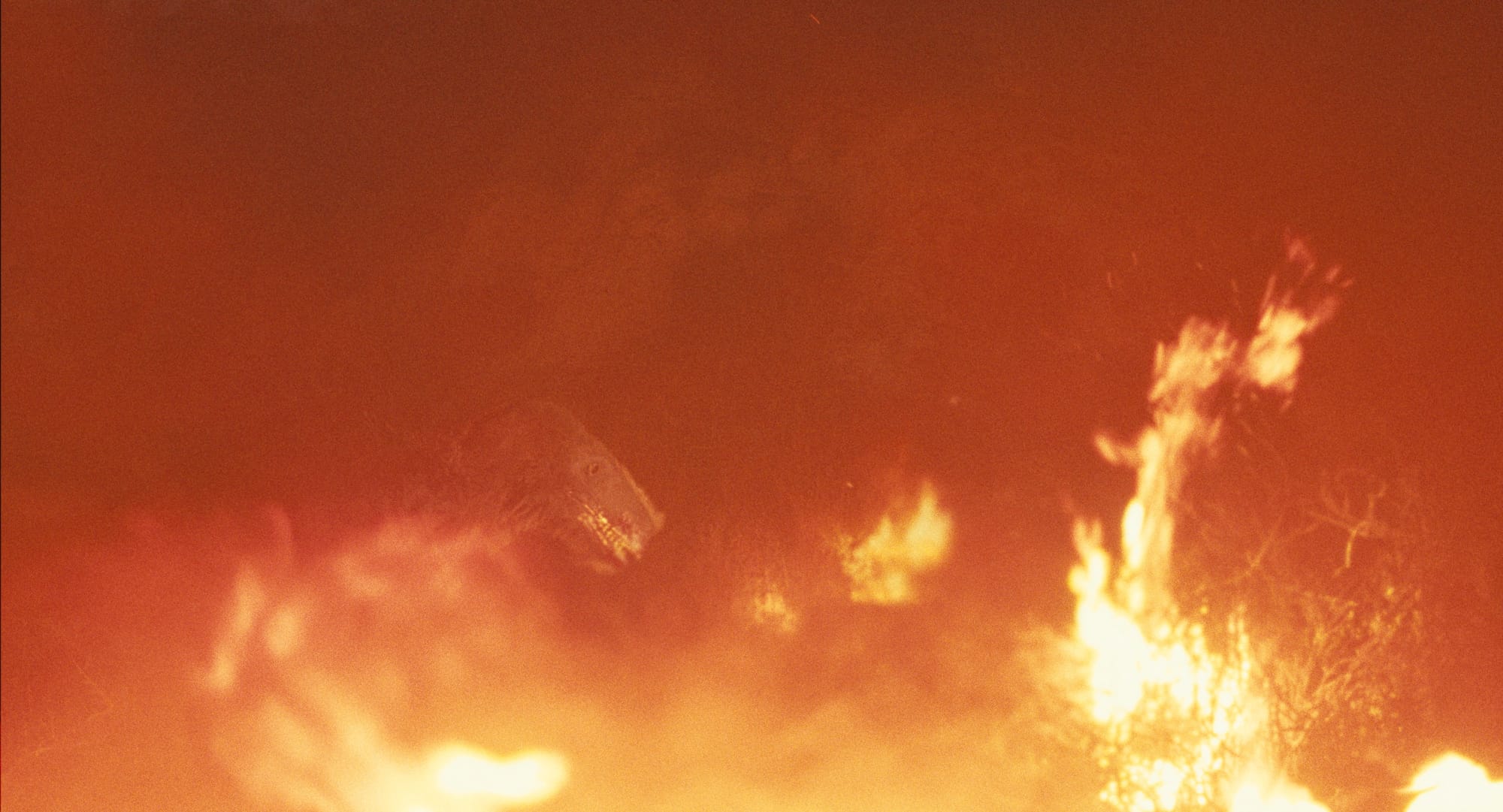
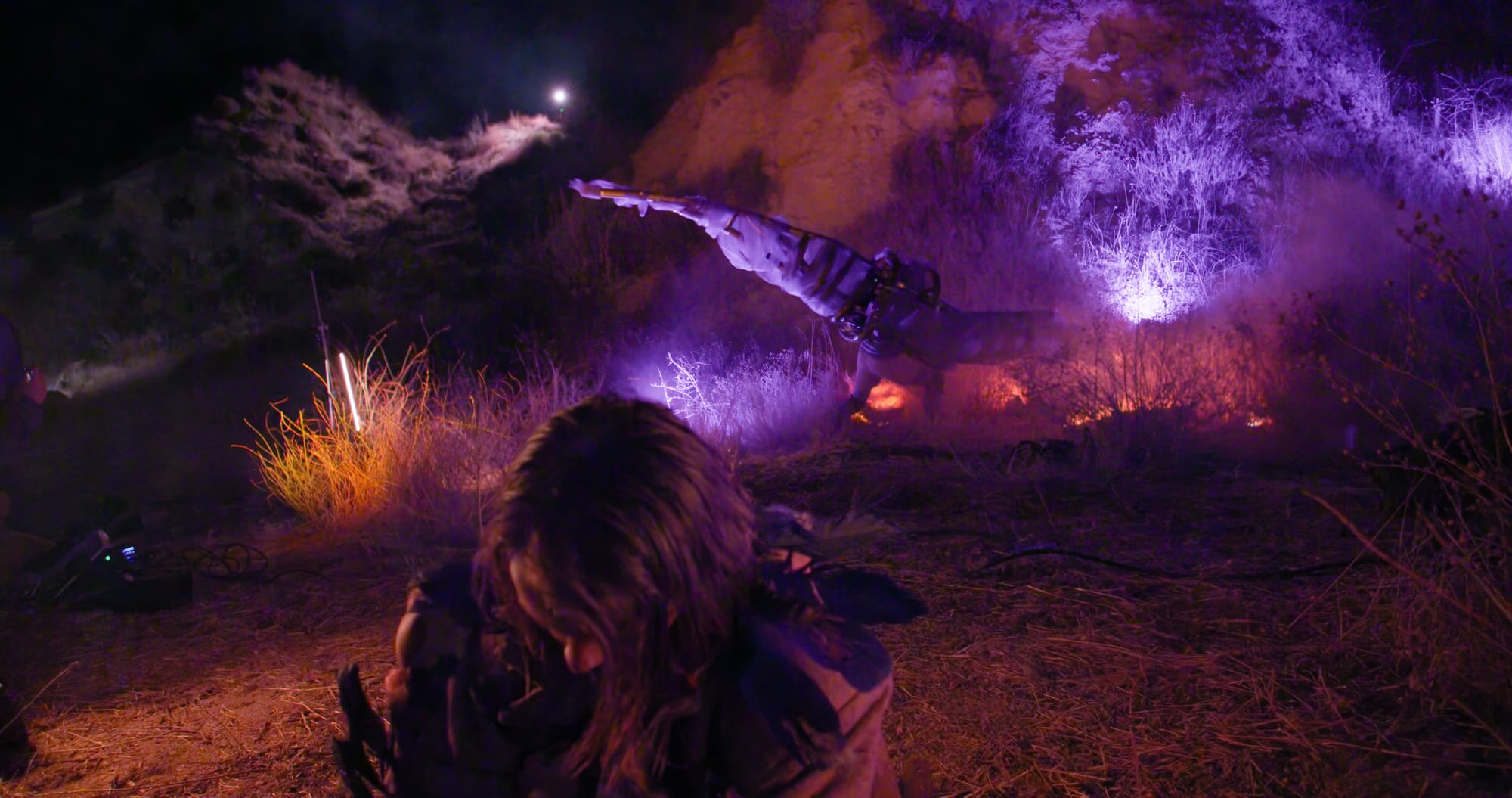
For Matt, Manny's death might be the most purely Matt moment in the entire film. It's the full reveal of our dinosaurs, and the entire attack was created in post; we didn't even shoot that moment on set. Matt essentially created the shot from scratch. Jurassic Park is one of the films that made him want to make movies and pursue VFX in the first place, and he'd always dreamed of making his own dinosaur film, especially one with historically accurate, feathered dinosaurs. So there's something really full-circle about a sequence that only exists because Matt had the technical ability and imagination to create something that was never physically in front of our camera. He brought the dinosaurs to life throughout the film, but Manny's death really feels like his masterpiece.
And then there's one moment that feels completely like both of us: the ending. A raptor curls up affectionately with the boy while, just behind them, Manny is being ripped to shreds.
Tenderness and brutality existing in the exact same frame. That's everything to us. If we can tug at your heartstrings while someone is being torn apart on screen, we've done our job.
What tool, technique, resource, collaborator, or mindset shift helped most during production?
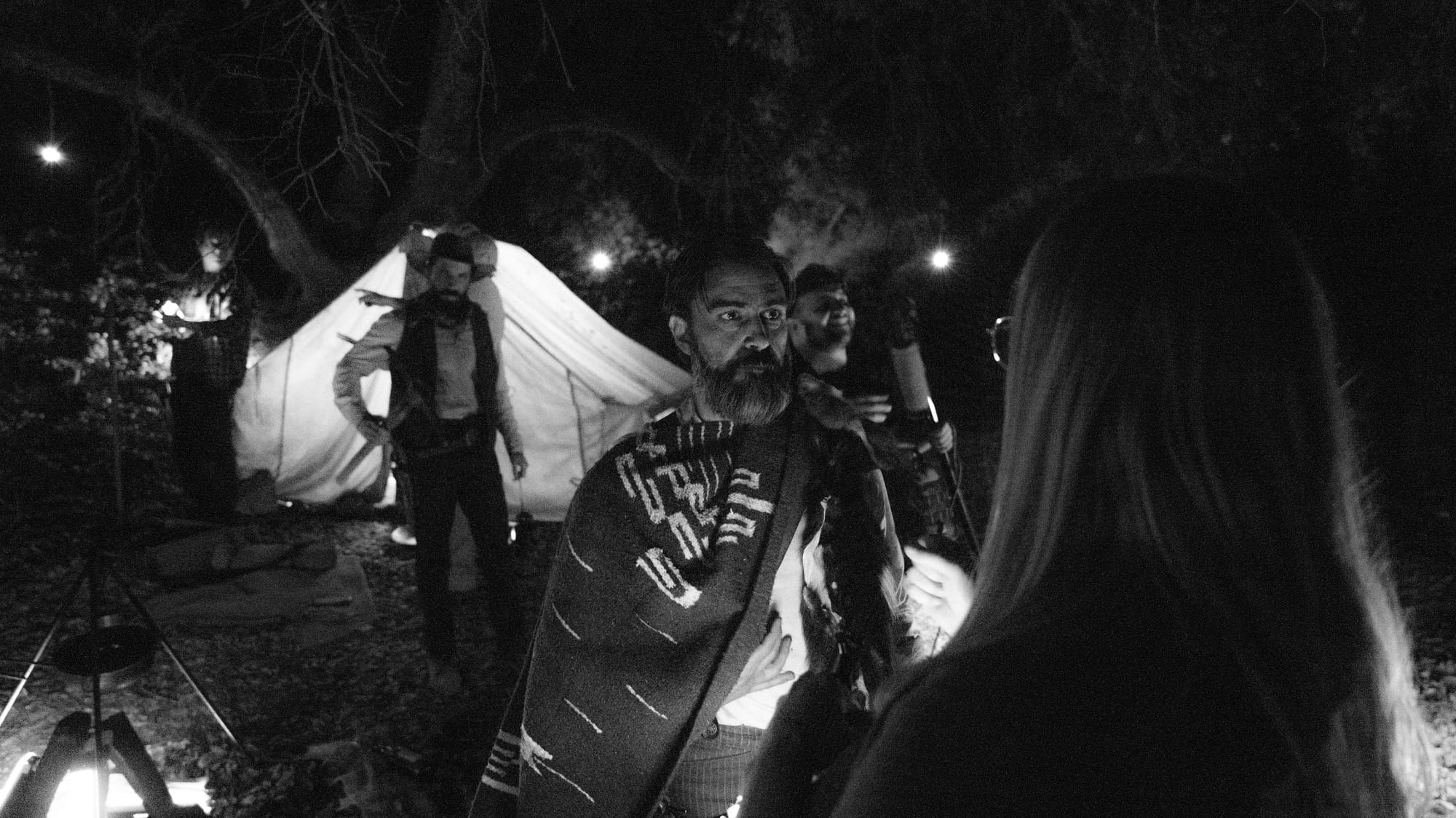
The biggest resource we had was each other. We come at filmmaking from very different backgrounds — Kelsey primarily from writing and directing, and Matt from VFX, computational photography, and emerging technology — and The Bones Exist became an experiment in what happens when those disciplines are involved together from the very beginning.
The biggest mindset shift was realizing that VFX didn't have to compensate for what we couldn't afford; it could actually influence how we shot the movie in the first place. Once we stopped separating "production" and "post-production" in our heads, we started finding solutions that neither of us would have arrived at independently.
That became the real breakthrough of the film: not one particular piece of technology, but building a creative process where story, cinematography, practical effects, and VFX were all speaking to each other from day one.
What is the greatest strength of independent filmmaking, and what lesson would you share with others?
The greatest strength of independent filmmaking is freedom: the freedom to take risks, experiment, and figure out how to make something before anyone has given you permission to make it.
We leaned heavily into that on The Bones Exist. We were trying to make a period monster film with dinosaurs on an independent budget, which is objectively a slightly insane thing to attempt. But instead of treating our limitations as reasons to make the film smaller, we used them as creative problems to solve. Matt brought his background in VFX and computational photography into the process, experimenting with technology like Gaussian Splats, drone-scanning our locations so we could digitally reconstruct and relight them, and even building a 16-camera array to capture practical fire and embers. We were constantly asking: how can we use the tools available to us to put something on screen that feels bigger than the resources we actually have?
That became one of the biggest breakthroughs for us: independent filmmaking doesn't necessarily mean thinking smaller. Sometimes it means thinking differently.
The lesson we'd share with other filmmakers is to stop waiting for the circumstances that supposedly make your movie possible. Your limitations can actually become part of your creative identity. If you don't have the traditional resources to accomplish something, invent another way to do it. Some of the things we're proudest of in The Bones Exist exist precisely because we couldn't make the film the traditional way.
There is an incredible freedom in realizing that you don't need permission to experiment. You just need to be willing to try something that might not work.
What does it mean to have your film selected for FilmQuest, and where does the story go next?
This is Kelsey's fourth time at FilmQuest and Matt's first. FilmQuest is one of the world's premier genre film festivals, and it means so much to be recognized.
Beyond the old tale that bad people get what's coming to them and that greed only leads to destruction, we hope audiences take away that the limits of indie filmmaking are changing. We can make big movies on a budget and let our imaginations run wild. It's exciting what technology can help indie filmmakers achieve.
We're currently developing the feature script and would love to expand this story. We both just want to keep telling big stories with big monsters.
Main Cast & Crew
- Writer/Co-Director: Matthew DuVall
- Co-Director: Kelsey Bollig
- Producer: Wendy Wang
- Producer: Annalea Fiachi
- Manny: Alex Peña
- Diego: Siya Maleki
- Don-Rob: Jack Campbell
- The Boy: Michael Mazanko
- Instagram: @the_bones_exist_film
Filmmaker Opportunities
💛 Fund your next project with fiscal sponsorship
Have a project in the works? As a 501(c)(3) nonprofit, the Cinematography for Actors Institute can accept tax-deductible donations on your film's behalf — a door-opener for grants, foundations, and supporters who want to back your work. We've serviced over 100 projects to date and helped route over $800,000 in funding to filmmakers. Explore fiscal sponsorship →
📬 Grant deadlines and festival opportunities, straight to your inbox
The CFA newsletter rounds up grants, festival calls, and community news for independent filmmakers — the kind of opportunities that are easy to miss and painful to miss. Join the newsletter →
🎬 Focus on the creative — we'll help with the logistics
Production Management, CFA's newest member program, launches this November: production insurance and workers' comp, payroll, film permits, gear rental coordination, SAG-AFTRA compliance, contract drafting, production consulting, and crew recommendations — handled by a team of working filmmakers, à la carte or all in, in partnership with Creative Access Group. It's waitlist-only until launch. Join the waitlist →
League of Filmmakers is published by our parent organization, the Cinematography for Actors Institute — a 501(c)(3) dedicated to education, community, and capital for underrepresented filmmakers and actors. Learn more about CFA →