On the night of October 13, 1990, nineteen-year-old Luisa takes her own life by jumping from the sixth floor of the hospital in Montichiari, Italy, days after giving birth to her second child. More than thirty years later, one of those children, Alberto, returns to piece together — through places, photographs, and testimonies — the lost memory of the mother he never knew. The Empty Space, co-written and co-directed by Stefano P. Testa and Alberto Ceresoli, is less a biography than an act of looking directly at an absence.
What makes the film remarkable is its refusal to fill in what cannot be recovered. Testa, a director and editor whose work consistently probes family dynamics through archives and found footage, builds a documentary that treats forgetting, silence, and imagination as material in their own right. The result is patient, tender, and quietly radical in its willingness to leave questions open.
Key Takeaways
- Testa and Ceresoli deliberately conducted no research before shooting, letting the filmmaking process itself become the investigation.
- When interviews revealed more gaps than answers, the "empty space" of absence became the film's true subject alongside Luisa herself.
- Gentleness — toward subjects, archives, and audience — became the film's central creative tool, extending even to Vinicio Capossela's improvised, restrained score.
Here, Testa speaks about confronting an unresolved absence, giving up control, and finding form for something that flickers at the edge of consciousness.
Interview
What drew you to make this film, and why this story, why now?
In 2023, Alberto approached me with the idea of making a documentary about Luisa, his biological mother. He had always felt the need to understand his past and uncover who she had been, but for years that question had remained latent, almost unspoken.
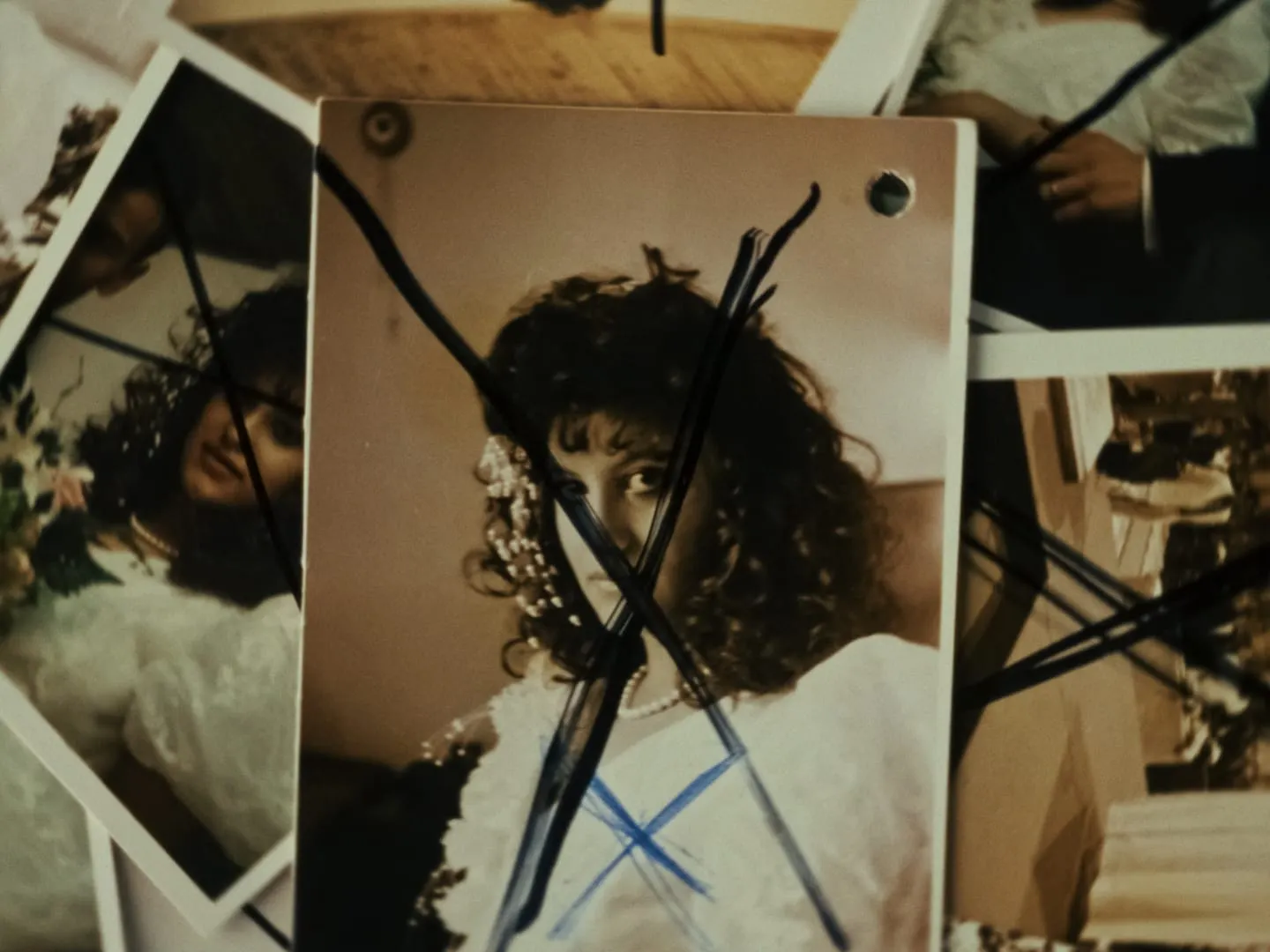
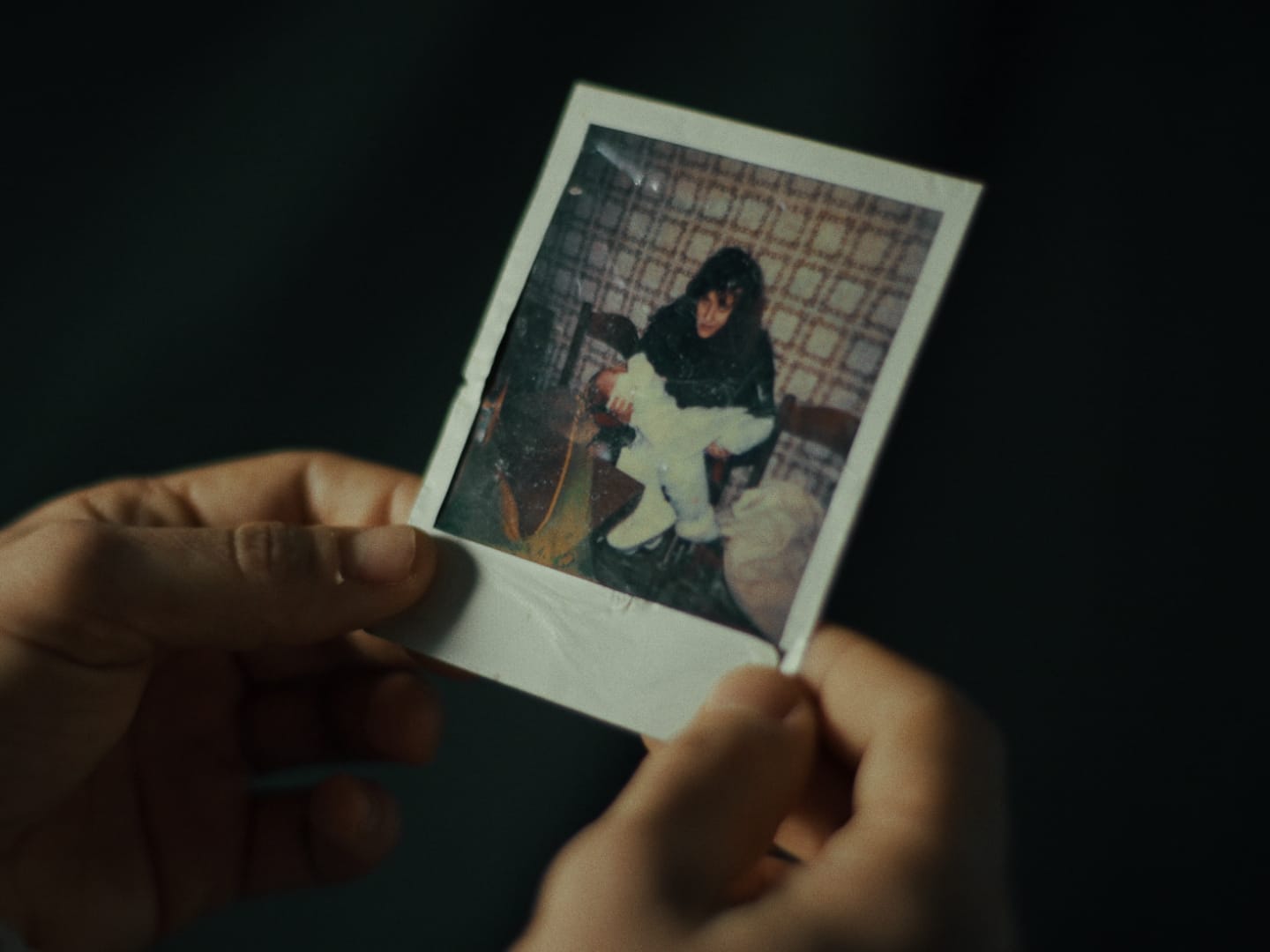
The impulse to begin the film came from a very simple moment. Alberto's partner, Carmela Cosco, who later became co-author of the original concept, asked him to show her a photograph of Luisa. That request suddenly made him confront the extent of the absence: he realized how little he actually knew about his own mother. At the same time, he did not know how to approach such an intimate and painful investigation directly. Cinema became a possible device through which to mediate that search, creating a space where memories, photographs, testimonies and imagination could gradually come together.
What drew me to the project was precisely this tension between the need to know and the impossibility of fully recovering the past. The film began not from the certainty that answers could be found, but from the need to face an absence that had remained unresolved for more than thirty years.
What surprised you most about the filmmaking process, and did any moment change how you saw the story?
What surprised us most was how difficult it was for the people closest to Luisa to remember and speak about her. After interviewing Romolo, Luisa's husband and Alberto's biological father; Gerardo, her brother; and Anna and Giusi, two of her friends, we realized how many gaps there were in the story. Their memories were fragmented, hesitant, and often marked by resistance. We could not always tell whether this came from repression, guilt, pain, or simply the passage of time.
At first, this was unsettling. The material we had gathered seemed far too limited to build a conventional biographical portrait. But that realization ultimately changed the film. The interviews revealed something more important than the information they failed to provide: they revealed a space defined by absence, forgetting, fear, suffering, nostalgia, and silence. That became the "empty space" of the title, and in many ways the true subject of the film alongside Luisa herself.
From that point on, our approach shifted. Rather than trying to fill every gap or reconstruct Luisa as completely as possible, we became interested in exploring the gaps themselves. The film became less about recovering a definitive truth and more about observing what remains when memory can no longer fully restore a person.
What was the hardest creative decision you made while making the film?
The hardest creative decision was also one of the most fundamental: not to conduct any research before production. We wanted the research itself to become the filmmaking process. We contacted the people we would later interview without agreeing in advance on what questions would be asked, and without knowing what their answers might be. There was no preliminary attempt to reconstruct the facts or establish a clear chronology before filming began.
This meant accepting a high degree of uncertainty. We were deliberately giving up control over the material and allowing the story to reveal itself through the encounters themselves. Creatively, this was risky, but it became essential to the film. The production did not document a research process that had already happened; it was the research process. What we discovered, what remained unclear, and even what people could not or would not remember all became part of the film's structure and meaning.
What moment in the film feels most like you, or like something only you could have made?
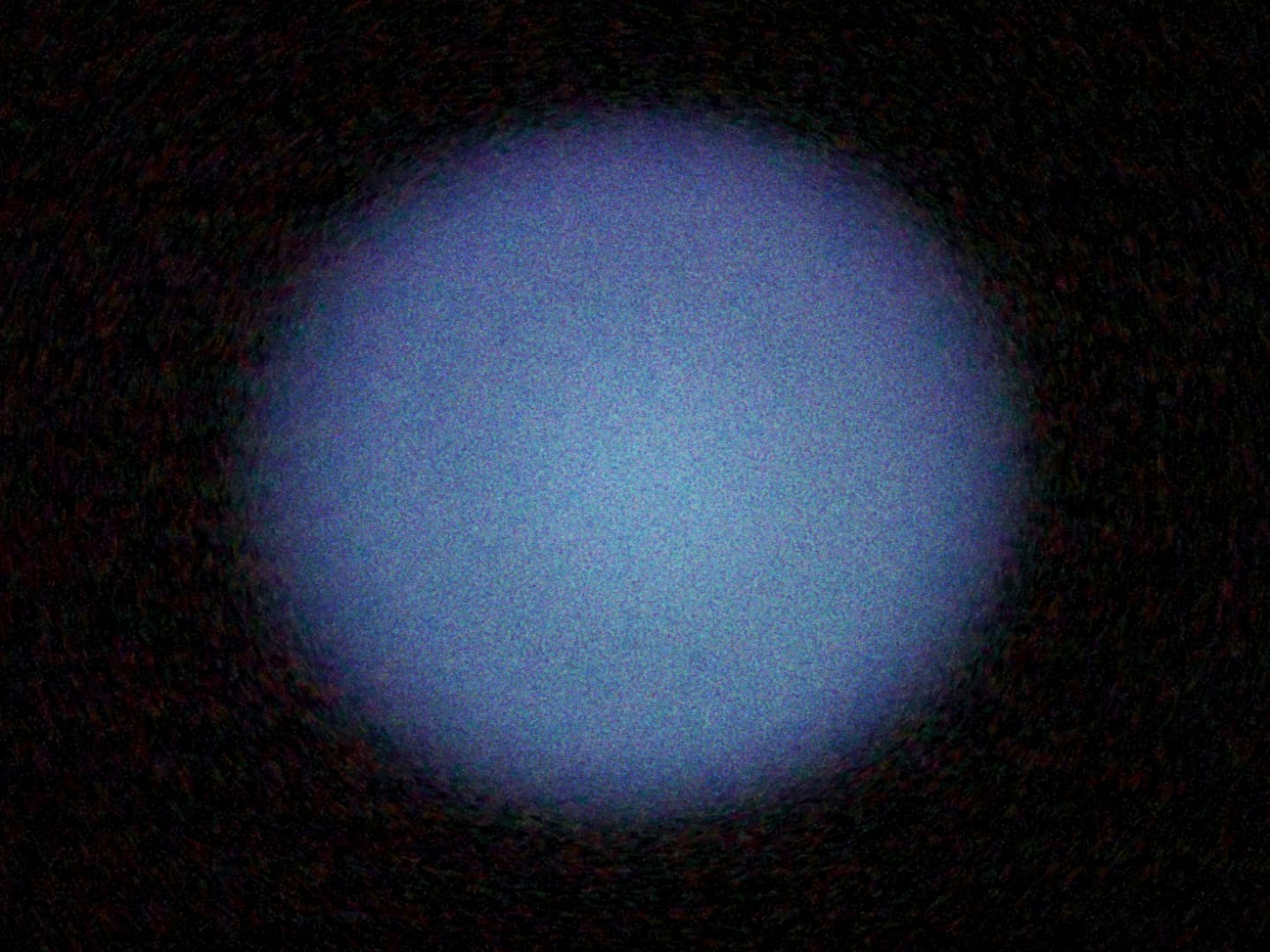
The moments that feel most uniquely mine are the abstract sequences that open and close the film, and reappear throughout it. The screen is almost black, but never completely: digital noise, flickering pixels, and glitches slowly gather into a shifting circular form, suggesting images that seem to emerge and disappear before they can ever become fully recognizable.
I developed this visual language as a possible representation of the "empty space" at the center of the film, an interior space shaped by absence, memory, and imagination. The imagery was inspired by the visual sensations we experience with our eyes closed in the presence of light: colored points, flashes, retinal impressions, latent images, forms that seem to surface from somewhere inside us without ever becoming clear. For me, these sequences embody the film's central tension, giving form to something elusive: the sensation of a presence that cannot be fully recovered, but continues to flicker at the edge of consciousness.
What tool, technique, or mindset shift helped most during production?
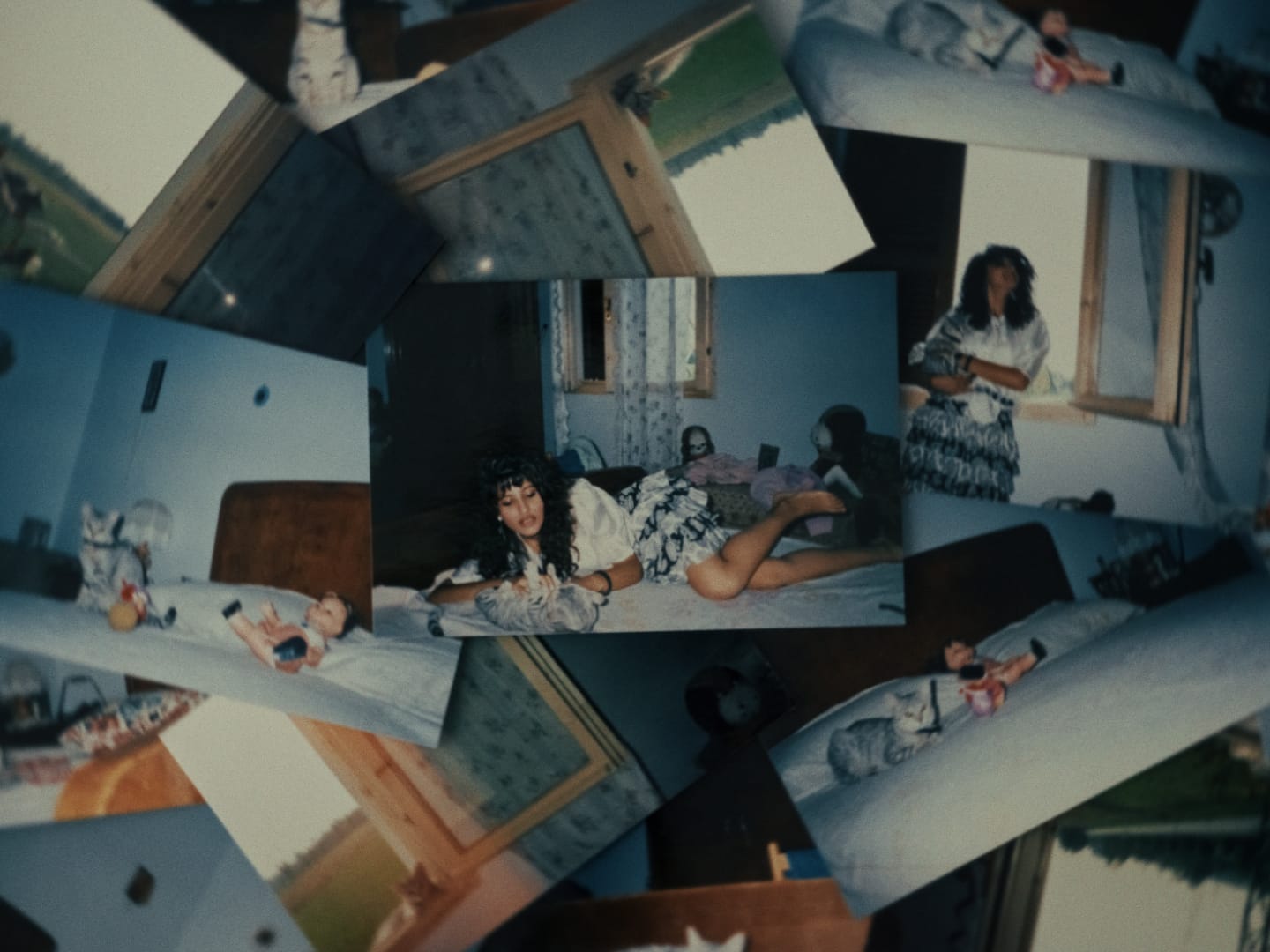
Perhaps the most important mindset behind the film was the decision to approach the story with gentleness. That principle shaped almost every part of the production. We approached the people we interviewed with care, treated the archival materials with the same sensitivity, and carried that attitude into the editing, the rhythm of the images, the sound, and every aesthetic choice. We wanted to avoid sensationalism, spectacle, emotional manipulation, and, above all, judgment. For us, gentleness became a way of suspending judgment and allowing the complexity of the story to remain open.
This approach also influenced the collaborations that grew around the film. Vinicio Capossela, deeply moved by the story, composed part of the original score by improvising a melody on a prepared piano. His contribution seemed to emerge from the same sensibility: restrained, fragile, and deeply emotional without ever becoming emphatic. In the end, gentleness was not simply a tone or an ethical position. It became one of the film's main creative tools.
What do you hope audiences take away from this film?
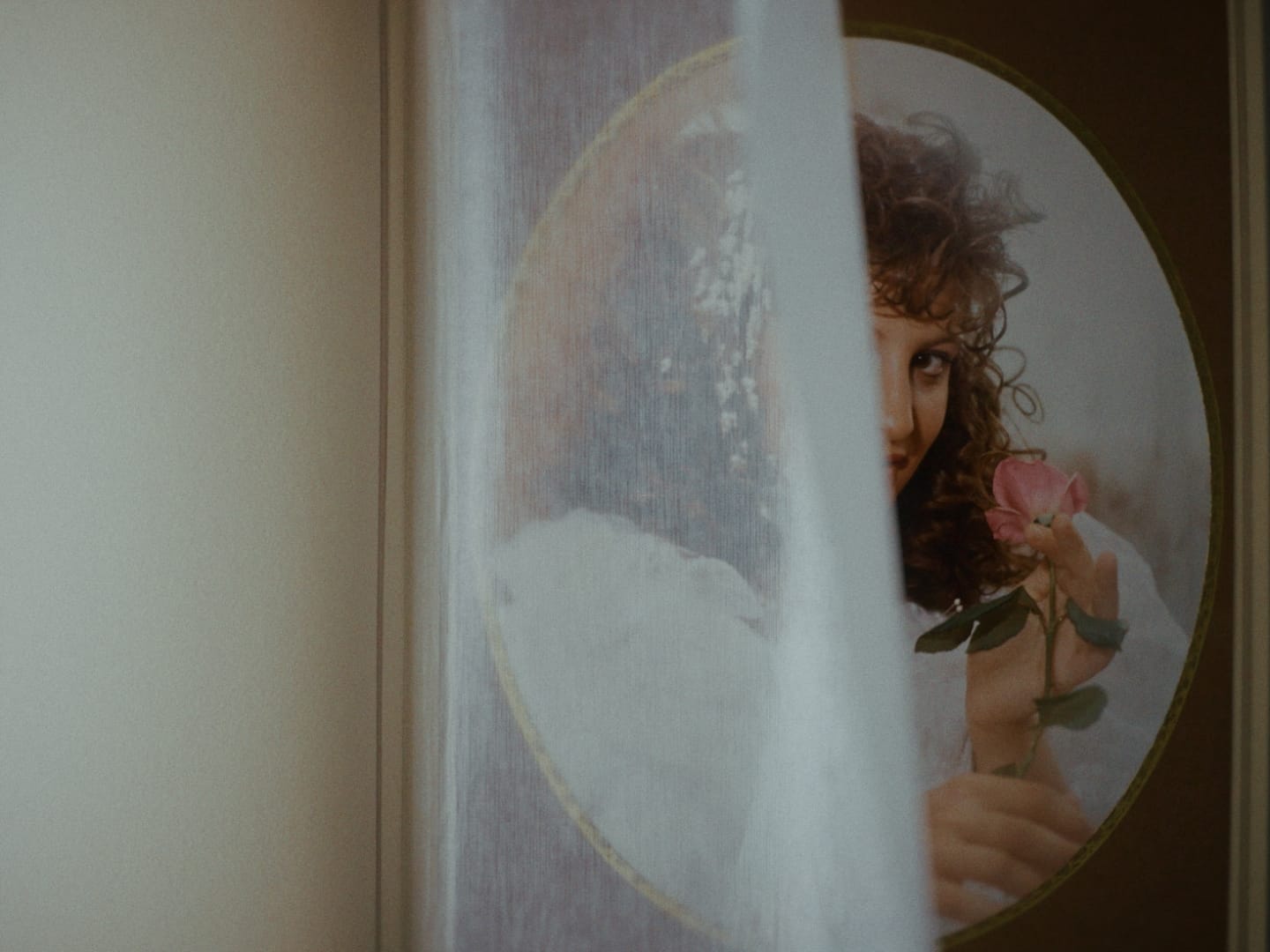
First of all, I hope audiences feel something for Luisa. I hope she can emerge not simply as the subject of a tragic story, but as a presence toward whom viewers can develop empathy, tenderness, curiosity, perhaps even conflicting emotions.
I also hope that the "empty space" of the film can become recognizable to the audience beyond Alberto's personal experience. In his case, it is rooted in loss and in the absence of a mother he can no longer remember. But I believe a similar space can exist within anyone. It may be the emotional distance separating two people who are physically close, yet unable to truly reach one another. It can be the space created by silence, misunderstanding, repression, or the inability to communicate and empathize.
What does it mean to have your film selected for Not Film Fest, and where does it go next?
It is an honor, and a great pleasure, to present The Empty Space at Not Film Fest. Beyond the prestige of the festival itself, I see the selection as an opportunity to meet other filmmakers, discover new voices, and create possible collaborations. Festivals are important not only because they give films an audience, but because they create a space where different approaches to cinema can meet.
Over the coming months, The Empty Space will continue its festival journey through other Italian and international festivals. After that, the film is expected to move into distribution in Italy.
Main Cast & Crew
- Written and directed by: Stefano P. Testa, Alberto Ceresoli
- Production: Lab 80 film, PERSEOfilm
- Produced by: Andrea Zanoli, Nadia Ghisalberti
- Script: Alberto Ceresoli, Carmela Cosco
- Cinematography: Stefano P. Testa
- Editing: Stefano P. Testa
- Original Score: Vinicio Capossela
- Sound Design and Mix: Nicola Gualandris
Filmmaker Opportunities
💛 Fund your next project with fiscal sponsorship
Have a project in the works? As a 501(c)(3) nonprofit, the Cinematography for Actors Institute can accept tax-deductible donations on your film's behalf — a door-opener for grants, foundations, and supporters who want to back your work. We've serviced over 100 projects to date and helped route over $800,000 in funding to filmmakers. Explore fiscal sponsorship →
📬 Grant deadlines and festival opportunities, straight to your inbox
The CFA newsletter rounds up grants, festival calls, and community news for independent filmmakers — the kind of opportunities that are easy to miss and painful to miss. Join the newsletter →
🎬 Focus on the creative — we'll help with the logistics
Production Management, CFA's newest member program, launches this November: production insurance and workers' comp, payroll, film permits, gear rental coordination, SAG-AFTRA compliance, contract drafting, production consulting, and crew recommendations — handled by a team of working filmmakers, à la carte or all in, in partnership with Creative Access Group. It's waitlist-only until launch. Join the waitlist →
League of Filmmakers is published by our parent organization, the Cinematography for Actors Institute — a 501(c)(3) dedicated to education, community, and capital for underrepresented filmmakers and actors. Learn more about CFA →