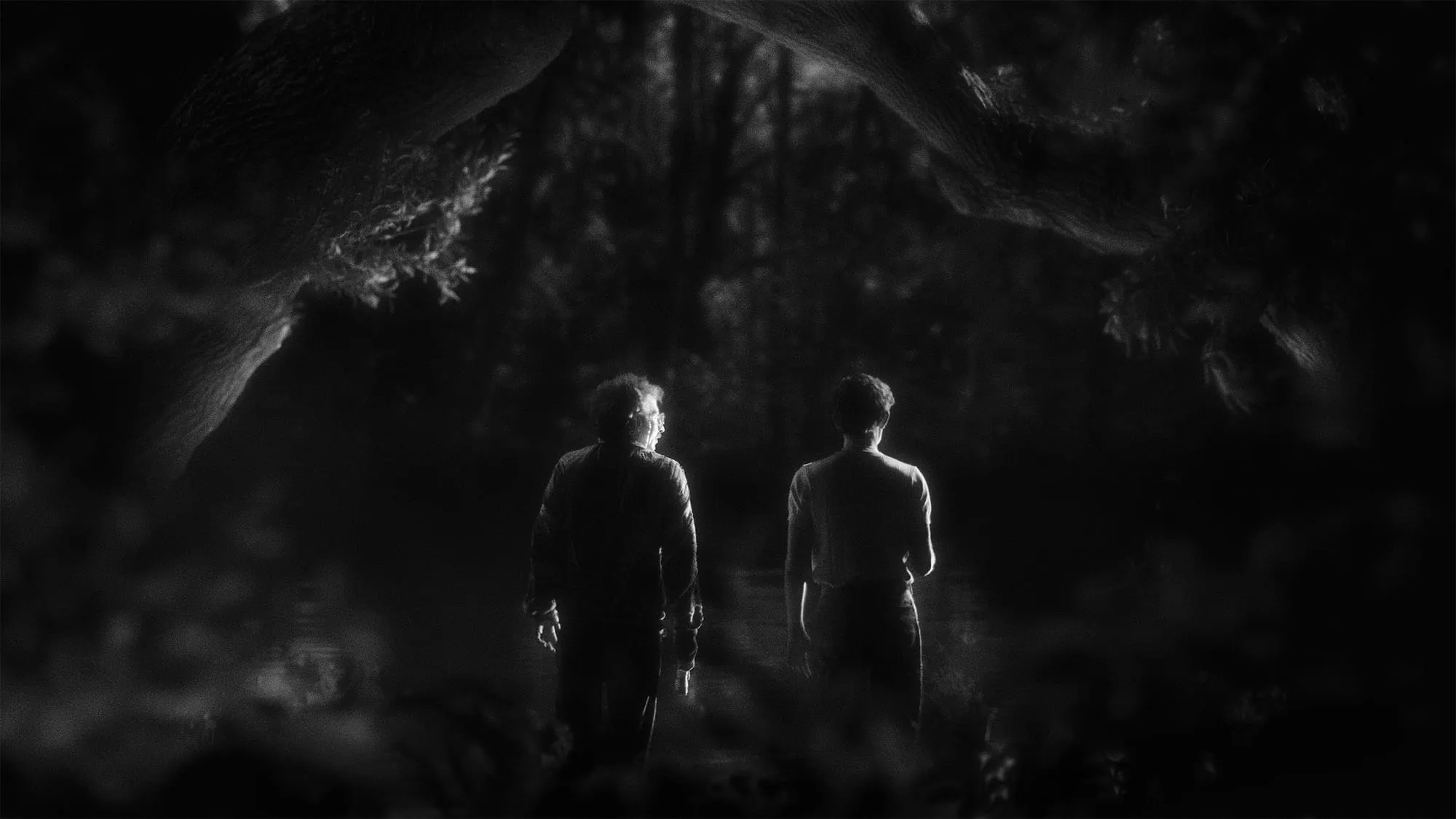
A man runs through a dark forest from something he cannot see. He finds an old friend. They decide to survive the night together. That setup belongs to a hundred horror shorts, which is exactly why The Smother is interesting — the entity chasing Jack and Sam is less a monster than a reckoning, and the scariest thing in the trees is the conversation these two have been avoiding for years.
The Smother began as a sparsely staged play with Public Assembly theater company in Los Angeles, lit entirely by flashlights. Director Ben Kadie reassembled the original team — writer Ciara Ni Chuirc, actors Nick Marcone and Demetri Bellardinelli — and brought producer Leigh Adler aboard to widen the frame. What they built was an artificial forest inside an LA warehouse, a VFX lake made without AI, and a horror comedy where the terror runs on attachment style rather than gore. Bellardinelli is nominated for Best Supporting Actor at FilmQuest.
Key Takeaways
- The film's horror comes from emotional conflict — the cracks in an adult friendship — rather than an external threat or violence.
- A forest built inside a warehouse, chosen over a real location, became the film's defining look rather than its compromise.
- The two leads were friends before production, and their improvisation was written back into the script.
Adler spoke with us about anxious attachment, budget as a creative engine, and the pleasure of a shoot that went right.
Interview
What drew you to make this film, and why this story, why now?
The Smother began its life as a short play developed with Public Assembly theater company in Los Angeles. It was sparsely staged, using only flashlights as a light source.
To expand the scope of the story, Ben reassembled the original team — writer, actors — and brought me on to produce. I had seen the play, as a friend and neighbor of Ciara, and was moved by its exploration of the complexity of adult friendship dynamics, and the pain that can occur for both parties when one friend is more emotionally attached than the other.
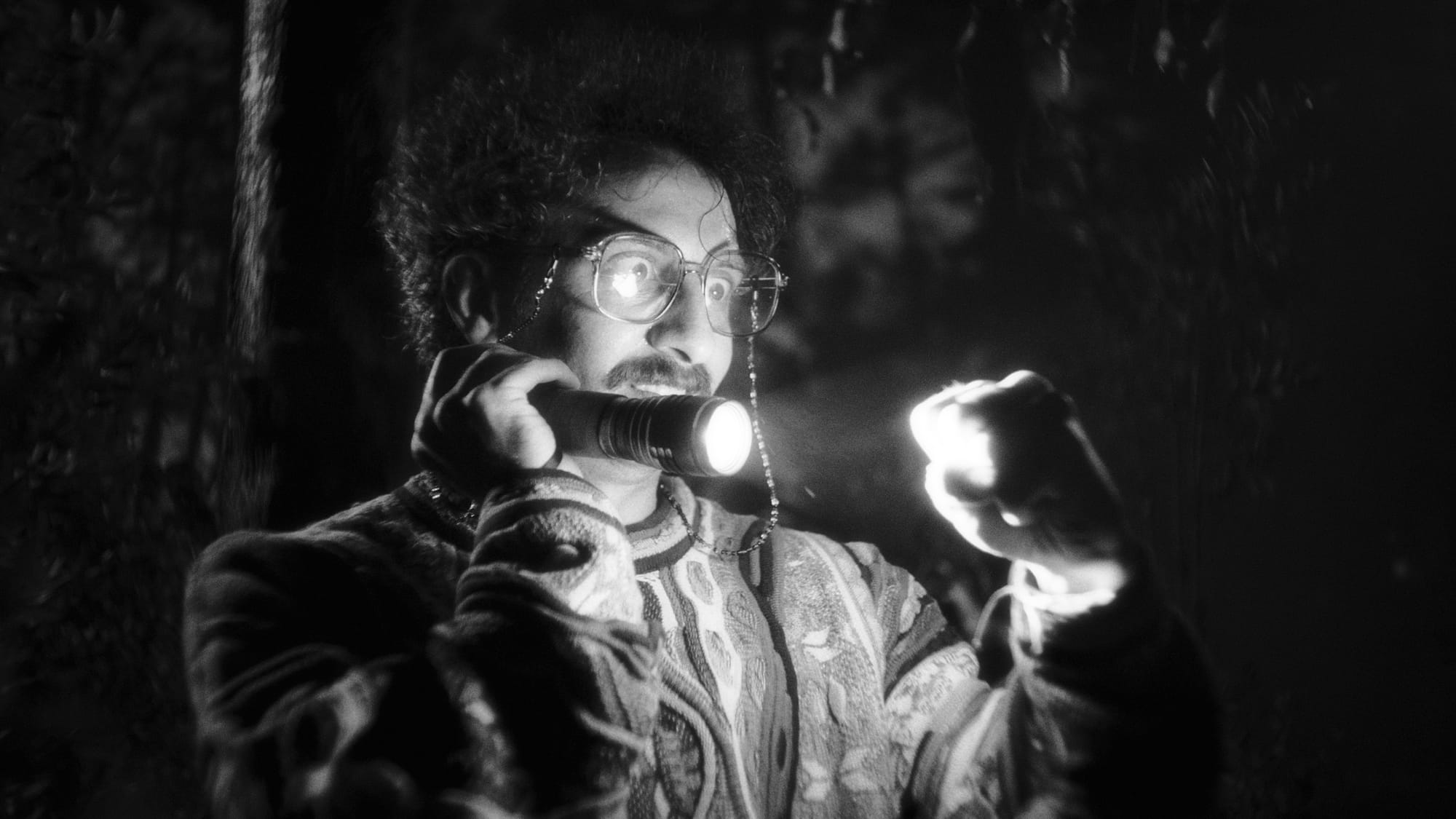
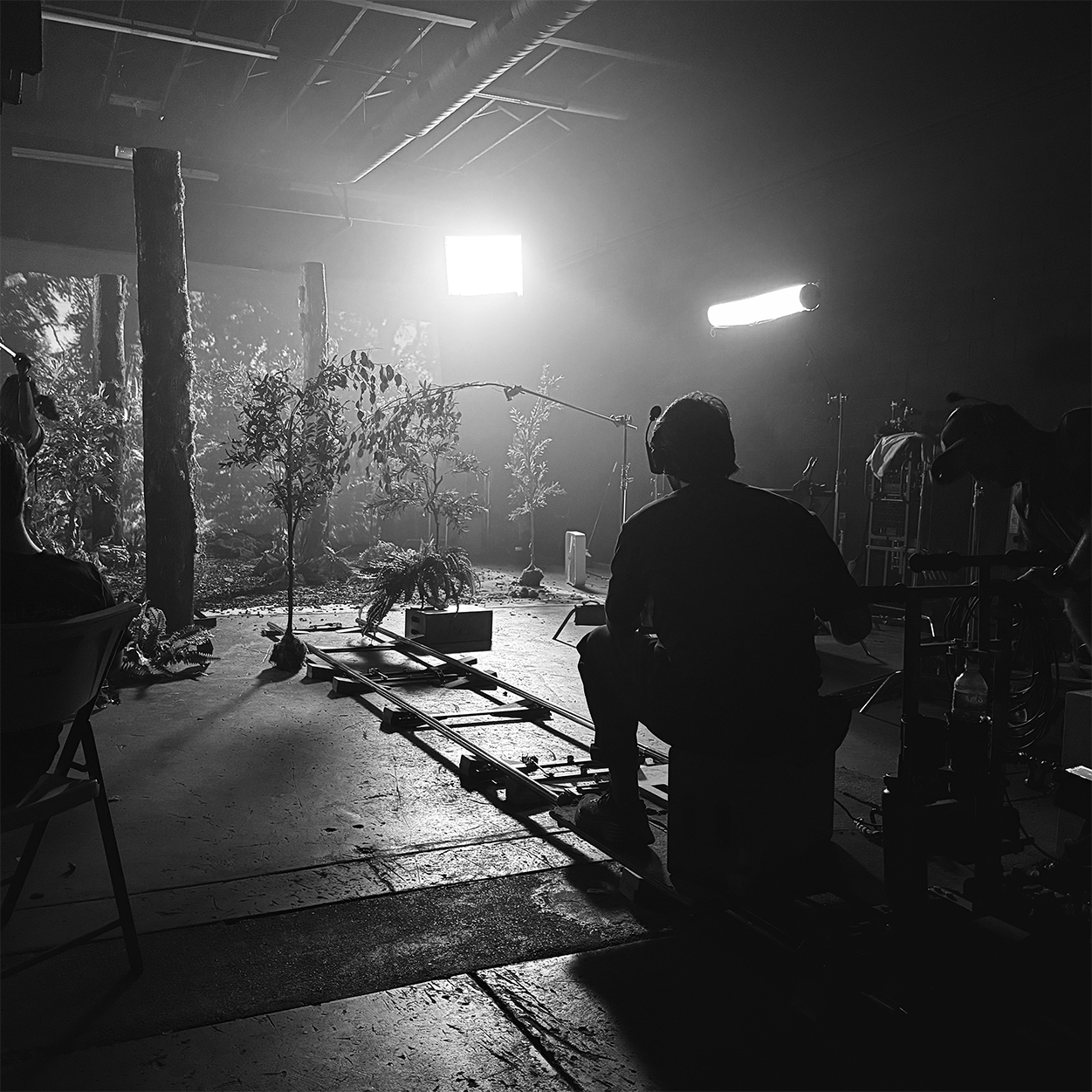
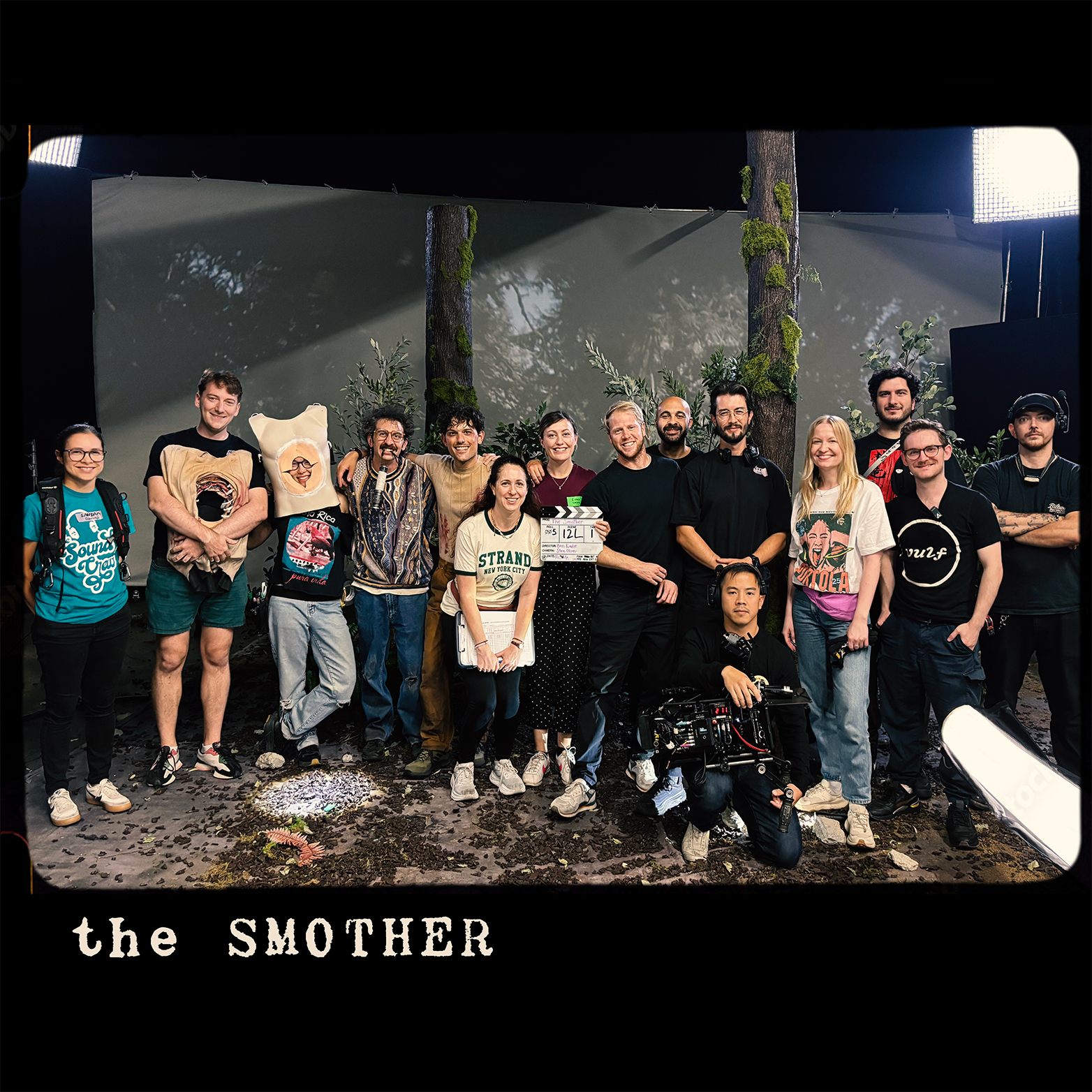
We wanted to explore this theme further in the short film, as we felt like complexities within platonic friendships are under-examined in cinema. We created an artificial forest inside a warehouse in LA and used practical and special effects to create a spooky, atmospheric world — including a VFX lake, no AI.
What surprised you most about the filmmaking process, and was there a moment that changed how you saw the story?
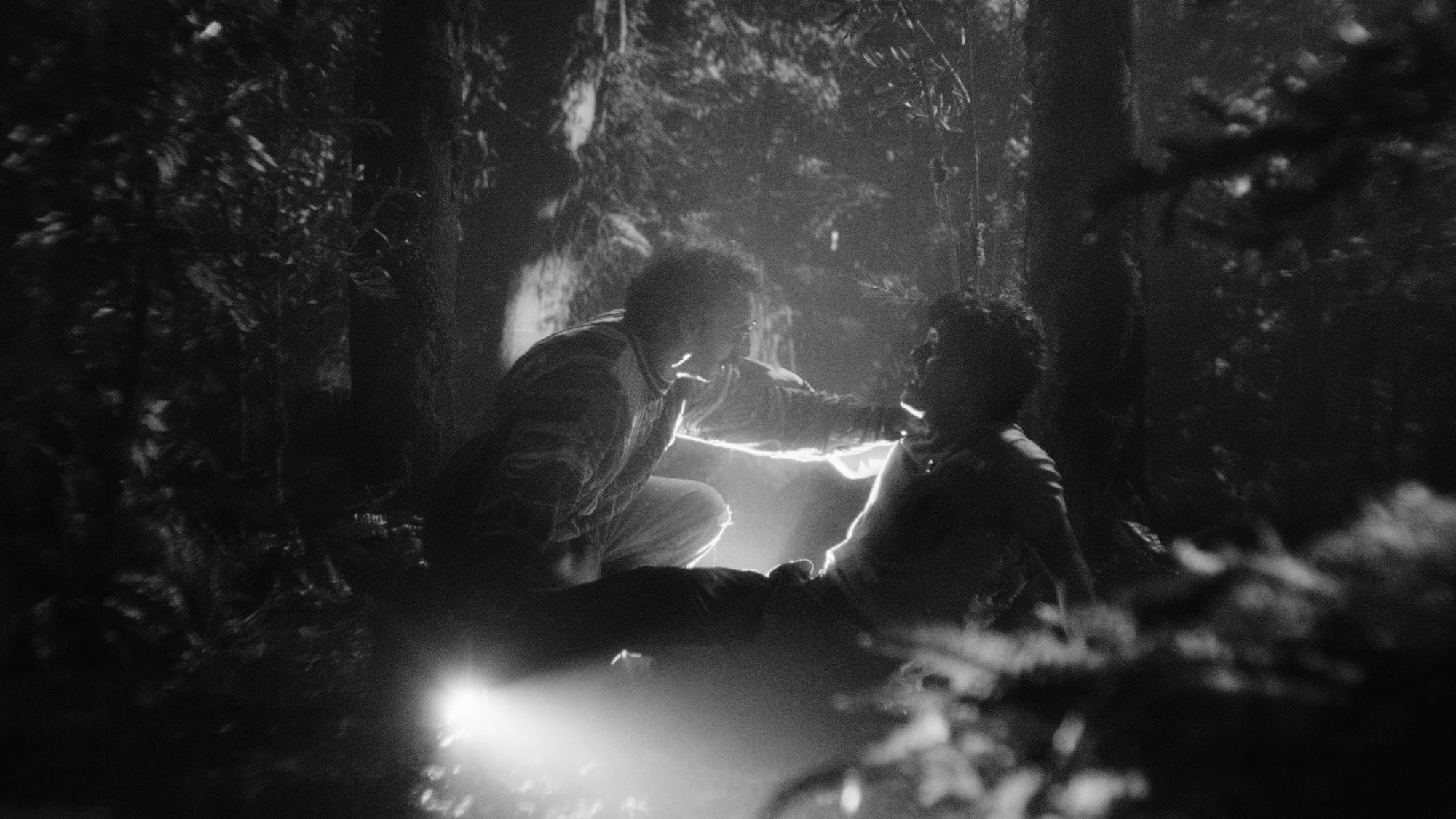
Something that changed how I saw the story during its journey from stage to screen: I resonate strongly with the character of Sam, who can fairly be described as "anxiously attached." Before the process of making the film, I had perceived more avoidant type personalities, like Jack, as aloof or unaffected. The film brought home the understanding that people like Jack can feel even more monstrous and desperate for love than they are able to express. I think audiences will naturally see themselves in one or both of these characters and think about their own friendships.
I was also surprised at how seamlessly the shoot went, thanks to the help of many friends who volunteered in addition to the cast and excellent crew. I thought the shoot would be somewhat stressful due to budget and time constraints, but it was an incredible experience and one of the best things I've ever done.
What moment in the film feels most like you, or like something only you could have made?
The combination of Sam's earnestness and unintentional humor and awkwardness feel very close to me — though I also try to be funny on purpose. The tonal balance and stylized aesthetic are "on brand" for the kind of films I'd like to produce.
What was the hardest creative decision you made while making the film?
The most significant decision was to shoot in a warehouse rather than on location in a real forest. However, this limitation enhanced the final look of the piece.
Decisions around score were also challenging, because we wanted to make sure we captured the right tone without being too comedically heavy handed or too self serious.
What tool, technique, resource, collaborator, or mindset shift helped most during production?
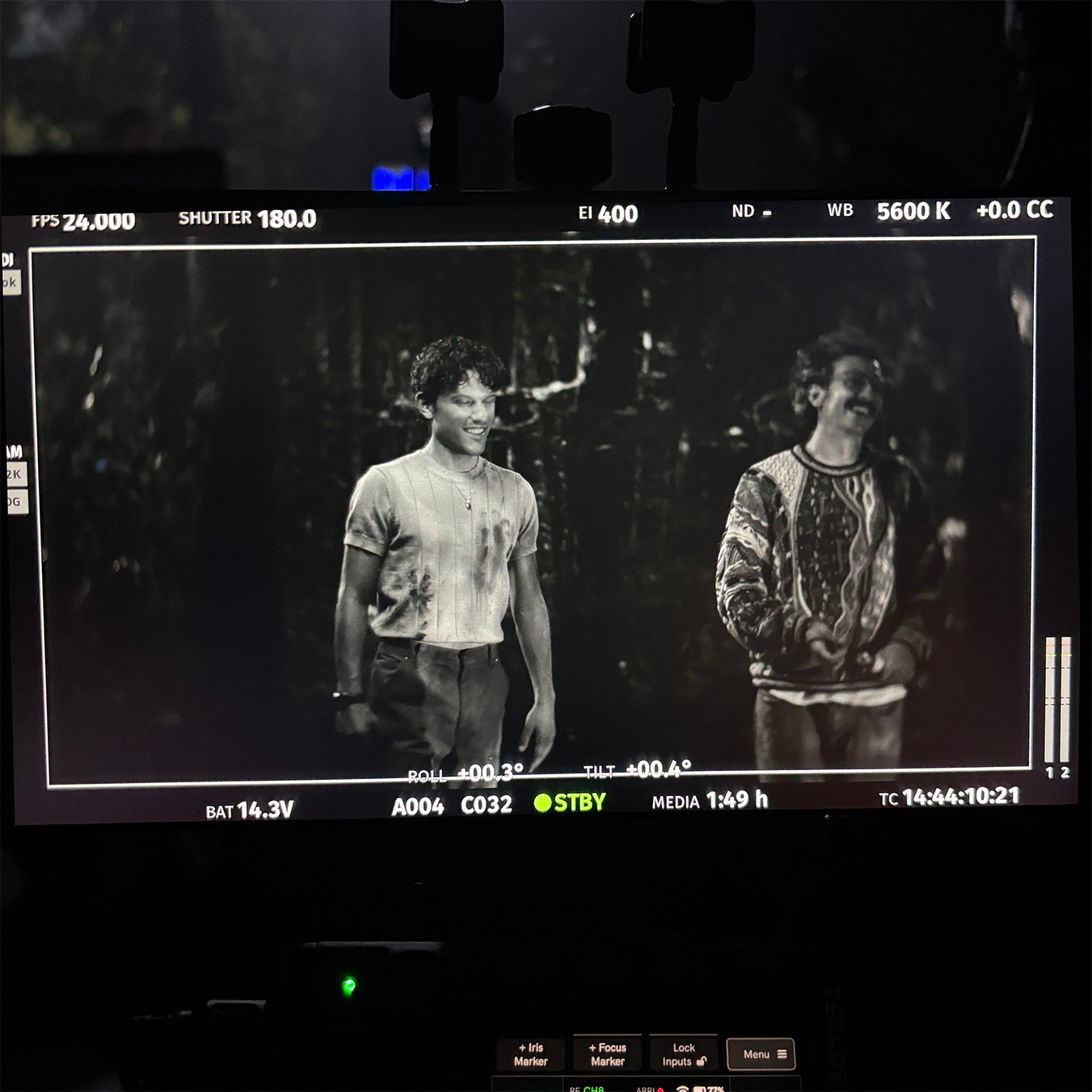
Demetri and Nick, the actors, were already friends outside of this project, and their familiarity allowed a level of play and improvisation that infused the script and elevated the onscreen chemistry. Their hilarious interactions in rehearsals and on set created an atmosphere of fun and play, and Ciara's openness to incorporating their riffs into the screenplay enhanced the sense of collaboration.
What is the greatest strength of independent filmmaking, and how did you lean into it here?
The greatest strength of independent filmmaking is creative ownership, control and freedom to take big swings and lean into some quirkiness and original elements. It means that the writing fundamentally has to be strong and true, as we didn't have budget for glossy visuals or set pieces.
We leaned into budget constraints as a forcing function for creativity and innovative problem solving, including how we built the set and had to be decisive during the shoot, without the luxury of time to overthink things. The small budget manifested in efficiency in all aspects of making the short, in a way that was an absolute blessing.
How does your film fit within, or push the boundaries of, its genre?
The Smother pushes the boundaries of the horror/comedy genre, as the fear and tension come primarily from emotional conflict and the anxiety that derives from complexities and cracks in a friendship, rather than an external monster or violence. The comedy similarly comes from the discordant notes we strike with each other and the way we can get out of alignment with our friends even when there is a history of love.
What we hope audiences take away is this: smothered people smother people. We hope they reflect on their friendships and resonate emotionally with the dynamics at play, and maybe feel seen by our representation of how hard it can be to have intimate conversations with friends. At the core of all my work is a desire to create a feeling of connection, resonance and being seen — both in our shared human beauty and moments of ugliness.
What does it mean to have your film selected for FilmQuest, and where does the film go next?
It is an incredibly exciting honor and you should see my face, it's like :D :D :D. We are so lucky and grateful to be part of this festival and to connect with an incredible community of genre filmmakers. We are also thrilled for Demetri, who is nominated for a Best Supporting Actor award. He deserves it.
We plan to expand the short into a feature film with additional characters and interesting locations. We want to continue diving into the psychological aspects of The Smother, but with even more humor, horror and honesty.
For future projects, I want to continue focusing on emotional truths, complex, ambiguous relationships, and creating beautiful, stylized worlds. It has inspired me to continue producing independent, low budget shorts — and hopefully features. It was a joyful experience to make The Smother.
Main Cast & Crew
- Nick Marcone (as Jack) — member of Public Assembly theater company in Los Angeles, where he has written and acted in several plays. In addition to acting, Nick works for the City of LA Office of Housing and Homelessness Solutions.
- Demetri Bellardinelli (as Sam) — LA-based actor and improviser, nominated for Best Supporting Actor at both FilmQuest and Nightmares Film Festival.
- Ben Kadie (Director) — an innovative director whose work combines technical wizardry, surreal whimsy, and rich emotional storytelling. BFA in film production from USC; his short films have screened at more than 200 festivals worldwide and his music videos have been viewed over a million times online.
- Ciara Ni Chuirc (Writer) — playwright whose plays include Made By God (Off-Broadway), Juggernaut, Afghanistasia, Ferns, and Sure This Is It, performed and developed in Dublin, Philadelphia, Washington DC, Los Angeles, and New York. Recipient of the Inkwell Development LAB Lerner Fellowship (2024) and a Theatre Project Award (2022) from the Irish Arts Council. MFA in Playwriting from Columbia University. The Smother is her first short film.
- Leigh Adler (Producer) — a producer with experience in management consulting and marketing strategy, with an MBA from Columbia Business School and a dual degree in Law and Art History from the University of New South Wales. Her 2026 productions include When It Finds You and Top Five All Time (in post-production).
- Film website here
Filmmaker Opportunities
💛 Fund your next project with fiscal sponsorship
Have a project in the works? As a 501(c)(3) nonprofit, the Cinematography for Actors Institute can accept tax-deductible donations on your film's behalf — a door-opener for grants, foundations, and supporters who want to back your work. We've serviced over 100 projects to date and helped route over $800,000 in funding to filmmakers. Explore fiscal sponsorship →
📬 Grant deadlines and festival opportunities, straight to your inbox
The CFA newsletter rounds up grants, festival calls, and community news for independent filmmakers — the kind of opportunities that are easy to miss and painful to miss. Join the newsletter →
🎬 Focus on the creative — we'll help with the logistics
Production Management, CFA's newest member program, launches this November: production insurance and workers' comp, payroll, film permits, gear rental coordination, SAG-AFTRA compliance, contract drafting, production consulting, and crew recommendations — handled by a team of working filmmakers, à la carte or all in, in partnership with Creative Access Group. It's waitlist-only until launch. Join the waitlist →
League of Filmmakers is published by our parent organization, the Cinematography for Actors Institute — a 501(c)(3) dedicated to education, community, and capital for underrepresented filmmakers and actors. Learn more about CFA →