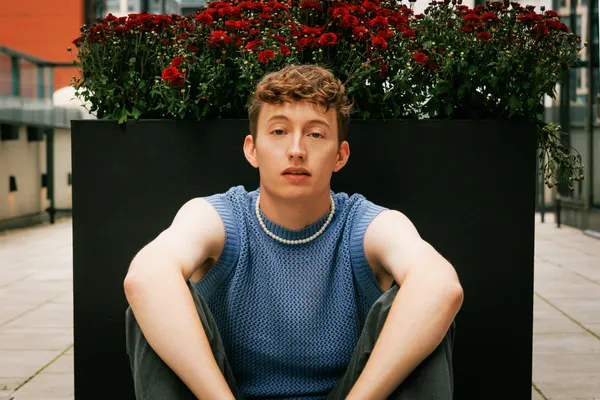
Beneath Washington Square, an urban park in Philadelphia, lie the bodies of hundreds of enslaved people. That is true. What David Dylan Thomas does with that fact is not: in White Meat, they all come back one night, and they only eat white people. At the center is Saraounia Castillo, a young Black woman with a whole bunch of white friends who are about to have a very bad night — and who may or may not deserve her help getting through it.
Thomas's screenplay is an Official Selection at FilmQuest, a festival he describes, with evident pleasure, as the horror filmmaker's festival. The premise lived in his head for years as a sketch before he committed it to the page, and the long gestation shows: White Meat is funny where it wants to be, historically precise where it needs to be, and entirely unwilling to let anyone off the hook.
Key Takeaways
- A true piece of Philadelphia history — the mass burial of enslaved people under Washington Square — becomes the engine for a zombie story with a very specific hunger.
- Thomas blends two distinct zombie traditions, Vodou and Romero, and revisits Blaxploitation to push Black liberation ideas further than most horror does.
- Independence is the point: these are scenes a studio would ask him to cut, which is exactly why he intends to keep control of the IP.
Thomas spoke with us about the legend that started it, the slave auction scene only he could have written, and why a premise-driven writer had to learn to let his characters drive.
Interview
What drew you to make this film, and why this story, why now?
My wife and I moved to Philadelphia in 2004 and immediately learned the legend of Washington Square Park and the hundreds of slaves buried beneath it. I immediately thought, what would happen if they all came back from the dead as zombies? Who would they eat? It sat as a Key-and-Peele-esque sketch in my head for years until one of those two made Get Out and it lit a fire under my ass to write a real screenplay to support it.
History, and Black History in particular, is under attack right now in this country, so it is important to me to tell this story now, as it highlights not only Black history but metaphorically tackles the consequences for trying to bury history that should be told.
What moment in the film feels most like you, or like something only you could have made?
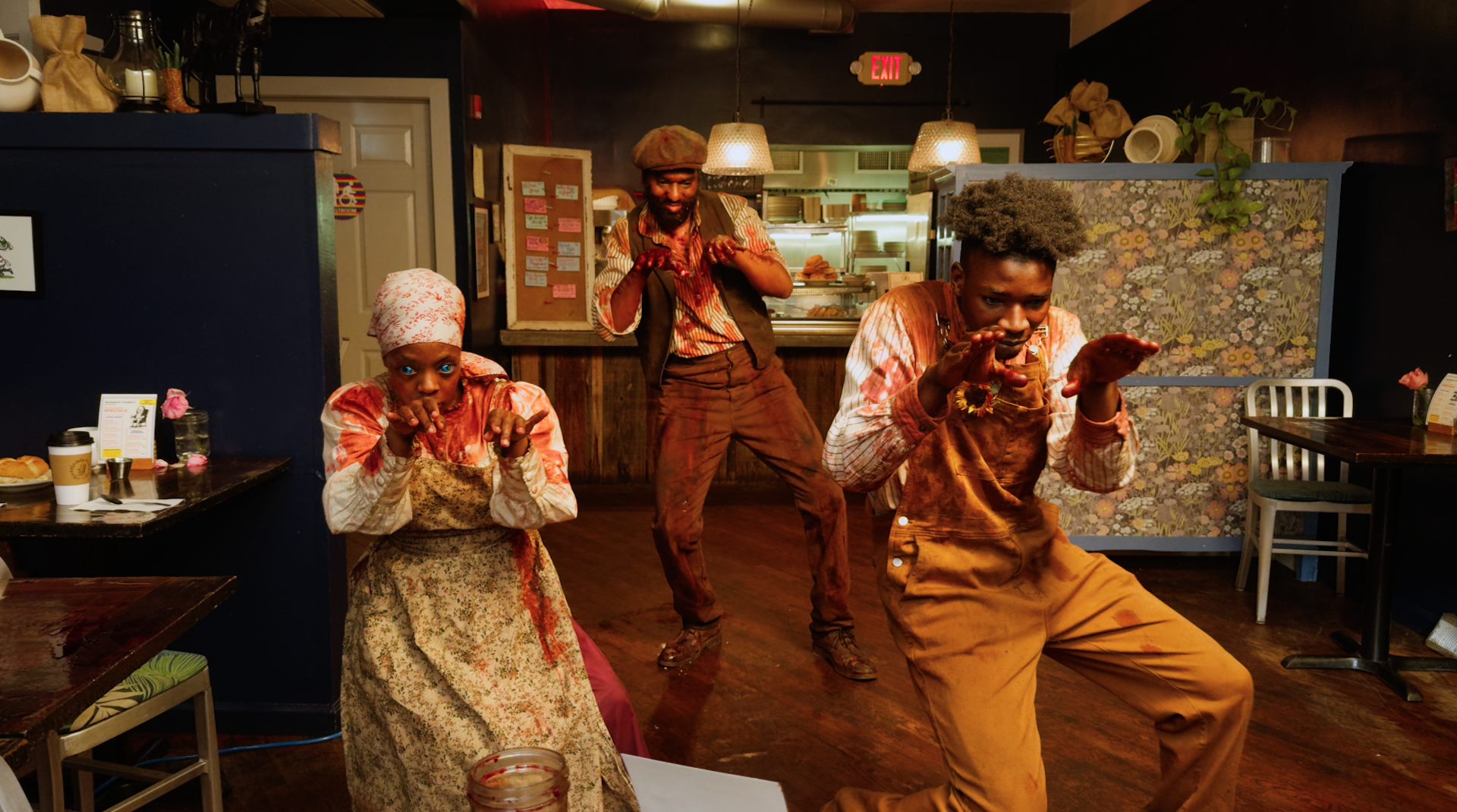
There's a slave auction scene in the movie that mixes historical fact, horror, and comedy in a way that I think is distinct to my sensibilities.
What was the hardest creative decision you made while making the film?
Honestly, deciding to make a short to support the feature. I was hoping to go direct from screenplay to feature, but we needed a proof of concept. I was hesitant to create a short that might cannibalize — pun intended — the feature, but we found a story in that world we could tell without giving away too much about the feature that, ultimately, was more creatively satisfying than just going straight to feature. (Access to a screener for that short, called White Meat: Appetizer, is available upon request.)
What tool, technique, resource, collaborator, or mindset shift helped most during production?
To translate this to different drafts of a screenplay, the biggest change overall was improving and giving more depth to the characters. I'm a very premise-driven creator, and so it takes me some time to let the characters take control and really guide the story the way they need to, rather than let the story try to dictate their actions.
How does your film fit within, or push the boundaries of, its genre or form?
I think we're mixing two different zombie traditions — Vodou zombies versus Romero zombies — in a way that hasn't really been done before. And I think we're revisiting Blaxploitation in a way that pushes Black liberation ideas further than most horror does.
What do you hope audiences take away from this film?
I define my community first and foremost as horror fans. Horror fans are very often folks who feel marginalized and find comfort and visibility in stories at the edges of, or beyond, human experience. So in a larger sense my community is the disenfranchised and threatened in an America that has, among other things, never really dealt with the legacy of slavery.
That idea is at the core of White Meat. At a time when our history is being actively suppressed, it is critical to remind people, even in a fantastical way, about what has happened and how it still impacts us today.
Also, White Meat taps into a rich history of Black horror cinema created by Black people for Black people that hit its first real peak in the 1970s wave of so-called "Blaxploitation" films that, in spite of trafficking in stereotypes, centered Black lives in a way cinema had failed to up until then.
What is the greatest strength of independent filmmaking, and how did you lean into it on this project?
Freedom to decide what story to tell. There are a lot of scenes in this screenplay that a big studio would very likely tell me to delete, especially in the current climate. Writing and, hopefully, producing independently will allow us to keep control of this IP and keep control of how truthful we want to make this story — even though it's about Black zombies eating white people.
What does it mean to have your screenplay selected for FilmQuest, and where do you see this film going next?
It is a huge honor to have my screenplay selected for this prestigious festival. To know that it really is the horror filmmaker's festival is that much more of an honor, in a "game recognizes game" kind of way.
I would love for White Meat to be made into a feature, and for that feature to lead to more stories about Black liberation told through the lens of really fun genre fare. Working on this film in particular has given me a hunger for telling more stories that combine genre, social justice, and history, giving audiences an entertaining way in to get excited to learn more about history, especially history that is being actively suppressed in this day and age.
At the core of all his work, Thomas says, is a desire to light a fire under people's asses. White Meat obliges.
Main Cast & Crew
Filmmaker Opportunities
💛 Fund your next project with fiscal sponsorship
Have a project in the works? As a 501(c)(3) nonprofit, the Cinematography for Actors Institute can accept tax-deductible donations on your film's behalf — a door-opener for grants, foundations, and supporters who want to back your work. We've serviced over 100 projects to date and helped route over $800,000 in funding to filmmakers. Explore fiscal sponsorship →
📬 Grant deadlines and festival opportunities, straight to your inbox
The CFA newsletter rounds up grants, festival calls, and community news for independent filmmakers — the kind of opportunities that are easy to miss and painful to miss. Join the newsletter →
🎬 Focus on the creative — we'll help with the logistics
Production Management, CFA's newest member program, launches this November: production insurance and workers' comp, payroll, film permits, gear rental coordination, SAG-AFTRA compliance, contract drafting, production consulting, and crew recommendations — handled by a team of working filmmakers, à la carte or all in, in partnership with Creative Access Group. It's waitlist-only until launch. Join the waitlist →
League of Filmmakers is published by our parent organization, the Cinematography for Actors Institute — a 501(c)(3) dedicated to education, community, and capital for underrepresented filmmakers and actors. Learn more about CFA →