
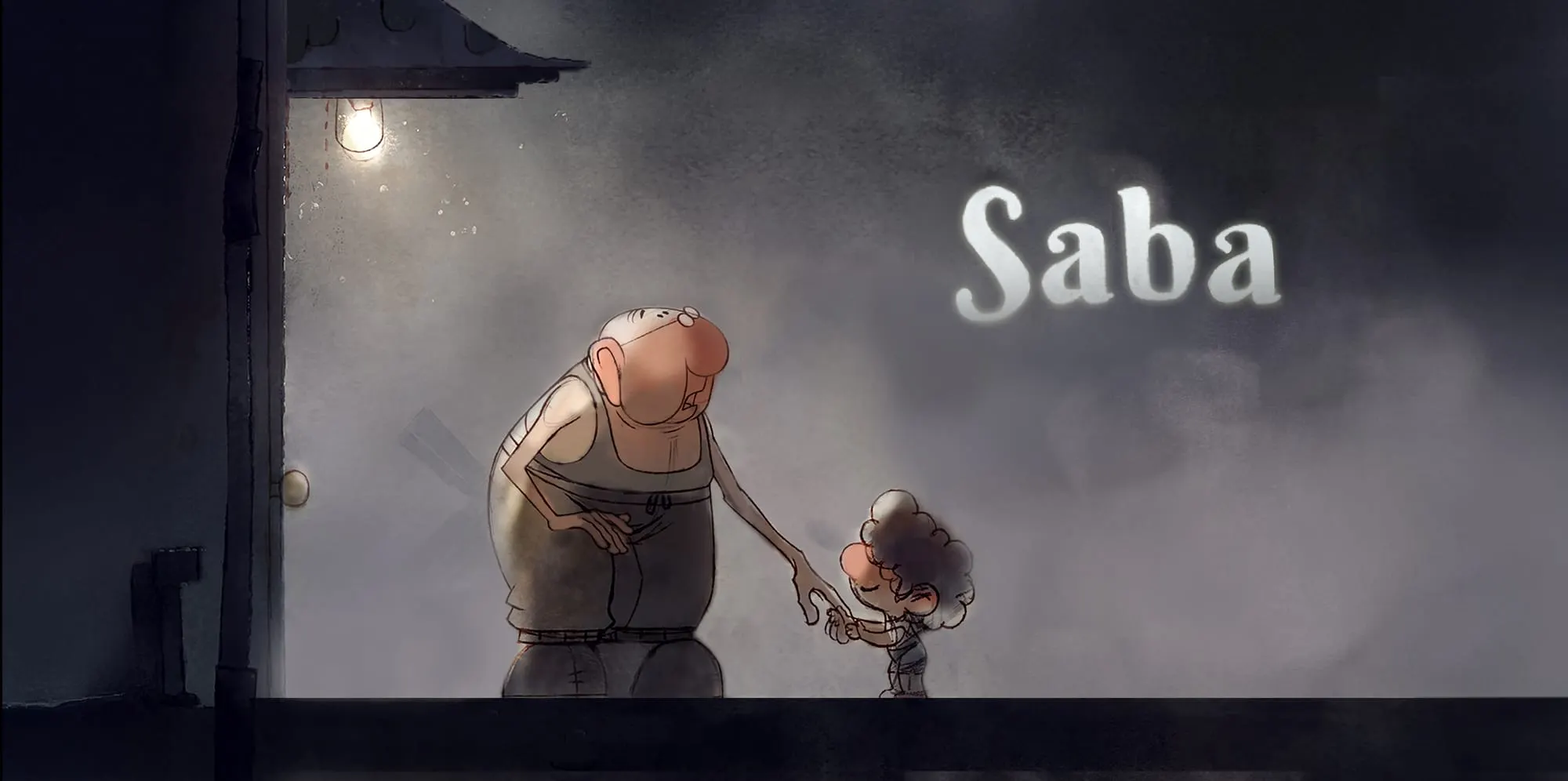
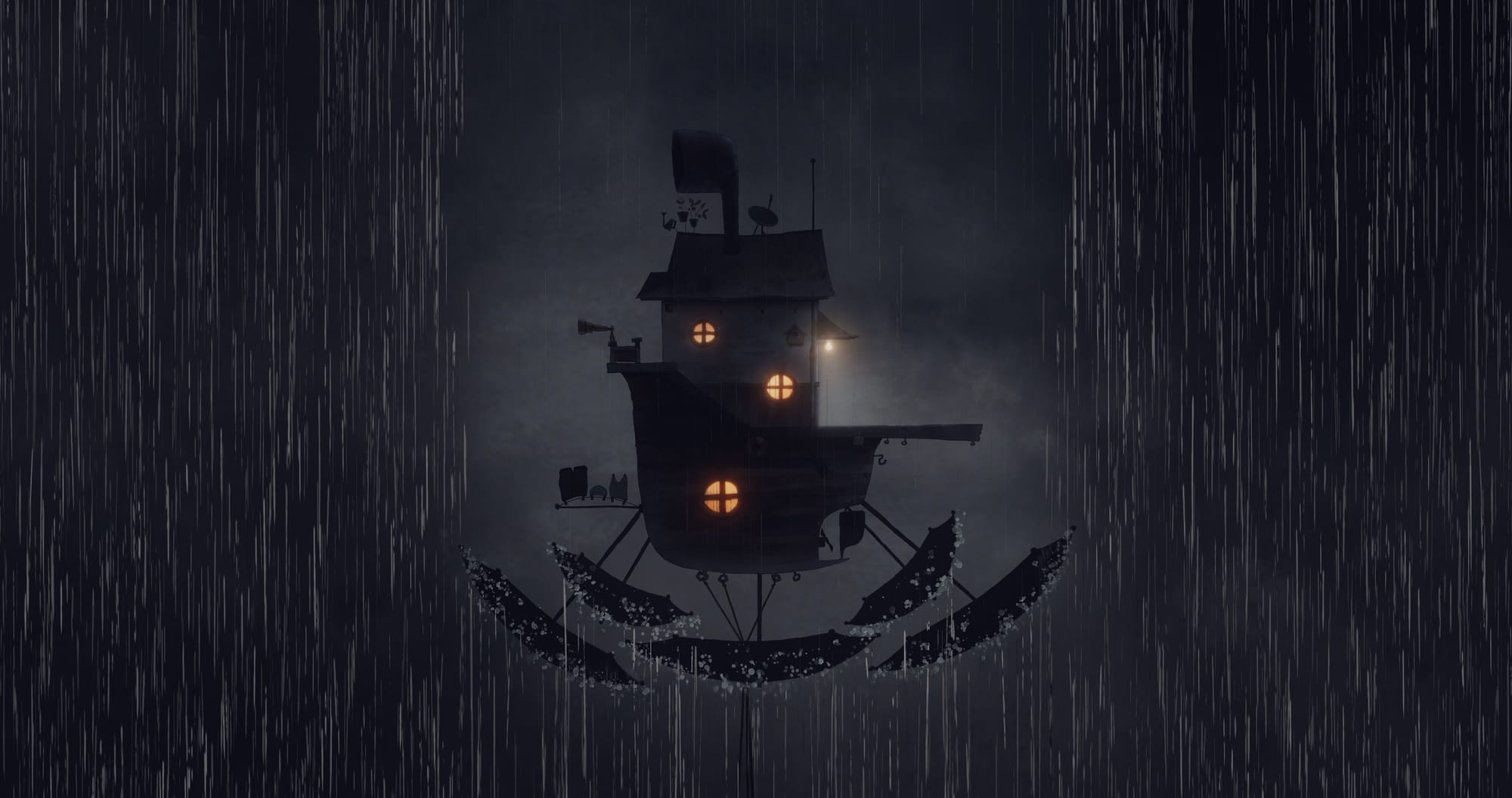
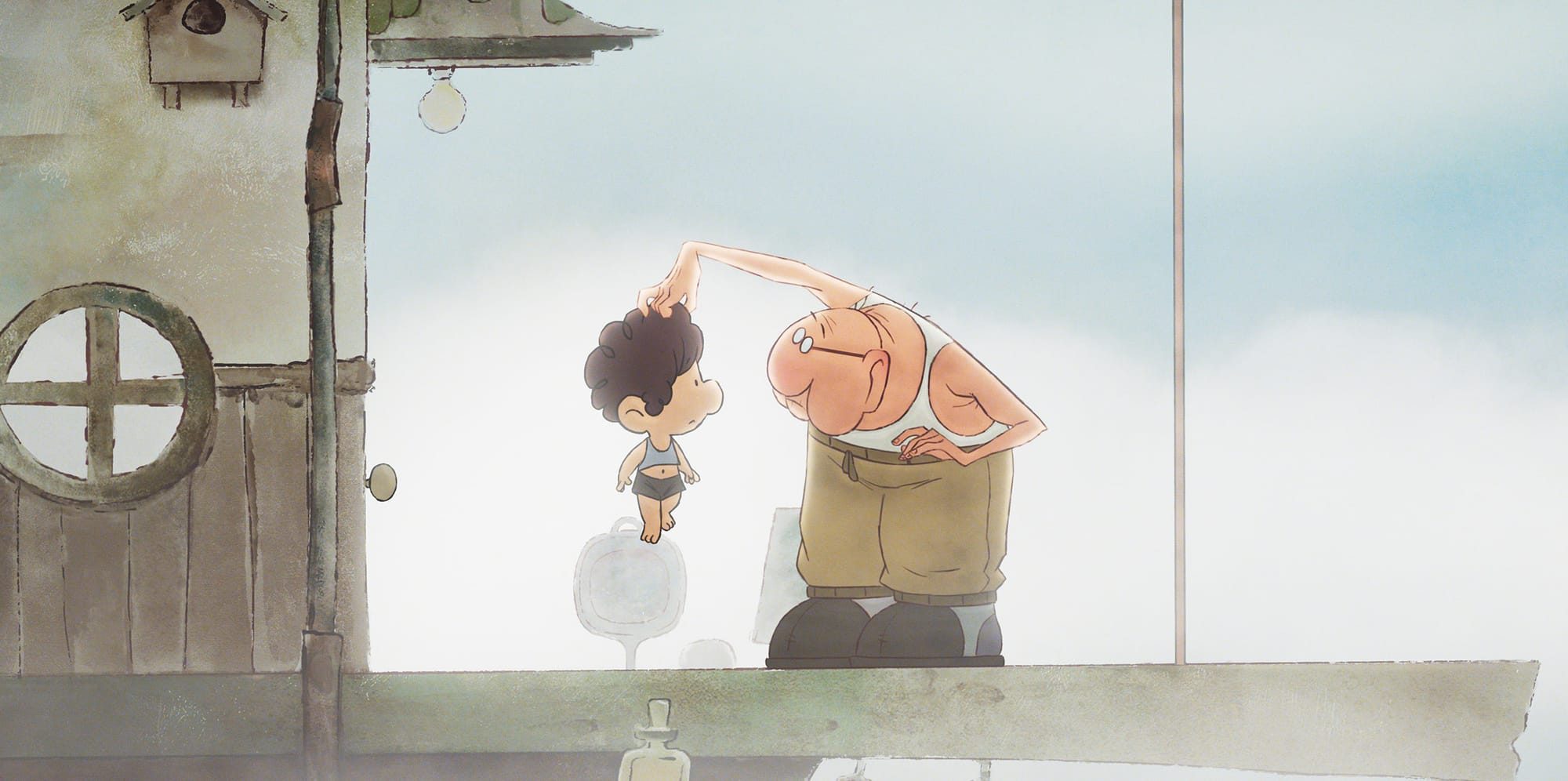
There is a question at the heart of Saba that most of us carry quietly: if you could spend one more moment with someone you've lost, what would you say? Liron Topaz — an award-winning director, supervising animator, and former Animation Department Chair at DreamWorks Animation — builds an entire world around that longing. In an abstract, symbolic reality where gravity is reversed, a grandfather guides his grandson through a surreal existence, until a violent storm tears one of the ropes anchoring their home, and their life together with it.
What follows is the boy's search for closure, told through a stylized, poetic visual language and almost no dialogue. Drawing on the loss of his own grandfather, Topaz has made a film that treats grief not as an event with an ending but as something that changes shape over time — and, at HollyShorts, finds audiences from every background connecting to the same ache.
Key Takeaways
- Saba unfolds as a single continuous shot, blending traditional 2D animation with virtual cinematography to mirror how memory and grief flow without interruption.
- Topaz brings studio-scale craft — honed on Kung Fu Panda, How to Train Your Dragon, and the Oscar-shortlisted short Bilby — to a deeply personal, independent story.
- The film's greatest strength came from restraint: the more the team explained, the less the film felt. Trusting the audience made it stronger.
Topaz spoke with us about longing, the discipline of taking things away, and the two filmmaking worlds he's spent his career trying to merge.
Interview
What drew you to make this film, and why this story, why now?
Saba began with a very personal question: if you could spend one more moment with someone you've lost, what would you say?
I lost my grandfather many years ago, but I realized that grief doesn't really end, it simply changes shape over time. I wanted to make a film about that longing we all share for one more conversation, one more hug, one more chance to say the things we never got to say.
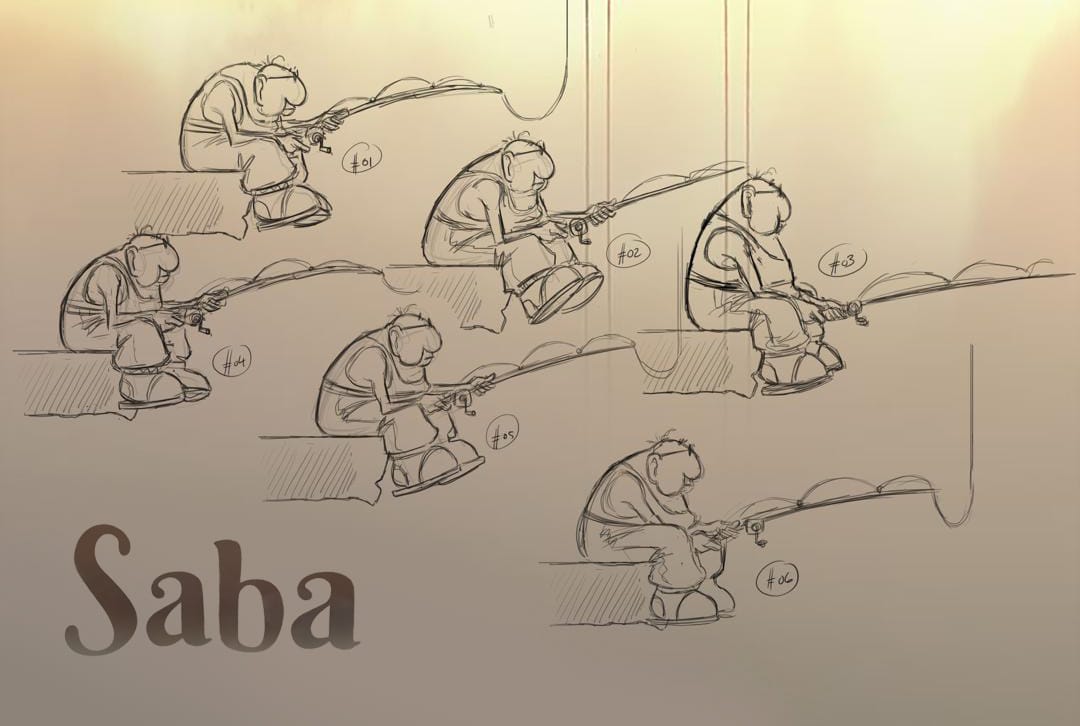
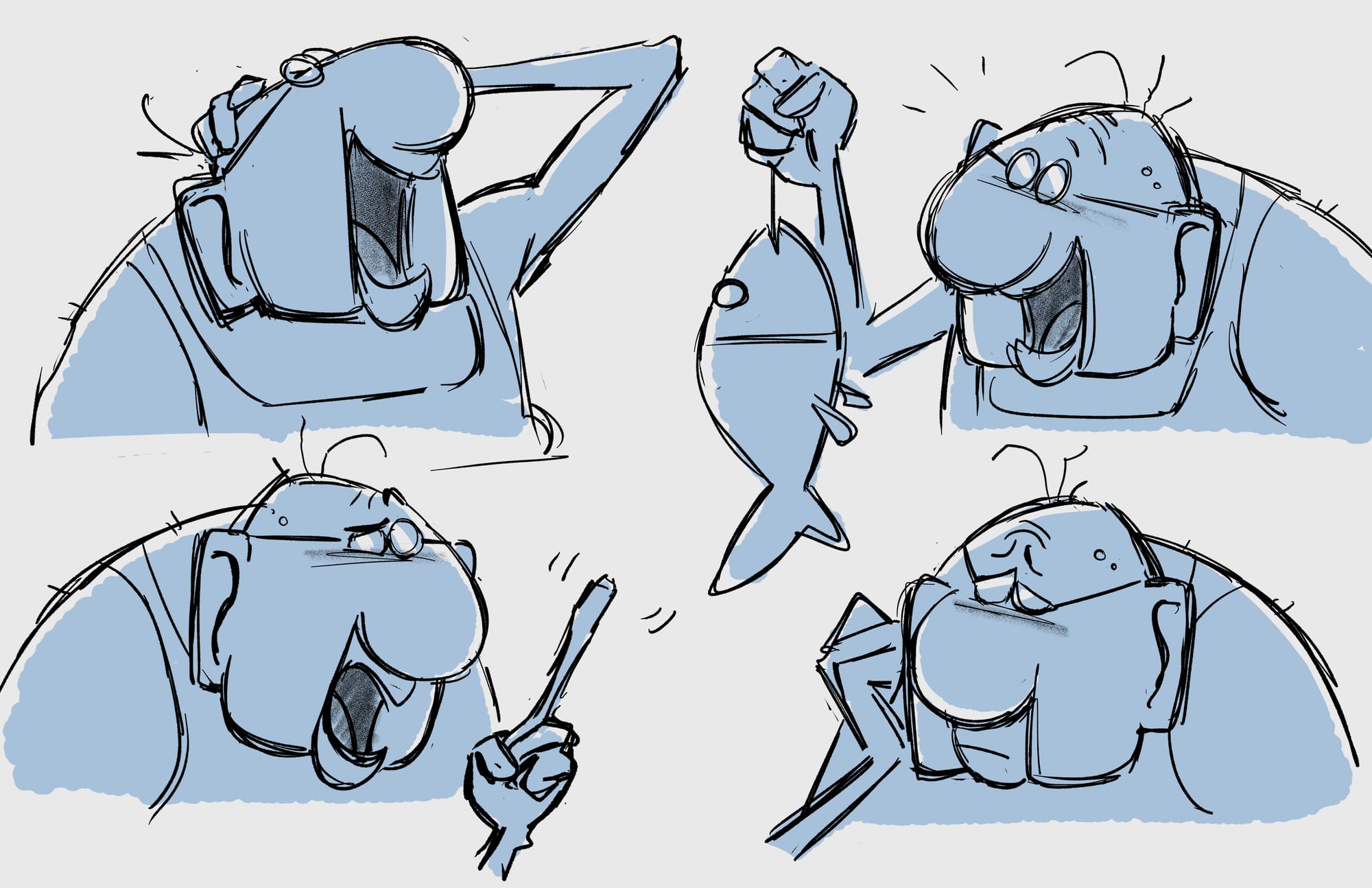
I also felt animation was uniquely suited to tell this story. Some emotions are difficult to express literally, so instead we built a surreal world where gravity flows upward and memories become physical places. It allowed me to tell an emotional truth rather than a realistic one.
What surprised you most about the filmmaking process, creatively or logistically?
What surprised me most was discovering that the film became stronger every time we took something away.
Early versions explained more about the world and the story, but as we refined it, we kept stripping things back. We trusted the audience to connect the dots emotionally instead of intellectually. That was a scary process because you're constantly wondering if you're taking away too much. In the end, those quieter moments became the most powerful.
The other big surprise was how much the continuous-shot approach influenced the storytelling. It wasn't a visual gimmick, but it forced us to think differently about pacing, transitions, and emotion because there was never an opportunity to hide behind a cut. Every moment had to naturally lead into the next, and I think that made the emotional journey feel much more immersive.
What moment in the film feels most like you, or like something only you could have made?
I think the film is really a combination of many things that define me as a filmmaker. I've always been drawn to poetic, non-verbal animated shorts, the kind of deeply personal films that are often made outside the studio system.
At the same time, I've spent nearly two decades working on some of the biggest animated films in the world. That experience taught me an incredible amount about storytelling, craft, and technical execution.
What feels uniquely mine is the combination of those two worlds: bringing the production value and cinematic language of large studio filmmaking to a deeply personal, independent story. That's the kind of filmmaker I aspire to be.
What was the hardest creative decision you made while making the film?
The hardest creative decision was deciding how much to explain.
As filmmakers, we're often tempted to answer every question and make sure the audience understands everything. But with Saba, I realized the opposite was true. The more we explained the rules of the world or the meaning behind certain moments, the less emotional the film became.
It took a lot of restraint to trust the audience and leave space for their own interpretations. In the end, I think the film became stronger because it asks viewers to bring their own memories and experiences into it.
What tool, technique, resource, or mindset shift helped most during production?
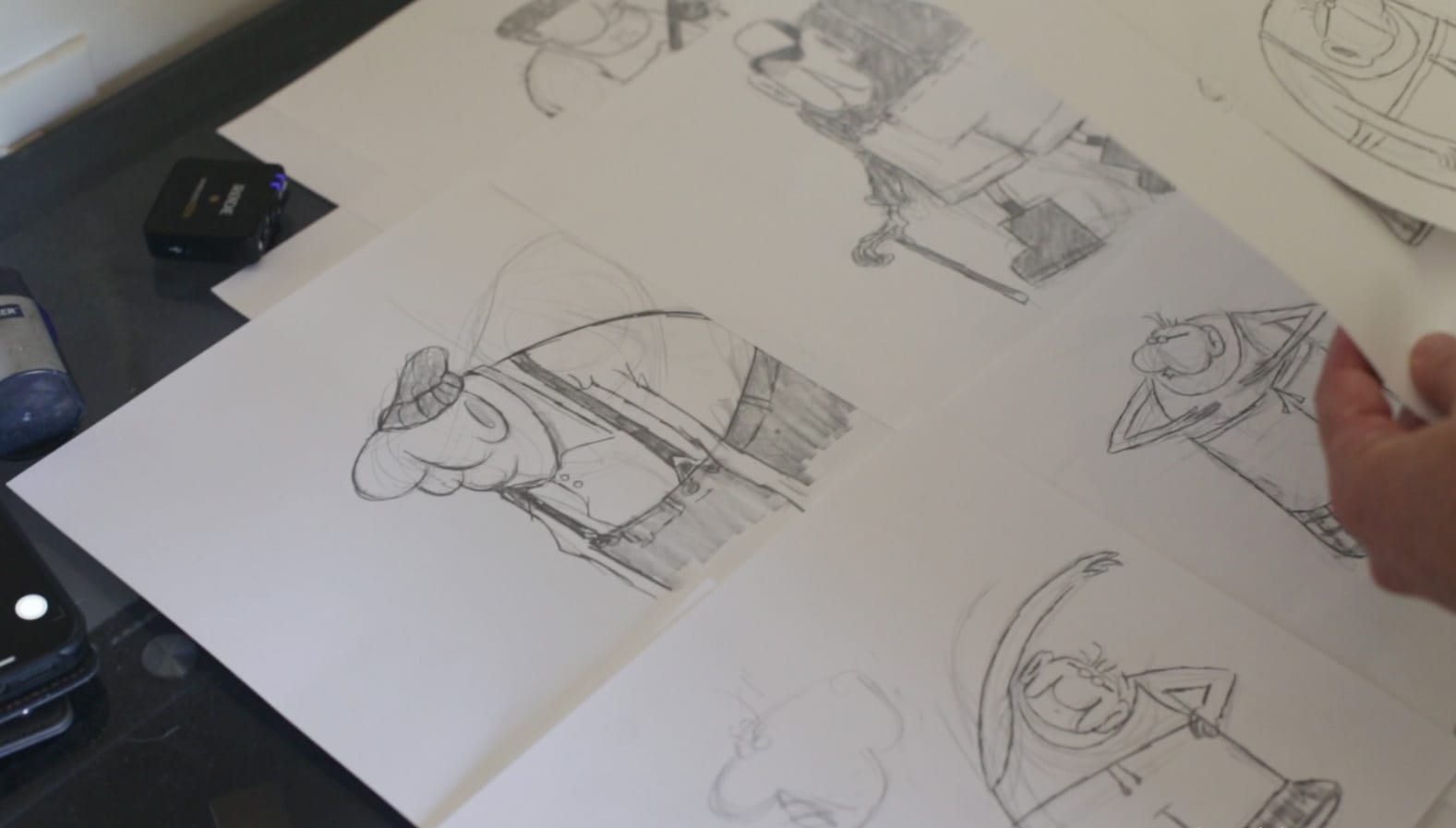
The biggest resource was having the best team I could have wished for, a team that wasn't afraid to challenge my ideas. The best conversations weren't about whether something looked beautiful, but whether it made us feel something.
Those discussions pushed the film far beyond what I could have achieved on my own. They constantly reminded me that every creative decision, whether technical or artistic, should ultimately serve the emotional experience.
What is the greatest strength of independent filmmaking, and how did you lean into it here?
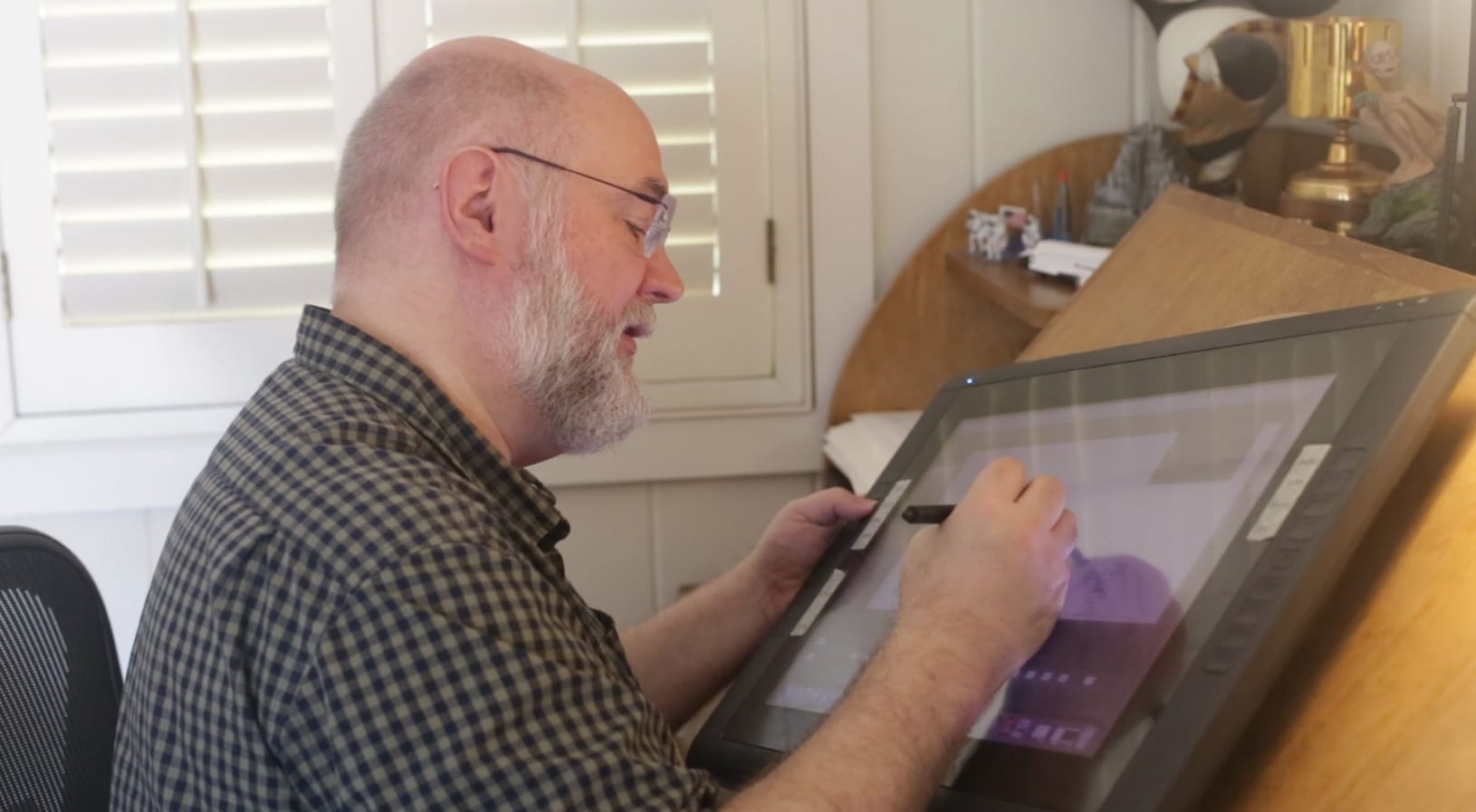
The greatest strength of independent filmmaking is creative freedom. It gives you permission to make the film you truly believe in, instead of the one you think you're supposed to make.
With Saba, we embraced that freedom every step of the way. We built a film around a continuous shot, minimal dialogue, and a deeply personal story, choices that probably wouldn't have survived a committee process.
The biggest lesson I learned is that if you're going to spend years making a film, make the one you would have wanted to watch. That's the film you'll stay passionate about through all the inevitable challenges, and I believe audiences can feel that honesty.
What does it mean to have your film selected for HollyShorts, and where do you see it going next?
It's a real honor. HollyShorts has become one of the premier destinations for short films, and it's incredibly exciting to share Saba with an audience that genuinely loves the short film format. One of my favorite parts of the festival journey has been watching people from completely different backgrounds connect with the same emotions. Every screening reminds me that while grief is deeply personal, it's also universal.
The film was always conceived as a complete story, and I wouldn't change that. But one of the biggest surprises has been how many people have asked about the world beyond the film. Seeing audiences become so curious about its mythology and wanting to spend more time in that universe has made me start thinking there may be a much bigger story waiting to be told as a feature.
Main Cast & Crew
- Writer / Director: Liron Topaz — award-winning director, supervising animator, and former Animation Department Chair at DreamWorks Animation (Kung Fu Panda, How to Train Your Dragon, The Croods, The Bad Guys). His 2018 short Bilby premiered at Annecy, won multiple awards, and was shortlisted for an Academy Award. He most recently directed DreamWorks' theatrical short The Bad Guys: Little Lies and Alibis (2025).
- Producer: Lirit Rosenzweig Topaz — producer with over two decades of experience across animation, television, film, and live events; founder of Neko Productions and FBF Animation, with executive producing credits spanning Sonic the Hedgehog, Marvel Avengers, Harry Potter, Barbie, Dr. Seuss, and Hulu's Ask Dr. Ruth.
- Production Design: Avner Geller — animation artist and Student Academy Award winner for Defective Detective; former Visual Development Artist at DreamWorks and Art Director at Netflix, currently Production Designer on an upcoming Sony Pictures Animation feature.
- Lead Animator: James Baxter — acclaimed character animator whose work spans Who Framed Roger Rabbit, Beauty and the Beast, The Lion King, The Prince of Egypt, Shrek 2, Kung Fu Panda, and more; currently Director of Character Animation at Netflix.
Filmmaker Opportunities
💛 Fund your next project with fiscal sponsorship
Have a project in the works? As a 501(c)(3) nonprofit, the Cinematography for Actors Institute can accept tax-deductible donations on your film's behalf — a door-opener for grants, foundations, and supporters who want to back your work. We've serviced over 100 projects to date and helped route over $800,000 in funding to filmmakers. Explore fiscal sponsorship →
📬 Grant deadlines and festival opportunities, straight to your inbox
The CFA newsletter rounds up grants, festival calls, and community news for independent filmmakers — the kind of opportunities that are easy to miss and painful to miss. Join the newsletter →
🎬 Focus on the creative — we'll help with the logistics
Production Management, CFA's newest member program, launches this November: production insurance and workers' comp, payroll, film permits, gear rental coordination, SAG-AFTRA compliance, contract drafting, production consulting, and crew recommendations — handled by a team of working filmmakers, à la carte or all in, in partnership with Creative Access Group. It's waitlist-only until launch. Join the waitlist →
League of Filmmakers is published by our parent organization, the Cinematography for Actors Institute — a 501(c)(3) dedicated to education, community, and capital for underrepresented filmmakers and actors. Learn more about CFA →


