
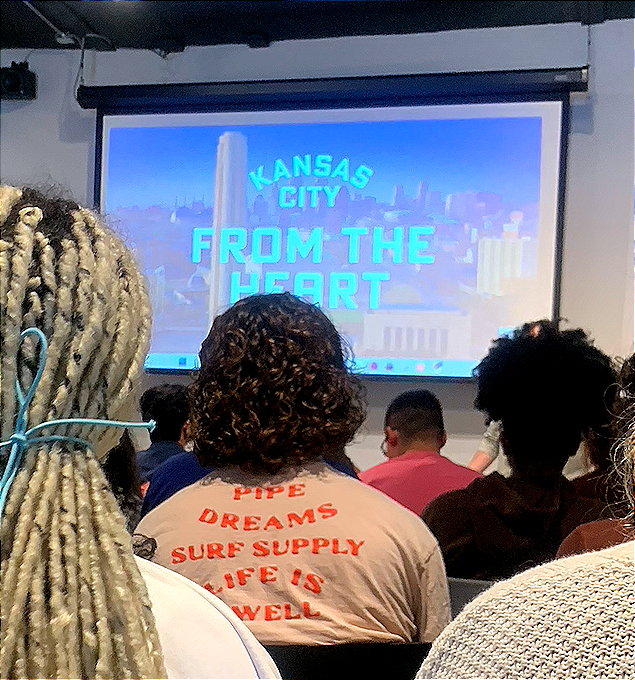
A little while back, me and about fifty other film students from the Kansas City Metropolitan area had the honor of attending a production assistant training in preparation for the World Cup, which is in the area this summer. Those of us in attendance were designated as apprentices in the Kansas City Film Crew & Services Directory. As a student filmmaker, I was excited to learn how to work professionally.
Production assistants (PAs) are the lowest rung on the ladder that is the film industry. They are "an extra pair of hands" and perform many low level tasks such as distributing walkie talkies, driving talent, and, of course, going on coffee runs.
Just because the job is the lowest doesn't mean that it's unimportant. PAs ensure that a production is always running smoothly by taking care of small tasks that slow down the process.
I learned a lot of small tips at this training that I'd like to share with you.
1) Always be PREPARED!
On the surface, this may seem obvious. You should always have everything you need for the day, no matter where you go. However, I also learned that there's a lot of things that a PA should have that you wouldn't suspect.
Several of the speakers told us that they keep extra t-shirts and socks in case they get too sweaty or it rains. They also mentioned bringing snacks and water despite the fact that both are commonly provided. Because we are preparing to work during a Kansas City summer (which are historically hot and humid), we were advised to bring sunscreen, brimmed hats, fans, and bug spray. Kansas City weather can change at the drop of a hat, so we were told to bring emergency ponchos and umbrellas.
On student productions, I always pack a bag of allergy medications, pain killers, and antacids in case of emergency, as well as menstral products for myself or other crew members.
It's also a good an idea to pack a notebook, pen, pencil, and sharpie. You'll never know when you need to write things down or when someone else does. Most PAs will carry a fanny pack or small backpack with everything they need.
As a PA, you are there to keep production running, so being prepared is important. You shouldn't be the reason production slows down. If you're having trouble, think of it like you're packing for summer camp or a camping trip. What will you need to keep you going?
If you want more general items that PAs might need, check out this article.

2) Communication is Key
Filmmaking is an interesting artform because it is a group effort 99% of the time. Because of this, you'll need to be able to effectively communicate with everyone on set. This means being friendly to others and listening thoroughly. This is where your notebook comes in; you may need to remember something important!
There's also a lot of set lingo that newbies won't know. "C-47s" are clothespins. "10-1" means "I'm going to the restroom." "Crafty" means food. Sometimes, speaking on set can feel like learning a new language. Luckily, you're not alone. If you don't know something, don't be afraid to ask for help.
There will be times when you are asked something that you aren't familiar with. Rather than responding by saying "I don't know," say "I'll find out". This shows that you are committed to learning and growing.
Safety is also key on set, so if you or anyone else gets injured or is having trouble performing a task, ask for help and help out. Your well-being is always more important than a shot.
Because we're prepping for the World Cup, Kansas City will see an influx of people and organizations from other countries, so it was specifically important for us to know how to communicate cross-culturally. If you ever end up working with people from another culture, remember to take your time. There's no shame in saying you don't understand. And remember, not all phrases which exist in your language exist in other languages. Be open to explaining.
3) Bring your A-Game
Most people who are PAs don't want to be PAs forever. They probably want to be producers, grips, or another one of the many roles on a film set. That's okay! However, don't let those feelings get in the way of your work as a PA.
Many of the tasks given to PAs feel meaningless. Coffee runs, for example, can seem like grunt work. Remember: no one would ask you to do something if it didn't matter. Coffee can bring a smile to someone's face. Well-organized walkies could lighten someone's load.
If you want your PA job to be a stepping stone into a full film career, you need to give it your all. Crew members will remember the PA who put enthusiam into their every action. The film industry essentially runs on word of mouth, and if people see that you're a go-getter, they'll ask you to do more jobs, and eventually, you'll be in the position you want.

As the lowest rung on the ladder, PAs aren't just the first step in a career, they are the foundation of the film set, building everyone else up so that the work can get done.
If this article's left you wondering "where do I get PA jobs?" here's an article on that topic.
League of Filmmakers is a DBA of Cinematography for Actors Institute, a nonprofit organization recognized as tax-exempt under IRS 501(c)(3) and California R&TC 23701(d). Operating under this umbrella, League of Filmmakers exists to elevate and unite creators across all filmmaking disciplines through editorial coverage, industry resources, strategic partnerships, and professional opportunities that support independent creators at every stage of their careers.